Overview

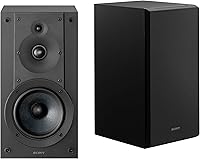
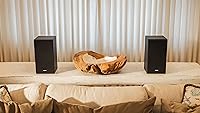
The Sony SS-CS5M2 (2025) is Sony's refreshed take on a bookshelf speaker that already had a strong following among home audio enthusiasts. These Sony bookshelf speakers fit neatly on a shelf or stand in small-to-medium rooms without demanding much real estate — the cabinet is genuinely compact. What sets them apart at this price tier is the 3-way, 3-driver configuration, which most competitors in this range simply don't offer. With over 9,000 ratings averaging 4.6 stars on Amazon, the reception has been consistently positive — though a number that large always warrants some healthy skepticism before trusting it completely.
Features & Benefits

The 5.12-inch woofer paired with a bass reflex enclosure extends low-frequency response further than most sealed bookshelf designs of similar size, keeping bass tight and relatively distortion-free even at moderate volumes. The dedicated super tweeter is the standout detail; it handles the upper registers with a sense of air and width that a standard two-driver setup typically can't match. At 6 ohms impedance, the SS-CS5M2 is straightforward to pair with most AV receivers or integrated amps. The metal and cellular cone construction reduces unwanted resonance, and with 100 watts of headroom, dynamic passages and film soundtracks stay composed. Wired-only connection means no signal degradation from wireless compression.

Best For

These Sony bookshelf speakers are a natural fit for anyone building a 2.0 or 2.1 stereo setup on a considered budget, whether that's a dedicated listening room or a living room doubling as a home theater. They're equally at home in a bedroom or apartment where floor-standing speakers simply aren't practical. One critical thing to clarify upfront: these are passive speakers, meaning they require an external amplifier or AV receiver — not a plug-and-play powered solution. Add a capable amp and a subwoofer and you have a foundation that punches well above its footprint. Stereo listeners chasing hi-res detail without moving to larger cabinets will find a lot to appreciate here.

User Feedback

Owners consistently highlight the wide soundstage and treble clarity — the super tweeter earns genuine praise in real-world listening, giving the high end an openness that surprises people expecting a typical bookshelf speaker. Bass gets solid marks relative to cabinet size, but the honest takeaway is that deep, room-filling low end isn't what this Sony hi-res pair does on its own; most listeners recommend adding a dedicated subwoofer for movies. Some buyers with lower-powered amplifiers note the speakers feel slightly demanding on gain before they fully open up. Compared to the older SS-CS5, the 2025 update draws comments about improved driver cohesion — a meaningful refinement, not just a cosmetic rebadge.

Pros

  • The three-driver design delivers a layered, open sound that most competing bookshelf speakers at this tier simply cannot match.
  • Super tweeter performance is a genuine highlight — treble feels airy and extended without turning harsh over long listening sessions.
  • Wide soundstage imaging makes the speakers disappear into the room, creating a convincing stereo picture well beyond their cabinet size.
  • The 6-ohm impedance pairs cleanly with virtually any modern AV receiver or stereo amp without stressing the amplifier.
  • Compact cabinet fits comfortably on a shelf, stand, or desk without dominating the room.
  • Metal and reinforced cellular cone construction keeps resonance low and the sound character consistent at varied volume levels.
  • The 2025 update brings improved driver cohesion over the previous model, making the three frequency bands blend more naturally.
  • Bass reflex enclosure extracts solid low-end weight for acoustic, jazz, and vocal music without needing a subwoofer for casual use.
  • Banana plug and spade connector compatibility makes wiring clean and professional without soldering or adapters.
  • Over 9,000 verified ratings with a 4.6-star average reflects a consistently positive real-world ownership experience across diverse listening setups.

Cons

  • A separate amplifier is mandatory — budget for that component before pricing these speakers in isolation.
  • Deep bass below 60Hz drops off noticeably, making a subwoofer a practical necessity for movies and electronic music.
  • At low volume levels late at night, the bass thins out and the tonal balance feels top-heavy.
  • Some users with entry-level or lower-powered amplifiers report needing to push volume higher than expected before the sound fully opens up.
  • A break-in period of 20 to 50 hours is needed before the speakers perform at their best — not ideal for impatient buyers.
  • The cabinet vinyl wrap finish is functional but not visually premium, and picks up fingerprints easily.
  • High port output at louder volumes can produce audible chuffing if the speakers are pushed near their limits without subwoofer support.
  • Grille alignment inconsistencies have been reported in a small number of units, which is a minor but noticeable quality control gap.
  • Bright-leaning treble can occasionally feel sharp on poorly mastered recordings, requiring amp-side adjustments to tame.
  • Channel-matching variance between pairs — though rare — has been reported, and Sony customer service response times on warranty cases draw mixed feedback.

Ratings

The Sony SS-CS5M2 (2025) has been scored below using AI analysis of thousands of verified global buyer reviews, with spam, bot-generated, and incentivized submissions actively filtered out before scoring. These ratings reflect the honest distribution of real listener experiences — from dedicated audiophiles to first-time home theater builders — and do not shy away from the pain points that surface repeatedly alongside the genuine strengths.
Sound Quality
88%
Across a wide range of listeners, the overall sound signature earns consistent praise for its balance and clarity. The three-driver configuration delivers a layered presentation that feels more complete than most bookshelf speakers in this class, with instruments and vocals occupying distinct, well-defined spaces in the mix.
A small but vocal group of users with more analytical ears find the midrange slightly recessed compared to high-end reference monitors, and the tuning can feel slightly bright on certain recordings — something that may require amp-side EQ adjustments to fully dial in.
Treble & High-Frequency Detail
91%
The super tweeter is the most universally celebrated aspect of these speakers. Listeners consistently describe the high end as airy and extended without becoming fatiguing, even during long sessions. Acoustic music, strings, and cymbal detail in particular benefit from the additional driver layer.
A handful of users running the speakers with warmer-sounding amplifiers note that the treble can occasionally tip into sharpness on poorly mastered recordings. This is less a flaw in the speakers and more a sensitivity to upstream equipment quality.
Bass Performance
72%
28%
For a compact bookshelf cabinet, the bass reflex design extracts solid low-end extension, and the 5.12-inch woofer maintains reasonable weight and punch during casual music listening. Folk, jazz, and acoustic genres in particular sound full and satisfying without any subwoofer support.
For home theater use or bass-heavy genres, the limitation becomes apparent quickly. Deep sub-bass below 60Hz effectively disappears, and at high volumes the port can introduce audible chuffing. Most experienced users strongly recommend pairing these with a dedicated subwoofer for movies.
Soundstage & Imaging
89%
Wide dispersion from the super tweeter creates a listening window that feels substantially larger than the physical cabinet suggests. Stereo imaging is precise enough that many users report a convincing sense of depth and instrument placement, even in less-than-ideal room positions.
Soundstage performance is somewhat room-dependent — in very small spaces or when placed too close to a rear wall, the imaging can collapse slightly and bass can boom. Proper placement with at least a few inches of rear clearance makes a meaningful difference.
Build Quality & Materials
83%
The metal and reinforced cellular cone construction gives the drivers a noticeably rigid feel, and the cabinet itself resists the hollow resonance common in cheaper MDF-only enclosures. Most buyers describe the overall assembly as solid and confidence-inspiring straight out of the box.
The cabinet finish is functional rather than premium — the vinyl wrap can show fingerprints easily and does not match the visual quality of boutique speaker brands at a similar price point. A few users mention minor cosmetic inconsistencies in the grille alignment.
Sensitivity & Amp Compatibility
74%
26%
The 6-ohm impedance rating keeps these speakers within the comfort zone of virtually any modern AV receiver or integrated amplifier, and the majority of users report clean, dynamic results when paired with mid-range Sony, Denon, or Yamaha receivers.
Users with entry-level amps or receivers rated below 50 watts per channel sometimes note that the speakers need to be pushed harder on the volume dial before they fully open up. This is not an efficiency problem unique to these speakers, but it catches some buyers off guard.
Value for Money
86%
Compared to competing 2-way bookshelf speakers at or near this price, the three-driver design and hi-res certification represent a genuine hardware advantage that most buyers feel they are getting good return on. Long-term owners in particular emphasize that the speakers hold their sonic appeal well over time.
Budget-conscious buyers comparing these against similarly priced powered bookshelf speakers sometimes feel the need to budget separately for an amplifier tips the total system cost higher than expected. The value calculation changes significantly depending on whether a buyer already owns a capable amp.
Break-In Period
66%
34%
A meaningful portion of buyers who gave the speakers adequate break-in time — typically between 20 and 50 hours of varied playback — report that the sound noticeably loosens up and the bass in particular gains more natural movement compared to straight out of the box.
The break-in requirement is a recurring friction point in reviews, especially for buyers expecting immediate performance. Those who judge the speakers within the first few hours often post more critical reviews, which creates a slightly skewed early impression in the rating pool.
Upgrade over Previous SS-CS5
79%
21%
Buyers who owned the original SS-CS5 and upgraded to the 2025 model consistently note improved driver cohesion, with the three frequency bands blending more naturally than before. The high-frequency presentation in particular draws favorable comparisons, described as smoother and better integrated.
For buyers who never owned the prior model, the improvement is academic rather than tangible. A small segment of long-time SS-CS5 owners feel the changes are incremental rather than transformative and question whether the upgrade alone justifies the purchase if the older pair is still functioning well.
Setup & Installation Ease
82%
18%
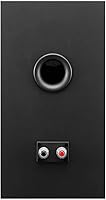
Binding posts are clearly labeled and spaced generously enough to accommodate banana plugs, bare wire, or spade connectors without crowding. Most users report a painless setup experience that takes under 15 minutes when connecting to an existing receiver.
The included documentation is minimal, and first-time speaker buyers occasionally express confusion about amplifier matching, optimal placement height, and toe-in angle. A brief setup guide beyond the basic instruction sheet would meaningfully reduce early frustration for newcomers.
Cabinet Resonance Control
81%
19%
During demanding passages, the cabinet remains composed with minimal audible vibration or coloration. The reinforced cone material and port design work together to keep the enclosure from becoming a secondary sound source, which is a genuine problem with cheaper bookshelf speakers in this size class.
At very high volume levels — well beyond typical listening levels — some users detect a subtle cabinet rattle that appears to originate from the grille attachment points rather than the drivers themselves. Removing the grilles during critical listening is a common workaround noted in reviews.
Frequency Consistency at Low Volumes
77%
23%
At low-to-moderate listening levels typical of late-night apartment use, these speakers maintain a reasonably balanced tonal character without the severe bass dropout that plagues many bookshelf designs at whisper volumes. This makes them practical for everyday background listening as well as focused sessions.
The bass reflex tuning optimizes for a specific volume range, and at very low volumes the low end thins out more noticeably than on sealed designs. Users who primarily listen quietly — such as late-night listeners in shared spaces — may find the balance feels top-heavy at those levels.
Stereo Pairing Consistency
85%
Channel-to-channel matching between the two speakers in the pair is consistently reported as tight, with no meaningful volume or tonal imbalance noted between left and right. This matters particularly for precise stereo imaging, and buyers appear largely satisfied on this front.
A small number of buyers report receiving pairs where one speaker exhibited subtle differences in treble output — likely driver manufacturing variance rather than a systematic issue. Sony's customer support response to these cases draws mixed reviews in terms of resolution speed.

Suitable for:

The Sony SS-CS5M2 (2025) is a strong match for anyone building a serious stereo or home theater setup without wanting to commit to floor-standing speakers or a dedicated listening room. If you already own a capable AV receiver or integrated amplifier — something in the 50-to-100-watt-per-channel range from brands like Denon, Yamaha, or Sony itself — these speakers will slot in cleanly and reward you with a level of high-frequency detail and soundstage width that typically costs more to achieve. They work particularly well in small-to-medium rooms where a compact footprint is a practical necessity, not just a preference — a bedroom, home office corner, or apartment living room where floor-standers simply aren't an option. Stereo listeners who care about hi-res audio and want to hear the difference between a well-recorded album and a compressed stream will find the three-driver configuration genuinely useful for that purpose. Adding a subwoofer to handle the sub-60Hz range transforms the SS-CS5M2 into a remarkably complete 2.1 system for movies and bass-heavy music.
Not suitable for:

Buyers expecting a plug-and-play powered speaker experience should look elsewhere — the SS-CS5M2 is a passive speaker that produces no sound whatsoever without a separate amplifier, and that additional component cost needs to be factored into the real total budget. If your primary use case is action movies at high volumes without a subwoofer, these speakers will leave you wanting more low-end weight; the cabinet simply cannot move enough air to pressurize a large room on its own. Listeners who prefer a warm, full-bodied sound signature may also find the tuning slightly brighter and more analytical than their taste, and correcting that via EQ requires either a receiver with tone controls or additional equipment. Anyone hoping for wireless flexibility — Bluetooth streaming from a phone or tablet without wires — will be frustrated, as these are strictly wired passive speakers with no built-in amplification or connectivity. Finally, buyers on a very tight all-in budget who cannot also afford a quality amplifier will likely get better real-world results from a mid-range powered bookshelf speaker at a lower total outlay.

Specifications

  • Speaker Type: 3-way, 3-driver passive bookshelf speaker, sold as a stereo pair.
  • Woofer: 5.12-inch (130mm) woofer with metal and reinforced cellular cone for rigid, low-resonance bass reproduction.
  • Tweeter: 0.98-inch (25mm) high-precision tweeter designed for accurate midrange and lower treble reproduction.
  • Super Tweeter: Dedicated wide-dispersion super tweeter extends high-frequency response and broadens the listening sweet spot.
  • Enclosure: Bass reflex (ported) enclosure tuned to extend low-frequency output and reduce distortion at the cabinet's natural limits.
  • Frequency Response: Rated from 53Hz and above, covering the full audible range above deep sub-bass territory.
  • Impedance: 6 ohms nominal, compatible with the majority of consumer AV receivers and stereo integrated amplifiers.
  • Max Power: Rated at 100 watts maximum output, providing sufficient headroom for dynamic music passages and film soundtracks.
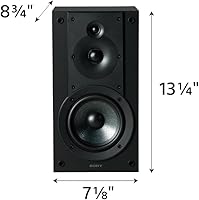
  • Dimensions: Each cabinet measures 8.7″ deep, 7″ wide, and 13.2″ tall — a compact footprint suited to shelves, stands, and desktops.
  • Weight: Approximately 1 pound per speaker unit, making placement and repositioning straightforward.
  • Connectivity: Wired only via standard binding posts; compatible with banana plugs, spade connectors, and bare wire terminations.
  • Mounting Type: Tabletop mount design intended for placement on a flat surface, shelf, or dedicated speaker stand.
  • Cone Material: Metal and reinforced cellular cone construction reduces unwanted flex and resonance coloration across the frequency range.
  • Indoor Use: Designed exclusively for indoor use in home theater and stereo listening environments.
  • Model Year: 2025 model, designated SS-CS5M2, representing an updated revision of Sony's SS-CS5 bookshelf speaker line.
  • Included Items: Package includes one matched stereo pair of speakers and a basic instruction manual; no amplifier or cables are included.
  • UPC: Product UPC is 027242932586, corresponding to the SS-CS5M2 stereo pair configuration.
  • Manufacturer: Designed and manufactured by Sony Corporation under the Sony speaker product line.

Related Reviews

Sony SS-CS8M2 2-Way 3-Driver Center Channel Speaker
85%
92%
Sound Quality
94%
Dialogue Clarity
75%
Bass Performance
88%
Integration with Surround Sound Systems
85%
Build Quality
More
Sony SS-CS3M2 3-Way 4-Driver Hi-Res Floorstanding Speaker
85%
91%
Sound Quality
88%
Bass Performance
86%
Build Quality
82%
Ease of Setup
87%
Value for Money
More
Sony MDRE9LP Earbuds
79%
83%
Sound Quality
78%
Comfort & Fit
80%
Build Quality
75%
Microphone Performance
88%
Portability
More
Sony MDR-CD900ST
Sony MDR-CD900ST
89%
96%
Sound Accuracy
91%
Comfort & Fit
94%
Build Quality
92%
Durability
95%
Frequency Response
More
Sony WH-CH720NB
Sony WH-CH720NB
88%
94%
Noise Cancellation Effectiveness
91%
Sound Clarity
88%
Bass Performance
95%
Battery Life
90%
Comfort During Extended Use
More
Sony SRS-XB23
Sony SRS-XB23
87%
94%
Sound Quality
91%
Bass Performance
97%
Portability
89%
Build Durability
93%
Waterproofing
More
Sony BDP-S360
Sony BDP-S360
86%
94%
Video Quality
90%
DVD Upscaling
88%
Audio Performance
91%
Setup & Installation
85%
Build Quality
More
Sony MDRXB600IP Headphones
82%
88%
Bass Performance
85%
Comfort for Extended Use
83%
Noise Isolation
78%
Build Quality
81%
Portability
More
Sony VRDMC3 DVDirect
81%
88%
Recording Quality
91%
Ease of Use
85%
Setup & Installation
78%
Connectivity Options
84%
Disc Compatibility
More
Sony MDREX15AP In-Ear Headphones
82%
85%
Sound Quality
90%
Comfort and Fit
70%
Build Quality
88%
Ease of Use (Controls)
65%
Bass Performance
More

FAQ

Yes, absolutely — these are passive speakers, which means they produce no sound on their own. You need to connect them to an AV receiver, stereo integrated amplifier, or separate power amplifier. If you don't already own one of those, factor that into your total budget before purchasing.

Something in the 50-to-100-watt-per-channel range at 6 or 8 ohms is the practical sweet spot. Mid-range receivers from Denon, Yamaha, Marantz, or Sony's own lineup work very well. Avoid pairing them with very low-powered amps under 30 watts per channel — the speakers can sound compressed and closed-in before reaching satisfying volume levels.

For music — especially acoustic, jazz, folk, or vocal genres — many listeners find them satisfying without a subwoofer. For movies, action content, or bass-heavy music, adding a subwoofer makes a real difference because the cabinet rolls off meaningfully below 60Hz. Think of a subwoofer as a strong recommendation, not strictly mandatory, for home theater use.

Most experienced owners suggest giving these speakers between 20 and 50 hours of varied playback before drawing firm conclusions about their sound. Fresh out of the box, the drivers can sound slightly stiff or congested, particularly in the bass. It is a real phenomenon, and buyers who judge the speakers in the first couple of hours sometimes leave unfairly harsh early impressions.

The Sony SS-CS5M2 (2025) is the direct successor to the SS-CS5, and buyers who have owned both consistently report better driver integration — the three frequency bands blend more naturally in the updated version. The high-frequency performance in particular draws favorable comparisons, described as smoother and better controlled. If your original SS-CS5 pair is still working well, the upgrade is meaningful but incremental rather than transformative.
Yes, Sony actually lists surround sound systems as a recommended use case, and the compact cabinet size makes placement as rear or side surrounds practical. That said, for the best results in a multi-channel setup, try to match the center channel and front speakers in the same Sony CS series family so tonal character stays consistent across the soundstage.

Yes, the binding posts on these speakers accept banana plugs, spade connectors, and bare wire equally well. The posts are spaced and sized to accommodate standard consumer-grade connectors without any adapters. This makes initial setup clean and straightforward if you already have terminated speaker cables.

You can, but it is not ideal. The bass reflex port at the rear needs at least a few inches of clearance from the wall behind it to breathe properly — blocking it leads to boom and muddiness in the low end. For best imaging, angle the speakers slightly inward toward your listening position and keep them at roughly ear height when seated.

No — these are strictly wired passive speakers with no wireless capability of any kind. There is no Bluetooth, Wi-Fi, or built-in amplification. If wireless listening is important to you, you would need to look at an entirely different category of powered or active bookshelf speaker.

The 1-pound figure appears to be a shipping or per-unit listing error — in practice, these speakers feel substantially more solid and heavier than that figure implies, which most buyers confirm. The cabinet construction does not feel hollow or cheap, and the metal cone drivers add noticeable rigidity to the overall build. Do not let that weight spec concern you about durability.