Overview

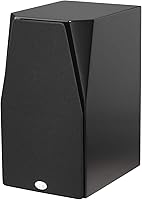
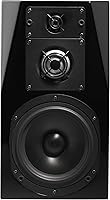
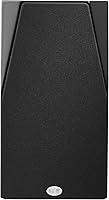
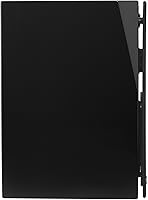
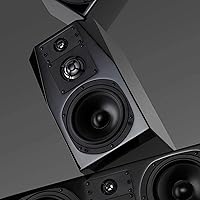
The NHT C-3 comes from a brand that has spent decades building speakers for listeners who actually care about accuracy, not hype. NHT has long been respected among audiophiles for designs that prioritize honest sound reproduction over flattering coloration. This NHT bookshelf speaker uses a sealed enclosure, which means the bass it produces is tight and controlled rather than artificially boosted by a port. That approach suits critical listening well. The cabinet wears a high-gloss black finish that looks genuinely premium on a shelf or stand. One critical note before you buy: this listing covers a single speaker unit, not a pair. Budget accordingly.

Features & Benefits

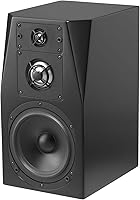
The 3-way driver layout is where this 3-way speaker separates itself from the competition. Most bookshelf speakers use just two drivers — a tweeter and a woofer — which forces one driver to cover a wide frequency range it was never optimally designed for. Here, a dedicated 2-inch aluminum midrange dome handles the crucial vocal and instrument range, while the 6.5-inch woofer and 1-inch tweeter each cover their own narrower slices of the spectrum. Aluminum drivers resist flexing under load, keeping the sound clean at higher volumes. The sealed enclosure reaches down to 40Hz — respectable for a cabinet this size — without the one-note boom ported designs can introduce. Just know the 87dB sensitivity rating means a capable amplifier is not optional; weak receivers will leave this speaker sounding flat.

Best For

This NHT bookshelf speaker makes the most sense for buyers building a real system, not just plugging in the first thing they find. If you already own a quality stereo or AV receiver rated at 50 watts or more per channel, this 3-way speaker will reward you noticeably. Listeners who value midrange accuracy and imaging over exaggerated bass will find the sealed design a better fit than a ported alternative. Pairing with a subwoofer is smart if home theater use is the goal, since the 40Hz floor leaves some low-end content uncovered. It also works well for nearfield desktop listening, where its compact footprint and precise soundstage reproduction shine without requiring a large room.

User Feedback

Long-term owners of this NHT bookshelf speaker consistently point to two things: the wide soundstage and the clarity in the midrange, particularly on acoustic instruments and vocals. The cabinet build gets regular praise — it feels and looks like something worth the price. That said, the single-unit listing trips up more buyers than it should; multiple reviewers mention ordering one and being surprised when only a single box arrives. Amplifier pairing matters, and a few owners note that modest receivers undersell what the speaker is capable of. On a positive note, several long-term users report that the sound opens up noticeably after extended break-in — worth keeping in mind if your first impression feels slightly restrained.

Pros

  • The 3-way driver layout delivers midrange clarity that most bookshelf speakers at this price tier simply cannot match.
  • Sealed enclosure produces tight, accurate bass with no port-induced bloat — a real advantage for critical listening.
  • All-aluminum drivers across all three frequency bands keep distortion low even at higher playback volumes.
  • Soundstage width and instrument separation impress consistently, especially in nearfield and desktop setups.
  • The high-gloss cabinet looks and feels genuinely premium — not like something that arrived in a budget box.
  • Long-term owners report no driver failures or cabinet issues after years of regular use, suggesting real durability.
  • Sound improves noticeably after a proper break-in period, rewarding patient listeners with a more open presentation.
  • Scales into a full NHT C-Series surround system for buyers with home theater ambitions beyond a stereo pair.
  • Sealed design is more placement-forgiving than ported alternatives — rear-wall proximity does not bloat the bass.
  • For listeners upgrading from entry-level speakers, the step up in accuracy and detail is immediately apparent.

Cons

  • This is a single-speaker listing — stereo listening requires purchasing two units, which significantly increases total cost.
  • The 87dB sensitivity rating means underpowered receivers will leave this NHT bookshelf speaker sounding dull and flat.
  • Bass extension stops at 40Hz, making a subwoofer a practical necessity for home theater and bass-heavy music genres.
  • Metal dome drivers can sound slightly analytical or forward on poorly recorded or heavily compressed source material.
  • At 16 pounds per unit, repositioning or adjusting placement is more physically awkward than lighter alternatives.
  • The gloss finish scratches and collects fingerprints easily, requiring more maintenance than matte cabinet designs.
  • First impressions out of the box can be underwhelming before the driver suspension loosens over 40 to 80 hours of use.
  • Replacement drivers are not widely available on the aftermarket, which is a concern for buyers planning very long-term ownership.
  • Bright-leaning amplifier pairings can push the aluminum tweeter into ear-fatiguing territory during long listening sessions.
  • The system investment required — two speakers plus a capable amplifier, plus potentially a subwoofer — adds up quickly.

Ratings

The scores below for the NHT C-3 were generated by AI after analyzing verified purchaser reviews from global markets, with spam, incentivized feedback, and bot activity actively filtered out. The result is an honest, balanced picture that reflects both what owners genuinely love and where real frustrations surface. Strengths and pain points are weighted equally — nothing has been softened to flatter the product.

Sound Clarity & Midrange Detail
93%
Owners consistently describe vocal reproduction as unusually precise for a bookshelf-class speaker. The dedicated 2-inch aluminum midrange dome handles instruments like acoustic guitar and piano with a specificity that budget two-way speakers simply cannot match. Listeners upgrading from entry-level speakers often describe the difference as immediately obvious.
A small number of reviewers with bright-leaning amplifiers found the aluminum drivers to sound slightly forward or analytical on certain recordings, particularly compressed modern pop. It is a characteristic of metal-dome designs rather than a flaw, but it does mean source quality and pairing matter more than usual.
Soundstage & Imaging
89%
The sealed enclosure and 3-way driver separation work together to produce a wider, more precisely placed soundstage than most bookshelf speakers at this price tier. Owners using the C-3 in nearfield desktop setups regularly comment on the sense of instrument separation and left-right placement accuracy during critical listening sessions.
Soundstage depth — the front-to-back layering of a mix — is competent but not class-leading. A few experienced listeners note that larger floorstanding speakers or some competing sealed designs at higher price points produce a more convincing three-dimensional image in larger rooms.
Bass Accuracy & Low-End Extension
74%
26%
What the C-3 does in the bass is controlled and honest. The sealed design means the low end rolls off gracefully rather than producing the one-note bloat common in ported speakers. For acoustic music, jazz, and orchestral content, the 40Hz floor is genuinely satisfying and does not call attention to what is missing.
For home theater use — action films, electronic music, anything with deep sub-bass content — 40Hz is not enough on its own, and this 3-way speaker will leave you wanting a subwoofer. Buyers expecting full-range bass performance without supplementing will likely be disappointed, and this is the single most common adjustment owners make after purchase.
Build Quality & Cabinet Finish
91%
The high-gloss black cabinet draws consistent praise from owners who place the speaker in a visible living room or media setup. It feels dense and inert when you knock on it, which is a practical sign of cabinet rigidity that directly reduces coloration. Long-term owners report no finish degradation or driver issues after years of regular use.
The gloss finish, while attractive, is a fingerprint and dust magnet that requires regular wiping to maintain its appearance. A handful of buyers also note that at 16 pounds per unit, placing and repositioning these speakers on stands or shelves is a two-person job more often than expected.
Amplifier Compatibility
66%
34%
For buyers pairing this NHT bookshelf speaker with a quality stereo receiver or AV amplifier rated at 50 watts or more per channel, the results are genuinely impressive. The 6-ohm nominal impedance is well within the range most modern receivers handle comfortably, and the speaker rewards a clean, powerful signal with noticeably better dynamics.
At 87dB sensitivity, this is not a speaker that thrives on modest power. Owners who plugged it into budget AV receivers or low-wattage integrated amplifiers reported a flat, uninvolving sound that undersells the speaker significantly. This compatibility requirement is a real barrier for buyers who do not already own appropriate amplification.
Value for Money
78%
22%
Buyers who understand what they are purchasing — a single premium speaker with a genuine 3-way driver system and all-aluminum cone array — tend to rate the value positively. The build and driver quality are consistent with what competing audio brands charge considerably more for, especially when factoring in the NHT brand legacy and sealed design execution.
The value equation shifts uncomfortably once buyers realize stereo listening requires purchasing two units, which doubles the already significant outlay. Add in a subwoofer for proper home theater use and the total system cost climbs well beyond what many shoppers anticipated when they first added a single unit to their cart.
High-Frequency Performance
84%
The 1-inch aluminum dome tweeter handles high-frequency content with good extension and low harshness at moderate listening volumes. Cymbal decay, violin harmonics, and high vocal sibilance are rendered with detail and without the brittle edge some cheaper metal tweeters produce.
At louder volumes, particularly above 85dB in a small room, some listeners detect a hint of brightness that can cause ear fatigue during extended sessions. This is more a system-matching issue than a product defect, but it reinforces the need to pair this 3-way speaker with neutral, well-controlled amplification.
Ease of Setup
71%
29%
Connection via standard binding posts is straightforward for anyone familiar with speaker wire termination. The cabinet dimensions are manageable for most bookshelf or stand placements, and the sealed design means placement near a rear wall does not cause the bass buildup that ported speakers are prone to in close-quarters positioning.
The setup experience is not beginner-friendly in a broader sense. Getting the best out of this NHT bookshelf speaker requires amplifier selection decisions, speaker positioning care, and potentially a subwoofer crossover configuration — steps that are routine for experienced audio hobbyists but genuinely intimidating for first-time buyers.
Listing Clarity & Purchase Experience
52%
48%
The product itself ships in standard packaging and arrives well-protected. Buyers who read the listing carefully and understood they were purchasing a single unit had no surprises with what arrived, and NHT's product quality control appears consistent across units based on owner accounts.
The single-unit listing format is the most cited frustration across all buyer feedback, and it is significant enough to affect this score. A notable number of reviewers ordered one unit expecting a stereo pair, and the resulting confusion has driven returns and negative reviews that have nothing to do with the speaker itself.
Driver Material & Resonance Control
88%
All-aluminum drivers across all three frequency bands mean the cone material behaves consistently and resists the flex and resonance that paper or polypropylene cones introduce under dynamic loads. Owners playing complex orchestral passages or dense rock mixes report that the speaker maintains composure without muddiness even when pushed.
Aluminum cones, by their nature, have a characteristic upper-frequency breakup behavior that can be audible on certain recordings if the crossover is not perfectly tuned. Most owners never notice it, but a small number of analytical listeners with resolving amplification have flagged occasional metallic-sounding artifacts on specific content.
Long-Term Durability
86%
Multi-year owners report no driver failures, cabinet delamination, or binding post degradation under regular use. NHT has a track record of building speakers that hold up over time, and the C-3 appears consistent with that reputation based on extended owner feedback from buyers who have lived with the speaker for several years.
The high-gloss finish can develop fine surface scratches over time, particularly if the speaker is handled or repositioned frequently. There is also a limited aftermarket for replacement drivers if a specific unit were to fail outside of warranty, which is a minor but real concern for buyers planning on a decade-plus ownership horizon.
Break-In Period
69%
31%
Multiple long-term owners specifically mention that the sound of this 3-way speaker opens up meaningfully after 40 to 80 hours of use. The bass loosens slightly and the midrange becomes more natural, which is a well-understood phenomenon with stiff aluminum cone suspensions and is a positive indicator of quality driver construction.
First impressions out of the box can be underwhelming — particularly in the low end, which sounds constrained before the suspension has loosened. Buyers who audition the speaker briefly at a retailer or return it quickly after purchase may be forming an opinion on an unbroken-in unit, leading to conclusions that do not reflect the speaker at its best.
Room Versatility
72%
28%
The sealed design and controlled dispersion pattern make the C-3 more placement-forgiving than ported speakers of a similar size. In small to medium rooms up to about 250 square feet, this NHT bookshelf speaker performs well without significant room treatment, and nearfield desktop use is a particularly strong application.
In larger living rooms or open-plan spaces, the physical output limits of a 6.5-inch woofer and 62.5 watts of power handling become apparent. The speaker does not pressurize a large room convincingly on its own, and listeners who want genuine home theater impact in a spacious environment will find the C-3 better suited as part of a multi-speaker system than as a standalone solution.

Suitable for:

The NHT C-3 is a strong match for anyone who takes their listening seriously and already has — or is willing to invest in — a quality amplifier to drive it. Stereo enthusiasts upgrading from budget bookshelf speakers will notice an immediate and meaningful improvement in midrange clarity and soundstage width, particularly on acoustic music, jazz, and well-recorded vocals. Home theater builders working through the NHT C-Series lineup will find this 3-way speaker slots naturally into a multi-channel setup as a front or surround channel, especially when paired with a capable AV receiver rated above 50 watts per channel. Desktop and nearfield listeners who want genuine hi-res audio accuracy without filling a dedicated listening room will find the compact sealed cabinet fits neatly on a stand or desk without sacrificing the precision they are paying for. If you are the kind of buyer who actually notices the difference between a clean, accurate speaker and a flattering one, this NHT bookshelf speaker is worth serious consideration.

Not suitable for:

The NHT C-3 is a poor fit for buyers who expect a plug-and-play experience with whatever receiver they already own. If your amplifier is a modest, budget-tier unit pushing less than 40 watts per channel, this 3-way speaker will sound flat and uninvolving — the 87dB sensitivity rating simply demands more power to perform at its potential. Buyers hoping for deep, room-filling bass without adding a subwoofer will also be let down; 40Hz is an honest lower limit, not a deep-bass claim, and anything below that — think movie explosions, bass-heavy electronic music, or organ pedal notes — just will not be there. Anyone shopping for a complete stereo pair in a single purchase should also look elsewhere, since this listing covers one speaker only, and the total cost of a proper stereo setup requires budgeting for two units plus appropriate amplification. Casual listeners who are not invested in the system-building process, and who want simplicity over accuracy, would be better served by a self-powered bookshelf speaker with a built-in amplifier at a fraction of the cost.

Specifications

  • Driver Config: 3-way design with a 6.5-inch aluminum cone woofer, 2-inch aluminum dome midrange, and 1-inch aluminum dome tweeter operating in dedicated frequency bands.
  • Enclosure Type: Sealed acoustic suspension cabinet, which provides tighter bass control and lower distortion compared to ported enclosure designs.
  • Frequency Response: Rated down to 40Hz, covering the vast majority of musical content without a subwoofer, though deep sub-bass extension below that threshold is not supported.
  • Impedance: 6 ohms nominal with a 4-ohm minimum, which is compatible with most quality stereo and AV receivers designed to handle 4-ohm or 6-ohm loads.
  • Sensitivity: 87dB at 2.83V measured at 1 meter, indicating a moderate efficiency rating that performs best when driven by an amplifier delivering at least 50 watts per channel.
  • Power Handling: Maximum rated power handling of 62.5 watts, suitable for home listening levels in small to medium-sized rooms without risk of thermal damage.
  • Cabinet Material: Sealed MDF (medium-density fiberboard) enclosure with a high-gloss black lacquer finish applied to all external surfaces.
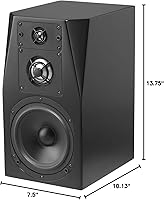
  • Dimensions: The cabinet measures 10.13″ deep, 7.5″ wide, and 13.75″ tall, making it a compact but substantial bookshelf-format speaker.
  • Weight: Each speaker unit weighs 16 pounds, reflecting the dense MDF cabinet construction and aluminum driver complement.
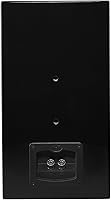
  • Connection Type: Wired connection via standard binding post terminals, compatible with bare wire, banana plugs, and spade connectors.
  • Unit Count: Each listing contains one speaker only; buyers who need a stereo pair must purchase two units separately.
  • Driver Material: All three drivers — woofer, midrange, and tweeter — use aluminum as the primary cone and dome material for low resonance and high stiffness.
  • Finish: High-gloss black lacquer exterior finish; aesthetically premium but requires regular cleaning to maintain appearance due to fingerprint and dust visibility.
  • Mounting Type: Designed for shelf or stand mounting in an indoor environment; not rated for outdoor use or wall-bracket mounting.
  • Series Compatibility: Part of the NHT C-Series lineup, which allows the speaker to be integrated into a matched multi-channel home theater system using other C-Series components.
  • Audio Channels: Single-channel (mono) output per unit; a stereo pair requires two units, and a 3.0 or larger surround configuration requires additional channel-specific components.
  • Wireless: No wireless capability; the speaker is entirely passive and requires a separate amplifier or receiver connected via speaker wire.
  • Warranty: Covered by an NHT extended warranty; buyers should confirm current warranty terms and registration requirements directly with NHT at time of purchase.

Related Reviews

ikuai 3.5″ USB 3.0 Hard Drive Enclosure
80%
93%
Ease of Setup
71%
Build Quality
62%
Cable Quality & Reliability
88%
Drive Compatibility
74%
Data Transfer Speed
More
ORICO 3.5″ External Hard Drive Enclosure SATA III to USB 3.1 Type C
84%
92%
Ease of Setup
90%
Data Transfer Speed
85%
Build Quality
88%
Compatibility with OS
87%
Shock Protection
More
Vantec NST-371C31-BK NexStar Gx USB 3.1 Gen 2 Type-C 3.5″ SATA HDD/SSD Enclosure
84%
89%
Performance
94%
Ease of Setup
85%
Build Quality
92%
Compatibility with Systems
88%
Data Transfer Speed
More
C. Crane CCRadio 3
C. Crane CCRadio 3
86%
91%
Reception & Sound Quality
96%
Battery Life
75%
Portability & Size
88%
Ease of Use
85%
Bluetooth Connectivity
More
C. Crane CC WiFi 3 Internet Radio

86%
88%
Audio Quality
74%
Wi-Fi Connectivity
90%
Sound Customization
91%
Ease of Use
85%
Build Quality
More
KCEVE USB 3.0 KVM Switch 3 Monitors 3 Computers
85%
94%
Ease of Setup
92%
Video Quality
88%
Build Quality
85%
Switching Speed
91%
Compatibility
More
Stratia C+C Vitamin C Serum 15% – 1 Fl Oz
87%
89%
Effectiveness in Brightening
84%
Anti-Aging Performance
91%
Skin Sensitivity Compatibility
92%
Texture and Feel
94%
Absorption Rate
More
OOZNARY Vita 3 Serum with Vitamin C & Niacinamide, 50mL
85%
87%
Effectiveness for Skin Brightening
92%
Gentleness for Sensitive Skin
90%
Texture and Absorption
85%
Hydration and Moisture
80%
Oil Control and Pore Refining
More
ySky 512GB USB-C/USB 3.2 SSD
88%
91%
Read Speed Performance
88%
Write Speed Performance
92%
Build Quality & Durability
89%
Portability
95%
Ease of Use / Setup
More
Behringer C-3 Dual-Diaphragm Studio Condenser Microphone
84%
88%
Sound Quality
91%
Versatility (Polar Patterns)
85%
Build Quality
70%
Noise Handling (Background Noise)
90%
Ease of Setup
More

FAQ

Just one. This is one of the most important things to know before purchasing — the NHT C-3 is sold as a single speaker unit per listing. If you need a stereo pair, you will need to purchase two. It is an easy detail to miss, and it has caught a lot of buyers off guard.

You want something that can deliver at least 50 watts per channel into a 6-ohm load, and ideally more headroom than that. The 87dB sensitivity rating means this NHT bookshelf speaker is not particularly efficient, so it needs a capable receiver or integrated amplifier to sound its best. A budget AV receiver rated at 20 to 30 watts will technically power it, but you will not hear what the speaker is actually capable of.

It depends on what you are listening to. For jazz, acoustic, classical, and most rock, the 40Hz low-end extension is genuinely satisfying and a subwoofer is optional. For home theater use — especially action films or electronic music with heavy sub-bass — you will feel the absence of anything below 40Hz. Adding a subwoofer is the right call for a full home theater setup.

Most modern AV receivers rated to drive 6-ohm or 4-ohm speakers will work fine from a compatibility standpoint. The bigger concern is whether your receiver has enough output power to drive this 3-way speaker to satisfying listening levels. Check your receiver's continuous power rating per channel — if it is above 50 watts into 6 ohms, you are in reasonable shape.

With aluminum-driver speakers like this one, break-in is genuinely noticeable. The suspension around the drivers — the flexible surround and spider — stiffens during manufacturing and loosens gradually with use. Most owners report the bass opens up and the midrange becomes more natural after 40 to 80 hours of regular play. Give it time before forming a final opinion.

Yes, and that is actually one of the smarter uses for this 3-way speaker. NHT designed the C-Series as a cohesive multi-channel system, so using these as surround or front left and right speakers alongside other C-Series components gives you a timbre-matched system throughout, which makes a meaningful difference in how cohesive movie audio sounds.

The most meaningful difference is in the 3-way driver configuration. Cheaper bookshelf speakers typically use a 2-way design — one tweeter and one woofer — which forces the woofer to cover the midrange as well. Here, a dedicated aluminum dome midrange handles that critical frequency range, and the improvement in vocal and instrument clarity is audible and real, not subtle. You are also getting an all-aluminum driver array and a sealed cabinet that cheaper options do not offer at that price point.

Use a soft microfiber cloth — dry for dust, or lightly dampened with water for fingerprints. Avoid paper towels, abrasive cloths, or household cleaning sprays, as these will scratch or cloud the gloss finish over time. The high-gloss black surface looks great but is unforgiving, so regular gentle wiping is the best approach.

They work well for desktop use if you have the surface space, and the sealed design is actually a practical advantage here because you can place them closer to a rear wall without bass buildup becoming a problem. At 7.5 inches wide and just over 13 inches tall, they are on the larger side for a desk, but on speaker stands positioned just outside a desk, they shine for nearfield listening.

Not under most conditions. The crossover is designed to hand off frequencies at points where aluminum cone breakup is not an issue, and most owners find the sound detailed rather than harsh. That said, if you pair this 3-way speaker with a bright-leaning amplifier and listen at high volumes for extended periods, some edge can creep into the high frequencies. Matching it with a neutral or slightly warm amplifier largely takes that concern off the table.