Overview
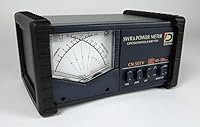
The Daiwa CN-501V VHF/UHF SWR/Power Meter is a mid-range bench instrument built for serious VHF and UHF operators who want reliable, at-a-glance readings without wrestling with complicated software or digital menus. A cross-needle SWR/power meter works by displaying forward power, reflected power, and SWR simultaneously on a single dial face — critical for protecting your transmitter and confirming your antenna is actually doing its job. This Daiwa bench meter is the direct successor to the CN-103M; the most notable change is the swap from toggle switches to push-button controls on the front panel. Covering 140–525 MHz, it spans the popular 2-meter and 70-centimeter amateur bands. It is a purely analog instrument — no touchscreens, no firmware updates, just a needle and a scale.
Features & Benefits
The standout feature of the CN-501V is its cross-needle movement, which puts forward power, reflected power, and SWR on one face at the same time. There is no mode-switching involved — you glance at the meter and you have everything you need instantly. The power range is switchable between 20 W and 200 W full scale, which covers everything from low-power antenna experiments to a solid 200-watt station. Both ports use standard SO-239 connectors, so fitting it into an existing coaxial run takes minutes. The built-in lamp is a convenient touch for low-light operating positions, though it requires an external 13.8 V DC feed — the meter works perfectly without it. At 7 x 5 x 4 inches and under two pounds, bench placement is straightforward.
Best For
This cross-needle SWR meter is squarely aimed at licensed amateur radio operators who run VHF or UHF rigs and want a permanent, always-visible power and SWR reference at their operating position. It is also a practical tool for antenna technicians and experimenters working anywhere in the 140–525 MHz window who need reflectometer data fast, without setting up complex test equipment. Operators moving up from basic, single-needle meters will appreciate the Daiwa name and the quality that comes with it. That said, if your station runs exclusively on HF, this meter simply does not cover your frequency range — it is not the right fit. And if you prefer touchscreen readouts over a needle, this is an analog-first instrument, full stop.
User Feedback
Operators who have lived with the CN-501V for months or years consistently point to two things: needle stability and meter face legibility, especially when compared to cheaper alternatives where the needle bounces or the scale markings are cramped. Build quality draws consistent praise from long-term owners. On the critical side, some users note that the push-button power-range switch feels less positive than the toggle it replaced on the CN-103M — a minor gripe, but worth knowing. The lamp cord length has also come up as a small annoyance for operators with tightly managed cable runs. One practical note: the meter reads correctly without any illumination, so the DC cord is not a dependency, just a comfort feature.
Pros
- Simultaneous cross-needle display shows forward power, reflected power, and SWR with a single glance — no mode switching needed.
- Dual power scales (20 W and 200 W full scale) handle everything from low-power antenna experiments to a full-output station.
- Standard SO-239 connectors on both ports drop straight into most existing coaxial setups without requiring adapters.
- No calibration procedure is required out of the box — the cross-needle design is ready to read the moment it is inline.
- The built-in panel lamp illuminates the scale for comfortable operation during low-light sessions.
- At under two pounds with a compact 7 x 5 x 4 inch footprint, it fits on crowded bench setups without dominating the space.
- Long-term owners consistently report stable, repeatable needle behavior that cheaper entry-level alternatives rarely deliver.
- The CN-501V carries forward the core analog reliability of the CN-103M it replaces, now with updated push-button controls.
- Core functionality requires zero external power — the included DC cord is only needed if you want the illuminated scale.
Cons
- Frequency coverage cuts off at 525 MHz, leaving operators who work above that range with no useful readings.
- The push-button power-range selector feels less tactile and decisive than the toggle switch it replaced on the CN-103M.
- Analog cross-needle readings carry mechanical tolerance — not appropriate for applications needing precise, lab-grade power measurements.
- The built-in lamp requires a dedicated 13.8 V DC feed, adding an extra cable run to an already busy shack.
- Several users report the included DC power cord is shorter than ideal for some bench and cabinet configurations.
- Accurate needle reading requires direct line-of-sight; mounting the meter out of the operator's immediate view creates a practical problem.
- There is no data logging, digital output, or PC connectivity of any kind for operators who want to track power trends.
- HF-only stations get nothing useful from this meter — the 140 MHz lower boundary excludes all shortwave and lower VHF work.
Ratings
The Daiwa CN-501V VHF/UHF SWR/Power Meter has been evaluated by our AI rating engine after a rigorous analysis of verified owner reviews sourced globally, with spam, bot submissions, and incentivized feedback actively filtered out. The scores below reflect the honest consensus of real operators — from hobbyist shack builders to working technicians — and transparently capture both what this instrument excels at and where it genuinely falls short. Each category score draws most heavily from long-term ownership reports, giving greater weight to buyers who have run the meter across multiple operating sessions rather than first-impression reviews.
Display Readability
Ease of Use
Build Quality
Measurement Accuracy
Power Range Versatility
Setup Experience
Long-Term Reliability
Footprint & Portability
Connector Quality
Frequency Coverage
Lamp & Illumination
Switch Feel
Value for Money
Suitable for:
The Daiwa CN-501V VHF/UHF SWR/Power Meter is the right instrument for licensed amateur radio operators who run VHF or UHF equipment and want a dedicated, always-visible power and SWR reference at their operating position rather than relying on the transceiver's built-in indicators. Anyone regularly working the 2-meter or 70-centimeter bands will appreciate being able to confirm SWR before keying up at full power — the kind of discipline that protects a final amplifier from a mismatched or damaged antenna system. Technicians and antenna experimenters who do iterative tuning work in the 140–525 MHz range will find the simultaneous cross-needle readout cuts session time significantly compared to toggling between forward and reflected readings. Operators stepping up from a basic single-needle meter will immediately notice the difference in legibility and confidence at the operating position. It also suits shack builds where a clean, uncluttered analog display is preferred — no screen glare, no software dependencies, no configuration headaches.
Not suitable for:
The Daiwa CN-501V VHF/UHF SWR/Power Meter has a hard frequency ceiling of 525 MHz, and any operator whose primary work sits on HF bands will find it completely unhelpful for their setup. Those looking for a single instrument to cover the full spectrum from shortwave through UHF will need either a separate HF wattmeter or a different solution altogether. This is also a poor fit for anyone who needs laboratory-grade measurement accuracy — analog cross-needle meters carry inherent mechanical tolerances, and readings should be treated as reliable working indicators rather than precise figures. If the meter will be installed in a position that is not directly in the operator's line of sight, the analog face becomes a practical problem that a remote-display or digital instrument would solve. Finally, operators who want to log power data over time, integrate readings into software, or set automatic alerts will find no provision for any of that here — this is a strictly passive, analog-only device.
Specifications
- Frequency Range: The meter covers 140 to 525 MHz, encompassing the 2-meter (144 MHz) and 70-centimeter (430–440 MHz) amateur radio bands.
- Power Scales: Two selectable full-scale power ranges — 20 W and 200 W — are switched via a front-panel push-button control.
- Power Rating: The unit is rated for continuous duty at up to 200 W within its specified frequency range.
- Connectors: Both the input and output ports use SO-239 (UHF female) connectors, accepting standard PL-259 plugs used in most amateur coaxial runs.
- Impedance: The meter is designed for 50-ohm coaxial systems, matching the standard impedance of the vast majority of amateur radio installations.
- Display Type: A cross-needle analog movement displays forward power, reflected power, and SWR simultaneously on a single meter face without any mode switching.
- Lamp Supply: The built-in scale illumination lamp is powered by an external 13.8 V DC source; a suitable power cord is included in the box.
- Calibration: No user calibration procedure is required — the cross-needle mechanism delivers simultaneous readings straight out of the box.
- Dimensions: The enclosure measures 7 x 5 x 4 inches (length x width x height), suitable for bench placement or compact mobile installs.
- Weight: The complete unit weighs 1.89 pounds, keeping it light enough for flexible placement in most operating environments.
- Color: The enclosure is finished in black, consistent with standard rack and bench instrument aesthetics.
- Model Number: The official manufacturer model designation is CN-501V.
- Predecessor Model: This meter is the factory-designated replacement for the CN-103M, differing primarily in the switch style on the front panel.
- Switch Type: Power range selection is handled by push-button switches, replacing the toggle-style switches found on the older CN-103M.
- Manufacturer: The CN-501V is produced by Daiwa, a Japanese manufacturer with an established history in amateur radio instrumentation.
Related Reviews
Daiwa CN-901 Professional Series SWR & Power Meter
LATNEX PM-120W VHF UHF RF Power Meter
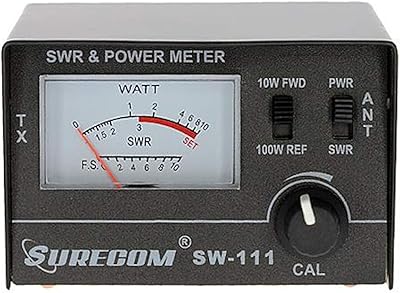
Mcbazel SURECOM SW-111 CB Radio SWR Meter
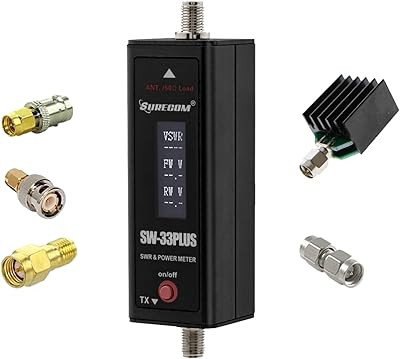
Mcbazel Surecom SW-33 Plus Power SWR Meter
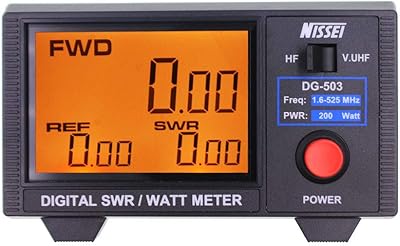
NISSEI DG-503 Digital RF SWR Power Meter
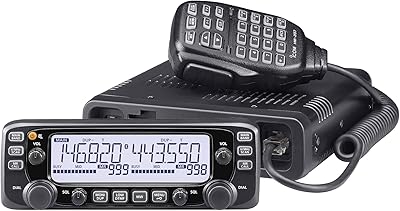
Icom IC-2730A Dual Band VHF/UHF Mobile Radio
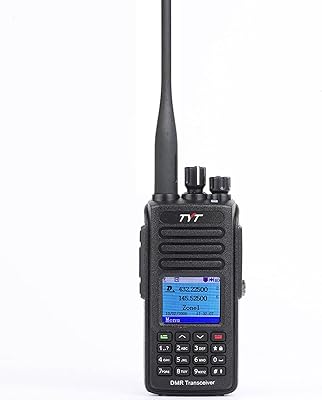
TYT MD-UV390 DMR Dual-Band Handheld Radio
TYT MD-UV380 Dual Band VHF/UHF Two-Way Radio
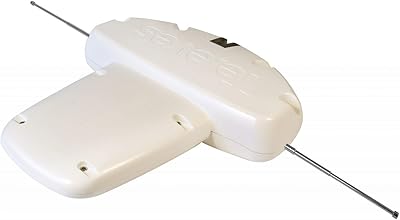
Televes DiNova Boss Mix UHF/VHF HDTV Antenna