

Overview

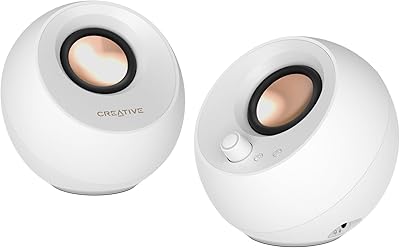
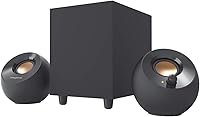
The Creative Pebble Plus is a 2.1 desktop speaker system that makes a real case for anyone tired of tinny laptop audio but unwilling to wrestle with complicated setups. Power comes entirely from a single USB connection, keeping the desk clean and eliminating the wall adapter hunt entirely. At its price point, expectations should be calibrated accordingly — this is not a studio monitor replacement, but a meaningful step up for everyday listening. Compared to its predecessor, the original Pebble, this iteration adds a dedicated external subwoofer that genuinely changes the low-end character of the whole setup.

Features & Benefits

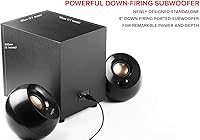
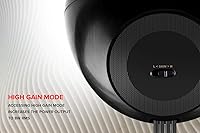
The 4-inch subwoofer fires its bass downward onto the surface below, which helps distribute low frequencies more evenly than a forward-facing woofer would. The two satellite speakers angle upward at 45 degrees, directing sound toward your ears rather than at your chin — a small design decision that noticeably improves clarity for a seated listener. Tucking the volume knob on the front of the right speaker sounds minor, but after using setups where you reach behind the unit, it genuinely matters day to day. One important caveat: High Gain Mode unlocks the full output, but it needs a 2A USB source — a standard laptop port or underpowered hub may fall short.

Best For

This 2.1 desktop speaker system suits anyone working from home who wants to hear a real difference during music, calls, and video playback without spending setup time. Budget-conscious gamers will appreciate the added bass presence, even if the system won't satisfy anyone chasing precise positional audio. Dorm rooms and small home offices are ideal environments — the compact footprint and single-cable power connection make placement flexible. If your habits lean toward streaming playlists, podcasts, and movies rather than critical audio work, this USB-powered setup aligns well with that use case without asking much in return.

User Feedback

Owners consistently highlight the bass output as the biggest surprise — most don't expect a speaker at this size to reach this low. The plug-and-play setup earns repeated praise from people who dislike reading manuals, and treble comes across as clean at moderate volumes. That said, the subwoofer has real weaknesses: at higher volumes, bass can become indistinct and over-pronounced, especially on a hard wood or glass desk surface. A handful of buyers have also flagged channel imbalance and slight distortion when pushing volume near maximum. Not dealbreakers for casual listeners, but worth knowing before purchasing.

Pros

  • Genuinely surprising bass output for a USB-powered desktop system at this price tier.
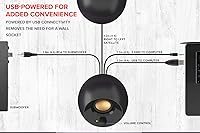
  • Single USB cable powers the entire setup — no wall adapter, no extra clutter.
  • Plug-and-play installation works instantly across Windows, macOS, and most devices with a 3.5mm port.
  • 45-degree angled drivers direct sound toward the listener, improving clarity for seated desk use.
  • Front-facing volume knob makes day-to-day adjustments quick and intuitive.
  • Clean, minimalist aesthetic blends well into professional and home office desk setups.
  • The 3.5mm AUX-in input connects to virtually any device, including older hardware.
  • Compact satellite speakers preserve desk real estate without sacrificing a dedicated subwoofer.
  • Build quality feels more solid than most plastic competitors at a similar price point.

Cons

  • Subwoofer bass becomes boomy and indistinct at higher volumes, especially on hard desk surfaces.
  • High Gain Mode requires a dedicated 2A USB power source that is not included in the box.
  • Wired-only connectivity is a dealbreaker for users who need wireless or Bluetooth audio.
  • A minority of units exhibit channel imbalance that becomes more noticeable at louder settings.
  • The satellite-to-subwoofer cable length limits how flexibly the speakers can be positioned.
  • Midrange detail thins out when the subwoofer is working hard, affecting vocal and instrument clarity.
  • The subwoofer can develop a low-level rattle or buzz over extended heavy use on vibration-prone surfaces.
  • No included power adapter means users with only USB-A 1A ports may never experience full output.
  • Sound performance does not scale well into larger rooms — this system is best kept close to the listener.

Ratings

The scores below reflect an AI-driven analysis of verified global user reviews for the Creative Pebble Plus, with spam, bot submissions, and incentivized feedback actively filtered out before any scoring was applied. Each category captures both what buyers consistently appreciated and the friction points that surfaced across thousands of real-world desk setups. Nothing has been smoothed over — the ratings reflect the honest spread of experience, not a best-case scenario.

Bass Performance
78%
22%
For a USB-powered system sitting on a desk, the low-end output genuinely catches people off guard — in a good way. Casual listeners playing lo-fi playlists or watching streaming content describe the bass as warm and present without needing to touch any settings.
At higher volumes, the subwoofer loses definition and starts to sound more like a single sustained rumble than actual musical bass. Users with hard desk surfaces report the boominess is amplified further, making placement a real factor in the final experience.
Treble & Midrange Clarity
74%
26%
Dialogue in films and vocals in music come through cleanly at everyday listening volumes. The 45-degree driver angle does its job — sound arrives at ear level rather than scattering across the room, which keeps voices and instruments from sounding muddy.
The midrange thins out noticeably when the subwoofer is pushing hard, creating a slight imbalance between the low and mid frequencies. Listeners who favor acoustic or jazz recordings tend to notice this compression more than those playing bass-heavy genres.
Soundstage & Imaging
67%
33%
The angled satellite positioning gives a wider perceived sound field than most 2.0 desktop speakers at this tier, which is genuinely appreciated for movie watching and casual gaming. It creates a more immersive sense of space than you'd get from speakers pointing straight forward.
Precise stereo imaging is not this system's strong suit — positional accuracy for gaming or critical listening is mediocre at best. The subwoofer's single-unit bass blends rather than separates, so the overall soundstage feels broad but not particularly detailed.
Volume Output
71%
29%
In High Gain Mode with a proper 2A USB source, the system can fill a small bedroom or home office without straining. For normal desk use with a monitor and keyboard nearby, standard mode handles the job without ever feeling underpowered.
High Gain Mode requires a dedicated 2A USB port, and many standard laptop ports or older USB hubs cannot deliver that consistently. Users who plug into unpowered hubs or weaker chargers report noticeably reduced output and occasional audio dropouts.
Distortion at High Volumes
58%
42%
At moderate volumes — which covers the majority of daily use scenarios — distortion is largely absent and the audio stays clean. Most users who keep the volume in the 60 to 75 percent range never encounter the issue.
Pushing toward maximum volume reveals audible distortion, particularly in the low frequencies, and a subset of users have reported a slight channel imbalance that becomes more noticeable when the system is working hard. It is a real limitation that affects anyone who likes to listen loud.
Setup & Ease of Use
94%
Plug the USB into any port, connect the 3.5mm cable, and the system is ready — there are no drivers, no pairing processes, and no configuration menus to navigate. Nearly every reviewer mentions how immediately it just works, regardless of device or operating system.
The one recurring friction point is learning that High Gain Mode needs a specific USB power source that is not included. A small but vocal group of buyers felt that detail was buried and only discovered it after wondering why the system sounded quieter than expected.
Build Quality
76%
24%
The matte plastic finish holds up well to daily desk life — no obvious flex in the cabinet panels, and the subwoofer feels solid enough that it stays put without needing to be weighted down. For the price bracket, the construction inspires more confidence than most competitors.
It is still plastic throughout, and some users notice a slight resonance in the subwoofer cabinet at certain bass frequencies. The satellite grilles feel a touch flimsy, and a few long-term owners report minor discoloration on the matte surface after extended use.
Design & Aesthetics
82%
18%
The clean, minimalist look earns consistent praise from buyers who want speakers that blend into a professional or minimalist desk setup rather than demanding visual attention. The pebble-shaped satellites are distinctive without being loud, which is genuinely rare in this category.
The aesthetic is very conservative — it comes in black and that is largely it. Users looking to match a more colorful or RGB-accented setup will find the visual options limited, and the subwoofer's boxy form factor clashes a bit with the rounder satellite design.
Desk Space Efficiency
88%
The satellite speakers occupy a small footprint, and the subwoofer tucks neatly under or beside a desk without demanding prime real estate. For dorm rooms and compact home offices where every inch of surface matters, buyers repeatedly call out the layout as a practical win.
Having a separate subwoofer unit does mean three physical objects on or around the desk instead of two, which some users did not fully account for before buying. The subwoofer cable length limits how far the unit can be repositioned once placed.
Cable Management
69%
31%
A single USB cable to the computer handles all the power, which is a legitimate convenience advantage over setups that need both a power brick and an audio cable running to different ports. The 3.5mm cable is long enough for most standard monitor and laptop positions.
The inter-speaker cable between the satellites and the subwoofer is not especially long, which restricts how far apart the two satellites can be placed. Users with wider monitors or multi-display setups sometimes find the cable run does not reach without some creative routing.
Value for Money
83%
Relative to other 2.1 systems at this price point, the inclusion of a real subwoofer — not a bass-boosted satellite — delivers a tangible step up that most buyers feel is worth the outlay. The no-frills setup means money goes into the audio hardware, not unnecessary features.
Buyers who push into the next price tier quickly find systems with significantly better mid-frequency accuracy and build materials, which can make the value case feel less strong in hindsight. It earns its price, but it does not dramatically exceed it.
Compatibility & Connectivity
87%
The 3.5mm AUX-in input means this system connects to virtually anything with a headphone jack — smartphones, older desktops, gaming handhelds, TVs with analog outputs. There are no Bluetooth pairing headaches or driver dependencies to manage.
The wired-only approach is a deliberate trade-off, but buyers who expected wireless connectivity based on the product listing's mention of Bluetooth specs — which belong to a different model in the comparison table — have left frustrated reviews over the confusion.
Long-Term Reliability
73%
27%
A good proportion of buyers report using the system daily for one to two years without hardware failures, and the volume control knob remains smooth and consistent over time. The lack of complex electronics keeps the failure surface relatively small.
A recurring minority complaint involves the subwoofer developing a low buzz or rattle after extended heavy use, particularly if it sits on a vibration-prone surface. A few owners also report the 3.5mm input becoming intermittently unreliable after many plug and unplug cycles.

Suitable for:

The Creative Pebble Plus is a strong fit for anyone upgrading from built-in laptop or monitor speakers who wants noticeably better sound without spending an afternoon on setup. Work-from-home users will appreciate how a single USB cable handles power and keeps the desk free of adapter clutter, while the front-mounted volume knob means adjustments mid-call or mid-video never require reaching around the back of anything. Students in dorm rooms and small apartments will find the compact satellite footprint and tuck-away subwoofer easy to place without sacrificing desk space. Casual gamers who want some bass rumble during gameplay without committing to a bulky surround system will get genuine value here. If your daily audio diet is streaming music, YouTube, podcasts, and the occasional movie night, this 2.1 desktop speaker system covers that range comfortably and consistently.

Not suitable for:

Buyers who need precise stereo imaging, flat frequency response, or detailed midrange reproduction should look elsewhere — the Pebble Plus is tuned for warmth and perceived bass impact, not accuracy. Audiophiles or music producers who rely on speakers to critically evaluate recordings will find the coloured sound signature a persistent frustration rather than a feature. Anyone planning to use the system at consistently high volumes should be aware that distortion and subwoofer boominess become real issues past the three-quarters mark, which limits its usefulness in larger rooms or louder listening environments. Users whose only available USB ports are on underpowered hubs or older laptops may never unlock High Gain Mode, which means the system will underperform relative to what it is capable of. If Bluetooth wireless connectivity is a hard requirement for your setup, this wired-only system is simply the wrong choice regardless of its other merits.

Specifications

  • System Config: 2.1 channel setup consisting of two satellite speakers and one dedicated external subwoofer unit.
  • Total Power: Up to 8W RMS total system output, achievable in High Gain Mode with a 5V 2A USB power source.
  • Satellite Driver: Each satellite houses a 2-inch mid-range dynamic driver elevated at a 45-degree angle toward the listener.
  • Subwoofer Driver: 4-inch down-firing ported driver housed in a standalone subwoofer cabinet designed to reflect bass off the desk surface.
  • Power Source: Powered entirely via USB 5V; standard 1A ports work for normal mode, while High Gain Mode requires a 2A USB source.
  • Audio Input: Universal 3.5mm AUX-in connection compatible with laptops, desktop PCs, smartphones, tablets, and most audio devices.
  • Frequency Response: Rated frequency response extends up to 20 kHz, covering the full range of standard audio content.
  • Dimensions: Each speaker unit measures 7.68″ deep, 5.91″ wide, and 7.95″ tall in the assembled tabletop position.
  • System Weight: Total combined system weight is approximately 5.6 pounds including both satellites and the subwoofer.
  • Volume Control: A physical volume knob is located on the front face of the right satellite for easy access without reaching behind the unit.
  • High Gain Mode: A toggle switch on the system activates High Gain Mode, increasing output power when a compatible 2A USB source is connected.
  • Housing Material: All enclosures are constructed from plastic with a matte finish across both the satellite speakers and the subwoofer cabinet.
  • Mounting Type: Designed exclusively for tabletop placement; no wall-mount or under-desk bracket support is included or natively supported.
  • Connectivity: Wired-only system with no Bluetooth or wireless audio functionality; connection is handled entirely via the 3.5mm AUX-in cable.
  • Included Items: Package includes two satellite speakers, one subwoofer unit, a quick start guide, and warranty documentation.
  • Compatibility: Works with any device that outputs audio via a 3.5mm jack, including desktops, laptops, gaming consoles, projectors, and smartphones.
  • Model Number: Official model designation is MF0480, manufactured by Creative Labs under the Pebble product line.
  • Warranty: Covered by a limited manufacturer warranty; specific duration and terms vary by region and point of purchase.

Related Reviews
Creative Pebble X Plus 2.1 USB-C Computer Speakers
87%
88%
Sound Quality
85%
Bass Response
91%
Ease of Setup
92%
RGB Lighting Customization
87%
Bluetooth Connectivity
More
Creative Pebble Pro 2.0 USB-C Speakers
86%
88%
Sound Quality
77%
Bass Response
82%
Build Quality
91%
Ease of Setup
85%
RGB Lighting Customization
More
Creative Sound BlasterX AE-5 Plus
79%
91%
DAC Audio Quality
88%
Headphone Amplifier Performance
58%
Software & Drivers
79%
Build & Installation
82%
Value for Money
More
TourBox Elite Plus
TourBox Elite Plus
87%
94%
Ergonomics & Comfort
91%
Workflow Efficiency
88%
Software Integration
90%
Programmability & Customization
85%
Build Quality
More
Logitech Pebble M350
88%
88%
Build Quality
85%
Ergonomics & Comfort
94%
Battery Life
90%
Connectivity Reliability
87%
Tracking Precision
More
BuddyPhones Explore Plus
90%
94%
Comfort & Fit
91%
Build Quality
88%
Sound Clarity
97%
Volume Limiting Safety
90%
Portability
More
Soundcore Boom 2 Plus
87%
95%
Sound Quality
93%
Bass Performance
91%
Volume Output
88%
Build Quality
90%
Water Resistance
More
GooDee YG600 Plus Projector
83%
92%
Value for Money
86%
Image Quality
89%
Portability
81%
Brightness
91%
Ease of Setup
More
Garmin Edge 1030 Plus
85%
91%
Battery Life
88%
Navigation Accuracy
85%
Touchscreen Clarity
90%
Build Quality
87%
Training Features
More
Logitech StreamCam Plus Webcam
87%
92%
Video Quality
95%
Ease of Setup
87%
Microphone Performance
90%
Auto-Focus Accuracy
91%
Portability
More

FAQ

No drivers needed at all. The Creative Pebble Plus is fully plug-and-play — connect the USB cable to your computer for power, plug the 3.5mm cable into your headphone or audio output port, and it is ready to go. Windows, macOS, and most operating systems recognize it instantly without any software.

High Gain Mode is a switch on the system that pushes the total output up to 8W RMS, which results in louder volume and stronger bass. Whether you need it depends on your listening habits — for a standard desk at normal volumes, the default mode is perfectly adequate. If you want to fill a small room or prefer listening at higher levels, High Gain Mode makes a real difference, but only if your USB port supplies 2A. A standard laptop port or cheap hub often cannot, so check your power source first.

For standard mode, yes — most laptop USB ports supply enough current for normal operation. The limitation arises with High Gain Mode, which needs a 2A USB source. Many laptops only output 0.5A or 1A from their standard USB-A ports, so High Gain Mode may underperform or not activate fully unless you use a dedicated 2A USB charger or a powered hub.

Yes, as long as your TV or console has a 3.5mm headphone or audio output port. The system uses a standard AUX-in connection, so it works with any source that outputs analog audio through a 3.5mm jack. For consoles that only output audio via HDMI or optical, you would need a separate DAC or audio converter to bridge the connection.

This is a common complaint, especially on hard surfaces like glass or wood desks. Placing a thin foam pad or a folded cloth under the subwoofer can significantly dampen the resonance and tighten the low end. Also try reducing volume slightly and avoiding High Gain Mode if you do not strictly need it — the bass becomes more controlled at moderate output levels.

This 2.1 desktop speaker system is wired only — it does not have Bluetooth. The Bluetooth specifications that appear on some product pages belong to a different model, the Pebble Pro, which is a separate product in the same lineup. If wireless connectivity is important to you, this is not the right system.

The inter-speaker cable that runs between the two satellites has a fixed length, which limits how far apart you can position them. For most standard desk widths it is sufficient, but if you have a very wide ultrawide monitor setup or want wide stereo separation, the cable may not reach comfortably without some awkward routing.

A small number of users do report a channel imbalance, particularly at higher volumes. First, check that the 3.5mm cable is fully seated in both the speaker and the source device — a half-inserted plug is a common culprit. If the imbalance persists at moderate volumes across different audio sources, it is likely a unit-level defect and worth contacting the manufacturer about under warranty.

It handles casual gaming well — there is enough bass presence to add impact to explosions and environmental audio, and the angled drivers give a reasonably wide sound field. That said, it is not the right choice if you rely on precise positional audio for competitive gaming. For single-player games, movies, and background music during sessions, this USB-powered setup delivers solid enjoyment without overcomplicating things.

The main difference is the addition of a dedicated subwoofer, which is a genuine leap in low-end performance rather than just a marketing claim. The original Pebble is a 2.0 system with no separate bass unit, so if you have ever felt your audio lacked body or warmth, the subwoofer inclusion here addresses that directly. For buyers who mostly watch videos and listen to bass-heavy music, the step up is well worth it. If your needs are lighter — voice calls, podcasts, ambient music — the cost difference may not be justifiable.