Overview

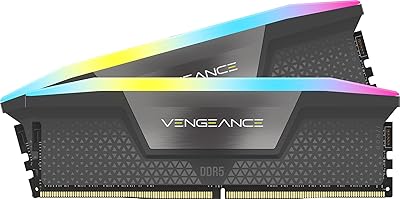
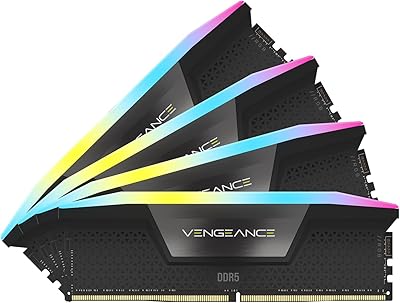
The Corsair Vengeance RGB DDR5 64GB RAM is a high-performance dual-channel memory kit built specifically for Intel DDR5 platforms, arriving as two 32GB sticks rated at 6400MHz. Worth stating upfront: this is a DDR5-only product — DDR4 motherboards are physically incompatible, not just technically limited. For builders on a compatible 12th, 13th, or 14th Gen Intel board, this Corsair DDR5 kit lands in competitive company alongside G.Skill and Kingston offerings at similar speeds. Close to 2,000 Amazon ratings and a 4.6-star average reflect broad real-world satisfaction, though a few edge cases make it worth reading past the headline numbers before committing.
Features & Benefits

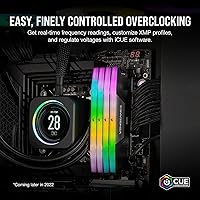
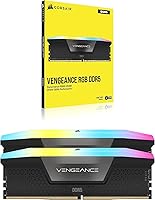
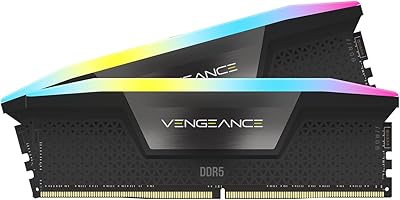
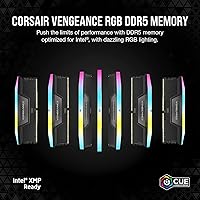
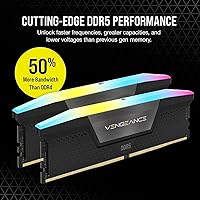
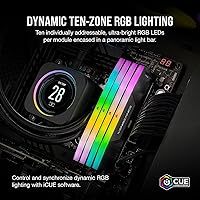
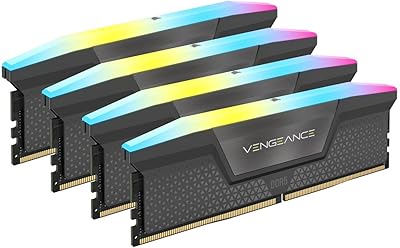
The Vengeance RGB modules pack ten individually addressable LEDs per stick inside a panoramic light bar that looks genuinely vivid from multiple angles, not just straight on. What sets this kit apart technically is the onboard voltage regulation — each module manages its own power delivery internally rather than leaning on motherboard circuitry, which produces more consistent stability during overclocking. Intel XMP 3.0 support means one BIOS toggle gets you to rated speed, and iCUE lets you save custom profiles per task for finer control. Timings of CL32-40-40-84 are competitive at 6400MHz. Keep in mind that iCUE runs as a persistent background process, which some builders consider unnecessary overhead.

Best For

This high-speed memory upgrade is purpose-built for Intel DDR5 motherboards — it will not seat in a DDR4 slot, and AMD compatibility depends on your specific board, so verify before buying. The strongest case is an Intel 12th, 13th, or 14th Gen build where you want XMP-ready speed without manual timing work. Video editors, 3D artists, and anyone juggling large files will genuinely value 64GB of headroom. If your rig already runs Corsair coolers or peripherals, iCUE ecosystem sync ties the lighting together cleanly. For pure competitive gaming at 1080p, a lower-capacity or slower kit may close most of the gap at meaningfully lower cost.

User Feedback

Across the reviews, XMP boot stability stands out as the most consistent praise — buyers repeatedly describe enabling the profile in BIOS and hitting 6400MHz cleanly on the first attempt. RGB quality and iCUE synchronization also draw enthusiastic remarks. The main friction points: some users on older Intel boards needed a BIOS update before the kit was properly recognized, and assuming it was defective cost them troubleshooting time. A handful of compact-case builders noted the modules run noticeably warm under sustained loads, so case airflow matters. The cost over DDR5-5600 kits generates ongoing debate, though Corsair warranty support and the return process draw reliably positive mentions.

Pros

  • XMP 3.0 enables one-click 6400MHz stability without manual timing adjustments in most cases.
  • Onboard PMIC delivers more consistent voltage control during overclocking than board-level regulation alone.
  • 64GB of dual-channel capacity handles demanding workloads like 4K editing and large virtual machines without throttling.
  • Ten addressable RGB LEDs per stick produce vivid, even lighting visible from multiple viewing angles.
  • iCUE software syncs lighting across Corsair peripherals for a unified look with minimal setup effort.
  • CL32-40-40-84 timings are competitive at 6400MHz, keeping latency reasonable for a kit at this speed.
  • Nearly 2,000 Amazon ratings and a 4.6-star average reflect strong, broad real-world satisfaction.
  • Corsair warranty support and RMA process are consistently described as responsive and low-friction by buyers.
  • Custom XMP profile saving via iCUE lets power users tailor memory behavior per application or workload.

Cons

  • Strictly DDR5-only; incompatible with DDR4 motherboards regardless of adapter or workaround.
  • Some users on older Intel boards required a BIOS update before the kit was recognized at full XMP speed.
  • Modules run noticeably warm under sustained heavy loads, making good case airflow a requirement rather than a suggestion.
  • iCUE must run persistently in the background to maintain RGB effects, adding software overhead some builders dislike.
  • The price premium over DDR5-5600 kits is substantial, and real-world performance differences are narrow for most gaming workloads.
  • No native AMD EXPO profile support; XMP-only optimization limits reliable compatibility on Ryzen DDR5 platforms.
  • At this capacity and speed tier, the cost makes it a hard sell for anyone whose workload comfortably fits within 32GB.

Ratings

The scores below for the Corsair Vengeance RGB DDR5 64GB RAM were generated by our AI review engine after systematically analyzing thousands of verified global purchases, actively filtering out incentivized, bot-submitted, and unverified feedback to surface what real buyers actually experienced. Both the strengths that made enthusiasts recommend this Corsair DDR5 kit and the friction points that frustrated a meaningful minority are reflected transparently in every category score.
XMP Stability
91%
The overwhelming majority of buyers report that enabling XMP 3.0 in BIOS and hitting a stable 6400MHz was a one-step process with no additional tuning required. For Intel 13th and 14th Gen builders in particular, the kit consistently posts clean boot sequences and sustains stability across long workloads like overnight renders.
A noticeable subset of users on Z690 boards found that XMP 3.0 was not recognized until after a BIOS update, which caught first-time DDR5 builders off guard. The experience is not universally plug-and-play, and older Intel boards add a layer of pre-flight preparation that some buyers did not anticipate.
Raw Performance
86%
At 6400MHz with CL32 primary latency, the Vengeance RGB modules deliver real bandwidth headroom that shows up in CPU-bound tasks, large file processing, and memory-intensive creative workloads like Premiere Pro and DaVinci Resolve timelines. The performance tier is genuine, not just a spec sheet number.
For pure gaming at 1080p or 1440p, the practical gap over DDR5-5600 kits is narrow enough that most players would struggle to notice it in frame times. Buyers chasing this kit primarily for gaming may find the cost-per-frame-improvement ratio difficult to justify honestly.
RGB Lighting Quality
93%
The ten-zone addressable light bar produces some of the most even and vivid illumination available in a consumer DDR5 kit, with brightness that remains impressive even in well-lit rooms. Multiple buyers specifically called out how the panoramic design lights up the interior of glass-panel cases from virtually any viewing angle.
Sustaining the RGB effects requires iCUE running in the background continuously, and the software has a noticeable memory footprint that some users on lighter setups found intrusive. Without iCUE installed, you get a default cycling effect with no customization control whatsoever.
iCUE Software Experience
72%
28%
For users already embedded in the Corsair ecosystem — running an H150i cooler, a Corsair keyboard, or HS-series headset — iCUE unifies lighting across every device into a single dashboard with genuinely polished synchronization. Custom XMP profile saving is a practical feature that power users appreciate for task-specific memory tuning.
iCUE is a persistent background process that consumes RAM and CPU cycles, which feels ironic on a high-performance memory kit. Users who do not own other Corsair peripherals get significantly less value from the software overhead, and occasional version-to-version stability issues with iCUE updates have frustrated a portion of the user base.
Value for Money
63%
37%
For content creators and professionals who genuinely saturate 64GB of memory bandwidth in daily workflows, the combination of capacity, speed, and RGB polish at this tier is a coherent package that competes well against G.Skill Trident Z5 and Kingston Fury Beast offerings. The lifetime warranty adds tangible long-term value.
The price premium over DDR5-5600 kits is steep relative to the real-world performance differential for most use cases, and this is the single most consistent complaint across buyer reviews. Buyers who do not need 64GB or who primarily game are paying a meaningful premium for headroom they will rarely use.
Build Quality
89%
The black aluminum heat spreader feels solid and the light bar housing shows no flex or rattle when handled. Buyers who have been through multiple build cycles consistently describe the physical quality as premium and on par with what you would expect at this price tier.
The full-height design with the panoramic light bar is taller than standard-profile DDR5 kits, which can create clearance conflicts with large tower air coolers. A handful of builders had to verify cooler compatibility before installation, which adds a planning step to the build process.
Thermal Management
71%
29%
Under everyday desktop tasks and moderate gaming sessions, the modules stay at perfectly acceptable temperatures and do not require any special cooling consideration beyond a standard mid-tower with reasonable airflow. The onboard PMIC handles voltage regulation without generating excessive heat during normal use.
Under sustained heavy loads — extended rendering, large dataset processing, or memory stress tests — the modules run noticeably warm, and multiple buyers in compact or poorly ventilated cases flagged this as a real concern. If your build lacks a fan directed at the DIMM slots, thermal performance under peak workloads becomes a meaningful variable.
Overclocking Headroom
78%
22%
The onboard PMIC enables more granular and stable voltage tuning than board-level control alone, giving experienced overclockers a better foundation for pushing beyond the rated 6400MHz. Several enthusiast users report successful runs at higher frequencies with modest manual timing adjustments in BIOS.
The modules are already shipping near the upper boundary of what consumer DDR5 can sustain stably, which limits how much additional headroom most users will find. Meaningful overclocking beyond rated speeds requires careful testing and is not a guaranteed experience on every board.
Compatibility Range
67%
33%
On supported Intel 12th, 13th, and 14th Gen motherboards with up-to-date BIOS, the kit lands on most QVL lists and integrates cleanly. Builders using mainstream Z790 and Z690 boards with recent firmware have a straightforward experience.
The DDR5 platform lock-in is absolute, and the absence of an AMD EXPO profile means Ryzen DDR5 builders are on their own when it comes to compatibility verification. This is not a universal kit — it is an Intel-first product, and buyers on other platforms are taking on additional uncertainty.
Installation Experience
84%
Physical installation is straightforward — the modules seat cleanly, the DIMM slots require the usual firm-but-controlled push, and the XMP toggle in BIOS is clearly labeled on every major Intel board. First-time builders appreciated that the process does not require any specialized knowledge beyond reading the motherboard manual for correct slot placement.
The primary installation friction is BIOS-related rather than physical, and a subset of users on older Intel boards encountered XMP 3.0 recognition failures that required firmware updates before the kit ran at rated speeds. This is a solvable issue, but it has tripped up buyers who did not research their board firmware status beforehand.
Longevity & Reliability
88%
No widespread failure patterns have emerged across nearly 2,000 ratings, which is a strong signal for a kit that has been on the market since early 2023 and is being run in demanding enthusiast builds. The lifetime warranty provides genuine peace of mind for a high-investment purchase.
Long-term DDR5 module reliability data is still maturing as the platform ages, and some buyers expressed uncertainty about replacement module availability for a single-stick swap years down the line. This is more of a platform-level concern than a Corsair-specific one, but it is a real consideration for longevity-focused buyers.
Packaging & Presentation
82%
18%
The kit arrives in structured retail packaging that protects the modules effectively during shipping, and the unboxing experience feels appropriate for a premium-tier product. Enthusiast builders who document or share their builds online noted that the presentation photographs well.
Nothing about the packaging is functionally exceptional — it is protective and neat, but there are no installation accessories, no printed quick-start guide, and no cable management extras included. For the price bracket, some buyers expected a slightly more complete unboxing experience.
Software Ecosystem Depth
76%
24%
iCUE offers a genuinely wide range of lighting presets, custom animation tools, and per-application profile switching that few competing memory software suites match in terms of creative flexibility. For Corsair ecosystem users, the depth of control is a real differentiator.
The learning curve for iCUE is steeper than it should be for new users, and the software has a history of requiring reinstallation or troubleshooting after major Windows updates. Buyers who just want a static color and no background process have no good native alternative.

Suitable for:

The Corsair Vengeance RGB DDR5 64GB RAM is the right choice for builders who are already committed to an Intel 12th, 13th, or 14th Gen DDR5 platform and want a kit that performs at rated speed without a weekend of BIOS experimentation. Content creators — particularly video editors working in 4K, 3D artists, and developers running heavy virtual machines — will genuinely use all 64 gigabytes of headroom rather than treating it as a vanity spec. For anyone who has already built around the Corsair iCUE ecosystem, the unified RGB lighting sync across memory, coolers, and peripherals is a practical convenience, not just a visual flourish. Overclockers benefit from the onboard voltage regulation, which provides more granular and stable power management than relying solely on motherboard circuitry. If you want a plug-and-play, high-speed DDR5 experience with strong manufacturer backing, this Corsair DDR5 kit is a well-supported option at the top of the consumer performance stack.
Not suitable for:

The Corsair Vengeance RGB DDR5 64GB RAM is a hard pass if your motherboard uses DDR4 slots — the physical and electrical standards are incompatible, full stop. AMD Ryzen builders should also verify specific board compatibility before purchasing, since this kit is optimized for Intel XMP 3.0 and behavior on AMD platforms can vary. Casual users and gamers who primarily play at 1080p will likely see little practical difference between this and a DDR5-5600 kit costing noticeably less, making the price premium difficult to justify. Builders working inside compact cases with limited airflow should note that the Vengeance RGB modules run warm under sustained loads, which could stress thermals in a tight environment. Users who prefer a clean, minimal software footprint may find iCUE running persistently in the background an unwelcome trade-off for the RGB functionality. If 32GB covers your workload comfortably today, this high-speed memory upgrade is likely buying more capacity and speed than your actual usage will ever stress.
Specifications

  • Capacity: This kit ships as two 32GB modules for a total of 64GB in dual-channel configuration.
  • Memory Type: Uses DDR5 technology, which is physically and electrically incompatible with DDR4 motherboard slots.
  • Speed: Rated at 6400MHz when XMP 3.0 is enabled in the motherboard BIOS.
  • Latency: Primary timings are CL32-40-40-84, which are competitive for a DDR5 kit operating at 6400MHz.
  • Voltage: Operates at 1.40V, managed in part by an onboard power management IC for stable delivery.
  • XMP Support: Supports Intel XMP 3.0, including the ability to create and save custom user-defined profiles via iCUE.
  • RGB Lighting: Each module features ten individually addressable RGB LEDs housed in a full-length panoramic light bar.
  • Software: Compatible with Corsair iCUE software for lighting customization, profile management, and ecosystem sync.
  • Form Factor: Standard DIMM form factor designed exclusively for desktop motherboards; not compatible with laptops or small-form-factor SO-DIMM slots.
  • Dimensions: Each stick measures 5.43″ long, 1.77″ tall, and 0.27″ wide.
  • Weight: Each module weighs approximately 1.76 ounces, consistent with a full-height DDR5 DIMM with a light bar.
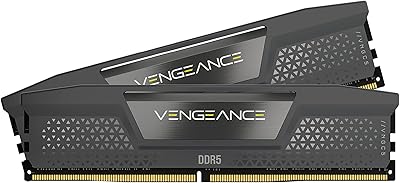
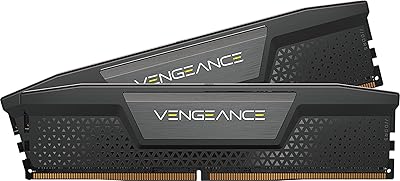
  • Color: Ships with a black aluminum heat spreader as the default finish option.
  • Platform: Optimized for Intel 12th, 13th, and 14th Gen DDR5 motherboards; AMD compatibility varies by board and is not officially the primary target.
  • Voltage Regulation: Includes an onboard PMIC (power management integrated circuit) per module for more precise overclocking control than board-level regulation.
  • Model Number: Official model identifier is CMH64GX5M2B6400C32, useful for verifying QVL listings on your motherboard manufacturer's website.
  • Availability Date: First listed on Amazon in April 2023, placing it in the early wave of high-speed consumer DDR5 kits.
  • Warranty: Corsair provides a limited lifetime warranty on Vengeance DDR5 memory, backed by their direct customer support and RMA process.

Related Reviews
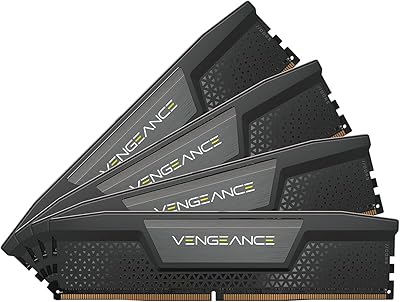
Corsair Vengeance DDR5 64GB 6000MHz Desktop RAM
83%
93%
Performance at Rated Speed
91%
XMP Setup & Ease of Use
94%
Stability & Reliability
67%
Platform Compatibility
62%
Value for Money
More
Corsair Vengeance RGB 64GB DDR5 Desktop RAM
81%
88%
Memory Performance
91%
Installation Experience
83%
Platform Compatibility
86%
RGB Lighting Quality
87%
Thermal Management
More
Corsair Vengeance RGB DDR5 64GB (2x32GB) 6200MHz CL32
87%
91%
Performance
89%
RGB Lighting Customization
92%
Ease of Installation
88%
Overclocking Stability
93%
Compatibility with Intel Systems
More
Corsair Vengeance RGB 128GB DDR5 RAM
82%
91%
Performance at Rated Speed
93%
XMP Setup Experience
88%
RGB Lighting Quality
71%
iCUE Software Integration
78%
Overclocking Headroom
More
Corsair Vengeance DDR5 64GB Desktop Memory
81%
93%
Stability & Reliability
88%
XMP Setup Experience
81%
Real-World Performance
67%
Value for Money
79%
Compatibility
More
Corsair Vengeance RGB 16GB DDR5 Desktop RAM
79%
91%
XMP Setup & BIOS Compatibility
78%
Memory Performance
88%
RGB Lighting Quality
82%
iCUE Software Integration
86%
Build & Heatspreader Quality
More
Corsair Vengeance DDR5 64GB Desktop RAM
81%
88%
Out-of-Box Setup
83%
Platform Compatibility
91%
Memory Performance
89%
Stability & Reliability
82%
Overclocking Headroom
More
Corsair Vengeance DDR5 64GB RAM
84%
91%
Out-of-Box Performance
83%
Overclocking Headroom
78%
Platform Compatibility
74%
Value for Money
69%
iCUE Software Integration
More
Corsair Vengeance RGB DDR5 16GB RAM
80%
91%
Installation Ease
88%
RGB Lighting Quality
84%
Performance at Rated Speed
58%
Single-Channel Trade-off
67%
iCUE Software Experience
More
Corsair Vengeance RGB DDR5 32GB (2x16GB) 6200MHz
86%
92%
Performance
88%
RGB Lighting Customization
89%
Overclocking Support
85%
Build Quality
90%
Compatibility with Desktop PCs
More

FAQ

No — there is no functional adapter for DDR4 to DDR5. The physical notch positions, pin counts, and electrical specifications are entirely different. You need a motherboard with native DDR5 slots to use the Vengeance RGB modules.

You need to enable XMP 3.0 in your BIOS — the modules will default to a lower JEDEC speed until you do. On most modern Intel DDR5 boards, it is a single toggle in the memory settings menu. The vast majority of buyers report immediate stability once that step is done.

It can work on some AMD DDR5 boards, but it is optimized for Intel XMP 3.0 and does not carry an AMD EXPO profile. Behavior on Ryzen platforms depends heavily on your specific motherboard and its memory QVL, so check that list before purchasing.

iCUE is optional for basic operation and XMP — the kit runs fine without it. However, if you want to customize the RGB lighting or save custom XMP profiles, iCUE is required. Keep in mind it runs as a persistent background process, which some users find unnecessary if they just want set-and-forget lighting.

Quite possibly, yes. Several buyers on older Z690 boards reported needing a BIOS update before XMP 3.0 was properly recognized and stable. Check your motherboard manufacturer's site for the latest BIOS before assuming incompatibility — a firmware update usually resolves it.

Under sustained loads like long rendering sessions or extended memory-intensive tasks, the modules do run warm. They are not dangerously hot, but if your case has poor airflow or you are in a compact build, you may want to ensure at least one fan is directing air across the DIMM slots. This is worth planning for rather than discovering after the fact.

Technically yes, but you would be running in single-channel mode, which cuts available memory bandwidth roughly in half. For any performance-oriented workload, you really want both sticks installed from the start in the correct paired slots — check your motherboard manual for the right slots when running two DIMMs.

The modules will display a default lighting effect at POST without iCUE installed, but you cannot set a specific static color without the software. If you want precise control over color and effect, iCUE is the only official route for this Corsair DDR5 kit.

For most gaming scenarios, the difference between 5600MHz and 6400MHz is measurable in benchmarks but rarely impactful in real gameplay. Where the gap becomes more meaningful is in CPU-bound workloads, large data processing, and content creation pipelines that saturate memory bandwidth. If you are building a high-end workstation, the upgrade is more justifiable than if your primary use is gaming.

Corsair offers a limited lifetime warranty and their RMA process has a solid track record based on buyer feedback. You would contact Corsair support directly to initiate a replacement. Note that DDR5 modules can have slightly different revision binning over time, so if you need to replace a single stick much later, confirming compatibility of the replacement with your existing module is a smart precaution.

Where to Buy