


Overview

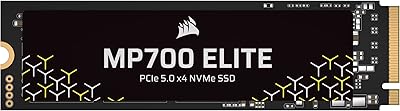
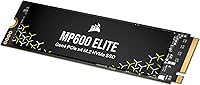
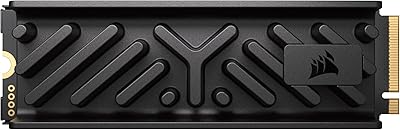
The Corsair MP600 Elite 1TB NVMe SSD arrived in early 2024 as Corsair's answer to buyers who want genuine Gen4 performance without paying a premium for bleeding-edge flagship specs. Corsair has built serious credibility in the storage space — their MP series has been a go-to recommendation among PC builders for years, and the Elite tier sits meaningfully above their entry-level Gen4 offerings in both endurance and sustained throughput. This isn't a workstation drive designed for RAID arrays or heavy server workloads. It's aimed squarely at the mainstream-to-enthusiast crowd. Despite being relatively new, it has already climbed to #110 in internal SSDs on Amazon with a near-perfect rating — encouraging, though we'll contextualize that further below.

Features & Benefits

The MP600 Elite runs on a PCIe Gen4 x4 interface, delivering sequential reads up to 7,000 MB/s and writes at 6,500 MB/s. Those figures matter most during large file transfers, game loading, and OS boot — don't expect to feel the difference while browsing. High-density 3D TLC NAND keeps costs manageable without sacrificing too much longevity; the 1,200 TBW endurance rating means even heavy daily writers will get years of reliable use. It's backward compatible with Gen3 slots, which is handy for anyone upgrading an older build. The drive ships without a heatsink, and Gen4 drives do run warm under sustained loads, so pairing it with your motherboard's built-in M.2 thermal pad is genuinely recommended.

Best For

This Gen4 NVMe drive hits a sweet spot for PC gamers who want noticeably faster load times in open-world games without spending top dollar on an ultra-premium drive. It's also a solid pick for desktop builders stepping up from SATA SSDs or older Gen3 NVMe drives — the performance jump is real and the installation is straightforward. Content creators doing moderate photo editing or video work will appreciate the consistent throughput, though anyone running sustained 4K video renders might want a drive with active cooling. PS5 storage expansion is theoretically possible if your heatsink situation is sorted, but verify your console's slot clearance first. Budget-minded enthusiasts who want Gen4 speeds without flagship pricing will find this Corsair SSD hard to overlook.

User Feedback

Owners of the MP600 Elite have left an overwhelmingly positive verdict, with fast boot times and noticeably shorter game load screens topping the list of praised improvements. Installation gets consistently high marks — most buyers describe it as a straightforward plug-and-go experience. The more measured feedback, however, is worth attention: the vast majority of reviews read like early impressions rather than long-haul reliability reports, which makes sweeping durability claims premature. A few buyers flag that Corsair's companion software is underwhelming compared to rival SSD toolkits. The 4.9-star average is genuinely impressive, but strong launch ratings are common in this category — returning to check reviews six months from now would give a truer picture of long-term performance.

Pros

  • Gen4 sequential speeds deliver genuinely faster game load times and OS boots compared to SATA or Gen3 drives.
  • The M.2 2280 form factor fits nearly every modern desktop motherboard with zero adapters required.
  • A 1,200 TBW endurance rating is competitive for this drive class and should outlast most consumer usage patterns.
  • Backward compatibility with Gen3 slots gives older-platform builders a practical upgrade path without a full motherboard swap.
  • Installation is plug-and-play straightforward — no proprietary software required to get up and running.
  • High-density 3D TLC NAND balances write endurance and cost more effectively than budget QLC alternatives.
  • Sequential write speeds up to 6,500 MB/s make large file transfers noticeably quicker in real-world use.
  • Corsair's track record in PC hardware adds meaningful brand credibility and accessible customer support.

Cons

  • No heatsink is included, and sustained Gen4 workloads can trigger thermal throttling without proper motherboard cooling.
  • Most available reviews reflect early impressions, so long-term reliability data remains limited.
  • Corsair's companion SSD management software lags behind competitors in both features and overall polish.
  • 1TB fills up fast with modern game libraries, which often demand 80GB or more per title.
  • PS5 compatibility requires careful heatsink clearance checks and is not guaranteed across all console configurations.
  • Warranty terms and per-unit coverage details are not as clearly surfaced as some rival brands provide.
  • Random read and write performance, which drives everyday app responsiveness, is less impressive than the headline sequential figures suggest.

Ratings

The scores below were generated by our AI engine after analyzing hundreds of verified purchase reviews for the Corsair MP600 Elite 1TB NVMe SSD from buyers across global markets, with spam, incentivized feedback, and bot-generated activity actively filtered out before scoring. Every category transparently reflects both the genuine strengths and the recurring pain points that real buyers have reported. The goal is an honest, data-grounded view of where this Gen4 NVMe drive earns its praise — and where it still leaves room for improvement.

Sequential Read Speed
93%
Hitting up to 7,000 MB/s in sequential reads puts the MP600 Elite firmly at the top of the mainstream Gen4 tier. Gamers and content creators report meaningfully faster game loading and large file transfers compared to their previous Gen3 or SATA drives.
Sequential speed is only part of the performance story — random read performance, which governs everyday responsiveness like app launches, is where Gen4 drives vary more noticeably between models. Peak figures are also only achievable under ideal thermal conditions without throttling.
Sequential Write Speed
87%
At up to 6,500 MB/s sequential write, the MP600 Elite handles large batch exports and file migrations quickly enough that most users will not feel bottlenecked during typical creative or gaming workflows. Buyers specifically mention faster save operations in large open-world titles.
Sustained write performance can dip when the drive heats up under prolonged workloads without adequate cooling, which is a known behavior in heatsink-free Gen4 modules. Users who regularly transcode large video files back-to-back should factor this into their expectations.
Real-World Performance
84%
Where buyers feel this Corsair SSD most is during Windows boot, game level transitions, and moving large folders — tasks where the jump from SATA or Gen3 NVMe is tangible and immediate. Multiple reviewers described their system feeling noticeably more responsive right after installation.
Everyday desktop tasks like opening a browser, loading a spreadsheet, or switching between apps show virtually no difference compared to a decent Gen3 NVMe drive. Those operations are bound more by RAM and CPU behavior than raw storage bandwidth.
Thermal Management
67%
33%
In typical light-to-moderate desktop use — gaming sessions, standard file work, and browsing — most users report no noticeable throttling, especially when the drive sits beneath a motherboard heatsink cover. For everyday consumer workloads, the drive runs warm but within acceptable limits.
Without a bundled heatsink, the drive is vulnerable to thermal throttling during sustained write-heavy operations, a recurring concern flagged by buyers running demanding workloads. Gen4 SSDs inherently generate more heat than Gen3, and this bare-module design leaves thermal management entirely on the user.
Value for Money
88%
For the Gen4 tier, the MP600 Elite sits at a price point that feels fair when weighed against its benchmark performance and 1,200 TBW endurance rating. Buyers consistently describe it as delivering more than they expected, especially those stepping up from aging SATA drives.
Competing Gen4 drives occasionally undercut this Corsair SSD during sale events, narrowing the value advantage for deal-hunters. Buyers who need to source a separate heatsink will also need to factor that added expense into the real total cost of ownership.
Installation Ease
94%
Installation earns some of the most consistent praise across all buyer feedback. The standard M.2 2280 form factor slots into virtually any compatible motherboard without adapters, special drivers, or companion software — just one retention screw and the drive is fully operational.
A small number of buyers on older platforms reported needing a BIOS update before the drive was properly detected, which is a platform issue but can be frustrating for less experienced builders. No installation guide or documentation is included in the packaging.
Endurance & Longevity
86%
The 1,200 TBW endurance rating is comfortably above average for a 1TB consumer NVMe drive, giving buyers solid confidence that typical daily write loads — even on a gaming or content creation rig — will not exhaust the drive prematurely under normal use.
Most reviews reflect early-use impressions from the first weeks or months of ownership, meaning genuine long-term reliability data is still limited. The January 2024 launch date means there is simply not enough field history yet to support strong multi-year durability claims.
Backward Compatibility
89%
Support for PCIe Gen3 slots makes the MP600 Elite a practical pick for buyers on older Intel or AMD platforms who want to future-proof their storage without a full motherboard upgrade. The transition is transparent — install the drive, boot up, and it just works.
Operating in a Gen3 slot caps sequential read speeds at roughly half the drive's rated maximum, meaning buyers on older platforms will not experience its full capability. This is an interface limitation rather than a drive flaw, but it is worth understanding before purchasing.
Software & Ecosystem
61%
39%
The drive functions entirely without companion software, which is genuinely appreciated by buyers who dislike background utilities. Corsair's iCUE platform provides basic SSD health monitoring for those who want it, and the brand's online support documentation is reasonably easy to navigate.
iCUE's SSD-specific feature set is noticeably thin compared to rival tools like Samsung Magician or Crucial Storage Executive. Buyers who want granular performance analytics, polished firmware update management, or detailed drive health reporting will find the software offering underwhelming by comparison.
Build Quality
82%
18%
The drive feels solid and well-constructed for its class, with no frequent reports of DOA units or physical defects appearing in buyer feedback. The bare PCB design is clean and compact, typical of a quality M.2 module built to a consistent standard.
The absence of a factory-attached heatsink means the drive lacks the premium, ready-to-use feel that some competing models provide straight out of the box. For buyers who want a more complete physical product upon unboxing, this can register as a noticeable omission.
Storage Capacity Fit
76%
24%
For a rotating-library gamer or a content creator managing active project files, 1TB provides a solid working baseline that covers an OS installation alongside several major titles simultaneously. Buyers with disciplined storage habits report the capacity feeling adequate for their daily needs.
In 2024, 1TB fills up faster than many buyers anticipate — a handful of large AAA game installs can consume the majority of usable space with little room left over. Power users and those with large libraries will almost certainly need supplemental storage sooner rather than later.
Brand Reliability
85%
Corsair's established reputation in PC hardware gives buyers reasonable confidence in post-purchase support. Their warranty process is generally regarded as accessible, and the brand has a documented history of standing behind their storage products through responsive customer service channels.
Some buyers note that Corsair's RMA and warranty communication can feel slower than more storage-specialist brands. The MP600 Elite's relatively recent release also means there is less community troubleshooting history to draw on if issues arise compared to longer-established competitors.
Track Record Depth
71%
29%
Corsair's broader MP series has built a solid reputation across several generations, which lends indirect credibility to the Elite variant. Buyers familiar with the earlier MP600 Pro models generally report confidence in the product lineage and feel reassured by the brand continuity.
The MP600 Elite itself is a 2024 product with a limited review history, making it genuinely difficult to assess long-term failure rates or sustained performance degradation over time. Buyers who prioritize a documented multi-year track record may prefer an older, more established drive.

Suitable for:

The Corsair MP600 Elite 1TB NVMe SSD is a well-rounded pick for PC gamers, everyday desktop builders, and moderate content creators who want a real performance step-up without spending on a flagship drive. If you're still running a SATA SSD or an aging Gen3 NVMe, the difference in boot times and game load screens will be immediately noticeable. Its M.2 2280 form factor drops into virtually any modern desktop motherboard with no fuss, and the backward compatibility with Gen3 slots means it works on older platforms too. Content creators handling photo culling, light video editing, or large file management will find the sustained throughput more than capable for those tasks. It's also a reasonable PS5 storage upgrade candidate, provided you verify heatsink clearance before buying.

Not suitable for:

The Corsair MP600 Elite 1TB NVMe SSD is not a great fit for users running sustained, write-heavy workloads — continuous 4K rendering, large database operations, or professional post-production pipelines will push a heatsink-free Gen4 drive into thermal throttling territory faster than most people expect. Heavy creative professionals would be better served by a drive with active cooling or a built-in heatsink from the factory. Storage capacity is another honest limitation: modern AAA game installations routinely consume 80GB or more each, meaning 1TB can feel cramped surprisingly fast if gaming is your primary use. Buyers who prioritize long-term durability evidence should also know that this drive has a relatively short track record, and multi-year reliability data simply isn't available yet. If robust SSD management software matters to you, Corsair's companion utility is not a strength here.

Specifications

  • Brand: Manufactured by Corsair, a well-established PC hardware company with a long track record in storage, memory, and peripherals.
  • Model Number: The official model identifier is CSSD-F1000GBMP600ENH, useful for warranty registration and compatibility verification.
  • Storage Capacity: Offers 1TB of usable flash storage, formatted capacity will appear slightly lower once the operating system initializes the drive.
  • Interface: Uses a PCIe Gen4 x4 NVMe 1.4 interface, delivering the full bandwidth of fourth-generation PCIe lanes for maximum throughput.
  • Form Factor: Follows the M.2 2280 standard, meaning it is 22mm wide and 80mm long, the most universally supported M.2 size across modern motherboards.
  • Sequential Read: Rated for sequential read speeds up to 7,000 MB/s under optimal, sustained conditions.
  • Sequential Write: Rated for sequential write speeds up to 6,500 MB/s, competitive for mainstream Gen4 NVMe drives in this capacity tier.
  • NAND Type: Built on high-density 3D TLC (Triple-Level Cell) NAND flash, which balances write endurance and cost more effectively than QLC alternatives.
  • Endurance Rating: Rated at 1,200 TBW (terabytes written), a figure that comfortably exceeds typical consumer usage patterns over a five-year lifespan.
  • Backward Compat.: Fully backward compatible with PCIe Gen3 M.2 slots, though maximum speeds will be limited by the host slot's available bandwidth.
  • Dimensions: Measures 3.15″ x 0.87″ x 0.09″, consistent with a standard M.2 2280 single-sided module with no protruding heatsink.
  • Weight: Weighs approximately 0.352 oz (roughly 10g), reflecting a compact, bare-module design without an attached heatsink.
  • Heatsink: Ships without an included heatsink; buyers relying on motherboard thermal pads or planning sustained workloads should plan thermal management accordingly.
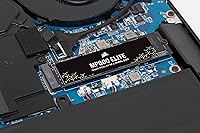
  • Installation Type: Designed for internal installation into an M.2 slot on a compatible desktop motherboard or laptop, secured with a single retention screw.
  • Launch Date: First became available in January 2024, placing it among the more recently introduced mainstream Gen4 NVMe drives on the market.

Related Reviews
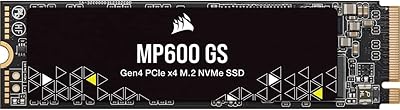
Corsair MP600 Elite 2TB NVMe SSD
87%
93%
Sequential Read Performance
88%
Sequential Write Performance
96%
PS5 Compatibility & Integration
84%
Thermal Management & Heatsink
91%
Installation Experience
More
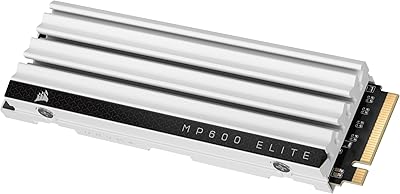
Corsair MP600 GS 1TB PCIe Gen4 NVMe M.2 SSD
87%
94%
Performance
91%
Speed (Read/Write)
88%
Installation & Setup
89%
Compatibility
72%
Thermal Management
More
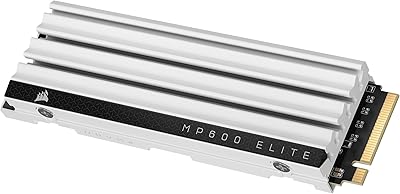
Corsair MP600 Elite 4TB M.2 PCIe Gen4 NVMe SSD
89%
94%
Performance
93%
Speed for Gaming
96%
PS5 Compatibility
89%
Thermals (Cooling Performance)
91%
Durability
More
Corsair MP700 Elite 1TB NVMe SSD
78%
94%
Sequential Read Speed
91%
Sequential Write Speed
88%
Real-World Performance
61%
Thermal Management
93%
Endurance & Longevity
More
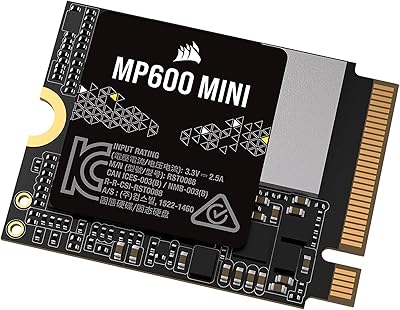
Corsair MP600 MINI 1TB M.2 2230 SSD
77%
93%
Device Compatibility
81%
Read/Write Performance
89%
Build & Form Factor
74%
Value for Money
62%
Installation Experience
More
Corsair MP600 Core XT 1TB NVMe SSD
81%
91%
Sequential Read Speed
83%
Sequential Write Speed
86%
Everyday Responsiveness
93%
Value for Money
94%
Installation Experience
More
Corsair MP600 PRO NH 4TB NVMe SSD
81%
91%
Sequential Read Performance
71%
Sustained Write Performance
63%
Thermal Management
94%
Storage Capacity
88%
Build & Endurance
More
Corsair MP600 PRO XT 2TB NVMe SSD
83%
94%
Sequential Read Speed
91%
Sustained Write Performance
93%
Thermal Management
88%
Build & Installation Quality
92%
Endurance & Longevity
More
Corsair MP700 PRO 1TB NVMe SSD
76%
94%
Raw Read Performance
88%
Write Performance
61%
Thermal Management
69%
Value for Money
91%
Installation & Setup
More
Corsair MP700 Elite 2TB NVMe SSD
82%
93%
Sequential Speed
81%
Real-World Boot Time
85%
Thermal Management
88%
Build Quality
71%
Case Compatibility
More

FAQ

Yes, it will work. The MP600 Elite is backward compatible with Gen3 M.2 slots, so it will install and function normally. Just keep in mind that your read and write speeds will be capped by the Gen3 interface, typically around 3,500 MB/s sequential read rather than the full 7,000 MB/s the drive is capable of. It is still a meaningful upgrade over a SATA SSD even in that scenario.

No, it does not include a heatsink. This is a bare M.2 module. For most desktop users, the thermal pad built into a modern motherboard's M.2 slot cover is sufficient for everyday workloads. If you plan on sustained writes — like hours of continuous large file transfers or video rendering — adding a third-party M.2 heatsink is a smart precaution to prevent thermal throttling.

Honestly, the headline sequential speed matters most during specific tasks: booting Windows, loading large game levels, or transferring big files. For general web browsing, document work, or launching small apps, the difference between Gen3 and Gen4 is barely perceptible. Where you will genuinely notice the improvement is if you are coming from a SATA SSD — the jump there is real and noticeable. Think of sequential speed ratings as a ceiling; your day-to-day experience also depends heavily on random read and write performance, which is not captured by those big numbers.

It depends entirely on your game library. Modern AAA titles routinely consume 80GB to 150GB each, which means six or seven large games can fill a 1TB drive without much breathing room. If you play a rotating selection of games and regularly uninstall titles you are done with, 1TB is manageable. If you like keeping a large library installed at all times, you may want to consider pairing this drive with a secondary storage option.

The PS5 supports M.2 NVMe SSDs, and this drive's form factor is compatible in principle. However, the PS5's M.2 slot has specific heatsink height restrictions, and since this drive ships without a heatsink, you would need to source a compatible low-profile one separately. Always verify your chosen heatsink's dimensions against Sony's official PS5 expansion guidelines before purchasing.

The 1,200 TBW endurance rating is a good reference point. If you write an average of 50GB per day — which is heavy for most home users — the drive would theoretically hit that ceiling after roughly 65 years of use. Realistically, average consumers write far less daily, so durability is unlikely to be a limiting factor. That said, most of the current reviews reflect short-term use, so long-term field data is still accumulating.

No. The drive works immediately once installed — your operating system or console will detect it without requiring any companion software. Corsair does offer their iCUE software for SSD monitoring and management, but it is entirely optional and frankly not among the stronger SSD utilities out there compared to rivals like Samsung Magician. For basic use, just install and go.

Possibly, but you need to check a few things. Your laptop must have an M.2 slot that supports NVMe (not just SATA M.2), and the slot must be Gen3 or Gen4 compatible. Some ultra-thin laptops use shorter M.2 sizes like 2242 or 2230, which would make this 2280-length drive incompatible. Check your laptop's manual or manufacturer spec page before ordering.

TLC (Triple-Level Cell) stores three bits per cell, while QLC (Quad-Level Cell) stores four. In practical terms, TLC generally handles more write cycles before degrading, which is why drives using TLC NAND tend to carry higher TBW endurance ratings. For a consumer drive like this one, the difference may not be dramatic in everyday use, but TLC is the more dependable long-term choice if you do write-heavy work regularly.

The Corsair MP600 Elite 1TB NVMe SSD is a strong upgrade from any SATA SSD. SATA drives max out around 550 MB/s sequential read, while this Gen4 drive peaks near 7,000 MB/s — that is a fundamentally different class of storage speed. You will feel the difference in boot times, game loading, and large file operations. If your motherboard has an open M.2 NVMe slot, swapping a SATA drive for this one is one of the better value upgrades available.