Overview

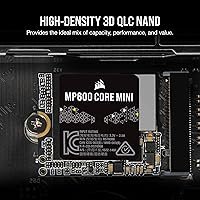
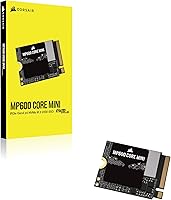
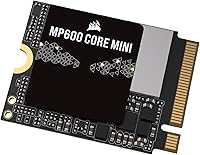
The Corsair MP600 Core Mini 1TB NVMe SSD is built for one specific job: giving handheld gaming PCs and compact ultrabooks a meaningful storage upgrade without the physical compromises that come with a standard M.2 2280 drive. The M.2 2230 form factor is everything here — it determines whether a drive can even fit inside a Steam Deck or Surface Pro, and most SSDs simply don't qualify. Corsair has a solid track record in consumer storage, and this model sits in their mid-range lineup, priced below premium TLC-based alternatives. That cost difference comes with a real tradeoff: QLC NAND trades long-term write endurance for higher density, which is a reasonable bargain for most gaming use cases.
Features & Benefits

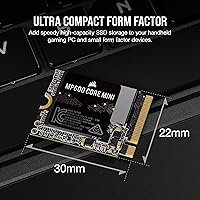
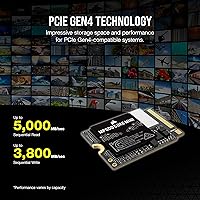
The PCIe Gen4 x4 interface pushes sequential reads up to 5,000 MB/s and writes up to 3,800 MB/s — numbers that hold up well against other 2230-class drives. Compact dimensions of 0.87 x 1.18 x 0.12 inches and a weight under a tenth of an ounce mean this 2230 NVMe upgrade physically fits where most drives simply cannot. The NVMe 1.4 protocol keeps latency low, translating to snappier OS response and faster game load times compared to older SATA alternatives. Worth flagging honestly: sustained write performance can throttle under prolonged heavy workloads — that is a known characteristic of QLC NAND, not a manufacturing defect. For typical gaming and everyday computing, most users will never encounter it. The drive is also backward compatible with Gen3 slots, widening device compatibility further.

Best For

This compact Gen4 drive makes the most sense for a specific group of buyers. Steam Deck owners bumping against storage limits will find it one of the few drives that physically fits and delivers genuine Gen4 throughput. ASUS ROG Ally users face the same constraint — the 2230 slot is non-negotiable — and the MP600 Core Mini clears that bar without issue. Surface Pro owners replacing a sluggish OEM drive without changing form factors will also find it a practical fit. Where it falls short is demanding professional workloads: sustained video encoding or bulk file transfers will eventually expose the QLC NAND's write endurance limits. For gaming libraries, OS drives, and general daily computing, it is a well-matched, practical choice.

User Feedback

A 4.7 out of 5 rating across nearly 1,000 reviews is a strong signal for a drive targeting such a narrow use case. Most praise focuses on how cleanly it drops into the Steam Deck and the genuine speed improvement over sluggish stock storage — real, if not transformative. The honest recurring criticism involves sustained write throttling, which shows up in feedback from users pushing the drive beyond typical gaming loads. A practical warning worth heeding: upgrading a Steam Deck requires either cloning the original drive or performing a clean SteamOS reinstall, and that process catches some buyers off guard. Overall, the feedback reflects a drive that does exactly what it promises for the right audience, without overpromising.

Pros

  • Genuine Gen4 speeds in an M.2 2230 package — rare and valuable for handheld gaming devices.
  • 1TB capacity fits comfortably in the Steam Deck and ASUS ROG Ally without any physical modifications.
  • Sequential read speeds up to 5,000 MB/s are competitive even among full-size 2280 mid-range drives.
  • Backward compatibility with PCIe Gen3 slots adds flexibility if you ever repurpose the drive.
  • At under a tenth of an ounce, the MP600 Core Mini adds virtually no weight to portable devices.
  • Nearly 1,000 buyer ratings averaging 4.7 out of 5 reflects consistent real-world satisfaction.
  • Noticeably faster game load times compared to the eMMC storage found in base Steam Deck models.
  • Priced below TLC-based 2230 competitors, making Gen4 storage accessible without overpaying.
  • Ranked in the top 250 internal SSDs on Amazon, indicating strong adoption and broad buyer confidence.

Cons

  • QLC NAND can throttle sustained write speeds under prolonged heavy workloads — a real concern for power users.
  • Lower long-term write endurance compared to TLC-based alternatives at a similar price point.
  • Steam Deck installation requires cloning or a full SteamOS reinstall, which catches some buyers off guard.
  • No included heatsink or thermal pad, which may matter in thermally constrained devices during extended sessions.
  • TLC competitors like the WD SN740 offer better sustained write performance for users who can stretch the budget.
  • QLC NAND performance advantages shrink significantly once the drive cache is saturated on large file transfers.
  • Not widely available through as many retail channels as some competing 2230 drives, limiting purchase options.
  • Buyers upgrading a Surface Pro may need to verify their exact model supports the 2230 slot before purchasing.

Ratings

The scores below are generated by our AI engine after analyzing verified buyer reviews for the Corsair MP600 Core Mini 1TB NVMe SSD from global sources, with spam, incentivized, and bot-flagged submissions actively filtered out. Each category reflects what real owners consistently reported across hundreds of purchases — both the genuine strengths and the friction points that shaped their experience. Nothing here has been softened; the numbers and commentary reflect the full picture.
Read Speed Performance
91%
Buyers upgrading from base Steam Deck eMMC storage consistently note how much snappier game loads and OS navigation feel with this compact Gen4 drive installed. Sequential read performance near the 5,000 MB/s ceiling holds up well under typical gaming workloads, and users switching from SATA-based 2230 drives report an immediate, tangible improvement.
Real-world read speeds in mixed workloads rarely hit the rated ceiling, and users running benchmarks under thermal stress in the ROG Ally note some variance from advertised numbers. This is common across the category, but worth calibrating expectations around.
Write Speed Performance
72%
28%
For game installations, OS updates, and everyday file operations, write speeds are more than adequate — users rarely encounter a bottleneck during normal use. The rated 3,800 MB/s sequential write is competitive for a 2230 QLC drive, and lighter workloads stay within that range consistently.
Sustained sequential writes — such as bulk game library transfers or large backup operations — reveal QLC NAND's throttling behavior once the SLC cache fills. Several technically inclined buyers flagged noticeable speed drops during prolonged writes, which is a structural limitation of the NAND type rather than a defect in this specific drive.
Form Factor Fit
94%
The M.2 2230 dimensions are exactly what Steam Deck, ASUS ROG Ally, and compatible Surface Pro models require, and buyers across all three platforms confirm the physical fit is clean and problem-free. At under a tenth of an ounce, it adds no perceptible weight to portable devices, which owners of thin ultrabooks particularly appreciate.
The 2230 form factor is a strength only for the right device — buyers who accidentally order this for a standard laptop or desktop without verifying their slot type end up needing an adapter bracket or returning it outright. The product page is clear, but the niche nature of 2230 still generates occasional misfits among less experienced buyers.
Value for Money
83%
Compared to TLC-based 2230 alternatives like the WD SN740, the MP600 Core Mini comes in at a lower price point while still delivering Gen4 bandwidth — a tradeoff most gaming-focused buyers consider worthwhile. For Steam Deck owners on a budget who just want more space and faster loads, the price-to-performance ratio lands in a genuinely sweet spot.
Power users who push drives hard and care about long-term write endurance will find the TLC premium worth paying, making the value argument weaker for that group. The gap between QLC and TLC endurance ratings is real enough that buyers planning to use this as a workhorse drive for years may feel the cost savings less justified over time.
Installation Experience
67%
33%
The drive itself installs cleanly — it slots in without force, and buyers with basic tech confidence find the hardware side of the swap straightforward in both the Steam Deck and ROG Ally. No tools beyond a small Phillips screwdriver are required, and the physical connection is reliable from the first install.
The software side of the process is where buyers run into friction: Steam Deck upgrades require either a full SteamOS reinstall via USB recovery image or a successful drive clone beforehand, and neither option is truly plug-and-play. A meaningful portion of negative reviews trace back to this process rather than the drive itself, which suggests buyers need more preparation than the packaging implies.
Build Reliability
88%
Across nearly 1,000 reviews, reports of dead-on-arrival or early-failure units are rare, pointing to solid manufacturing consistency from Corsair. Buyers who have had the drive installed for six months or more report no degradation in performance or reliability issues, which builds confidence in day-to-day durability.
QLC NAND has a lower total bytes written (TBW) rating than TLC equivalents, which is a theoretical long-term concern even if it rarely surfaces in typical consumer use timelines. A handful of buyers reported issues after firmware-related interactions, though these cases appear isolated rather than systematic.
Thermal Management
71%
29%
Under typical gaming sessions in the Steam Deck or ROG Ally, the drive maintains acceptable temperatures without active cooling or a heatsink, which is the norm for 2230 drives given the tight physical clearances inside these devices. Most buyers report no throttling during standard gaming use.
Extended sessions combining sustained writes with gaming loads in thermally constrained enclosures can push temperatures to a point where the drive reduces performance to protect itself. This 2230 NVMe upgrade ships without any thermal pad or dissipation layer, which is standard for the form factor but leaves some buyers wishing Corsair had included something.
Device Compatibility
86%
Gen3 backward compatibility means this drive is not locked to the handful of Gen4 handhelds — buyers repurposing it in an older ultrabook or secondary device can still use it at reduced but perfectly usable speeds. Corsair's official compatibility list covers the three most popular 2230 upgrade targets, giving buyers reasonable confidence before purchasing.
Not all Surface Pro generations use the 2230 slot, and buyers who did not verify their exact model revision before ordering occasionally find the drive does not match their device. Compatibility confirmation requires a bit of homework that casual buyers sometimes skip.
Packaging & Unboxing
74%
26%
The drive arrives in secure, minimal packaging that keeps it protected in transit without unnecessary bulk. Buyers report no damage on arrival in the vast majority of cases, and the no-frills approach aligns with the utilitarian nature of an internal component upgrade.
There are no accessories, mounting screws, or installation guides included in the box, which is typical for bare M.2 drives but leaves first-time upgraders without any hand-holding. A basic quick-start card pointing to online installation resources would meaningfully reduce the friction some buyers experience.
Sequential Read Consistency
79%
21%
In back-to-back benchmark runs simulating real gaming load patterns, the MP600 Core Mini holds its sequential read performance reasonably well without wild variance. Buyers using it as a primary OS and game drive in the Steam Deck confirm that repeated load cycles do not produce noticeably degrading performance over weeks of use.
Some technically thorough reviewers note that read consistency under thermal pressure is slightly less stable than competing TLC drives benchmarked in identical conditions. The gap is small in practice but visible in sustained benchmark sequences that stress the drive beyond typical gaming patterns.
Endurance & Longevity
63%
37%
For typical gaming use — installing titles, booting SteamOS, loading levels — the drive's write endurance is more than sufficient for the expected lifespan of a handheld gaming device. Buyers treating it as a gaming-first storage drive rather than a general-purpose workhorse will likely never exhaust its rated TBW under normal conditions.
QLC NAND's inherently lower program-erase cycle tolerance is a factual limitation that TLC-based competitors do not carry to the same degree. Buyers planning to use this compact Gen4 drive for intensive content creation, regular large-file transfers, or as a NAS-adjacent device should factor this tradeoff carefully before committing.
Brand Trust & Support
82%
18%
Corsair's established presence in the enthusiast hardware market gives buyers a baseline of confidence that a lesser-known brand would not carry, and their warranty support infrastructure is generally regarded as responsive. The brand name also makes finding community troubleshooting resources easier, which matters during Steam Deck or ROG Ally installs.
Some buyers note that Corsair's warranty process for storage products requires more documentation than competitors, and support response times for SSD-specific cases can lag behind their peripherals division. This is a minor concern for most users but worth noting for those who prioritize seamless RMA experiences.
Random Read & Write (4K)
76%
24%
Random read performance at small queue depths — the pattern most relevant to OS boot times and game level loading — is strong enough to deliver a perceptibly snappier experience compared to SATA or eMMC alternatives. Buyers consistently describe faster menu navigation and shorter initial load screens after installing the drive.
Random write IOPS under mixed queue depth workloads is where QLC NAND shows its weakest profile compared to TLC competition, particularly once the SLC write cache is depleted. This rarely affects gaming, but buyers running Windows with heavy background processes on a Surface Pro may see occasional micro-stutters under combined load.

Suitable for:

The Corsair MP600 Core Mini 1TB NVMe SSD was designed for a specific kind of buyer, and if you fall into that group, it is a genuinely strong pick. Steam Deck owners running out of room on base storage will find this one of the few 1TB drives that physically fits the 2230 slot and delivers real Gen4 throughput — not just a marketing label. ASUS ROG Ally users face the same physical constraint, and this compact Gen4 drive clears that bar without compromise. Surface Pro owners looking to replace a slow OEM SSD without changing form factors will also find it a clean, compatible upgrade. It also suits budget-conscious buyers who want Gen4 speeds in a 2230 package and are comfortable with the performance tradeoffs that come with QLC NAND at this price point.
Not suitable for:

If your device uses a standard M.2 2280 slot, the Corsair MP600 Core Mini 1TB NVMe SSD is simply not the right tool — you can get more endurance and better sustained write performance from TLC-based 2280 drives at a similar or lower price. Content creators doing sustained video encoding, bulk RAW file transfers, or any workload that writes large amounts of data continuously will likely run into QLC throttling under pressure. This 2230 NVMe upgrade is also not a fit for users who prioritize long-term write endurance above all else; QLC NAND inherently has lower program-erase cycle tolerance than TLC alternatives like the WD SN740. Buyers expecting a plug-and-play Steam Deck upgrade with zero friction should also be aware that the process involves either cloning or a clean SteamOS reinstall, which requires some patience and preparation.
Specifications

  • Brand: Manufactured by Corsair, a well-established name in consumer and enthusiast PC hardware.
  • Model Number: The official model identifier is CSSD-F1000GBMP600CMN.
  • Form Factor: Uses the M.2 2230 format, measuring 0.87 x 1.18 x 0.12 inches — significantly shorter than the standard 2280 drives found in most desktop and laptop builds.
  • Capacity: Offers 1TB of usable flash storage for games, applications, and operating system files.
  • Interface: Connects via PCIe Gen4 x4 using the NVMe 1.4 protocol, delivering lower latency and higher bandwidth than SATA-based alternatives.
  • Sequential Read: Rated for sequential read speeds of up to 5,000 MB/s under optimal conditions.
  • Sequential Write: Rated for sequential write speeds of up to 3,800 MB/s, with the caveat that sustained writes may throttle on large workloads due to QLC NAND characteristics.
  • NAND Type: Uses high-density 3D QLC (Quad-Level Cell) NAND flash, which prioritizes storage density and cost efficiency over maximum write endurance.
  • Gen3 Compatibility: Backward compatible with PCIe Gen3 x4 slots, allowing use in devices that do not support Gen4.
  • Weight: Weighs just 0.099 oz (approximately 2.8 grams), adding negligible mass to any portable device.
  • Color: Available in black; no exposed heatspreader or RGB lighting — a clean, unadorned form suited for compact enclosures.
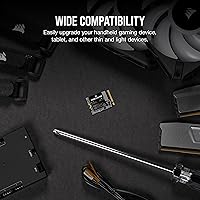
  • Compatible Devices: Officially compatible with Valve Steam Deck, ASUS ROG Ally, and select Microsoft Surface Pro models that use the M.2 2230 slot.
  • Installation Type: Internal drive requiring physical installation into an M.2 2230-compatible slot; not a plug-and-play external solution.
  • Release Date: First made available in October 2023, positioning it as a relatively recent addition to the 2230 NVMe market.
  • User Rating: Holds a 4.7 out of 5 aggregate rating based on nearly 1,000 verified buyer reviews on Amazon.
  • Sales Rank: Ranked #210 in the Internal Solid State Drives category on Amazon, indicating strong and consistent sales volume for a niche form factor.

Related Reviews
Corsair MP600 MINI 1TB M.2 2230 SSD
77%
93%
Device Compatibility
81%
Read/Write Performance
89%
Build & Form Factor
74%
Value for Money
62%
Installation Experience
More
Corsair MP600 Core XT 1TB NVMe SSD
81%
91%
Sequential Read Speed
83%
Sequential Write Speed
86%
Everyday Responsiveness
93%
Value for Money
94%
Installation Experience
More
Corsair MP600 CORE MINI 2TB NVMe SSD
82%
91%
Read Performance
74%
Write Performance
97%
Form Factor Fit
89%
Installation Ease
68%
Thermal Behavior
More
Corsair MP600 Elite 1TB NVMe SSD
82%
93%
Sequential Read Speed
87%
Sequential Write Speed
84%
Real-World Performance
67%
Thermal Management
88%
Value for Money
More
Corsair MP600 GS 1TB PCIe Gen4 NVMe M.2 SSD
87%
94%
Performance
91%
Speed (Read/Write)
88%
Installation & Setup
89%
Compatibility
72%
Thermal Management
More
Corsair MP600 PRO XT 2TB NVMe SSD
83%
94%
Sequential Read Speed
91%
Sustained Write Performance
93%
Thermal Management
88%
Build & Installation Quality
92%
Endurance & Longevity
More
Corsair MP600 PRO NH 4TB NVMe SSD
81%
91%
Sequential Read Performance
71%
Sustained Write Performance
63%
Thermal Management
94%
Storage Capacity
88%
Build & Endurance
More
Corsair MP600 Elite 2TB NVMe SSD
87%
93%
Sequential Read Performance
88%
Sequential Write Performance
96%
PS5 Compatibility & Integration
84%
Thermal Management & Heatsink
91%
Installation Experience
More
Corsair MP700 PRO 1TB NVMe SSD
76%
94%
Raw Read Performance
88%
Write Performance
61%
Thermal Management
69%
Value for Money
91%
Installation & Setup
More
KOOSMILE KT-M9 i9-12900HK 32GB Mini PC
76%
88%
CPU Performance
86%
Multitasking Capability
91%
Built-in Status Display
69%
Thermal Management
83%
Display & Connectivity
More

FAQ

Yes, it is physically designed for the M.2 2230 slot that the Steam Deck uses. No cutting, adapters, or modifications are needed — it drops right into the existing slot. Just make sure you have the right screwdriver and are comfortable opening the back panel.

In most cases, yes. The safest and most common approach is to perform a clean SteamOS reinstall using Valve's recovery image on a USB drive. Some users successfully clone their existing drive beforehand using tools like Clonezilla, but this adds complexity. If you are not comfortable with either process, it is worth researching the steps before you crack the case open.

Yes. The ROG Ally uses an M.2 2230 slot, and this compact Gen4 drive fits and operates correctly in that slot. Performance should align with the drive's rated Gen4 specs since the ROG Ally supports PCIe Gen4.

For typical gaming — loading levels, installing titles, booting the OS — QLC NAND performs well and you are unlikely to notice any difference from a TLC drive in daily use. The limitation shows up during sustained, large sequential writes, like copying a 50GB library at once or continuous recording. If you are just gaming and occasionally installing titles, QLC is a practical and cost-effective choice.

The improvement is real but measured. Compared to the eMMC storage in base Steam Deck models, game load times and boot speeds are noticeably quicker — often shaving several seconds off load screens. Do not expect a night-and-day transformation in gameplay itself; the gains are in load times and responsiveness, not frame rates.

Technically it can work if your motherboard or laptop has a retention screw position that supports 2230, but most standard M.2 slots are designed for 2280 drives and lack proper anchor points for a shorter drive. You would need a 2230-to-2280 bracket or adapter. For a regular laptop or desktop, a native 2280 drive is a more practical and usually cheaper choice.

It works with both. The MP600 Core Mini is backward compatible with PCIe Gen3 x4 slots, though speeds will be capped at Gen3 levels in that case — still significantly faster than SATA. If your device supports Gen4, you will get the full performance the drive is rated for.

Corsair does not typically bundle cloning software or physical accessories with this drive. For warranty details, Corsair generally covers their SSDs for a limited period — check the official Corsair website for the exact terms applicable to your region, as these can vary.

The WD SN740 uses TLC NAND, which gives it better sustained write endurance and slightly more consistent performance under heavy workloads. The MP600 Core Mini is generally priced lower and still delivers strong Gen4 read and write speeds for gaming. If budget is tight and your primary use is gaming rather than large file transfers, this compact Gen4 drive is a reasonable alternative.

Thermal throttling is possible in any compact device with limited airflow, though it is not a widely reported issue with this drive in typical gaming scenarios. The drive has no built-in heatsink, which is standard for 2230 form factor drives given the tight clearances inside handheld devices. Extended sessions with sustained read and write activity are the most likely scenario for heat buildup, but for normal gaming use, most buyers report no thermal issues.