Comica EJoy D10 PRO Wireless Dynamic Microphone
Comica EJoy D10 PRO Wireless Dynamic Microphone — image 1
Comica EJoy D10 PRO Wireless Dynamic Microphone — image 2
Comica EJoy D10 PRO Wireless Dynamic Microphone — image 3

Comica EJoy D10 PRO Wireless Dynamic Microphone — image 4
Comica EJoy D10 PRO Wireless Dynamic Microphone — image 5

Comica EJoy D10 PRO Wireless Dynamic Microphone — image 6
Comica EJoy D10 PRO Wireless Dynamic Microphone — image 7
Comica EJoy D10 PRO Wireless Dynamic Microphone — image 8
Comica EJoy D10 PRO Wireless Dynamic Microphone — image 9
76%
24%

Overview

The Comica EJoy D10 PRO Wireless Dynamic Microphone arrived in early 2025 as one of the few mid-range mics to offer genuine wireless freedom alongside traditional wired connectivity. Most competitors at this price point lean on condenser capsules, but Comica went a different direction with a large-diaphragm dynamic design — a choice that pays off in noisier environments where condensers tend to pick up everything in the room. It ships ready to go with a desktop stand and USB receiver dongle, though you'll need to budget separately for a boom arm. For streamers and podcasters frustrated by cable clutter, this wireless dynamic mic makes a compelling case right out of the box.

Features & Benefits

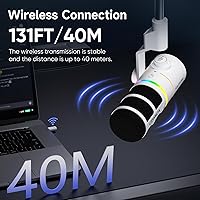
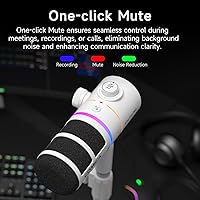
The EJoy D10 PRO covers a lot of ground technically. Its wireless USB receiver handles up to 40 meters of range in open space — expect something closer to 10-15 meters once walls and furniture enter the picture, which is still plenty for most home setups. The XLR and USB-C dual outputs make it easy to route audio through a professional interface or connect directly to a phone, depending on the situation. The 48kHz/24-bit recording ceiling and Comica's CalMix processing do a decent job cleaning up voice tracks. Add real-time headphone monitoring, four-stage gain control, and a one-click mute, and you have a feature set that most single-purpose USB mics simply don't offer.

Best For

Comica's streaming microphone is a particularly strong fit for anyone building a wireless desktop recording setup who doesn't want to manage a tangle of cables on camera. The dynamic capsule design gives it a natural edge in shared spaces — a living room, a spare bedroom, anywhere acoustic treatment is minimal. It also spans platforms well, working with Windows, macOS, PS4/PS5, and USB-C phones, which matters for creators who record across more than one environment. That said, if you're chasing an ultra-low-noise mic for music or voice-over work, the 72dB signal-to-noise ratio means dedicated studio mics at a similar price may serve you better.

User Feedback

Buyers tend to praise this wireless dynamic mic for easy plug-and-play setup and stable wireless connectivity in typical home environments. The 45-hour battery claim holds up reasonably well in real use, with most users reporting two or three full streaming sessions before needing a charge. On the critical side, the 72dB SNR does come up — listeners with trained ears notice a slightly elevated noise floor compared to pricier alternatives like the Shure MV7. The 2.51-pound body feels solid but can sit a bit top-heavy on the included stand. A handful of reviewers also noted that RGB lighting is fun for stream aesthetics but harder to justify if you prefer a clean, minimal look.

Pros

  • True wireless operation via USB receiver eliminates cable clutter from streaming desks.
  • Dynamic capsule handles noisy rooms better than most condenser mics at this price.
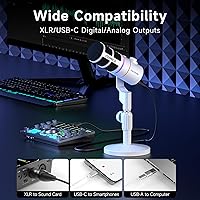
  • Dual XLR and USB-C outputs make it compatible with professional interfaces and smartphones alike.
  • 48kHz/24-bit recording delivers more than enough resolution for streaming and podcast production.
  • Real-time 3.5mm headphone monitoring lets you catch audio issues before they hit the recording.
  • One-click mute button is a practical lifesaver during live streams and video calls.
  • Up to 45 hours of wireless battery life holds up well across multiple recording sessions.
  • Three switchable EQ presets give quick tonal adjustments without needing post-production software.
  • Works across Windows, macOS, PS4, PS5, and USB-C phones with minimal driver setup.
  • Setup is genuinely plug-and-play — the USB receiver pairs quickly with no software required.

Cons

  • A 72dB SNR is modest; trained listeners may notice a noise floor on quiet recordings.
  • Wireless range drops significantly indoors — walls and furniture reduce the practical usable distance.
  • Boom arm is sold separately, which feels like an oversight given the desktop-focused positioning.
  • At 2.51 pounds, the mic sits heavy on the included stand and can feel unbalanced.
  • RGB lighting cannot be fully disabled, which may bother users who prefer a minimal setup.
  • No onboard USB audio mixing software or companion app for deeper EQ or monitoring control.
  • Wired competitors at a similar price point can offer a cleaner noise floor for studio use.
  • Battery is built-in and non-removable, so long-term battery degradation is a real consideration.

Ratings

The scores below for the Comica EJoy D10 PRO Wireless Dynamic Microphone were generated by our AI system after analyzing verified global buyer reviews, actively filtering out incentivized, duplicate, and bot-generated submissions to surface what real users actually experience. Both consistent strengths and recurring frustrations are reflected transparently in every category, so you can make a genuinely informed decision rather than relying on curated highlights.

Wireless Performance
78%
22%
Most buyers report a stable, dropout-free connection within typical home streaming distances of 5 to 15 meters, and the plug-and-play USB dongle pairs instantly without any driver headaches on Windows or macOS. Gamers and streamers consistently praise the freedom of moving around without yanking a cable off the desk mid-session.
The advertised 40-meter range is an open-space figure that rarely translates indoors — walls and furniture cut the reliable range considerably. A handful of users in larger rooms or interference-heavy environments noted occasional brief dropouts that required repositioning the receiver.
Audio Quality
74%
26%
At 48kHz/24-bit, the EJoy D10 PRO captures voice with enough clarity and warmth to sound noticeably more professional than a headset mic, and the dynamic capsule handles moderately noisy rooms better than many condenser alternatives at this price. Comica's CalMix processing does a reasonable job thinning out keyboard clicks and background hum during live streams.
The 72dB signal-to-noise ratio is the main limiting factor — with gain pushed higher, a faint noise floor becomes audible, particularly on sensitive headphones. Listeners accustomed to higher-end wired mics like the Shure MV7 will notice the difference in raw clarity and low-end definition.
Ease of Setup
91%
Nearly every reviewer comments on how quickly the mic becomes operational — plug in the dongle, switch to wireless mode, and the device is recognized immediately as an audio source on PC, Mac, and PlayStation consoles without any software installation. This simplicity is especially appreciated by users coming from complex audio interface setups.
A small number of users encountered the mic being assigned as a secondary audio device on Windows, requiring a brief detour into sound settings to set it as the default. First-time XLR users occasionally found the wired mode switching less intuitive than the wireless experience.
Battery Life
82%
18%
Real-world battery endurance consistently aligns with the advertised 45-hour claim for moderate-use streamers — most buyers report getting two to four full multi-hour sessions before needing a charge. The ability to charge via USB-C while recording means battery anxiety is largely a non-issue during long broadcasts.
Because the battery is built-in and non-removable, long-term degradation over months of heavy use is a genuine concern that a few longer-term owners have already flagged. There is no battery percentage indicator on the unit itself, so tracking remaining charge requires inference from the charging light behavior.
Build Quality
71%
29%
The microphone has a solid, substantial feel in hand — the 2.51-pound body gives a reassuring sense of durability, and the physical controls including the gain dial and mute button have a satisfying tactile response that cheap plastic mics lack. Several reviewers noted the unit survived accidental desk drops without damage.
The weight that signals durability also makes the included desktop stand feel somewhat underpowered — the mic sits top-heavy and can tilt if the stand is bumped. A few buyers noted that the USB-C port feels marginally loose after repeated cable insertions, which is worth monitoring over time.
Value for Money
76%
24%
For a single purchase that covers wireless streaming, wired XLR recording, real-time monitoring, and cross-platform compatibility, the EJoy D10 PRO packs a genuinely broad feature set that would require multiple separate purchases to replicate. Buyers upgrading from entry-level headset mics tend to feel the value proposition is strong.
Buyers comparing directly against wired-only competitors at a similar price point sometimes find the audio quality trade-off for wireless freedom not fully justified, especially if they never plan to move away from their desk. The separately sold boom arm also adds to the true cost of a fully configured setup.
Noise Rejection
79%
21%
The cardioid dynamic capsule is noticeably better at ignoring off-axis noise than the condenser mics common at this price — keyboard clatter, room echo, and HVAC hum are all attenuated meaningfully, which makes a real difference for streamers recording in untreated spaces. Multiple users confirmed it held up well in open-plan home environments.
In very loud environments, such as gaming rooms with mechanical keyboards or households with pets and children, the mic does still pick up intrusive sounds that a directional condenser with a shock mount might handle more gracefully. The CalMix algorithm helps, but it is not a substitute for acoustic treatment in challenging rooms.
RGB Lighting
66%
34%
For streamers who want a visually dynamic desk setup on camera, the six RGB effect modes add genuine personality and the Audio Dynamic mode that pulses in sync with voice is a crowd-pleaser in live stream aesthetics. The color effects are smooth and the transitions between modes are quick via a single button press.
The inability to fully disable the RGB is a real friction point for users who want a professional, distraction-free look during video calls or corporate streaming contexts. Several buyers working in office environments noted the lighting felt out of place and wished there was a plain off setting.
EQ & Sound Customization
63%
37%
Having three onboard EQ presets — bass, nature, and bright — gives non-technical users a quick way to adjust the mic's tonal character without opening any software, which is a practical convenience during live sessions where there is no time for post-processing tweaks.
The differences between the three presets are subtle enough that casual users may struggle to hear a clear distinction without headphones. Buyers who want meaningful parametric or graphic EQ control will find this feature thin, and there is no companion software or app to extend the customization options.
Gain Control
81%
19%
Having four discrete hardware gain levels on the physical dial means adjusting input sensitivity takes seconds, without alt-tabbing out of a game or stream to open software. Users recording in varying environments — quiet home offices versus louder shared spaces — found the range of the four levels covered most realistic recording scenarios.
Four fixed steps rather than a continuous dial means you cannot fine-tune the gain precisely between levels, which occasionally results in the input being slightly too hot or too quiet for a specific room setup. Advanced users accustomed to full-range gain knobs on audio interfaces may find this limiting.
Compatibility
88%
Working across Windows, macOS, PS4, PS5, and USB-C mobile devices without driver installation covers the realistic device range of most content creators and gamers, and the XLR output extends compatibility further to any professional audio interface or mixer. This breadth is one of the EJoy D10 PRO's most consistently praised practical strengths.
Lightning-port iPhones are not supported, which is still relevant for a portion of the iOS user base. Bluetooth connectivity is absent entirely, so users expecting to pair with smart TVs or Bluetooth speakers will be disappointed.
Real-Time Monitoring
83%
The 3.5mm headphone output for real-time monitoring works reliably and with negligible latency, allowing streamers and podcasters to catch gain issues, plosives, or background noise in the moment rather than discovering problems in post-production. Buyers new to hardware monitoring consistently called this feature a revelation compared to software-based playback monitoring.
There is no separate volume control for the headphone output on the unit itself — monitoring level is tied to the overall gain setting, which some users found inconvenient when they wanted loud headphone monitoring with a conservative mic input level.
Portability
58%
42%
The included desktop stand and compact receiver dongle mean the basic setup can be relocated from room to room without much hassle, and the wireless mode eliminates the need to manage cable routing in a new position. A carrying bag is not included but the package dimensions are manageable.
At 2.51 pounds the microphone is not something most users would describe as portable in any meaningful travel sense — it is a desk-bound device with minor relocatability rather than a genuinely mobile recording solution. Field recording or on-the-go use cases are not well served by this form factor.

Suitable for:

The Comica EJoy D10 PRO Wireless Dynamic Microphone is a strong pick for streamers, gamers, and casual podcasters who prioritize flexibility and a clean desk setup over absolute audio perfection. If you're the kind of creator who streams from a living room or shared space, the dynamic capsule is a practical advantage — it naturally rejects ambient noise without requiring heavy acoustic treatment. The wireless operation is genuinely useful for anyone who moves around during a session, wants to record from across the room, or simply hates managing cables on camera. Content creators who switch between a PC, a PS4/PS5, and a USB-C smartphone will appreciate not needing a different mic for each device. For anyone stepping up from a cheap headset mic and wanting hardware gain control, real-time monitoring, and a dedicated mute button, this wireless dynamic mic is a meaningful upgrade at a reasonable mid-range price.

Not suitable for:

The Comica EJoy D10 PRO Wireless Dynamic Microphone is not the right tool for buyers who need the cleanest possible noise floor for professional voice-over work, music recording, or broadcast-quality podcasting. A 72dB signal-to-noise ratio is workable for streaming and casual recording, but experienced ears — including podcast listeners on good headphones — may notice a slightly elevated noise floor compared to higher-end wired alternatives like the Shure MV7. The 40-meter wireless range is measured in open space, so buyers in densely built homes or offices with thick walls should expect considerably shorter real-world performance. At 2.51 pounds, the EJoy D10 PRO is on the heavier side for a desktop mic, and without a boom arm in the box, the included stand may feel limiting if you prefer a more adjustable positioning setup. Buyers chasing studio-grade transparency or a minimal aesthetic without RGB lighting may find better value looking elsewhere.

Specifications

  • Capsule Type: The microphone uses a large-diaphragm dynamic capsule with a cardioid (unidirectional) polar pattern for focused voice capture.
  • Sample Rate: Audio is recorded at 48kHz and 24-bit depth, providing lossless quality suitable for streaming and post-production workflows.
  • Signal-to-Noise Ratio: The signal-to-noise ratio is rated at 72dB, which is adequate for streaming and podcasting but modest compared to premium studio microphones.
  • Wireless Range: The dedicated USB receiver supports a wireless transmission range of up to 40 meters in open, unobstructed environments.
  • Battery Life: The built-in lithium polymer battery is rated for up to 45 hours of continuous use in wireless mode, and supports charging during operation.
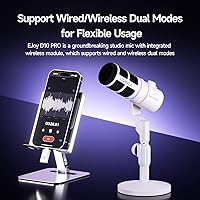
  • Connectivity: The microphone offers three connection options: wireless via USB receiver dongle, digital via USB-C, and analog via XLR output.
  • Headphone Output: A 3.5mm headphone jack on the microphone body enables zero-latency real-time monitoring during recording or live streaming sessions.
  • Gain Control: A hardware dial provides four discrete gain levels, allowing manual input adjustment without relying on software settings.
  • EQ Modes: Three onboard EQ presets — bass, nature, and bright — can be switched directly on the unit to adjust tonal character on the fly.
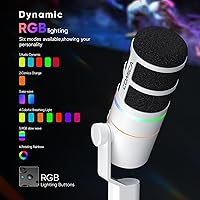
  • RGB Lighting: Six RGB lighting effects are available, including Audio Dynamic, Comica Orange, Sea Wave, Colorful Breathing, RGB Slow Wave, and Rotating Rainbow modes.
  • Compatible Platforms: The microphone is compatible with Windows, macOS, iOS devices via USB-C, and Sony PlayStation 4 and PlayStation 5 consoles.
  • Weight: The microphone unit weighs 2.51 pounds, which places it on the heavier end of desktop microphones in its category.
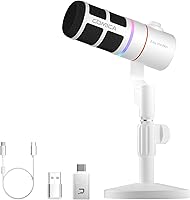
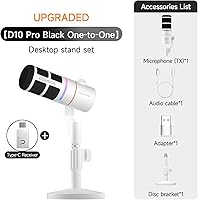
  • Package Contents: The box includes the microphone transmitter unit, USB receiver, a charging and audio output cable, an adapter, a desktop mic stand, and a user manual.
  • Mute Function: A dedicated one-click mute button provides instant audio cutoff, which is useful for live streams, calls, and on-the-fly silencing.
  • Noise Processing: Comica's proprietary CalMix audio algorithm is built into the signal chain to help identify and filter out non-vocal background noise.
  • Power Source: The microphone operates on a built-in rechargeable lithium polymer battery; it does not require external power packs or disposable batteries.
  • Form Factor: The microphone ships with a desktop stand as the default configuration; a boom arm mount is available separately as an optional accessory.
  • Package Dimensions: The retail package measures 10.67 x 8.94 x 3.35 inches, making it straightforward to store or transport in standard carry bags.

Related Reviews
COMICA Ejoy Uni PRO(A)
80%
93%
Ease of Setup
78%
Audio Clarity
74%
Noise Cancellation
71%
Wireless Performance
63%
Build Quality
More
Comica VM30
Comica VM30
79%
83%
Audio Clarity
78%
Wireless Performance
91%
Build Quality
63%
Battery Life
88%
Connectivity & Compatibility
More
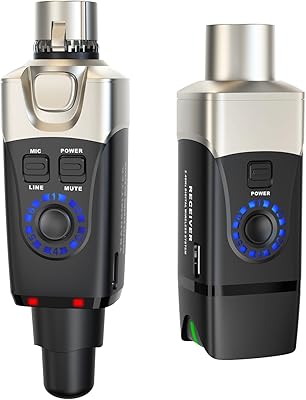
Xvive U3
Xvive U3
76%
93%
Ease of Setup
78%
Audio Quality
89%
Latency Performance
71%
Wireless Range
63%
Battery Life
More
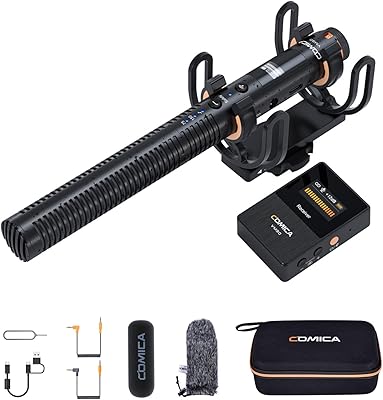
Comica CVM-V30 PRO Shotgun Microphone
80%
83%
Audio Clarity
78%
Noise Rejection
86%
Build Quality
81%
Shock Mount Performance
74%
Low-Cut Filter
More
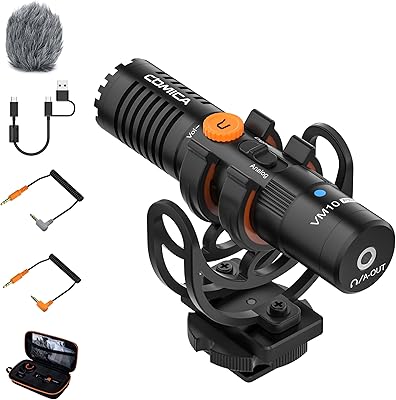
Comica VM10 Pro
Comica VM10 Pro
87%
93%
Build Quality
96%
Portability
88%
Digital Audio Performance
91%
Gain Control Functionality
84%
Real-Time Monitoring
More
Azden WMS-PRO Wireless Microphone System
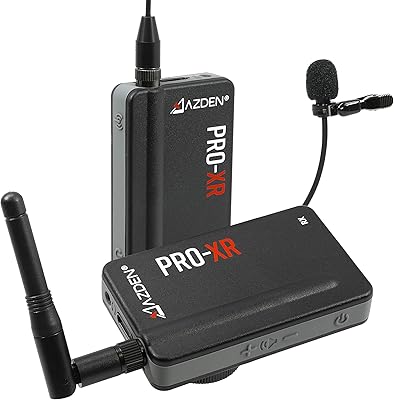
70%
83%
Value for Money
67%
Audio Quality
88%
Ease of Setup
62%
Signal Reliability
57%
Build Quality
More
Comica CVM-WM100 PLUS
83%
92%
Signal Stability
86%
Audio Quality & Clarity
94%
Post-Production Flexibility
61%
Portability & Form Factor
68%
Power Management & Battery Life
More
Comica CVM-WM200A Wireless Lavalier Microphone System
77%
74%
Audio Clarity
61%
Wireless Range
88%
Ease of Setup
83%
Build Quality
53%
Battery Performance
More
Neewer CM28 Pro Wireless Lavalier Microphone System
79%
88%
Audio Clarity
91%
Standalone Recording
67%
Wireless Range & Stability
86%
Battery Life
83%
Charging Case Design
More
Azden PRO-XR Wireless Microphone System
81%
88%
Signal Reliability
83%
Audio Quality
91%
Battery Life
86%
Interference Resistance
74%
Operating Range
More

FAQ

Yes, you just plug the USB receiver dongle into one of the PS5's USB ports and the mic connects automatically — no drivers or software setup needed. The same applies to PS4. Keep in mind the wireless range will be shorter in a typical living room setup than the spec sheet suggests, but for console gaming distances it works without issues.

It works with smartphones that have a USB-C port, so modern Android phones and recent iPhone models with USB-C are compatible. Older Lightning iPhones are not directly supported. You would connect it using the included cable in wired USB-C mode rather than wirelessly, since the wireless receiver requires a USB-A port.

The EJoy D10 PRO uses a dedicated USB dongle that you plug into your computer or console. The mic and receiver come pre-paired from the factory, so in most cases it shows up as an audio device immediately with no driver installation required on Windows or macOS.

In an open space with no obstacles, yes — but in a real home environment with walls, furniture, and other wireless devices, expect the reliable range to drop to somewhere between 10 and 20 meters. For typical streaming or podcasting setups where the mic stays on or near your desk, range is rarely a concern.

Yes, the Comica EJoy D10 PRO Wireless Dynamic Microphone supports pass-through charging, so you can plug it in via USB-C and keep recording or streaming without interruption. This is handy for marathon sessions where you do not want to track battery levels.

You toggle between the three presets — bass, nature, and bright — with a short press of the designated button on the mic body. The differences are subtle rather than dramatic, more like a gentle tonal tilt than a full EQ sweep, but the bright setting in particular can add some presence clarity if your voice sounds a bit flat in recordings.

This is worth being honest about: the 72dB signal-to-noise ratio means that in very quiet recordings with the gain pushed up, a low-level hiss can be audible, especially on headphones. For streaming, gaming commentary, and podcasting it is generally fine, but if you are doing professional voice-over or audiobook narration, a dedicated studio mic with a higher SNR would serve you better.

The XLR output on this mic is analog, so it connects to any standard XLR input on an audio interface or mixer just like a conventional dynamic mic would. This is actually a nice option for users who already own an interface and want tighter control over the signal chain in wired mode.

You can cycle through the lighting effects, but based on the design there is no true power-off mode for the RGB — it stays active when the mic is on. If you prefer a clean, minimal aesthetic during professional video calls or recordings, the lighting can be distracting and there is currently no way to disable it entirely.

The included stand is functional and keeps the mic upright on a flat surface, but at 2.51 pounds the microphone is fairly heavy for the stand's footprint, and it can feel a bit top-heavy. If you plan to position the mic at different angles or want it off your desk surface, investing in a compatible boom arm is worth considering and will give you much more flexibility.