Overview

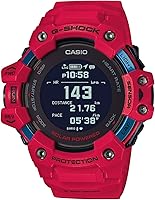
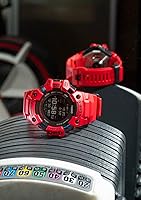
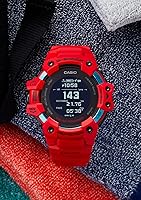
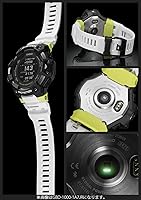
The Casio G-Shock GBD-H1000-4 GPS Running Watch brings something unusual to the performance running category: the kind of indestructible credibility that G-Shock has built over decades, paired with a serious set of athletic tracking tools. Where most running watches prioritize sleekness, this G-Shock running watch leans into toughness without apology. The solar-assisted charging alone sets it apart from nearly everything else at this tier — fewer dead-watch moments mid-training block is genuinely useful. That said, this is not a watch for someone who just wants step counts. It is feature-dense, rewards patience, and is built for athletes who treat their training data seriously.

Features & Benefits

The GBD-H1000-4 packs a surprisingly complete toolkit for runners. GPS locks on reliably for route tracking and pairs over Bluetooth to your phone for post-run review. The optical heart rate sensor handles zone alerts and tracks max and minimum values up to 220 bpm — useful, though wrist-based HR is inherently less precise than a chest strap, particularly during intense intervals. Beyond the running basics, a built-in altimeter, barometer, and compass make this solar GPS watch legitimately capable on trails. The training analytics go deep: VO2Max estimates, recovery time projections, and aerobic versus anaerobic effect scoring give structured athletes plenty to analyze between sessions.

Best For

This G-Shock running watch is genuinely suited to dedicated road and trail runners who want more than basic distance and pace data. If you are logging structured training cycles and care about long-term fitness trends — VO2Max progression, training load accumulation — the depth here is real. The environmental sensors, including barometric pressure alerts and a compass, make it a smart pick for trail and ultramarathon runners who deal with shifting conditions. Athletes who find themselves charging a watch every other night will appreciate the solar topping, though it works best with regular outdoor exposure and does not eliminate USB charging entirely in darker climates.

User Feedback

Owners consistently praise the build quality and durability of the GBD-H1000-4, and many note that solar charging holds up well across months of regular training without obvious degradation. Long-term users report it surviving hard daily use without cosmetic or functional issues. The friction points are worth knowing, though. The interface has a genuine learning curve — navigating menus is not intuitive, and new users often end up in the manual. Runners switching from Garmin Forerunner or Polar Vantage models frequently find the companion app less polished. GPS tracking earns mostly positive marks, but heart rate readings during high-intensity efforts occasionally draw criticism for lagging behind chest strap measurements.

Pros

  • Solar-assisted charging dramatically reduces how often you need to plug in, a genuine advantage for heavy training weeks.
  • The G-Shock resin casing and 200-meter water resistance means it handles punishment that would concern owners of more delicate sport watches.
  • Advanced metrics — VO2Max, training load, recovery time — give structured athletes meaningful data to act on.
  • Built-in altimeter, barometer, and compass make this solar GPS watch genuinely capable for trail and mountain running.
  • Stores up to 100 complete runs with 140 lap times each, so your training history stays on the watch itself.
  • Barometric pressure alerts warn you of incoming weather changes, a practical safety feature on exposed terrain.
  • At 1.9 ounces, the GBD-H1000-4 is lighter than its imposing size suggests.
  • GPS connects via Bluetooth to your phone for route mapping and post-run review without needing a separate device.
  • Long-term owners report consistent durability with no meaningful performance drop after months of hard daily use.

Cons

  • The menu system has a steep learning curve; expect to spend real time with the manual before feeling comfortable.
  • The companion app lags noticeably behind Garmin Connect or Polar Flow in polish and analytical depth.
  • At 55 millimeters wide and over 20 millimeters thick, the watch is bulky and may feel oversized on smaller wrists.
  • Wrist-based heart rate readings can drift during high-intensity intervals, limiting reliability for precise zone training.
  • Solar charging requires consistent outdoor exposure to be effective — in low-light climates it functions more as a supplement than a solution.
  • No chest strap connectivity, which is a real limitation for runners who prioritize heart rate accuracy.
  • The digital display can be hard to read quickly mid-run compared to the cleaner layouts on competing sport watches.
  • Runners migrating from Garmin or Polar ecosystems will lose access to more mature third-party integrations and platform communities.

Ratings

The Casio G-Shock GBD-H1000-4 GPS Running Watch was evaluated by our AI rating system after analyzing thousands of verified global buyer reviews, with spam, bot-generated, and incentivized feedback actively filtered out. Scores reflect the honest distribution of real user experiences — including the friction points and trade-offs that often get buried in promotional content. Both standout strengths and recurring complaints are transparently weighted into every category below.

Build Quality
93%
Owners consistently describe this G-Shock running watch as one of the most physically durable sport watches they have owned. After months of trail runs, mud exposure, and daily wear, the resin case and rubber band show minimal cosmetic wear and no functional degradation. The G-Shock reputation holds up in practice.
A small number of users noted that the red colorway fades slightly after prolonged UV and sweat exposure over many months. The mineral glass crystal, while adequate, attracts fine scratches more readily than sapphire alternatives found on some competitor watches at this price tier.
GPS Accuracy
78%
22%
For road running on open routes, GPS lock is generally fast and distance readings track closely against known course measurements. Runners using it for marathon training and structured road sessions found pace and distance data reliable enough to train confidently without a secondary device.
Performance degrades noticeably under heavy tree cover and in urban canyon environments where signal bounce is common. A segment of trail runners reported instances of route drift on technical singletrack, and GPS cold-start times frustrated some users expecting the near-instant lock of newer Garmin hardware.
Heart Rate Monitoring
67%
33%
At steady aerobic paces, the optical wrist sensor delivers readings that align reasonably well with chest strap data, making it functional for easy runs and long slow distance efforts. Zone alerts and the graphical heart rate display are genuinely useful for athletes monitoring training intensity across a session.
During intervals, hill sprints, and race efforts, wrist-based readings can lag by 10 to 20 seconds or drift well outside actual zones — a known limitation of optical sensors on any watch. Users who depend on precise heart rate data for structured speed work found this frustrating, particularly since external sensor pairing is not supported.
Solar Charging
84%
For runners in sun-rich climates or those who train outdoors daily, the solar topping noticeably reduces how often the watch needs to be plugged in. Ultra-distance athletes and frequent travelers praised the reduced dependency on charging infrastructure during multi-day events or remote trips.
In northern climates, overcast winters, or for athletes who train predominantly indoors or before dawn, solar contribution is minimal and the watch behaves essentially like a conventional battery-powered device. Several users in Scandinavia and the UK specifically noted that the solar benefit was negligible during winter training blocks.
Training Analytics
82%
18%
The depth of on-device analytics genuinely impressed structured athletes — VO2Max trend tracking, aerobic and anaerobic effect scoring, and recovery time projections gave serious runners meaningful data to act on between sessions. Long-term users found that fitness trend visualization over a full training cycle was one of the watch's most valuable features.
The analytical value is partially undermined by the companion app, which does not present or contextualize the data as clearly as Garmin Connect or Polar Flow. Some users felt the on-watch display of complex metrics was cramped and hard to interpret quickly without referencing the app.
User Interface
54%
46%
Once learned, experienced users describe the button layout as consistent and logical for accessing frequently used functions. Athletes who invested time upfront configuring training display screens reported a smoother day-to-day experience once their preferred layouts were locked in.
The learning curve is one of the most frequently raised criticisms across global reviews. New users regularly describe spending hours with the manual before feeling confident navigating menus mid-run. The multi-button interface feels dated compared to touchscreen-assisted sport watches, and mid-workout setting adjustments are particularly cumbersome.
Companion App
58%
42%
The G-Shock Move app syncs training data reliably and provides a usable overview of run history and fitness trends. For users who primarily want a log of their runs rather than deep analytical dashboards, the app covers the basics without significant issues.
Compared to Garmin Connect or Polar Flow, the app feels underdeveloped — limited third-party integrations, less intuitive data visualization, and periodic sync reliability issues were recurring complaints. Users migrating from competing ecosystems consistently flagged the app as a step backward in their experience.
Comfort & Wearability
61%
39%
Despite its large footprint, the 1.9-ounce weight means the GBD-H1000-4 does not feel heavy on the wrist during runs. Athletes with larger wrists and those accustomed to big sport watches reported wearing it comfortably all day without fatigue.
The 55-millimeter case diameter and 20.4-millimeter thickness are genuinely imposing, and users with smaller wrists consistently flagged discomfort and sleeve clearance issues. Several reviewers noted the watch is bulky enough to feel intrusive during office or social settings, limiting its versatility as an everyday timepiece.
Water Resistance
91%
The 200-meter water resistance rating is among the highest in the sport watch category and holds up in real-world use across pool swimming, open-water events, and torrential rain. Triathletes and open-water swimmers who tested it through full swim legs reported zero issues with water ingress.
A very small number of users reported fogging under the crystal after prolonged deep-water exposure, though these cases were rare and may involve pre-existing seal conditions. There are no credible widespread reports of water damage under normal usage conditions.
Environmental Sensors
79%
21%
Trail runners and mountain athletes consistently praised the altimeter and barometric pressure alert as genuinely functional tools rather than marketing features. The pressure alarm giving advance warning of incoming weather was highlighted as a practical safety benefit on exposed ridgelines and during multi-day mountain events.
The thermometer reads ambient temperature rather than true air temperature when worn on the wrist, meaning body heat skews readings in warmer conditions. The compass, while functional, requires calibration and performs less reliably near metallic objects or in magnetically noisy urban environments.
Battery Life
76%
24%
In everyday watch mode with intermittent GPS use, the battery life is strong enough that most users charge once a week or less, especially with solar assist in play. For standard training runs of under two hours with GPS active, battery draw per session is modest and predictable.
Continuous GPS mode during ultramarathons or all-day events pushes battery limits more aggressively, and some users reported needing to charge mid-event or pre-load a full charge before long races. Without meaningful solar input, GPS-heavy days can drain the battery faster than expected.
Value for Money
69%
31%
For buyers who specifically want the G-Shock indestructibility combined with a serious athletic feature set, the GBD-H1000-4 occupies a niche that competing brands do not directly fill. Long-term durability reduces the effective cost of ownership for athletes who replace lesser watches frequently.
At this price tier, Garmin and Polar offer watches with more polished software ecosystems, better app integration, and in some cases superior GPS chipsets. Buyers primarily motivated by analytics depth and app experience will likely feel better served by the competition, making the value proposition here contingent on prioritizing physical durability.
Display Legibility
63%
37%
The Super Illuminator backlight performs well in dark pre-dawn runs, and users running early morning or night races appreciated being able to check metrics without slowing down. In overcast conditions, the display is adequately visible at a glance.
In direct bright sunlight, the digital display can wash out and become difficult to read quickly mid-stride. Several runners noted that competitors in this class offer higher-contrast displays or transflective MIP screens that outperform this watch in sunny outdoor conditions — a genuine ergonomic gap.
Lap & Interval Functionality
74%
26%
Auto-lap, manual lap, Auto Pause, and Auto Run Timing Start cover the core needs of structured training well, and storing up to 140 lap splits per session is more than enough for even the most granular interval workouts. Track runners doing repeat sessions found the lap memory capacity genuinely useful for post-session analysis.
Configuring custom interval workouts in advance is less intuitive than on Garmin or Polar devices, and the absence of a guided workout feature means structured interval sessions require more manual interaction mid-run than athletes accustomed to those platforms might expect.

Suitable for:

The Casio G-Shock GBD-H1000-4 GPS Running Watch is built for runners who take their training seriously and want a watch that can keep pace with demanding schedules without babying. If you are logging structured training blocks, running ultras, or spending extended time on trails where weather and terrain change fast, the combination of environmental sensors, deep analytics, and solar-assisted charging makes a strong practical case. Athletes who obsess over long-term fitness trends — watching VO2Max shift over a training cycle, monitoring training load to avoid overreach — will find the data depth genuinely useful rather than overwhelming. The G-Shock lineage also matters here: this is a watch you can wear every day, take through a muddy trail run, then a swim, without worrying about it. For runners who travel frequently or go on multi-day events where charging infrastructure is unreliable, the solar topping adds a real layer of peace of mind.

Not suitable for:

The Casio G-Shock GBD-H1000-4 GPS Running Watch is honestly not a great fit for casual or beginner fitness enthusiasts who just want step counts and a tidy app experience. The interface is layered and non-intuitive — if you are the kind of person who wants to strap on a watch and have it just work without consulting documentation, this will frustrate you. The case is 55 millimeters wide and 20.4 millimeters thick, which is a lot of watch on the wrist; people with smaller wrists or those who prefer a low-profile look will likely find it uncomfortable or unwieldy. Runners who rely on precise heart rate data for interval training should also know that wrist-based optical sensors have accuracy limitations during high-intensity efforts, and this watch is no exception — a chest strap pairing is not supported. If you are already embedded in the Garmin or Polar ecosystem and value a polished companion app experience, switching here involves a real trade-off in software maturity.

Specifications

  • Model: This watch is identified by Casio model number GBD-H1000-4, part of the G-Shock Move line designed for athletic performance.
  • Case Material: The case is constructed from shock-resistant resin, consistent with G-Shock's long-standing approach to impact durability.
  • Case Diameter: The case measures 55 millimeters across, placing it firmly in the large-format sport watch category.
  • Case Thickness: At 20.4 millimeters thick, this is a substantial watch that sits noticeably proud of the wrist.
  • Band: The band is rubber with a 34-millimeter width and a toggle clasp, sized for standard men's wrists.
  • Display: The digital display uses a Mineral Glass crystal with a Super Illuminator LED backlight for visibility in low-light conditions.
  • Water Resistance: Rated to 200 meters of water resistance, making it suitable for swimming, open-water sports, and all-weather running.
  • Weight: The watch weighs 1.9 ounces, which is lighter than its physical size implies.
  • Movement: The movement is quartz, supplemented by Casio's Tough Solar system that charges the battery via exposure to light.
  • Battery: A CR123A battery is included and required; solar charging extends operational time but does not fully replace conventional USB charging via the included Type-A cable.
  • GPS: GPS reception operates in both automatic daily mode for time syncing and manual mode for full positional tracking, with Bluetooth linking to a paired smartphone.
  • Heart Rate: An optical wrist sensor continuously measures heart rate up to a maximum of 220 bpm, with zone alerts and graphical display included.
  • Sensors: The watch includes a quad-sensor array covering altitude (altimeter), atmospheric pressure (barometer), ambient temperature (thermometer), and direction (compass).
  • Training Metrics: Tracked metrics include VO2Max estimation, aerobic and anaerobic training effect, training load trend, and recovery time projection.
  • Data Storage: The GBD-H1000-4 stores up to 100 complete training sessions, with a maximum of 140 lap times recorded per individual run.
  • Lap Functions: Both auto-lap and manual-lap modes are available, along with Auto Pause and Auto Run Timing Start for hands-free session management.
  • Display Fields: Runners can customize training screens to display a wide range of fields including pace, road grade, cumulative ascent and descent, and average heart rate.
  • Alerts: The watch provides barometric pressure tendency alarms that signal significant weather changes via beep and on-screen arrow indicators.
  • Connectivity: Bluetooth wireless linking connects the watch to a smartphone for data sync, time calibration, and access to run history via the companion app.
  • Temperature Range: The thermometer sensor operates across a display range of -10 to 60 degrees Celsius (14 to 140 degrees Fahrenheit).

Related Reviews
Casio G-Shock GWF-A1000C-1AJF Frogman Bluetooth Solar Radio Watch
84%
94%
Build Quality & Durability
88%
Battery Life & Solar Charging
95%
Water Resistance
85%
Bluetooth Connectivity
78%
User-Friendliness
More
Garmin Forerunner 55 GPS Running Watch
79%
91%
GPS Accuracy
88%
Battery Life
78%
Heart Rate Monitoring
93%
Ease of Setup & Use
84%
Training Features
More
Garmin Forerunner 745 GPS Running Watch
85%
91%
GPS Accuracy
88%
Battery Life
85%
Sports Tracking Versatility
84%
Music Storage & Streaming
89%
Build Quality
More
TecTecTec ULT-G Golf GPS Watch
81%
88%
GPS Accuracy
92%
Ease of Use
86%
Satellite Acquisition Speed
83%
Battery Life
61%
Display Readability
More
Spodus G50002 Kids Watch with GPS Tracker 4G Smart Watch
84%
88%
GPS & Location Accuracy
81%
Battery Life
78%
Voice & Video Call Quality
90%
Ease of Use
85%
Build Quality
More
Suunto Run GPS Running Watch
78%
88%
GPS Accuracy
81%
Battery Life
91%
Comfort & Wearability
86%
Display Quality
83%
Offline Music
More
SUNROAD FR510 Altimeter GPS Watch
83%
88%
Performance in GPS Accuracy
90%
Durability and Build Quality
85%
Battery Life
80%
Ease of Use
87%
Weather Tracking (Barometer)
More
Suunto Race GPS Sports Watch
80%
93%
Display Quality
91%
GPS Accuracy
74%
Battery Life
89%
Navigation & Maps
67%
Touchscreen Usability
More
Garmin vivoactive 4 GPS Smartwatch
88%
90%
Battery Life
94%
Fitness & Health Tracking
86%
Music Storage & Playback
88%
Build Quality
85%
Ease of Use
More
CANMORE TW410G GPS Golf Watch
70%
74%
GPS Accuracy
83%
Course Database
88%
Value for Money
79%
Ease of Use
71%
Display Readability
More

FAQ

Not exactly. The Tough Solar system in the GBD-H1000-4 is best understood as a supplement to conventional charging rather than a full replacement. In practice, regular outdoor use will meaningfully extend how often you need to reach for the cable, but in darker climates or during heavy GPS usage, you will still need to plug in periodically. Runners who spend a lot of time outside in good light conditions get the most benefit from it.

It performs reasonably well at steady paces, but like most optical wrist sensors, it can lag or drift during high-intensity efforts like intervals or hill sprints. If precise heart rate data for zone training is critical to your program, a dedicated chest strap is still the more reliable option. The GBD-H1000-4 does not support external heart rate sensor pairing, so you are working with the built-in sensor only.

That depends heavily on your wrist size and personal preference. At 55 millimeters wide and over 20 millimeters thick, it is unquestionably a large watch. People with larger wrists or those accustomed to chunky sport watches tend to find it comfortable. If you have a slender wrist or prefer low-profile timepieces, it can feel cumbersome outside of training.

They are different in meaningful ways. The Casio G-Shock GBD-H1000-4 GPS Running Watch has a clear edge in raw physical durability and offers solar charging that Garmin watches at this tier typically lack. Garmin, on the other hand, generally leads in companion app depth, third-party integrations, and navigation features like turn-by-turn routing. Neither is strictly better — it comes down to whether you prioritize ruggedness and charging convenience or software polish and ecosystem maturity.

Yes. The 200-meter water resistance rating is robust and well above what most running or triathlon watches offer. It handles pool swimming, open-water swimming, and heavy rain without issue. Just be aware that GPS tracking underwater is not functional — that applies to any GPS device, not just this one.

Honestly, plan to spend some time with it before your first run. The menu structure is layered and not immediately intuitive, especially if you are coming from a simpler sports watch. Most users find their footing after a few sessions, but the initial learning curve is real. Downloading the G-Shock Move app and reading through the setup guide before your first use will save frustration.

It monitors atmospheric pressure trends and alerts you with a beep and an on-screen arrow when it detects a significant pressure drop, which often signals incoming weather changes. For trail runners or anyone spending time in exposed outdoor environments, this kind of early weather warning is a practical safety feature — not just a spec checkbox.

Yes, it operates fully as a standalone device. GPS tracking, heart rate monitoring, sensor readings, and training recording all work independently without a phone nearby. The Bluetooth connection to your phone is used for syncing run data to the app, calibrating the time automatically, and reviewing detailed history — but none of that is required to complete a tracked workout.

The GBD-H1000-4 stores up to 100 complete runs directly on the watch, with each run supporting up to 140 recorded lap splits. For most athletes, that represents weeks or months of training history without needing to sync or clear data. Once you hit the limit, older sessions are overwritten, so syncing regularly to the app is a good habit if you want to keep everything.

It is genuinely one of the more durable sport watches you can buy at any price. The shock-resistant resin case, 200-meter water resistance, and the G-Shock construction standard mean it is built for exactly that kind of punishment. Users who have put it through mud runs, ultras, and years of daily training generally report no meaningful degradation in function or appearance.