Overview

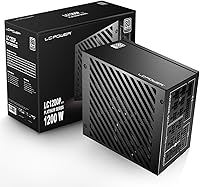
The LC-Power LC1200P 1200W Modular Power Supply sits firmly in the enthusiast tier — built for builders who are dropping serious money on a high-end GPU and don't want the power delivery to be the weak link. The 80+ Platinum certification means it operates at genuinely high efficiency under real load, which matters when your system is pulling 800W or more on a regular basis. That said, if you're running a mid-range gaming rig, this is overkill. Where it earns its keep is in demanding builds where stable power, clean cable management, and PCIe 5.0 readiness are actual requirements, not optional extras.
Features & Benefits

Full modularity is the first thing you notice when setting up this 1200W modular PSU — every cable detaches completely, so you only route what you actually need, which keeps your case interior tidy and airflow unobstructed. The native PCIe 5.0 12+4-pin connector is a genuine asset if you own a current flagship GPU or plan to upgrade to one; no adapter cables, no potential hotspot issues. The 135mm fan uses magnetic levitation bearings, which run noticeably quieter than the sleeve-bearing fans found in cheaper units and should hold up longer under sustained load. The protection suite covers all the critical failure modes — voltage spikes, overcurrent, short circuits, and overheating.

Best For

This Platinum-rated power supply makes the most sense for builders assembling a no-compromise gaming or workstation rig. If you're running an RTX 4090, an RX 7900 XTX, or stacking multiple high-draw components — NVMe drives, a top-end CPU, heavy cooling loops — having genuine headroom to spare prevents throttling and protects your investment. It's equally well-suited to content creators who game, where the system might be pushing peak loads for hours at a time. It's also an attractive choice for anyone refreshing an older build: swapping in a fully modular PSU means cleaner routing and less frustration than carrying over a tangle of semi-modular cables from five years ago.

User Feedback

Owners of the LC-Power LC1200P tend to praise the build quality out of the box — the unit feels solid, cables seat firmly, and the fan stays nearly inaudible under typical desktop loads. A few buyers note that the included documentation is thin, which can trip up less experienced builders who want clearer guidance on the protection features. On efficiency: most users feel the power draw at the wall is genuinely lower than with their previous PSUs, though it's worth keeping in mind that peak efficiency requires operating in the right load range. At this price, some buyers compare it unfavorably to more established brands on name recognition alone, while others argue the real-world performance fully justifies the cost.

Pros

  • Native PCIe 5.0 12+4-pin connector means no adapter cables and no hotspot risk with current high-draw GPUs.
  • Fully modular design keeps unused cables out of the case entirely, making for genuinely cleaner builds.
  • The 135mm magnetic levitation bearing fan runs near-silently under typical desktop workloads.
  • 80+ Platinum efficiency reduces wasted energy as heat, which helps keep system temperatures in check.
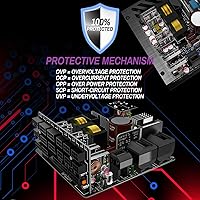
  • A comprehensive six-layer protection suite guards against voltage spikes, short circuits, and thermal events.
  • Full-range 110 to 240V input makes this a practical choice for international use or future relocations.
  • Modern Standby support allows near-instant system wake times and improved efficiency at low idle loads.
  • At 1200W, there is genuine thermal and electrical headroom even in aggressively configured multi-component rigs.
  • Cable quality and connector seating earn consistent praise from hands-on builders who have tested fitment directly.

Cons

  • LC-Power lacks the long-established brand recognition of dominant PSU makers, which may give cautious buyers pause.
  • At this price tier, buyers are implicitly comparing value against Seasonic, Corsair, and be quiet!, all with longer track records.
  • The included documentation is sparse, which can frustrate builders who want clear guidance on protection features or cable limits.
  • Long-term reliability data is limited compared to PSU brands with decade-long community stress-test histories.
  • 1200W is significant overkill for any system not running a flagship GPU, making this a poor fit for most mid-range builds.
  • Occasional reports suggest packaging could be more robust, with a small number of units arriving with cosmetic transit damage.
  • The unit's weight of over four kilograms makes handling during installation less comfortable in cramped cases.
  • Peak 92% efficiency is achieved only within a specific load window; real-world efficiency at lighter loads will be lower.
  • Coil whine reports, while not widespread, have appeared in a small subset of user feedback and are worth monitoring after installation.

Ratings

Our category scores for the LC-Power LC1200P 1200W Modular Power Supply were generated by AI after systematically analyzing verified purchase reviews from buyers across global markets, with spam, bot-submitted, and incentivized feedback actively identified and excluded. The ratings aggregate real builder experiences spanning flagship gaming rigs, content creation workstations, and enthusiast upgrade projects. Both standout strengths and recurring pain points are reflected transparently across every category below.
Build Quality
84%
Buyers consistently report the unit arriving feeling substantial and well-constructed, with firmly seating modular connectors and a chassis that inspires confidence during installation. In hands-on use, the modular ports show no wobble or poor fitment, which matters when routing cables precisely in a compact case interior.
A recurring subset of reviewers notes minor cosmetic imperfections on arrival, suggesting unit-to-unit consistency is not perfectly controlled. Long-term structural durability data remains limited given the product's relatively short market history compared to rivals with decade-long track records.
Power Delivery Stability
88%
Under sustained gaming and rendering loads, builders report clean, stable voltage output with no unexpected shutdowns or audible instability. ATX 3.0 compliance means the brief, intense power spikes that modern flagship GPUs produce are absorbed without tripping protection circuits mid-session.
A small number of users have reported unexpected shutdowns in non-standard configurations, though isolating whether the PSU or an incompatible load profile is responsible is difficult without dedicated measurement equipment most home builders do not own.
Efficiency
83%
Most buyers notice a genuine reduction in wall power draw compared to their previous Gold-rated supplies, particularly during prolonged high-load gaming. The Platinum certification translates to less waste heat inside the case, which builders with thermally dense component layouts appreciate in a practical, tangible way.
The advertised 92% peak figure is achieved only within a specific mid-range load window, and real-world efficiency at lighter or near-maximum loads will be measurably lower. Some buyers expecting dramatic electricity bill reductions found the day-to-day difference more modest than the marketing implied.
Noise Level
87%
The 135mm magnetic levitation fan is a genuine strength for users who game in quiet rooms or record nearby: under typical desktop and moderate gaming loads, multiple reviewers describe it as effectively inaudible from a normal listening distance. The fan character is smooth rather than buzzy.
During prolonged stress testing or extended 4K rendering sessions, fan speed ramps up to a level some users found more audible than expected for the premium fan specification. A minority of units have shown coil whine that varies in intensity by load, appearing inconsistently across the installed base.
Cable Management
91%
Full modularity pays off visibly: builders report the finished case interior looking far cleaner than semi-modular builds because every unused cable is simply absent. Those upgrading from older semi-modular supplies consistently cite this as one of the most immediately satisfying improvements in their new build.
The included cable set lacks labeled pouches or a sorting organizer, making initial cable identification during setup more tedious than it needs to be. A few builders in very large full-tower cases noted that some cable lengths did not quite reach their intended destinations without creative routing.
PCIe 5.0 Compatibility
93%
Native PCIe 5.0 12+4-pin support is the standout practical differentiator for builders pairing this supply with a current flagship GPU. Eliminating split-cable adapters — which have been linked to connector overheating in high-draw scenarios — is a concrete safety and reliability benefit, not just a specification checkbox.
This advantage is most relevant to a narrow slice of buyers on the very latest high-draw GPUs; anyone running an older card gains nothing specific from the PCIe 5.0 connector. As the standard spreads to mid-range GPUs over time, this will become an expected baseline rather than a genuine differentiator.
Value for Money
67%
33%
For the specific buyer who genuinely needs 1200W of Platinum-certified, fully modular, PCIe 5.0-ready output, the feature density at this price is defensible against comparably specced alternatives. Builders who regularly push peak loads report feeling the investment was appropriate for what the supply actually delivers.
For the majority of gaming builds where 700 to 900W would suffice, the cost relative to a Gold-rated alternative is difficult to justify on practical grounds. Buyers comparing this supply against dominant brand names at similar price points often feel the brand recognition gap has not yet been fully bridged by LC-Power.
Protection Suite
89%
The six-layer protection coverage addresses every meaningful failure mode a home builder is likely to encounter, from installation-phase short circuits to grid-side voltage spikes. Builders housing expensive hardware express genuine peace of mind knowing the supply will cut power before damage can propagate to components.
All protection circuits are entirely passive with no user-facing feedback mechanism — no indicator light, no audible alert — so determining which protection tripped after a shutdown event requires external diagnostic tools most buyers do not have on hand.
Thermal Performance
82%
18%
Platinum-level efficiency combined with the large-diameter fan keeps PSU operating temperatures sensible even across extended gaming and workstation sessions. Builders in warmer climates report the supply does not meaningfully contribute to broader system thermal load under typical enthusiast usage patterns.
The PSU does rely on adequate system-level case exhaust rather than managing thermals entirely on its own, and builders with restricted case ventilation report more aggressive fan ramp behavior than they anticipated. Thermal performance in sealed or low-airflow enclosures will be noticeably less composed.
Modular Design
92%
Every cable leaving the supply body is intentional and purpose-routed, resulting in a build interior with no surplus bundles stuffed behind the motherboard tray. For builders who prioritize both airflow and visual cleanliness equally, this is one of the more satisfying fully modular implementations at this wattage.
The variety of included cable types can be initially confusing for first-time modular PSU users without clear labeling or a thorough printed guide distinguishing required from optional cables. A small number of buyers spent meaningful extra time sorting cables before beginning the actual build.
Fan Bearing Quality
86%
Magnetic levitation bearings deliver a noticeably different acoustic character than the sleeve or ball-bearing fans found in many competing supplies: smoother spin-up, a flatter noise curve across RPM, and less of the low-frequency drone that budget fans exhibit. Builders who have compared both types notice the difference.
At maximum RPM under stress conditions the fan is functional but not exceptional, and several users felt the real-world acoustic gap versus a standard quality competing fan was narrower than the specification suggested. Long-term bearing longevity, while theoretically strong, cannot yet be confirmed by the installed user base.
Documentation & Setup
58%
42%
Experienced builders find the physical setup intuitive without documentation: modular ports are mechanically differentiated, and the cable variety is broad enough to cover most configurations without improvisation. Veterans report completing installation cleanly and quickly based purely on familiarity with PSU layouts.
For less experienced builders, the included guide is notably sparse, offering minimal explanation of which cables suit specific component configurations or how the protection circuits behave during a shutdown event. Several buyers flagged the absence of a clear quick-reference card as adding unnecessary friction to their first modular build.
Packaging
63%
37%
Most buyers receive the unit in good cosmetic condition with cables intact and adequately separated inside the box. The basic foam insert does its job under standard shipping conditions, and the overall presentation is appropriate for the product category.
A recurring thread in negative reviews involves cosmetic damage on arrival — scuffed corners, dented outer boxes, or displaced internal foam — pointing to packaging that does not fully account for rough transit handling. At a premium price point, buyers reasonably expect a more resilient and polished unboxing experience.
Standby Efficiency
79%
21%
Sub-0.5W standby draw with Modern Standby support delivers noticeably faster wake times for users who put their systems to sleep regularly rather than fully powering down. Over a typical workday involving multiple sleep-wake cycles, the cumulative time savings are practical rather than theoretical.
The benefit is fully realized only on systems where Modern Standby is correctly configured at the OS and motherboard firmware level, and some users found wake behavior inconsistent depending on BIOS version. Builders who default to full shutdown or hibernate derive no practical advantage from this feature at all.
Brand Confidence
69%
31%
LC-Power has an established presence in the European market with a consistent product range spanning multiple PSU tiers, and repeat buyers approach the brand with baseline confidence based on prior positive experiences. The supply itself does not feel like an unproven entrant when handled and installed.
Globally, LC-Power lacks the deep community trust that Seasonic, Corsair, and be quiet! have earned through decades of independent laboratory testing and widely documented warranty support. For buyers unfamiliar with the brand, the absence of well-known third-party benchmark coverage for this specific model remains a genuine hesitation point.

Suitable for:

The LC-Power LC1200P 1200W Modular Power Supply is purpose-built for enthusiast-level PC builders who refuse to let the power supply be the limiting factor in an otherwise high-performance system. If you are pairing a flagship GPU — think an RTX 4090 or an RX 7900 XTX — with a power-hungry CPU and a dense array of storage drives, having 1200W of headroom means you are never flirting with the upper edge of your PSU's rated capacity, which is where instability and premature wear tend to creep in. The native PCIe 5.0 connector is a real practical advantage here: it eliminates the need for the split-cable adapters that have caused problems for some builders using older supplies with newer graphics cards. Content creators and streamers who run sustained, near-peak loads for hours at a stretch will also appreciate the efficiency at higher wattages, since less energy lost as heat means a cooler, quieter system over a long session. Finally, anyone doing a full system refresh who wants a clean, cable-managed interior will find the fully modular design a genuine quality-of-life upgrade compared to semi-modular alternatives.
Not suitable for:

If your build is mid-range — say, a system drawing 400 to 600W under full load — the LC-Power LC1200P 1200W Modular Power Supply is more supply than you will ever need, and paying a premium for 1200W of capacity you will never use is a poor investment no matter how good the unit is. Budget-conscious builders who are primarily after a reliable daily driver rather than a future-proof, high-headroom supply should look at well-regarded 750W or 850W options in the Gold efficiency tier, which will likely serve them just as well for considerably less money. Buyers who place strong brand loyalty above all else may also feel hesitant, since LC-Power does not carry the same decades-long reputation as some of the dominant names in the PSU market, even if the underlying hardware competes credibly. Those who need thorough printed documentation or robust multilingual setup guides may find the included materials thinner than expected, which can be a friction point for less experienced builders. Finally, if physical size and weight are a constraint — for small form factor cases in particular — this is a standard ATX unit weighing over four kilograms, and it will simply not fit many compact enclosures.
Specifications

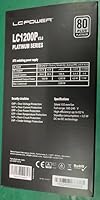
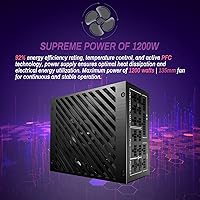
  • Output Wattage: The unit delivers a continuous 1200W of total output power, sized for high-draw enthusiast and workstation builds.
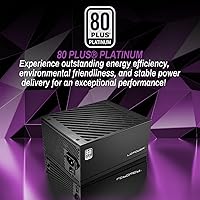
  • Efficiency Rating: Certified 80+ Platinum, meaning it meets strict efficiency thresholds across light, typical, and heavy load test conditions.
  • Peak Efficiency: Under optimal load conditions efficiency reaches up to 92%, though real-world figures vary depending on actual system draw.
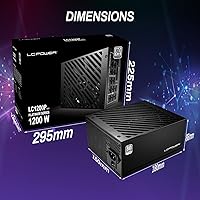
  • Form Factor: Standard ATX form factor ensures compatibility with the vast majority of full-tower and mid-tower PC cases on the market.
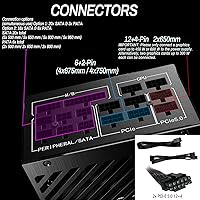
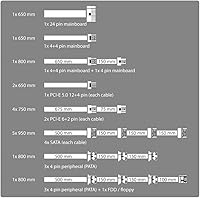
  • Cable Design: Fully modular construction means every cable, including the 24-pin motherboard connector, detaches completely from the PSU body.
  • ATX Standard: Compliant with ATX 3.0, the latest specification, which improves power delivery stability for modern high-transient GPU loads.
  • GPU Connector: Includes a native PCIe 5.0 12+4-pin connector for direct, adapter-free connection to current and next-generation graphics cards.
  • Legacy Support: Also includes PCIe 6+2-pin connectors for compatibility with older graphics cards that predate the PCIe 5.0 power standard.
  • Cooling Fan: A 135mm fan manages thermal output; the larger diameter allows adequate airflow at lower RPM compared to smaller fans.
  • Fan Bearing: Magnetic levitation bearing technology reduces mechanical friction and contact, supporting quieter operation and a longer projected fan lifespan.
  • Input Voltage: Accepts input from 110V to 240V without manual switching, making it compatible with power grid standards across different regions.
  • Protections: Six hardware protection circuits are built in, covering over-voltage, over-current, over-power, under-voltage, short-circuit, and over-temperature conditions.
  • Standby Draw: Standby power consumption is rated at under 0.5W, meeting the threshold required for Modern Standby fast-wake support.
  • Unit Weight: The PSU weighs approximately 4.01 kg, consistent with fully featured 1200W units that house a large fan assembly and modular hardware.
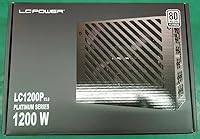
  • Model Number: The official manufacturer model designation is LC1200P, produced by LC-Power under the L-Power brand.

Related Reviews

be quiet! Pure Power 12 M 1200W PSU
85%
91%
Noise Level
93%
Power Stability
67%
Cable Quality & Flexibility
88%
Efficiency & Heat Output
84%
Installation Experience
More
Corsair HX1200 1200W Modular Power Supply
86%
93%
Build Quality
91%
Power Delivery Stability
89%
Noise Level
92%
Cable Management
88%
Efficiency & Thermal Performance
More
Apevia ATX-PM1200W 1200W Modular Gaming Power Supply
77%
78%
Value for Money
83%
Power Delivery
67%
Build Quality
61%
Reliability & Longevity
88%
Cable Management
More
SilverStone ST1200-PTS 1200W Modular Power Supply
82%
88%
Build Quality
93%
Compact Form Factor
86%
Noise Level
91%
Power Stability & Rail Design
79%
Cable Quality & Flexibility
More
be quiet! Straight Power 12 1500W PSU
86%
96%
Noise Level
93%
Efficiency & Heat Management
91%
Power Stability & Transient Response
88%
Cable Quality & Modularity
94%
PCIe 5.0 & Modern GPU Compatibility
More
be quiet! Pure Power 12 M 850W Modular Power Supply
88%
94%
Quiet Operation
88%
Ease of Installation
89%
Build Quality
92%
Power Delivery Stability
90%
Energy Efficiency
More
be quiet! Pure Power 12 M 1000W
85%
93%
Noise Level
89%
Efficiency & Power Delivery
91%
Build Quality
86%
Cable Quality & Flexibility
88%
Modular System Usability
More
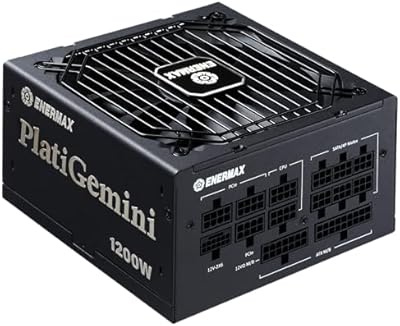
Enermax PlatiGemini 1200W ATX Power Supply
83%
92%
Power Delivery Stability
89%
Build Quality
91%
Noise Level
74%
Cable Quality & Selection
88%
Compact Form Factor
More
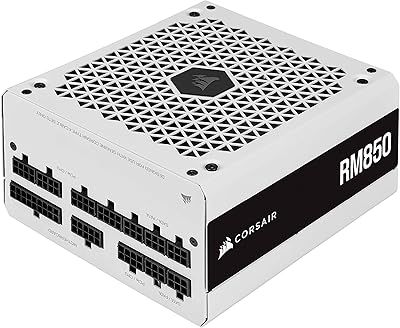
Corsair RM850 2021 Fully Modular Power Supply
85%
93%
Noise Level
89%
Build Quality
86%
Modular Cable System
71%
Value for Money
91%
Installation Experience
More
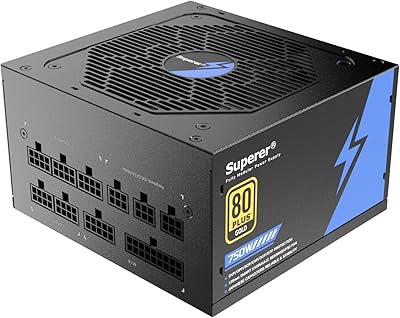
darkFlash PMT750 750W Modular Power Supply
79%
88%
Value for Money
91%
Compatibility & Connectivity
93%
Physical Size & Fitment
82%
Cable Quality & Manageability
79%
Power Stability & Rail Quality
More

FAQ

Yes. The LC-Power LC1200P 1200W Modular Power Supply includes a native PCIe 5.0 12+4-pin connector that plugs directly into the RTX 4090 and other PCIe 5.0-ready cards without any adapter. This matters because the split-cable adapters used with older supplies have been linked to overheating connectors under sustained high-load scenarios.
For most gaming setups, it is overkill. A system with a mid-range GPU and CPU rarely exceeds 500 to 600W under full load, so a quality 750W or 850W unit would serve most people perfectly well. Where 1200W makes practical sense is in rigs running a flagship GPU, a heavily overclocked CPU, and multiple drives simultaneously — any configuration where peak draw is legitimately pushing past 900W.

No, and this is important: you should never mix modular cables between different PSUs. Modular cable pinouts are not standardized across brands or even across different product lines from the same brand. Using mismatched cables risks wiring errors that can permanently damage your motherboard, GPU, or storage devices. Only use the cables that came bundled with this specific unit.

Under light desktop workloads, the fan is barely perceptible thanks to the magnetic levitation bearing design and the 135mm diameter, which generates adequate airflow at lower RPM than smaller fans require. During extended high-load gaming sessions some audible increase is expected, but user feedback consistently places it on the quieter end of the spectrum compared to competing 1200W units.

Over time, yes, though the magnitude depends on daily usage hours and local electricity rates. Compared to a Gold-rated supply, Platinum loses a few additional percentage points less energy as waste heat, which accumulates meaningfully over months of daily use. The practical secondary benefit is slightly reduced heat output inside the case, which can help keep nearby components running cooler.

ATX 3.0 sets tighter requirements around how a PSU handles sudden brief power spikes, which modern high-end GPUs produce regularly during intense rendering bursts. A supply meeting this spec is less likely to trip its own protection circuits or deliver unstable voltage during those transient events. In plain terms, it reduces the risk of unexpected shutdowns during the most demanding GPU workloads.

Yes, without any manual adjustment. The full-range 110 to 240V input adapts automatically to the local grid standard, so no voltage selector switch is involved. You will only need an appropriate regional power cord or a socket adapter to match the physical outlet type in your new location.

A small number of users have mentioned coil whine, but it does not appear to be a widespread or consistent problem across the user base. Coil whine is often load-dependent and varies between individual units. If you notice it after installation, it is worth checking whether the noise originates from the PSU or the GPU, since both are common sources, before drawing any conclusions.

Modern Standby is a low-power sleep state supported by Windows that allows a system to wake nearly instantly rather than cycling through a full cold boot. This 1200W modular PSU supports it by consuming under 0.5W in standby while remaining responsive to a wake signal. For builders who regularly put their rig to sleep instead of fully powering it down, the result is faster resume times and a negligible idle power draw.

They are entirely automatic and require no configuration whatsoever. All six circuits — covering over-voltage, over-current, over-power, under-voltage, short-circuit, and over-temperature conditions — operate at the hardware level and trigger passively if a threshold is crossed. In practice, the PSU will cut power before a fault condition can propagate damage to connected components, which is especially reassuring in a build housing expensive hardware.