Overview

The BTECH RPS-30PRO 30A Bench Power Supply sits in a practical middle ground — it's a regulated desktop converter built specifically for radio hobbyists and technicians who are tired of dragging car batteries indoors or babysitting cheap wall adapters. It runs off a standard 110V outlet and delivers a steady 13.8V DC output, the voltage that most ham, CB, GMRS, and LMR radios expect. You can also dial it anywhere from 9 to 15V if needed. At roughly 9 by 8 by 3 inches, it doesn't hog desk space for what it puts out. Just be clear: this isn't a precision lab instrument — it's purpose-built for radio use, and it does that job well.
Features & Benefits

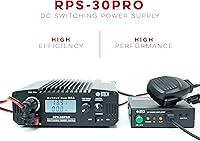
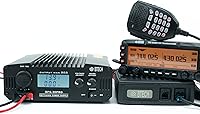
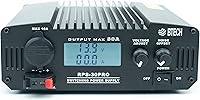
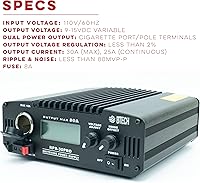
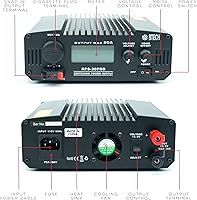
What sets the RPS-30PRO apart from its cheaper sibling is immediately obvious on the front panel. There's an LCD display showing live voltage and current readings, plus a noise offset control dial that lets you fine-tune RF interference — a feature that actually matters when you're listening for weak signals on a receiver. Three connection types cover nearly every radio you'd want to run: screw-post terminals for hardwired setups, snap-in Anderson-style ports for quick swaps, and a cigarette lighter socket for accessories. The supply handles 25 amps continuously and peaks at 30, which is enough headroom for most transceivers at full transmit. Ripple stays under 80mV, and built-in thermal, short-circuit, and surge protection add a real layer of safety.

Best For

This radio power supply makes the most sense for ham radio operators running HF or VHF/UHF transceivers from a home shack — it's sized and rated to handle a typical 100-watt radio without breaking a sweat. GMRS and CB users who want to ditch the car battery on the workbench will find it equally capable. Scanner listeners benefit from the low-ripple output, since a noisy supply can mask faint signals. Technicians who bench-test 12V automotive electronics or DC accessories will find it handy too, though they should know this isn't a variable lab supply with fine-grained control. And if you're already on the RPS-30M, the front-panel display and adjustable voltage knob alone make the upgrade worthwhile.

User Feedback

With a 4.8-star average across over 160 ratings, this bench supply has clearly earned its reputation. Buyers consistently point to accurate voltage output and a sturdy build as standout qualities, and several long-term owners report trouble-free operation well past the first year. That said, a few recurring complaints are worth knowing before you buy. The cooling fan can get noticeably loud under sustained high-current loads — not a dealbreaker for most, but worth considering if your shack is in a quiet room. The noise offset dial also has a bit of a learning curve; some users needed to experiment before dialing out interference cleanly. BTECH's US-based support earns consistent praise, with buyers noting responsive service compared to generic import brands.

Pros

  • Steady 13.8V output is perfectly matched to the needs of most ham, CB, and GMRS radios right out of the box.
  • The front-panel LCD gives you a real-time look at what the supply is actually doing, which the cheaper sibling simply cannot offer.
  • Three connection types mean you can hook up almost any DC-powered radio or accessory without hunting for adapters.
  • The noise offset dial is a genuinely useful feature for anyone running a receiver — it makes a noticeable difference in audio clarity.
  • Built-in thermal, short-circuit, and surge protection make it reasonable to leave running unattended during long operating sessions.
  • At 5 lbs and a compact 9 by 8 by 3-inch footprint, this radio power supply fits on a crowded shack desk without dominating the space.
  • Voltage is adjustable from 9 to 15V via a front knob, not a buried set screw, which makes dialing in non-standard equipment far less frustrating.
  • Long-term owners report consistent, trouble-free performance well past the initial break-in period.
  • BTECH’s US-based customer support is frequently called out as responsive and helpful, a real differentiator from generic import brands.

Cons

  • The cooling fan can become noticeably loud under sustained high-current draw, which may bother operators in quiet listening environments.
  • The noise offset dial has a learning curve — new users often need several sessions to find the right setting for their specific setup.
  • Output voltage regulation is adequate for radio use but too coarse for sensitive electronics prototyping or precision measurement work.
  • Only compatible with 110V AC mains, limiting usability internationally without a separate step-down transformer.
  • No independent current-limiting control, which reduces flexibility for bench-testing equipment with varying power demands.
  • The snap-in terminals are rated for only 3 amps, so high-draw accessories must use the screw-post terminals — easy to overlook during setup.
  • At its price, buyers stepping up from budget supplies may expect dual digital readouts for both voltage and current; only voltage is displayed.
  • The unit is heavier and bulkier than ultra-compact switching supplies, making it less ideal for portable or travel use.

Ratings

The BTECH RPS-30PRO 30A Bench Power Supply earns one of the stronger consensus scores we've tracked in the regulated desktop power supply category, based on AI analysis of verified global buyer reviews with spam, bot, and incentivized feedback actively filtered out. Radio hobbyists and technicians dominate the reviewer pool, giving the scores here unusual real-world relevance for that specific use case. Both the genuine strengths and the recurring frustrations are reflected transparently in the breakdowns below.
Output Voltage Stability
91%
Buyers running HF transceivers and GMRS radios consistently report that the 13.8V output holds steady even during sustained transmit sessions, with no sagging or fluctuation noticed on the LCD. Long-term owners specifically call out how reliable the regulated output remains after months of daily shack use.
A small number of users noted the output tolerance of plus or minus 0.5V is occasionally at the edge of that range out of the box, requiring a quick knob adjustment to center it precisely. This is a minor issue but worth checking on first power-up.
Noise & RF Interference
83%
For most radio operators, the sub-80mV ripple keeps receiver audio noticeably cleaner than generic switching supplies, and the noise offset dial gives users an active tool to push interference even lower when needed. Scanner users in particular praise the audible difference when switching from a cheap supply to this one.
The noise offset dial demands patience — some users spent 20 to 30 minutes finding the sweet spot before their receiver quieted down, and a few never fully dialed it out. It is not a set-and-forget solution for everyone, especially in environments with other RF sources nearby.
Build Quality
88%
The steel chassis feels solid and substantial in hand, and buyers who have owned the unit for a year or more consistently report no rattles, panel flex, or connector wear. The front-panel controls have a reassuring tactile quality that feels appropriate for the price tier.
A few reviewers noted that the ventilation grille finish shows minor scuffs after regular handling, and the LCD bezel has some flex if pressed firmly. Nothing structurally concerning, but cosmetic durability is not quite at the level of higher-end bench equipment.
Current Delivery
87%
Running a 100-watt HF radio at full transmit draw is handled without hesitation, and operators who key up repeatedly in digital modes like FT8 report stable, unthrottled output throughout. The 25-amp continuous rating proves accurate in practice, not just on paper.
At loads approaching the 25-amp ceiling, the supply gets noticeably warm and the fan speeds up considerably. A handful of users pushing high-duty-cycle digital modes for hours reported the protection circuit tripping once or twice, suggesting the continuous rating is a real ceiling rather than a conservative estimate.
Ease of Setup
93%
Most buyers describe the initial setup as genuinely straightforward — plug into the wall, connect the radio via the screw terminals, and it works. The front-panel voltage knob eliminates the frustrating step-screw adjustment that plagued the base model, making first-time configuration quick even for newcomers.
The snap-in terminal type is less intuitive for users unfamiliar with Anderson-style connectors, and the manual does not explain the noise offset dial in enough depth for beginners. A short video tutorial from BTECH would go a long way here.
Fan Noise
67%
33%
At idle or light loads, the cooling fan is barely perceptible, and users who primarily monitor or receive rather than transmit at high power report the supply running quietly enough for a bedroom shack. The thermal management design means the fan only ramps up when it genuinely needs to.
Under sustained high-current transmit — especially digital modes or back-to-back voice contacts — the fan audibly spins up to a level that several users describe as distracting. In a quiet listening room, this is the single most commented-on complaint across long-term owner reviews.
Connection Versatility
89%
Having three distinct output types on one supply is genuinely practical: hardwired screw terminals for the main radio, snap-in ports for a quick-swap accessory, and a cigarette socket for a desk lamp or phone charger. Operators running multiple devices off one supply find this eliminates a lot of clutter.
The snap-in terminals are limited to 3 amps, which catches some buyers off guard when they try to power a second radio through them. This rating needs to be clearly understood before purchase, as the listing buries it in the spec table.
LCD Display Clarity
82%
18%
The live readout of both voltage and current is one of the most appreciated upgrades over the base model, giving operators an at-a-glance view of exactly what their radio is drawing during transmit. Several users mention it helped them diagnose a radio with abnormal current consumption they hadn’t noticed before.
The display is adequate but not exceptional — viewing angles are narrow, and in a brightly lit shack the contrast can make numbers harder to read at a distance. A few buyers wished the digits were larger or backlit more brightly.
Value for Money
78%
22%
Relative to third-party alternatives with similar specs, this radio power supply offers a reasonable package of features — display, noise offset control, multiple outputs, and US support — that most competitors at a similar price point do not bundle together. For the intended radio use case, the pricing feels justified.
Buyers comparing it purely on output specs against generic imports will find cheaper options that deliver the same current rating. The premium here is for the BTECH ecosystem, the noise offset feature, and the domestic support, which not every buyer needs or values equally.
Long-Term Reliability
86%
Owners who have run this bench supply through a full year or more of regular shack use generally report zero issues, with no degradation in output accuracy or any component failures. This longer-term feedback is a meaningful signal in a category where cheap supplies often fail within months.
The sample size of multi-year owners is still relatively limited given the product’s launch date, so reliability conclusions beyond 18 months are based on a smaller subset of reviewers. A few early units reportedly had fan bearing noise develop over time.
Voltage Adjustability
81%
19%
The front-panel knob covering 9 to 15V is smooth and responsive, making it easy to set non-standard voltages for testing older CB radios or accessories that prefer slightly higher or lower supply rails. The LCD makes fine-tuning precise without needing a separate voltmeter.
The adjustment range, while adequate for radio work, is too coarse for electronics bench work requiring millivolt precision. Users who also do general electronics prototyping will find the control resolution insufficient for anything sensitive.
Protection Circuits
84%
The overheat, short-circuit, and surge protection systems have been tested in practice by users who accidentally shorted a connector or overloaded the output — and the supply recovered cleanly after clearing the fault. This kind of real-world validation matters more than spec-sheet claims.
The protection circuit tripping threshold is not user-adjustable, which means users running close to the continuous current ceiling have no early warning before a shutdown occurs. A current-limit LED or audible alert would make the protection more useful in practice.
Customer Support
88%
BTECH’s US-based support team receives consistent praise for actual responsiveness — buyers report getting helpful replies within a business day and, in some cases, replacement parts or units shipped without extensive back-and-forth. This is a meaningful differentiator compared to most imported supply brands.
A small number of users report longer response times during peak periods, and support for very technical questions sometimes requires escalation. Overall, though, the support experience is well above average for this product category.
Size & Desk Footprint
85%
At 9 by 8 by 3 inches, this bench supply takes up less desk real estate than many competing units at the same current rating, which matters in a shack where space is always at a premium. Its relatively flat profile also makes it easy to stack accessories on top if needed.
It is noticeably larger and heavier than ultra-compact switching-mode supplies, so users who prioritize portability or operate in tight spaces may find the footprint a constraint. It is clearly a permanent-installation unit, not something you carry to a field day easily.

Suitable for:

The BTECH RPS-30PRO 30A Bench Power Supply is an excellent fit for radio hobbyists who want a dedicated, reliable desktop power source without the hassle of maintaining a car battery in their shack. Ham operators running HF or VHF/UHF transceivers will appreciate the 13.8V fixed output and the 25-amp continuous rating, which comfortably handles most 100-watt radios at full transmit without throttling. GMRS and CB users who currently power their rigs from a vehicle or a generic adapter will find this a meaningful step up in stability and convenience. Scanner enthusiasts benefit particularly from the low-ripple output and the noise offset dial, which helps clean up interference that would otherwise mask weak signals. It also suits technicians who regularly bench-test 12V DC accessories or automotive electronics and need a dependable, switchable power source close at hand. If you already own the entry-level RPS-30M and have been frustrated by the hidden voltage adjustment or the lack of a live readout, this bench supply resolves both of those annoyances directly.
Not suitable for:

The BTECH RPS-30PRO 30A Bench Power Supply is not the right tool if you need laboratory-grade voltage precision or fine-grained current control for electronics development or component testing. The output regulation and ripple specs are tuned for radio equipment, not sensitive analog circuits or precision calibration work. Electronics engineers or hobbyists building or testing amplifiers, microcontrollers, or audio circuits may find the adjustment resolution too coarse and the noise floor too high for their needs. This supply also runs on 110V AC only, so it is not an option for users in regions with 220–240V mains without a separate step-down transformer. At its price point, buyers expecting a full variable bench supply with independent voltage and current limiting knobs, digital readouts for both parameters, and fine milliamp control will be disappointed — those features belong to a different class of instrument entirely. If your power demands regularly exceed 25 amps continuously, you should be looking at the larger RPS-50PRO instead.
Specifications

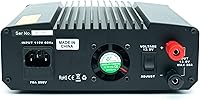
  • Input Voltage: Requires a standard 110V / 60Hz AC wall outlet; not compatible with 220–240V mains without a separate step-down transformer.
  • Fixed Output: Delivers a regulated 13.8V DC output with a tolerance of plus or minus 0.5V, matching the standard operating voltage of most two-way radios.
  • Adjustable Output: A front-panel knob allows continuous voltage adjustment from 9V to 15V DC for use with equipment that requires non-standard supply voltages.
  • Peak Current: Rated at 30 amps peak output, suitable for brief high-demand events such as transmit key-up on a high-power transceiver.
  • Continuous Current: Sustains 25 amps continuously, providing reliable headroom for radios running extended transmit sessions or high-duty-cycle digital modes.
  • Ripple and Noise: Output ripple and noise are rated at under 80mV peak-to-peak, keeping interference low enough for clean audio reception on sensitive receivers.
  • Connections: Includes three output connection types: screw-post terminals for hardwired leads, snap-in Anderson-style ports for quick-disconnect accessories, and a cigarette lighter socket for 12V plugs.
  • Snap-In Rating: The snap-in Anderson-style terminals are rated for up to 3 amps and are intended for low-draw accessories, not primary radio power connections.
  • Display: An LCD panel on the front face shows real-time output voltage and current draw, allowing the operator to monitor load conditions at a glance.
  • Noise Offset: A dedicated noise offset control dial on the front panel allows the user to reduce RF interference introduced by the supply into connected equipment.
  • Protection: Onboard protection circuits guard against overheat, short-circuit, and current surge conditions, enabling safer unattended operation during long sessions.
  • Input Fuse: The AC input side is protected by an 8-amp fuse rated for 110V, which should be replaced only with an identical type and rating.
  • Dimensions: The unit measures 9″ long by 8″ deep by 3″ tall, fitting on most standard shack desks without requiring dedicated shelf space.
  • Weight: Weighs 5 lbs, making it light enough to reposition on a bench easily while remaining stable during normal operation.
  • Form Factor: Enclosed brick-style steel chassis with a fan-assisted cooling system that activates based on internal thermal conditions.
  • Voltage Regulation: Output voltage regulation is rated at less than 2%, which is well within the tolerance range for radio and general 12V DC equipment.
  • Brand Focus: BTECH designs exclusively radio-related products, meaning the engineering decisions in this supply are specifically optimized for two-way radio use cases.
  • Warranty Support: Backed by a US-based BTECH support team, with warranty service handled domestically rather than through overseas manufacturer channels.

Related Reviews
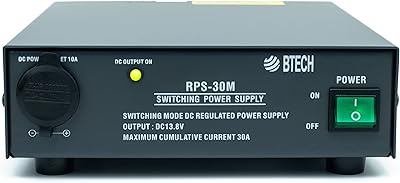
BTECH RPS-30M 30A Bench Power Supply
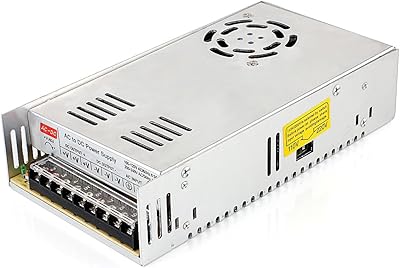
80%
93%
Voltage Stability
88%
Output Current Capacity
86%
Ripple & Noise
84%
Build Quality
91%
Compact Design
More
Pyramid PSV150 Compact Bench Power Supply
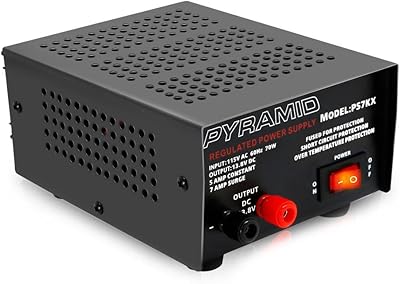
89%
95%
Voltage Accuracy
93%
Current Stability
88%
Build Quality
91%
Safety Features
90%
Connection Versatility
More
SUPERNIGHT 12V 30A Switching Power Supply
86%
91%
Power Performance
85%
Cooling Efficiency
94%
Safety Features
88%
Value for Money
72%
Noise Levels Under Load
More
Pyramid PS7KX Bench Power Supply
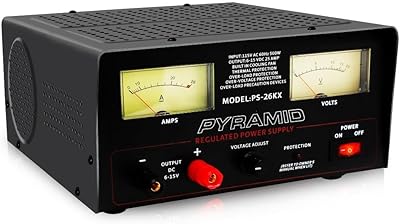
80%
91%
Voltage Stability
88%
Value for Money
93%
Ease of Setup
74%
Build Quality
78%
Cooling Performance
More
Pyramid PS26KX Universal Compact Bench Power Supply
86%
91%
Power Output Consistency
88%
Build Quality
85%
Cooling Efficiency
80%
Ease of Use
94%
Safety Features
More
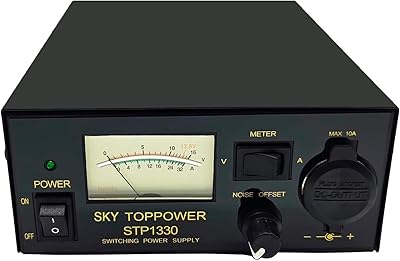
SKY TOPPOWER STP1330 Ham Radio Power Supply
82%
91%
Voltage Regulation Stability
88%
Noise & RFI Performance
74%
Continuous Current Headroom
89%
Fan Noise & Thermal Management
78%
Build Quality & Chassis
More
Pyramid PS15K.5 Universal Compact Bench Power Supply
85%
89%
Performance
91%
Build Quality
86%
Ease of Use
88%
Reliability
93%
Safety Features
More
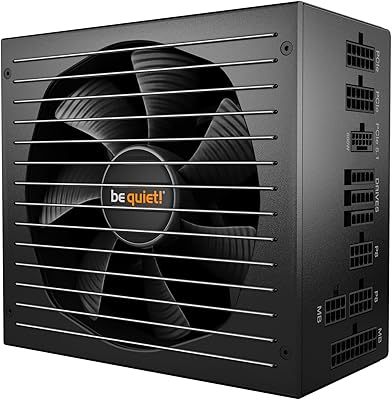
be quiet! Straight Power 12 1000W Power Supply
88%
94%
Quiet Operation
92%
Energy Efficiency
89%
Build Quality
90%
Modular Design and Cable Management
88%
Stability Under Load
More
LC-Power LC1200P 1200W Gaming PC Power Supply
85%
89%
Performance
91%
Energy Efficiency
85%
Cable Management
87%
Noise Level
88%
Reliability
More
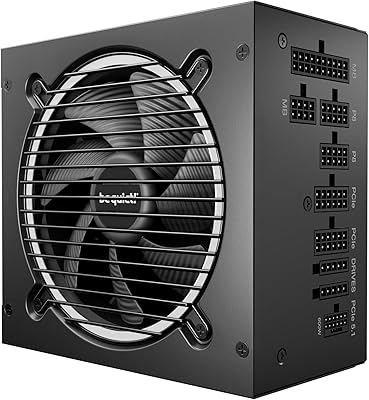
be quiet! Pure Power 13 750W PSU
86%
93%
Noise Level
88%
Build Quality
86%
Value for Money
74%
Wattage & Power Headroom
84%
Cable Quality & Modularity
More

FAQ

Yes, for the vast majority of 100-watt HF radios it will. Most transceivers in that class draw somewhere between 20 and 23 amps at full transmit, and this bench supply is rated for 25 amps continuous, so you have real headroom to spare. Just make sure you’re using the screw-post terminals for the radio connection, not the snap-in ports, which are only rated for 3 amps.

The noise offset dial is a fine-tuning control that lets you reduce switching noise the supply might introduce into your radio or receiver. Whether you need it depends on your setup — some users plug in and never touch it, while others, especially those running sensitive receivers or HF listeners, find it makes a noticeable difference in background noise. It has a bit of a learning curve, so expect to spend a few minutes experimenting when you first set up.

The RPS-30M and the RPS-30PRO have the same core output specs, so the upgrade is really about usability. The RPS-30PRO adds a front-panel LCD so you can actually see what voltage and current your radio is pulling, a noise offset control dial, snap-in Anderson-style terminals, and a voltage adjustment knob you can reach without flipping the unit over. If any of those features matter to your workflow, the difference in price is easy to justify. If you just need basic power and never plan to adjust voltage, the RPS-30M gets the job done for less.

Absolutely. The RPS-30PRO outputs standard DC voltage and doesn’t care what you plug into it, as long as the device runs on 12V and stays within the current limits. Technicians use it to bench-test automotive accessories, LED lighting setups, and other DC equipment all the time. Just check the current draw of whatever you’re powering and make sure it doesn’t push the supply past 25 amps for extended periods.

At light to moderate loads the fan is fairly quiet and most people don’t notice it. Under sustained high current draw, though, it does spin up and gets noticeably louder. It’s not obnoxiously loud, but if your shack is in a quiet room and you’re sensitive to fan noise, it’s worth knowing about before you buy. Several long-term owners mention this as the only real gripe they have with an otherwise solid unit.

No, not directly. It is designed for 110V / 60Hz AC only. If you’re outside North America and your wall outlets deliver 220–240V, you would need a separate step-down transformer to run this safely. Using it without one would likely blow the input fuse at best, or damage the unit permanently at worst.

The supply has built-in short-circuit and current-surge protection that should kick in and shut down output before any serious damage occurs. Once the fault is cleared, you can reset the supply and continue. This kind of protection is particularly useful if you’re testing unfamiliar equipment or if a connector comes loose unexpectedly during a session.

You can, as long as their combined current draw stays within the 25-amp continuous rating. For example, two radios each drawing 10 amps at transmit would total 20 amps, which is fine. Use the LCD display to keep an eye on total current draw while both are active. Just be mindful that simultaneous full-power transmission on both could push you close to the limit.

There is a front-panel adjustment knob, so you can simply turn it while watching the LCD until the display reads 13.8V. Unlike the base model which requires a small screwdriver and flipping the unit upside down to adjust, the RPS-30PRO puts that control right on the front face, which makes recalibrating quick and easy.

BTECH handles warranty and support from within the US, which is one of the reasons buyers tend to respond positively to them compared to generic import brands. Response times and service quality are consistently praised in long-term owner reviews. The specifics of warranty duration can change, so it’s worth confirming current terms directly with BTECH at the time of purchase, but the consensus from existing owners is that the support team is genuinely helpful and accessible.