Overview

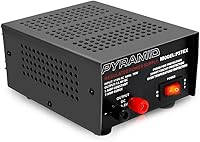
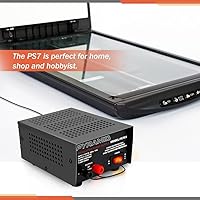
The Pyramid PS7KX Bench Power Supply has been a quiet fixture in the hobbyist market since 2005 — a straightforward, linear regulated unit that converts standard 115V AC wall power into a steady 13.8V DC output. It carries a 4.6-star rating across nearly 500 reviews, which says something for a no-frills workhorse that has barely changed in two decades. This bench supply is not trying to compete with laboratory-grade variable supplies. It is built for radio operators, hobbyists, and tinkerers who need a reliable, fixed-voltage DC source they can plug in and trust.

Features & Benefits

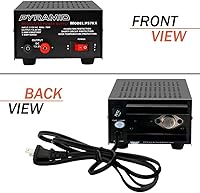
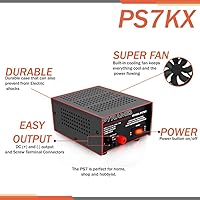
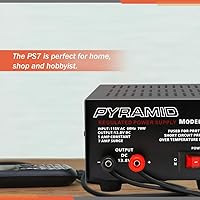
What makes this linear power unit stand out for its price point is the quality of its regulation. A linear regulated design produces a cleaner, quieter DC signal than cheaper switching supplies — a real advantage when powering radio equipment that is sensitive to electrical noise. The screw-type terminals make wiring straightforward, with no proprietary connectors to hunt down. The built-in cooling fan and heatsink handle heat during longer sessions, and short-circuit protection with an auto-reset fuse means a wiring mistake is unlikely to damage the unit or whatever is connected to it. Continuous 5A with a 7A surge covers the typical draw of most ham and CB radios comfortably.

Best For

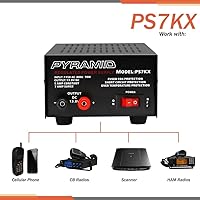
The PS7KX is a natural fit for amateur radio operators who need a dependable 13.8V DC source at the bench — it matches the standard voltage most ham and CB transceivers expect. Hobbyists doing basic component testing or powering small circuits will also find it more than adequate. For anyone just setting up their first home lab, the plug-in simplicity is a genuine plus. One important thing to flag upfront: this bench supply outputs a fixed 13.8V. If you need adjustable voltage control, this is not the right tool. But for fixed-voltage applications, it handles scanners, cellular devices, and radio gear without fuss.

User Feedback

Across nearly 500 ratings, the recurring theme is reliable voltage stability — buyers report the unit holds steady through extended sessions without drift. First-time users regularly mention how easy the screw terminals are to work with. That said, the fan noise gets flagged often. It is not deafening, but it is noticeable in a quiet room, so if you work in a noise-sensitive environment, that is worth knowing before you buy. A smaller number of users note the unit runs warm under sustained high-amp loads — not dangerous given the built-in protections, but worth monitoring. On balance, owner satisfaction skews strongly positive for what this linear power unit delivers at its price tier.

Pros

  • Linear regulated output delivers a cleaner DC signal than most switching supplies at this price point.
  • Voltage holds steady during extended radio sessions — no drift, no noise-related interference.
  • Screw terminals are beginner-friendly and accommodate a solid range of wire gauges without tools.
  • Auto-reset short-circuit protection recovers quickly from wiring mistakes without requiring a fuse replacement.
  • At 7.5 by 4.9 by 3 inches, the PS7KX fits on a crowded bench without demanding dedicated real estate.
  • Plug-in operation means zero configuration — connect your device, flip the switch, and you are running.
  • The 7A surge capacity handles the momentary startup spikes common in radio transceivers without tripping protection.
  • Nearly two decades on the market with consistent reviews signals genuine long-term reliability, not just launch hype.
  • Solid steel chassis keeps the unit stable on the bench during repeated connection and disconnection cycles.

Cons

  • The built-in fan runs continuously and is audible enough to be distracting in quiet workspaces.
  • No voltage or current display means you need a separate multimeter to confirm what the unit is actually outputting.
  • Chassis runs noticeably warm when the unit is pushed near its 5A continuous ceiling for extended periods.
  • Fixed 13.8V output offers zero flexibility for users whose projects require different operating voltages.
  • No mounting provisions or rack-compatibility options make workstation integration awkward without improvising.
  • No fault indicator light or audible alarm when the protection circuit engages, leaving beginners confused about why power stopped.
  • The design and aesthetics reflect a product that has not been meaningfully updated since the mid-2000s.
  • International buyers on 220-240V mains power cannot use this bench supply without a separate step-down transformer.

Ratings

The Pyramid PS7KX Bench Power Supply earns its ratings here from AI-driven analysis of verified global buyer reviews, with spam, bot-generated, and incentivized feedback actively filtered out before scoring. What you see reflects how real hobbyists, radio operators, and first-time lab builders actually experienced this linear power unit day-to-day — strengths and frustrations included. The scores below are designed to help you make a genuinely informed decision, not to sell you anything.

Voltage Stability
91%
Users who run CB and HAM radios consistently report that this bench supply holds its 13.8V output without noticeable drift, even during longer operating sessions. For radio work where voltage fluctuation causes audio distortion or transmission issues, that kind of steadiness is exactly what buyers are paying for.
A small segment of users noted slight variance when pushing the unit near its continuous 5A ceiling for extended periods. While not a dealbreaker for most use cases, those running demanding equipment close to the amp limit may want to monitor output with a separate meter.
Value for Money
88%
Given its fixed price point in the budget tier, the PS7KX delivers a level of output cleanliness and build integrity that buyers frequently describe as punching above its weight. Hobbyists who shopped around before buying often note they expected less for the money.
The value equation shifts slightly for buyers who later realize they needed a variable-voltage supply — this unit outputs a fixed 13.8V only. That discovery after purchase is a recurring source of disappointment, making it critical to confirm your use case before ordering.
Ease of Setup
93%
The screw-type terminals make initial wiring genuinely approachable, even for first-timers who have never connected a bench supply before. Multiple reviewers mention getting up and running in under ten minutes without consulting any documentation.
The included instructions are minimal, and the unit offers no display or indicator beyond a power switch. Users who want visual confirmation of output voltage or current draw have to supply their own multimeter, which can feel like an oversight at any price.
Build Quality
74%
26%
The steel chassis feels solid and appropriately weighted at 5.4 pounds — it does not slide around the bench during use, which matters when you are connecting and disconnecting leads regularly. The fit of the casing components is generally consistent across units.
The cabinet aesthetics are purely functional with no attempt at refinement. A handful of buyers noted that the ventilation grille and terminal housing feel like they come from an older design era, and a small number reported cosmetic inconsistencies straight out of the box.
Cooling Performance
78%
22%
The combination of a built-in fan and cabinet heatsink does its job under normal operating conditions. Most users report the unit stays manageable in temperature during the kind of sustained radio sessions it is designed for.
The fan is audible — noticeably so in a quiet room or small workspace. This is one of the most consistently flagged complaints, and while it does not affect performance, it is a real quality-of-life issue for anyone working in a noise-sensitive environment.
Fan Noise
61%
39%
The fan engages reliably and keeps thermal buildup under control, which at least tells you it is doing its job rather than running silent and failing quietly. Users who work in garages or louder shop environments report the noise as a complete non-issue.
In a typical home office or shack setup, the fan hum is persistent and more prominent than buyers often expect from a unit this size. Several reviewers specifically mentioned they wished there was a quieter fan option or that the noise level had been disclosed more clearly in product listings.
Safety Protection
86%
The electronic overload and short-circuit protection with auto-reset fuse has saved more than a few users from what could have been costly mistakes during component testing. The auto-reset behavior means recovery after an accidental short is quick and does not require sourcing a replacement fuse.
There is no audible or visual alarm when the protection circuit trips, so users only know it engaged when the unit stops delivering power. For beginners, a simple LED indicator for fault status would meaningfully reduce confusion during troubleshooting.
Thermal Management Under Load
67%
33%
For typical radio operation drawing 3 to 4 amps, the PS7KX stays within an acceptable temperature range over multi-hour sessions. The heatsink design handles moderate sustained draw without throttling or shutting down under normal conditions.
When pushed consistently near the 5A continuous rating — say, running a high-power transceiver at full duty cycle — a minority of users report the chassis becoming uncomfortably warm to the touch. It does not appear to be a safety failure, but it signals the unit is near its design ceiling.
Terminal Quality
82%
18%
The screw-type terminals accept a solid range of wire gauges and tighten down firmly without stripping easily. For users who want a semi-permanent bench connection, the terminals hold well over time without loosening from repeated thermal cycles.
The terminals are basic in design and offer no color-coded housing beyond labeling, which can be a minor readability issue in a dimly lit workspace. Users who prefer binding posts or banana jack compatibility will need adapters.
Compact Footprint
84%
At 7.5 by 4.9 by 3 inches, this linear power unit fits neatly on a crowded bench or even a small shelf without dominating the space. Apartment hobbyists and anyone with a modest shack setup consistently mention the size as a practical advantage.
The box-shaped form factor does not offer any mounting options or rack compatibility out of the box. For users who want to integrate it into a more structured workstation, the lack of mounting provisions requires improvised solutions.
Compatibility Range
79%
21%
The fixed 13.8V output aligns well with the standard operating voltage of most CB radios, HAM transceivers, and many handheld scanners, making the PS7KX a natural drop-in power source for that ecosystem without any configuration needed.
Outside of the 13.8V niche, compatibility narrows quickly. Users powering devices that require different voltages or adjustable output are simply out of luck — this is a single-purpose supply by design, which will frustrate anyone who discovers that need post-purchase.
Long-Term Reliability
83%
Given that this model has been on the market since 2005 with minimal design changes, the track record is reassuring. A number of reviewers note years of continuous or semi-continuous use without failure, which is meaningful for a unit at this price tier.
A small percentage of long-term users do report eventual fan failure or terminal corrosion after several years of heavy use. These are not widespread issues, but they are worth factoring in if you need the unit to perform reliably without maintenance over the very long haul.
Power Input Handling
80%
20%
The 115V AC, 60Hz input requirement covers standard North American outlets without any configuration, and the 70W draw is modest enough that it can share a power strip with other bench equipment without tripping breakers or causing voltage sag on shared circuits.
The unit is not designed for international voltage ranges, so buyers outside North America or those who travel with their equipment need to be aware that a step-down transformer would be required, adding bulk and cost to what is supposed to be a simple setup.

Suitable for:

The Pyramid PS7KX Bench Power Supply is purpose-built for a specific, well-defined audience — and for those buyers, it delivers exactly what it promises. Amateur radio operators and CB enthusiasts who need a stable 13.8V DC source to run their transceivers at the bench will find this linear power unit fits their workflow naturally, since that voltage is the de facto standard for most radio gear. Electronics hobbyists doing basic component testing or powering small circuits will also appreciate the clean, regulated output that switching supplies in this price range often cannot match. Beginners setting up a first home lab benefit most from its plug-and-go simplicity — there is no configuration, no calibration, just connect your device and power on. It also works well as a permanent, fixed installation to run a scanner or other low-draw device from a wall outlet without relying on batteries. If your use case fits within the fixed 13.8V, 5A continuous envelope, this bench supply is a reliable, long-proven tool that has earned its reputation across nearly two decades on the market.

Not suitable for:

The Pyramid PS7KX Bench Power Supply is the wrong choice for a surprisingly wide range of buyers, and being clear about that upfront saves a lot of post-purchase frustration. The single most common mismatch is buyers who need adjustable voltage output — this unit is fixed at 13.8V with no way to dial it up or down, so anyone expecting a variable bench supply for multi-voltage experimentation should look elsewhere entirely. Professionals or advanced hobbyists who need precision voltage accuracy, digital readouts, or fine current limiting will find the PS7KX far too basic for their standards. Those working in quiet environments — a home office, a bedroom shack, a recording-adjacent space — may find the built-in fan more disruptive than expected, since it runs continuously and is audible in low-noise settings. Buyers outside North America should also note that the unit is designed strictly for 115V AC, 60Hz input, making it incompatible with standard mains power in most other regions without a step-down transformer. Anyone planning to run equipment that regularly demands the full 5A continuous rating for hours at a time should also factor in that the chassis runs warm under those conditions, which may not suit every setup.

Specifications

  • Output Voltage: This bench supply delivers a fixed 13.8V DC output — the standard operating voltage for most CB and HAM radio transceivers.
  • Continuous Current: The unit provides a steady 5A of continuous current, suitable for the typical draw of most radio and scanning equipment.
  • Surge Current: A 7A surge capacity handles the brief startup spikes common in radio transceivers without tripping the protection circuit.
  • Power Input: Requires a standard 115V AC, 60Hz wall outlet — compatible with North American mains power only, no voltage switching.
  • Power Consumption: Maximum power input is rated at 70W, which is modest enough to share a power strip with other bench equipment.
  • Regulation Type: Uses a linear regulated design, which produces a quieter, cleaner DC signal compared to switching-mode alternatives at this price point.
  • Terminals: Features hardwired screw-type connection terminals that accept a range of wire gauges for direct, tool-free wiring to connected devices.
  • Protection: Built-in electronic overload and short-circuit protection is paired with an auto-reset fuse, eliminating the need to replace a blown fuse after a fault.
  • Cooling System: Combines a cabinet-mounted heatsink with a continuously running internal fan to manage heat during sustained operation.
  • Dimensions: The unit measures 7.5 x 4.9 x 3 inches, making it compact enough for a crowded workbench or a dedicated shelf in a small shack.
  • Weight: Weighs 5.4 pounds — heavy enough to stay stable on a bench during repeated terminal connections without requiring anchoring.
  • Form Factor: Box-shaped desktop unit with no rack-mount provisions; intended for freestanding placement on a flat surface.
  • Compatible Devices: Designed to power CB radios, HAM transceivers, handheld scanners, and other 13.8V DC consumer and hobby electronics.
  • Brand & Maker: Sold under the Pyramid brand and manufactured by Sound Around, a New York-based distributor of consumer electronics accessories.
  • Model Number: The model designation is PS7KX, which appears on the unit and packaging for warranty and support reference.
  • Market Availability: This model has been continuously available since June 2005, with no discontinuation announced by the manufacturer as of the latest data.

Related Reviews
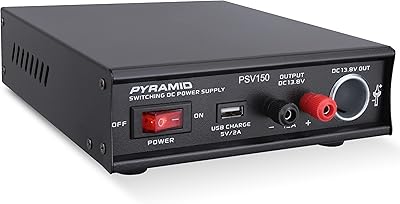
Pyramid PSV150 Compact Bench Power Supply
89%
95%
Voltage Accuracy
93%
Current Stability
88%
Build Quality
91%
Safety Features
90%
Connection Versatility
More
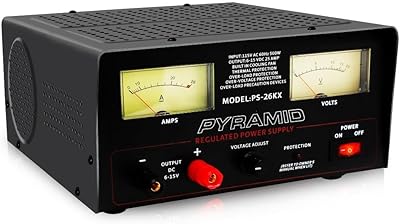
Pyramid PS26KX Universal Compact Bench Power Supply
86%
91%
Power Output Consistency
88%
Build Quality
85%
Cooling Efficiency
80%
Ease of Use
94%
Safety Features
More
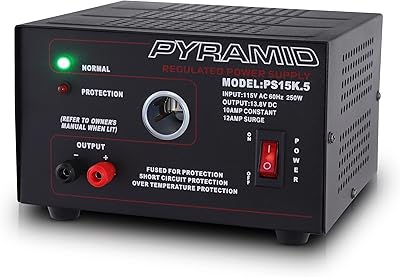
Pyramid PS15K.5 Universal Compact Bench Power Supply
85%
89%
Performance
91%
Build Quality
86%
Ease of Use
88%
Reliability
93%
Safety Features
More
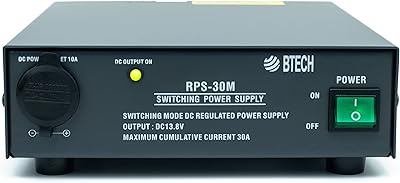
BTECH RPS-30M 30A Bench Power Supply
80%
93%
Voltage Stability
88%
Output Current Capacity
86%
Ripple & Noise
84%
Build Quality
91%
Compact Design
More
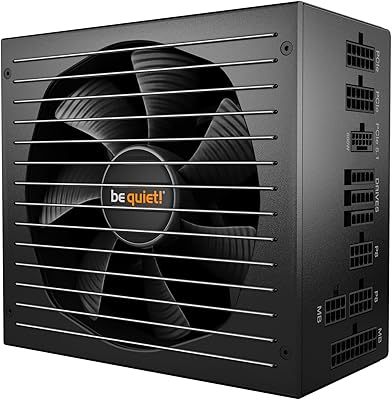
be quiet! Straight Power 12 1000W Power Supply
88%
94%
Quiet Operation
92%
Energy Efficiency
89%
Build Quality
90%
Modular Design and Cable Management
88%
Stability Under Load
More
be quiet! Pure Power 13 M 1000W Power Supply
89%
92%
Performance
94%
Noise Level
89%
Build Quality
90%
Power Delivery Stability
88%
Cable Management
More
be quiet! Straight Power 12 1500W PSU
86%
96%
Noise Level
93%
Efficiency & Heat Management
91%
Power Stability & Transient Response
88%
Cable Quality & Modularity
94%
PCIe 5.0 & Modern GPU Compatibility
More
be quiet! Dark Power Pro 13 PSU
84%
96%
Voltage Stability & Regulation
93%
Noise Level
94%
Efficiency (80 Plus Titanium)
91%
PCIe 5.0 & 12VHPWR Compatibility
83%
Rail Configuration Flexibility
More
be quiet! Pure Power 13 750W PSU
86%
93%
Noise Level
88%
Build Quality
86%
Value for Money
74%
Wattage & Power Headroom
84%
Cable Quality & Modularity
More
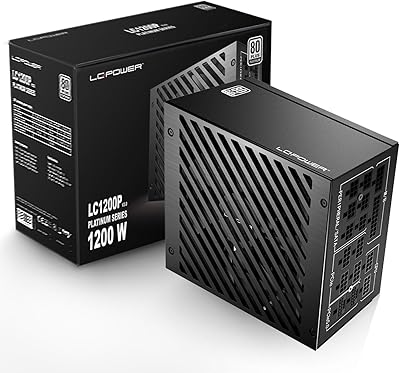
LC-Power LC1200P 1200W Gaming PC Power Supply
85%
89%
Performance
91%
Energy Efficiency
85%
Cable Management
87%
Noise Level
88%
Reliability
More

FAQ

No — this is a fixed-voltage supply locked at 13.8V DC. There are no dials, trimmers, or adjustment controls of any kind. If you need variable output, you will need to look at a different class of bench supply entirely.

Almost certainly yes, if your radio runs on 13.8V DC at 5A or less of continuous draw. The Pyramid PS7KX Bench Power Supply was specifically designed with radio operators in mind, and 13.8V is the standard operating voltage for the vast majority of CB and HAM transceivers.

Noticeably loud by modern standards. The fan runs continuously whenever the unit is powered on, and in a quiet room or home office environment, the hum is hard to ignore. In a garage workshop or a louder shack setup it blends in fine, but if fan noise bothers you, that is worth weighing before buying.

The built-in protection circuit kicks in and cuts power to the connected device. The auto-reset fuse means you do not need to pop open the unit or find a replacement fuse — just clear the fault condition and the supply should recover on its own. There is no indicator light to confirm when the fault has cleared, so you will want a multimeter handy to verify output is restored.

Not without a separate step-down transformer. The PS7KX is designed specifically for 115V AC, 60Hz input, which is the North American standard. Plugging it directly into a 220-240V outlet without a transformer would likely damage the unit immediately.

For normal operating loads of 3 to 4 amps, yes — the fan and heatsink are there specifically to manage sustained heat. If you are regularly drawing close to the full 5A continuously, the chassis will run noticeably warm, which is not a failure but is worth monitoring. Give the unit room to breathe and avoid enclosing it in a tight cabinet.

The terminals comfortably accept wire in the range of 14 to 18 AWG, which covers most standard hookup wire used in radio and hobby electronics. Strip about a half-inch of insulation, insert the wire, and tighten the screw until snug — no soldering required.

No. The package contains the power supply unit and documentation only. You supply your own wire and any connectors needed for your specific device. Given the screw terminals, most users just run wire directly from the supply to their equipment.

Start with the auto-reset protection circuit. If you had a short or overload event, the supply may have tripped. Power it off, disconnect your load, wait about 30 seconds, then power it back on and check the terminals with a multimeter. If output is restored, reconnect your device and check for the original fault. If output never comes back, verify the wall outlet is live and the power switch is fully engaged.

In practical terms, a linear regulated supply like this one produces a cleaner, lower-noise DC output than most switching supplies in the same price range. That matters most for radio equipment, where electrical noise from a switching supply can bleed into audio or transmission quality. The trade-off is that linear supplies tend to run warmer and are less efficient, but for bench use at fixed voltage, those are acceptable compromises for most hobbyists.