Overview

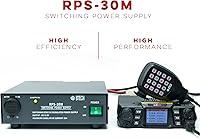
The BTECH RPS-30M 30A Bench Power Supply is a compact, regulated unit that takes standard 110V AC from your wall outlet and delivers a stable 13.8V DC output — exactly what CB, Ham, GMRS, and LMR radios need to operate cleanly indoors. BTECH designs its products in the USA and backs them with real domestic support, which carries weight in a hobby community that tends to be skeptical of no-name imports. Since its release in mid-2022, it has built a genuinely strong reputation, not through marketing, but through consistent performance reported by actual radio operators running it daily in their shacks.

Features & Benefits

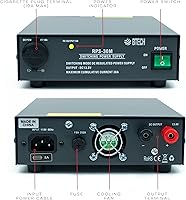
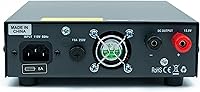
The RPS-30M gives you two practical ways to connect your gear: screw-type post terminals rated for the full 30A draw, and a cigarette-style port for lighter accessories pulling up to 10A. In real shack use, the 25A continuous rating is what matters most — the 30A peak figure is brief surge headroom, not a sustained operating number, so size your radio's current needs accordingly. Voltage is factory-set to 13.8V, but a hidden adjustment screw underneath lets you dial between 9V and 15V if needed. Protection against overheating, short circuits, and current surges is built in, and the unit sits quietly on a crowded desk without demanding much space.

Best For

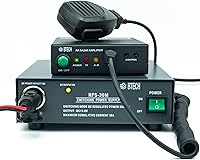
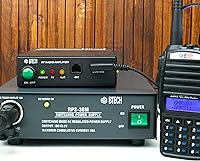
This bench supply is most at home in an amateur radio shack. If you're running a 100W HF transceiver or a mid-power VHF/UHF rig indoors, it's a clean, safe alternative to dragging a vehicle battery inside or dealing with a switcher supply's noise floor. GMRS and CB operators who want consistent voltage without worrying about a battery slowly discharging mid-QSO will appreciate the plug-and-go simplicity. It also suits hobbyists powering 12V DC tools or test gear from a standard wall outlet. If desk space is tight and you can't justify a full-sized supply, the compact form factor makes this desktop power unit a genuinely practical choice.

User Feedback

With 277 ratings and a 4.8-star average, the RPS-30M has collected unusually consistent praise for a bench supply in this price tier. Operators most commonly highlight rock-solid voltage under load and the surprisingly small footprint as the two things that won them over. A few buyers note that the cooling fan can be audible in a quiet room, and some mention wishing the voltage adjustment were a front-panel knob rather than a tucked-away screw. That said, genuinely critical reviews are rare. Several users specifically mention switching from cheaper units and finding this desktop power unit noticeably more dependable during extended transmit sessions.

Pros

  • Holds voltage rock-solid at 13.8V even under sustained transmit loads, which is the core job done right.
  • At 25A continuous, the RPS-30M covers the power needs of most 100W-class HF and VHF transceivers without strain.
  • Dual output options — screw terminals for heavy gear and a cigarette port for accessories — cover most shack setups in one unit.
  • The compact size is genuinely impressive for a 30A-rated supply; it fits where bulkier units simply cannot.
  • Built-in short circuit, overheat, and surge protection adds a meaningful layer of safety during long operating sessions.
  • Simple plug-and-switch operation means zero learning curve, even for newer operators setting up their first indoor shack.
  • A hidden set screw allows voltage adjustment from 9V to 15V, giving the bench supply flexibility beyond a single fixed use case.
  • BTECH's USA-based warranty and support is a real differentiator for buyers burned by unresponsive overseas sellers.
  • Under 100mV ripple and noise keeps interference out of your audio chain, which matters on SSB and digital modes.
  • Strong owner satisfaction across hundreds of real-world ratings suggests reliability holds up beyond the initial purchase.

Cons

  • The voltage adjustment is a recessed set screw on the underside, not a front panel knob — awkward if you change voltages often.
  • The cooling fan is audible in quiet rooms, which can be distracting during receive-only listening sessions.
  • No built-in LCD or meter display means you cannot monitor live voltage or current draw without a separate instrument.
  • Strictly a 110V/60Hz input design — buyers outside North America need an external step-down transformer to use it.
  • The cigarette plug output is capped at 10A, which limits how much gear you can run through that port simultaneously.
  • At roughly 4 lbs, it is not the lightest option if you ever need to transport it to a field day or portable operation.
  • No front-panel indicators beyond a power switch — there is no at-a-glance way to know if a protection circuit has tripped.
  • Buyers needing genuinely sustained draws above 25A will need to look at a higher-rated supply rather than relying on the peak figure.

Ratings

Our AI scoring system analyzed verified global owner reviews of the BTECH RPS-30M 30A Bench Power Supply, actively filtering out incentivized, bot-generated, and duplicate submissions to surface what real operators actually experience day to day. The scores below reflect a balanced picture — genuine strengths weighted against recurring frustrations — so you can calibrate your expectations before buying. Both the highs and the honest shortcomings are represented across every category.

Voltage Stability
93%
Operators running SSB voice and digital modes consistently report that the output holds steady at 13.8V even during prolonged transmit cycles, which is the single most important performance trait for this type of supply. Users who previously tolerated voltage sag from cheaper units noticed an immediate improvement in transmitted audio quality after switching to the RPS-30M.
A small number of reviewers noted minor voltage fluctuation at the upper edge of the continuous current draw range, though these cases appear isolated rather than systemic. Users pairing this supply with very sensitive SDR equipment occasionally reported wanting tighter regulation than the rated sub-2% tolerance provides.
Output Current Capacity
88%
The 25A continuous rating covers the real-world demands of most 100W-class HF and VHF transceivers without the supply running hot or throttling output, which is exactly what shack operators need during contest weekends or extended net participation. Buyers appreciate that sustained performance is reliable, not just on paper.
The gap between the advertised 30A peak and the 25A continuous limit has caught some buyers off guard, particularly those who assumed the peak figure represented the usable operating ceiling. Operators with gear that demands sustained draws nudging above 25A have had to reconsider their setup or accept the risk of triggering protection circuits.
Ripple & Noise
86%
The sub-100mV peak-to-peak ripple specification translates into noticeably clean audio on receive, with operators on HF reporting no audible hum or switching noise bleeding into their signals. For a supply in this price tier, the noise floor is genuinely respectable and meets the practical needs of most amateur and GMRS operators.
Operators running highly sensitive weak-signal digital modes like FT8 or WSPR, where a pristine noise floor is critical, occasionally flagged a faint background hum under specific load conditions. It is not a widespread complaint, but buyers with particularly demanding noise requirements may want to verify performance with their specific radio before fully committing.
Build Quality
84%
The chassis feels solid and purposefully constructed for a compact unit — reviewers consistently describe it as something that looks and feels like it belongs on a proper workbench rather than a toy supply from a dollar-bin brand. The screw terminals are sturdy and accept a range of wire gauges without stripping, which matters for operators doing their own cabling.
A handful of buyers noted that the overall finish, while functional, does not quite match the premium aesthetic of more expensive competing supplies. The plastic housing, though structurally sound, gives some users pause about long-term durability in a hot or dust-prone shack environment.
Compact Design
91%
For operators working in a spare bedroom, apartment, or tight corner of a home office, the small footprint is a meaningful practical advantage — it coexists on a desk with a transceiver, logging computer, and accessories without dominating the available surface area. Several reviewers specifically cited the size as the deciding factor over larger competitors with similar specs.
The compact dimensions do mean that the internal cooling relies more heavily on the fan than a larger chassis with passive heatsinking would, which contributes to the audible fan noise some users flag. There is also less physical separation between the terminals and the chassis edge than some operators would prefer when routing heavy-gauge cable.
Voltage Adjustability
67%
33%
The ability to adjust output between 9V and 15V via the internal set screw gives the supply genuine flexibility beyond a single fixed use case, which hobbyists powering a variety of DC devices appreciate. For operators who set their voltage once and leave it, the preset factory calibration at 13.8V is accurate and requires no immediate adjustment.
The recessed set screw on the underside of the unit is an awkward solution for anyone who changes voltage settings with any regularity — it requires flipping the unit over, finding a small flathead screwdriver, and using a separate meter to verify the result. Buyers accustomed to front-panel knobs on other bench supplies find this workflow genuinely inconvenient.
Fan Noise
61%
39%
The cooling fan does its job reliably, keeping the internal temperature in check during sustained operation, and most users in a typical shack environment with background noise from the radio itself find it easy to tune out. The fan appears to spin at a consistent speed rather than ramping up and down erratically, which some users find less distracting than variable-speed alternatives.
In a quiet room, the fan hum is the most commonly cited minor frustration across reviewer feedback — it is consistent and audible enough to be noticeable during receive-only listening or in a household where others are nearby. Operators who previously used fanless linear supplies find the transition to active cooling the single biggest lifestyle adjustment.
Safety Protections
89%
Reviewers who encountered accidental short circuits during installation or wiring changes report that the protection circuits responded correctly, shutting down output without damaging the supply or connected equipment. The peace of mind this provides during long unattended operating sessions is something buyers in this community genuinely value.
A few users noted that when a protection circuit trips, there is no clear indicator light or audible alert to communicate what happened or that the supply is in a fault state, requiring some troubleshooting to identify the cause. A simple LED fault indicator would make diagnosing protection events significantly faster and less frustrating.
Ease of Setup
94%
The plug-in, switch-on simplicity is a genuine strength — new operators who have never run a bench supply before report being up and running in under five minutes, which reduces the barrier for newer hams building their first home shack. There are no driver installations, app pairings, or configuration menus to navigate.
While setup is straightforward, the lack of any included wiring accessories means first-time buyers who do not already own ring terminals or Anderson Powerpole connectors will need a separate shopping trip before they can connect their radio. The manual, by most accounts, is minimal and offers little practical guidance for newcomers.
Output Connections
79%
21%
Having both high-current screw terminals and a cigarette port on the same unit covers the majority of practical shack connection scenarios without requiring a separate distribution block. Operators who run a primary radio off the terminals and a handheld charger or accessory off the cigarette port find this dual-output arrangement genuinely convenient.
The cigarette port's 10A ceiling limits what you can simultaneously run through it — anything beyond a light accessory or a handheld radio charger will need to go through the screw terminals instead. Some operators also noted they would prefer a second set of screw terminals rather than the cigarette port, as the latter feels like a concession to vehicle accessories rather than a shack-native design choice.
Value for Money
83%
At its mid-range price point, the RPS-30M delivers performance that reviewers consistently describe as punching above its tier — particularly in voltage stability and build quality, where cheaper supplies at lower price points noticeably fall short. Buyers who compared it directly against no-name alternatives describe the step up as immediately justified.
A subset of experienced operators note that for a modest additional investment, BTECH's own higher-spec models add an LCD display and front-panel voltage control, making the RPS-30M feel slightly value-constrained for buyers who want those features without paying significantly more. The pricing feels appropriate but not exceptional when evaluated against the full competitive landscape.
Brand & Support
87%
BTECH's domestic USA-based support is a tangible advantage in a product category where many competing supplies are backed only by overseas sellers with slow or unreliable communication. Reviewers who reached out with technical questions or warranty concerns generally report responsive, knowledgeable service that reflects familiarity with the amateur radio community.
A small number of buyers noted that warranty claim processing took longer than expected, and documentation on exact warranty terms is not always clearly communicated at point of purchase. For international buyers outside North America, the domestic support advantage largely disappears and the 110V-only input adds a further complication.
Monitoring & Feedback
48%
52%
The supply does its job quietly and without demanding operator attention during normal operation, which suits users who simply want a set-and-forget power source without visual clutter on their desk. For buyers who already own a benchtop multimeter, the absence of an onboard display is a non-issue.
The complete absence of any display — no voltage meter, no current meter, no fault indicator — is a notable gap for a supply targeting serious hobbyists, and it is the most consistent feature request in user feedback. Without external metering, operators have no way to monitor their radio's actual current draw or verify output voltage in real time without adding a separate instrument.
Portability
72%
28%
At roughly 4 lbs and with a footprint small enough to slide into a bag, the RPS-30M is workable for field day or portable shack use in situations where a wall outlet is available — something operators of bulkier linear supplies cannot say about their gear. The low weight makes repositioning it in a shack setup a one-handed job.
It is not designed for field use in the traditional sense, and the 110V AC input requirement means it is only useful where shore power or a generator is available — battery-backed portable setups are entirely outside its scope. The lack of any carry handle or protective case means transport requires careful packing to avoid damaging the terminals or housing.

Suitable for:

The BTECH RPS-30M 30A Bench Power Supply is purpose-built for amateur and hobby radio operators who need a dependable, indoor-friendly power source for their shack. Ham operators running HF transceivers that demand steady current at 13.8V will find it keeps voltage stable even during sustained transmit cycles, which is where cheaper supplies tend to falter. GMRS and CB enthusiasts who have been improvising with automotive batteries or unreliable wall adapters will immediately notice the difference a regulated supply makes in audio quality and transmit consistency. Beyond radio use, it works well for hobbyists who need a clean 12V DC source for test equipment, LED lighting rigs, or other DC-powered projects on a workbench. Its small footprint makes it a realistic fit for anyone working in a spare bedroom, apartment, or compact home office where desk space is genuinely limited. Buyers who care about having a domestic warranty and someone reachable when something goes wrong will also find BTECH's USA-based support structure reassuring compared to generic imports.

Not suitable for:

The BTECH RPS-30M 30A Bench Power Supply is not the right tool if you need variable voltage controlled by a front-panel knob — the adjustment here is a recessed set screw under the unit, which is inconvenient if you regularly switch between voltage levels. Anyone powering high-efficiency HF amplifiers or gear that draws well beyond 25 amps continuously should look at heavier-duty supplies, since the RPS-30M is rated for 25A sustained and the 30A figure is a brief peak, not a workload ceiling. If fan noise is a dealbreaker in a quiet listening environment, this desktop power unit may frustrate you, as several users flag the cooling fan as audible during operation. It also lacks an LCD readout for real-time voltage and current monitoring, so operators who want live feedback without a separate meter will need to step up to a more instrumented model. Finally, buyers outside North America running 220-240V mains power cannot use this supply without a separate converter, as it is designed strictly for 110V/60Hz input.

Specifications

  • Brand: Manufactured and supported by BTECH, a brand designed in the USA with domestic warranty coverage.
  • Model: The unit carries the model designation RPS-30M within BTECH's regulated power supply lineup.
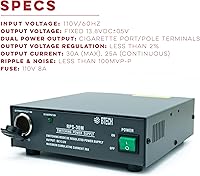
  • Input Voltage: Accepts 110V AC at 60Hz only, requiring a standard North American wall outlet for operation.
  • Output Voltage: Factory preset to a fixed 13.8V DC output, adjustable between 9V and 15V via an internal set screw.
  • Peak Current: Delivers up to 30A at peak, intended for brief surge demands rather than sustained high-draw operation.
  • Continuous Current: Rated for 25A of continuous current output, which covers the steady-state needs of most 100W-class transceivers.
  • Voltage Regulation: Output voltage regulation is specified at less than 2%, keeping the supply voltage consistent under varying load conditions.
  • Ripple & Noise: Ripple and noise is rated under 100mV peak-to-peak, reducing interference in sensitive audio and digital radio applications.
  • Connections: Features dual output paths: screw-type post terminals rated for up to 30A and a cigarette-style plug port rated for up to 10A.
  • Dimensions: The unit measures 7.5 x 5.7 x 1.85 inches, making it one of the more compact options in the 30A supply category.
  • Weight: The complete unit weighs approximately 4 lbs, light enough to reposition on a desk without difficulty.
  • Fuse Rating: Protected on the input side by an 8A fuse rated for 110V AC to guard against upstream electrical faults.
  • Protections: Includes built-in safeguards against overheating, short circuits, and amperage surges to protect both the supply and connected equipment.
  • Color: Available in black with a compact, low-profile chassis suited for desk or shelf mounting in a home shack environment.
  • Country of Design: Designed in the USA, with BTECH providing US-based customer support and warranty service for domestic buyers.

Related Reviews
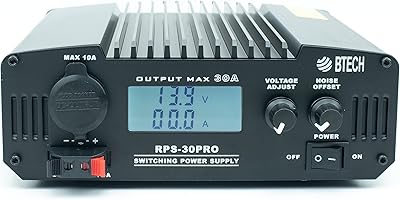
BTECH RPS-30PRO 30A Bench Power Supply
84%
91%
Output Voltage Stability
83%
Noise & RF Interference
88%
Build Quality
87%
Current Delivery
93%
Ease of Setup
More
Pyramid PSV150 Compact Bench Power Supply
89%
95%
Voltage Accuracy
93%
Current Stability
88%
Build Quality
91%
Safety Features
90%
Connection Versatility
More
SUPERNIGHT 12V 30A Switching Power Supply
86%
91%
Power Performance
85%
Cooling Efficiency
94%
Safety Features
88%
Value for Money
72%
Noise Levels Under Load
More
Pyramid PS26KX Universal Compact Bench Power Supply
86%
91%
Power Output Consistency
88%
Build Quality
85%
Cooling Efficiency
80%
Ease of Use
94%
Safety Features
More
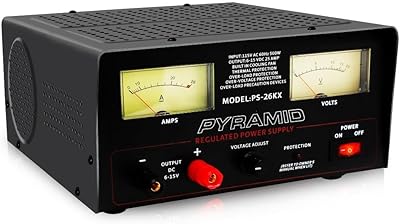
Pyramid PS7KX Bench Power Supply
80%
91%
Voltage Stability
88%
Value for Money
93%
Ease of Setup
74%
Build Quality
78%
Cooling Performance
More
SKY TOPPOWER STP1330 Ham Radio Power Supply
82%
91%
Voltage Regulation Stability
88%
Noise & RFI Performance
74%
Continuous Current Headroom
89%
Fan Noise & Thermal Management
78%
Build Quality & Chassis
More
Pyramid PS15K.5 Universal Compact Bench Power Supply
85%
89%
Performance
91%
Build Quality
86%
Ease of Use
88%
Reliability
93%
Safety Features
More
be quiet! Straight Power 12 1000W Power Supply
88%
94%
Quiet Operation
92%
Energy Efficiency
89%
Build Quality
90%
Modular Design and Cable Management
88%
Stability Under Load
More
be quiet! Dark Power Pro 13 PSU
84%
96%
Voltage Stability & Regulation
93%
Noise Level
94%
Efficiency (80 Plus Titanium)
91%
PCIe 5.0 & 12VHPWR Compatibility
83%
Rail Configuration Flexibility
More
be quiet! Pure Power 13 750W PSU
86%
93%
Noise Level
88%
Build Quality
86%
Value for Money
74%
Wattage & Power Headroom
84%
Cable Quality & Modularity
More

FAQ

Yes, as long as your transceiver draws at or below 25A continuously, the RPS-30M should handle extended transmit cycles without complaint. Keep in mind the 30A figure is a peak rating for brief surges, not a number you want to run against indefinitely. Most 100W-class radios draw well within that 25A continuous ceiling on voice modes.

You can adjust it, but the process is a little unconventional. There is a small set screw recessed on the underside of the unit that lets you dial the output anywhere from 9V to 15V. It is not a front-panel knob, so if you regularly switch between voltage levels, you will want a small flathead screwdriver handy and a multimeter to verify the new setting.

No, this unit is designed exclusively for 110V AC at 60Hz, which is the standard in North America. If you are in a country using 220-240V mains, you would need an external step-down transformer before connecting this supply. Do not attempt to plug it directly into higher-voltage outlets.

The fan is noticeable but not dramatically loud. In a quiet room it is audible as a consistent low hum, which some operators find mildly distracting during receive-only listening. In a typical shack environment with other ambient noise, most users report it blends into the background without much issue.

Technically yes, provided the combined current draw of both radios stays within the 25A continuous limit. Use the screw terminal outputs for your primary radio and the cigarette port for a lower-draw accessory, keeping in mind that cigarette port is capped at 10A on its own. Add up your radios' published current draw specs before committing to a dual-radio setup.

The unit ships with the supply itself; connection hardware for the screw terminals and any adapters you need for your specific radio are your responsibility. Most radio operators already have appropriate ring terminals or Anderson Powerpole connectors on hand, but first-time buyers should factor in those accessories.

No, this desktop power unit has no built-in meter or LCD readout. If you want to monitor output voltage or current draw live, you will need a separate inline meter or a benchtop multimeter. It is a notable omission compared to some step-up models in the BTECH lineup that do include an LCD display.

The built-in protection circuits will shut down or limit output automatically to prevent damage to the unit and your connected equipment. Once the fault condition is cleared and the unit has cooled, normal operation should resume. It is worth checking your wiring if a short circuit protection event occurs before restarting.

A regulated bench supply like this one offers a much more stable and consistent voltage than a vehicle battery, which sags under load and varies depending on charge state. You also avoid the risks of working with a large, heavy battery indoors, including off-gassing and the hassle of keeping it charged. For permanent shack use, a regulated AC-to-DC supply is the cleaner, safer long-term solution.

BTECH provides a US-based warranty and customer support for domestic buyers, which means you are dealing with a real support team rather than a distant overseas seller. The specific warranty duration should be confirmed with BTECH directly or at point of purchase, but the brand has a reputation in the amateur radio community for being responsive when issues arise.

Where to Buy