Overview

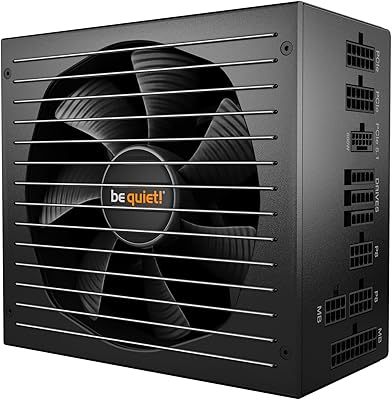
The be quiet! Dark Power Pro 13 PSU represents the top of the brand's power supply lineup, and the 1300W variant is squarely aimed at builders who refuse to compromise. ATX 3.1 compliant and carrying an 80 Plus Titanium rating — meaning it converts up to 94.5% of drawn power into usable energy — this flagship PSU wastes remarkably little electricity even when a power-hungry GPU is pulling hard. That makes it relevant not just for gaming rigs loaded with next-gen graphics cards, but for workstation operators and overclockers who need clean, stable power around the clock.
Features & Benefits

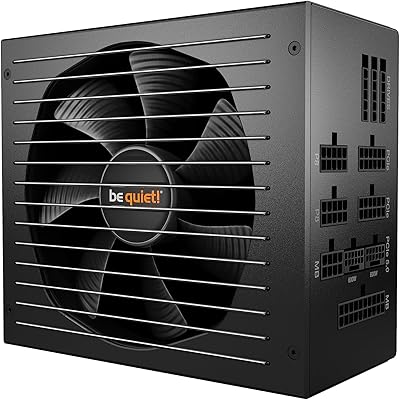
The power delivery architecture here is genuinely sophisticated. Fully digital control paired with a full bridge LLC topology means the voltage rails stay rock-steady even as load fluctuates wildly — something cheaper units simply cannot match. The standout feature for builders is the overclocking key switch, which lets you toggle between six independent 12V rails and one unified high-current rail. Think of it as choosing between precision control and raw amperage delivery. Both 12VHPWR cables are included in the box, so you can connect a PCIe 5.0 card or a legacy 6+2 pin GPU without hunting for adapters. The full mesh front panel and funnel-shaped inlet keep thermals in check while the fan stays nearly inaudible.

Best For

This power supply is a strong fit for a specific type of builder — one who is already running, or planning to run, a card like an RTX 4090 or RX 7900 XTX and wants to eliminate power delivery as a variable. The switchable rail configuration is a genuine plus for overclockers, giving them flexibility that most PSUs simply don't offer. Professionals who run machines 24/7 will also appreciate how titanium-grade efficiency translates into lower electricity consumption over months of continuous use. And if PCIe 5.0 GPU adoption is on your horizon, this flagship PSU is already prepared for that transition without any adapters or compromises.

User Feedback

Owners of this power supply tend to be satisfied, with the most consistent praise directed at how quiet it runs — even under sustained, demanding loads, the fan rarely becomes audible. Build quality and cable construction also earn positive comments, with the 12VHPWR connectors feeling solid rather than flimsy. On the downside, a handful of buyers have flagged physical size as a concern; at over 16 inches deep, it won't fit comfortably in some mid-tower cases without planning. The rail-switching feature is appreciated by those who understand it, but a portion of buyers admit they never touched it. Long-term reliability impressions are largely positive, though the sample size for multi-year ownership is still growing.

Pros

  • Titanium efficiency rating means noticeably less heat generated inside the case during sustained high loads.
  • Both 12VHPWR cables are included in the box — no hunting for adapters or aftermarket cables.
  • The fan stays nearly inaudible during typical gaming and productivity workloads, even at high output.
  • Switchable rail configuration gives overclockers a meaningful tuning option most competitors simply do not offer.
  • Fully digital regulation keeps voltage rails stable when GPU power draw spikes suddenly and sharply.
  • ATX 3.1 compliance ensures this power supply is ready for current and upcoming GPU generations without modification.
  • Build quality feels dense and premium throughout, with firm modular connectors that do not loosen over time.
  • Broad compatibility across desktops, workstations, HTPCs, and mining rigs makes it versatile across multiple build types.
  • Long-term reliability impressions from extended owners are consistently positive, including in always-on professional environments.

Cons

  • At over 16 inches long, this power supply will not fit many standard mid-tower cases without careful planning.
  • The documentation for the rail-switching feature is thin and leaves many buyers confused about when to use each mode.
  • Cable stiffness near the 12VHPWR connector heads makes routing inside tighter cases more awkward than it should be.
  • Some modular cable lengths fall slightly short for clean routing in mid-tower builds with bottom-mounted PSU bays.
  • The cable storage pouch feels like an afterthought compared to the premium packaging competitors offer at this tier.
  • 1300W is overkill for any build not pairing a flagship GPU with a high-core-count processor — most users never approach full load.
  • Efficiency and regulation advantages over Platinum-tier alternatives are only measurable with specialized equipment in typical builds.
  • Relatively recent market availability means multi-year reliability data is still limited compared to longer-established flagship units.

Ratings

The be quiet! Dark Power Pro 13 PSU scores below are generated by AI after analyzing verified buyer reviews from global markets, with spam, bot-submitted, and incentivized feedback actively filtered out. This flagship power supply earns strong marks across most categories, though a few real-world friction points prevent a clean sweep. Both the standout strengths and the legitimate grievances are reflected transparently in every scorecard.
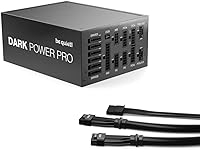
Voltage Stability & Regulation
96%
Builders running RTX 4090-class cards under extended gaming or rendering sessions consistently report no voltage sag or instability. The fully digital control architecture keeps rails disciplined even when GPU power draw spikes suddenly, which is exactly where cheaper units start to show their limits.
A small group of users running exotic multi-GPU or extreme overclocking setups noted that the difference over competing high-end units was detectable only with professional measurement equipment — making this level of precision overkill for anything less than a serious enthusiast build.
Noise Level
93%
Quiet operation is arguably the most praised aspect by everyday owners. Under typical gaming loads the fan is nearly inaudible, and several users running 24/7 workstation workloads report they often forget the PSU fan exists entirely. For a 1300W unit, that is genuinely impressive.
At sustained loads pushing close to the unit's ceiling — think stress testing or prolonged crypto workloads — the fan does spin up noticeably. It never becomes loud by any reasonable standard, but buyers expecting zero audible presence at 100% load may be slightly surprised.
Efficiency (80 Plus Titanium)
94%
Users running machines around the clock flag real electricity savings compared to their previous Gold or Platinum units. The 94.5% peak efficiency means less heat generated inside the case, which also takes pressure off case cooling and contributes to the overall quiet system experience.
Titanium-grade efficiency only delivers meaningful savings if the system is genuinely pulling significant wattage. Builders with modest components below this PSU's power range will see marginal real-world efficiency gains that may not justify the investment over a Platinum-rated alternative.
PCIe 5.0 & 12VHPWR Compatibility
91%
Having two 12VHPWR cables included in the box is a practical advantage that owners genuinely appreciate. There is no need to source aftermarket cables or use potentially risky adapters, and the connectors are reported to seat firmly and stay put during cable management.
A handful of users flagged minor concerns about cable stiffness near the 12VHPWR connector head, which can make routing inside tighter cases slightly awkward. Nothing that affects function, but it adds a small frustration during the build process.
Rail Configuration Flexibility
83%
The ability to switch between six independent 12V rails and one unified high-current rail via a physical key switch is a feature that serious overclockers genuinely use and value. Those who understand it treat it as a meaningful tuning tool that most competing PSUs simply do not offer.
The majority of everyday buyers admit they never touched the switch or fully understood its purpose. Documentation explaining when and why to use each mode is considered thin by a notable portion of users, which reduces this feature's practical value for the non-specialist audience.
Build Quality & Materials
89%
The chassis feels dense and well-constructed, and the full mesh front panel looks premium without feeling fragile. Cable connectors across the board are firm and consistent, with no reports of loose modular connections that can plague lesser units over time.
At this weight and price tier, some users expected slightly more refined cable sleeving. The included cables are functional and well-made, but a few buyers feel the aesthetics fall just short of what competing flagship PSUs offer in the same bracket.
Physical Size & Case Compatibility
67%
33%
For full tower or large mid-tower builds, the physical footprint is a non-issue and the unit installs cleanly. Builders who planned their case choice around a unit of this caliber generally report a straightforward installation with adequate cable clearance.
At over 16 inches in length, this power supply does not fit in many standard mid-tower cases without careful planning or physical interference with drive bays. This is one of the most consistently surfaced complaints and has caught several buyers off guard post-purchase.
Cable Length & Management
78%
22%
Cable lengths are generous enough for most full-tower configurations, and the modular design means unused cables stay out of the build entirely. Users managing large cases with bottom-mounted PSU shrouds report comfortable routing without extensions.
In mid-tower cases — particularly those with the PSU mounted at the bottom rear — some cables, especially the 24-pin ATX, are reported as slightly short for clean routing to the top of the motherboard. Not a dealbreaker, but it adds friction for aesthetics-focused builders.
Thermal Management
88%
The funnel-shaped mesh inlet channels airflow efficiently, and internal temperatures stay well-controlled even during extended high-load sessions. Users in warm ambient environments or cases with limited airflow report the PSU handles heat without throttling or unusual fan behavior.
Some users noted that in cases with restricted PSU intake — like certain SFF-adjacent mid-towers with dense cable bundles near the PSU bay — exhaust temperatures run higher than expected. Proper cable management around the unit makes a measurable difference.
Value for Money
71%
29%
For the target buyer — someone building around a flagship GPU and expecting to run the system hard for years — the combination of titanium efficiency, ATX 3.1 compliance, and included 12VHPWR cables makes the investment feel well-considered rather than excessive.
For builders who do not push the hardware to its limits or who run more modest component configurations, the asking price is difficult to justify against well-regarded Platinum-rated alternatives that deliver 90% of the real-world performance at a noticeably lower cost.
Long-Term Reliability
87%
Owners who have run this power supply for over a year — including in workstation and always-on configurations — report no degradation in performance or stability. The brand's track record in this segment lends additional confidence to the long-term ownership picture.
The product is relatively young, with wide availability dating from mid-2023, so long-term multi-year reliability data from a large owner pool is still accumulating. Early signals are positive, but buyers seeking decade-long proven track records have limited data to draw from.
Documentation & Setup Experience
72%
28%
Initial setup is straightforward for experienced builders, and the physical overclocking key switch is easy to locate. Modular connector labeling is clear, which reduces errors during a complex build with many cable runs.
The manual is considered sparse by users who wanted deeper guidance on rail configuration modes and optimal use cases for the switch. First-time high-end builders in particular felt the documentation assumed a level of prior PSU knowledge that not every buyer has.
Packaging & Unboxing
81%
19%
The unit arrives well-protected, and the accessory organization inside the box is tidy. Both 12VHPWR cables and the full modular cable set are presented in a way that feels appropriate for a premium product at this tier.
A minor but recurring note from buyers is that the cable storage pouch, while functional, feels like an afterthought compared to the fabric pouches or rigid cases that some competing flagship PSUs include. It is a small detail, but noticeable at this price point.
Overclocking Support
85%
The unified 12V rail mode delivers the kind of uninterrupted high-amperage draw that serious overclockers need when pushing CPUs and GPUs beyond spec simultaneously. Users who stress-test aggressively report rock-solid behavior that inspires confidence during extended sessions.
The multi-rail mode, while useful for controlled power distribution, requires the user to understand which devices draw from which rail to configure the build correctly. Without that knowledge, some overclockers default to single-rail mode and never explore the full feature set.
Broad System Compatibility
90%
The combination of ATX form factor, comprehensive connector selection, and switchable rail modes makes this power supply viable across a wide range of build types — from workstations to HTPCs to mining rigs. Buyers repurposing it across multiple builds over time see strong versatility.
The 1300W output is genuinely excessive for any build not running one or more flagship discrete GPUs alongside a high-core-count processor. Buyers who overestimate their power needs and purchase this unit for midrange systems are paying for headroom they will realistically never use.

Suitable for:

The be quiet! Dark Power Pro 13 PSU is built for a specific type of builder, and when it lands in the right hands, it genuinely earns its place. If you are running a flagship GPU — think RTX 4090 or RX 7900 XTX territory — and you want a power supply that handles sudden, massive transient loads without flinching, this is one of the most capable units available. Overclockers pushing both CPU and GPU beyond stock settings will appreciate the ability to toggle between multi-rail and single-rail delivery, giving them a tuning lever that most PSUs simply do not offer. Professionals running workstations around the clock will also find the titanium efficiency rating meaningful over time — lower heat output and reduced electricity draw add up across months of continuous operation. If near-silent system noise is a priority and you refuse to compromise on power headroom to achieve it, this flagship PSU strikes that balance better than most of its competitors. It is equally well-suited for forward-looking builders who want full PCIe 5.0 readiness with proper 12VHPWR cables included from day one, no adapters required.

Not suitable for:

The be quiet! Dark Power Pro 13 PSU is a poor match for anyone building a system that does not genuinely demand this level of output or engineering sophistication. If your build is centered around a mid-range GPU and a mainstream processor, a well-regarded Platinum-rated unit at a significantly lower price will deliver functionally identical real-world results — the efficiency difference and voltage precision will be completely imperceptible in everyday use. Budget-conscious builders should look elsewhere; the premium here is real, and it only makes financial sense when the hardware pushing the PSU is equally serious. Case compatibility is another practical constraint: at over 16 inches in depth, this power supply will not fit in many popular mid-tower cases without careful pre-purchase measurement, and discovering that post-purchase is a genuinely frustrating experience. The rail-switching feature, while clever, requires some technical background to use intentionally — buyers expecting intuitive plug-and-play simplicity may find the documentation underwhelming. Builders working inside compact or SFF-adjacent cases should also be cautious, as the physical size creates clearance problems that no amount of creative cable routing can fully solve.
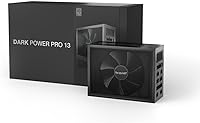
Specifications

  • Output Wattage: This power supply delivers a continuous 1300W of output, providing ample headroom for flagship GPU and high-core-count CPU combinations under sustained load.
  • Efficiency Rating: Certified 80 Plus Titanium, the unit converts up to 94.5% of incoming AC power into usable DC power, minimizing waste heat across the full load range.
  • Form Factor: Built to the standard ATX form factor, it is designed for full-size ATX cases, though its extended depth requires careful case compatibility checks before purchase.
  • Dimensions: The unit measures 16.42″ x 9.97″ x 5.99″, making it one of the longer PSUs in its class and a potential fit issue for shallower mid-tower cases.
  • Weight: At 14.39 pounds, this is a dense, substantial unit that reflects the internal component quality and build robustness expected at this tier.
  • ATX Standard: Fully compliant with the ATX 3.1 specification, ensuring compatibility with current and upcoming motherboards, GPUs, and system power delivery requirements.
  • Rail Configuration: Offers six independent 12V rails or one unified high-current 12V rail, switchable via a physical overclocking key on the unit itself.
  • GPU Connectors: Natively supports PCIe 5.0 graphics cards via the 12VHPWR connector standard, as well as legacy GPUs using the traditional 6+2 pin PCIe connector format.
  • Included Cables: Two 12VHPWR cables are included in the box, allowing direct connection to high-end graphics cards without requiring third-party adapters.
  • Regulation Method: Uses fully digital control circuitry for precise, real-time voltage regulation across all rails, reducing ripple and maintaining stability during rapid load transitions.
  • Topology: Built around a full bridge LLC resonant converter topology, which contributes to both the unit's high efficiency figures and its exceptional voltage regulation consistency.
  • Cooling Method: Air-cooled via an internal fan drawing air through a full mesh front panel fitted with a funnel-shaped inlet that channels and concentrates airflow for improved thermal performance.
  • Compatible Systems: Officially supported configurations include desktop PCs, servers, workstations, home theater PCs, and cryptocurrency mining rigs requiring stable high-wattage power delivery.
  • Input Voltage: Accepts up to 240V AC input, making it suitable for use in both North American and international electrical environments with appropriate outlets.
  • Model Number: The official model identifier is BN500, used for warranty registration, technical support requests, and cross-referencing compatible accessories or replacement cables.
  • Brand: Manufactured by be quiet!, a German brand with a long-standing focus on low-noise PC components for enthusiast, professional, and workstation computing environments.
  • Connector Type: Uses standard ATX and PCI Express connector interfaces throughout its modular cable ecosystem, ensuring broad compatibility with current generation motherboards and add-in cards.
  • Availability: This unit first became available in May 2023, positioning it as a relatively recent flagship release with ongoing firmware and compatibility support from the manufacturer.

Related Reviews

be quiet! Dark Power 13 1000W PSU
89%
94%
Performance & Power Delivery
98%
Noise Level
89%
Build Quality
90%
Modular Cable Management
85%
Installation Ease
More
be quiet! Pure Power 13 M 850W Power Supply
89%
92%
Performance
94%
Efficiency
88%
Noise Level
91%
Modular Design
89%
Build Quality
More
be quiet! Pure Power 13 750W PSU
86%
93%
Noise Level
88%
Build Quality
86%
Value for Money
74%
Wattage & Power Headroom
84%
Cable Quality & Modularity
More
be quiet! Pure Power 13 M 1000W Power Supply
89%
92%
Performance
94%
Noise Level
89%
Build Quality
90%
Power Delivery Stability
88%
Cable Management
More
be quiet! Dark Rock Pro 5
85%
93%
Thermal Performance
89%
Acoustic Performance
96%
Build Quality
74%
Installation Experience
61%
RAM Clearance
More
be quiet! Power Zone 2 750W ATX 3.1 PSU
87%
92%
Performance
89%
Quiet Operation
90%
Energy Efficiency
85%
Build Quality
93%
Compatibility with Modern Systems
More
be quiet! Power Zone 2 1000W ATX 3.1 PSU
89%
92%
Performance under Load
88%
Noise Level
91%
Cooling Efficiency
90%
Build Quality
89%
Power Delivery Stability
More
be quiet! Straight Power 12 1000W Power Supply
88%
94%
Quiet Operation
92%
Energy Efficiency
89%
Build Quality
90%
Modular Design and Cable Management
88%
Stability Under Load
More
be quiet! Straight Power 12 1500W PSU
86%
96%
Noise Level
93%
Efficiency & Heat Management
91%
Power Stability & Transient Response
88%
Cable Quality & Modularity
94%
PCIe 5.0 & Modern GPU Compatibility
More
be quiet! Pure Power 12 M 850W Modular Power Supply
88%
94%
Quiet Operation
88%
Ease of Installation
89%
Build Quality
92%
Power Delivery Stability
90%
Energy Efficiency
More

FAQ

That depends heavily on your specific case. At over 16 inches in depth, the be quiet! Dark Power Pro 13 PSU is longer than many standard ATX units, and it has caused clearance issues in a notable number of popular mid-tower builds. Before purchasing, measure your case's PSU bay depth carefully and check whether your drive cage or other internal components sit close to the PSU compartment.
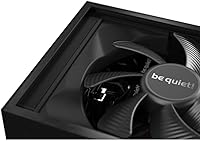
The switch lets you choose between two power delivery modes: six separate 12V rails, or one single massive 12V rail. The multi-rail mode distributes power across different rails for added protection, while single-rail mode sends all available amperage down one path — useful when overclocking demands uninterrupted high current. For most standard builds, either mode works fine, but overclockers pushing hardware beyond spec tend to prefer single-rail for the unthrottled headroom.

No. Two 12VHPWR cables are included in the box, so you can connect directly to a PCIe 5.0 card like the RTX 4090 without sourcing any adapters. This is a meaningful practical advantage — third-party adapter cables have been a source of connector issues in high-draw scenarios, and native cables eliminate that risk.

It is genuinely quiet under typical loads. Owners running it in gaming and productivity workloads consistently describe the fan as nearly inaudible. It does spin up at extreme sustained loads near the unit's ceiling, but even then it stays well within what most people would call acceptable. If you are building a quiet workstation or a living room PC, this is one of the stronger choices at this wattage.

For the majority of single-GPU builds — even high-end ones — yes, it is more than strictly necessary. A system running one RTX 4090 alongside a modern high-performance CPU typically peaks well below 1000W under gaming loads. The 1300W headroom makes more sense for extreme overclocking scenarios, multi-GPU setups, or workstations with many storage devices and expansion cards running simultaneously.

The practical savings depend on how long your system runs and how hard it works. Titanium efficiency means the unit wastes less power as heat compared to Gold or even Platinum alternatives. For a system running 8 hours a day under gaming loads, the efficiency difference might translate to a modest but real reduction in annual electricity costs. For always-on workstations, those savings compound meaningfully over time.

It works well beyond gaming builds. The broad compatibility list officially includes workstations, servers, and even mining rigs. The 24/7 reliability and high efficiency rating make it a reasonable choice for professional environments where continuous stable power delivery matters more than upfront cost.

You only need to connect as many cables as your GPU requires, which is typically one 12VHPWR connector for a single card. The second cable is included as a convenience for multi-GPU configurations or future upgrades. Leaving the second cable unplugged and stored does not affect performance.

Multi-rail mode adds a layer of overcurrent protection by limiting how much current any single rail can deliver before triggering a protection circuit. This reduces the risk of damage from a short circuit on one rail spreading to the entire system. Single-rail mode removes those per-rail limits, which gives more headroom but puts more responsibility on the connected hardware behaving within spec. For most builders, multi-rail mode is the safer daily-use choice.

Yes, this is a fully modular design, meaning every cable — including the main ATX power connector — detaches from the PSU itself. That makes cable management cleaner and helps with airflow. Cable quality is generally well-regarded by owners, though a few have noted that the 12VHPWR cables are on the stiffer side near the connector head, which can make routing in tight spaces slightly more challenging during the build process.

Where to Buy