Overview

The OLIMT 8x25 Compact Monocular arrived on the market in early 2024, positioning itself as a palm-sized optic for outdoor enthusiasts who refuse to haul heavy gear. OLIMT is a relatively new brand, so the 4.4-star average across 152 ratings offers a promising early signal — though it is too soon to claim long-term reliability with real confidence. At its mid-range price point, buyers reasonably expect solid glass quality and durable construction, not professional-grade performance. Worth stating upfront: this is a single-eye optic, not a substitute for binoculars. If you are comfortable with that distinction, this compact monocular punches well above expectations for its size.

Features & Benefits

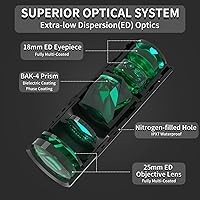
What sets this pocket scope apart from cheaper alternatives starts with the glass itself. The ED (extra-low dispersion) lenses, paired with fully multi-coated surfaces, reduce chromatic aberration — that annoying color fringing you often see around high-contrast edges — resulting in noticeably cleaner color rendition than you would expect at this size. The BAK-4 prism system improves light transmission and contrast over the more common BK-7 glass found in budget optics, which matters most in overcast or shaded conditions. An IPX7 waterproof rating, backed by nitrogen fill and O-ring seals, means you do not need to baby it in the rain. The 0.3-meter close-focus distance is a genuine bonus for birdwatchers wanting to study subjects at nearly arm's length.

Best For

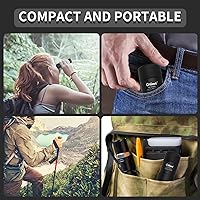
This compact monocular fits naturally into a few specific scenarios. Hikers and backpackers will appreciate the sub-6-ounce weight and genuinely pocket-sized footprint — it disappears into a jacket pocket without noticeable bulk. Travelers find it handy for sightseeing, wildlife spotting, or watching performances without carrying a full binocular case. Casual birdwatchers benefit from the macro close-focus capability that most monoculars at this size skip entirely. Hunters can rely on the waterproof build for scouting in variable weather. That said, the 25mm objective will not gather enough light for serious low-light hunting or astronomy, and those who need both eyes for extended sessions should consider proper binoculars instead.

User Feedback

Across verified purchases, the most consistent praise centers on image sharpness and how much optical quality buyers feel they are getting for the price — several reviewers mention being genuinely surprised by the clarity at 8x. Compact size comes up repeatedly, with travelers and hikers noting it slips easily into a shirt pocket. On the downside, a handful of users flag focus wheel stiffness straight out of the box, requiring a brief break-in period. A few buyers who wear glasses also note the eye relief feels slightly tight for comfortable extended sessions. No widespread durability complaints have surfaced yet, though the brand's short track record means long-term wear patterns are still an open question.

Pros

  • ED glass delivers noticeably cleaner color and sharper edges compared to standard lenses at this size
  • BAK-4 prisms improve brightness and contrast, a meaningful upgrade over cheaper BK-7 alternatives
  • IPX7 waterproof rating holds up confidently in rain, splashes, and humid trail conditions
  • At 5.8oz and roughly the size of a thick marker, this compact monocular genuinely disappears into a pocket
  • A 0.3-meter close-focus distance is rare at this price tier and a real asset for nature observers
  • The wide field of view makes tracking birds in flight or moving wildlife far less frustrating
  • Early buyer ratings skew consistently positive, with image clarity being the most praised attribute
  • Nitrogen fill prevents internal fogging when moving between temperature extremes
  • Solid build quality for the price, with no widespread reports of early failure or loose tolerances
  • Versatile enough to cover hiking, travel, wildlife, sports events, and casual birdwatching in one package

Cons

  • The focus wheel can feel stiff out of the box, requiring a break-in period before it moves smoothly
  • 16mm eye relief is workable but may feel tight for eyeglass wearers during extended sessions
  • The 25mm objective limits low-light performance — not suitable for dawn, dusk, or night observation
  • OLIMT is a new brand with limited long-term ownership data, making durability hard to verify beyond early reviews
  • Single-eye use causes fatigue faster than binoculars during prolonged glassing sessions
  • 152 ratings is a relatively small sample size to draw firm conclusions about consistency across production batches
  • No image stabilization, so hand tremor at 8x magnification is visible when not braced against a surface
  • The included accessories feel basic and may not inspire confidence in the overall package presentation

Ratings

The scores below reflect our AI-driven analysis of verified global buyer reviews for the OLIMT 8x25 Compact Monocular, with spam, bot-generated, and incentivized feedback actively filtered out before scoring. Each category is weighted against real-world usage patterns reported by confirmed purchasers, from trail hikers to casual birdwatchers. Both the standout strengths and the honest friction points are reflected in every score — nothing is rounded up to make the product look better than it actually is.

Optical Clarity
83%
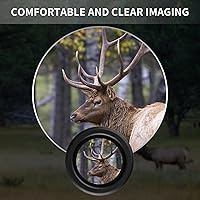
Buyers consistently report sharper, cleaner images than they expected from a monocular this small. The ED glass visibly reduces color fringing on high-contrast subjects — tree lines against bright skies, birds on wire fences — and the fully multi-coated lenses hold up well in midday sun without significant glare washing out detail.
At the edges of the field of view, a modest amount of softness appears, which is typical for compact optics but noticeable to experienced users. In lower ambient light — overcast mornings or shaded forest trails — the 25mm objective starts to show its ceiling, and images lose punch compared to larger-aperture alternatives.
Portability & Size
94%
At 5.8oz and barely larger than a thick marker, this pocket scope genuinely disappears into a jacket pocket or daypack hip belt. Hikers and travelers repeatedly describe it as the optic they actually bring on trips because it adds no meaningful weight or bulk to their kit.
The compact form factor is a deliberate trade-off, and a small minority of users with larger hands find it slightly awkward to grip steadily for extended glassing sessions. There is no getting around the fact that size constraints limit the objective diameter, which caps low-light capability.
Build Quality
76%
24%
The chassis feels solid and purposeful for its price tier — no rattles, no flex in the barrel, and the rubber armoring absorbs minor knocks without complaint. Several buyers who used it across multiple hiking trips in variable weather report no structural issues after months of field use.
OLIMT is a young brand and the long-term wear data simply does not exist yet at scale — 152 ratings tells you the product starts well but cannot confirm how it holds up over two or three years of regular use. A few buyers noted the focus ring collar and eyecup felt slightly plasticky under close inspection.
Waterproof Performance
88%
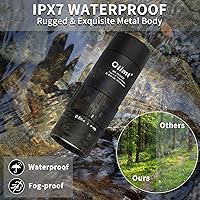
The IPX7 rating earns consistent praise from users who have taken this compact monocular through rain showers, boat spray, and humid coastal environments without any fogging or moisture ingress. The nitrogen fill is particularly appreciated by hikers who move quickly between temperature zones and expect a cheaper optic to fog instantly.
IPX7 is a strong rating on paper, but a small number of buyers in very humid subtropical climates reported light internal condensation after extended temperature swings — suggesting real-world performance, while generally reliable, may not be perfectly uniform across all units or conditions.
Value for Money
86%
At its mid-range price point, buyers routinely describe this pocket scope as punching above its weight — particularly citing the BAK-4 prism glass and ED optics as features that typically cost more elsewhere. First-time monocular buyers especially feel they received more than expected for their outlay.
Seasoned optics users familiar with higher-end brands note the gap in refinement — lens coatings, focus smoothness, and eyecup quality — that justifies spending more if optics are a serious hobby rather than an occasional tool. Value is strong, but it is not without ceiling.
Focus Mechanism
67%
33%
Once broken in, the manual focus wheel turns smoothly enough for casual field use, and the focusing range from 0.3 meters to infinity covers a wide variety of real-world scenarios from close macro subjects to distant landscapes without requiring optical swaps or adapters.
Out of the box, a notable portion of buyers flag the focus wheel as stiff, requiring deliberate effort to turn — a real frustration when trying to quickly lock onto a moving bird or a distant subject. The break-in period is real and not immediately obvious to first-time buyers expecting a ready-to-use experience.
Eye Relief Comfort
63%
37%
For bare-eyed users, the 16mm eye relief is adequate for relaxed viewing sessions of moderate duration. Buyers without glasses report comfortable viewing at concerts, sporting events, and on trail stops without significant strain.
Eyeglass wearers consistently flag the 16mm relief as a pain point — getting close enough to the lens for full field of view requires removing glasses or rolling the eyecup down so far it feels unstable. This is a recurring theme across multiple verified reviews and is a genuine limitation for a meaningful segment of buyers.
Low-Light Performance
54%
46%
In good daytime light the optics perform well, and the ED glass maintains decent contrast even on slightly overcast days where cheaper optics tend to flatten out and lose definition. For standard outdoor use during daylight hours, most buyers are satisfied.
As soon as light drops — early morning birdwatching, dusk wildlife viewing, or any shaded forest scenario — the 25mm objective simply cannot gather enough light to produce a bright, usable image. Buyers who purchased this specifically for dawn or dusk use are the most disappointed segment in the review pool.
Field of View
81%
19%
The wide 358ft-at-1000yd field of view is a practical strength that buyers notice quickly when scanning across open landscapes or tracking birds through tree canopy. It reduces the frustrating tunnel-vision effect that plagues narrower budget monoculars and makes the viewing experience feel more natural.
While the field is wide for the magnification level, users upgrading from premium binoculars will feel a step down in the immersive panoramic quality that larger eyepieces deliver. At 8x, the field is appropriate but not exceptional by professional optics standards.
Close Focus Capability
89%
The 0.3-meter minimum focus distance is one of the most appreciated features among nature-oriented buyers — butterfly watchers, wildflower photographers without a macro lens, and insect observers describe it as a genuine surprise that differentiates this pocket scope from similarly priced competitors.
To be fair, close focus is only relevant to a specific subset of buyers — hunters and long-distance travelers rarely mention it. For those use cases it adds no functional value, so its impact on overall satisfaction varies heavily by user type.
Image Stability
66%
34%
At 8x magnification with a lightweight chassis, handheld stability is reasonable when the user braces properly — elbow tucked, body steady, or leaning against a tree or vehicle. Buyers using it for stationary subjects like landscapes or perched birds generally report an acceptable image.
Any hand tremor at 8x becomes visible, and buyers who grip the monocular casually while moving report a noticeably shaky image. Without a tripod thread for stabilization, active users tracking fast-moving subjects in the field will notice the wobble more than they might expect.
Macro Versatility
82%
18%
The ability to shift from scanning a distant hillside to focusing on a flower inches away without swapping optics is a real practical benefit that casual naturalists and trail hikers consistently mention as a pleasant surprise. It extends the useful range of this compact monocular well beyond a simple distance tool.
Macro focusing at 0.3 meters requires a steady hand and fine focus wheel adjustment, which can be fiddly given the stiffness some units exhibit out of the box. Users expecting the macro experience to be effortless may find the manual focus demands more patience than anticipated.
Packaging & Accessories
58%
42%
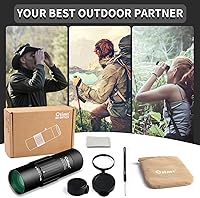
The included carrying case, lens caps, neck strap, and cleaning cloth cover the basics and mean buyers can use the optic immediately after unboxing without sourcing additional accessories. For casual buyers, the out-of-box experience feels complete.
The accessories feel entry-level in quality — the case in particular draws criticism for being functional rather than confidence-inspiring, and the cleaning cloth is thin. Buyers who plan heavy backcountry use will likely replace at least the case with something more protective fairly quickly.
Brand Confidence
61%
39%
Early ratings trend positively, and the optical components OLIMT has chosen — BAK-4 prisms, ED glass, IPX7 sealing — are proven technologies rather than speculative claims. Buyers who researched the specs before purchasing feel the brand made sensible component choices.
With under two years on the market and a relatively small review pool, there is no meaningful long-term reliability track record to draw on. Buyers who prioritize established brand support, documented warranty claims history, or years of field-tested production consistency will find OLIMT an unproven quantity.

Suitable for:

The OLIMT 8x25 Compact Monocular is a strong fit for anyone who wants real optical quality without the weight or bulk of traditional binoculars. Hikers and backpackers who obsess over pack weight will appreciate an optic that slips into a hip-belt pocket and barely registers on a scale. Travelers — whether exploring a national park or navigating a foreign city — will find this pocket scope genuinely useful for spotting distant landmarks, reading signs, or scanning wildlife from a trail overlook. Casual birdwatchers get an unexpected bonus with the 0.3-meter close-focus distance, which lets you study a perched bird at nearly arm's length without disturbing it. Hunters who need a rugged, weather-resistant scout tool for open-country glassing will also find the waterproof build and wide field of view practical in the field. Concert-goers and sports fans rounding out the crowd are equally well served by a discreet optic that fits in a jacket pocket.

Not suitable for:

Buyers with more demanding optical needs should think carefully before committing to the OLIMT 8x25 Compact Monocular. The 25mm objective lens, while respectable for daytime use, cannot gather enough light for low-light hunting at dusk or serious stargazing — situations where a 42mm or 50mm objective makes a meaningful difference. Birdwatchers who spend hours scanning treetops may find the 16mm eye relief slightly cramped, particularly if they wear prescription glasses, and the manual focus wheel can feel stiff during fast-moving observation sessions. Users who prefer the depth perception and comfort of two-eye viewing will always find a quality binocular more satisfying for extended use. OLIMT is also a young brand, and buyers who prioritize long manufacturer track records or established warranty support may want to consider more established names until further long-term reliability data exists.

Specifications

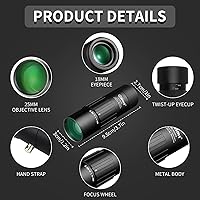
  • Magnification: Offers 8x optical magnification, bringing distant subjects eight times closer than the naked eye.
  • Objective Lens: Features a 25mm objective lens diameter, suitable for daytime and bright outdoor use.
  • Lens Glass: Uses ED (extra-low dispersion) glass with fully multi-coated surfaces to reduce chromatic aberration and improve color accuracy.
  • Prism Type: Equipped with BAK-4 borosilicate prisms, which provide superior light transmission and contrast compared to BK-7 alternatives.
  • Field of View: Delivers a wide field of view of 358ft at 1000yd, making it easier to locate and track moving subjects.
  • Close Focus: Achieves a minimum focus distance of 0.3m (approximately 0.98ft), enabling detailed observation of nearby objects such as insects or flowers.
  • Eye Relief: Provides 16mm of eye relief, which is functional for most users though may feel snug for those wearing prescription eyeglasses.
  • Waterproofing: Rated IPX7 waterproof, meaning it can withstand submersion in up to 1 meter of water for 30 minutes under standard testing conditions.
  • Nitrogen Fill: The interior is nitrogen-purged and sealed with O-rings to prevent internal fogging when moving between temperature extremes.
  • Weight: Weighs 5.8oz (approximately 164g), making it one of the lighter handheld monoculars available at this aperture size.
  • Dimensions: Measures 3.8″ in length and 1.2″ in both width and height, compact enough to fit in a standard jacket or trouser pocket.
  • Optical Tube: Has an optical tube length of 97mm, contributing to its palm-sized profile without significantly compromising the optical path.
  • Focus Type: Uses a manual focus wheel; there is no auto-focus mechanism, so the user adjusts sharpness by rotating the barrel ring.
  • Mount Type: Designed for handheld use with no tripod thread mentioned in official specifications; users requiring a fixed mount would need a third-party adapter.
  • Eyepiece Type: Features a monocentric eyepiece design, which simplifies the optical path and can contribute to sharper center-field image quality.
  • Model Number: Carries the manufacturer model number WT360825-B1, useful for warranty claims or direct manufacturer support inquiries.
  • Brand & Origin: Manufactured by OLIMT, a brand that entered the market in January 2024 with this model as part of its compact optics line.
  • Availability: Listed as not discontinued by the manufacturer as of the most recent product data available.

Related Reviews
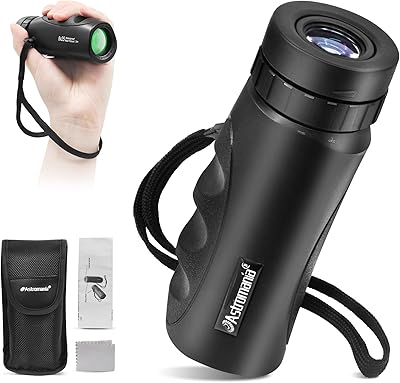
Astromania 8x25 Compact Monocular
74%
93%
Portability & Size
74%
Daytime Image Clarity
51%
Low-Light Performance
81%
Build Quality & Durability
72%
Waterproofing & Weather Resistance
More
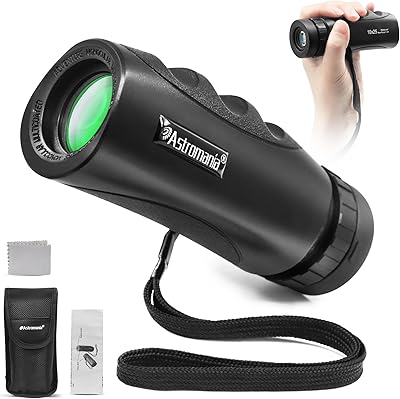
Astromania 10x25 Waterproof Compact Monocular
86%
92%
Portability
88%
Build Quality
90%
Waterproof Performance
85%
Ease of Use
82%
Image Clarity
More
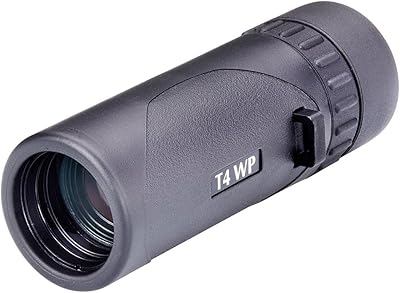
Opticron T4 Trailfinder WP 8x25 Monocular
81%
88%
Optical Clarity
86%
Build Quality
93%
Portability & Size
84%
Waterproofing
82%
Value for Money
More
Starscope 10x42 Monocular
85%
88%
Optical Quality
91%
Ease of Use
94%
Portability & Weight
85%
Build Durability
70%
Smartphone Compatibility
More
Astromania 8x42 BAK4 Monocular
77%
83%
Optical Clarity
79%
Build Quality
77%
Waterproofing & Weather Resistance
91%
Portability & Size
68%
Ease of Focus
More
Brunton Echo 7x18 Monocular
73%
94%
Portability
76%
Optical Clarity (Daytime)
47%
Low-Light Performance
82%
Build Quality & Durability
78%
Magnification Usability
More
Pankoo 16x52 Monocular
74%
74%
Optical Clarity
71%
Magnification Performance
52%
Low-Light Performance
77%
Build Quality & Durability
81%
Waterproofing & Fog Resistance
More
Occer 12x25 Binoculars
77%
83%
Optical Clarity
78%
Magnification Performance
71%
Build Quality
93%
Value for Money
67%
Ease of Focus
More
PhysioPhyx 80x100 Monocular
65%
63%
Optical Clarity
58%
Magnification Performance
61%
Build Quality & Durability
78%
Smartphone Compatibility
86%
Portability & Size
More
Aurosports 10x25 Binoculars
75%
74%
Optical Clarity
67%
Build Quality
61%
Low-Light Performance
88%
Value for Money
91%
Ease of Use
More

FAQ

For casual birdwatching it works surprisingly well, especially given the 0.3-meter close-focus distance that lets you study birds at very short range. That said, if you spend hours in the field every week, the single-eye design will cause fatigue faster than a binocular would. Think of this compact monocular as a strong companion optic rather than a full replacement for a dedicated birding binocular.

Yes, the IPX7 waterproof rating means it can handle rain, splashes, and even brief submersion without issue. The O-ring seals and nitrogen fill also prevent internal fogging when you move from a cold environment into a warm one, which is a common problem with cheaper sealed optics.

A handful of buyers have noted the focus wheel feels a bit tight when brand new. This is fairly common with manual focus monoculars and tends to loosen with regular use over the first few weeks. If it feels resistant at first, work it back and forth gently a few times rather than forcing it.

It can, but the 16mm eye relief is on the shorter side for eyeglass wearers who typically need 14mm or more for full field of view. You may need to roll down the rubber eyecup to get your eye close enough to the lens. Some glasses wearers find it comfortable enough; others prefer optics with 18mm or more of relief for extended sessions.

At 8x, any hand tremor is visible, which is normal for handheld monoculars at this power level. Bracing your elbow against your body or resting against a stable surface helps considerably. For glassing distant stationary subjects like a mountain view or a parked bird, the image is steady enough; for tracking fast-moving wildlife, you will notice some wobble.

Standard glass bends different wavelengths of light at slightly different angles, which creates faint color fringing — especially around high-contrast edges like a dark tree branch against a bright sky. ED glass corrects for this, producing cleaner, more neutral-toned images with sharper edges. It is not a dramatic transformation at 8x, but the difference is real and noticeable when comparing side by side.

The official specifications do not list a tripod thread, so standard tripod mounting is not a built-in feature. If you need hands-free or stabilized viewing, you would need to look for a third-party universal smartphone or monocular tripod adapter to see if it can be rigged. For most casual uses it is simply designed to be held.

OLIMT is a newer name with a short track record, which is worth acknowledging honestly. The early ratings are solid, and the optical components it uses — BAK-4 prisms, ED glass, IPX7 sealing — are established technologies, not proprietary unknowns. That said, if long-term warranty support and brand reputation matter heavily to you, more established optics brands offer that peace of mind at a higher cost.

The 0.3-meter close-focus distance is genuinely useful for macro-style observation. At that range you can fill the view with a butterfly, a flower, or a small reptile in striking detail. It is one of the more useful differentiators of this pocket scope compared to competing monoculars that bottom out at 1 meter or more.

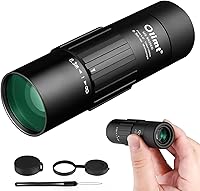
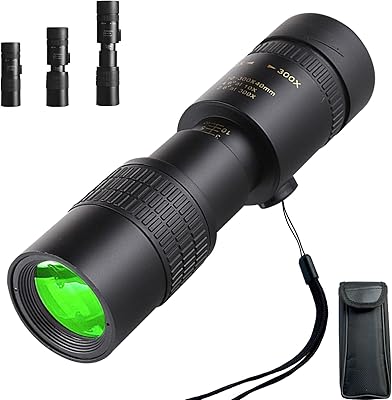
The package typically includes the monocular, a carrying case, lens caps, a cleaning cloth, and a neck strap. Buyer feedback suggests the included case is functional but feels basic — it does the job of protecting the optic during transport without being particularly impressive in its own right. For backcountry use, a padded aftermarket case might offer better peace of mind.