Overview

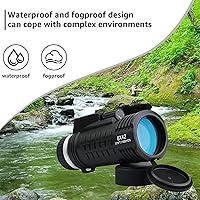
The SVBONY SV42 8x42 Monocular sits in a competitive middle ground — not a budget throwaway, but not a premium optic either. What makes this compact monocular worth a closer look is the combination of features it brings together: 8x magnification, a 42mm objective lens for respectable low-light use, and a built-in compass and rangefinder that most rivals at this price simply don't offer. Weighing just 330g and designed for single-hand operation, it's the kind of optic you'll actually bring on a trail rather than leave at home. IPX6 waterproofing adds genuine peace of mind for anyone who spends time outdoors in unpredictable weather.

Features & Benefits

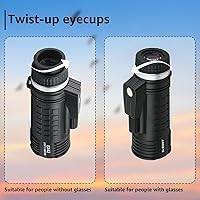
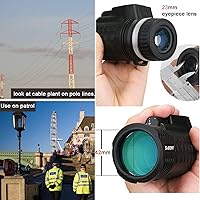
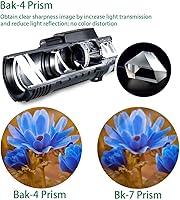
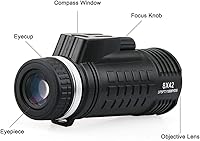
The optical foundation here is solid for the price. BAK4 prism glass paired with fully multi-coated lenses means light transmission is genuinely good — images look bright and sharp rather than washed out, even in overcast conditions. The 23mm eyepiece with matching eye relief is a thoughtful touch; it makes viewing comfortable whether or not you wear glasses. The rangefinder works by aligning a scale against a target, which takes a moment to learn but becomes second nature quickly. It won't replace a laser rangefinder, but for rough distance estimates while birding or hiking, it does the job. A standard tripod thread rounds things out for steady, long-session viewing.

Best For

This birding monocular makes the most sense for casual outdoor users who want more than bare-bones optics without crossing into high-end territory. Bird watchers who head out regularly will appreciate the image quality and the one-handed focus that keeps a hand free for a field guide or uneven terrain. Hikers and campers get extra mileage from the compass, which provides quick directional checks without reaching for a phone. Travelers who pack light will find the weight and jacket-pocket dimensions genuinely practical. It also serves as a reasonable step up for beginners who are tired of soft, dim images from true entry-level optics.

User Feedback

With a 3.7-star average across 60 ratings, the SV42 lands in a mixed but not alarming place. Buyers who are satisfied tend to highlight the image clarity for the price and note it feels more substantial than similarly priced alternatives. The waterproofing generally holds up in light rain and humid conditions, which is reassuring. On the other side, some reviewers find the compass readability awkward in the field — the scale can be tricky to interpret quickly. A few also mention the focus wheel feels stiffer than ideal for smooth one-handed use. Nothing deal-breaking, but worth weighing if effortless single-hand control is a top priority for you.

Pros

  • BAK4 prism with fully multi-coated optics produce noticeably bright, clear images for the price tier.
  • The built-in compass and rangefinder combo is a rare find in this price range and adds real trail utility.
  • At just 330g, this compact monocular is light enough to carry all day without fatigue.
  • IPX6 waterproofing holds up well in rain and humid conditions, based on buyer reports.
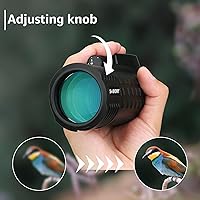
  • Single-hand focus design lets you lock onto targets quickly without awkward two-handed fumbling.
  • The 23mm eye relief makes it comfortable for eyeglass wearers during extended viewing sessions.
  • A standard tripod thread means you can mount it for steady, longer observation sessions when needed.
  • Image brightness is solid for overcast or partly shaded environments, outperforming cheaper alternatives.
  • Compact dimensions mean it fits in a jacket pocket — genuinely portable, not just marketed as such.

Cons

  • The focus wheel has been reported as stiffer than ideal, making smooth one-handed operation harder than expected.
  • Compass readability in the field is awkward — interpreting the scale quickly under real conditions takes practice.
  • The rangefinder provides rough estimates only; it is not suitable for any application needing precision distance data.
  • Low-light performance is adequate but not impressive — dawn and dusk birding will reveal its optical ceiling.
  • Only 60 ratings at the time of review makes it difficult to assess long-term durability with confidence.
  • Some buyers have raised concerns about housing and coating quality after extended or repeated outdoor use.
  • Close focus stops at 3 meters, which rules out any close-range or nature macro observation scenarios.
  • The 3.7-star average suggests a meaningful portion of buyers were left underwhelmed, worth factoring into your decision.

Ratings

The SVBONY SV42 8x42 Monocular has been scored by our AI rating system after analyzing verified buyer reviews from multiple global markets, with spam, bot-generated, and incentivized feedback actively filtered out before scoring. The results reflect a balanced picture — genuine strengths in optical value and portability sit alongside real frustrations around usability details and long-term durability. Both sides are represented transparently so you can make a genuinely informed call.

Optical Clarity
74%
26%
Most buyers are pleasantly surprised by how sharp and bright images look, especially given the price tier. The BAK4 prism and fully multi-coated glass work together to deliver images that are noticeably cleaner than what entry-level rivals produce — colors look more natural and contrast holds up well in daylight.
At the edges of the field of view, some softness and slight chromatic fringing appear, which is typical at this price but noticeable to more experienced optical users. Performance in deep shade or early dusk is adequate rather than impressive — the 42mm aperture has a ceiling that becomes apparent in challenging light.
Build Quality
61%
39%
The housing feels solid enough for casual outdoor use, and the rubberized exterior provides a decent grip even with damp hands. Several buyers noted it feels more substantial than the price suggests when you first pick it up.
After extended use, some owners report wear on the lens coating and minor play developing in the focus mechanism. The overall construction sits firmly in the mid-budget tier — it handles normal field conditions but does not inspire confidence for rough or heavy-duty use over many years.
Waterproofing
78%
22%
Real-world feedback consistently confirms the IPX6 rating translates to actual protection — buyers who have used it during rainy hikes or in humid coastal environments report no moisture ingress or fogging issues. For a birding or hiking monocular, this level of protection is genuinely reassuring.
A small number of users report fogging after more significant temperature swings than typical day-use scenarios. IPX6 protects against water jets and rain but is not rated for submersion, so it is not the right choice for kayaking or similar water-contact activities.
Focus Mechanism
58%
42%
The single-hand focus concept is well-suited to active outdoor use — being able to track a bird or moving subject without reaching for a second hand is a practical advantage that buyers who switch from binoculars genuinely appreciate. The focus range covers most distances well.
The focus wheel is frequently described as stiffer than expected, making smooth micro-adjustments harder to pull off in the field. Buyers who have handled higher-end monoculars will find the action noticeably less refined, and the stiffness does not appear to ease significantly with time.
Compass Usability
53%
47%
The integrated compass is a rare feature at this price point and does add genuine value for hikers and campers who want a directional reference without pulling out a phone. For occasional checks during trail navigation, it does its job.
Reading the compass scale through the eyepiece requires a deliberate, steady hold — quick glances while moving are rarely reliable. Multiple buyers flag that the compass markings are small and not intuitive to interpret on the fly, which limits its usefulness in fast-paced outdoor scenarios.
Rangefinder Accuracy
51%
49%
For casual distance estimation — gauging roughly how far away a bird or landmark is — the optical rangefinder provides a useful ballpark figure that most users find adequate for birding and general trail use. It adds a layer of utility that most competing monoculars in this range skip entirely.
The rangefinder requires knowing the approximate height of your target object to produce a meaningful estimate, which is an extra mental step that many users find awkward in practice. Results vary depending on steadiness and lighting, and anyone expecting repeatable precision will be disappointed.
Portability
88%
At 330g and fitting comfortably in a jacket pocket, this compact monocular is one of the easier optical tools to actually carry consistently. Travelers and day hikers in particular highlight how often they end up using it precisely because it is always within reach.
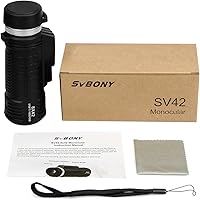
The included carry pouch, while functional, does not offer much structural protection if the monocular gets knocked around inside a pack. A more protective case would make it easier to carry without worrying about the lens caps coming loose.
Eye Comfort
77%
23%
The 23mm eye relief is a genuine practical advantage for eyeglass wearers, eliminating the need to remove glasses to get a full image. Extended viewing sessions are comfortable for most users, with no significant reports of eye strain during typical field use.
Users with smaller faces or shorter eye-to-lens distances occasionally report needing to adjust their positioning more than expected to avoid partial blackout around the image edges. This is a minor issue but worth noting for users sensitive to eyecup ergonomics.
Value for Money
79%
21%
The combination of BAK4 optics, IPX6 waterproofing, a built-in compass, and a rangefinder at this price point is genuinely competitive — most comparable monoculars sacrifice at least one of these features to stay in the same range. Buyers who keep expectations calibrated to the price consistently feel they got a fair deal.
The 3.7-star average across 60 reviews suggests a meaningful number of buyers felt the product did not fully deliver on its promise. Value perception drops noticeably among users who expected near-premium performance, which the SV42 cannot sustain across all its advertised features.
Low-Light Performance
62%
38%
In standard overcast daylight and lightly shaded woodland environments, the 42mm objective lens and FMC coating provide adequately bright images that satisfy most casual birders. The 5.3mm exit pupil is a reasonable figure for daytime and early evening use.
Genuine low-light situations — deep shade, heavy overcast, or post-sunset — expose the limitations of the 42mm aperture relatively quickly. Buyers who plan to use it regularly at dawn or dusk should temper expectations; it manages but does not excel in these conditions.
Single-Hand Ergonomics
66%
34%
The monocular is shaped and weighted in a way that feels natural in one hand for short observation bursts, and the focus wheel position makes brief adjustments accessible with the thumb or index finger. For casual target acquisition, it works as intended.
Sustained single-handed use over long periods is tiring due to the weight distribution and the effort required to operate a stiffer-than-ideal focus wheel simultaneously. Users with smaller hands also find the grip less secure than they would like when making fine focus adjustments.
Tripod Compatibility
72%
28%
The standard threaded mount interface works reliably with most consumer tripods, which is a useful feature for anyone who wants to set up for extended observation at a fixed location — watching a nest, scanning a hillside, or doing casual stargazing.
The tripod mount thread sits in a position that is not perfectly balanced for all tripod head types, and a few buyers note the monocular tilts slightly depending on head configuration. It functions, but a better-balanced mounting point would improve the experience.
Durability Over Time
55%
45%
For buyers who use it occasionally and store it properly with lens caps on, the SV42 holds up reasonably well over a single season of outdoor use. The rubberized exterior resists minor scratches and absorbs small knocks without obvious damage.
Reports of lens coating wear and focus mechanism looseness after six to twelve months of regular use are concerning for long-term value. The build quality is consistent with a mid-budget product, but buyers expecting it to last years of heavy field use may find it underwhelming.
Setup & Ease of Use
81%
19%
There is virtually no learning curve for the core viewing function — pick it up, focus, and you are ready. Beginners transitioning from binoculars or basic monoculars adapt within minutes, and the single-hand design reinforces how accessible it is for new users.
Getting comfortable with the compass and rangefinder features takes noticeably more effort and a read of the instruction manual. New users often find these tools confusing at first, and the manual itself is not considered especially clear by reviewers who commented on it.

Suitable for:

The SVBONY SV42 8x42 Monocular is a strong fit for casual bird watchers and outdoor enthusiasts who want a meaningful upgrade from entry-level optics without spending heavily. If you regularly head out on hikes, nature walks, or camping trips, the built-in compass and rangefinder add real practical value — you get a navigational aid and a rough distance estimator in one compact package rather than juggling multiple tools. Travelers and day-trippers will appreciate how easily it slips into a jacket pocket or day bag, and the single-hand focus design means you can stay nimble on uneven ground. The IPX6 waterproof rating also makes it a sensible choice for anyone who spends time near water or in unpredictable weather. Beginners who have outgrown dim, soft-imaging entry-level monoculars will notice a genuine step up in brightness and sharpness here.

Not suitable for:

The SVBONY SV42 8x42 Monocular is not the right choice for serious or advanced optical users who prioritize premium glass quality, razor-sharp edge-to-edge clarity, or a silky-smooth focus mechanism. If you are a dedicated birder or wildlife observer who frequently works in low-light conditions at dawn or dusk, the 42mm objective lens is adequate but not exceptional — you will likely want a larger aperture or higher-grade coatings for consistently satisfying results. The built-in rangefinder is a mechanical estimate tool, not a laser-precise instrument, so anyone needing accurate distance measurements for hunting, archery, or professional fieldwork should look elsewhere. Users who have come to expect the tactile refinement of mid-to-high-end optics may find the focus wheel stiffer and less responsive than they would like. With a relatively modest review count and a middling average rating, buyers who need proven long-term reliability might want to wait for a more established track record before committing.

Specifications

  • Magnification: The monocular offers 8x magnification, bringing distant subjects eight times closer than the naked eye.
  • Objective Lens: A 42mm objective lens gathers sufficient light for clear viewing in standard daylight and moderately overcast conditions.
  • Prism Type: BAK4 borosilicate prism glass is used, which provides better light transmission and edge clarity compared to lower-grade BK7 prisms.
  • Lens Coating: All optical surfaces feature fully multi-coated (FMC) glass to reduce glare and maximize brightness across the light spectrum.
  • Field of View: The field of view spans 375ft at 1000 yards (125m at 1000m), giving a reasonably wide window for tracking moving subjects.
  • Eye Relief: 23mm of eye relief allows comfortable viewing for users who wear eyeglasses without significant vignetting or edge blackout.
  • Exit Pupil: The exit pupil diameter measures 5.3mm, which supports comfortable low-light use though is not optimized for deep-dusk conditions.
  • Close Focus: Minimum focus distance is 3m (9.84ft), suitable for most birding and general observation but not for close-range macro subjects.
  • Eyepiece Diameter: The eyepiece measures 23mm in diameter, contributing to a wider, more comfortable viewing field during extended sessions.
  • Waterproofing: Rated IPX6, the monocular can withstand heavy rain and water jets, protecting internal optics from moisture and debris ingress.
  • Fog Resistance: Nitrogen-purged internal construction prevents fogging on optical elements when moving between temperature extremes.
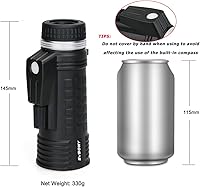
  • Weight: The unit weighs 330g (11.6 oz), making it light enough for all-day carry in a pack or jacket pocket.
  • Dimensions: Physical dimensions measure 7.08″ deep by 2.75″ wide by 3.34″ tall in standard handheld orientation.
  • Focus System: Single-hand manual focus is operated via a central focus wheel, designed for quick and accurate target acquisition with one hand.
  • Built-in Compass: An integrated compass indicates cardinal direction and is readable through the eyepiece for on-the-go orientation.
  • Rangefinder: A built-in optical rangefinder scale allows estimation of distance to a target based on known object height references.
  • Tripod Mount: A standard threaded interface on the body is compatible with most consumer and prosumer tripods for stable, hands-free viewing.
  • Optical Tube Length: The optical tube measures 145mm in length, contributing to the monocular's compact and portable overall profile.

Related Reviews
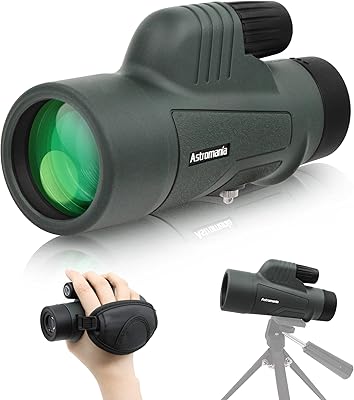
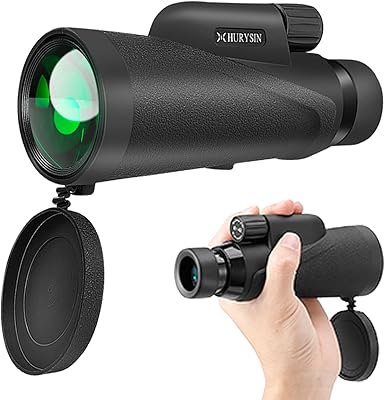
HURYSIN 8x42 Monocular
79%
74%
Optical Clarity
83%
Build Quality
88%
Waterproofing
86%
Eye Relief & Comfort
67%
Focus Mechanism
More
Astromania 8x42 BAK4 Monocular
77%
83%
Optical Clarity
79%
Build Quality
77%
Waterproofing & Weather Resistance
91%
Portability & Size
68%
Ease of Focus
More
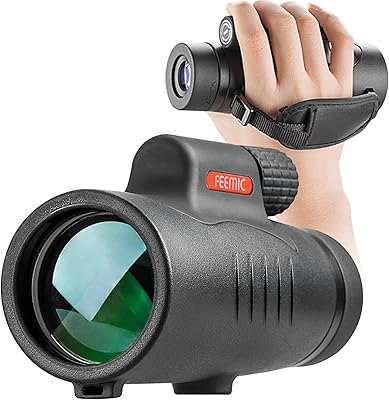
FEEMIC SO-1 8x42 Monocular
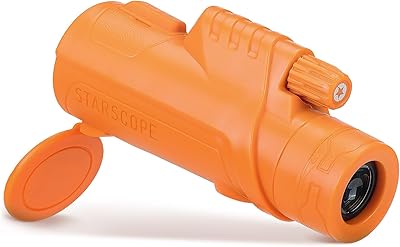
76%
74%
Optical Clarity
81%
Build Quality
78%
Waterproofing & Weather Resistance
83%
Magnification & Field of View
67%
Ease of Focus
More
Hontry 8x42 Binoculars
79%
83%
Optical Clarity
91%
Waterproof Performance
88%
Floating Capability
77%
Build Quality
81%
Comfort & Ergonomics
More
Starscope 10x42 Monocular
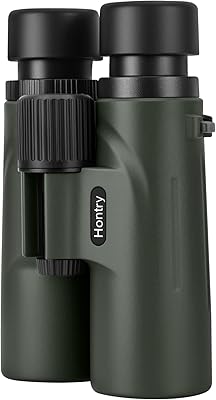
85%
88%
Optical Quality
91%
Ease of Use
94%
Portability & Weight
85%
Build Durability
70%
Smartphone Compatibility
More
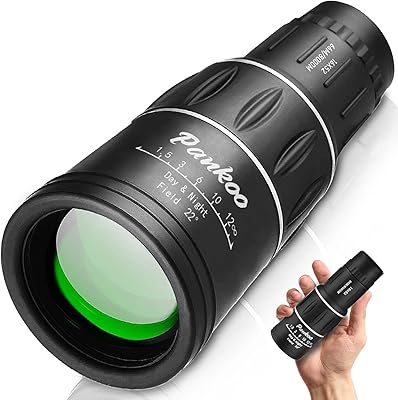
Pankoo 16x52 Monocular
74%
74%
Optical Clarity
71%
Magnification Performance
52%
Low-Light Performance
77%
Build Quality & Durability
81%
Waterproofing & Fog Resistance
More
Belmeri 10-300x40 Monocular Telescope
58%
61%
Optical Clarity
43%
Zoom Performance
58%
Build Quality
89%
Portability
72%
Ease of Use
More
Pankoo 40x60 Monocular
73%
74%
Optical Clarity
68%
Magnification Performance
66%
Low-Light Performance
71%
Build Quality
78%
Waterproofing & Weather Resistance
More
PhysioPhyx 80x100 Monocular
65%
63%
Optical Clarity
58%
Magnification Performance
61%
Build Quality & Durability
78%
Smartphone Compatibility
86%
Portability & Size
More
National Geographic 8x42 Binoculars
87%
89%
Value for Money
85%
Build Quality
92%
Usability & Comfort
87%
Optical Performance
90%
Portability & Size
More

FAQ

It holds up well for casual and regular bird watching. The optics are genuinely usable — images are bright and sharp enough for identifying common species at typical field distances. It is not a professional-grade instrument, but it performs above what most beginners expect at this price level.

No, it is not a laser rangefinder. The rangefinder is an optical scale you view through the eyepiece — you align the scale against an object of known height to estimate distance. It takes a little practice to use reliably, but once you get the hang of it, it gives useful rough estimates for birding and hiking situations. Do not expect the precision of a dedicated laser unit.

Yes, the 23mm eye relief is specifically designed to accommodate eyeglass wearers. You can view the full image without needing to remove your glasses, and there should be minimal edge blackout if you position your eye correctly behind the eyepiece.

The IPX6 waterproof rating means it can handle heavy, sustained rain without moisture getting inside — real-world buyers have confirmed this holds up in wet conditions. It is not rated for submersion, so do not drop it in a river, but general wet-weather outdoor use is well within its design intent.

This is one area where some buyers have expressed mild frustration. The focus wheel works as intended and is genuinely designed for single-hand use, but a handful of reviewers find it stiffer than they would like, especially when trying to make fine adjustments quickly. It loosens up slightly with use, but if an ultra-smooth focus is a priority for you, it is worth factoring in.

The compass is readable through the eyepiece, but it is not as instant to interpret as a standalone wrist compass or phone. You need to hold the monocular steady and take a deliberate look to get a clear directional reading. It works, but do not expect a quick glance to suffice — it is better suited for periodic checks than constant real-time navigation.

Yes, there is a standard threaded interface on the body that connects to most common tripods. For prolonged observation sessions where hand fatigue would otherwise be an issue — like watching a bird nest or scanning a distant hillside — mounting it on a tripod works well and gives noticeably steadier views.

The step up is noticeable. The BAK4 prism combined with fully multi-coated optics produces images that are brighter and sharper than what you typically get from entry-level monoculars with BK7 prisms or single-coated lenses. Colors look more natural, and the image holds up better in partially shaded environments.

The weight and size are manageable for older kids and teenagers, but the focus mechanism and built-in tools are better appreciated by adults. For younger children, the single-hand focus and compass readability might be frustrating. It is primarily designed for adult users.

A small number of buyers have flagged concerns about the housing and lens coatings showing wear after extended outdoor use. Nothing catastrophic, but it is fair to say the build quality is consistent with its price tier rather than above it. Treating it with reasonable care — keeping the lens caps on when not in use and storing it in the included pouch — should extend its lifespan considerably.

Where to Buy