Overview

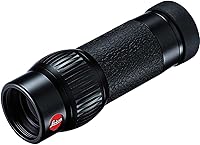
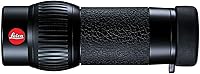
The Leica Monovid 8x20 Monocular sits at the top of a crowded category, carrying the full weight of Leica's German optical heritage in a body that genuinely fits in a shirt pocket. At 8x magnification with a 20mm objective, it delivers surprisingly capable performance for something weighing just four ounces. It ships with a leather case and a close-up accessory lens — practical inclusions that hint at how seriously Leica treats this product. This isn't a budget impulse buy; it's a considered purchase for someone who wants the best compact monocular available and isn't willing to compromise on glass quality to get it.
Features & Benefits

What makes the Monovid 8x20 stand apart from cheaper alternatives is less about the spec sheet and more about how those specs translate into everyday use. The AquaDura lens coating is genuinely useful — rain-spotted glass is a real frustration in the field, and here a quick wipe restores clarity without effort. Nitrogen filling means you can move from an air-conditioned car into humid morning air without the lens fogging internally, a problem that plagues lesser optics. The central focusing knob is smooth and precise, and the close-up accessory lens transforms this compact monocular into a capable macro tool — hold it about ten inches from a butterfly's wing and the detail is remarkable.

Best For

This Leica monocular makes the most sense for people who have already decided that bulk isn't acceptable. Travelers who've wrestled with binoculars through airport security will appreciate the difference immediately — this fits in a jacket pocket with room to spare. Birdwatchers who do quick, opportunistic spotting rather than long observation sessions will find the single-lens format works well. The close-focus macro capability is a genuine bonus for anyone interested in botanical or insect detail; it's not a gimmick. Theatre and opera-goers wanting a discreet viewing option will find it performs well in low light for its size, and hunters or sports fans rounding out a minimalist kit complete the picture.

User Feedback

Among owners who've used the Monovid 8x20 for extended periods, optical clarity and build quality dominate the praise — images are consistently described as sharp, contrasty, and free from the color fringing cheaper glass often shows. The leather case draws appreciation as a premium touch rather than an afterthought. On the critical side, eye fatigue is a real and honest concern: using a single eye for more than fifteen to twenty minutes continuously is tiring, and buyers coming from compact binoculars often mention an adjustment period. A minority feel the price is hard to justify when capable rivals exist, though most long-term owners report it stays in regular use for years.

Pros

  • Optical clarity is genuinely outstanding — images are sharp, contrasty, and free from color fringing.
  • Four ounces and pocket-sized: this Leica monocular disappears into a jacket without adding any perceptible bulk.
  • AquaDura lens coating sheds rain and smudges with a single wipe, keeping the view clear in wet conditions.
  • Nitrogen filling means zero internal fogging when moving between temperature extremes — a real field advantage.
  • The close-up accessory lens delivers usable macro detail at roughly ten inches, adding genuine versatility.
  • Build quality inspires long-term confidence — multi-year owners consistently report zero degradation in performance.
  • The central focusing knob is smooth and precise, well-suited to one-handed operation in the field.
  • Comes with a quality leather case that actually protects the optic rather than feeling like an afterthought.
  • Roof prism with phase correction coating produces high-contrast images that punch well above the size class.
  • Long-term cost-per-use math works in its favor — this is a buy-once, keep-forever kind of optic.

Cons

  • Single-eye fatigue sets in after extended viewing sessions — not ideal for sustained observation over 20 minutes.
  • Spectacle wearers will find the eye relief too short to see the full field of view comfortably.
  • The price point is steep enough that casual or occasional users will struggle to justify the investment.
  • No lanyard or strap is included, leaving a pocketable optic at unnecessary drop risk during active use.
  • The close-up accessory lens is fiddly to attach and detach quickly, especially in cold conditions or with gloves.
  • Low-light performance is limited by the 20mm objective — dusk and overcast conditions expose this physical constraint.
  • The cylindrical body shape is slightly awkward to grab quickly from a trouser pocket versus a flatter design.
  • The leather case has no belt clip, which reduces convenience for hikers who want hands-free carry.
  • At 8x magnification, sustained handheld viewing without a support surface introduces noticeable image tremor.
  • The exterior synthetic finish shows cosmetic scuffs more visibly than rubber-armored competitors after field use.

Ratings

The Leica Monovid 8x20 Monocular has been put through its paces by optics enthusiasts, travelers, and naturalists worldwide, and our AI has analyzed verified purchase reviews across global markets — actively filtering out incentivized, duplicated, and bot-generated feedback — to produce the scores below. What emerges is a portrait of a genuinely exceptional compact optic that earns its premium standing in most areas, with a few honest caveats that serious buyers deserve to know before committing.
Optical Clarity
94%
Users consistently describe the image as strikingly clean — sharp across most of the field, with natural color rendition and none of the purple fringing that plagues budget monoculars. Birdwatchers and hunters singled out edge-to-edge contrast as a genuine strength, especially in bright outdoor conditions.
A small number of reviewers noted slight softness at the very edges of the field, which is common in roof prism designs at this size class. In very low-light conditions — dusk hunting or dim theatre interiors — the 20mm objective does show the physical limits of its light-gathering ability.
Build Quality
96%
Long-term owners frequently mention that this Leica monocular shows virtually no wear after years of regular use — no loosening of the focusing knob, no degradation of the lens coatings, no play in the barrel. The synthetic body feels dense and purposeful, not hollow, and the leather case that ships with it reinforces the sense that every component was chosen with care.
The body material, while durable, does not have the rubberized grip texture that some field users prefer when handling with wet or cold hands. A few users noted that the leather case, while attractive, is not a tight enough fit to prevent the monocular from sliding around slightly inside.
Portability & Size
91%
At just four ounces, the Monovid 8x20 is light enough to forget you're carrying it. Frequent travelers report it slipping into a jeans pocket or a small belt pouch without adding any noticeable bulk — a meaningful advantage over even the most compact binoculars on the market.
The cylindrical shape, while impressively compact, can make it slightly awkward to retrieve quickly from a trouser pocket compared to a flatter form factor. A few buyers wished the included case had a belt clip rather than just a loop, particularly for hiking use.
Close-Focus & Macro Performance
88%
The included close-up accessory lens is one of the more genuinely surprising features here — hold the Monovid 8x20 roughly ten to twelve inches from a flower or insect and the detail is startling for a device this size. Nature photographers and macro hobbyists praised this as a real differentiator that few competing products can match.
Getting the working distance right with the close-up lens takes practice; at less than a foot from the subject, slight hand tremor becomes very visible. Some users also found attaching and detaching the accessory lens fiddly in the field, particularly with gloves on.
Weather & Fog Resistance
89%
The nitrogen-filled housing delivered in real-world conditions — reviewers who used this compact monocular on rainy coastal hikes or in humid tropical environments reported zero internal fogging, even with abrupt temperature changes. The AquaDura coating also proved its worth: a quick swipe of a cloth restores full clarity after rain exposure.
While the optics resist moisture impressively, the body itself is not submersion-rated, so it should not be treated as fully waterproof. A couple of users reported that heavy condensation on the exterior eyecup rubber did occasionally interfere with comfortable viewing until wiped down.
Focusing Mechanism
86%
The central focusing knob operates smoothly and with well-calibrated resistance — not so stiff it requires effort, not so loose that it drifts. Users appreciated that the internal focusing design keeps the barrel length fixed, which contributes both to durability and a cleaner overall feel when operating one-handed.
The focus travel covers a relatively short rotation arc, which means fine adjustments at close distances require a delicate touch. A small number of users with larger hands found the knob slightly undersized for comfortable rapid focusing during fast-moving wildlife observation.
Eye Relief & Comfort
74%
26%
For eyeglass-free users, the eye relief is adequate and the eyecup positions the eye comfortably at the right distance for a full field of view. Casual theatre and event use, where viewing sessions are intermittent, received consistently positive feedback on comfort.
Spectacle wearers found the eye relief notably short, making it difficult to see the full field without pressing the lens against their glasses. Extended uninterrupted viewing — more than fifteen to twenty minutes — also introduces single-eye fatigue that binocular users are simply not accustomed to, and this was one of the most consistent criticisms in long-form reviews.
Value for Money
67%
33%
Buyers who made a long-term commitment to this Leica monocular overwhelmingly reported feeling the purchase was justified after extended ownership — the optics hold up, nothing breaks, and the close-focus capability adds genuine versatility. For dedicated users, the cost-per-year calculation becomes more favorable over time.
The sticker price is a significant barrier, and several reviewers who compared it directly against mid-tier competitors felt the optical gap was noticeable but perhaps not proportional to the price gap. Buyers seeking a capable travel monocular without a deep commitment to the Leica brand may find the value argument harder to make.
Low-Light Performance
71%
29%
The quality glass and phase-corrected prism system do a respectable job of extracting usable image quality in diminishing light — better than what raw aperture math alone would suggest. For early morning birdwatching or dusk wildlife spotting, the Monovid 8x20 holds its own reasonably well.
A 20mm objective is a physical constraint that no coating or prism technology can fully overcome in genuinely dark conditions. Users who regularly observe at dawn or dusk reported wishing for a larger objective, and the monocular is not well-suited to nighttime or heavily overcast use.
Image Stability
78%
22%
At 8x magnification, handheld stability is manageable for most users in calm conditions. Short observation bursts — scanning a treeline, spotting a distant bird, checking a scoreboard — felt steady enough that image shake was rarely mentioned as a problem.
Sustained observation at 8x without a support surface does introduce noticeable tremor, as it would with any handheld optic at this magnification. The light weight that makes portability excellent also means there is less mass to dampen hand movement, which can become tiring over a long observation session.
Ease of Use
83%
The single-knob focusing system and minimal control layout mean there is virtually nothing to learn before using this compact monocular effectively. Users new to monoculars as a format found the physical operation intuitive almost immediately, and one-handed use is genuinely comfortable.
Switching between standard and macro use requires physically attaching the close-up lens, which introduces a step that can cost a fleeting wildlife moment. New users transitioning from binoculars also reported a brief adaptation period in training one eye to do all the work.
Accessories & Packaging
81%
19%
The leather carrying case is a quality inclusion that feels appropriate to the product tier — it protects the optic and looks good doing it. The close-up accessory lens ships as a standard component rather than an optional add-on, which buyers consistently appreciated as a sign of genuine value.
There is no strap or lanyard included, which surprised some buyers given the price point — carrying this monocular freely in a pocket without a tether means a drop risk that a simple cord would eliminate. The case closure, while functional, was described by a few reviewers as less secure than expected.
Durability Over Time
93%
Multi-year owners of the Monovid 8x20 are among its most vocal advocates. Reports of units still performing at full optical capacity after five or more years of regular use are common, and the lack of external moving parts means there is relatively little that can degrade or break through normal handling.
The synthetic exterior material, while tough, does show cosmetic scuffs and surface marks over heavy field use more visibly than rubber-armored competitors. The leather case, while premium, requires occasional conditioning to prevent cracking if used in arid climates.
Brand Trust & Heritage
92%
Leica's optical reputation carries real weight among informed buyers, and the Monovid 8x20 does not appear to be a brand-name exercise — it is a product that consistently performs in line with what that name implies. Buyers in the optics community frequently cited the Leica heritage as a confidence factor that reduced purchase hesitation.
For buyers outside the optics hobby community, the brand premium can feel abstract rather than tangible, especially when comparable-looking monoculars are available at a fraction of the cost. A portion of reviewers acknowledged they were partly paying for the name, which is a personal value judgment rather than a performance critique.

Suitable for:

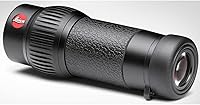
The Leica Monovid 8x20 Monocular is built for a specific kind of buyer: someone who already understands optics, values real glass quality, and refuses to carry anything bulky. Frequent travelers — especially those who pack light but still want to catch wildlife on a safari, scan a distant ridgeline on a hike, or read a distant menu board in a foreign city — will find this compact monocular fits naturally into daily carry without a second thought. Birdwatchers who do opportunistic, on-the-go spotting rather than marathon observation sessions will appreciate the one-handed convenience and the genuinely capable image quality. The close-up accessory lens adds a dimension that makes it particularly interesting for nature photographers, botanists, or anyone who routinely wants to examine fine surface detail — insects, minerals, textiles — at close range without carrying a loupe or a separate macro tool. Theatre-goers and sports fans who want something discreet and high-performing in a jacket pocket, and hunters rounding out a minimalist kit, round out the core audience well.
Not suitable for:

If you are primarily a binocular user and expect to observe continuously for thirty minutes or more at a stretch, the Leica Monovid 8x20 Monocular will likely frustrate you — single-eye viewing fatigue is a genuine physical reality, not a minor quibble, and no amount of optical quality changes that. Buyers on a tight budget should look elsewhere; the price reflects genuine engineering and brand heritage, but there are capable mid-tier monoculars that serve casual users adequately for far less. Spectacle wearers may also struggle, as the eye relief is not generous enough to comfortably accommodate glasses while retaining a full field of view. If your primary use case is low-light or dawn-to-dusk wildlife observation, the 20mm objective is a real constraint — physics limits how much light a lens this small can gather, regardless of coating quality. Finally, anyone expecting waterproof submersion protection should know this compact monocular is weather-resistant, not waterproof — it handles rain well, but it is not designed for immersion.

Specifications

  • Magnification: The optic delivers 8x magnification, bringing distant subjects eight times closer than the naked eye.
  • Objective Lens: A 20mm objective lens gathers light efficiently for a monocular of this size, balancing brightness with compact dimensions.
  • Prism Type: Roof prism design with phase correction (P40) coating produces high-contrast, sharp images with accurate color rendition.
  • Lens Coating: AquaDura hydrophobic multi-coating on exterior lens surfaces actively repels water, oils, and dust for easy field cleaning.
  • Fog Protection: Internal nitrogen filling prevents moisture from entering the optical path, eliminating the risk of internal fogging in humid or cold conditions.
  • Close Focus: Standard minimum focusing distance is approximately 1.8m (about 5.9 feet) without any accessories attached.
  • Macro Focus: With the included close-up accessory lens attached, the minimum focusing distance drops to approximately 9.8–11.8 inches for macro-level observation.
  • Focus Mechanism: Internal focusing is controlled via a central knob that adjusts the optics without changing the external barrel length.
  • Dimensions: The body measures 3.9″ deep by 1.5″ wide by 1.5″ tall, making it genuinely pocketable for everyday carry.
  • Weight: The monocular body weighs 0.25 lbs (4 oz), light enough to carry without noticing it in a jacket or trouser pocket.
  • Body Material: The outer housing is constructed from a durable synthetic material that resists impact and everyday wear.
  • Color: Available in black finish, which minimizes reflective glare during field use and maintains a low-profile appearance.
  • Included Accessories: Each unit ships with a purpose-made leather carrying case and a close-up accessory lens for macro use.
  • Manufacturer: Designed and produced by Leica Camera Co., a German optical company with a heritage spanning over a century.
  • Model Number: The official Leica part and model number for this unit is 40390.
  • Warranty: Covered by a Leica manufacturer warranty; specific terms and duration should be confirmed directly with Leica Camera Co. at time of purchase.
  • Suggested Users: Intended for unisex adult use across applications including nature observation, hunting, travel, and theatre.
  • Package Weight: The complete retail package including case and accessories weighs approximately 1 lb (0.45 kg).
  • Package Dimensions: The retail packaging measures 7.7″ x 6″ x 3.8″, compact enough to ship and store without difficulty.
  • Model Year: This version of the monocular carries a model year of 2011, reflecting a mature, refined product iteration.

Related Reviews
Starscope 10x42 Monocular
85%
88%
Optical Quality
91%
Ease of Use
94%
Portability & Weight
85%
Build Durability
70%
Smartphone Compatibility
More
Astromania 12X50 BAK4 Monocular
86%
88%
Image Clarity
92%
Build Quality
94%
Waterproof Performance
90%
Portability
85%
Ease of Use
More
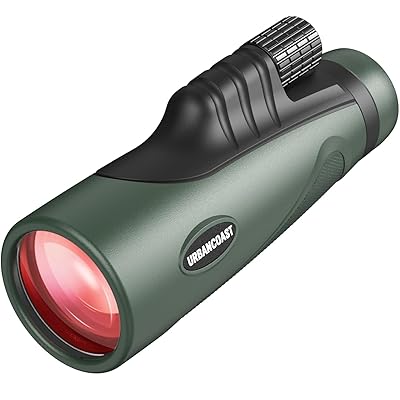
URBANCOAST 15x54 Monocular
77%
83%
Optical Clarity
81%
Build Quality
74%
Waterproofing & Weather Resistance
79%
Comfort & Ergonomics
77%
Magnification Performance
More
Gosky 15x55 Monocular
73%
83%
Optical Clarity
54%
Image Stability
79%
Build Quality
86%
Waterproofing
61%
Focus Mechanism
More
PhysioPhyx 80x100 Monocular
65%
63%
Optical Clarity
58%
Magnification Performance
61%
Build Quality & Durability
78%
Smartphone Compatibility
86%
Portability & Size
More
Belmeri 10-300x40 Monocular
80%
91%
Value for Money
88%
Portability & Size
84%
Image Quality at Moderate Zoom
77%
Zoom Magnification Performance
72%
Focus Precision
More
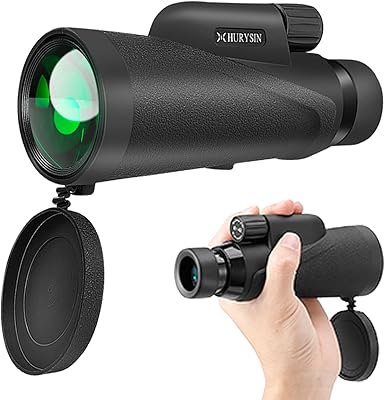
HURYSIN 8x42 Monocular
79%
74%
Optical Clarity
83%
Build Quality
88%
Waterproofing
86%
Eye Relief & Comfort
67%
Focus Mechanism
More
Pankoo 40x60 Monocular
73%
74%
Optical Clarity
68%
Magnification Performance
66%
Low-Light Performance
71%
Build Quality
78%
Waterproofing & Weather Resistance
More
Pankoo 16x52 Monocular
74%
74%
Optical Clarity
71%
Magnification Performance
52%
Low-Light Performance
77%
Build Quality & Durability
81%
Waterproofing & Fog Resistance
More
Astromania 8x42 BAK4 Monocular
77%
83%
Optical Clarity
79%
Build Quality
77%
Waterproofing & Weather Resistance
91%
Portability & Size
68%
Ease of Focus
More

FAQ

The Leica Monovid 8x20 Monocular is water-resistant rather than fully waterproof — the AquaDura coating handles rain and splashes very well, and the nitrogen fill protects against internal fogging, but it is not rated for submersion. If you drop it in a stream, retrieve it quickly and let it dry; it is not designed for underwater exposure.

You attach the small close-up accessory lens to the objective end of the monocular, and then hold it roughly ten to twelve inches from your subject — a flower, an insect, a coin — to get remarkable macro detail. The tricky part is that at that distance, any hand movement becomes very visible, so a steady hand or a surface to brace against helps considerably. Attaching and detaching the lens with gloves on is fiddly, so in the field it is best reserved for deliberate macro sessions rather than quick-reaction situations.

Honest answer: probably not with full comfort. The eye relief on this compact monocular is relatively short, which is a common trade-off at this size. Most eyeglass wearers report seeing a reduced field of view unless they remove their glasses during use, which is fine for some but not practical for everyone. If eye relief is a priority, it is worth testing in person before buying.

The core trade-off is size and weight versus extended comfort. A compact binocular uses both eyes, which dramatically reduces fatigue over long observation sessions and generally produces a more natural viewing experience. This Leica monocular wins on pure portability — it is genuinely half the size and weight — but if you plan to watch wildlife or a sporting event for thirty minutes or more without breaks, a binocular will be more comfortable. For opportunistic spotting, travel, and theatre use, the monocular format makes a lot of sense.

No — the nitrogen fill specifically addresses this. When air is trapped inside an optic, temperature changes can cause that air's moisture to condense on the internal glass surfaces, fogging the view. Replacing that air with dry nitrogen eliminates the moisture source entirely, so the optics remain clear regardless of temperature transitions.

The leather case is a quality inclusion and provides good protection against scratches and minor impacts during normal carry. It is not a hard-shell case, so it will not protect against significant compression or a hard drop, but for daily bag or pocket carry it does its job well. Some users add a small carabiner or clip to the case loop for belt attachment, since no clip is included out of the box.

It is a strong choice for opportunistic birdwatching — the kind where a bird appears unexpectedly and you want to identify it quickly with one hand while doing something else with the other. The optical quality is genuinely excellent for a monocular at this size, and the close focus distance of about 1.8m means nearby perched birds are accessible too. For extended hide-based watching sessions, a binocular will cause less eye fatigue over time, but for hiking and travel birdwatching this compact monocular is a well-regarded option.

The AquaDura coating makes cleaning relatively straightforward — most smudges and water spots wipe away with a soft microfiber cloth using light circular pressure. For dust or grit, blow or brush it away gently first before wiping to avoid micro-scratching the surface. Avoid household glass cleaners, paper towels, or shirt fabric; stick to optical-grade microfiber cloths, and optionally a drop of lens cleaning fluid designed for coated optics.

No lanyard or strap is included in the standard package, which is a legitimate omission at this price point. The monocular does have a strap lug, so you can attach a third-party lanyard or wrist strap if you want to carry it around your neck or wrist — many owners do exactly this, particularly for hiking or hunting use where dropping it is a real risk.

This is probably the most honest question to ask before buying. The short answer is: both things are true to some degree. The optical quality, build precision, lens coatings, and long-term durability are all measurably better than what mid-tier competitors deliver — owners who keep and use the Monovid 8x20 for five or more years frequently say it still performs like new. At the same time, part of the premium does reflect brand prestige, and if you are an occasional casual user, capable alternatives exist at lower price points. For serious users who will carry it regularly, the long-term case for the investment is solid.