Overview

The Gosky 15x55 Monocular sits firmly in the mid-to-upper tier of the single-tube optics market, built for outdoor enthusiasts who want serious magnification without hauling a full pair of binoculars. Gosky has carved out a reputation for accessible, capable optics, and this scope reflects that philosophy well. The 15x magnification is genuinely powerful — but that power comes with a real trade-off. At that zoom level, hand tremor becomes visible fast, and stationary subjects reward you far more than moving ones. Think a hawk perched on a fence post, not a flock flushing from a field. Set your expectations accordingly and this 15x optic delivers honest value; chase fast action with it and you will likely feel let down.

Features & Benefits

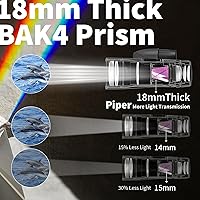
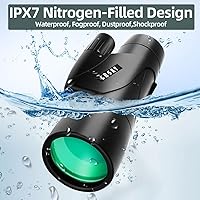
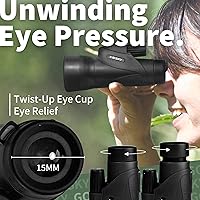
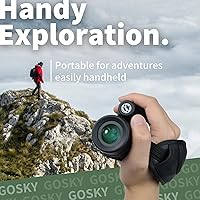
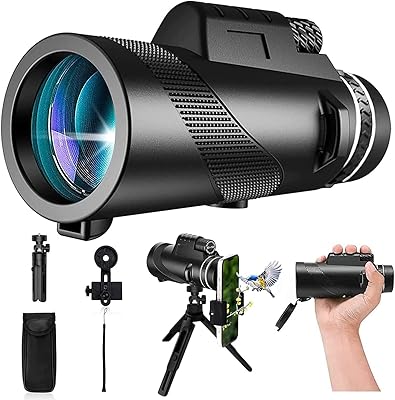
The optical foundation here is solid. BAK-4 prism glass paired with fully multi-coated lenses pulls in noticeably more light than entry-level optics, so daytime views are crisp and well-contrasted. That said, do not expect miracles at dusk — 15x magnification inherently dims the image, and no coating fully compensates for that physics. The IPX7-rated, nitrogen-filled body handles rain and humidity without complaint, which matters when you are glassing wetlands or caught in a sudden downpour. The twist-up eyecup is a small but thoughtful detail that genuinely helps eyeglass wearers. The manual focus ring rewards patience over speed — precise once dialed in, but quick target acquisition takes real practice. The included hand strap keeps things secure on uneven terrain.

Best For

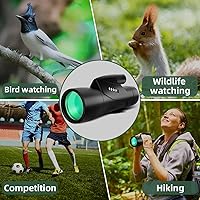
This monocular earns its keep when you are mostly stationary and have time to focus deliberately. Bird watchers working from a blind, a feeder setup, or a lakeshore will find the reach genuinely useful for identifying distant species. Hunters scouting open terrain before season will appreciate the magnification for glassing ridgelines. Travelers who resist packing full binoculars will find the Gosky scope a smart compromise between size and power. It also performs surprisingly well as a casual astronomy tool — lunar surface detail at 15x is impressive on a clear night. Fast-moving subjects like field sports, though, are a poor match. Slow, deliberate observation is where this optic consistently delivers.

User Feedback

Across a large pool of verified buyers, daytime image clarity surfaces repeatedly as a genuine strength — people are pleased with what the optics deliver in good light. The consistent complaint, worth taking seriously, is shake at full magnification. Without a tripod, keeping a distant subject centered is genuinely difficult, and that frustration shows up across many reviews. The focus wheel draws attention too: stiff out of the box, but most users report it loosens naturally with regular use. The smartphone adapter earns points for being included, though alignment requires patience — treat it as a welcome bonus rather than a polished feature. Waterproofing claims hold up in real-world rain exposure, which adds meaningful confidence for long-term buyers.

Pros

  • Daytime image clarity is consistently praised by real-world users across a wide range of outdoor settings.
  • BAK-4 prism glass and fully multi-coated lenses produce bright, sharp views in good lighting conditions.
  • IPX7 waterproofing holds up in genuine rain and humidity, not just controlled lab conditions.
  • At 1.79 pounds, this monocular is easy to carry all day without fatiguing your neck or bag.
  • The twist-up eyecup genuinely accommodates eyeglass wearers without awkward repositioning.
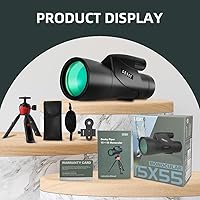
  • A smartphone adapter is included in the box, saving buyers from a separate accessory purchase.
  • 15x magnification gives serious reach for bird identification and terrain scouting at distance.
  • Nitrogen-filled construction keeps internal fogging at bay even in cold, humid conditions.
  • The hand strap adds practical security during active use on trails or boats.
  • Focus precision rewards users who take the time to learn the manual ring — results are sharp once dialed in.

Cons

  • At 15x, image shake without a tripod is significant enough to undermine the optic's core strength.
  • The focus wheel arrives noticeably stiff out of the box and requires a break-in period.
  • Low-light performance drops off sharply at dusk — not a reliable option for dawn or evening sessions.
  • The smartphone adapter alignment process is fiddly and inconsistent across different phone sizes.
  • A compatible tripod is essentially a required accessory for comfortable use, adding to the total cost.
  • The manual focus system is too slow for tracking fast or erratic moving subjects.
  • Field of view at 315ft per 1,000 yards is relatively narrow, limiting situational awareness in wide-open environments.
  • No image stabilization means prolonged handheld use causes eye fatigue at high magnification.

Ratings

Our AI rating system analyzed thousands of verified global purchases of the Gosky 15x55 Monocular, actively filtering out incentivized, bot-generated, and low-credibility submissions to surface what real buyers actually experience. The scores below reflect a transparent synthesis of both the genuine strengths and the documented frustrations reported across diverse use cases and conditions. Nothing has been softened — where this 15x optic earns praise, the score shows it; where it falls short, that shows too.

Optical Clarity
83%
In good daylight, the BAK-4 prism and fully multi-coated lenses deliver noticeably sharp, well-contrasted images that regularly impress buyers at this price tier. Bird watchers in particular report being able to resolve fine field marks — wing patterns, eye rings, bill shapes — at distances where cheaper optics would blur the detail.
Low-light performance is where the score pulls back. At 15x, the exit pupil narrows significantly, and images at dawn or dusk lose brightness faster than buyers expect. Some users feel the marketing implies more all-conditions capability than the optics actually deliver in practice.
Image Stability
54%
46%
When mounted on a tripod, the image steadiness is genuinely impressive — the optics resolve fine detail without vibration blur, and even light breezes do not cause problems. Users who pair this monocular with even a basic travel tripod consistently report a much more satisfying experience than those who use it purely handheld.
Handheld stability at 15x is a real problem, and it is the most common complaint across verified reviews. Any slight hand tremor becomes amplified at this magnification, making it genuinely difficult to hold a subject centered for more than a second or two. Buyers who expect to use it casually without support will likely feel let down.
Build Quality
79%
21%
The rubberized exterior gives the body a solid, confident feel that does not suggest cheap construction. Users report the chassis handles rough outdoor conditions well — drops onto gravel, knocks against tree branches, and general pack wear have not produced structural failures in most accounts.
A few buyers note the focus ring feels mechanically rough compared to pricier optics in the same category, and the eyecup rotation on some units lacks the smooth, click-stop precision found on competing brands. The build is good, not exceptional, and some may feel it does not quite match the asking price at that tier.
Waterproofing
86%
The IPX7 rating translates well into real-world conditions, with users regularly reporting successful use in sustained rain, heavy morning dew, and high-humidity coastal environments without any internal fogging or moisture intrusion. The nitrogen fill specifically earns trust in cold-to-warm transitions where condensation would otherwise ruin a session.
A small number of buyers report that extended submersion beyond casual rain exposure — such as a complete drop into a creek — produced some moisture ingress, suggesting the IPX7 rating should be treated as a protection rating rather than a dive rating. Proper care and avoiding full submersion remains advisable.
Focus Mechanism
61%
39%
Once broken in after several outings, the manual focus ring provides genuinely precise control that experienced observers appreciate. For stationary subjects, the ability to dial in sharpness exactly as needed — rather than relying on autofocus interpretation — is something birders and hunters find valuable for critical identification moments.
Out of the box stiffness is nearly universal in user reports, and it does create friction in the early ownership experience. More importantly, the manual system is inherently slow for quick target acquisition — if a bird flushes or a deer moves, reacquiring focus fast enough is difficult, and this is not something that improves with use.
Portability
88%
At 1.79 pounds and compact enough to slip into a jacket pocket or a day pack side pouch, this monocular genuinely earns its billing as a travel-friendly optic. Travelers report bringing it on international trips where binoculars would have added too much bulk, and hikers appreciate not needing a dedicated optics pouch.
While lightweight for its magnification class, it still runs heavier than ultra-compact monoculars in the 8x to 10x range. Users who prioritize absolute minimal weight for ultralight backpacking or long-distance trail use may find alternatives in the sub-one-pound category more practical for their needs.
Smartphone Adapter
58%
42%
The inclusion of a smartphone adapter in the box is genuinely appreciated — buyers who expected to pay separately for digiscoping capability see it as added value. When alignment is achieved successfully, the resulting photos and short video clips of wildlife or landscapes are sharp enough to share on social platforms without embarrassment.
Alignment is the persistent problem. Getting a specific phone to sit centered over the eyepiece takes real patience, and the process needs repeating every time the phone is removed. Users with wider or oddly proportioned phones report that stable alignment is nearly impossible, and some simply give up using the adapter after a few frustrating attempts.
Eye Comfort
77%
23%
The twist-up eyecup is a well-implemented detail that both eyeglass wearers and bare-eye users benefit from. Eyeglass wearers specifically note that twisting the cup down correctly preserves the full field of view without the black vignette ring that poorly designed eye relief systems produce.
Extended sessions of 20 minutes or more at 15x magnification cause noticeable eye fatigue for some users, particularly when viewing handheld. The narrow exit pupil at this magnification requires the eye to stay precisely centered, which demands slightly more effort than lower-power optics and contributes to longer-session discomfort.
Value for Money
72%
28%
Buyers who understand what they are purchasing — a high-magnification, stationary-use optic with solid glass and genuine weatherproofing — tend to feel the price is fair for the optical performance delivered. Frequent comparisons to binoculars costing significantly more in user reviews suggest real perceived value among informed buyers.
Buyers who purchase expecting all-conditions, handheld versatility comparable to a mid-range binocular setup often feel the value proposition weakens. When the real-world tripod requirement is factored into the total cost, the price-to-performance ratio becomes less compelling against some competitive alternatives at similar or slightly lower price points.
Field of View
63%
37%
At 315ft per 1,000 yards, the field of view is workable for tracking large, slow-moving subjects across open terrain. Bird watchers scanning flat wetlands or hunters glassing open ridgelines report the field of view is adequate for their deliberate, methodical style of observation.
Compared to lower-magnification monoculars or binoculars in the same price range, the field of view feels noticeably narrow. Users trying to scan a treeline for movement or watch multiple subjects at once find the restricted window frustrating, and the narrowness makes initial target acquisition harder, compounding the manual focus issue.
Included Accessories
74%
26%
The combination of a hand strap, smartphone adapter, and lens caps included in a single box purchase represents a more complete out-of-box package than many competing optics at this level. The hand strap in particular gets consistent positive mentions from users doing active fieldwork where dropping the scope would be costly.
The carrying case included by some reports is basic in construction and offers minimal padding for protection during travel. The tripod thread is present but a tripod itself — arguably the most important accessory given the magnification level — is not included, which means most users need to budget for a separate purchase almost immediately.
Durability Over Time
78%
22%
Long-term feedback from users who have owned this monocular for a year or more generally describes a product that maintains its optical quality without degradation. The waterproof seals appear to hold, internal fogging does not develop, and the glass alignment seems stable through normal outdoor use.
Some users note the focus ring never fully reaches the silky-smooth action of higher-end optics even after extensive break-in, settling instead at a functional but slightly rough feel. Minor cosmetic wear on the rubber exterior also appears relatively quickly compared to more expensive builds, though this does not affect optical performance.

Suitable for:

The Gosky 15x55 Monocular is a strong match for patient, deliberate observers who spend most of their time stationary or moving slowly through natural environments. Bird watchers who set up near feeders, work from a blind, or scan shorelines for shorebirds will get genuine mileage from the 15x reach — distant species that would be a blur at lower magnification become identifiable. Hunters using this 15x optic to glass open ridgelines or scout terrain before season opens will appreciate the long-distance clarity without the bulk of a full binocular setup. Travelers who refuse to pack heavy gear but still want a capable optic for safaris, national parks, or coastal wildlife encounters will find this monocular a practical compromise. It also holds real appeal for budget-conscious stargazers who want to study the lunar surface on clear nights without investing in a dedicated telescope.

Not suitable for:

Buyers who need to track fast-moving subjects — think field sports, flushing birds, or erratic wildlife — will find the Gosky 15x55 Monocular genuinely frustrating at full magnification, where any hand movement translates directly into a shaky image. Without a tripod, steady viewing at 15x requires real effort, and casual users who expect to raise it and immediately lock onto a target will likely feel let down. This is not a low-light instrument; the fully multi-coated lenses improve transmission, but physics still wins at 15x, and image brightness drops noticeably at dawn or dusk. Anyone hoping to use it primarily as a digiscoping tool should know the smartphone adapter works, but alignment varies by phone and takes patience — it is not a polished, plug-and-play accessory. Buyers seeking wide-field views for situational awareness, like maritime use or stadium events, will also find the relatively narrow field of view at this magnification limiting.

Specifications

  • Magnification: This monocular provides 15x magnification, bringing distant subjects significantly closer for detailed observation.
  • Objective Lens: The 55mm objective lens diameter allows substantial light gathering for bright, clear daytime images.
  • Prism Type: BAK-4 borosilicate prism glass is used internally, delivering higher light transmission and reduced image distortion compared to BK-7 alternatives.
  • Lens Coating: Fully Multi-Coated (FMC) lenses apply multiple anti-reflection layers across all air-to-glass surfaces to maximize clarity and contrast.
  • Field of View: The field of view measures 315ft at 1,000 yards, which is relatively narrow at this magnification level.
  • Waterproofing: The body carries an IPX7 waterproof rating, meaning it can withstand immersion in up to 1 meter of water for 30 minutes.
  • Fog Protection: Nitrogen purging inside the sealed body prevents internal fogging when moving between temperature extremes.
  • Dimensions: The scope measures 3.25″ in depth, 2.15″ in width, and 7″ in height, making it compact enough for a jacket pocket or day pack.
  • Weight: At 1.79 pounds, this monocular is light enough for all-day carry without significant fatigue.
  • Focus System: A manual focus ring provides direct, precise control over focus distance, requiring hands-on adjustment rather than autofocus automation.
  • Eye Relief: Long eye relief combined with a twist-up eyecup allows comfortable viewing for both eyeglass wearers and bare-eye users.
  • Eyecup Design: The twist-up eyecup rotates to adjust eye distance from the ocular lens, accommodating a range of users without tools.
  • Smartphone Adapter: A quick-alignment smartphone holder is included in the box, compatible with most standard smartphone widths for digiscoping use.
  • Hand Strap: An included wrist strap attaches to the body for secure one-handed carrying during active outdoor use.
  • Model Number: The official model number is MW3-1555, which can be referenced for warranty claims or accessory compatibility.
  • Color: The unit is finished in black with a rubberized exterior texture for grip and impact resistance.
  • Body Construction: The chassis is constructed to be dustproof and shockproof in addition to its waterproof and fog-proof properties.
  • Optical Tube Length: The optical tube measures 18mm, a figure relevant to the internal prism and eyepiece configuration.

Related Reviews
Gosky 12x55 HD Monocular Telescope
75%
83%
Optical Clarity
67%
Low-Light Performance
79%
Build Quality
88%
Waterproofing
61%
Focus Mechanism
More
Starscope 10x42 Monocular
85%
88%
Optical Quality
91%
Ease of Use
94%
Portability & Weight
85%
Build Durability
70%
Smartphone Compatibility
More
PhysioPhyx 80x100 Monocular
65%
63%
Optical Clarity
58%
Magnification Performance
61%
Build Quality & Durability
78%
Smartphone Compatibility
86%
Portability & Size
More
HURYSIN 8x42 Monocular
79%
74%
Optical Clarity
83%
Build Quality
88%
Waterproofing
86%
Eye Relief & Comfort
67%
Focus Mechanism
More
Belmeri 10-300x40 Monocular
80%
91%
Value for Money
88%
Portability & Size
84%
Image Quality at Moderate Zoom
77%
Zoom Magnification Performance
72%
Focus Precision
More
Astromania 8x42 BAK4 Monocular
77%
83%
Optical Clarity
79%
Build Quality
77%
Waterproofing & Weather Resistance
91%
Portability & Size
68%
Ease of Focus
More
Astromania 12X50 BAK4 Monocular
86%
88%
Image Clarity
92%
Build Quality
94%
Waterproof Performance
90%
Portability
85%
Ease of Use
More
Leica Monovid 8x20 Monocular
85%
94%
Optical Clarity
96%
Build Quality
91%
Portability & Size
88%
Close-Focus & Macro Performance
89%
Weather & Fog Resistance
More
URBANCOAST 15x54 Monocular
77%
83%
Optical Clarity
81%
Build Quality
74%
Waterproofing & Weather Resistance
79%
Comfort & Ergonomics
77%
Magnification Performance
More
Celestron Nature 10x25 Monocular
79%
83%
Optical Clarity
61%
Low-Light Performance
88%
Build Quality
91%
Weather Resistance
94%
Portability & Size
More

FAQ

You can absolutely use it handheld, but at 15x magnification, any hand movement becomes very noticeable in the image. For casual glancing at a distant object, handheld works fine. If you plan to observe for more than a few seconds — identifying a bird species, reading a distant sign, or studying terrain — a lightweight tripod or monopod makes a dramatic difference. Most experienced users treat a small travel tripod as a required companion for this monocular.

It works very well for birding situations where you are stationary — near a feeder, inside a blind, or scanning a shoreline from a fixed point. The 15x reach lets you identify field marks at serious distances. Where it struggles is with fast-moving birds flushing unexpectedly, since the manual focus and narrow field of view make quick target acquisition harder than with lower-magnification optics.

The fully multi-coated lenses and BAK-4 prism do improve light transmission relative to cheaper optics, but the 15x magnification inherently darkens the exit pupil. At dusk or in heavy shade, the image dims noticeably. This is a physics trade-off of high magnification, not a flaw unique to this scope. Plan to use it in good daylight for best results.

Yes. The twist-up eyecup is specifically designed with eyeglass wearers in mind. By twisting the eyecup down, you reduce the distance between the lens and your eye to match the shorter eye relief required when wearing glasses, which preserves the full field of view without vignetting around the edges.

The adapter clamps onto the eyepiece and holds your phone in position so the camera lens aligns with the ocular lens of the scope. In practice, getting the alignment right takes a few tries, especially with larger or oddly shaped phones. Once aligned, you can take photos or video through the scope — a technique called digiscoping. Treat it as a useful bonus rather than a polished, precision accessory, and you will not be disappointed.

The IPX7 rating is genuine and means the body can handle submersion to 1 meter for 30 minutes. Prolonged rain, splashing, and humid conditions are all within its design tolerance. Real-world user feedback backs this up — people report using it in rainstorms without internal fogging or moisture damage. Just avoid submerging it intentionally for extended periods beyond its rating.

Nothing is wrong. This is a commonly reported experience, and it tends to resolve itself with regular use over the first few outings. The focus ring mechanism loosens naturally as it breaks in. Avoid forcing it aggressively at first — just use it normally and it will smooth out within a few sessions.

Binoculars generally offer a wider field of view, easier target acquisition, and more comfortable two-eyed viewing for extended sessions. This monocular trades those advantages for compactness and portability. If you already own quality binoculars, this scope is better thought of as a lightweight backup or travel companion. If you are choosing between the two as a primary optic, binoculars in the same price range will usually feel more versatile for most wildlife scenarios.

The body has a standard 1/4-inch tripod thread, which is compatible with the vast majority of consumer photo and video tripods on the market. A tripod is not included in the box, but any standard camera tripod or even a lightweight tabletop model will work. Given how much steady support improves the experience at 15x, budgeting for a basic tripod alongside this scope is a genuinely practical decision.

It can work for older teens and young adults, but it does require patience with the focus ring and some understanding of how to manage image shake at high magnification. Younger children may find the manual focus frustrating and the image unstable. If the primary user is a child, a lower-magnification monocular — something in the 8x to 10x range — would likely provide a more immediately rewarding experience.