Overview

The BOTSLAB G980H Dual Dash Cam is a front-and-rear system that punches well above what you might expect at its price point. Built around the Sony IMX 415 sensor, it captures true 4K footage up front and solid 2K coverage at the rear — a pairing that handles most real-world recording needs without overcomplicating the setup. The compact body mounts to your windshield via a static sticker, leaving no adhesive residue, and the small display is functional without being distracting. Rather than a standard battery, it uses a supercapacitor for more reliable power handling across temperature extremes. A 64GB microSD card is included, so you can genuinely be up and recording the same day it arrives.
Features & Benefits

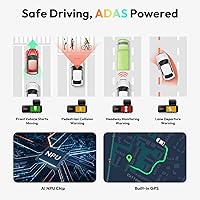
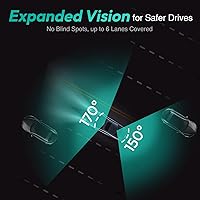
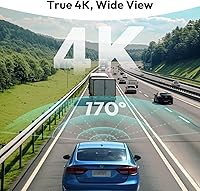
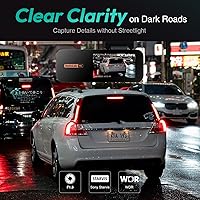
Where the G980H really earns its keep is in difficult lighting. The Sony STARVIS sensor paired with Wide Dynamic Range processing keeps footage readable under streetlights, oncoming headlights, and tunnel entrances where contrast shifts are brutal. The 170° front and 150° rear angles cover a wide span of traffic without excessive edge distortion. Built-in GPS logs your route and speed, linking with Google Maps for post-trip playback — useful if you ever need to verify where you were and how fast. Dual-band Wi-Fi and Bluetooth let you transfer clips to your phone reasonably fast, though pairing can be inconsistent on some devices. The ADAS alerts covering lane departure, forward collisions, and pedestrian proximity add awareness, but treat them as prompts rather than precision safety systems.

Best For

This front-and-rear camera suits daily commuters most directly — people who want clear, timestamped footage ready in case an accident or insurance dispute ever materializes. Night drivers also benefit considerably, as the Sony sensor produces noticeably better low-light results than cheaper alternatives in the same class. If GPS route logging and app-based clip management appeal to you, the feature set here is genuinely capable. City parkers should know upfront that continuous parking monitoring requires a hardwire kit sold separately — that limitation deserves to be front and center, not buried in the fine print. For longer road trips, the included card is a reasonable starting point, though heavy recorders may want to step up to 128GB to prevent older footage from cycling out too quickly.

User Feedback

Owners consistently highlight daytime footage clarity as the standout strength — sharp enough to read plates at a practical distance, which matters most when you actually need the recording. Night performance earns solid marks too, though some reviewers note the camera struggles on very dark rural stretches with no ambient light. The companion app splits opinion: plenty of users find it adequate, but a notable share report connection drops and an interface that feels unpolished. A few buyers in warmer climates mention the unit running warm during summer months, though outright failures appear rare. Mount stability rarely comes up as a concern, which speaks well for everyday durability. Most criticism circles back to software rather than hardware, suggesting the core camera is dependable even if the app experience still has room to grow.

Pros

  • True 4K front footage captures license plates and road details with enough clarity to hold up in an insurance dispute.
  • The Sony STARVIS sensor handles urban night driving noticeably better than most competitors in this price bracket.
  • A 64GB microSD card is included in the box, so you are genuinely ready to record the day it arrives.
  • Built-in GPS embeds real-time speed and route data directly into video files for easy post-trip review.
  • The supercapacitor design handles temperature extremes more reliably than battery-powered alternatives.
  • 170-degree front and 150-degree rear angles cover multiple lanes simultaneously with minimal center distortion.
  • Dual-band Wi-Fi and Bluetooth allow reasonably fast clip transfers without pulling the memory card.
  • The static sticker windshield mount leaves no adhesive residue, which is a practical advantage for leased vehicles.
  • Loop recording with G-sensor incident locking protects critical footage automatically without any manual intervention.

Cons

  • The companion app has documented pairing issues that affect a significant share of users, particularly on certain Android versions.
  • Parking mode requires a separately purchased hardwire kit — a cost that is easy to overlook before checkout.
  • ADAS alerts produce frequent false positives in construction zones and on roads with faded lane markings.
  • The 64GB card fills up faster than expected for drivers who record continuously on multi-hour trips.
  • Cold GPS acquisition can take a few minutes, leaving early portions of some clips without location metadata.
  • The rear camera footage quality lags noticeably behind the front, especially in low-light conditions.
  • Menu navigation relies on physical buttons rather than a touchscreen, which some users find slow and fiddly.
  • The instruction manual is too sparse for first-time dash cam owners, often requiring supplemental video guides to complete setup.
  • The unit runs warm during summer months when parked in direct sunlight, which has raised durability concerns for drivers in hot climates.

Ratings

The BOTSLAB G980H Dual Dash Cam earned its scores through AI-driven analysis of verified buyer reviews gathered globally, with spam, bot-generated, and incentivized submissions actively filtered out before any scoring was applied. The result is a rating profile that reflects what real drivers actually experience — not just the highlights, but also the friction points that show up after weeks of daily use. Both the strengths and the genuine shortcomings are represented transparently across each category below.
Video Quality (Front)
88%
Daytime footage from the front camera is consistently sharp and detailed enough to clearly resolve license plates and road signs at highway speeds. The Sony IMX 415 sensor handles bright daylight well, producing natural color rendition that holds up even when reviewing clips on a laptop screen.
In very low ambient light — think unlit rural roads with no streetlamps — the 4K footage can show visible noise and softer edges than the spec sheet implies. Some users also note that 4K files are large, which fills the included card faster than expected on long drives.
Night Vision Performance
81%
19%
The Sony STARVIS sensor makes a real difference in urban night driving, where streetlights, headlights, and illuminated signs create a high-contrast mess that cheaper sensors struggle with. Most reviewers find the night footage genuinely usable for insurance purposes without needing any post-processing.
Performance drops noticeably in completely unlit environments, where the camera leans on digital enhancement that introduces grain. Drivers who regularly navigate very dark roads may find the results underwhelming compared to what the marketing imagery suggests.
Rear Camera Quality
74%
26%
The 2K rear camera provides solid coverage of what is behind the vehicle, capturing enough detail to be useful in rear-end collision scenarios. The 150-degree field of view gives a wide perspective that covers adjacent lanes without excessive fish-eye distortion at the center.
There is a noticeable quality gap between the front 4K and rear 2K feeds, which some buyers find disappointing when they expect parity. Low-light rear footage in particular can appear flat and detail-poor compared to the front camera under the same conditions.
ADAS Reliability
63%
37%
The lane departure and forward collision alerts work reasonably well on well-marked highways, giving a genuine heads-up nudge when attention drifts during monotonous stretches. Fatigue reminders every two hours are a thoughtful addition that longer-haul drivers genuinely appreciate.
On urban streets with faded lane markings, construction zones, or curved roads, false positives become frequent enough to be annoying. Several reviewers turned off certain ADAS alerts entirely because the sensitivity could not be calibrated finely enough for their typical driving environment.
App & Wi-Fi Experience
58%
42%
When the connection holds, the companion app handles clip browsing and download reasonably well, and the dual-band Wi-Fi does transfer files faster than older single-band systems. The interface gives access to GPS playback and basic settings without needing to pull the SD card.
Pairing reliability is the most consistent complaint across user reviews — dropped connections, failed initial pairings, and app crashes during transfers appear frequently enough to be a pattern rather than an outlier. Users on certain Android versions report the worst experience, and the app interface itself feels like it lags behind the hardware quality.
GPS Accuracy & Route Logging
83%
The built-in GPS locks on quickly in open conditions and embeds accurate speed and location data directly into video files. Google Maps integration makes reviewing a trip route straightforward, and the on-screen speed readout is useful for drivers who want an additional reference point.
GPS signal can take a minute or two to acquire cold in underground parking structures or dense urban canyons, leaving the first few minutes of some clips without location data. A small number of reviewers also noticed occasional speed readings that drifted slightly from their vehicle speedometer.
Installation & Setup
79%
21%
The static sticker mount installs without adhesive residue, which is a practical plus for drivers who lease their vehicles or switch cars frequently. Routing cables along the headliner is straightforward, and the included pry bar tool makes that job noticeably easier than typical dash cam installs.
Running the rear camera cable neatly through the interior takes patience and is not as plug-and-play as the product packaging suggests. A few buyers also found the instruction manual too sparse for first-time dash cam users, requiring them to rely on online videos to finish the setup confidently.
Parking Mode
61%
39%
When properly set up with the hardwire kit, the 24/7 parking mode with G-sensor activation works reliably, capturing impacts and movement around the vehicle even with the engine off. Urban drivers who have used it report genuine peace of mind when parked overnight on busy streets.
The hardwire kit is not included and must be purchased separately, which is a meaningful add-on cost that is easy to overlook at the point of purchase. Without it, parking mode simply does not function — and buyers who assumed it was ready out of the box have expressed frustration in reviews.
Build Quality & Durability
76%
24%
The physical construction feels solid for a mid-range unit, with no reported issues around the lens mount or housing cracking under normal use. The supercapacitor design is a genuine durability advantage over battery-based models, especially in climates where temperatures swing significantly.
Some users in hot climates note the unit runs warm during summer months, particularly when parked in direct sunlight before driving. While outright failures are rare in the review pool, a handful of buyers in consistently high-temperature regions have reported shorter-than-expected lifespans.
Included Accessories & Value
84%
Bundling a genuine 64GB microSD card at this price tier is a practical differentiator — most competitors at a similar level either exclude a card or include a slower, lower-capacity one. The car charger and front-rear camera kit mean you have everything needed for basic installation without an extra parts order.
64GB is sufficient for typical daily commuters but runs short for drivers who record continuously on longer road trips or want extended loop storage. Power users and those who travel frequently would benefit from upgrading to 128GB or 256GB sooner rather than later.
Display Usability
71%
29%
The 2.45-inch screen is adequately sized for confirming the camera is recording and for basic menu navigation without pulling out a phone. Brightness is sufficient for daytime visibility, and the real-time speed display is a convenient at-a-glance reference while driving.
The display is not touch-enabled, so navigating menus requires physical buttons that some users find fiddly, especially while stationary in the car. Viewing recorded footage directly on the unit is functional but not enjoyable given the screen size — most users default to the app or a laptop for serious review.
Wide Angle Coverage
82%
18%
The 170-degree front angle covers a genuinely wide swath of the road ahead, capturing activity across multiple lanes simultaneously without requiring any manual adjustment. The rear 150-degree view is similarly generous and captures enough peripheral context to be useful beyond just what is directly behind you.
Like all wide-angle dash cams, some barrel distortion is visible at the extreme edges of the frame, which slightly warps the appearance of vehicles in adjacent lanes. This is largely a category-wide trade-off rather than a flaw specific to this unit, but buyers expecting distortion-free edges may notice it.
Loop Recording & Storage Management
78%
22%
Automatic loop recording works reliably and the G-sensor incident locking functions correctly in real-world collision scenarios, protecting the relevant clips from being overwritten. Setup requires minimal configuration out of the box, which lowers the barrier for less technical users.
The management of protected versus looping files can get confusing if the card fills up with locked clips after multiple minor incidents. A few users have found themselves needing to manually clear protected files to restore normal loop function, which is not well explained in the documentation.

Suitable for:

The BOTSLAB G980H Dual Dash Cam is a strong fit for daily commuters who want reliable, high-resolution documentation of everything happening in front of and behind their vehicle without spending flagship money. Drivers who regularly navigate busy city roads at night will get the most from the Sony STARVIS sensor, which handles the kind of mixed-lighting conditions — headlights, traffic signals, tunnels — that expose the weaknesses of cheaper alternatives. If you want GPS route logging and speed data embedded directly in your footage, this front-and-rear camera delivers that capability in a way that integrates naturally into a post-incident review workflow. Tech-comfortable users who are willing to manage footage through a companion app and appreciate the convenience of Wi-Fi transfers will find the feature set genuinely practical. Urban dwellers who park on the street overnight and want the option of continuous parking monitoring will also benefit, provided they factor the separately sold hardwire kit into their plan from the start.

Not suitable for:

Buyers who expect a truly plug-and-play experience from first power-on may find the BOTSLAB G980H Dual Dash Cam more demanding than anticipated, particularly when it comes to setting up the rear camera cable run and getting the companion app to pair reliably. Drivers who spend significant time on completely unlit rural roads should temper their expectations around night performance — the Sony sensor performs well in urban and suburban lighting, but deep darkness pushes it toward its limits. Anyone planning to rely heavily on ADAS features as a core safety layer should reconsider; these alerts are better understood as supplementary nudges than dependable driver assistance, and false positives on poorly marked or curved roads can make them more of a nuisance than a benefit. Those who want uninterrupted 24/7 parking protection without additional purchases will be disappointed to find that the hardwire kit is a required add-on, not an included one. Finally, professional drivers or rideshare operators who record continuously for many hours a day may find the 64GB card cycles through footage too quickly and that the app-based workflow is not efficient enough for high-volume clip management.
Specifications

  • Front Resolution: The front camera records at true 4K (3840×2160), delivering high-detail footage suitable for reading license plates and road signage at speed.
  • Rear Resolution: The rear camera captures footage at 2K resolution, providing clear coverage of the area behind the vehicle across a wide field of view.
  • Image Sensor: A Sony IMX 415 STARVIS sensor powers the front camera, offering strong light sensitivity and improved performance in low-light and high-contrast driving conditions.
  • Field of View: The front lens covers 170° and the rear lens covers 150°, together spanning up to six lanes of traffic without requiring any manual adjustment.
  • Display: A built-in 2.45-inch screen provides a live view of the front camera feed and allows direct access to settings and playback without a companion device.
  • Connectivity: The unit supports dual-band 5G and 2.4G Wi-Fi alongside Bluetooth, enabling wireless clip transfers and remote configuration through the BOTSLAB companion app.
  • GPS: Built-in GPS records precise location coordinates and speed data with every clip, and integrates with Google Maps for post-trip route playback.
  • ADAS Features: The 1.5 TOPS AI NPU chip powers real-time alerts for lane departure, forward collision risk, pedestrian proximity, vehicle movement ahead, and driver fatigue at two-hour intervals.
  • Parking Mode: 24/7 parking monitoring with G-sensor-triggered incident locking is supported, but requires a separately purchased hardwire kit (BOTSLAB ASIN: B0DT1633D2) to function.
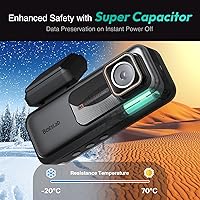
  • Power Backup: A supercapacitor replaces the conventional lithium battery, providing stable power handling during sudden shutoffs and improved reliability across a wider temperature range.
  • Included Storage: A 64GB microSD card is included in the box, providing enough capacity for typical daily commuters without requiring an immediate additional purchase.
  • Mounting Type: The camera attaches to the windshield using a static sticker mount that leaves no adhesive residue upon removal, making it suitable for leased or shared vehicles.
  • Temperature Range: The unit is rated to operate reliably between -20°C and 70°C, covering most real-world climates including cold winter starts and hot summer interiors.
  • Dimensions: The front unit measures 0.79 × 3.54 × 1.97 inches, keeping the windshield footprint compact and minimizing obstruction to the driver's sightline.
  • Weight: The complete front unit weighs 1.57 pounds, which is within the typical range for dual-channel dash cams with built-in displays.
  • Dynamic Range: Wide Dynamic Range (WDR) processing is applied to footage to balance exposure in scenes that combine very bright and very dark zones, such as tunnel exits in daylight.
  • Loop Recording: Continuous loop recording automatically overwrites the oldest non-protected footage when the memory card reaches capacity, ensuring uninterrupted coverage.
  • In-Box Contents: The package includes the front camera, rear camera, a 64GB microSD card, a car charger, a USB power cord, and an installation pry bar for clean cable routing.
  • Vehicle Compatibility: Designed for use in cars and SUVs up to 5.5 meters in length; it is not intended for larger commercial vehicles or trucks beyond that size.
  • AI Chip: A 1.5 TOPS neural processing unit handles the real-time ADAS computations on-device, without requiring a cloud connection for alert generation.

Related Reviews
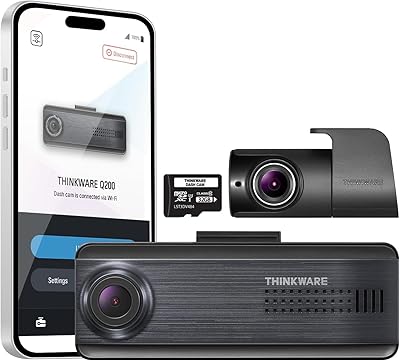
Thinkware Q200 2-Channel Dash Cam
76%
84%
Front Camera Clarity
67%
Rear Camera Clarity
72%
Night Vision Performance
76%
Parking Mode
63%
GPS Alert Accuracy
More
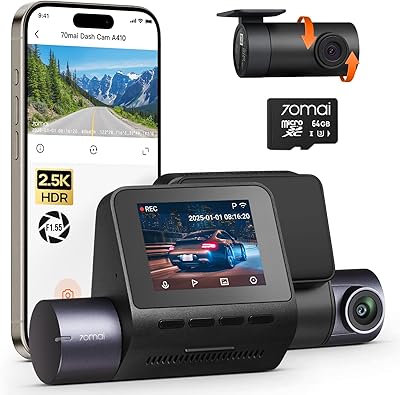
70mai A410 Dual Dash Camera
78%
88%
Daytime Video Clarity
71%
Night Vision Performance
74%
Rear Camera Quality
67%
App & Wi-Fi Experience
84%
GPS Accuracy & Data Logging
More
ORSKEY S800 Dual Dash Cam
73%
88%
Value for Money
82%
Front Camera Video Quality
53%
Rear Camera Video Quality
61%
Night Vision Performance
91%
Ease of Installation
More
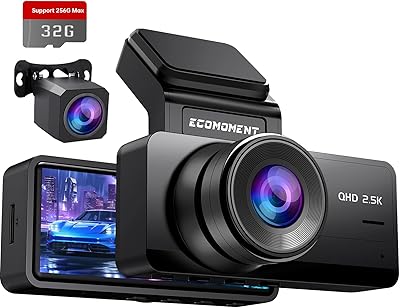
Ecomoment S70 Dual Dash Cam
83%
88%
Video Quality (Front & Rear)
91%
Night Vision Performance
85%
Ease of Installation
89%
Field of View (Wide Angle)
82%
Durability & Build Quality
More
IIWEY N2 4K Dual Dash Cam
83%
92%
Video Quality
84%
Ease of Use
89%
Durability
60%
Installation Process
90%
Wi-Fi Functionality
More
Thinkware U3000 4K Dual Dash Cam
86%
93%
Video Quality (4K Performance)
90%
Night Vision Performance
88%
Ease of Installation
85%
Radar Parking Mode
70%
App Connectivity & Control
More
Sarmert M572 4K Dual Dash Cam
85%
94%
Video Quality
89%
Ease of Installation
88%
Night Vision Performance
70%
Wi-Fi Connectivity
80%
App Experience
More
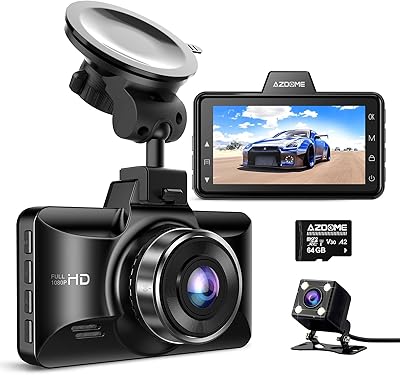
AZDOME M01 Pro Dual Dash Cam
64%
76%
Video Quality (Front)
54%
Video Quality (Rear)
67%
Night Vision
88%
Ease of Installation
58%
ADAS Performance
More
COOAU D20S 4K Dual Dash Cam
83%
91%
Video Quality (Daytime)
75%
Night Vision Performance
88%
Ease of Installation
82%
App Control and Software Experience
86%
GPS Accuracy and Tracking
More
SUVCON M02 4K/1080P Dual Dash Cam
77%
88%
Video Clarity (Daytime)
71%
Night & Low-Light Performance
74%
Rear Camera Quality
66%
App Experience (Viidure)
91%
Ease of Installation
More

FAQ

It does require an extra purchase — a dedicated hardwire kit that connects the camera directly to your vehicle's fuse box for continuous low-power operation. The kit is sold separately by BOTSLAB. Without it, the camera only operates while the car is running through the standard car charger, so parking monitoring simply will not activate.

It is a functional card, not a placeholder, and it is enough for most daily commuters recording in a continuous loop. If you regularly drive for several hours or want to keep footage for extended periods before reviewing, upgrading to a 128GB or 256GB card is worth considering. The camera supports higher-capacity cards without any issues.

It works well for many users, but app pairing is one of the more frequently raised complaints in real buyer feedback. Some Android users in particular report dropped connections or failed initial pairings. If you run into trouble, switching between 2.4G and 5G bands within the app settings resolves it for most people, though the experience is not as smooth as it should be at this level.

They are useful in certain environments — steady highway driving with clear lane markings is where they work best. In urban traffic, construction zones, or on winding roads with faded markings, false alerts become frequent enough to be a genuine annoyance. A lot of users end up turning off some of the more sensitive alerts and keeping just the ones that suit their typical commute.

The Sony STARVIS sensor performs well in mixed urban lighting, but fully unlit rural roads push it to its limits. You will get usable footage in most suburban and highway conditions, but if your regular driving includes long stretches of completely unlit road, expect some noise and softness in those clips compared to the daylight quality.

Yes — the dual-band Wi-Fi lets you connect the camera to the companion app on your phone and browse or download clips wirelessly. It is slower than pulling the card and using a reader, but for reviewing a specific incident without interrupting the setup, the wireless route is practical once you have the pairing sorted.

The supercapacitor design handles heat better than battery-based models, and the operating range goes up to 70°C. That said, a number of users in consistently hot climates have noted the unit runs noticeably warm after extended sun exposure. It is a common issue across the dash cam category, not unique to this one, but worth knowing if you live somewhere with intense summer temperatures.

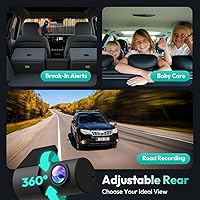
The rear camera connects back to the front unit via a cable that you route along the headliner and down the pillar — the included pry bar makes tucking the cable in much easier. It draws power through that connection rather than needing its own separate power source, so once routed, the rear camera is effectively plug-and-play off the front unit.

Yes, your current speed is shown on the camera's display in real time, and that speed data is also embedded into each recorded video file. This can be useful if you ever need to demonstrate your traveling speed as part of an insurance claim or dispute. Keep in mind the GPS reading and your vehicle speedometer can occasionally differ slightly, which is normal for GPS-based speed tracking.

The camera supports microSD cards up to 256GB, which gives you considerably more recording headroom than the included 64GB card. For drivers who want longer loop storage or who do extended highway driving, stepping up to 128GB or 256GB is a straightforward upgrade that the hardware handles without issue.