Overview

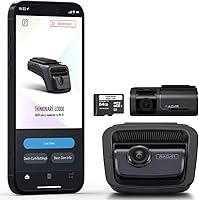
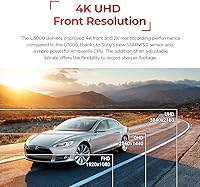
The Thinkware U3000 4K Dual Dash Cam sits firmly in the premium tier of the dual-channel dash cam market, built for drivers who want actual evidence when something goes wrong — not just a recording that looks decent on a phone screen. The standout hardware choice is the Sony STARVIS 2 sensor, which separates the U3000 from the crowded mid-range field. You get 4K up front and 1440p at the rear, a noticeable jump over the 1080p ceiling most competitors still operate at. A 64GB card is included, so you are recording from day one. One caveat worth flagging early: full parking mode requires hardwiring or an OBD-II cable, sold separately.

Features & Benefits

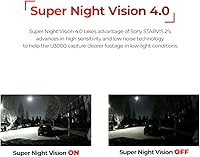
What makes the U3000 genuinely useful at night is not just brightness — it is the ability to resolve detail. The Sony STARVIS 2 sensor, combined with Super Night Vision 4.0, captures license plates legibly at distance in low-light conditions where cheaper cameras produce little more than smeared color. Wide Dynamic Range and smart dewarping handle the other common failure points: glaring sunlight does not blow out the sky, and the 156-degree field of view does not push cars into distorted shapes at the edges. The radar-based parking mode is notably efficient — low-power radar wakes the camera only when motion is detected, preserving your battery compared to always-on systems. GPS tags every clip with speed and location automatically.

Best For

This dual dash cam makes the most sense for people who genuinely need documented evidence — not just a peace-of-mind gadget that sits on the dash. Daily commuters who park on city streets or in shared lots will get real value from the radar-activated parking coverage. Rideshare and delivery drivers benefit from GPS-tagged front-and-rear footage that can resolve disputes quickly. Families with newer drivers and shared vehicles will appreciate remote impact alerts via the app. The U3000 also supports trucks, minivans, and RVs. That said, buyers who want plug-and-play parking protection should know upfront that hardwiring is required — not an issue if you plan ahead, but not a quick five-minute job either.

User Feedback

With around 230 ratings and a 3.9-star average, this Thinkware unit has a solid base but not enough volume to call the verdict fully settled. Buyers who praise it tend to focus on night video clarity — specifically that footage holds up when reviewed after an incident, rather than just looking impressive on a small phone screen. The radar parking feature generally gets positive marks for delivering on its promise. On the other side, some users report friction with the companion app, including connectivity hiccups and a learning curve that feels steep at this price. Heat tolerance in hot climates and whether the rear camera justifies the cost are recurring concerns worth researching before committing.

Pros

  • Sony STARVIS 2 sensor captures license plates legibly in dark parking lots, not just vague shapes.
  • 4K front resolution delivers footage that holds up under scrutiny in insurance or legal contexts.
  • Radar-based parking mode wakes the camera only on motion, protecting your battery during long park periods.
  • Built-in GPS automatically embeds speed and location into every clip — no separate tracker needed.
  • Dual-band Wi-Fi lets you pull clips directly to your phone without ever touching the memory card.
  • Wide Dynamic Range keeps footage usable in harsh sunlight without blowing out the sky or losing shadow detail.
  • Dewarping processing keeps the 156-degree field of view from distorting vehicle shapes at the frame edges.
  • 64GB card is included, so you are ready to record immediately without a separate purchase.
  • Compatible with trucks, RVs, and minivans, making it practical for larger or commercial vehicles.
  • ADAS alerts add a useful layer of road awareness without feeling tacked on at this price point.

Cons

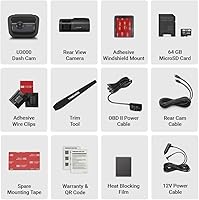
  • Hardwire kit or OBD-II cable required for parking mode — neither is included in the box.
  • The Dash Cam Link app has reported reliability issues, including intermittent connection drops.
  • App setup has a learning curve that feels steeper than competitors at a similar price.
  • Rear camera tops out at 1440p, which some buyers feel does not fully justify the overall cost.
  • No in-box mounting hardware beyond the windshield mount — installation accessories cost extra.
  • Heat durability in high-temperature climates has been flagged by a portion of users.
  • With around 230 ratings, the feedback pool is still relatively small to draw firm long-term reliability conclusions.
  • Parking mode clips are capped at 20 seconds, which may not capture the full context of slower-moving incidents.
  • Buyers comparing to Vantrue or Garmin alternatives at similar prices may find feature overlap that narrows the gap.

Ratings

The Thinkware U3000 4K Dual Dash Cam has been scored by our AI system after analyzing verified global buyer reviews, actively filtering out incentivized, repeated, and bot-flagged submissions to surface genuine ownership experiences. These scores reflect the full picture — where real drivers praised the hardware and where friction points emerged in day-to-day use. Both strengths and honest shortcomings are weighted into every category below.

Night Vision Quality
88%
Owners consistently report that the Sony STARVIS 2 sensor delivers footage where license plates are actually legible in dimly lit parking lots and poorly lit roads — not just bright but unreadable blobs. Reviewers coming from mid-range cameras describe the low-light jump as immediately obvious when reviewing clips side by side.
On completely unlit rural roads or in extreme darkness, the footage softens noticeably at distance. A subset of users also noted that heavy rain at night introduces grain that makes plate reading unreliable beyond close range.
Video Clarity
91%
The 4K front channel holds up exceptionally well when footage needs to serve as actual evidence — fine text on road signs and plates in moving traffic stays sharp enough to be useful. Wide Dynamic Range keeps tunnel exits and backlit intersections from blowing out the frame the way cheaper sensors do.
The rear camera at 1440p is competent but noticeably softer by comparison, and some buyers feel the resolution gap is hard to justify given the overall cost of the system. Dewarping occasionally introduces slight edge softness in the far corners of the frame.
Parking Protection
82%
18%
The radar-based trigger system genuinely works as described — the camera wakes quickly on nearby motion without staying powered all night, which matters for anyone who parks for extended periods without access to regular charging. Reviewers who commute to large parking structures found this the single most valuable feature day to day.
The mandatory hardwire kit or OBD-II cable requirement catches a significant portion of buyers off guard, as neither is included in the box. Users who assumed parking mode was plug-and-play account for a disproportionate share of disappointed reviews.
App & Connectivity
63%
37%
When the Dash Cam Link app connects reliably, the dual-band Wi-Fi makes clip retrieval fast and genuinely convenient — no fumbling with a card reader, and remote live view works well enough for checking on a parked car in real time.
App reliability is the most common friction point in user reviews, with complaints spanning dropped Wi-Fi connections, sluggish clip loading, and an initial pairing process that trips up less tech-confident users. Several reviewers noted the app experience feels behind the hardware quality, which is a genuine weak point at this price.
GPS Accuracy
86%
Built-in GPS locks quickly in most environments and embeds speed and coordinates automatically — reviewers who submitted footage to insurers after accidents specifically mentioned that having timestamped location data made the claims process noticeably smoother. No separate module or subscription is required.
GPS signal acquisition can lag for the first minute or two after startup in dense urban canyons, which means very short trips around the block may not have full location data embedded. A small number of users reported occasional speed readings that ran slightly high relative to their speedometer.
Installation Experience
58%
42%
The included 64GB card and quick-start guide mean basic recording is genuinely up and running within 20 to 30 minutes for straightforward windshield mounting. Drivers who have installed dash cams before found the physical setup clean and the cable routing manageable.
For anyone new to dash cams, the full setup — especially configuring parking mode with a hardwire kit — involves a meaningful time investment and some electrical work that many buyers were not expecting. The quick guide provides limited detail on hardwiring, pushing users toward third-party tutorials.
Build Quality
79%
21%
The unit feels substantial and well-assembled for a windshield-mounted device, with materials that do not flex or creak on bumpy roads. Reviewers who have used it through multiple seasons generally report no housing degradation or mount loosening under normal driving conditions.
Heat durability in high-summer climates has been flagged by a portion of owners who park in direct sunlight regularly — a handful of reviews mention issues surfacing after extended heat exposure. The windshield mount, while solid, does not offer alternative adhesive options for unusual windshield angles.
Value for Money
72%
28%
For buyers who fully use the radar parking mode, GPS tagging, and 4K front channel as an integrated evidence system, the hardware delivers genuine capability that justifies the premium tier pricing. Rideshare drivers and daily commuters with high parking exposure tend to rate value favorably because the feature set directly reduces real financial risk.
Buyers who primarily want a basic trip recorder and skip parking mode will find the price hard to justify against capable competitors at significantly lower cost. The additional outlay for a hardwire kit further widens the gap versus alternatives that bundle those accessories.
ADAS Reliability
74%
26%
Forward collision and lane departure warnings work consistently enough that commuters who drive long highway stretches find them a genuinely useful secondary layer of attention — not a gimmick. Safety camera alerts via GPS are particularly appreciated by users who travel through unfamiliar regions.
False positives for lane departure warnings in urban environments — tight lane markings, construction zones, and frequent merges — frustrate some users enough that they disable the alerts entirely. The ADAS sensitivity calibration options are limited, which reduces the ability to fine-tune these features to individual driving styles.
Event Recording
83%
The 20-second event clip structure — capturing 10 seconds before and after a trigger — has proven sufficient for the vast majority of real incidents reported by users, including rear-end situations and parking lot hits. Reviewers who have actually submitted clips to insurers report that the pre-trigger buffer made all the difference in showing fault.
Slower or more gradual incidents — like a car slowly rolling into yours or a prolonged parking altercation — can fall outside the 20-second window, leaving gaps in documented context. The event file limit means in heavy-traffic environments, important clips can occasionally be queued behind less critical triggers.
Wide Dynamic Range
84%
Drivers who spend time on roads with dramatic lighting transitions — tunnel exits, sunrise driving, tree-lined streets with dappled light — notice a tangible improvement in how evenly exposed the footage looks. WDR combined with smart auto-exposure means the camera rarely needs manual adjustment across varied lighting conditions.
In extreme midday glare, particularly when recording toward a low sun on reflective wet roads, some overexposure still bleeds through despite WDR active. Buyers comparing direct output to similarly priced Garmin units noted that color accuracy under artificial lighting is slightly warmer than neutral.
Vehicle Compatibility
89%
Official compatibility extending to trucks, RVs, minivans, and buses gives this Thinkware unit meaningful flexibility compared to dash cams narrowly tuned for standard passenger cars. RV owners in particular appreciate that the wider field of view and rear coverage work sensibly for longer vehicles.
Larger vehicles with non-standard windshield curvature or heavily tinted glass may require additional consideration for mount placement and GPS signal quality. Cable routing in trucks and RVs is more involved than in compact cars, which amplifies the installation complexity issue for this buyer group.
App Notifications
67%
33%
Remote impact notifications delivered via the app give families and fleet-minded buyers a real-time awareness layer that most rivals do not offer at this level. Parents of newer drivers in particular highlight this as a compelling practical feature that adds meaningful peace of mind.
Notification delivery depends entirely on a stable app connection, and the intermittent connectivity issues that affect the broader app experience carry over here. Several users report delayed or missed impact alerts during periods of weak phone signal or app background restrictions on iOS.

Suitable for:

The Thinkware U3000 4K Dual Dash Cam is genuinely well-matched for drivers who treat a dash cam as a practical safety tool rather than an afterthought. Rideshare and delivery drivers will find the GPS-tagged, front-and-rear footage especially useful — when a dispute arises, having timestamped speed and location data alongside clear video is the difference between a resolved claim and a he-said-she-said stalemate. Daily commuters who park in busy lots or on street parking will benefit most from the radar parking mode, which watches the car passively without running the battery down. Families managing shared vehicles or supervising newer drivers can use the remote impact notification feature to stay informed without being intrusive. Truck, minivan, and RV owners are also supported, which broadens its appeal beyond standard passenger cars. If you are already comfortable with mild installation work — or willing to pay a shop to hardwire it — this Thinkware unit rewards that investment with parking protection that actually holds up overnight.

Not suitable for:

The Thinkware U3000 4K Dual Dash Cam is not the right call for buyers expecting a truly plug-and-play experience, particularly around parking mode. Full parking protection requires either a hardwire kit or an OBD-II cable, neither of which is included — and that is a real sticking point if you assumed the box contained everything needed. Budget-conscious buyers will also want to think carefully here; the price reflects genuine hardware quality, but if your primary concern is basic trip recording with decent daytime footage, there are capable dual-channel options at a lower cost that will do the job. The companion app has drawn criticism for reliability issues, so anyone who relies heavily on app-based control rather than SD card management may find the experience frustrating at times. Drivers in consistently hot climates should research heat tolerance before committing, as thermal stress is a recurring concern with windshield-mounted cameras in general, and the U3000 is not immune to that. If you want a low-maintenance camera you can install once and forget entirely, this unit demands more engagement than that.

Specifications

  • Front Resolution: The front camera records at 4K (2160p), capturing enough detail to read license plates and road signs under normal driving conditions.
  • Rear Resolution: The rear camera records at 1440p, a meaningful step above standard 1080p rear cameras common in this product category.
  • Image Sensor: Both channels use Sony STARVIS 2 sensors, which are optimized for low-light sensitivity and high dynamic range performance.
  • Processor: An Ambarella chip handles video encoding and image processing, supporting adjustable bitrate to prioritize detail in critical footage.
  • Field of View: The front camera covers a 156-degree horizontal field of view, wide enough to capture adjacent lanes and intersection activity.
  • Night Vision: Super Night Vision 4.0 uses advanced low-noise processing to brighten dark scenes while preserving detail rather than simply amplifying brightness.
  • Parking Mode: Built-in low-power radar detects nearby motion and wakes the camera to record, without requiring the system to stay fully active while parked.
  • Event Recording: Triggered events save a 20-second clip capturing 10 seconds before and 10 seconds after the impact or motion trigger.
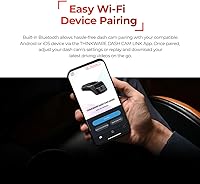
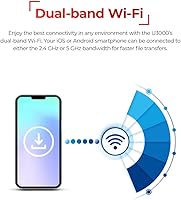
  • Connectivity: Dual-band Wi-Fi operates on both 2.4GHz and 5GHz bands for faster clip transfers, alongside Bluetooth for initial pairing.
  • GPS: Built-in GPS automatically embeds speed and location metadata into every recorded clip without requiring an external module.
  • Image Processing: Wide Dynamic Range, smart auto-exposure, and dewarping work together to produce natural-looking footage in high-contrast lighting conditions.
  • ADAS Features: Active driver assistance includes forward collision warning, lane departure warning, and safety camera location alerts via built-in GPS data.
  • Included Storage: A 64GB microSD card is included in the box, providing immediate recording capacity without a separate purchase.
  • Mount Type: The unit attaches via a windshield mount and does not include adhesive or suction alternatives in the standard package.
  • Dimensions: The front unit measures 5.5 x 3.86 x 7.48 inches and weighs 4.6 oz, making it a moderately sized unit for a dual-channel system.
  • Compatible Vehicles: Officially compatible with cars, trucks, minivans, RVs, and buses, accommodating a wider range of vehicle types than most consumer dash cams.
  • Parking Power: Continuous parking mode operation requires a hardwire kit or OBD-II power cable, neither of which is included in the standard box.
  • App Control: The Dash Cam Link app connects via Wi-Fi for remote clip review, live view, and impact notifications on both iOS and Android devices.

Related Reviews
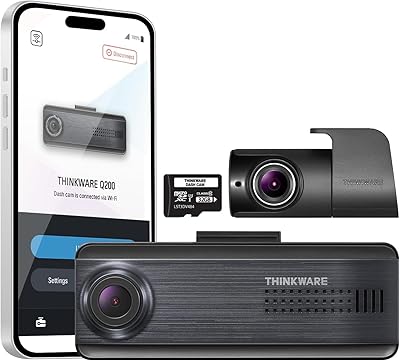
Thinkware Q200 2-Channel Dash Cam
76%
84%
Front Camera Clarity
67%
Rear Camera Clarity
72%
Night Vision Performance
76%
Parking Mode
63%
GPS Alert Accuracy
More
IIWEY N2 4K Dual Dash Cam
83%
92%
Video Quality
84%
Ease of Use
89%
Durability
60%
Installation Process
90%
Wi-Fi Functionality
More
Kolvt L3 4K Dual Dash Cam
77%
86%
Front Video Quality
77%
Rear Video Quality
71%
Night Vision
74%
App and Wi-Fi
76%
Build Quality
More
DDPAI N5 Dual Front and Rear Dash Cam
77%
88%
Video Quality (Front)
71%
Video Quality (Rear)
74%
Parking Mode & Surveillance
82%
Wi-Fi Speed & App Experience
83%
GPS Accuracy & Logging
More
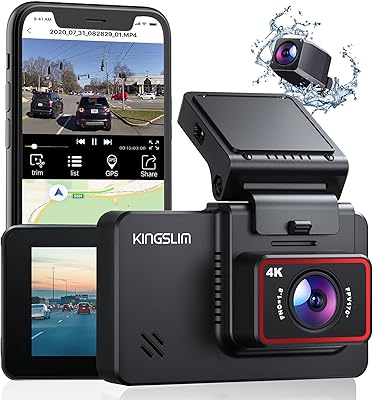
Kingslim D4 Dual Dash Cam
75%
88%
Daytime Video Quality
71%
Night Vision Performance
84%
GPS Accuracy
57%
App & WiFi Connectivity
76%
Ease of Installation
More
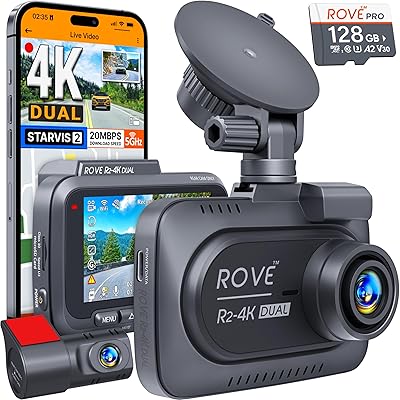
ROVE R2-4K Dual Dash Cam
80%
91%
Video Clarity (Front)
88%
Night Vision Performance
74%
Rear Camera Quality
78%
Wi-Fi & App Experience
86%
GPS Accuracy & Logging
More
70mai 4K Omni X800 Dual Dash Cam
80%
91%
Night Vision Quality
93%
Video Clarity (Daytime)
88%
Rotating Camera Design
79%
4G LTE Remote Monitoring
67%
Parking Mode Usability
More
Sarmert M572 4K Dual Dash Camera
75%
84%
Video Clarity (Daytime)
71%
Night Vision & Low Light
63%
App Experience
58%
Parking Mode
89%
Supercapacitor Reliability
More
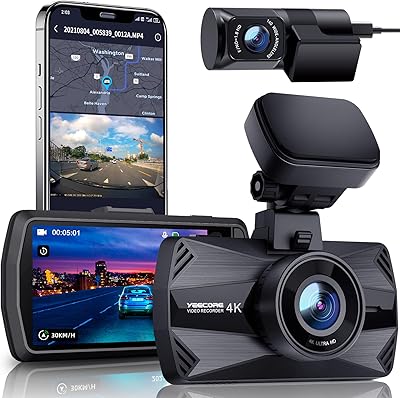
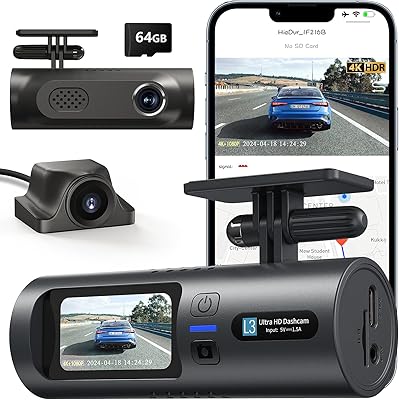
YEECORE D22 Front and Rear Dash Cam
78%
91%
Front Video Quality
67%
Rear Camera Quality
78%
Night Vision
88%
GPS Accuracy
63%
Wi-Fi & App Performance
More
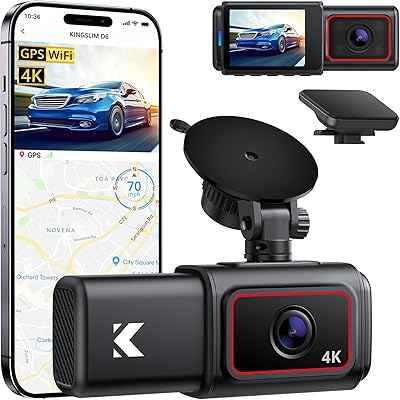
Kingslim D6 4K Dual Dash Cam
84%
91%
4K Video Quality
88%
Night Vision Performance
84%
Ease of Setup
89%
WiFi & GPS Functionality
82%
Build Quality & Durability
More

FAQ

Yes, and this is the most important thing to know before buying. The radar parking mode requires either a dedicated hardwire kit or an OBD-II power cable to keep the unit powered while your engine is off. Neither is included in the box, so factor that into your total cost and installation plan.

The Thinkware U3000 4K Dual Dash Cam performs noticeably better at night than most cameras in this category thanks to the Sony STARVIS 2 sensor and Super Night Vision 4.0. In practical terms, plate characters are generally legible on vehicles in front of you at typical following distances in low-lit conditions — though very dark, unlit roads will still challenge any camera at extreme range.

Standard motion detection keeps the camera active and watching constantly, which drains your car battery faster. The radar approach used here is more efficient — the radar module stays on in a low-power state and only wakes the full camera when it detects something moving nearby. Over a long park period, that difference in power draw is significant.

The specs officially cover cars, trucks, minivans, RVs, and buses, so larger vehicles are supported. The windshield mount is the same regardless of vehicle type, though placement and cable routing will vary depending on your cabin layout.

No, that is one of the more convenient aspects of the U3000. The dual-band Wi-Fi connects to the Dash Cam Link app, letting you browse and download clips directly to your phone. The 5GHz band in particular speeds up transfers noticeably compared to single-band systems.

This is a fair concern based on user feedback. The app works well for most users, but a portion of reviewers have reported intermittent Wi-Fi connectivity drops and a setup process that is less intuitive than expected at this price point. It is functional, but if app-first control is central to how you plan to use the camera, go in with measured expectations.

GPS tagging is automatic — once the camera has a signal lock, it embeds speed and location data into each clip without any manual input. This metadata shows up alongside the video when you review footage, which is particularly useful if you ever need to submit a clip to an insurer or present it in a dispute.

Heat tolerance is a genuine consideration for any windshield-mounted camera, and the U3000 is not unique in this regard. Some users in hot climates have flagged thermal stress as a concern, particularly during extended periods parked in direct sunlight. If you live somewhere routinely above 100°F in summer, it is worth reading recent owner feedback specific to your climate before deciding.

Each triggered event saves a 20-second clip — 10 seconds before the trigger and 10 seconds after. For typical parking impacts and hit-and-runs, that window usually captures enough context. Very slow or gradual events, like someone slowly pushing your car or a prolonged exchange, might fall outside that window, but for most common parking incidents it is adequate.

It uses a microSD card, and the 64GB card included in the box gets you started immediately. You can upgrade to a higher capacity card — most users opt for 128GB or 256GB if they want longer loop recording before older footage overwrites. Stick with cards rated for continuous write cycles, as standard consumer cards wear out faster in dash cam applications.