
Overview

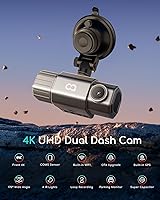
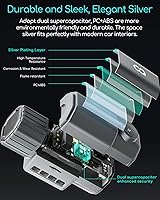
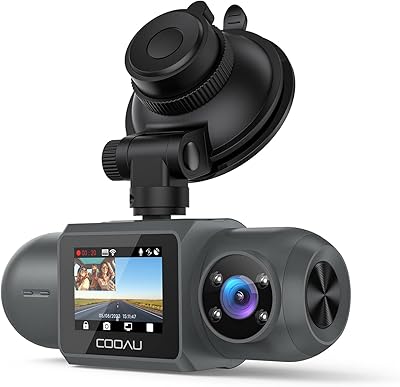
The COOAU D20S Dual Dash Cam sits in a comfortable mid-range spot that most daily drivers and rideshare operators will find hard to ignore. Unlike single-channel cameras that only watch the road ahead, this dual dash cam covers both the windshield view and the passenger cabin simultaneously — a genuinely useful setup if you drive for Uber or Lyft. What separates it from cheaper competitors is the COOAUDash app, which handles setup and clip review wirelessly. It also uses a supercapacitor instead of a lithium battery, so heat-related degradation over time is far less of a concern than with budget alternatives.

Features & Benefits

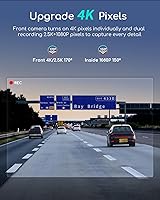
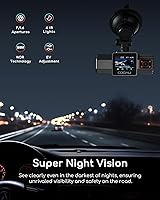
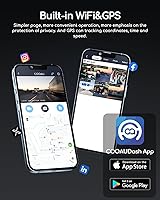
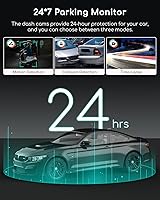
The front lens captures a wide sweep of traffic — enough to pick out license plates several cars ahead and read road signs clearly on busy multi-lane highways. Low-light performance inside the cabin is handled by four infrared LEDs, which activate automatically in the dark so passenger faces and details stay identifiable without any visible glare. The built-in GPS records speed and route continuously, and you can replay that data on a map inside the COOAUDash app after your trip. Should a collision occur, the G-sensor immediately locks that clip so loop recording cannot erase it. Three parking modes let the camera keep watching your car even when you are not in it.

Best For

This cabin-and-road camera is an obvious pick for rideshare drivers who need documentation on both sides of the windshield — the interior lens covers the rear side windows well enough to capture passenger activity without requiring a separate rear-facing unit. Families on long drives will appreciate having road footage as a safety record alongside incidental cabin shots. It also works well for anyone stepping up from a basic single-channel camera who wants GPS, Wi-Fi, and app-based clip management without spending flagship money. Truck, minivan, and RV owners benefit from the wide front angle, which comfortably captures multiple lanes at once.

User Feedback

Verified buyers tend to praise night vision clarity inside the cabin and how straightforward the COOAUDash app is to configure on a first attempt. Rideshare drivers in particular mention feeling more confident knowing passenger-side footage is available if a dispute arises. That said, a few recurring frustrations are worth knowing before buying: the SD card is not included, and some users report that not all high-capacity cards are recognized reliably. The parking mode works well for overnight street parking, but it requires a hardwire kit that is also sold separately, adding cost and installation effort. Mount stability draws occasional criticism on rough roads.

Pros

  • Front camera captures license plates and lane details clearly, even in fast-moving highway traffic.
  • Infrared cabin lighting activates automatically in low light, keeping passenger footage usable at night.
  • Built-in GPS logs your speed and exact route, adding valuable context to any incident footage.
  • The COOAUDash app makes clip review and camera setup genuinely convenient — no card removal needed.
  • Supercapacitor design holds up better in hot parked cars than cameras that rely on lithium batteries.
  • G-sensor automatically locks collision footage so loop recording cannot accidentally erase key evidence.
  • Three parking modes cover different real-world scenarios, from a quick bump in a lot to overnight monitoring.
  • Wide front angle is broad enough for multi-lane roads and larger vehicle windshields.
  • 24-month warranty provides reasonable post-purchase peace of mind for a mid-range device.
  • Wireless firmware updates mean you can improve camera performance without any manual intervention.

Cons

  • SD card is not included, and not all high-capacity cards are reliably recognized by the camera.
  • Parking mode requires a hardwire kit sold separately, adding both cost and installation complexity.
  • The interior camera captures cabin and rear side windows only — it cannot replace a true rear road-facing camera.
  • The 1.5-inch screen is too small for comfortable on-device footage review without the companion app.
  • Some users report the suction cup mount losing grip over time, especially on textured or curved windshields.
  • App connectivity can be inconsistent, with occasional pairing drops reported after phone software updates.
  • The camera body is on the heavier side for its size, which can stress the suction mount over long periods.
  • No included memory means first-time buyers face an unexpected extra purchase before the camera is usable.

Ratings

The COOAU D20S Dual Dash Cam earned these scores after our AI system analyzed verified global buyer reviews, actively filtering out incentivized, bot-generated, and duplicate feedback to surface what real drivers actually experience. Ratings span everything from front camera clarity to parking mode usability, reflecting an honest balance of what the camera does well and where it leaves buyers wanting more.

Front Camera Quality
84%
Drivers consistently report that the front footage holds up well when they need to pull a still frame to read a distant license plate or identify a road sign after an incident. On clear daytime highways, the wide coverage captures multiple lanes without distortion at the edges, which matters in multi-vehicle situations.
A portion of buyers feel the 4K label sets expectations higher than the real-world output sometimes justifies, particularly in overcast or hazy conditions where fine detail softens noticeably. Some users also note that compression artifacts appear in fast-paced traffic footage at certain recording settings.
Interior Night Vision
81%
19%
Rideshare drivers in particular praise how the infrared cabin camera keeps passenger faces and interior details identifiable even on completely unlit rural roads or in underground parking garages. The automatic activation means there is nothing to toggle — it just works when the light drops.
In mixed lighting situations, such as city streets with alternating bright streetlamps and dark gaps, the IR system can occasionally produce uneven exposure across the cabin frame. A handful of users report that reflective surfaces inside some vehicles create minor glare spots in the footage.
App Experience
77%
23%
The COOAUDash app genuinely changes the daily workflow — being able to connect over Wi-Fi, scrub through recent clips, and adjust settings without ever touching the camera or pulling the SD card is a real quality-of-life improvement over older button-driven dash cams in this price range.
App stability is the most divisive topic in user feedback: while initial setup is widely praised as straightforward, a meaningful number of users report that Wi-Fi pairing becomes unreliable after phone operating system updates, requiring a full re-pair process. The app interface itself feels utilitarian and lags behind competing brands on polish.
GPS Accuracy
79%
21%
The built-in GPS locks on reasonably quickly after startup and logs accurate speed and route data that syncs cleanly into the app map view. Commuters find it useful for reconstructing exactly where and when an incident occurred, which adds real weight to any insurance claim.
In dense urban environments with tall buildings, some users experience brief GPS signal drops that create gaps or jumps in the logged route. The GPS data is only viewable inside the app, so drivers who want real-time speed overlay burned into the video itself may find the implementation limited.
Parking Mode
62%
38%
When fully set up with a hardwire kit, the motion-triggered and collision-triggered parking modes perform reliably — several users describe catching attempted break-ins and minor lot scrapes they would have otherwise never known about. The three-mode flexibility suits different parking situations well.
The hardwire kit required to enable parking mode is not included and must be purchased separately, which frustrates a significant number of buyers who assumed full functionality was ready out of the box. Installation requires routing a wire to the fuse box, which is beyond the comfort level of many non-technical users and often means a shop fee on top of the kit cost.
Build Quality
73%
27%
The camera housing feels solid and does not rattle or creak during driving, which matters on longer trips where vibration can loosen cheaper plastic assemblies. The adjustable mount knobs allow for fine-tuning the angle without wobble once properly tightened.
At 13.7 ounces, the unit is noticeably heavier than many competitors at this price point, and that weight puts ongoing stress on the suction cup mount — particularly in vehicles with curved or treated windshields. The plastic finish also picks up smudges and scratches more visibly than matte-finished rivals.
Mount Stability
66%
34%
On flat windshields in moderate temperatures, the suction cup mount holds position reliably through daily driving including highway speeds and typical urban stop-and-go. First-time installation is quick and the adjustable neck locks angles securely once set.
In hot climates or with prolonged summer sun exposure, the suction cup loses adhesion at a rate that multiple buyers describe as a recurring frustration — some report the camera dropping onto the dashboard entirely. Users in warmer states frequently recommend adding an adhesive pad backup or replacing the mount within the first few months.
SD Card Compatibility
61%
39%
When a compatible, high-endurance microSD card from a reputable brand is used, loop recording and file locking work exactly as described, with no corruption issues reported under normal conditions. The 256GB ceiling is generous for this price tier and allows for long storage windows before footage cycles.
The camera does not include any SD card, which trips up a significant share of buyers who expect one at this price. Beyond that, compatibility with off-brand or certain high-capacity cards is inconsistent enough that users report cards not being recognized at all, requiring reformatting or replacement before the camera functions.
Daytime Video Clarity
86%
Under good daylight conditions, front footage is genuinely sharp and wide enough to capture the full road context in a single frame — something drivers upgrading from older 1080P-only cameras notice immediately. Colors render naturally without the oversaturation common in cheaper wide-angle lenses.
The wide field of view introduces mild barrel distortion toward the frame edges, which is normal for lenses of this angle but can make judging distances in footage slightly tricky. Footage file sizes at maximum resolution are also large, filling even a sizeable SD card faster than some users anticipate.
Low-Light Road Performance
74%
26%
The front camera handles typical nighttime driving on lit roads well, maintaining readable plate detail on vehicles up to a couple of car lengths ahead in standard streetlight conditions. WDR processing helps prevent the blown-out headlight halos that plague many cameras at this price.
On truly dark rural roads with no ambient light, front footage quality drops more noticeably than some competing cameras with larger front sensors. Buyers coming from a premium dash cam background may find the low-light ceiling underwhelming, even if it is acceptable for most urban and suburban driving scenarios.
Ease of Setup
83%
The physical installation is quick — most users report having the camera mounted, plugged in, and recording within ten minutes of opening the box. Automatic start and stop with the ignition means there is effectively no daily interaction required once it is installed.
The initial app pairing process trips some users up, particularly on Android devices where Wi-Fi auto-switch settings can interrupt the connection mid-setup. The printed manual is also described as thin on troubleshooting detail, leaving some buyers reliant on online searches for anything beyond basic use.
Value for Money
78%
22%
For a dual-channel camera with built-in GPS, Wi-Fi, app control, and a supercapacitor instead of a battery, the D20S packs a competitive feature set into its price bracket. Rideshare drivers who need both road and cabin coverage find the cost-per-feature ratio genuinely hard to beat among comparable setups.
The total cost of ownership is higher than the sticker price implies once buyers factor in a quality SD card, a hardwire kit for parking mode, and potentially a replacement mount — expenses that are easy to underestimate at checkout. Buyers who do not use the parking mode or GPS features will feel less value from the package overall.
Thermal Durability
82%
18%
The supercapacitor design is a genuine long-term advantage — drivers in hot climates report that after months of leaving the camera in a parked car during summer, performance has not degraded the way lithium-battery dash cams often do. This makes the D20S a more sensible choice for anyone in the Sun Belt or similar climates.
While the supercapacitor itself handles heat well, the overall housing and mount adhesion in very high temperatures remain weak points that the capacitor cannot address. Buyers in extremely cold climates also note that initial startup in freezing conditions occasionally causes a brief delay before the camera begins recording.
Warranty and Support
71%
29%
A 24-month warranty is above average for this category, and buyers who have needed to contact COOAU support generally describe response times as acceptable and replacement processes as straightforward. OTA firmware updates through the app also mean the camera can improve post-purchase without any manual intervention.
Support is email-only, which some buyers find slow when they need a quick resolution — there is no live chat or phone option. A few users also report difficulty getting warranty claims processed quickly when the failure mode is ambiguous, such as intermittent app connectivity rather than a clear hardware defect.

Suitable for:

The COOAU D20S Dual Dash Cam is built with rideshare and gig economy drivers in mind first — if you spend hours a day driving strangers around, having simultaneous road-facing and cabin-facing footage is practical protection that a single-channel camera simply cannot offer. Beyond that use case, it makes a lot of sense for commuters and families who want a step up from a basic setup without committing to a flagship price. The wide front angle handles larger vehicles like trucks, minivans, and RVs comfortably, capturing multiple lanes in a single frame. Drivers who hate fumbling with SD cards will appreciate the COOAUDash app, which lets you pull up clips and adjust settings wirelessly right from your phone. If you park overnight on the street or in an unattended lot regularly, the built-in parking modes offer a reasonable layer of surveillance without needing a second dedicated device.

Not suitable for:

Buyers expecting a true plug-and-play experience should know upfront that the D20S ships without an SD card or the hardwire kit needed for parking mode — both are additional purchases that can add meaningful cost and installation effort. Drivers who rely heavily on a rear exterior view of what is behind their car will also be disappointed, since the interior cabin camera faces the passenger area and rear side windows, not the road behind you; a dedicated rear-facing unit would be needed for that. The 1.5-inch screen is genuinely small, so anyone who prefers reviewing footage directly on the camera rather than through a phone app will find the experience frustrating. Those who want the absolute sharpest 4K footage on both channels should look elsewhere, as only the front camera reaches that resolution — the interior tops out at 1080P. Finally, if you are not comfortable with basic wiring or do not want to pay a shop to install a hardwire kit, the parking monitoring feature may never be usable for you.

Specifications

  • Front Resolution: The front camera records at up to 4K (2160p), with a selectable 2560x1440p mode for users who want to balance detail and file size.
  • Interior Resolution: The cabin-facing camera records at 1080P, which is sufficient for identifying passengers and interior details under normal and low-light conditions.
  • Front Field of View: The front lens covers a 170-degree horizontal sweep, wide enough to capture multiple lanes of traffic and roadside signage simultaneously.
  • Interior Field of View: The interior camera has a 150-degree field of view, covering the cabin area and rear side windows in a single frame.
  • Aperture: The front lens has an F1.6 aperture and the interior lens an F1.8 aperture, both designed to allow more light in low-visibility driving conditions.
  • Night Vision: Four dedicated infrared LEDs on the cabin camera activate automatically in darkness to maintain clear interior footage without visible light disturbance.
  • GPS: A built-in GPS module records speed and location data continuously, with route playback available via the companion smartphone app.
  • Connectivity: The camera includes built-in Wi-Fi for wireless app pairing and a USB port for direct wired connection and power input.
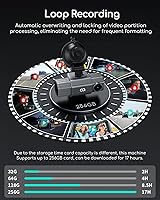
  • Storage Support: The D20S supports microSD cards up to 256GB; no card is included in the box and must be purchased separately.
  • Power Input: The camera is powered via the included car charger at DC 12V or 24V, compatible with standard passenger vehicles and larger commercial vehicles.
  • Battery Type: Instead of a lithium battery, the unit uses a supercapacitor, which handles heat far better and is less prone to degradation over time in a parked car.
  • Parking Modes: Three parking monitoring modes are available: collision-triggered recording, motion detection, and time-lapse, each suited to different parking environments.
  • Screen Size: The built-in display measures 1.5 inches, intended primarily for basic status checks rather than detailed footage review.
  • Mount Type: The camera attaches to the windshield via a suction cup mount with adjustable knobs to set the viewing angle after installation.
  • Dimensions: The unit measures 1.65 x 3.94 x 1.65 inches, making it a moderately compact unit for a dual-channel system.
  • Weight: The camera weighs 13.7 ounces, which is on the heavier side for a dash cam and worth considering when evaluating long-term mount stability.
  • Loop Recording: When the SD card reaches capacity, loop recording automatically overwrites the oldest saved clips, while the G-sensor locks incident footage to prevent it from being overwritten.
  • Companion App: The COOAUDash app (available for iOS and Android) enables wireless video playback, camera settings adjustment, and over-the-air firmware updates.
  • Warranty: COOAU provides a 24-month warranty on the D20S, with customer support available via a dedicated email address.
  • In Box Contents: The package includes the camera unit, a suction cup mount, a car charger, an 11.81-foot USB data cable, and a printed user manual; no SD card or hardwire kit is included.

Related Reviews
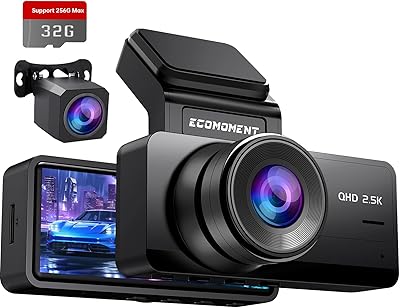
Ecomoment S70 Dual Dash Cam
71%
88%
Value for Money
84%
Daytime Video Quality
61%
Night Vision Performance
91%
Ease of Installation
82%
Display & Playback
More
70mai A410 Dual Dash Camera
78%
88%
Daytime Video Clarity
71%
Night Vision Performance
74%
Rear Camera Quality
67%
App & Wi-Fi Experience
84%
GPS Accuracy & Data Logging
More
COOAU D30S Dual Front Interior Dash Cam
77%
88%
Video Clarity (Front Camera)
91%
Cabin Night Vision
84%
GPS Accuracy & Logging
93%
Supercapacitor Reliability
61%
App Experience (COOAUDash)
More
ORSKEY S800 Dual Dash Cam
73%
88%
Value for Money
82%
Front Camera Video Quality
53%
Rear Camera Video Quality
61%
Night Vision Performance
91%
Ease of Installation
More
Thinkware Q200 2-Channel Dash Cam
76%
84%
Front Camera Clarity
67%
Rear Camera Clarity
72%
Night Vision Performance
76%
Parking Mode
63%
GPS Alert Accuracy
More
YEECORE D22 Front and Rear Dash Cam
78%
91%
Front Video Quality
67%
Rear Camera Quality
78%
Night Vision
88%
GPS Accuracy
63%
Wi-Fi & App Performance
More
Kingslim D4 Dual Dash Cam
75%
88%
Daytime Video Quality
71%
Night Vision Performance
84%
GPS Accuracy
57%
App & WiFi Connectivity
76%
Ease of Installation
More
Sarmert M572 4K Dual Dash Camera
75%
84%
Video Clarity (Daytime)
71%
Night Vision & Low Light
63%
App Experience
58%
Parking Mode
89%
Supercapacitor Reliability
More
IIWEY N2 4K Dual Dash Cam
83%
92%
Video Quality
84%
Ease of Use
89%
Durability
60%
Installation Process
90%
Wi-Fi Functionality
More
DDPAI N5 Dual Front and Rear Dash Cam
77%
88%
Video Quality (Front)
71%
Video Quality (Rear)
74%
Parking Mode & Surveillance
82%
Wi-Fi Speed & App Experience
83%
GPS Accuracy & Logging
More

FAQ

The interior camera faces the cabin and rear side windows — it is not a rear road-facing camera. If you need to capture traffic directly behind your vehicle, you would need to add a separate rear-facing unit. The D20S is designed to document the front road view and the passenger cabin, which is exactly what rideshare drivers need but may not fully replace a traditional front-and-rear setup for other drivers.

Yes, the SD card is not included in the box, which catches a lot of buyers off guard. You will need a microSD card — the camera supports up to 256GB. It is worth buying a reputable brand and checking compatibility, as some users have reported that certain off-brand high-capacity cards are not reliably recognized.

Not quite. Parking mode requires a constant power source, which means you need a hardwire kit to connect the camera directly to your car's fuse box. That kit is sold separately and is not included. If you only use the standard car charger that comes in the box, the camera will shut off when you turn your ignition off and parking monitoring will not work.

No, and this is one of the more practical aspects of this camera. The COOAUDash app connects to the camera over Wi-Fi, letting you browse, play back, and download clips directly to your phone without touching the camera or removing the SD card. It makes reviewing a recent incident or pulling a clip to share much less of a hassle than older button-only cameras.

For the front camera, yes — the difference is most apparent when you need to read a license plate or sign at a distance. The extra resolution gives you more usable detail in still frames pulled from footage. Just keep in mind that only the front camera shoots in 4K; the interior cabin camera records at 1080P, which is still perfectly adequate for its purpose but worth setting expectations around.

Infrared light is invisible to the human eye, so passengers will not see any glow or beam from the cabin camera. The recording happens silently and without visible illumination, which is one reason IR is the preferred choice for interior dash cameras used in rideshare vehicles.

User experiences are mixed on this. In moderate climates on flat glass, the suction mount holds reliably for most drivers. However, in very hot conditions or on windshields with a pronounced curve, some users report the mount gradually losing grip. Cleaning both the windshield and the suction cup thoroughly before installation and re-checking the seal periodically is a good habit, especially if you park in direct sunlight.

Yes, the COOAUDash app works on both iOS and Android devices. You connect by enabling the camera's Wi-Fi hotspot from the device itself and then pairing through the app — it typically takes under a minute the first time. A small number of users have reported occasional drop issues after phone OS updates, but COOAU pushes firmware fixes through the app, so keeping both updated helps.

Yes, the built-in G-sensor detects sudden impact or hard braking and immediately locks the current clip so loop recording cannot overwrite it. That locked file stays protected until you manually delete it. It is a standard but genuinely important feature — without it, continuous loop recording could erase the exact footage you need.

The supercapacitor design is a meaningful advantage here. Traditional dash cams with lithium batteries can suffer permanent capacity loss or even swelling when left in a hot parked car for extended periods. The capacitor in this camera handles high temperatures significantly better, making it a more durable choice if your car regularly sits in direct sunlight or in a warm climate.