Overview

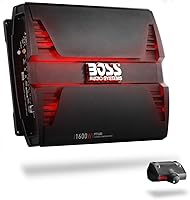
The BOSS Audio PT1600 2-Channel Car Amplifier sits squarely in the value tier of the car audio market — and it doesn't pretend otherwise. BOSS Audio Systems has built a reputation on delivering feature-packed electronics at prices that don't require a second mortgage, and the PT1600 fits that pattern well. The headline 1600W figure is a peak number under ideal conditions; real-world sustained output is considerably more modest, which is worth keeping in mind before you start planning your build. That said, the 6-year warranty — valid for Amazon purchases — adds a layer of confidence you don't always find at this price point. Honest expectations make for happy installs.
Features & Benefits

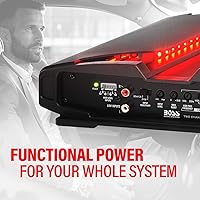
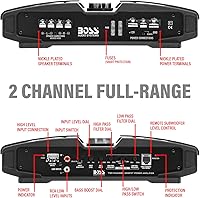
Class A/B amplification sits at the heart of this BOSS amplifier, and it's a meaningful choice. Unlike Class D designs optimized purely for efficiency, Class A/B topology tends to produce warmer, more natural-sounding audio — a real advantage for full-range speaker duties. Bridge the two channels into a single mono output and you unlock serious peak power, which is plenty of headroom for a mid-sized subwoofer. The variable bass boost lets you dial in low-frequency punch without touching your head unit's EQ. High and low-level inputs mean the PT1600 connects directly to factory radios lacking RCA outputs — no adapter needed. The MOSFET power supply keeps voltage stable under load, which matters more than most buyers realize.

Best For

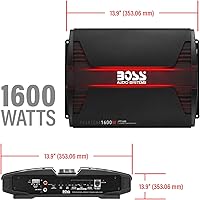
This 2-channel amp punches above its weight for a specific type of buyer: someone upgrading from a factory system who wants real impact without hiring a specialist or spending days studying wiring diagrams. The high/low-level input flexibility is the standout feature for anyone stuck with a stock head unit, making this a genuine plug-and-play upgrade for countless daily drivers. Bridged mono operation makes it a natural fit for powering a single subwoofer, while running it in stereo handles a pair of component speakers cleanly. At roughly 14 inches long, it fits in most trunk corners and under seats without a fight. This is a practical daily driver solution, not a competition build amplifier.

User Feedback

Across several hundred reviews, a clear pattern emerges. Most buyers are happy with the installation experience and report a night-and-day improvement over their factory audio setup — exactly what this amp is designed to deliver. Heat management comes up regularly in criticism, with some users noting that extended high-volume sessions cause the unit to run warm, so ventilation during install is worth prioritizing. A handful of technically savvy reviewers point out that peak power specs should be taken as marketing shorthand rather than a reliable benchmark; RMS figures tell the more honest story. Customer support from BOSS is generally praised. Professional installation is strongly recommended — both by the brand and by buyers who learned that lesson firsthand.

Pros

  • High and low-level inputs make it compatible with virtually any factory head unit right out of the box.
  • Bridgeable design lets you redirect full power to a single subwoofer without buying a separate mono amp.
  • Class A/B operation produces warmer, more natural audio quality compared to many budget Class D alternatives.
  • The MOSFET power supply keeps voltage steady, which translates to more consistent output under real driving conditions.
  • Variable bass boost gives you hands-on control over low-frequency punch without touching your head unit settings.
  • The 6-year warranty, backed by Amazon purchase verification, is a reassuring safety net at this price tier.
  • Surface-mount installation is flexible enough to fit trunk floors, under seats, or behind rear panels.
  • The PT1600 ships with onboard high-pass and low-pass crossover controls, reducing the need for external signal processors.
  • Most buyers report a noticeably cleaner and louder listening experience compared to a stock factory setup.
  • BOSS customer support has earned generally positive feedback, which matters when questions arise post-install.

Cons

  • Peak power ratings are heavily inflated; real sustained RMS output is significantly lower than the headline number suggests.
  • Heat build-up during prolonged high-volume use has been reported by multiple buyers, making ventilation a non-optional consideration.
  • No remote subwoofer level control is included, which competing amps at a similar price often provide.
  • The large 14-inch chassis can be difficult to mount discreetly in smaller vehicles with limited cargo space.
  • Gain control labeling and documentation can confuse first-time installers who mistake it for a volume adjustment.
  • Signal-to-noise performance at high gain settings may introduce audible noise in quiet passages for critical listeners.
  • The warranty is only valid on Amazon-sold units, leaving buyers from third-party marketplace sellers without coverage.
  • Build quality on connectors and terminal blocks feels utilitarian and may require careful torquing to avoid intermittent connections.
  • No variable low-pass filter frequency display makes precise crossover tuning a trial-and-error process without external tools.

Ratings

Our editorial team used AI-assisted analysis to process verified global buyer reviews for the BOSS Audio PT1600 2-Channel Car Amplifier, actively filtering out incentivized, duplicate, and bot-flagged submissions to surface authentic ownership experiences. The scores below reflect a balanced synthesis of real praise and legitimate frustration — nothing is glossed over. Where the PT1600 earns strong marks, it's because consistent user evidence supports it; where it falls short, those gaps are reflected honestly.

Value for Money
88%
The vast majority of buyers feel they got more amplifier than they paid for, particularly those stepping up from a stock factory system for the first time. The feature set — bridgeable channels, variable crossovers, MOSFET power supply — would cost noticeably more in a branded mid-tier unit.
A minority of buyers, especially those who researched RMS figures after purchase, felt the value calculation shifted once they understood the gap between peak and real-world output. If you go in expecting boutique-tier performance, the price won't save the experience.
Power Output Accuracy
58%
42%
For casual listeners upgrading from a factory setup, the real-world output is a clear and noticeable improvement — more headroom, better dynamics, and enough clean volume to satisfy everyday commuting and weekend cruising without strain.
The 1600W headline is a peak figure that very few real installs ever approach, and a measurable portion of reviewers called this out directly. Users who benchmarked the amp against its rated specs found the sustained RMS performance more modest, which affects expectations for demanding speaker loads.
Ease of Installation
86%
The high-level input option genuinely simplifies the install for anyone working with a factory head unit, eliminating the need for a line output converter and saving meaningful time and cost. Terminal labeling is clear, and the layout is logical enough for a first-time DIY installer.
The gain control is a recurring source of confusion — several buyers reported setting it like a volume knob and experiencing distortion before understanding its actual function. The manual could do a better job of flagging this upfront rather than burying it in fine print.
Sound Quality
74%
26%
Class A/B amplification gives the PT1600 a warmer, more natural tonal character than budget Class D alternatives at similar price points, and buyers powering mid-range speakers consistently noted a cleaner, fuller sound compared to their stock setup.
At high gain settings or when pushed near its output ceiling, some users reported audible noise floor and slight harshness on transients. Critical listeners in quieter vehicles noticed these artifacts more than those using the amp for bass-heavy setups.
Thermal Management
55%
45%
Under moderate listening conditions — typical daily commutes, mixed-genre playback at reasonable volumes — the amp runs warm but within acceptable limits, and the built-in protection circuitry has prevented damage in most reported cases.
Extended high-volume sessions, especially in enclosed or poorly ventilated installs, have triggered thermal shutdowns for a notable number of users. This is a real operational limitation that buyers planning aggressive, continuous-use setups need to account for during their mounting decision.
Build Quality
67%
33%
The chassis feels solid and adequately rigid for the price tier, and the heatsink construction is appropriately sized for the amp's intended use case. Most buyers found the physical unit looked and felt more substantial than they expected at this price.
Terminal block connectors and some internal solder joints drew criticism from more experienced installers who examined the unit closely. A handful of buyers reported intermittent connection issues that traced back to connector quality rather than wiring errors.
Crossover Flexibility
76%
24%
Having both high-pass and low-pass variable crossover filters onboard is genuinely useful for a budget amp — it removes the need for an external processor in simple one- or two-speaker setups, which most buyers in this category are running.
The crossover controls lack frequency markings or detents, making precise tuning a guesswork exercise without a test tone and meter. For users who care about crossover accuracy, the onboard filters are functional but imprecise.
Bass Boost Control
79%
21%
The variable bass boost is a genuinely usable control that lets you add low-frequency punch directly at the amp, which is handy when your head unit's EQ doesn't reach far enough into the sub-bass range.
Pushed too far, the bass boost introduces audible distortion before the subwoofer reaches its mechanical limits, particularly on lower-quality speaker pairings. It works best as a subtle trim tool rather than a primary bass shaping control.
Warranty & Support
72%
28%
Six years of warranty coverage is longer than most competitors in this tier offer, and buyers who dealt with BOSS customer support after a unit failure generally reported a responsive and reasonable resolution process.
The warranty is strictly tied to direct Amazon purchases, which locks out buyers who find the unit through third-party sellers at a discount — a frustrating limitation that has caught a number of buyers off guard post-purchase.
Compatibility
83%
The 2-to-8-ohm impedance range and dual input types give this 2-channel amp genuinely broad compatibility with both aftermarket and OEM audio ecosystems, which is why it appears so often in budget system builds across a wide range of vehicle types.
Bridged mono operation requires a minimum 4-ohm load, which rules out pairing with some popular single-voice-coil subwoofers wired at 2 ohms — a compatibility gap that isn't always obvious from the product listing.
Size & Fitment
78%
22%
At roughly 14 inches long, the PT1600 fits comfortably in most trunk corners, under rear seats, and behind factory panels without requiring custom fabrication, which DIY installers consistently appreciate.
For genuinely compact vehicles — small hatchbacks, sports coupes with tight trunk floors — the footprint is still a meaningful constraint, and a few buyers reported having to rethink their mounting location after the unit arrived.
Channel Bridging Performance
71%
29%
Bridging the two channels to mono for a single subwoofer is where the PT1600 feels most purposeful — the increase in available power is audible and meaningful, and the process itself is straightforward with the onboard switching.
Real bridged output falls short of the peak 1600W marketing figure in practice, and users who benchmarked the amp in bridged mode found performance closer to moderate RMS figures. It's still useful, but the numbers require context.
Signal Clarity
69%
31%
The 90 dB signal-to-noise ratio keeps background noise at inaudible levels during normal playback, and most users found the amp quiet enough during low-volume listening to avoid the hiss issues that plague some ultra-budget alternatives.
At elevated gain settings or with longer RCA cable runs, some users reported a faint but perceptible noise floor, particularly in quiet vehicles with good cabin insulation where ambient noise doesn't mask amplifier artifacts.
Documentation & Setup Guidance
52%
48%
The physical unit is laid out intuitively enough that experienced installers can often complete a basic setup without consulting the manual at all, which is a practical advantage during tight installs.
The included documentation is thin, and the gain control misconception — arguably the most important concept for a new amp owner — is not explained clearly enough to prevent common setup errors. Several buyers reported distortion issues that traced back to improper gain setting rather than a hardware fault.

Suitable for:

The BOSS Audio PT1600 2-Channel Car Amplifier was built with a very specific buyer in mind: someone who wants a meaningful audio upgrade without overcomplicating their build or overextending their budget. It's a strong fit for daily drivers who are stuck with a factory head unit, since the high-level inputs let you tap directly into the existing speaker wires without needing an aftermarket radio or line output converter. DIY installers who want to power a subwoofer in bridged mono mode will find the setup refreshingly straightforward. The surface-mount design and compact footprint make it practical for tighter installs — under a seat, in a trunk corner, or behind a rear panel. If your goal is noticeably better sound and more bass impact for a reasonable outlay, this 2-channel amp delivers a clear return on investment.
Not suitable for:

The BOSS Audio PT1600 2-Channel Car Amplifier is not the right tool for serious audio enthusiasts who prioritize sustained, high-fidelity output at reference listening levels. The peak power figure is a marketing ceiling, not a real-world operating point, and buyers chasing true high-RMS performance for demanding speakers or competition-grade subwoofers will quickly hit the amp's limits. Thermal management under extended heavy use is a documented concern, so anyone planning long drives at high volume in a poorly ventilated install space should factor that in carefully. If you're building a multi-amplifier system with active crossovers or a dedicated signal processor, this amp lacks the routing flexibility that more advanced setups require. Audiophiles who prioritize the last word in signal purity and low noise floor at high output levels will want to look at purpose-built units in a higher category.
Specifications

  • Max Power Output: The amplifier delivers a peak output of 1600W when bridged into a 4-ohm load under optimal conditions.
  • RMS Power: Continuous RMS output is rated at 800W per channel at 2 ohms, or 400W per channel at 4 ohms.
  • Amplifier Class: Class A/B topology is used, balancing audio fidelity with reasonable thermal efficiency during sustained operation.
  • Channels: The unit operates as a 2-channel stereo amplifier and can be bridged to a single mono output channel.
  • Bridgeable: Yes, both channels can be combined into a single mono output for driving a subwoofer with increased power.
  • Speaker Impedance: Compatible with speaker loads ranging from 2 ohms to 8 ohms, covering most aftermarket and OEM speaker configurations.
  • Frequency Response: The amplifier reproduces frequencies from 9 Hz to 50 kHz, covering the full range of audible and near-audible content.
  • Signal-to-Noise Ratio: A signal-to-noise ratio of 90 dB keeps background hiss well below audible thresholds under normal listening conditions.
  • THD at RMS: Total harmonic distortion is rated at 0.01% at RMS output, indicating low signal coloration during normal playback.
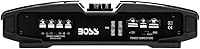
  • Input Types: Both high-level (speaker wire) and low-level (RCA) inputs are provided, enabling compatibility with factory and aftermarket head units.
  • Crossover: Variable high-pass and low-pass crossover filters are built in, allowing basic signal routing without an external processor.
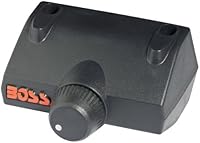
  • Bass Boost: An onboard variable bass boost control lets users increase low-frequency output to taste directly from the amplifier.
  • Power Supply: A MOSFET-based internal power supply provides stable voltage regulation under fluctuating electrical load conditions.
  • Fuse Configuration: Two 25-amp ATO blade fuses protect the unit from electrical faults and should be replaced only with identical-rated fuses.
  • Dimensions: The chassis measures 14 x 10.31 x 2.25 inches, sized for trunk, under-seat, or rear-panel surface mounting.
  • Weight: The amplifier weighs 9.04 lbs, making solo installation manageable without assistance in most vehicle types.
  • Mounting Type: Designed for surface mounting, with a flat bottom profile suited to horizontal installation on flat vehicle surfaces.
  • Warranty: A 6-year Platinum Online Dealer Warranty is included, valid exclusively on units purchased and shipped directly through Amazon.com.

Related Reviews
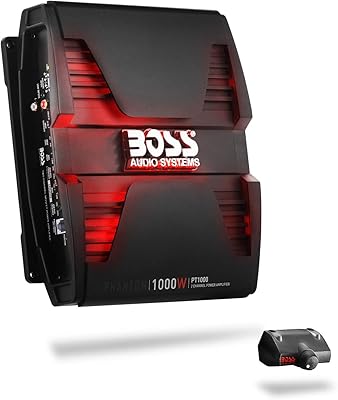
BOSS Audio PT1000 2-Channel Car Amplifier
65%
81%
Value for Money
47%
Power Output Accuracy
83%
Ease of Installation
51%
Thermal Management
58%
Build Quality
More
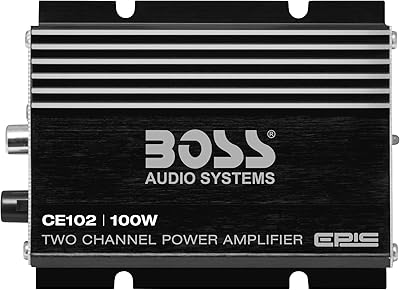
BOSS Audio CE102 2-Channel Car Amplifier
67%
83%
Value for Money
67%
Sound Quality
54%
Build Quality
81%
Ease of Installation
58%
Power Output
More
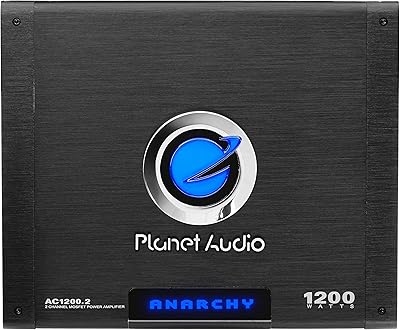
Planet Audio AC1200.2 2-Channel Car Amplifier
72%
84%
Value for Money
67%
Power Output
88%
Ease of Installation
71%
Sound Quality
58%
Thermal Performance
More
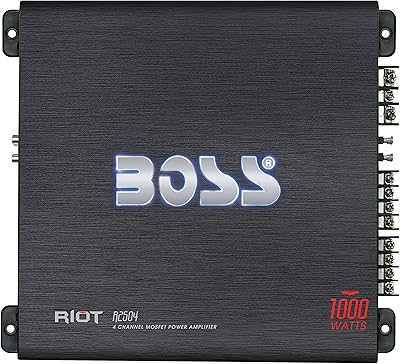
BOSS Audio R2504 4-Channel Car Amplifier
70%
82%
Value for Money
86%
Ease of Installation
51%
Power Output (Real-World)
58%
Thermal Management
62%
Build Quality
More
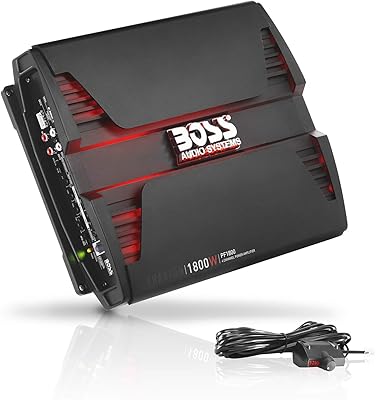
BOSS Audio PF1800 4-Channel Car Amplifier
71%
88%
Value for Money
84%
Ease of Installation
76%
Sound Quality
51%
Power Output Accuracy
58%
Thermal Management
More
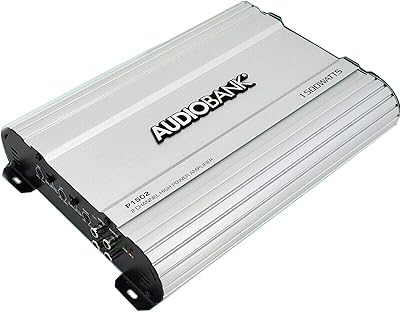
Audiobank P1502 2-Channel Car Amplifier
69%
83%
Value for Money
81%
Ease of Installation
68%
Sound Quality
78%
Bass Performance
58%
Build Quality
More
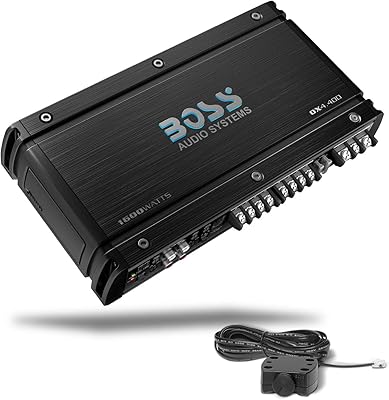
BOSS Audio Systems OX4.400 4-Channel Car Amplifier
84%
90%
Power Output
85%
Sound Clarity & Performance
88%
Bass Enhancement
91%
Ease of Installation
80%
Build Quality
More
Belva BXA5002 2-Channel Car Amplifier
72%
83%
Value for Money
87%
Ease of Installation
76%
Sound Quality
58%
Power Output Accuracy
67%
Build Quality
More
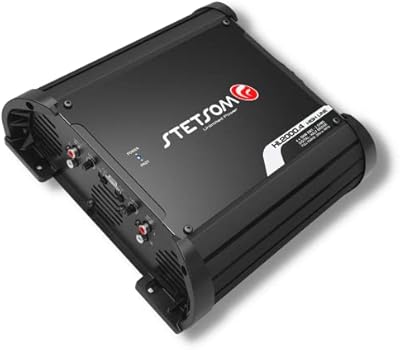
Stetsom HL 2000.4 2-Ohm 4-Channel Car Audio Amplifier
87%
93%
Power Output
85%
Cooling System Efficiency
88%
Sound Quality
91%
Ease of Installation
82%
Durability
More
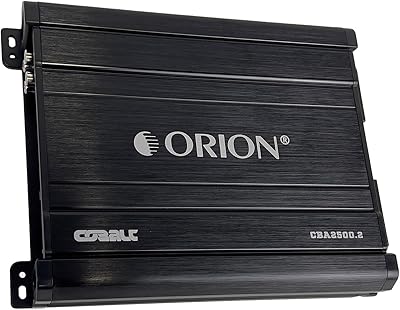
Orion Cobalt Series CBA2500.2 2-Channel Car Amplifier
88%
94%
Power Output
89%
Sound Quality
90%
Heat Management
85%
Ease of Installation
87%
Bass Boost Effectiveness
More

FAQ

Yes, that's actually one of the more practical features on the PT1600. The high-level inputs let you connect directly to your factory speaker wires, so you don't need to replace your head unit or buy a separate line output converter to get started.

Bridging combines both stereo channels into a single mono output, which significantly increases the power available to one speaker or subwoofer. To do it on this BOSS amplifier, you connect your speaker to the positive terminal of channel 1 and the negative terminal of channel 2, then set the amp to bridged mode using the onboard switch. Just make sure your subwoofer's impedance is 4 ohms or higher when bridged, since bridging halves the load seen by the amp.

It's one of the most common mix-ups in car audio. The gain control is not a volume knob — it sets the sensitivity of the amplifier's input stage to match the output level coming from your head unit. You set it once during installation to avoid clipping distortion, and then leave it alone. Turning it up all the way doesn't mean louder clean music; it usually means distortion.

Class A/B amplifiers run warmer than Class D units by design, and several owners of this 2-channel amp have noted that it gets noticeably warm during extended high-volume sessions. It's nothing alarming under moderate use, but if you're planning to push it hard for long periods, leave a few inches of clearance around the unit and avoid enclosing it in a sealed compartment.

No, a wiring kit is not included in the box. You'll need to source your own power cable, ground wire, RCA cables or speaker wire adapters, and an inline fuse holder separately. Most installers recommend at least 4-gauge power wiring for an amp in this output range.

Not simultaneously in the truest sense — once you bridge the amp to mono for a subwoofer, you've used both channels. If you want to power a sub and a speaker pair, you'd need a second amplifier or a 4-channel unit. That said, you can run the two channels in stereo to drive a pair of full-range speakers, or bridge it entirely for one subwoofer, but not both at once.

That 1600W figure is a peak rating, which represents an absolute ceiling under perfect lab conditions rather than what you'll see in everyday use. The more useful number is the RMS output — around 400W per channel at 4 ohms — which reflects real sustained performance. For most daily driving upgrades, that's genuinely adequate, but if you see comparisons based solely on max wattage, apply some healthy skepticism.

The 6-year warranty is legitimate, but it comes with a specific condition: the unit must have been purchased and shipped directly by Amazon.com, not a third-party marketplace seller. If that's the case, BOSS customer support has generally received positive feedback for being responsive and helpful. Keep your order confirmation on file, since that's your proof of purchase.

BOSS officially recommends professional installation, and for good reason — improper wiring can damage the amp, your vehicle's electrical system, or both. That said, plenty of confident DIYers install amps like this without issues, especially if they've done basic car audio work before. If this is your first amplifier install, at minimum watch a few detailed installation guides specific to your vehicle before starting, and take the grounding connection seriously.

For a straightforward setup — one subwoofer or a single pair of speakers — the onboard variable crossover filters are more than adequate. You can set a low-pass filter for a subwoofer or a high-pass for speakers without any external hardware. If you're building a multi-way active system with precise crossover points and time alignment, then yes, an outboard processor would give you more control. But for everyday builds, the built-in crossover handles the job cleanly.

Where to Buy