Overview

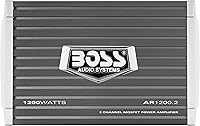
The BOSS Audio AR1200.2 2-Channel Car Amplifier has been a fixture in the budget car audio market since 2011 — and that longevity says something. For drivers tired of factory sound but not ready to spend big, this BOSS amplifier sits in a sweet spot: real power, reasonable size, and a price that doesn't require a second thought. The Class AB topology delivers a decent balance between thermal efficiency and audio quality, which matters when the amp is tucked under a seat all day. Add a 6-year warranty through Amazon, and it becomes a surprisingly low-risk entry point into proper car audio.
Features & Benefits

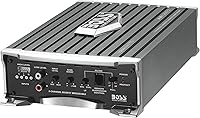
The dual-channel configuration gives you options: run it at 2 ohms for more punch, or 4 ohms for a cleaner, more stable signal. Bridge both channels and you have a single 1200W output — handy when you want to dedicate the amp entirely to a subwoofer. Worth noting: that 1200W figure is peak, not sustained RMS, so real-world output will be more modest. The variable bass boost and gain control let you tune the amp to your specific head unit without needing extra gear. A MOSFET power supply keeps voltage steady under load, and both high and low-level inputs mean it works with factory radios too.

Best For

This 2-channel amp is squarely aimed at first-time builders — people stepping up from stock speakers who don't want to overthink the process. If you're running a single sub off a compact install, the bridging capability makes this a natural fit. The physical footprint is modest enough to tuck into most trunks or under seats without major fabrication work. Budget-conscious setups benefit most here; this isn't an amp for audiophiles chasing flat frequency response curves. It's for someone who wants noticeably better bass and volume, installed over a weekend. DIY-friendly inputs, both high and low-level, keep the install accessible regardless of what head unit you're working with.

User Feedback

The AR1200.2 carries a 3.8-star average — honest middle ground for this category. Buyers who went in with calibrated expectations tend to come away satisfied: the amp works, it installs without drama, and it produces a clear step up from factory audio. Recurring complaints involve heat buildup during extended high-volume use and some questions about long-term reliability past the first year or two. A smaller number of users report early failures, which pulls the rating down. On the upside, the installation process gets consistent praise, and the warranty offers real reassurance. Mixed reliability is common at this price tier, so scanning the one- and two-star reviews before buying is worth a few minutes.

Pros

  • Bridgeable design lets you run a single subwoofer off both channels without buying a separate mono amp.
  • High and low-level inputs make it compatible with factory head units right out of the box.
  • Compact dimensions fit easily under seats or in smaller trunk installs without major modifications.
  • Variable gain control simplifies matching the amp to virtually any head unit output level.
  • MOSFET power supply helps maintain stable voltage under load, reducing audible distortion.
  • Class AB topology offers a reasonable balance between sound quality and thermal efficiency for the price.
  • A 6-year warranty through Amazon provides meaningful protection and reduces purchase risk.
  • Variable bass boost gives you direct control over low-end punch without needing an external processor.
  • The amp has been on the market since 2011, suggesting a stable and tested design.
  • Cost-per-watt value is strong for entry-level builds where budget is the primary constraint.

Cons

  • Rated wattage reflects peak output, not sustained RMS — real-world power delivery is considerably more modest.
  • Heat buildup during extended high-volume use is a recurring complaint across user reviews.
  • Long-term reliability past the first year or two is inconsistent based on buyer feedback patterns.
  • The 3.8-star average signals a meaningful minority of buyers experiencing early failures or performance issues.
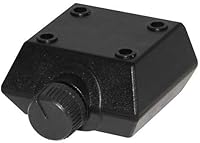
  • No remote subwoofer control is included, limiting fine-tuning convenience once the amp is installed.
  • Build quality feels commensurate with the price point, which may not inspire confidence in demanding installs.
  • Users running continuous 2-ohm loads may find thermal throttling or premature failure more likely.
  • Limited headroom means the amp can clip more easily when pushed, which risks speaker damage over time.

Ratings

Our AI rating system analyzed verified global buyer reviews for the BOSS Audio AR1200.2 2-Channel Car Amplifier, actively filtering out incentivized, bot-generated, and spam submissions to surface what real owners genuinely experienced. Scores across all categories transparently reflect both the strengths that earned loyal repeat buyers and the recurring pain points that pulled the overall average below four stars. Whether this amp fits your build or falls short depends heavily on your expectations going in — and these scores are designed to help you figure that out.

Value for Money
78%
22%
For first-time builders, the cost-per-watt ratio is hard to argue with at this price tier. Buyers who understood they were getting a budget amp — not a boutique unit — consistently reported satisfaction, especially when running it bridged to a single subwoofer on a modest build.
Buyers who expected performance closer to mid-range amplifiers walked away disappointed, particularly once they realized the peak wattage figures don't reflect sustained real-world output. If your budget can stretch even a little further, you'll likely notice a meaningful jump in build and power consistency.
Power Output
61%
39%
In bridged mode, this 2-channel amp delivers enough low-end punch to noticeably transform a factory audio setup. For casual listeners and first-time upgraders, the difference versus stock output is real and satisfying, especially on bass-heavy music genres at moderate volume.
The 1200W rating is a peak figure, and sustained RMS output is considerably lower — a distinction that catches many buyers off guard. Users pushing the amp hard at higher volumes reported that it ran out of headroom faster than the spec sheet implied, leading to clipping or underwhelming output on demanding tracks.
Build Quality
54%
46%
The chassis feels solid enough for basic installs and the terminal connections are accessible and clearly labeled, which experienced DIYers appreciated during a straightforward wiring job. For light-duty use in a compact setup, the physical construction holds up adequately.
The overall feel of the unit is clearly budget-grade — plastics and housing materials don't inspire long-term confidence, and a meaningful subset of buyers reported premature failure within the first year or two of use. Compared to similarly priced alternatives from competing brands, the build tolerance can feel inconsistent unit to unit.
Heat Management
52%
48%
Under normal listening conditions at moderate volumes, the amp runs warm but manageable. Users who mounted it in open, well-ventilated locations — such as on the rear deck or an open trunk floor — reported fewer heat-related issues over the short term.
Extended high-volume sessions are where heat becomes a real problem. Several buyers noted the amp going into thermal protection cutoff during summer driving or long road trips, and inadequate ventilation in enclosed installs accelerated wear noticeably. Class AB topology generates more heat than Class D by design, which amplifies this concern at the budget tier.
Ease of Installation
82%
18%
High and low-level input options make this one of the more beginner-accessible amps available — you can wire it to a factory radio without any adapter or extra hardware. Terminals are logically arranged, labeling is clear, and the compact footprint fits into tight spaces that would rule out larger units.
While the wiring itself is approachable, some first-timers struggled with gain setting, occasionally maxing it out incorrectly and introducing distortion or clipping into their signal chain. A basic setup guide is not included in the box, so buyers without prior car audio experience may need to consult external resources.
Sound Quality
67%
33%
For a budget Class AB amp, the sonic output is cleaner than many buyers expected, particularly in the midrange when run in stereo mode at conservative gain settings. The variable bass boost adds useful low-end texture without sounding overly bloated when used in moderation.
Audiophiles and experienced listeners noticed a lack of refinement at higher volumes, with occasional muddiness and channel separation that falls short of pricier alternatives. The fixed high-pass filter also limits fine-tuning flexibility for users who want precise crossover control over full-range speakers.
Long-Term Reliability
49%
51%
A portion of buyers reported the amp running without issue for two or more years in standard daily-driver setups, particularly those who kept volumes reasonable and ensured proper ventilation and grounding during the initial install.
The reliability picture across the broader review base is uneven — early failures, intermittent channel dropout, and power supply issues show up with enough frequency to be a real concern. The 3.8-star average is partly a reflection of these long-term ownership experiences dragging down what would otherwise be a stronger initial impression.
Warranty & Support
73%
27%
A 6-year warranty through Amazon is genuinely rare and valuable at this price point, providing a meaningful safety net for buyers who might otherwise hesitate given the mixed reliability reports. Amazon's return and claim process makes acting on a warranty far less painful than dealing with third-party brands directly.
The warranty is only valid for purchases made directly through Amazon, which excludes a meaningful share of buyers who may have bought through a marketplace seller or third-party retailer. Some users also reported difficulty reaching BOSS Audio customer support directly when issues arose outside of Amazon's standard return window.
Bass Performance
74%
26%
The variable bass boost and bridgeable configuration make this amp a genuinely capable low-frequency driver for casual subwoofer builds. Listeners who primarily wanted more thump on hip-hop, EDM, or rap found the amp punchy and responsive when paired with a suitable enclosure.
Bass output lacks the tightness and definition that a dedicated mono amp with a proper subsonic filter would deliver. At higher boost levels, low-end response can become loose or one-note, which wears on the listener over a long drive more than users initially expected.
Gain Control Usability
71%
29%
The variable gain control gives installers a useful range of input sensitivity adjustment, making it compatible with a wide variety of head units including low-output factory radios. Experienced installers appreciated having that tuning flexibility on a budget unit.
Without a built-in gain-setting tool or clearer guidance, many users — especially beginners — set the gain too aggressively, resulting in distortion that they mistook for a faulty unit. A common complaint in negative reviews traces back to improper gain configuration rather than a genuine product defect.
Compact Footprint
83%
At roughly 10.2″ by 6.5″, this 2-channel amp fits comfortably in spots that larger amps simply cannot reach — under bench seats, along sidewalls, or in compact trunk corners. For small cars and hatchbacks where real estate is limited, the size is a genuine practical advantage.
The compact size comes with slightly cramped terminal spacing, which a few buyers found fiddly when working with thicker gauge power and ground wires. Users planning to use 4-gauge or larger wiring should check clearance before committing to a specific mounting location.
Compatibility
81%
19%
High and low-level inputs cover almost every head unit scenario a DIYer is likely to encounter, from original equipment factory radios to modern aftermarket double-DINs. This flexibility significantly lowers the barrier to a clean first install without additional adapters.
There is no mention of integration with digital signal processors or advanced tuning systems, which limits its appeal for users looking to grow their setup over time. Buyers who later upgraded their head unit to a DSP-capable model found the AR1200.2 lacking in downstream integration options.
Packaging & Accessories
58%
42%
The unit arrives well-protected and undamaged in the vast majority of cases, and the box is compact enough to store easily if you need to return or resell the item later. A basic RCA and remote turn-on wire is included, which helps with initial setup.
The accessory kit is minimal — no wiring harness, no installation manual beyond a basic diagram, and no proper gain-setting guide. For a product marketed partly toward beginners, the lack of practical setup documentation is a notable gap that forces users to rely entirely on online forums and YouTube tutorials.

Suitable for:

The BOSS Audio AR1200.2 2-Channel Car Amplifier is well-matched for drivers making their first real jump away from factory audio — people who want noticeably better sound without committing to a complicated, expensive build. If your goal is to power a single subwoofer without buying a dedicated mono amp, the bridging capability makes this 2-channel amp a practical and affordable shortcut. It also works well for smaller vehicles where trunk or under-seat space is limited, since the compact footprint keeps the install manageable. DIYers benefit from the high and low-level inputs, which remove the headache of needing an aftermarket head unit just to get started. For budget-conscious builds where the priority is more bass and volume rather than studio-grade accuracy, this amp delivers a meaningful upgrade at a price that leaves room for speakers, wiring, and everything else a first install requires.
Not suitable for:

The BOSS Audio AR1200.2 2-Channel Car Amplifier is not the right choice for buyers prioritizing long-term reliability or high-demand daily use at elevated volumes. The 1200W figure is a peak rating — sustained RMS output is considerably lower, which can frustrate buyers expecting wall-to-wall power from a budget price point. Audiophiles or experienced builders chasing clean headroom, flat frequency response, or competition-level output should look at higher-tier Class AB or Class D options with verified RMS specs. Users in warm climates or who plan extended listening sessions should be aware that heat management has been a recurring concern in reviews, and improper ventilation can shorten the amp's lifespan. If you are building a multi-amplifier setup or running demanding 2-ohm loads for extended periods, the limitations of a value-tier amp like this will show up faster than you would like.
Specifications

  • Model Number: The official model designation for this amplifier is AR1200.2.
  • Brand: Manufactured and sold by BOSS Audio Systems, a longtime budget car audio brand.
  • Channels: This is a 2-channel amplifier capable of being bridged down to a single output channel.
  • Max Power Output: Peak power output reaches 1200W when both channels are bridged at 4 ohms.
  • Power at 2 Ohms: Each channel delivers up to 600W max at a 2-ohm load when run in stereo mode.
  • Power at 4 Ohms: Each channel delivers up to 300W max at a 4-ohm load in standard stereo operation.
  • Bridged Power: When bridged, the amp outputs up to 1200W max into a single 4-ohm load.
  • Topology: Uses Class AB circuit design, which balances thermal efficiency with audio signal fidelity.
  • Power Supply: Equipped with a MOSFET power supply for stable voltage regulation under varying electrical loads.
  • Bass Boost: Includes a variable bass boost control, allowing users to increase low-frequency output to taste.
  • Gain Control: Variable gain control adjusts input sensitivity to match the output level of virtually any head unit.
  • Input Types: Accepts both high-level (speaker wire) and low-level (RCA) inputs for broad head unit compatibility.
  • Low Pass Filter: Variable low pass filter allows adjustment of the crossover point for subwoofer-focused signal routing.
  • High Pass Filter: Fixed high pass filter is included to block low frequencies from full-range speaker channels.
  • Dimensions: The amplifier measures 10.2″ in depth, 6.5″ in width, and 2.8″ in height.
  • Weight: Unit weighs 4.5 lbs, making it manageable for single-person installation in most vehicles.
  • Mounting Type: Designed for surface mounting, suitable for trunk floors, under seats, or custom enclosures.
  • Warranty: BOSS Audio provides a 6-year Platinum Online Dealer Warranty valid exclusively for purchases made through Amazon.com.
  • Availability: This model has been continuously available since its introduction in March 2011 and is not discontinued.
  • Voltage: The unit is rated for 230V electrical system compatibility as noted in product documentation.

Related Reviews
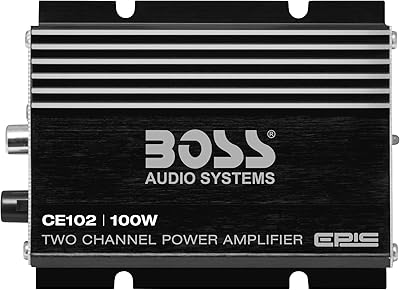
BOSS Audio CE102 2-Channel Car Amplifier
67%
83%
Value for Money
67%
Sound Quality
54%
Build Quality
81%
Ease of Installation
58%
Power Output
More
BOSS Audio PT1000 2-Channel Car Amplifier
65%
81%
Value for Money
47%
Power Output Accuracy
83%
Ease of Installation
51%
Thermal Management
58%
Build Quality
More
Planet Audio AC1200.2 2-Channel Car Amplifier

72%
84%
Value for Money
67%
Power Output
88%
Ease of Installation
71%
Sound Quality
58%
Thermal Performance
More
BOSS Audio R2504 4-Channel Car Amplifier
70%
82%
Value for Money
86%
Ease of Installation
51%
Power Output (Real-World)
58%
Thermal Management
62%
Build Quality
More
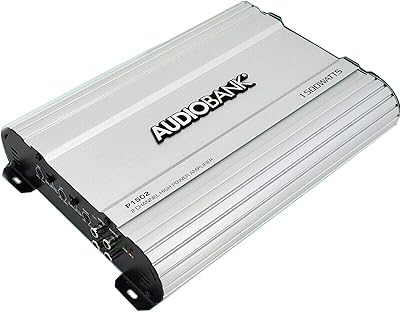
Audiobank P1502 2-Channel Car Amplifier
69%
83%
Value for Money
81%
Ease of Installation
68%
Sound Quality
78%
Bass Performance
58%
Build Quality
More
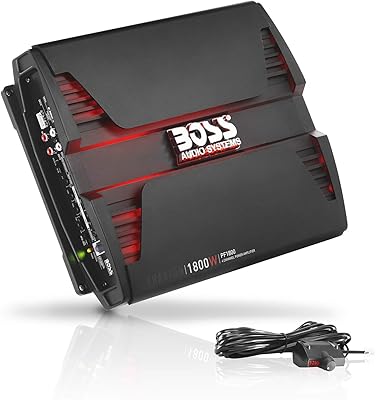
BOSS Audio PF1800 4-Channel Car Amplifier
71%
88%
Value for Money
84%
Ease of Installation
76%
Sound Quality
51%
Power Output Accuracy
58%
Thermal Management
More
BOSS Audio Systems OX4.400 4-Channel Car Amplifier
84%
90%
Power Output
85%
Sound Clarity & Performance
88%
Bass Enhancement
91%
Ease of Installation
80%
Build Quality
More
Stetsom HL 2000.4 2-Ohm 4-Channel Car Audio Amplifier
87%
93%
Power Output
85%
Cooling System Efficiency
88%
Sound Quality
91%
Ease of Installation
82%
Durability
More
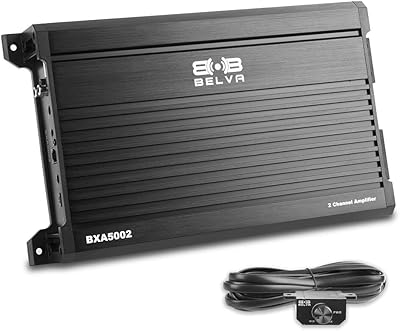
Belva BXA5002 2-Channel Car Amplifier
72%
83%
Value for Money
87%
Ease of Installation
76%
Sound Quality
58%
Power Output Accuracy
67%
Build Quality
More
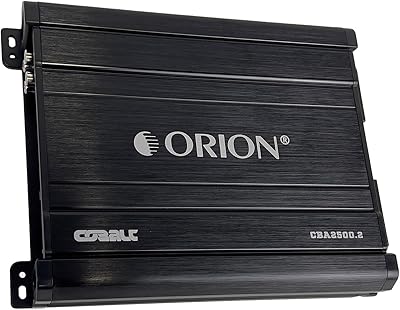
Orion Cobalt Series CBA2500.2 2-Channel Car Amplifier
88%
94%
Power Output
89%
Sound Quality
90%
Heat Management
85%
Ease of Installation
87%
Bass Boost Effectiveness
More
Douk Audio OK013 Mini 2.1 Channel HiFi Stereo Amplifier
75%
83%
Value for Money
71%
Sound Output & Power
77%
Build Quality
88%
Ease of Installation
58%
Thermal Management
More

FAQ

Yes, and that is actually one of the more practical ways to use this amp. Bridge both channels together into a single 4-ohm output and you have one dedicated channel for your sub. Just make sure your subwoofer's impedance matches the 4-ohm bridged requirement — running a 2-ohm sub while bridged is not supported and risks damaging the unit.

Not exactly. The 1200W figure is a peak rating, which represents maximum output under ideal, momentary conditions. In real-world use, sustained RMS output will be noticeably lower — this is standard practice across budget amplifiers, not unique to this one. If raw sustained power is critical to your build, check for RMS specs before committing.

It works with factory head units. The high-level inputs let you tap into the existing speaker wires coming out of your stock radio, so you do not need an aftermarket stereo to get started. The variable gain control then lets you calibrate the input sensitivity to match whatever signal level your head unit puts out.

At roughly 10.2″ x 6.5″ x 2.8″, it is a fairly compact unit — smaller than a shoebox. Most trunk installs and many under-seat locations can accommodate it without too much trouble. Just make sure there is enough clearance around it for airflow, since heat management has been a concern for some users running it at higher volumes for extended periods.

For a beginner, it is one of the more approachable options in its class. The input options are flexible, the gain control is straightforward to set up, and the wiring terminals are clearly labeled. That said, you will still need to run power from the battery, ground the amp properly, and understand basic signal routing — a wiring kit and a decent install guide go a long way if this is your first amp.

Heat is one of the more consistent concerns raised by users of this 2-channel amp, particularly during long listening sessions or when the volume stays high for extended periods. Class AB amps do run warmer than Class D by design, but poor ventilation makes things worse. Mount it with clearance on all sides and avoid enclosing it in a sealed space without airflow.

In stereo mode, you can connect one sub per channel, provided the impedance per channel stays at 2 ohms or 4 ohms as rated. If you bridge the amp, you are limited to a single sub at 4 ohms. Running wiring configurations that drop below the rated impedance is where reliability issues tend to start, so stick to the supported ohm loads.

The bass boost amplifies low frequencies going to your subwoofer or speakers, giving you more perceived punch and thump at the output. It sounds appealing, but running it cranked all the way up puts extra stress on both the amp and your speakers. Most experienced installers recommend using it conservatively and letting proper gain staging and enclosure design do the heavy lifting.

Reliability is the most mixed area in user feedback — some buyers have had it running without issues for years, while others report failures within the first year or two. The 6-year warranty through Amazon is a genuine safety net, but it only applies if you bought through Amazon directly. Keep your order confirmation and register the product if BOSS requires it, because filing a claim later without proof of purchase is frustrating.

No, and confusing the two is one of the most common mistakes in car audio installs. The gain control sets the input sensitivity — essentially, it tells the amp how strong the incoming signal from your head unit is, so the amp can scale it correctly. It is set once during installation to match your head unit and then left alone. Turning it up does not make the amp louder in the way a volume knob does; it just increases the risk of clipping and distortion if set too high.

Where to Buy