Overview

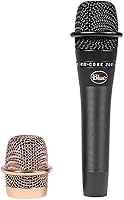
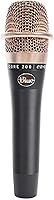
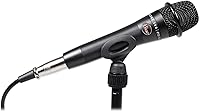
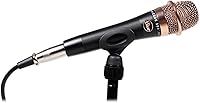
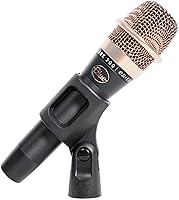
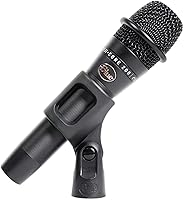
The Blue Encore 200 Dynamic Microphone sits near the top of Blue's Encore Pro Series, earning its position through a genuinely different approach to handheld dynamics. Unlike passive dynamics, it uses phantom power to drive its active capsule — a design choice that pays off in detail and clarity that standard handhelds rarely deliver. Pick it up and the metal-plated shell communicates durability immediately; this isn't a lightweight plastic affair. It ships with a mic clip, a spare grille, and a storage pouch — practical inclusions that touring musicians will actually use. That said, it's a live and gigging tool first, not a primary studio mic.

Features & Benefits

What separates the Encore 200 from a conventional dynamic is its active dynamic capsule — phantom power doesn't just pass through; it powers circuitry that sharpens transient response and extends clarity in ways a passive element simply can't match. The cardioid polar pattern does a solid job rejecting sound from the sides and rear, which matters when you're performing next to a cranked guitar amp or a loud drum kit. A frequency response running from 50Hz to 16kHz covers vocals and most instruments well, though it won't capture the air above that range the way a condenser would. The 147dB SPL ceiling means distortion isn't a concern even in punishing live environments.

Best For

This active dynamic mic shines brightest in live performance contexts — particularly for lead vocalists in loud bands who need a mic that holds up under stage conditions without feeding back every time a monitor shifts angle. It's also worth considering for instrument miking: placing it in front of a guitar cabinet or pointing it at a brass instrument is where the high SPL headroom proves its value. Musicians who've been relying on a basic workhorse dynamic and want noticeably better clarity without the fragility of a condenser will find the step-up feels natural. Home studio users who also gig occasionally will appreciate having one mic that handles both environments without complaint.

User Feedback

Among gigging musicians, the most consistent praise for this Blue handheld mic centers on how noticeably clearer it sounds compared to passive dynamics at a similar price point — many draw the comparison directly to the SM58 and find the difference real, not subtle. Build quality earns consistent positive marks too, with users reporting it surviving regular touring without visible wear. On the critical side, the phantom power requirement catches some buyers off guard; if your mixer doesn't supply 48V phantom, the mic simply won't function. The spare grille gets good marks as a practical touch. A smaller group feels the 16kHz ceiling leaves high-frequency air on the table, though others prefer that warmer character for vocals.

Pros

  • The active dynamic capsule delivers noticeably sharper clarity and detail compared to standard passive handhelds at this price tier.
  • Handles extremely loud sources — up to 147dB SPL — without distorting, making it reliable in front of loud amps and drums.
  • The cardioid polar pattern rejects off-axis sound well, reducing feedback risk on loud stages with floor monitors.
  • Heavy-duty metal-plated construction feels built for years of regular gigging and touring, not just occasional home use.
  • Comes with a spare grille and a storage pouch out of the box — small additions that are genuinely practical for working musicians.
  • The 78dB signal-to-noise ratio keeps the noise floor low, so quiet passages and spoken word come through cleanly.
  • A 25-ohm output impedance pairs cooperatively with most mixers and preamps without needing special impedance matching.
  • Covers the core vocal frequency range from 50Hz to 16kHz, handling everything from warm baritones to bright midrange singers effectively.
  • For performers who gig and also record at home occasionally, this active dynamic mic handles both contexts without a second mic stand investment.

Cons

  • Requires 48V phantom power to function at all — passive mixers and interfaces without that feature make this mic completely unusable.
  • The 16kHz frequency ceiling means high-frequency air and sparkle, common in condensers, are simply absent here.
  • At just under 0.9kg, the mic is on the heavier side for extended handheld use during long performances.
  • Not ideal as a dedicated home recording mic — the design priorities are clearly optimized for live stages rather than controlled studio environments.
  • The active capsule design adds a layer of complexity; if something goes wrong electrically, repairs are less straightforward than a passive coil.
  • No built-in pad or high-pass filter switch, which limits fine-tuning options for users who like to tailor the signal at the mic level.
  • Buyers who already own a capable passive dynamic may find the real-world clarity improvement smaller than the specs suggest in moderately loud settings.
  • The storage pouch is useful but not a hard-shell case, offering limited protection if the mic is packed loosely in a gear bag.

Ratings

The scores below reflect our AI-driven analysis of verified global user reviews for the Blue Encore 200 Dynamic Microphone, with spam, bot-generated, and incentivized feedback actively filtered out before any scoring was calculated. Ratings cover everything from stage performance and build durability to setup friction and value, giving you an honest picture of where this active dynamic mic genuinely delivers and where real buyers have run into frustration.

Vocal Clarity
88%
Gigging vocalists consistently report that the Encore 200 produces noticeably cleaner, more articulate sound than comparably priced passive dynamics — the kind of difference that's immediately audible through a PA without tweaking EQ. High-mid detail comes through even in dense band mixes, which performers switching from a basic handheld dynamic find particularly striking.
A portion of users note that the clarity advantage narrows in very loud, reverberant venues where room acoustics swamp the finer detail the active capsule retrieves. Those coming from condenser microphones also consistently feel the top-end openness is missing, making the mic sound slightly closed-in on bright or airy vocal styles.
Build Quality
91%
The metal-plated shell inspires real confidence — multiple touring musicians describe dropping it on stage or packing it carelessly in a gear bag for months without any structural damage or finish peeling. The grille assembly feels solid rather than decorative, and the overall weight distribution in hand suggests a mic built for years of hard use, not careful handling.
The heavier weight — close to 0.85 kg — becomes noticeable during long sets where the performer holds the mic continuously rather than using a stand. A small number of users report minor cosmetic scuffing around the XLR connector collar after extended touring, though none flagged functional failure as a result.
SPL Handling
93%
Positioned directly in front of cranked guitar cabinets and loud brass instruments, this active dynamic mic handles the transient impact cleanly without any audible breakup — a capability that genuinely separates it from dynamic mics with lower SPL ceilings. Drummers who sing while playing report it holds up even when pointed toward their own kit accidentally.
The high SPL ceiling is largely wasted for softer use cases like acoustic singer-songwriter performances or intimate spoken word settings, where any capable dynamic would perform identically. Users who bought it primarily for quiet sources note the spec feels irrelevant to their actual workflow.
Feedback Rejection
84%
The cardioid polar pattern performs reliably on loud stages with floor monitors — users playing in bar and club environments report fewer feedback incidents compared to their previous handheld mics, particularly when positioning monitors at the correct angle relative to the mic's rejection axis. Sound engineers working front-of-house also note it's easier to push the vocal higher in the mix before issues arise.
A handful of users in smaller venues with poorly positioned monitors found that the feedback rejection advantage wasn't dramatically different from a standard passive cardioid at equivalent volumes. The mic requires sensible monitor placement to realize its full rejection potential, which isn't always possible in improvised live setups.
Phantom Power Setup
52%
48%
For buyers who already own an interface or mixer with 48V phantom power, setup is straightforward — enable phantom, connect the XLR cable, and the mic works immediately without any additional configuration or drivers. Audio engineers familiar with condenser mic workflows find the phantom power requirement completely unremarkable.
This is the single most frequently cited frustration in user reviews: buyers who didn't realize the mic requires phantom power to function at all are left with a completely silent mic until they upgrade their signal chain or purchase a standalone phantom power supply. The product listing does not make this dependency prominent enough, and the confusion has generated a disproportionate share of negative reviews from otherwise satisfied users.
Frequency Response
73%
27%
The 50Hz–16kHz response handles the meat of the vocal frequency range confidently — warm baritones, mid-focused rock singers, and spoken word presenters all find the tonal character natural and well-balanced without needing significant EQ correction at the console. Low-end warmth in particular earns praise from performers who find brighter condensers harsh on their voices.
The ceiling at 16kHz is a real limitation that polarizes opinion — users who record acoustic instruments or need the full harmonic shimmer of a soprano vocalist find the rolloff audibly removes detail that a condenser would capture. This is a deliberate design trade-off rather than a flaw, but it disqualifies the mic for buyers who need extended high-frequency reproduction.
Value for Money
79%
21%
For working musicians who gig regularly and want a meaningful performance upgrade over an SM58 without paying condenser prices or accepting condenser fragility, the Encore 200 sits in a genuinely useful middle ground that justifies its cost. The active capsule technology at this price tier is not widely replicated by competitors, which strengthens the value argument for the right buyer.
Buyers who realize after purchase that their current interface lacks phantom power face an unexpected additional cost that pushes the effective total price higher than budgeted. Those who primarily record at home and rarely gig may also feel the performance premium over a simpler passive dynamic doesn't justify the price difference in their specific context.
Handling Noise
68%
32%
During normal handheld vocal use on stage, handling noise is well-controlled — the mic's weight and shell damping absorb most minor grip shifts and cable movements without audible thumps in the signal. Performers who hold the mic firmly at the base report a clean, noise-free experience throughout their sets.
Aggressive performers who tap the mic body, change grip frequently mid-song, or palm the grille habitually report occasional low-frequency thuds that require a high-pass filter to manage cleanly. The mic lacks any built-in shock-mount capsule suspension, so physical impacts transmit more directly than they would on mics with internal isolation systems.
Included Accessories
76%
24%
The spare grille is consistently praised as a thoughtful and practical inclusion — gigging musicians who have bent or dented a grille mid-tour appreciate having a replacement immediately available without a separate purchase. The storage pouch adds enough protection for a packed gig bag that the mic arrives at a venue scratch-free.
The storage pouch is soft-sided and offers minimal crush protection if heavy gear is stacked on top of it, which limits its usefulness for musicians who load equipment aggressively. Several users also note that the included mic clip is basic and doesn't inspire confidence for overhead or angled stand positions under heavy cable weight.
Instrument Miking
82%
18%
Pointed at a guitar cabinet or a brass bell, the Encore 200 captures the core body of the instrument cleanly with enough detail to differentiate it from a generic workhorse dynamic on a live mix. Sound engineers using it on guitar cabs during live shows report a natural, usable tone that requires minimal EQ to sit well in a full band mix.
For acoustic instruments like nylon-string guitar or violin, where high-frequency harmonic texture is a defining characteristic, the 16kHz rolloff noticeably softens the sound in ways that are harder to restore with EQ. The mic is better suited to amplified and high-SPL sources than to nuanced acoustic instrument miking.
Compatibility
66%
34%
The 25-ohm output impedance works cooperatively with the balanced XLR inputs on virtually every modern mixer and audio interface, and the signal level is healthy enough that even moderate-gain preamps don't need to be pushed hard to get a clean, full signal. Professional sound engineers report no impedance-matching issues across a wide range of consoles.
The phantom power dependency creates a hard compatibility wall with passive signal chains, battery-powered recorders without phantom support, and vintage mixers that predate phantom power standardization. Users in budget home setups often discover this limitation only after the mic is already in hand, which drives significant frustration in the review ecosystem.
Durability Over Time
89%
Long-term owners — particularly those who have used the mic across one to three years of regular live performance — report that the mic holds its sound quality and structural integrity without degradation. The metal-plated finish resists the kind of gradual cosmetic deterioration that plagues cheaper plastic-bodied mics after extended touring.
There is a modest subset of users who report that the XLR socket connection feels marginally looser after heavy touring use, suggesting the connector housing could benefit from a more robust locking mechanism. This appears to be a minority experience but is worth noting for musicians who plug and unplug daily across multiple venues.
Ease of Use
71%
29%
For performers already comfortable with XLR mic setups, this active dynamic mic slots in without any learning curve — it behaves like a standard handheld mic once phantom power is active, with no switches, pads, or filters to configure. The ergonomic grip diameter is comfortable for a wide range of hand sizes across extended performances.
The lack of any onboard controls — no pad switch, no high-pass filter, no polarity flip — means any signal shaping has to happen downstream at the mixer or interface, which adds steps for performers who prefer to dial in their sound at the mic itself. First-time XLR users unfamiliar with phantom power face a steeper initial setup experience than the packaging implies.

Suitable for:

The Blue Encore 200 Dynamic Microphone is a strong choice for working musicians who spend meaningful time on stage and need a handheld mic that can keep up with loud, demanding environments. If you front a band with a full drum kit and cranked amplifiers behind you, the active dynamic capsule and high SPL handling make a real, audible difference over a basic passive dynamic. Performers who have been using something like an SM58 for years and feel like they're leaving some clarity on the table will find this a natural and worthwhile step up — without the handling noise and fragility concerns that come with switching to a condenser. It also works well for instrument miking duties, particularly guitar cabinets and brass, where the ability to absorb loud transients without distorting is genuinely useful. Home studio musicians who also play live will appreciate that this mic pulls double duty reasonably well, and podcasters or streamers who want a road-ready XLR build rather than a desk-oriented USB mic will find it fits that bill too.

Not suitable for:

Buyers who don't have a mixer, audio interface, or preamp that supplies 48V phantom power should hold off on the Encore 200 entirely — without phantom power, the active capsule simply doesn't work, and that's a dealbreaker that catches people off guard more often than it should. If your signal chain is entirely passive or you're planning to run straight into a basic passive DI box, this is the wrong mic for that setup. Dedicated studio recording engineers looking for extended high-frequency air and the kind of detail a large-diaphragm condenser delivers will find the 16kHz frequency ceiling a real limitation, particularly for acoustic instruments, voiceover work requiring pristine top-end, or any application where capturing the full harmonic range matters. This is also not the right pick for someone on a strict budget who just needs any working microphone — there are more affordable passive dynamics that handle basic needs without the phantom power dependency. And if portability and simplicity are priorities — say, a solo acoustic performer who just needs to plug into whatever house system is available — a standard passive dynamic is a more forgiving choice.

Specifications

  • Transducer Type: Uses an active dynamic moving coil capsule, requiring phantom power to operate its internal circuitry.
  • Polar Pattern: Cardioid (unidirectional), capturing sound primarily from the front while rejecting noise from the sides and rear.
  • Frequency Response: Reproduces frequencies from 50Hz to 16kHz, covering the core range needed for vocals, speech, and most live instruments.
  • Maximum SPL: Rated to handle up to 147dB SPL before distortion occurs, making it suitable for extremely loud live sources.
  • Sensitivity: Output sensitivity is 2.25 mV/Pa, which provides a healthy signal level compatible with standard mixer and preamp gain structures.
  • Output Impedance: Output impedance measures 25 ohms, allowing broad compatibility with the balanced XLR inputs found on most mixers and audio interfaces.
  • Signal-to-Noise: A signal-to-noise ratio of 78dB keeps self-noise low enough that quiet vocal passages and spoken word reproduce clearly without audible hiss.
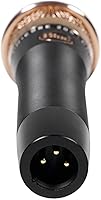
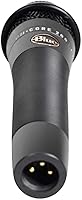
  • Connector: Connects via a standard 3-pin XLR connector; no USB or wireless output option is available.
  • Power Requirement: Requires 48V phantom power supplied by a compatible mixer, audio interface, or standalone phantom power unit to function.
  • Body Length: The mic body measures 185mm (7.3 inches) from base to grille tip, a standard handheld length comfortable for most performers.
  • Body Diameter: Diameter ranges from 28mm (1.1 inches) at the handle to 50mm (1.97 inches) at the widest point of the grille housing.
  • Weight: Weighs approximately 0.85 kg (1.87 lbs), which is on the heavier side for a handheld dynamic compared to lighter passive alternatives.
  • Shell Material: The outer body is constructed from reinforced metal with a heavy-duty metal-plated finish designed to withstand regular live use and transport.
  • Included Items: Package includes a standard microphone clip adapter, one spare mic grille, and a soft storage pouch for transport and protection.
  • Recommended Use: Intended primarily for live vocal performance, spoken word, and instrument miking in stage environments where durability and SPL handling are priorities.

Related Reviews

Dynamic Color Co Oceans Color Set - 1oz Bottles (Electric Blue, Sky Blue, Teal, Turquoise, Dynamic Blue)
86%
94%
Color Vibrancy
90%
Ease of Use
89%
Longevity of Color
88%
Smoothness of Flow
70%
Blendability for Gradients
More
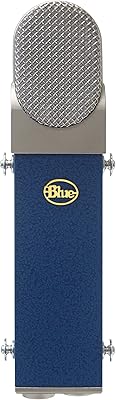
Blue Microphones Blueberry Cardioid Condenser Microphone
87%
91%
Sound Quality
89%
Build Quality
88%
Ease of Use
94%
Performance in Studio Settings
90%
Noise Rejection (Cardioid Pickup)
More
Blue Microphone Bluebird SL XLR Cardioid Condenser Microphone
88%
92%
Sound Quality
88%
Ease of Setup
90%
Noise Reduction
91%
Build Quality
87%
Value for Money
More
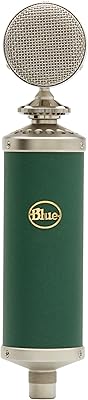
Blue Kiwi Large-diaphragm Condenser Microphone
78%
91%
Sound Quality
93%
Pattern Versatility
88%
Vocal Performance
57%
Ease of Setup
72%
Value for Money
More
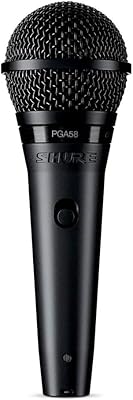
Shure PGA58
Shure PGA58
86%
93%
Build Quality
86%
Vocal Clarity
89%
Feedback Rejection
96%
Value for Money
84%
Switch Design
More
Shure PGA48-XLR
Shure PGA48-XLR
83%
93%
Build Quality
86%
Vocal Clarity
91%
Value for Money
82%
Feedback Rejection
74%
Handling Noise
More
TELEFUNKEN M80 Dynamic Microphone
89%
94%
High-Frequency Clarity
96%
Build Quality & Durability
92%
Off-Axis Noise Rejection
91%
Vocal Cut & Presence
89%
Feedback Resistance
More
RØDE Procaster
RØDE Procaster
81%
92%
Vocal Sound Quality
94%
Build Quality
88%
Noise Rejection
63%
Gain Requirements & Preamp Compatibility
86%
Internal Pop Filter
More
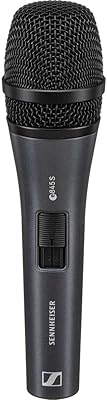
Sennheiser e 845-S
Sennheiser e 845-S
89%
92%
Vocal Clarity
96%
Build Durability
93%
Feedback Rejection
89%
Switch Reliability
84%
Handling Noise Suppression
More
Shure WH20 Dynamic Headset Microphone
85%
90%
Sound Clarity
87%
Comfort and Fit
85%
Durability
88%
Ease of Use
84%
Design and Portability
More

FAQ

It genuinely requires 48V phantom power — this isn't optional. The active capsule inside relies on that power to function, so if your mixer or interface doesn't supply phantom power, the mic will produce little to no usable signal. Before buying, check that your gear has a phantom power switch, which most modern mixers and audio interfaces do.

The two mics share a similar price bracket and live-vocal focus, but the Encore 200 tends to sound noticeably clearer and more detailed — largely because the active capsule extracts more high-mid definition than the SM58's passive coil. The SM58 wins on simplicity since it works with any XLR connection regardless of phantom power availability, while the Encore 200 asks more of your signal chain in exchange for that extra clarity.

Yes, and it works well in that role provided you have an XLR audio interface with phantom power. The cardioid pattern rejects background noise effectively, and the clear vocal reproduction translates well to spoken word content. Just keep in mind that this is a handheld mic, so you'll want a desk stand or boom arm to position it comfortably for a seated recording setup.

It holds up fine for home recording in a supporting role — demoing song ideas, tracking scratch vocals, or miking a guitar amp — but it isn't a substitute for a dedicated studio condenser. The 16kHz frequency ceiling means some high-end air and detail won't be captured, which is unlikely to matter for practice recordings but will be noticeable if you're aiming for polished final takes.

No XLR cable is included, so you'll need to supply your own. For most stage applications a 6-meter (20-foot) cable is a practical starting point, though the right length depends entirely on the distance between your mic stand and your mixer or stage box. Standard balanced XLR cables work perfectly — nothing specialized is required.

The metal-plated shell is genuinely road-ready — users who gig regularly report minimal cosmetic wear and no structural issues even after extended touring use. The included storage pouch helps protect the grille between shows, and the spare grille is a thoughtful addition for situations where the primary one gets dented or damaged on the road.

Absolutely — the 147dB SPL ceiling is one of this active dynamic mic's real strengths. Cranked guitar cabinets and loud drum sources that would push a condenser into distortion are handled cleanly here. It's a legitimate instrument miking tool, not just a vocal mic.

Yes, the standard clip adapter uses a common thread size that fits the vast majority of mic stands sold today. If your stand uses a European thread size, a simple adapter — available for very little money — is all you need.

That's a fair point of confusion. Standard passive dynamic mics don't need phantom power, but this one uses an active capsule design where phantom power drives internal electronics that boost and refine the signal before it ever leaves the mic. Think of it as Blue's way of bridging the gap between a rugged dynamic and a more detailed-sounding condenser — the active circuitry is what makes that possible.

For most live vocal applications, no — the frequencies above 16kHz are subtle harmonics that human hearing perceives as air or shimmer, and they're often masked entirely by stage noise anyway. Where it becomes more relevant is in quiet, controlled recording environments where you're comparing it directly to a full-range condenser. If you're primarily gigging, the rolloff is unlikely to bother you; if studio detail is a top priority, a condenser is a better fit.