Overview

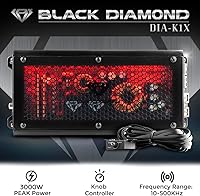
The Black Diamond DIA-K1X Monoblock Car Amplifier sits squarely in the value tier of the car audio market — and it wears that badge honestly. Black Diamond isn't competing with Rockford Fosgate or JL Audio here; this is a budget-friendly workhorse built for people who want real bass output without spending a premium. What makes it worth a second look is the compact Class D design — at roughly 10.5 by 4.7 by 2 inches, it tucks into tight spots a traditional amp simply wouldn't fit. If you're building a bass-focused system on a sensible budget, this monoblock amp deserves consideration on practical terms alone.
Features & Benefits

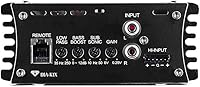
The number that actually matters here is 1000 watts RMS at 1 ohm — not the 3000-watt peak figure, which is a marketing ceiling you'll never realistically touch. Pair this Class D amplifier with a dual voice coil subwoofer wired to 1 ohm and you'll get the full output; wire to 2 ohms and you'll draw less, which works fine for moderate builds. The onboard tuning controls — a low-pass filter, bass boost, and subsonic filter — give you real flexibility whether you're running a sealed or ported box. The included remote bass knob is a small but genuinely useful addition for daily driving.

Best For

This monoblock amp is a solid match for a specific type of buyer: someone doing their first real subwoofer install, working with a limited budget, and not looking to run a complex multi-amp setup. It shines in compact vehicle installs — think hatchbacks, smaller crossovers, or any trunk where you're working with limited real estate. First-time builders especially benefit from the straightforward wiring and onboard controls that don't require deep signal-processing knowledge to configure. If you want reference-level audio fidelity, this isn't your amp. But for pure daily-driver bass on a budget, the DIA-K1X is a practical, no-nonsense option.

User Feedback

Buyers who've installed the DIA-K1X tend to highlight two things: the bass output for the price and how straightforward the physical install is — meaningful validation for a budget-tier unit. The recurring concerns, though, are worth noting. Some users report issues with gain sensitivity; setting it too high without a proper multimeter check can push the amp into clipping territory quickly. Connector and terminal build quality has drawn occasional criticism as well — using correctly sized wire and a solid ground point seems to matter more here than on pricier amps. The LED window divides opinion, a fun cosmetic touch for some, completely irrelevant for others. Overall sentiment skews positive, but not without caveats.

Pros

  • Delivers genuine 1000W RMS at 1 ohm — real, usable power for a single subwoofer build.
  • Class D efficiency means less heat buildup and lower draw on your vehicle's electrical system.
  • Slim chassis fits into tight trunks and compact installs where larger amps simply won't go.
  • Onboard subsonic filter protects your subwoofer from damaging low-frequency signals in ported enclosures.
  • The remote bass knob lets you dial in low-end output from the driver's seat without fumbling under panels.
  • Straightforward wiring layout makes the install accessible for first-timers without professional help.
  • CE certification provides baseline peace of mind for buyers concerned about electrical safety compliance.
  • Adjustable low-pass and bass boost controls give meaningful tuning flexibility for both sealed and ported boxes.
  • The value-to-output ratio at this price tier is genuinely hard to argue with for a basic one-sub setup.

Cons

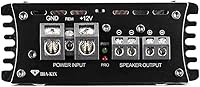
  • Terminal and connector build quality feels budget-grade — proper wire gauge and quality ring terminals are non-negotiable here.
  • Gain sensitivity can be unforgiving; without a multimeter during setup, pushing into clipping territory is a real risk.
  • Black Diamond has a limited brand track record compared to established car audio names, making long-term reliability harder to predict.
  • The advertised 3000W peak figure is essentially a non-number in real-world use and may mislead buyers who focus on it.
  • Ground point sensitivity is higher than you might expect — a poor connection can introduce noise or cause instability.
  • Sparse long-term owner data makes it difficult to assess how this Class D amplifier holds up after two or three years of daily use.
  • The LED acrylic window is purely cosmetic and contributes nothing to acoustic or thermal performance.
  • Being 1-ohm stable only limits subwoofer pairing flexibility; certain wiring configurations won't reach the full rated output.

Ratings

The Black Diamond DIA-K1X Monoblock Car Amplifier scores below were generated by our AI engine after analyzing verified buyer reviews from multiple global markets, with spam, bot-generated, and incentivized feedback actively filtered out. Both the standout strengths and the recurring pain points real buyers encountered are transparently reflected in the individual category breakdowns. This is an unsponsored, realistic snapshot of how this compact Class D amp performs in everyday use — not a promotional summary.
Value for Money
83%
For the price, buyers consistently report that the DIA-K1X punches noticeably harder than factory setups and some step-up competitors in its class. Getting 1000W RMS into a single subwoofer build without spending heavily is a realistic outcome, which is the core reason this amp lands in so many first-time install shopping carts.
The value equation shifts if you factor in the cost of quality ring terminals and heavier wire gauge, which are effectively required to get reliable results. Buyers who expect plug-and-play reliability without investing in proper install materials often report a meaningfully worse experience than those who take the time to do it right.
Bass Output
76%
24%
Most buyers report a satisfying and genuine improvement in low-frequency output compared to their previous factory or entry-level setups — particularly in daily commuting scenarios where bass impact matters more than tonal precision. Paired with a competent single subwoofer and a properly tuned low-pass filter, the DIA-K1X can deliver the kind of chest-felt bass that budget builders are after.
Bass quality is volume-forward and not particularly refined — buyers accustomed to higher-tier amps will notice a lack of definition and tightness at high output levels. A subset of users reports muddiness when the bass boost is pushed past its midpoint, suggesting the control has a narrower sweet spot than the spec sheet implies.
Build Quality
59%
41%
The chassis feels adequately solid for the price bracket, and the compact form factor is well-executed — there is no excessive flex or obvious gaps in the housing under normal handling. The surface-mount design and SMC internal layout show that some engineering care went into keeping the unit compact without it feeling entirely thrown together.
The terminal block and connector quality is a recurring sore point — several buyers note that the binding posts feel flimsy compared to amps even slightly up the price ladder. Some users also report quality inconsistency between units, making it feel more like a luck-of-the-draw purchase than a consistently manufactured product.
Installation Ease
81%
19%
Buyers who have done even a basic car audio install describe this monoblock as one of the more straightforward units to get up and running — labeled terminals are logical and the filter controls are intuitive enough to set without a manual. First-timers specifically appreciate that the process does not require professional help for a functional result.
The most common installation stumbling block is gain setting — without a proper test tone and measurement tool, buyers frequently set the gain too aggressively, leading to audible clipping or protection mode trips. Ground point sensitivity also trips up some installers, with a poorly grounded connection introducing noise that can be tricky to diagnose.
Compact Footprint
87%
At just under 11 inches long and barely 2 inches tall, this Class D amplifier fits into spaces where most same-power amps simply would not — including tight hatchback trunks and behind-seat panels in compact sedans. Multiple buyers specifically cite the small footprint as the deciding factor over technically comparable alternatives.
The slim profile comes with a trade-off: less surface area for heat dissipation means the amp needs clear airflow around it to stay within its 40-degree operating limit. Buyers who mount it in a fully enclosed space without ventilation have reported thermal protection triggering during extended high-volume listening sessions.
Thermal Management
74%
26%
Class D amplification is inherently more efficient than Class A/B, and buyers who install this monoblock with adequate airflow report it running warm but not alarmingly hot even during extended bass-heavy sessions. The SMC circuit design appears to contribute to reasonable heat distribution across the chassis under normal daily use conditions.
Without proper ventilation, the amp enters protection mode faster than some buyers expect — a few report cut-outs during summer drives when the unit is mounted in a closed trunk with limited airflow. The 40-degree Celsius operating ceiling is lower than some competing Class D units at a similar price, which matters in hot-climate installs.
Tuning Flexibility
72%
28%
Having an adjustable low-pass filter, bass boost, and subsonic filter on a single-channel amp in this price range is more than some budget competitors offer, and buyers appreciate the ability to configure the unit for both sealed and ported enclosures without external processors. The controls cover the practical basics that most single-sub daily builds actually need.
The filter range and sweep precision feel limited compared to mid-tier amps, and experienced installers note that the bass boost control has a noticeable jump in its response curve that makes fine tuning difficult. For critical listening or more complex subwoofer pairings, the onboard controls alone are unlikely to be sufficient.
Remote Bass Knob
79%
21%
The inclusion of a remote bass knob turns what would otherwise be a set-and-forget install into one where you can actively manage bass levels during different listening scenarios — from highway cruising with heavy hip-hop to quieter podcast sessions. The knob is easy to mount within driver reach and wires in without complication.
A handful of buyers note that the knob travel feels slightly coarse — there is not much gradation between nearly off and fully on, making subtle level adjustments harder than expected. The knob also lacks any detent or center-click to return to a calibrated baseline, which is a small but real ergonomic shortcoming.
Gain Stability
56%
44%
When gain is set conservatively and correctly — ideally with a multimeter and test tone — the DIA-K1X holds its output level steadily without audible fluctuation during normal listening. Buyers who take the time to configure gain properly report a clean, stable signal with no unexpected dropouts under ordinary daily driving conditions.
The gain control is sensitive enough that even a modest overshoot causes audible clipping, and the amp lacks robust internal limiting to catch this before it becomes a problem. This is one of the most consistently mentioned negatives in user reviews, particularly among buyers who attempted to set gain by ear rather than with proper measurement tools.
Terminal Quality
53%
47%
The terminals are functional and accept standard wire gauges without unusual modifications, and buyers who used quality ring terminals report a connection that holds firm under normal vibration. For a value-tier product, the terminal layout is at least sensibly arranged and labeled clearly enough to avoid wiring confusion during install.
The physical binding posts and connector housings feel noticeably flimsy — several buyers describe them as the weakest part of an otherwise acceptable build, and a few report stripped or loosened terminals within the first few months of use. Anyone installing this in a vehicle with significant road vibration should check connections periodically.
Long-Term Reliability
58%
42%
A portion of buyers report daily use over a year without functional problems, suggesting the unit holds up under normal conditions when installed correctly. For a budget-tier amp, clearing the first six to twelve months intact is a meaningful baseline, and the DIA-K1X appears to do so for the majority of buyers.
Long-term data is genuinely thin for this product, and the review pool lacks strong representation of buyers past the two-year mark. A small but notable percentage of buyers report early failure — particularly units that ran hot due to poor ventilation — making install quality a significant variable in the overall reliability equation.
Aesthetic Design
71%
29%
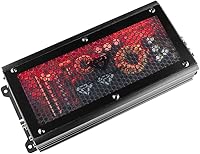
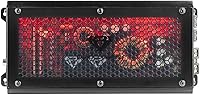
The red LED acrylic window is a genuinely polarizing feature that a meaningful portion of buyers actually enjoy — especially those doing show-style installs where the amp is visible. At a price point where most competitors offer no visual differentiation whatsoever, it gives the unit a more finished and intentional appearance.
Just as many buyers find the LED window irrelevant or prefer a cleaner look — particularly those mounting the amp out of sight under a seat or inside a sealed compartment. The LED cannot be disabled, which is a minor but real annoyance for buyers who prefer a subdued aesthetic or simply did not want the feature.
Noise Floor
62%
38%
Buyers who nail the ground connection and use shielded RCA cables report a reasonably quiet noise floor for the price tier — hiss and alternator whine are manageable when the install is done with care. At typical listening volumes with a well-matched subwoofer, background noise does not meaningfully intrude on the bass listening experience.
Ground-loop hum and alternator whine are reported by a noticeable subset of buyers, and the amp does not appear to include any form of internal noise filtering to compensate for imperfect installs. Troubleshooting signal noise in this unit can require more systematic effort than buyers at this price point typically expect to invest.
Safety & Compliance
77%
23%
CE certification gives buyers a reasonable baseline of confidence that the unit has been tested against fundamental safety and electromagnetic compatibility standards — which matters when wiring a high-current device into a vehicle's electrical system. For first-time builders especially, this certification is a meaningful reassurance that the amp will not behave erratically under normal use.
CE certification covers European baseline standards but does not carry the same testing depth as UL or ETL certifications more familiar to North American buyers. There is also no evidence of a manufacturer warranty included with the unit, leaving buyers with limited recourse if the amp fails after the seller's return window closes.

Suitable for:

The Black Diamond DIA-K1X Monoblock Car Amplifier is built for a particular kind of buyer: someone who wants a meaningful bass upgrade on a realistic budget and isn't chasing audiophile-grade performance. It's a strong fit for first-time car audio builders — the kind of person stepping up from a factory head unit and adding a single subwoofer for the first time. The compact footprint makes it especially practical for smaller vehicles like hatchbacks, compact SUVs, or sedans where trunk space is genuinely limited. DIY installers who want to tune their setup without hiring a professional will find the onboard controls — low-pass filter, bass boost, and subsonic filter — cover the basics without being overwhelming. If your primary goal is more bass on a sensible spend, this monoblock amp checks the right boxes.
Not suitable for:

If you're building a serious multi-amplifier setup, expecting competition-grade output, or running a demanding load below 1 ohm, the Black Diamond DIA-K1X Monoblock Car Amplifier is not the right tool. Experienced installers who prioritize terminal build quality, long-term reliability under sustained high heat, or precise gain staging will likely find the component quality underwhelming next to mid-range and premium alternatives. This Class D amplifier isn't designed for audiophiles — its strength is bass volume, not tonal accuracy or low-distortion output at moderate listening levels. Buyers who want a unit they can grow into as their system expands should consider more scalable options from brands with a longer track record. If your vehicle's electrical system is already stressed or your ground points aren't solid, those underlying problems will surface faster here than they would with a better-built amp.
Specifications

  • Brand: This amplifier is manufactured by Black Diamond, a value-tier car audio brand.
  • Model: The official model designation is DIA-K1X.
  • Amplifier Class: Class D topology is used, prioritizing power efficiency and reduced heat output over the raw linearity of Class A/B designs.
  • Channels: Single-channel monoblock configuration, intended exclusively for subwoofer amplification.
  • RMS Power: Continuous output is rated at 1000W RMS at a 1-ohm load, which is the real-world figure buyers should rely on when matching to a subwoofer.
  • Peak Power: Advertised peak output is 3000W, a momentary burst measurement taken under ideal lab conditions rather than a reflection of sustained performance.
  • Min Impedance: The amplifier is stable down to a 1-ohm load; operating below this threshold is not supported and risks triggering thermal protection.
  • Dimensions: The chassis measures 10.55 × 4.72 × 1.96 inches (L × W × H), placing it among the more compact options available in its power class.
  • Weight: The unit weighs 5.11 pounds, reflecting its slim surface-mount construction and SMC-based internal layout.
  • Low-Pass Filter: An onboard adjustable low-pass filter directs only bass-range frequencies to the connected subwoofer, with the cutoff point tunable to suit different enclosure and driver combinations.
  • Bass Boost: An adjustable bass boost control allows additional low-frequency emphasis to be dialed in according to listener preference and subwoofer sensitivity.
  • Subsonic Filter: An adjustable subsonic filter is included to block damaging infrasonic frequencies, a particularly important safeguard when using a ported enclosure.
  • Remote Knob: A wired remote bass level knob is included in the box, enabling driver-seat adjustment of bass output without physical access to the amplifier.
  • LED Lighting: The top panel features a red LED-illuminated acrylic window, a cosmetic design element that activates whenever the amplifier is powered on.
  • Mounting Type: The amplifier is designed for surface mounting and does not include rack-mount provisions.
  • Max Operating Temp: The rated maximum ambient operating temperature is 40 degrees Celsius; adequate airflow around the chassis is recommended to stay within this threshold.
  • Certification: CE certified, indicating it meets baseline European safety and electromagnetic compatibility standards.
  • Circuit Design: Internal construction uses Surface Mount Component (SMC) technology, which contributes to the compact board layout and improved thermal management.
  • Box Contents: The retail package includes the amplifier unit and the remote bass knob; no power wiring, signal cables, or mounting hardware are included.

Related Reviews

Black Diamond DIA-XT69 6x9 Car Coaxial Speaker
76%
83%
Sound Clarity
61%
Bass Performance
86%
Treble Extension
91%
Volume Output
79%
Installation Ease
More
Belva BB200ABv2 Monoblock Car Amplifier
76%
88%
Value for Money
79%
Bass Output Quality
91%
Ease of Installation
61%
Thermal Management
67%
Build Quality
More
LKC PHF450D Car Audio Monoblock Amplifier
88%
91%
Power Output (2 Ohms)
87%
Power Output (4 Ohms)
93%
Heat Dissipation
88%
Build Quality
85%
Ease of Integration
More
BOSS Audio R1600M Monoblock Car Amplifier
72%
83%
Value for Money
88%
Ease of Installation
79%
Bass Output
61%
Build Quality
86%
Signal Flexibility
More
Planet Audio TR1500.1M Monoblock Car Amplifier
70%
88%
Value for Money
79%
Bass Output & Performance
83%
Ease of Installation
63%
Build Quality
57%
Thermal Management
More
Planet Audio AC2500.1M Monoblock Car Amplifier
85%
92%
Performance
95%
Bass Output
85%
Ease of Installation
65%
Thermal Performance
88%
Build Quality
More
Blaupunkt AMP1500M Monoblock Car Amplifier
73%
81%
Value for Money
63%
Real-World Power Output
88%
Ease of Installation
77%
Audio Clarity
58%
Build Quality
More
Planet Audio AC1500.1M Monoblock Car Amplifier
75%
91%
Value for Money
78%
Bass Output Quality
86%
Ease of Installation
61%
Thermal Management
67%
Build Quality
More
Audiobank P6001 Monoblock Car Amplifier
61%
74%
Value for Money
38%
Power Accuracy
56%
Build Quality
52%
Thermal Management
78%
Installation Ease
More
Hifonics Zeus ZXX 1800 Watt Monoblock Car Audio Amplifier
86%
88%
Performance
90%
Build Quality
85%
Ease of Installation
89%
Heat Management
84%
Sound Clarity
More

FAQ

This monoblock is rated at 1000W RMS at a 1-ohm load, so wiring your subwoofer down to 1 ohm will give you maximum output. A dual voice coil sub wired to 2 ohms will work fine but will produce less power. Do not go below 1 ohm — the amp is not rated for it, and you risk tripping the thermal protection or causing damage.

For an amp in this power class, 4-gauge power and ground wiring is the standard recommendation. Undersized wire creates resistance, generates heat, and causes the voltage drop that starves the amp during peaks. Also make sure your ground connection lands on bare metal — paint or coating underneath the ring terminal is one of the most common causes of noise and instability.

Yes — subwoofer size alone is not the deciding factor here, impedance and power handling are. As long as your 12-inch driver is rated to handle 1000W RMS continuously and you are wiring it to the correct impedance, the pairing will work. Always match your sub's RMS rating to the amp's RMS output, not the peak figure.

The safest approach is to use a multimeter with a test tone, or an oscilloscope if you have access to one, rather than setting gain by ear. Turning the gain up until it sounds loud is the most common mistake at this price tier, and it is clipping — not volume — that damages subwoofers over time. If you are not comfortable doing this yourself, most car audio shops can set the gain correctly in about 15 minutes.

You can wire two subs in parallel to land at a 1-ohm combined load, but a single well-matched subwoofer is the cleaner and more reliable approach for this monoblock. If you are planning a two-driver setup from the start, a higher-rated monoblock or a two-channel amp will serve you better in the long run.

It is a genuinely useful addition for daily driving. Being able to pull the bass back for a podcast or push it up when a bass-heavy track comes on — without reaching behind a panel or under a seat — is a real convenience. The knob is straightforward to wire and most buyers find it one of the easier parts of the install.

The amplifier itself is compatible with either enclosure type. The key difference is how you use the subsonic filter: ported boxes expose your subwoofer to infrasonic frequencies that can cause damage, so engaging the subsonic filter is important in that setup. For sealed enclosures, the subsonic filter is less critical but does not hurt to have running.

Class D amplifiers run significantly cooler than Class A/B designs, and the SMC circuit layout in this unit helps manage heat reasonably well. That said, stuffing it into a closed compartment with no airflow is asking for trouble with any amplifier. Leave a few inches of clearance around the chassis when mounting and you should stay well within the 40-degree operating limit under normal daily use.

There is no toggle or switch for the LED — it illuminates whenever the amplifier is powered on. If the lighting does not suit your install aesthetic, that is worth knowing before you buy. It is entirely cosmetic and has no effect on performance either way.

The Black Diamond DIA-K1X Monoblock Car Amplifier is rated at 1000W RMS — the continuous, sustained output it can deliver under real operating conditions. The 3000W peak figure is a momentary burst measurement taken under ideal lab conditions, and it is not a number you will experience in practice. When comparing amplifiers, always look at RMS figures; peak numbers are marketing shorthand and tell you very little about real-world performance.
Where to Buy