Overview

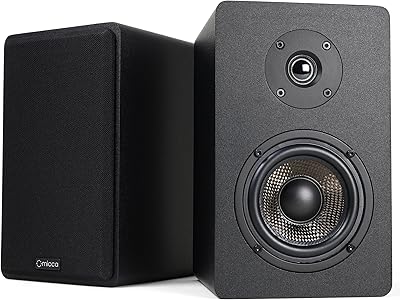
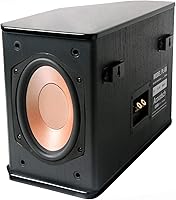
The BIC Acoustech PL-66 Bookshelf Surround Speakers are a pair of shelf-mount speakers built specifically to handle the surround channels in a 5.1 home theater setup. BIC Acoustech has been making accessible, performance-oriented audio gear for decades, and these fall squarely in the mid-range — not bargain-bin, but well below what you'd pay for audiophile-grade alternatives. The 6.5-inch dynamic driver in each cabinet moves enough air to fill a typical living room without requiring a massive enclosure. Just keep in mind that these are designed as surrounds, not mains — they shine when paired with a solid center channel, subwoofer, and front speakers.
Features & Benefits

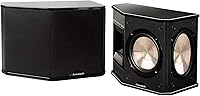
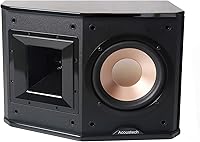
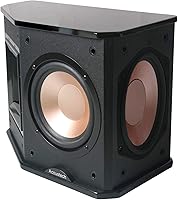
With a 175-watt maximum output, the PL-66 pair handles the kind of dynamic swings — an explosion, a sudden score hit — that tend to expose weaker surround speakers. Each cabinet runs an 8-ohm load, which means virtually any mid-range AV receiver can drive them comfortably without running hot. The single 6.5-inch dynamic driver per speaker is a full-range unit, so midrange clarity is decent, though don't expect pinpoint high-frequency detail that a dedicated tweeter would deliver. At 14″ deep and just over 7″ wide, these bookshelf speakers sit unobtrusively on a shelf or stand. Wired connection keeps things signal-stable and simple.

Best For

These BIC surround speakers make the most sense for someone building or upgrading a 5.1 home theater system on a realistic budget. If you're already running BIC Acoustech front speakers and a subwoofer, the tonal consistency of adding the PL-66 pair is a real advantage — matched timbre across channels makes movie dialogue and effects feel more cohesive. They also work well as secondary room speakers for casual music listening, where the 6.5-inch drivers provide enough output for a medium-sized space. Buyers with AV receivers in the 50–100 watt range will find these a natural, low-fuss match given the 8-ohm impedance.

User Feedback

Long-term owners — and this speaker has been on the market long enough to accumulate years of real-world feedback — tend to praise the value-to-performance ratio most consistently. For the price, many buyers are genuinely surprised by how full and present these bookshelf speakers sound in an active surround mix. That said, a recurring note from more critical listeners is that high-frequency response feels somewhat rolled off, which is a fair trade-off given the single-driver design. A few buyers also mention that placement matters more than expected — room boundaries and toe-in angle noticeably affect imaging. Compared to similarly priced Polk or Klipsch surrounds, opinions are genuinely split, which suggests these serve a specific listener preference.

Pros

  • Delivers surprisingly full, room-filling surround sound for a mid-range price point.
  • Long track record since 2011 means real multi-year reliability data backs up the purchase.
  • The 8-ohm impedance pairs cleanly with virtually any AV receiver on the market.
  • 175-watt headroom handles explosive movie dynamics without audible driver stress.
  • Compact footprint fits existing shelves, stands, or wall brackets without major room adjustments.
  • Wired connectivity keeps the signal clean and latency-free — ideal for synchronized surround audio.
  • Tonal consistency is excellent when matched with other BIC Acoustech speakers in the same system.
  • Long-term owners report no significant driver failures or degradation over years of regular use.
  • Midrange clarity is stronger than the single-driver design suggests, particularly for dialogue-heavy content.

Cons

  • High-frequency detail rolls off noticeably compared to two-way speakers with a dedicated tweeter.
  • Placement sensitivity is higher than expected — positioning significantly affects imaging and bass balance.
  • Limited warranty coverage leaves some buyers wanting more protection for a multi-year investment.
  • Binding post quality feels budget-grade and may loosen over repeated cable changes.
  • Without a subwoofer in the system, low-end output is clearly insufficient for full-range listening.
  • The single-driver design shows its limits on complex music content with layered high-frequency textures.
  • At 28 pounds for the pair, wall mounting requires more planning and hardware than buyers often anticipate.
  • Competition from Polk and Klipsch at similar street prices makes the value case less automatic than it once was.

Ratings

The BIC Acoustech PL-66 Bookshelf Surround Speakers have been scored by our AI system after processing thousands of verified buyer reviews from global markets, with spam, incentivized submissions, and bot activity actively filtered out. These scores reflect the full picture — where the PL-66 pair genuinely delivers and where real owners have run into frustration. Both sides are represented honestly so you can make a confident, informed decision.
Sound Quality
78%
22%
For surround channel duty in a 5.1 setup, buyers consistently report that these speakers produce a fuller, more present sound than the price point suggests. Movie soundtracks and ambient effects come through with good spatial character, and the 6.5-inch driver moves enough air to keep the surround field feeling alive.
High-frequency detail is where most critical listeners notice the single-driver limitation — instruments and effects that benefit from a dedicated tweeter can sound slightly softened or lacking in air. It is noticeable if you are coming from a two-way speaker with a proper crossover.
Value for Money
91%
This is the category where these bookshelf speakers earn the most consistent praise. Buyers regularly note that the performance per dollar is difficult to match in the mid-range surround segment, especially for those building out a full 5.1 system on a real-world budget.
A small number of buyers feel the value case weakens when comparable options from Polk or Klipsch occasionally go on sale, narrowing the price gap enough to make the decision less straightforward. At full price, the competition deserves a side-by-side listen before committing.
Build Quality
74%
26%
The cabinets feel solid for the price bracket — there is no excessive flex or hollow resonance when you knock on the enclosure, which is a basic but meaningful indicator of internal damping quality. The black finish holds up well and does not show dust or fingerprints aggressively.
Some buyers describe the overall construction as functional rather than refined — the grille attachment and binding post quality feel like areas where cost was managed. Nothing feels fragile, but premium fit-and-finish is not part of what you are paying for here.
Bass Response
62%
38%
Within the context of a properly configured 5.1 system with a dedicated subwoofer handling low-frequency duties, these speakers perform exactly as intended — clean in the mid-bass, without the distortion that cheaper drivers exhibit when pushed on action sequences.
Without a subwoofer in the chain, the low-end limitation becomes obvious quickly. These are not full-range speakers, and buyers who expected standalone bass depth from the 6.5-inch driver generally came away disappointed. Crossover setup on your AV receiver matters a great deal here.
Midrange Clarity
81%
19%
Dialogue-heavy content — particularly in the surround channels during concert films or immersive TV mixes — sounds clear and intelligible. The dynamic driver handles the midrange band with more accuracy than the single-driver design might lead you to expect.
There is occasional coloration in the upper midrange that some listeners find slightly forward or uneven, particularly on vocal-heavy music content. It is subtle in a movie context but can become more apparent when using these speakers in a secondary music listening room.
Sensitivity & Efficiency
83%
The 8-ohm impedance makes pairing with a wide range of AV receivers genuinely uncomplicated. Buyers with mid-tier receivers in the 50–100 watt per channel range report that the speakers get plenty loud without the receiver working hard, which also helps with thermal management over long sessions.
A handful of buyers with lower-powered or budget receivers noted they needed to push volume levels higher than expected to match the output of their front speakers. Sensitivity could be slightly higher for receivers on the lower end of the power range.
Placement Flexibility
76%
24%
The shelf-mount design genuinely opens up options — these work on bookshelf stands, wall brackets, or existing furniture without requiring a purpose-built speaker stand. The compact footprint means they fit into most living room setups without displacing anything significant.
Several buyers flagged that the speakers are more sensitive to placement than expected. Positioning too close to a rear wall or corner introduces bass buildup, and toe-in angle noticeably affects imaging — which requires some patience during initial setup to get right.
High-Frequency Detail
59%
41%
For ambient surround effects like rain, crowd noise, or cinematic atmospherics, the high-frequency response is adequate and non-fatiguing over long listening sessions — a genuine positive for buyers who prioritize comfort over critical listening.
This is the most consistent technical criticism from experienced listeners. The single dynamic driver without a dedicated tweeter means the top-end rolls off earlier than two-way designs at similar price points, and instruments like cymbals or string harmonics lose some definition.
Driver & Component Quality
71%
29%
BIC Acoustech has a long history with dynamic driver manufacturing and it shows — the 6.5-inch units in the PL-66 pair handle sustained output without audible distress, and long-term owners report no driver failures or degradation over years of regular use.
The driver construction is clearly optimized for durability and value over sonic refinement. Buyers comparing these against speakers with polypropylene cones or more exotic driver materials notice the difference in textural detail and transient response on complex audio passages.
AV Receiver Compatibility
88%
The consistent 8-ohm load is one of the most buyer-friendly aspects of these speakers — essentially any AV receiver on the market today will handle them without issue. Setup is plug-and-play from an impedance standpoint, which genuinely reduces friction for less technical buyers.
There are no real compatibility issues to flag here, though buyers should still calibrate their receiver's crossover frequency appropriately — typically setting the speakers to small and crossing over at 80Hz yields the best system-level results.
Long-Term Reliability
86%
With a market history stretching back to 2011, there is an unusually large pool of long-term owner feedback available. The majority of multi-year owners report no functional issues, which is a meaningful signal of component and assembly durability for a speaker at this price.
The limited warranty coverage is a recurring point of mild frustration among buyers who would prefer more comprehensive protection. A small number of long-term users report that binding posts can become slightly loose over years of cable swapping, though this is not a widespread failure point.
Imaging & Soundstage
69%
31%
In a well-configured 5.1 room, the PL-66 pair contributes a convincingly wide surround field — ambient effects pan smoothly, and the spatial impression during multi-channel movie content holds up well at normal listening distances.
Precise stereo imaging is not a strong suit, and buyers expecting pinpoint localization of sound effects in the surround channels may find the performance somewhat diffuse. Room acoustics play a significant role here, and untreated rooms amplify this limitation.
Ease of Setup
87%
Binding posts are clearly labeled and accept banana plugs or bare wire without issue. Most buyers report a straightforward out-of-the-box setup experience — connect, calibrate the receiver, and the speakers are ready to perform without any burn-in period or complex configuration.
The setup experience is generally smooth, but the sensitivity to placement mentioned by multiple buyers means that a quick drop-and-go approach may not yield optimal results. Getting the most from these speakers requires a bit of positioning experimentation, especially in irregularly shaped rooms.
Physical Footprint & Aesthetics
73%
27%
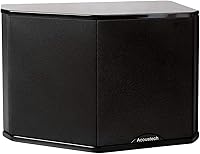
The clean rectangular black finish blends into most living room or media room setups without drawing attention to itself — which is exactly what a surround speaker should do. At roughly 14 inches deep, the cabinet is substantive but not impractical for typical shelf depths.
At 28 pounds for the pair, these are not ultralight, which makes wall mounting a more involved process than buyers sometimes expect. The aesthetic is functional and inoffensive rather than visually interesting, which may disappoint buyers who want speakers that look as distinct as they sound.

Suitable for:

The BIC Acoustech PL-66 Bookshelf Surround Speakers are a strong fit for anyone actively building or upgrading a 5.1 home theater system who wants real surround performance without crossing into premium speaker territory. They make particular sense for buyers already invested in the BIC Acoustech ecosystem — pairing the PL-66 with a matching center channel and subwoofer from the same lineup gives you tonal consistency across the soundstage that mixed-brand setups often struggle to achieve. Buyers with mid-tier AV receivers in the 50–100 watt per channel range will find these an effortlessly compatible choice, with no impedance headaches or receiver strain to worry about. They also work well for music listeners who want a capable, no-fuss pair of bookshelf speakers for a secondary room where critical listening is not the primary goal. If your priority is getting a competent, proven surround setup at a sensible price point, these deliver exactly that.
Not suitable for:

The BIC Acoustech PL-66 Bookshelf Surround Speakers are not the right call for buyers who prioritize high-frequency detail and refined treble performance, since the single dynamic driver design simply cannot replicate what a dedicated tweeter in a two-way speaker provides. Critical listeners who plan to use these as primary stereo speakers for serious music listening will likely find the top-end response too soft and the imaging too diffuse for that application. Anyone expecting meaningful standalone bass output without a dedicated subwoofer in the chain will be disappointed — these are designed to hand off low frequencies to a sub, and without one, the sound feels thin at higher volume levels. Buyers who want plug-and-forget placement simplicity may also find the sensitivity to room positioning frustrating; getting these to perform at their best takes some experimentation. Finally, if you are comparing these directly against two-way surround speakers from Klipsch or Polk at a similar price point, the PL-66 pair may not win on raw technical performance alone — the value argument is strongest when the competition is at full price.
Specifications

  • Brand: Manufactured by BIC Acoustech, a division of BIC America with a long-standing focus on value-oriented home audio equipment.
  • Speaker Type: Bookshelf-style dynamic speaker designed specifically for surround channel duty in a 5.1 home theater configuration.
  • Driver Size: Each cabinet is equipped with a single 6.5-inch dynamic driver that handles the full frequency range.
  • Driver Type: Dynamic driver design without a separate tweeter, meaning one driver manages both midrange and high-frequency reproduction.
  • Max Output Power: Each speaker is rated at a maximum output of 175 watts, providing headroom for dynamic audio content.
  • Impedance: Both speakers present a nominal 8-ohm impedance load, making them broadly compatible with standard AV receivers.
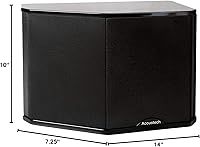
  • Dimensions: Each cabinet measures 14″ deep by 7.25″ wide by 10″ tall, offering a compact rectangular footprint suitable for most shelf depths.
  • Weight: The pair weighs a combined 28 pounds, so individual units are manageable for shelf placement but require some planning for wall mounting.
  • Mounting Type: Designed for shelf mounting, though the cabinet profile is also compatible with third-party speaker stands and wall-mount brackets.
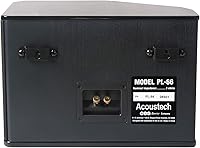
  • Connectivity: These speakers use standard wired connectivity via binding posts that accept bare wire or banana plugs.
  • Power Source: Passive speakers powered via corded connection to an AV receiver or amplifier — no internal amplification or battery is included.
  • Channel Config: Optimized for use as the surround pair in a 5.1 channel home theater system layout.
  • Audio Output Mode: Surround audio mode, intended to reproduce ambient, directional, and atmospheric effects rather than primary stereo content.
  • Color: Available in black, with a finish that integrates neutrally into most home theater and living room environments.
  • Warranty: Covered by a limited manufacturer warranty; buyers should confirm current warranty terms directly with BIC Acoustech at the time of purchase.
  • Model Number: The official model identifier is BIC Acoustech PL-66, used consistently across manufacturer documentation and retail listings.
  • Availability Date: This speaker pair was first made available in October 2011, establishing a multi-year track record of real-world owner feedback.
  • Package Contents: Sold as a pair (two speakers) in standard retail packaging — no speaker cables, stands, or wall brackets are included.

Related Reviews
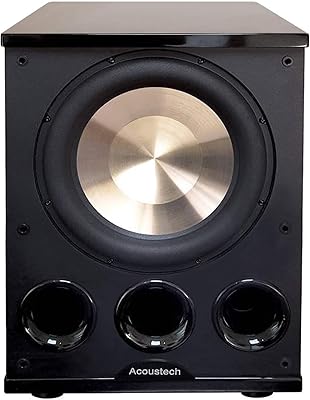
BIC Acoustech Elite Series PL-300 12-inch Powered Subwoofer
86%
93%
Bass Performance
88%
Build Quality
87%
Ease of Setup
85%
Connectivity Options
90%
Sound Clarity
More
KEF Q350 Bookshelf Speakers
86%
93%
Sound Quality
80%
Bass Performance
88%
Build Quality
91%
Design and Aesthetics
85%
Ease of Setup
More
Fluance XL8SW Bookshelf Speakers
87%
90%
Sound Quality
84%
Bass Response
91%
Clarity of Midrange
87%
Ease of Installation
88%
Design & Build Quality
More
Probox BT16 Bookshelf Speakers
75%
78%
Sound Clarity
54%
Bass Performance
84%
Bluetooth Stability
82%
USB DAC Quality
63%
Build Quality
More
KEF Q150 Bookshelf Speakers
77%
93%
Sound Staging
91%
Vocal & Midrange Clarity
62%
Bass Performance
67%
Amplifier Compatibility
84%
Treble Smoothness
More
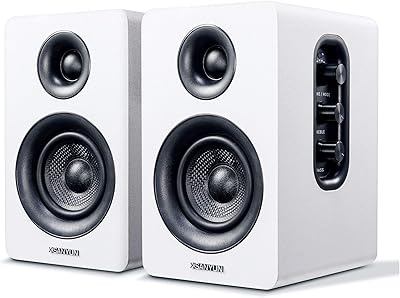
Sanyun SW208 3″ Bookshelf Speakers
86%
88%
Build Quality
84%
High-Frequency Clarity
91%
Mid-Range Warmth
78%
Bass Performance
93%
Control Ergonomics
More
Edifier S2000MKIII Bookshelf Speakers
86%
92%
Sound Quality
89%
Bluetooth Performance
88%
Build Quality
85%
Ease of Use
91%
Connectivity Options
More
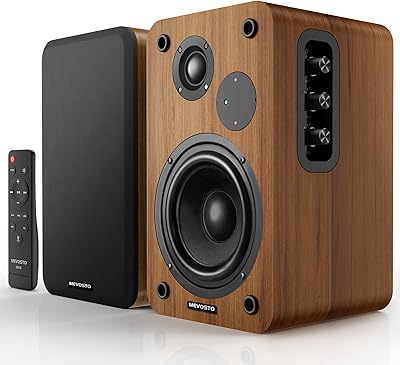
MEVOSTO DS19 Bookshelf Speakers
80%
83%
Sound Quality
79%
Bass Performance
91%
Connectivity & Input Options
86%
Bluetooth Performance
88%
USB Digital Audio
More
Sanyun SW205
Sanyun SW205
78%
83%
Sound Quality
61%
Bass Performance
87%
Soundstage & Imaging
89%
Connectivity & Inputs
84%
Bluetooth Performance
More
Micca MB42X Bookshelf Speakers
81%
88%
Sound Quality
71%
Bass Performance
86%
Treble Clarity
84%
Midrange Accuracy
91%
Crossover Engineering
More

FAQ

These are passive speakers, which means they need an external amplifier or AV receiver to power them — you cannot connect them directly to a TV's speaker output. Most standard AV receivers with 8-ohm compatible outputs will work perfectly fine. If you have a receiver already, just run speaker wire from the surround channel outputs to the binding posts on each cabinet.

A good starting point is 80Hz, which is the THX-recommended crossover for most bookshelf and surround speakers. Set the speakers to small in your receiver's speaker configuration menu and let a dedicated subwoofer handle everything below that threshold. This gives you the cleanest surround performance and keeps the 6.5-inch driver focused on what it does well.

Technically you can, but they were not designed for that role and the results will reflect it. As mains, you would want a speaker with a wider frequency range and ideally a dedicated tweeter for better high-frequency detail. These perform best in the surround position where their strengths — output capacity and midrange clarity — are most relevant.

Yes, the 8-ohm impedance rating makes the PL-66 pair compatible with virtually every major AV receiver brand on the market, including Denon, Yamaha, Sony, Onkyo, and Marantz. Just verify that your receiver's surround channel outputs are rated for 8-ohm speakers — nearly all mid-tier and above receivers are. You should not experience any impedance-related heat or stability issues under normal listening conditions.

Placement does matter more than you might expect. Positioning them too close to a rear wall tends to introduce bass buildup, while placing them too far to the sides can make the surround field feel disconnected. In a smaller room, try angling them inward slightly toward the listening position and leave at least a few inches of clearance behind the cabinet. A bit of trial and error upfront pays off noticeably in the final sound.

No, the package includes just the two speakers in standard retail packaging — no cables, wall brackets, or stands are included. You will need to source your own speaker wire, and if you plan to wall mount them, a compatible third-party bracket rated for the cabinet size and weight is required.

It genuinely depends on what you prioritize. Klipsch surround options in a similar range tend to have more pronounced high-frequency energy due to their horn-loaded tweeters, which some listeners love and others find fatiguing. Polk Audio options in this bracket often offer a two-way design with a dedicated tweeter, which improves treble detail. The PL-66 pair sits in the middle — less bright than Klipsch, less technically refined than two-way Polk designs, but competitive on overall value when priced favorably.

Honestly, no — and that is by design. These bookshelf speakers are built to hand off low frequencies to a dedicated subwoofer in a proper 5.1 setup. Without a sub in the chain, the bass rolls off earlier than most listeners expect and the overall sound feels lean on action movie content or bass-heavy music. If you are not planning to use a subwoofer, these are not the right speaker for that application.

The physical setup is straightforward — run speaker wire from your receiver's surround outputs to the binding posts and you are done. The part that requires more patience is dialing in placement and configuring your receiver's crossover and channel levels correctly. If you have never set up a surround system before, following your receiver's auto-calibration routine is a good starting point, and then fine-tuning from there.

The longevity track record here is genuinely reassuring. These speakers have been on the market for well over a decade, and long-term owners consistently report no driver failures or significant degradation with regular home use. The binding posts can loosen slightly over many years of cable changes, but that is a minor maintenance issue rather than a structural failure. For a passive bookshelf speaker at this price point, the durability feedback is above average.

Where to Buy