Overview

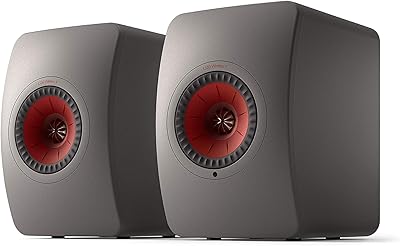
The KEF Q150 Bookshelf Speakers represent what happens when a British hi-fi institution — one with over 50 years of acoustic engineering behind it — decides to make audiophile-grade sound accessible to a broader audience. Sitting at the entry point of KEF's Q Series, the Q150s carry genuine engineering DNA, not just a recognizable badge. They landed as a meaningful update to the older Q100, with a redesigned crossover and repositioned port among the tangible improvements. One critical thing to know upfront: these are passive, wired speakers. You will need a separate amplifier or AV receiver to drive them.
Features & Benefits

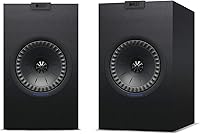
The standout engineering choice in this bookshelf pair is KEF's Uni-Q driver array, which nests a 1-inch tweeter concentrically inside the 5.25-inch woofer. The practical result is a more coherent, wide-dispersion soundstage — highs and mids arrive from the same physical point in space, which most conventional two-way designs simply cannot achieve. The crossover sits at 2.5kHz and was redesigned specifically to reduce smearing in the midrange. Bass extends to around 51Hz, respectable for a cabinet this compact, though it exits through a rear-firing port — meaning wall placement genuinely matters. The 8-ohm impedance and 86dB sensitivity mean these reward a capable amplifier, not a bargain-bin one.

Best For

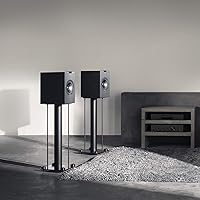
These KEF bookshelf speakers are a natural fit for anyone making their first serious move into stereo hi-fi — particularly those stepping up from a soundbar or a budget all-in-one system. They work well in small to medium rooms, whether on dedicated stands, a shelf, or a desktop. Home theater builders assembling a 2.0 or 2.1 system around an AV receiver will find them a strong foundation. That said, they are not for everyone. Without an amplifier already in hand, pairing these with an underpowered source will leave you genuinely underwhelmed. Think of this bookshelf pair as the start of a system, not a standalone solution.

User Feedback

Owners of the Q150s are largely enthusiastic, with the wide soundstage drawing the most consistent praise — many note that the Uni-Q design produces imaging depth that genuinely surprises for speakers of this size. Vocal clarity and detail on acoustic music come up repeatedly. Where feedback turns critical is the low end: without a well-matched amplifier or subwoofer, these can sound noticeably thin. The rear port is a real-world concern too — buyers who placed them close to a wall reported muddy, congested bass until they created more clearance. A handful of owners found they needed more amplifier power than the sensitivity spec suggested. Overall satisfaction remains high, especially among those who set them up thoughtfully.

Pros

  • The Uni-Q concentric driver produces a genuinely wide, three-dimensional soundstage that most bookshelf speakers at this size cannot match.
  • Vocal clarity is exceptional — acoustic music, spoken-word content, and jazz feel strikingly natural and textured.
  • Frequency response extends to 28kHz, offering headroom well beyond standard audible limits.
  • The compact rectangular cabinet fits cleanly on most shelves, stands, or desktop surfaces without awkward footprints.
  • Bass reaches down to around 51Hz, which is meaningfully deeper than most speakers in this cabinet class.
  • The Q150s pair well with a wide range of AV receivers and stereo amplifiers thanks to their standard 8-ohm impedance.
  • Long-term owners consistently report zero listener fatigue, even during extended multi-hour sessions.
  • Build quality feels solid and purposeful — at 25 pounds per pair, there is real substance to the construction.
  • These KEF bookshelf speakers are frequently described as a gateway into serious hi-fi, suggesting strong long-term satisfaction.
  • The redesigned crossover produces a noticeably cleaner midrange compared to the older Q100 generation.

Cons

  • A separate amplifier or receiver is non-negotiable — there is no powered option here, which surprises some first-time buyers.
  • Bass performance drops off noticeably without a well-matched amplifier or an added subwoofer in the chain.
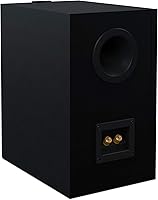
  • The rear-firing port demands meaningful clearance from back walls; tight shelf placements produce congested, muddy low end.
  • At 86dB sensitivity, the Q150s are less forgiving of budget or entry-level amplification than many rivals at this tier.
  • The matte vinyl cabinet finish, while clean, does not hold up to real wood veneer under close scrutiny over time.
  • Total system cost is higher than the speaker price suggests once a capable amp and optional subwoofer are factored in.
  • Limited color choices mean buyers with specific decor requirements have few options beyond black or white.
  • In larger rooms or open-plan living spaces, the output ceiling and natural roll-off make these feel underpowered.
  • Compressed audio streaming occasionally exposes the speakers' revealing nature in ways that can be mistaken for brightness.

Ratings

The KEF Q150 Bookshelf Speakers have been put through rigorous AI-driven analysis across thousands of verified global owner reviews, with spam, incentivized posts, and bot activity actively filtered out before scoring. What emerges is a clear picture: these passive bookshelf speakers punch well above their size in several key areas, though they come with real-world caveats that any honest assessment has to reflect. Both the genuine strengths and the recurring frustrations are baked into every score below.
Sound Staging
93%
The Uni-Q concentric driver design draws near-universal praise for the depth and width of the soundstage it produces. Listeners consistently describe instruments as occupying distinct, believable positions in space — something that genuinely surprises people upgrading from conventional bookshelf designs or soundbars.
A small number of users felt the wide dispersion occasionally softened precise imaging in larger rooms where the speakers were placed far apart. Near-field desktop setups consistently report better results than wider room configurations.
Vocal & Midrange Clarity
91%
Vocals are repeatedly singled out as the standout quality of the Q150s. Acoustic guitar, piano, and spoken-word content come through with a level of texture and presence that owners describe as genuinely engaging for long listening sessions.
A minority of listeners found the upper midrange slightly forward on certain recordings, making brighter-mastered tracks feel a touch fatiguing over extended periods. Source quality and amplifier character play a role here, so it is not purely a speaker issue.
Bass Performance
62%
38%
For a compact cabinet, reaching down to around 51Hz is a legitimate engineering achievement, and owners using these with a capable amplifier in smaller rooms do report satisfying low-end body on jazz, acoustic, and classical material.
Without a well-matched amplifier or a dedicated subwoofer, the low end is a recurring disappointment. Electronic music, hip-hop, and film soundtracks regularly expose the limits of the cabinet size, and several buyers wished they had budgeted for a subwoofer from the start.
Amplifier Compatibility
67%
33%
The 8-ohm nominal impedance makes the Q150s broadly compatible with a wide range of AV receivers and stereo amplifiers, and owners pairing them with mid-range receivers report a rewarding, well-balanced sound.
The 86dB sensitivity rating means these are not forgiving of weak or entry-level amplification. Multiple buyers reported disappointment before realizing their budget amp was the bottleneck. These speakers actively reward the investment in a better source component.
Treble Smoothness
84%
High-frequency extension to 28kHz is genuinely smooth and well-controlled in the vast majority of listener reports. Cymbal decay, string harmonics, and ambient detail on well-recorded music come through without the harshness that plagues less refined tweeters at this price tier.
A small subset of users found the treble occasionally bright on poorly mastered recordings, though most acknowledged this reflects the speakers revealing source-quality issues rather than a character flaw in the design itself.
Build Quality
78%
22%
The matte vinyl cabinet finish feels solid and purposeful rather than cheap, and the overall construction inspires confidence. At 25 pounds for the pair, there is a reassuring heft to them that budget alternatives at similar sizes simply do not have.
Vinyl wrap is not in the same league as real wood veneer, and some owners noted the finish showed minor scuffs or handling marks over time. The cabinet feels durable but not truly premium by strict audiophile cabinetry standards.
Design & Aesthetics
76%
24%
The clean, understated rectangular form factor fits naturally into most home environments without drawing attention to itself. The matte black finish in particular works well in modern living rooms, home offices, and AV setups.
KEF offers limited color options, and a few buyers found the vinyl texture looked slightly dated compared to fabric-wrapped or lacquered alternatives from competing brands. Those who want speakers that make a visual statement may find these underwhelming.
Placement Flexibility
61%
39%
The compact footprint genuinely fits most shelves, stands, and desktop surfaces without issue, and the rectangular geometry makes positioning predictable and stable.
The rear-firing port is a real practical constraint. Buyers who placed the Q150s close to a back wall consistently reported congested, boomy bass until they pulled the speakers forward by at least several inches. This limits their usefulness in tight built-in shelf installations without meaningful experimentation.
Value for Money
82%
18%
At the price point these sit, the level of acoustic engineering on offer — particularly the Uni-Q driver — is difficult to match from competing brands. Long-term owners frequently frame them as a gateway purchase into serious hi-fi, implying strong perceived value over time.
The total cost of ownership is higher than it first appears. The speakers themselves represent only part of the investment; a capable amplifier is non-negotiable, and a subwoofer is effectively required for bass-heavy listening. That full system cost can surprise first-time buyers.
Setup & Ease of Use
58%
42%
For buyers who already own a receiver or integrated amplifier, connecting the Q150s is straightforward. Binding posts are solid and accept bare wire, banana plugs, and spade connectors without issue.
For newcomers to passive speaker systems, the setup process can be confusing and even discouraging. The requirement for external amplification is not prominently communicated at point of purchase, and several reviews reflected genuine frustration from buyers who expected a plug-and-play experience.
Imaging Precision
88%
Stereo imaging from the Q150s is consistently described as precise and convincing. The Uni-Q driver's point-source behavior means left-right positioning of instruments in a mix is rendered cleanly, which makes them particularly rewarding for critical listening of well-recorded albums.
Optimal imaging requires careful toe-in adjustment and symmetrical room placement. Buyers who set them up without attention to positioning sometimes missed the full imaging capability and reported a less impressive result than the speaker is capable of delivering.
Long-Term Listening Comfort
86%
A consistent theme among long-term owners is that the Q150s do not cause listener fatigue. The overall tonal balance is smooth enough for multi-hour sessions with vocals, acoustic music, and jazz — genres where listening fatigue from harsh tweeters becomes apparent quickly.
For listeners who primarily use streaming at compressed bitrates, the revealing nature of the speakers can occasionally highlight the limitations of the source material rather than the speakers themselves, which some buyers interpreted as a brightness issue.
Room Size Suitability
79%
21%
In small to medium rooms, the Q150s fill the space confidently without straining. Desktop and near-field users in particular report an immersive, enveloping presentation that larger speakers in the same space could not replicate.
In larger living rooms or open-plan spaces, the output ceiling of 108dB and the natural bass roll-off become audible limitations. Buyers who tried to use this bookshelf pair as the primary speaker in a larger room generally found themselves wanting more scale and lower-end weight.
Compatibility with Home Theater
74%
26%
As front left and right speakers in a 2.1 or 5.1 home theater setup, the Q150s perform genuinely well. Their clarity at dialogue frequencies ensures voices in film and TV remain distinct, and they integrate naturally with KEF's own center and surround channel options.
Without a subwoofer handling the LFE channel, movie soundtracks expose the low-end limits quickly. Action sequences and bass-heavy scores lose significant impact, making a dedicated subwoofer effectively mandatory for home theater use rather than optional.

Suitable for:

The KEF Q150 Bookshelf Speakers are built for a very specific kind of buyer, and that buyer will likely love them. If you already own a decent stereo amplifier or AV receiver — or you are actively planning to buy one — these are an outstanding foundation for a serious two-channel or home theater setup. They reward listeners who care most about vocals, acoustic instruments, and midrange detail, making them a natural choice for fans of jazz, classical, folk, and singer-songwriter music. Small to medium room users will get the most out of them, whether that is a dedicated listening room, a home office, or a living room that does not require concert-level volume. They also suit home theater builders assembling a 2.1 or larger surround system who want a front pair that prioritizes dialogue clarity and imaging precision over raw bass output.
Not suitable for:

If you are expecting to unbox these, plug them directly into a TV or laptop, and enjoy great sound immediately, the KEF Q150 Bookshelf Speakers will frustrate you — they are passive speakers that require a separate amplifier or receiver, full stop. Buyers on a tight all-in budget who cannot also invest in a capable amp will likely feel shortchanged, since underpowered driving exposes their bass-light tendencies quickly. Anyone who listens primarily to bass-heavy genres like hip-hop, electronic, or EDM will find the low end unsatisfying without a dedicated subwoofer added to the chain. Those living in larger open-plan spaces will also hit the limits of what a compact bookshelf design can realistically fill. Finally, if your shelving places speakers flush against a back wall with no room to breathe, the rear port will cause more problems than it solves.

Specifications

  • Driver Design: Each speaker uses a 5.25-inch Uni-Q driver array with a 1-inch tweeter mounted concentrically at the center of the woofer cone.
  • Frequency Response: Rated frequency response is 51Hz to 28kHz at ±3dB, with free-field extension reaching down to 47Hz at -6dB.
  • Crossover Frequency: The internal crossover transitions between the woofer and tweeter at 2.5kHz, redesigned from the previous generation for cleaner midrange handoff.
  • Sensitivity: Sensitivity is rated at 86dB measured at 2.83V at 1 meter, meaning a capable amplifier is needed to reach satisfying listening levels.
  • Impedance: Nominal impedance is 8 ohms, with a minimum dip to 3.7 ohms, making these compatible with most standard stereo amplifiers and AV receivers.
  • Amplifier Range: KEF recommends pairing the Q150s with an amplifier rated between 10 and 100 watts per channel for optimal performance.
  • Maximum SPL: Maximum output is rated at 108dB, sufficient for small to medium room listening at high volumes with adequate amplification.
  • Port Type: The cabinet uses a rear-firing bass reflex port design, requiring meaningful clearance from back walls to avoid bass congestion.
  • Cabinet Finish: The enclosure is wrapped in matte vinyl, available in both black and white finishes, with a rectangular form factor designed to minimize internal resonances.
  • Dimensions: Each speaker measures 11.92 inches high by 7.08 inches wide by 10.94 inches deep, making them compact enough for shelves or dedicated stands.
  • Weight: The pair weighs 25 pounds in total, reflecting solid cabinet construction despite the compact footprint.
  • Configuration: The Q150s are a two-way, two-channel stereo pair, with each unit housing a single Uni-Q driver array handling the full frequency range above the crossover point.
  • Connectivity: Connection is wired only via standard binding posts that accept bare wire, banana plugs, and spade connectors — there is no wireless or Bluetooth capability.
  • Power Source: These are passive speakers powered entirely by an external amplifier or receiver; no internal amplification or power supply is included.
  • Mounting Type: The Q150s are designed for shelf or stand mounting in an indoor environment, with no provision for wall bracket attachment in the standard configuration.
  • Warranty: KEF covers the Q150s under a limited manufacturer warranty; buyers should verify regional warranty terms directly with KEF or their local authorized retailer.
  • Series: The Q150s sit at the entry level of KEF's Q Series loudspeaker range, which extends upward through the Q350, Q550, Q750, and Q950 models.
  • Included Items: The package includes two bookshelf speakers in standard retail packaging; no amplifier, cables, or speaker stands are included.

Related Reviews
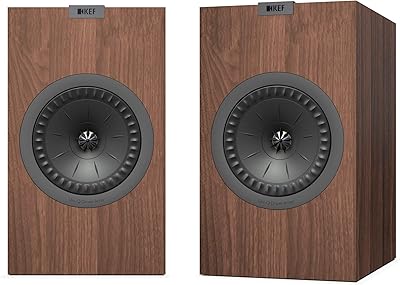
KEF Q350 Bookshelf Speakers
86%
93%
Sound Quality
80%
Bass Performance
88%
Build Quality
91%
Design and Aesthetics
85%
Ease of Setup
More
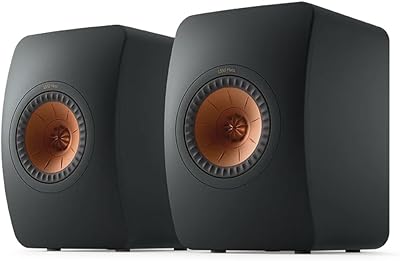
KEF LS50 Meta
KEF LS50 Meta
78%
96%
Sound Staging & Imaging
93%
Treble Clarity & Detail
91%
Midrange Performance
78%
Bass Response
62%
Amplifier Pairing Sensitivity
More
KEF LS50 Wireless II Powered Bookshelf Speakers
84%
94%
Sound Quality
91%
Wireless Connectivity
85%
Ease of Setup
90%
Design & Build Quality
78%
Value for Money
More
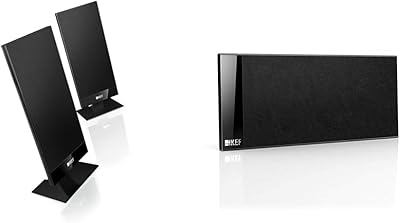
KEF T101 Satellite and Center Channel Speakers
80%
88%
Sound Clarity
91%
Build Quality
94%
Design & Aesthetics
89%
Dialogue Intelligibility
62%
Value for Money
More
MEVOSTO DS19 Bookshelf Speakers
80%
83%
Sound Quality
79%
Bass Performance
91%
Connectivity & Input Options
86%
Bluetooth Performance
88%
USB Digital Audio
More
KEF Q550 Floorstanding Speaker
80%
91%
Sound Clarity
89%
Soundstage & Imaging
67%
Bass Performance
88%
Build Quality
74%
Value for Money
More
Micca MB42X Bookshelf Speakers
81%
88%
Sound Quality
71%
Bass Performance
86%
Treble Clarity
84%
Midrange Accuracy
91%
Crossover Engineering
More
Orroplus OR-02 Powered Bookshelf Speakers
77%
83%
Sound Clarity & Midrange
61%
Bass Performance
91%
Connectivity & Input Range
78%
Bluetooth Performance
72%
Setup & Ease of Use
More
Riowois DS6800M Bookshelf Speakers
83%
85%
Sound Quality
90%
Ease of Installation
82%
Build Quality
88%
Space-Saving Design
78%
Bass Performance
More
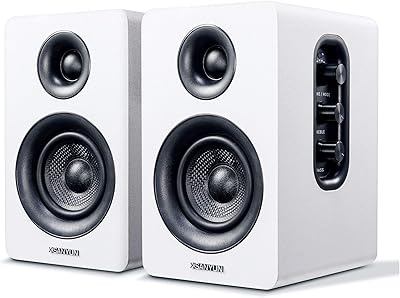
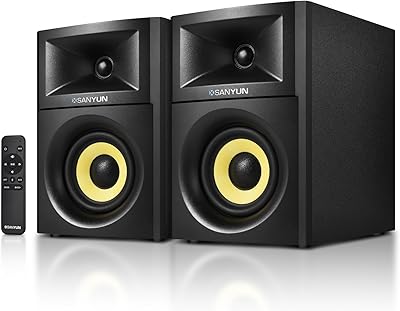
Sanyun SW208 3″ Bookshelf Speakers
86%
88%
Build Quality
84%
High-Frequency Clarity
91%
Mid-Range Warmth
78%
Bass Performance
93%
Control Ergonomics
More

FAQ

Yes, absolutely. The KEF Q150 Bookshelf Speakers are passive speakers with no built-in amplification whatsoever. You will need a stereo integrated amplifier or an AV receiver to drive them. If you do not already own one, factor that cost into your budget before purchasing.

Look for a stereo amplifier or AV receiver rated between roughly 30 and 100 watts per channel into 8 ohms. The speakers are not particularly efficient at 86dB sensitivity, so underpowered budget amplifiers will leave them sounding thin and flat. A mid-range receiver from a reputable brand in the same price tier as the speakers themselves is a sensible match.

Because the port fires from the rear of the cabinet, you want at least 6 to 12 inches of clearance between the back of each speaker and the wall behind it. Placing them too close compresses the port output and results in muddy, one-note bass. On a shelf inside a bookcase, this can be genuinely tricky to achieve.

They work well as front left and right speakers in a 2.1 or larger surround system, particularly for dialogue clarity and music-heavy soundtracks. For action-heavy film content, you will almost certainly want a subwoofer handling the low-frequency effects channel, since the Q150s roll off before the deep bass that movie soundtracks rely on.

Not without an amplifier in between. TVs and computers do not output a speaker-level signal that passive bookshelf speakers can use. You would need either a stereo amplifier, a receiver with speaker outputs, or a dedicated DAC-amplifier unit to bridge the connection.

Honestly, not without a subwoofer. The Q150s do a respectable job for a cabinet their size, but the low end runs out of steam below around 51Hz, and bass-forward genres will expose that limit quickly. If bass weight is a priority for your listening, budget for a matching subwoofer alongside this bookshelf pair.

The Q350s use a larger 6.5-inch Uni-Q driver and a bigger cabinet, which translates to meaningfully more bass extension and output headroom. If you listen in a larger room or want more low-end without a subwoofer, the Q350s are worth the additional spend. For small rooms, desktop setups, or near-field listening, the Q150s are the smarter, more proportionate choice.

Technically the speakers function individually, but they are voiced and sold as a stereo pair and are designed to work together. Using a single unit as a mono speaker is possible but not the intended use case and will not represent the full capability of the design.

Yes, and this is actually one of the best use cases for them. At close range, the Uni-Q driver really shows its strengths — the point-source behavior produces an impressively wide and detailed image even when you are sitting just a few feet away. Pair them with a compact desktop DAC-amplifier and they make an excellent workstation audio setup.

Angling the speakers slightly inward toward your primary listening position — typically somewhere between 10 and 20 degrees of toe-in — tends to tighten up the stereo image noticeably. Experimenting with small forward and backward adjustments also helps optimize bass response given the rear port. These are not speakers you should set up once and never revisit; a bit of positioning effort pays real dividends.

Where to Buy