Overview

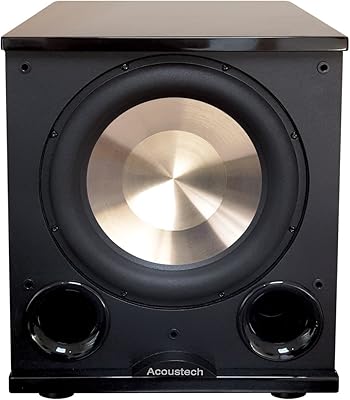
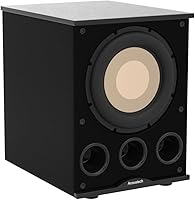
The BIC Acoustech PL-300 12-inch Powered Subwoofer sits squarely in the mid-range category — priced for home theater enthusiasts who want genuine low-end performance without stepping into audiophile territory. BIC Acoustech, an American brand with roots going back decades, has built a reputation for delivering solid acoustic value rather than chasing spec-sheet bragging rights. This 12-inch powered sub is a wired, corded unit — no Wi-Fi, no Bluetooth, no app. That is not an oversight; it is a design philosophy. Released in late 2021, it entered a competitive market but carved out a niche for buyers who want dependable bass over smart-home integration.
Features & Benefits

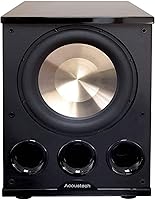
The PL-300 gives you two distinct operating modes: Bass Boost, which digs down to 15Hz for deep, physical low-end, and Max Output, which trades some depth for higher volume levels. That kind of flexibility is genuinely useful. The tri-tuned port design — three ports working in tandem — helps reduce port chuffing at high volumes and extends usable bass range compared to single-port cabinets. On power: the 1400W figure is peak, meaning brief transient headroom. The continuous RMS rating of 350W is what actually runs day-to-day. The internally braced MDF cabinet keeps vibration in check, which keeps bass tight rather than muddy. RCA inputs and speaker wire outputs mean it will work with virtually any AV receiver you already own.

Best For

This 12-inch powered sub is a strong fit for small-to-medium living rooms where you want real bass presence without overwhelming the space. It is particularly well-suited for 5.1 home theater builds — pair it with an AV receiver and a set of satellite speakers, and the setup is genuinely capable. Gamers benefit as well: explosions, engine roars, and rumbling horror soundscapes all land with physical weight. If you are upgrading from a soundbar or a basic two-speaker stereo, this is a meaningful step up. It also has no wireless dependency whatsoever, which makes it ideal for anyone who simply wants to plug in and not think about firmware updates or pairing issues.

User Feedback

Buyers who pick up this BIC Acoustech subwoofer tend to be pleasantly surprised by how much low-end it pushes relative to its price tier — bass output earns consistent praise, particularly from those pairing it with mid-range AV receivers. Setup is straightforward enough that most people have it running within an hour. The criticism that surfaces most often involves Bass Boost mode in acoustically untreated rooms: in hard-surfaced spaces, the low end can turn thick and loose rather than defined. The port plug can be fiddly to seat correctly, which a handful of buyers flag. At 48 pounds, repositioning is a chore. Long-term reliability reports, however, skew positive.

Pros

  • Impressive bass depth for the price tier — reaches down to 15Hz in Bass Boost mode.
  • Two distinct sound modes let you tune for depth or raw volume depending on the content.
  • Tri-tuned port design reduces port noise and keeps low-end response cleaner at higher volumes.
  • Works with virtually any AV receiver via standard RCA inputs or speaker wire — no special equipment needed.
  • Internally braced MDF cabinet keeps vibrations in check, which translates to tighter, more controlled bass.
  • Straightforward setup that most buyers complete in under an hour without needing a manual.
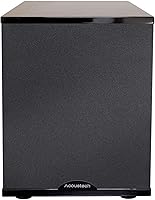
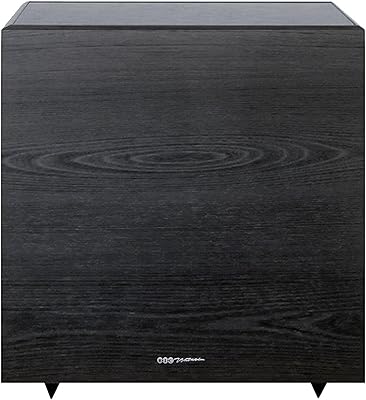
  • Black lacquer finish looks polished and holds up well in a living room environment.
  • The PL-300 delivers noticeably physical bass impact for gaming and action-movie soundtracks.
  • Reliable long-term performance reported by buyers who have owned it for a year or more.
  • No wireless dependency means no connectivity failures, dropouts, or software updates to manage.

Cons

  • Bass Boost mode can sound loose and boomy in acoustically untreated rooms with hard surfaces.
  • At 48 pounds, repositioning this 12-inch powered sub is a two-person job.
  • The port plug can be fiddly to seat correctly and may require trial-and-error to get right.
  • No auto-EQ or room correction means buyers have to dial in settings manually by ear.
  • Peak power rating of 1400W is misleading — continuous RMS output is 350W, which is what actually matters day to day.
  • No wireless connectivity at all, which rules it out for modern multi-room audio setups.
  • May not fill larger rooms above 300 to 400 square feet adequately at moderate volume levels.
  • Limited warranty coverage may concern buyers looking for long-term manufacturer support.
  • No built-in crossover display or digital controls — adjustments rely on basic analog dials.
  • Heavier and bulkier than similarly priced sealed-cabinet alternatives, limiting placement flexibility.

Ratings

Our AI rating engine analyzed verified global buyer reviews for the BIC Acoustech PL-300 12-inch Powered Subwoofer, actively filtering out incentivized, bot-generated, and low-quality submissions to surface genuine user sentiment. Scores reflect a balanced synthesis of real-world strengths and recurring pain points — nothing is glossed over. Where buyers consistently praised performance and where frustrations emerged, both are transparently represented below.

Bass Output & Depth
88%
For its price tier, the PL-300 delivers low-frequency extension that genuinely surprises buyers coming from soundbars or compact subs. In small-to-medium rooms, the 12-inch driver moves enough air to make action sequences and bass-heavy music feel physical and present, not just audible.
In larger rooms or open-plan spaces, the output can start to feel strained when pushed to higher volumes. The very lowest frequencies — below 20Hz — are present but subtle rather than dominant, which may disappoint buyers expecting concert-level sub-bass.
Bass Mode Flexibility
81%
19%
Having two distinct modes — Bass Boost for depth and Max Output for volume — gives users a practical way to adapt the sub to different content types without any additional equipment. Buyers switching between movies and music report this as a genuinely useful feature rather than a marketing checkbox.
The transition between modes requires a physical switch on the unit, which can be awkward if the sub is tucked into a cabinet or corner. Some buyers felt the two modes were not different enough in acoustically treated rooms to justify the switching ritual.
Value for Money
84%
Buyers consistently describe the PL-300 as punching above its price class, particularly when comparing it to similarly priced subs from less established brands. The combination of a 12-inch driver, tri-tuned ports, and a braced MDF cabinet at this price point is difficult to match on paper.
A handful of buyers felt the lack of auto-EQ or any room correction technology leaves performance on the table — features that competitors at a slightly higher price point include. Without those tools, getting the most from the sub requires manual tuning by ear.
Setup & Installation
86%
The wired-only connectivity — RCA inputs and speaker wire — is something most buyers already know how to handle, and the absence of app pairing or Bluetooth setup removes a common source of frustration entirely. Most users report being up and running within 45 minutes to an hour.
The port plug requires some patience to seat correctly, and the manual does not do a great job of explaining when and why to use it. A few buyers reported spending extra time troubleshooting bass response before realizing the plug position was the variable they needed to adjust.
Build Quality
83%
The internally braced MDF cabinet feels solid and substantial — there is no flex or rattle when you press on the panels, even at higher output levels. The black lacquer finish is clean and holds up well over time, with buyers reporting no peeling or surface degradation after a year or more of use.
The grille and some of the plastic trim pieces feel noticeably less premium than the cabinet itself, which creates a slight inconsistency in perceived quality. At 48 pounds, the sheer weight also suggests some over-engineering that adds to shipping risk if the box is handled roughly.
Tri-Tuned Port Performance
77%
23%
In well-treated rooms or carpeted spaces, the tri-port design does a credible job of extending low-end response while keeping port noise in check at moderate-to-high volumes. Buyers who took time to experiment with port plug configurations reported noticeably better-defined bass as a result.
In rooms with reflective surfaces or significant bass buildup, the ported design can work against the user — bass becomes thick and difficult to control without acoustic treatment. The port plug helps, but it is a blunt tool compared to the parametric EQ controls found on competing units.
Compatibility with AV Systems
91%
RCA line-level inputs and speaker-level wire connections mean this sub will physically connect to virtually any AV receiver, amplifier, or home theater system built in the last two decades. Buyers frequently highlight this as one of the least stressful compatibility experiences they have had with a new audio component.
There is no LFE input labeling distinction for buyers using older or entry-level receivers, which occasionally causes confusion during initial setup for less experienced users. The absence of auto-level or auto-on sensing also means some users forget to manually power the sub on and off.
Room-Filling Capacity
72%
28%
In dedicated small rooms — a bedroom theater setup, a 200 to 300 square foot living room — the PL-300 performs confidently and fills the space without strain. Buyers in those contexts describe the bass as convincing and proportionate, not overwhelming.
Move into a larger or open-plan space and the sub begins to show its limits. Buyers in rooms above roughly 400 square feet consistently report that bass presence thins out at realistic listening levels, and cranking the volume to compensate introduces some muddiness.
Bass Texture & Clarity
69%
31%
For deep bass effects in movies and games — rumbles, impacts, engine sounds — the PL-300 delivers with enough conviction to feel satisfying in context. Buyers who primarily use it for cinematic content rather than critical music listening tend to rate this aspect highly.
On acoustically demanding music — upright bass, orchestral low end, or any content where bass pitch accuracy matters — the sub can sound slightly underdifferentiated and loose. This is a common limitation of ported subs at this price, but buyers with musical listening habits should be aware of it.
Physical Ergonomics
58%
42%
The cabinet dimensions are reasonably proportionate for a 12-inch driver, and the floor-standing design means it integrates into most living room layouts without looking out of place. Its footprint is not dramatically larger than competing units at this driver size.
At 48 pounds, repositioning this sub is genuinely inconvenient and typically requires two people. Buyers who wanted to experiment with placement — which is one of the most effective ways to tune a subwoofer — found the weight a real barrier to doing so.
Long-Term Reliability
79%
21%
Buyers who have owned the PL-300 for a year or more generally report stable performance with no driver failures or amplifier issues emerging over time. BIC Acoustech has a reasonable track record for durability in this product category, and that reputation appears to hold here.
The limited warranty provides some coverage but leaves buyers uncertain about what specific scenarios are included. A small number of long-term owners flagged that customer support responsiveness when issues do arise is inconsistent.
Low-Frequency Extension
82%
18%
Reaching down to 15Hz in Bass Boost mode is a legitimately strong specification for a sub at this price, and buyers who run audio measurement tools confirm the extension is real, not just a spec-sheet claim. This makes the PL-300 particularly effective for LFE content in Dolby Atmos and DTS-encoded material.
Below 20Hz, the output becomes more felt than heard, which is inherently room- and placement-dependent. Buyers in upstairs apartments or on raised floors may experience structural interference that limits how much of that low extension actually translates into perceived impact.
Aesthetic Design
74%
26%
The black lacquer finish is clean and inoffensive enough to work in most living room contexts without drawing unwanted attention. Buyers appreciate that it does not look like a budget product — the cabinet proportions and finish give it a degree of visual credibility that matches its performance tier.
The design is functional rather than distinctive — it is unlikely to impress anyone looking for a statement audio piece. The grille cloth and minor plastic elements look a step below the cabinet quality on close inspection, which is a minor but noticeable inconsistency.
Gaming Performance
87%
For console and PC gaming, the PL-300 adds genuine tactile dimension to low-frequency game audio — explosions land with physical weight, engine rumbles feel grounded, and horror soundscapes become meaningfully more immersive. Gamers who pair it with a 5.1 setup consistently rate this use case very highly.
The lack of any wireless or optical connectivity means it must route through an AV receiver or amplifier rather than connecting directly to a console. Buyers who expected a simpler gaming hookup occasionally find this an extra step they were not prepared for.
Control & Adjustment Options
61%
39%
The two onboard controls — mode switch and volume dial — are straightforward and reliable. For buyers who want a set-it-and-forget-it experience, the simplicity is actually a plus rather than a limitation, and nothing can go wrong with an app update or firmware failure.
Beyond the basic mode switch and volume knob, there is no crossover adjustment, no phase control dial, and no parametric EQ of any kind. Buyers who want to fine-tune their sub's integration with their speakers will need to rely entirely on their AV receiver's built-in bass management tools.

Suitable for:

The BIC Acoustech PL-300 12-inch Powered Subwoofer is a strong match for home theater builders working with small-to-medium rooms who want real, physical bass without an audiophile budget. If you are stepping up from a soundbar or a bare-bones two-channel setup and want to build out a proper 5.1 system, this sub fits that transition well — it is compatible with virtually any AV receiver through standard RCA or speaker wire connections, so there is no need to replace existing gear. Gamers will appreciate how it handles low-frequency effects in action and horror titles, where the difference between hearing and feeling a sound matters. Music fans drawn to hip-hop, EDM, or electronic genres also get a lot from this sub, particularly in Bass Boost mode, which digs noticeably deep for a wired unit at this price tier. If you value simplicity — no apps, no pairing rituals, no firmware — this is the kind of set-it-and-forget-it sub that just works.
Not suitable for:

The BIC Acoustech PL-300 12-inch Powered Subwoofer is not the right call for buyers who want wireless integration or smart-home compatibility — there is no Bluetooth, no Wi-Fi, and no app control, full stop. Listeners in large open-plan spaces or dedicated home theater rooms above roughly 400 square feet may find a 12-inch driver undersized for the job, particularly at moderate listening volumes where the sub has to work harder to fill the room. Audiophiles who prioritize tightly controlled, articulate bass over raw output will likely find the low end less refined than pricier sealed-cabinet alternatives. If your listening room has hard floors, bare walls, and no acoustic treatment, Bass Boost mode can turn the bass response thick and unfocused — that is a room problem, but it is worth knowing before you buy. At 48 pounds, anyone who needs to frequently reposition their subwoofer or move between rooms will find this unit genuinely inconvenient.
Specifications

  • Driver Size: The subwoofer uses a 12-inch dynamic driver, providing sufficient cone surface area to move air effectively for deep, physical bass reproduction.
  • Peak Power: The unit is rated at 1400W peak power, which reflects maximum short-duration transient headroom rather than sustained output capacity.
  • RMS Power: Continuous RMS output is 350W, representing the actual sustained power the amplifier delivers under normal listening conditions.
  • Frequency Response: In Bass Boost mode, the PL-300 reaches down to 15Hz, covering the deepest range of audible and sub-audible low-frequency content.
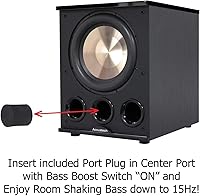
  • Port Design: A tri-tuned port system with three individual ports and an included port plug allows users to fine-tune bass response and reduce unwanted port noise at high volumes.
  • Cabinet Material: The enclosure is constructed from medium-density fiberboard with internal bracing to minimize resonance and keep bass output controlled rather than diffuse.
  • Finish: The exterior is wrapped in a black lacquer finish, giving the cabinet a clean, furniture-friendly appearance suitable for living room placement.
  • Dimensions: The cabinet measures 17.99 x 15 x 17.99 inches, making it a moderately compact floor-standing unit suited to small and medium room placements.
  • Weight: The unit weighs 48 pounds, which should be factored into placement planning as repositioning will generally require two people.
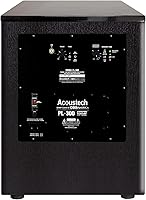
  • Connectivity: Input options include RCA line-level inputs and speaker-level wire connections, ensuring broad compatibility with AV receivers and stereo amplifiers.
  • Wireless: There is no wireless connectivity of any kind — no Bluetooth, no Wi-Fi, and no companion app — making this a strictly wired-only device.
  • Power Source: The subwoofer is powered via a standard corded electric connection and requires a nearby AC outlet for operation.
  • Mounting Type: Supports both floor-standing and tabletop placement configurations, giving some flexibility in how it is positioned within a room.
  • Sound Modes: Two selectable operating modes — Bass Boost and Max Output — let users choose between maximum bass depth and maximum volume output depending on content and preference.
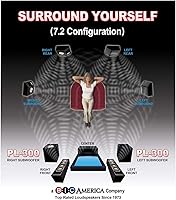
  • Compatible Systems: Designed for integration with 5.1 home theater setups, gaming consoles, and televisions using standard AV receiver configurations.
  • Surround Config: The PL-300 is rated for use in 5.1 surround sound channel configurations as the dedicated low-frequency effects channel.
  • Warranty: The unit is covered by a limited manufacturer warranty; buyers should confirm specific terms and duration directly with BIC Acoustech at the time of purchase.
  • Audio Driver Type: The subwoofer uses a dynamic driver design, which is well-suited for high-excursion bass reproduction at the output levels this unit targets.

Related Reviews

BIC America V-1220 12-Inch Powered Subwoofer
85%
88%
Bass Performance
90%
Ease of Integration
85%
Build Quality
92%
Value for Money
86%
Frequency Response
More
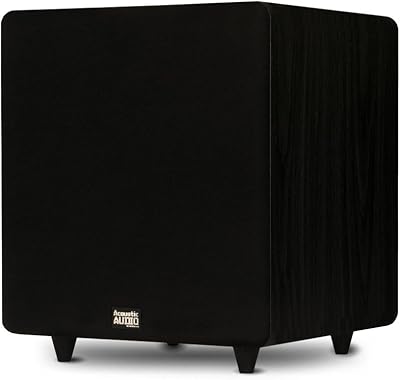
Acoustic Audio PSW500-12 12-Inch Powered Subwoofer
73%
83%
Bass Output for Price
88%
Ease of Setup
86%
Value for Money
67%
Build Quality
71%
Sound Quality
More
BIC America PL-200 II 12-inch Powered Subwoofer
80%
91%
Bass Depth & Extension
87%
Amplifier Performance
88%
Value for Money
74%
Build Quality
83%
Placement Flexibility
More
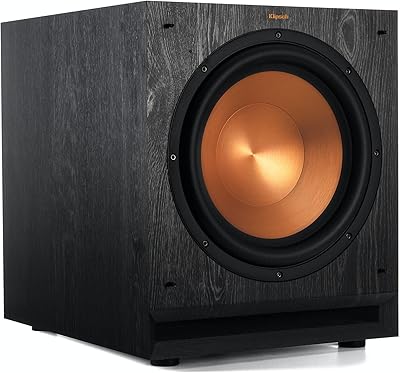
Klipsch SPL-120 12-inch Powered Subwoofer
80%
91%
Bass Performance
88%
Build Quality
89%
Amplifier Headroom
87%
System Integration
83%
Value for Money
More
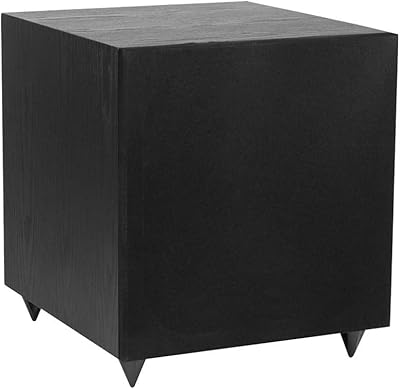
Monoprice 109723 12-inch Powered Subwoofer
73%
83%
Bass Output
88%
Value for Money
67%
Sound Clarity
71%
Build Quality
91%
Ease of Setup
More
BOSS Audio B12ES 12-Inch Powered Car Subwoofer
72%
88%
Ease of Installation
79%
Bass Output & Impact
83%
Value for Money
63%
Build Quality & Materials
81%
Remote Bass Control Usability
More
QPower QBOMB12VL 12-inch Vented Subwoofer Enclosure
78%
88%
Value for Money
82%
Build Quality
76%
Bass Performance
91%
Ease of Installation
84%
Exterior Finish
More
Q Power HD112VL 12-Inch Ported Subwoofer Enclosure
75%
88%
Value for Money
79%
Bass Performance
67%
Build Quality
86%
Fitment & Compatibility
71%
Port Design & Tuning
More
Q Power Shallow Single 12-Inch Sealed MDF Truck Subwoofer Enclosure Box
86%
85%
Bass Performance
90%
Build Quality
88%
Durability
93%
Ease of Installation
91%
Space Efficiency
More
Q Power REC69 Dual 12 Inch Ported Subwoofer Box for Ford F250/350/450 Super Duty 2000-2016
85%
91%
Bass Performance
85%
Fit & Compatibility
88%
Build Quality & Durability
75%
Installation Ease
90%
Space Efficiency
More

FAQ

Almost certainly yes. The BIC Acoustech PL-300 12-inch Powered Subwoofer connects via standard RCA line-level inputs or speaker wire, which are the two most common output options on AV receivers and stereo amplifiers. As long as your receiver has a subwoofer pre-out or speaker terminals, you are covered.
Bass Boost mode tunes the sub for maximum depth, pushing low-frequency response down to 15Hz — you will feel more of the lowest register, which works well for movies and music with deep bass content. Max Output prioritizes sheer volume over depth, which suits situations where you want the sub to hit harder in a larger space rather than dig lower. Neither mode is universally better; it depends on the content and your room.

No, and that is by design. The PL-300 is a fully wired unit — no Bluetooth, no Wi-Fi, no app pairing. If wireless connectivity is important to your setup, this is not the right sub for you. For buyers who want a simple, reliable wired connection with no dropout risk, that trade-off is actually a feature.

No — 1400W is the peak power rating, which refers to the maximum wattage the amplifier can handle in brief bursts during transient moments like a bass hit or explosion. The continuous RMS output, which is what actually runs sustained over time, is 350W. That is still plenty for most home theater applications, but understanding the distinction helps set realistic expectations.

The port plug seals one or more of the three tuned ports, which changes how the cabinet loads air and affects the bass character. Sealing ports generally tightens the bass and reduces boominess, while leaving them open allows for deeper extension. If your room has a lot of bass buildup or the low end sounds too loose, experimenting with the port plug is a good first troubleshooting step. Some buyers find it a bit fiddly to seat correctly, so expect a little trial and error.

The PL-300 performs best in rooms up to roughly 300 to 400 square feet. In smaller spaces — a bedroom converted to a theater room, a standard living room — it delivers noticeable bass impact without breaking a sweat. In large, open-plan spaces or rooms above that range, a 12-inch driver at this power level may start to feel strained at moderate-to-high volume settings.

It can. Hard, reflective surfaces tend to exaggerate bass buildup at certain frequencies, and in those conditions Bass Boost mode in particular can start to sound thick and uncontrolled rather than deep and defined. Using the port plug to tighten up the response, pulling the sub away from corners, and placing it on a rug if possible are all practical steps. If your listening room is fairly bare, be aware going in that some acoustic treatment will help you get the most out of the sub.

It works well for music, especially bass-heavy genres like hip-hop, EDM, and electronic. The 12-inch driver moves enough air to give those genres a physical quality that smaller subs or soundbars cannot replicate. For acoustic or jazz listening where bass accuracy and nuance matter more than raw output, a sealed-cabinet sub might serve you better — but for high-energy music genres, this sub is a capable choice.

Setup is fairly approachable. You connect the sub to your receiver using the included RCA cable or speaker wire, set the crossover and volume controls on the back of the unit, and adjust from there by ear. Most buyers report having it running and tuned within an hour. The lack of any app or digital interface actually keeps things simple — there is nothing to configure beyond the physical dials.

At 48 pounds, moving this sub solo is doable but awkward, especially if you need to lift it or navigate tight spaces. For initial placement or a permanent installation, one person can manage it. If you anticipate needing to reposition it regularly — say, between a living room and a dedicated room — plan to have a second set of hands available.