Overview

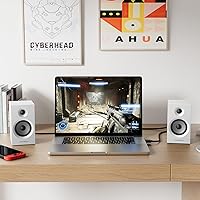
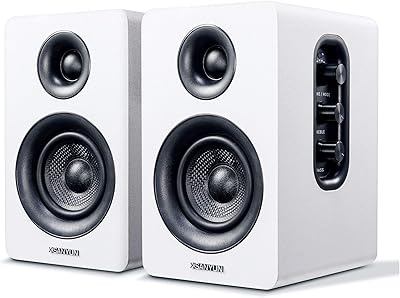
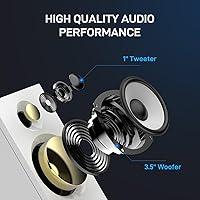
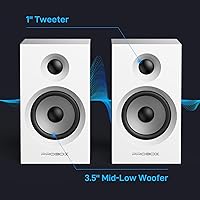
The Probox BT16 Bookshelf Speakers are a compact, wood-cabinet pair built for desks where space is tight but audio quality still matters. Each speaker combines a 3.5″ woofer with a 1″ silk-dome tweeter, a driver pairing that handles midrange clarity reasonably well for near-field listening. At 30W per channel, there is enough headroom to fill a small room without strain. Three input options — Bluetooth 5.3, USB, and 3.5mm aux — cover most connection scenarios right out of the box. The white finish is genuinely clean-looking, fitting naturally on a modern home-office or gaming desk without feeling out of place.
Features & Benefits

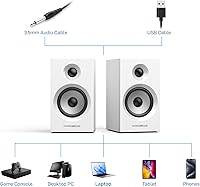
The most practical inclusion here is the built-in 24-bit DAC on the USB input, which routes audio directly from your computer without touching the often-compromised onboard sound chip — the difference in background noise alone is noticeable on quieter tracks. Bluetooth 5.3 holds a reliable connection across a typical room, and switching devices is straightforward. Physical treble and bass knobs on the side panel let you tune the sound instantly without opening any app. The '3D surround' mode is worth mentioning clearly: it is a software processing effect, not a hardware configuration, so expectations should be set accordingly. The package includes RCA, USB, and a power adapter — nothing missing on day one.

Best For

This desktop speaker set makes the most sense for home-office and desk setups where near-field placement does most of the heavy lifting. The RCA input makes it a solid companion for a budget turntable, while Bluetooth handles phone audio without fuss. Console gamers who want a small footprint and multiple input options will find the connectivity flexible enough for switching between a PC and a gaming console. Where it struggles is in larger rooms or bass-heavy listening — the 3.5″ driver has physical limits. If your priority is clean aesthetics and versatile connectivity at a mid-budget price, these bookshelf speakers punch reasonably well within that brief.

User Feedback

Across roughly 130 ratings, the BT16 pair sits at 4.1 stars — a respectable but not exceptional score that reflects a split experience. Buyers consistently praise clarity at moderate volumes and how easy the initial setup is, particularly via USB. Bluetooth stability draws positive mentions too, with few reports of drop-outs during normal use. The recurring criticism is bass depth: the small woofer simply cannot reproduce low frequencies with much weight, and buyers who expected room-filling bass were disappointed. The build quality is generally seen as acceptable rather than impressive for the price. A few users noted that switching inputs requires a manual button press, which is minor but worth knowing.

Pros

  • USB input bypasses noisy onboard PC audio, producing a noticeably cleaner sound floor
  • Bluetooth 5.3 holds a stable connection across a full room with very few reported drop-outs
  • Physical treble and bass knobs allow instant tone adjustments without opening any software
  • Three distinct input types plus RCA cover an unusually wide range of source devices
  • Wood-cabinet construction feels more solid than plastic alternatives at a comparable price
  • Automatic standby mode keeps idle noise completely silent — no hum, no hiss during quiet work sessions
  • Setup takes under ten minutes with all necessary cables included in the box
  • The compact footprint fits comfortably on a cluttered desk without dominating the space
  • Midrange clarity at moderate volumes is consistently praised for vocals and spoken-word content
  • Clean white finish integrates naturally into modern home-office and minimal gaming desk setups

Cons

  • Bass depth is genuinely limited — low-frequency content sounds thin without a separate subwoofer
  • The 3D surround mode is a software DSP effect, not real spatial audio, and the impact is subtle at best
  • Input switching requires a manual button press with no automatic source detection when a new device connects
  • Volume knob feel and grille materials read as budget-tier up close despite the wood cabinet
  • No multi-point Bluetooth support means re-pairing manually when switching between two devices
  • Auto-standby activates faster than some users prefer, cutting audio during brief playback pauses
  • Sound starts to lose composure when pushed toward the upper volume range
  • Fingerprints show clearly on the white finish, requiring regular wiping on a busy desk
  • No LED or display indicates which input is currently active, causing confusion for new users
  • Noticeable residual hiss at high volume with no signal playing, particularly at close desk distances

Ratings

The Probox BT16 Bookshelf Speakers have been scored by our AI system after parsing verified buyer reviews from multiple global markets, with spam, incentivized posts, and bot activity actively filtered out before any score was calculated. The results reflect a genuinely mixed but mostly positive picture — real strengths in connectivity and desk-friendly design, alongside honest limitations in low-frequency performance and build premium. Both sides are represented transparently below.
Sound Clarity
78%
22%
At normal desk-listening volumes, the midrange and treble come through with surprising cleanliness — vocals on podcasts or acoustic tracks sit well-defined without harshness. The silk-dome tweeter handles high frequencies smoothly, which several users specifically called out when comparing to cheaper plastic-driver alternatives.
Push the volume toward the upper range and some listeners notice the sound starts to thin out and lose composure. It is not a speaker that rewards being driven hard, and that ceiling becomes apparent fairly quickly with dense or dynamic music.
Bass Performance
54%
46%
For spoken-word content, lo-fi playlists, and casual background music, the low end is adequate — there is enough body to avoid that hollow, tinny quality that plagues truly tiny speakers. Near-field placement on a desk does help the perceived bass presence somewhat.
The 3.5″ woofer simply cannot move enough air to produce satisfying bass weight, and buyers expecting anything close to a subwoofer-assisted setup will be disappointed. Electronic music, hip-hop, or film audio all reveal the driver's physical limits in an obvious way.
Bluetooth Stability
84%
Bluetooth 5.3 delivers a noticeably reliable connection — users report clean, uninterrupted playback from phones and laptops across a standard-size room. The 20-meter range holds up well in open-plan home offices, which was a consistent positive in buyer feedback.
A small number of users noted occasional initial pairing delays when switching between two devices, though outright drop-outs during playback are rare. The lack of multi-point Bluetooth means the speaker connects to one device at a time, requiring manual re-pairing when switching sources.
USB DAC Quality
82%
18%
Plugging in via USB and letting the onboard 24-bit DAC handle conversion is the best way to use this desktop speaker set with a PC — the background noise floor drops noticeably compared to using a standard 3.5mm connection from a budget motherboard. Buyers who made this switch reported a clear, cleaner listening experience immediately.
The DAC improvement is most obvious if your computer's onboard audio is genuinely poor; users with a mid-range or better soundcard may not notice a dramatic difference. There is also no volume indicator on the USB input, so level management has to happen entirely through the computer.
Build Quality
63%
37%
The wood-based cabinet construction gives these bookshelf speakers a more solid feel than pure-plastic alternatives at a similar price, and the white finish is applied evenly with no obvious assembly flaws out of the box. Several buyers noted the cabinet feels reassuringly dense when handled.
The fabric grille and iron accents feel noticeably less premium up close, and a handful of users flagged that the finish shows fingerprints easily. For buyers comparing this to dedicated hi-fi brands, the construction quality reads as mid-budget rather than genuinely premium.
Design & Aesthetics
81%
19%
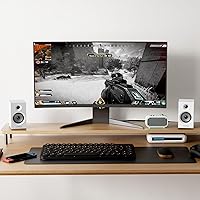
The clean white rectangular cabinet blends naturally into modern desk setups without looking like a piece of gaming gear. Buyers styling a home office or a minimal battlestation specifically called out the color and proportions as a good fit.
The design is purposefully neutral, which means it also lacks personality — buyers wanting a distinctive or bold visual statement will find it unremarkable. The speaker grille texture divides opinions slightly, with some finding it looks inexpensive against the otherwise clean cabinet.
Ease of Setup
89%
Unboxing to audio takes under ten minutes for almost every connectivity method — the included RCA, USB, and power cables mean there is nothing extra to buy just to get started. Multiple reviewers specifically praised this as a strong point, particularly for users who are not technically confident.
The input switching requires a physical button press on the unit, which is a minor friction point if your desk setup changes inputs frequently. There is no on-screen or LED feedback indicating which input is active, so new users sometimes press the button one too many times.
Volume & Power Output
74%
26%
At 30W per channel, the BT16 pair produces more than enough volume for a desk environment or a small bedroom — casual listening never requires pushing past the midpoint of the volume knob. The power delivery feels consistent without audible distortion at moderate levels.
These speakers are not built for open rooms or background audio at social gathering volumes. Buyers who tested them in a mid-size living room found the sound spread too thin, confirming that near-field or small-room use is the real sweet spot.
Treble & Bass Controls
77%
23%
Having physical knobs for treble and bass adjustment on the side panel is a genuinely useful feature at this price — it lets users compensate for a bright listening environment or a bass-light music genre without touching a computer. The control range is wide enough to make a real audible difference.
The knobs themselves feel somewhat loose and light in rotation, which some buyers found less reassuring than they expected. There are no detent positions or center markings, so returning to a neutral setting requires a bit of trial and error.
3D Surround Effect
51%
49%
For users who primarily watch YouTube, casual gaming streams, or light movie content, the software-processed surround mode adds a subtle sense of space that makes the stereo image feel slightly wider. It is a small but genuine enhancement for that specific use case.
This is a digital signal processing effect, not a hardware surround configuration — buyers expecting an immersive multi-speaker experience will be underwhelmed. In practice, the effect is subtle enough that many users forget it is active, and some found it introduced a slight muddiness on certain tracks.
Input Versatility
83%
Three distinct input options — Bluetooth, USB, and 3.5mm aux — plus an RCA pair covers an unusually wide range of source devices for a speaker at this size and price. Users pairing these with a turntable, a gaming console, and a laptop simultaneously praised not having to swap cables constantly.
Only one input is active at a time and the switching is manual, which breaks the illusion of flexibility somewhat in daily use. There is no automatic input detection when a new device connects, which is a convenience gap that competing speakers at higher price points tend to address.
Standby & Energy Efficiency
79%
21%
The automatic noise-filtering standby system works reliably — users who leave these bookshelf speakers on their desks all day reported no audible hiss or hum during idle periods. Meeting EU ER2 energy standards means power draw during standby is genuinely negligible.
The auto-standby activation time is not user-adjustable, and a few buyers found it kicked in faster than they preferred during brief pauses in audio playback. Waking the speakers from standby introduces a short delay before audio resumes, which some users found slightly disruptive.
Value for Money
76%
24%
For buyers primarily upgrading from built-in monitor or laptop speakers, the BT16 pair represents a meaningful jump in audio quality without requiring a separate DAC, amplifier, or subwoofer. The included cable bundle and the range of inputs make the out-of-box experience feel complete.
Buyers who have experienced entry-level dedicated hi-fi speakers may find the overall package underwhelming relative to the asking price. In a competitive budget speaker market, alternatives exist that offer stronger bass response or more refined build quality at a comparable cost.
Noise Floor & Idle Hiss
80%
20%
The intelligent filter chip does its job — at typical desk distances, these speakers are essentially silent during standby and produce no audible background hiss at normal listening volumes. This was a notable improvement that several users mentioned after switching from cheaper powered speakers.
At higher volume levels with no audio signal playing, a faint residual hiss becomes detectable at close range. It is not a dealbreaker for most listening scenarios, but users who work in very quiet environments and sit close to their speakers may find it occasionally noticeable.

Suitable for:

The Probox BT16 Bookshelf Speakers are a strong fit for anyone upgrading a home-office or gaming desk from built-in laptop or monitor audio without wanting to invest in a separate DAC and amplifier stack. The USB input with its onboard 24-bit DAC is particularly useful for PC users whose motherboard audio produces audible background noise — plugging in via USB rather than the headphone jack alone makes a noticeable difference in daily use. Casual listeners who switch regularly between a turntable, a phone, and a computer will appreciate having RCA, Bluetooth, and USB all available without any extra hardware. The compact footprint and clean white finish also make these bookshelf speakers a practical choice for smaller rooms or tidy desk builds where aesthetics matter alongside function. Anyone who listens primarily at moderate volumes — podcasts, acoustic music, background playlists — and sits close to their speakers will get the most out of what the drivers can actually deliver.
Not suitable for:

The Probox BT16 Bookshelf Speakers are not the right choice for buyers whose listening habits revolve around bass-heavy genres like electronic music, hip-hop, or cinematic film audio — the 3.5″ woofer has real physical limits that no amount of tone adjustment will overcome without adding a separate subwoofer. Serious audio enthusiasts who have spent time with dedicated hi-fi bookshelf speakers at higher price points will likely find the build finish and overall sound staging underwhelming by comparison. The software-processed 3D surround mode should not be mistaken for genuine multi-channel audio, so anyone expecting an immersive home-theatre experience from a 2.0 setup will be disappointed. These speakers also struggle to fill larger rooms convincingly — open-plan living spaces or medium-size bedrooms at social volumes expose the power and driver limitations quickly. If your primary use case involves loud, dynamic listening sessions or you regularly switch between three or more active input sources and want seamless automatic detection, this desktop speaker set will feel limiting.
Specifications

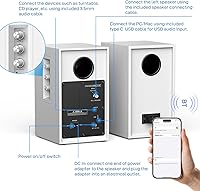
  • Power Output: Each speaker delivers 30W RMS, totaling 60W RMS combined across the stereo pair.
  • Woofer: A 3.5″ dynamic driver handles mid-bass and lower midrange frequencies in each cabinet.
  • Tweeter: Each unit includes a 1″ silk-film dome tweeter with an 18-core voice coil for high-frequency reproduction.
  • Bluetooth Version: Bluetooth 5.3 is used for wireless connectivity, providing stable, low-latency transmission up to 20 meters.
  • DAC: A built-in 24-bit digital-to-analog converter is active when connected via USB, bypassing the host device's onboard audio.
  • Inputs: Available inputs include USB (with DAC), 3.5mm auxiliary, RCA stereo pair, and Bluetooth 5.3 wireless.
  • Frequency Response: The specified upper frequency response reaches 20 kHz; the lower bass extension is not formally published by the manufacturer.
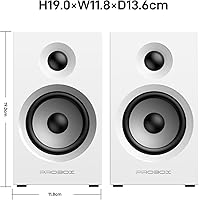
  • Dimensions: Each speaker measures 5.4″ deep, 4.5″ wide, and 7.9″ tall.
  • Weight: The complete pair weighs 5.54 lbs combined as shipped.
  • Cabinet Material: Cabinets are constructed from wood with fabric grille panels and iron accent components.
  • Controls: Side-panel rotary knobs provide independent treble and bass adjustment on the primary speaker unit.
  • Surround Mode: A software-processed dynamic 3D 2.0 surround effect is available as a selectable listening mode.
  • Power Source: The speakers are powered via a corded 15V electric adapter included in the box.
  • Standby System: An intelligent noise-filter chip automatically mutes idle hiss in standby mode and meets EU ER2 energy-efficiency standards.
  • Bluetooth Range: Wireless range is rated at up to 20 meters in open conditions without physical obstructions.
  • Included Accessories: The package includes a power adapter, an RCA stereo cable, and a USB cable.
  • Driver Type: Both the woofer and tweeter use dynamic driver technology with no planar or ribbon components.
  • Color & Style: Available in white with a modern rectangular cabinet profile designed to suit minimal home-office and gaming desk environments.
  • Warranty: A manufacturer warranty is included; buyers should confirm specific duration and terms directly with Probox at point of purchase.
  • Surround Config: This is a stereo 2.0 speaker system with no dedicated center channel, subwoofer output, or rear satellite support.

Related Reviews

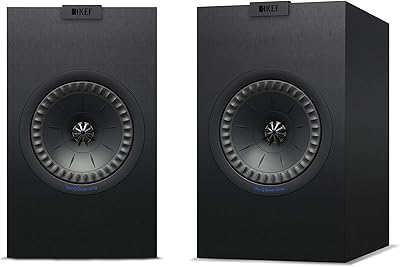
KEF Q350 Bookshelf Speakers
86%
93%
Sound Quality
80%
Bass Performance
88%
Build Quality
91%
Design and Aesthetics
85%
Ease of Setup
More
Orroplus OR-02 Powered Bookshelf Speakers
77%
83%
Sound Clarity & Midrange
61%
Bass Performance
91%
Connectivity & Input Range
78%
Bluetooth Performance
72%
Setup & Ease of Use
More
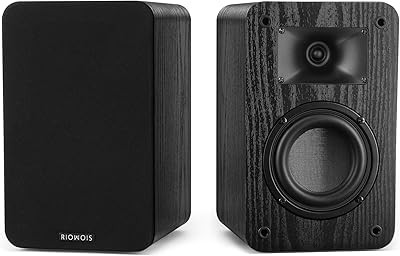
Riowois DS6800M Bookshelf Speakers
83%
85%
Sound Quality
90%
Ease of Installation
82%
Build Quality
88%
Space-Saving Design
78%
Bass Performance
More
KEF Q150 Bookshelf Speakers
87%
88%
Sound Quality
75%
Bass Performance
93%
Build Quality
90%
Design & Aesthetics
85%
Treble Clarity
More
Micca MB42X Bookshelf Speakers
84%
89%
Sound Quality
92%
Value for Money
85%
Ease of Setup
77%
Bass Performance
91%
Design & Aesthetics
More
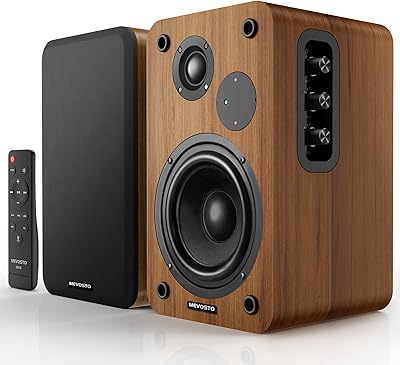
MEVOSTO DS19 Bookshelf Speakers
85%
89%
Sound Quality
91%
Bass Performance
85%
Treble Clarity
88%
Bluetooth Connectivity
90%
Design & Aesthetics
More
Edifier S2000MKIII Bookshelf Speakers
86%
92%
Sound Quality
89%
Bluetooth Performance
88%
Build Quality
85%
Ease of Use
91%
Connectivity Options
More
Sanyun SW205
Sanyun SW205
78%
83%
Sound Quality
61%
Bass Performance
87%
Soundstage & Imaging
89%
Connectivity & Inputs
84%
Bluetooth Performance
More
Fluance XL8SW Bookshelf Speakers
87%
90%
Sound Quality
84%
Bass Response
91%
Clarity of Midrange
87%
Ease of Installation
88%
Design & Build Quality
More
Sanyun SW208 3″ Bookshelf Speakers
86%
88%
Build Quality
84%
High-Frequency Clarity
91%
Mid-Range Warmth
78%
Bass Performance
93%
Control Ergonomics
More

FAQ

No, the Probox BT16 Bookshelf Speakers are fully active — the amplifier is built directly into the main speaker unit. You just connect your source, adjust the volume, and they are ready to go without any additional hardware.
When you connect via USB, the onboard 24-bit DAC takes over the audio conversion job from your computer, which often results in a noticeably lower noise floor — especially if your PC or laptop has mediocre onboard audio. The 3.5mm input works fine but passes audio through whatever DAC your source device uses, which can introduce faint hiss on some machines.

Yes, but only if your turntable has a built-in phono preamp or you use an external preamp between the turntable and the speakers. The RCA input on this desktop speaker set accepts a line-level signal — it does not have a phono stage built in, so a raw cartridge signal will be far too quiet and will sound wrong without a preamp in the chain.

Not in the traditional sense — it is a digital signal processing mode that widens the perceived stereo image rather than a true multi-channel configuration. Think of it as a spatial enhancement effect, similar to what you might find in headphone software. It adds a subtle sense of openness on some content but will not replicate a 5.1 or 7.1 setup.

Switching inputs requires pressing the input selection button on the main speaker unit manually — there is no automatic source detection. Once you press it, the speaker cycles to the next active input. It only takes a second, but it is worth knowing if you swap sources frequently throughout the day.

For casual PC or console gaming at desk range, they perform well enough — positional audio in games with clear directional cues comes through cleanly at moderate volumes. They are not ideal for competitive gaming where very precise low-frequency bass cues matter, but for most gaming scenarios the sound is engaging and fatigue-free over long sessions.

The BT16 pair handles moderate listening volumes confidently, but if you push the volume knob past roughly two-thirds of its range, the sound starts to thin out and lose some composure on complex tracks. For a desk environment or a small bedroom, you will rarely need to go that high anyway — at near-field distances, the speakers are more than loud enough at half volume.

For most users, no — the built-in noise-filter chip does a solid job of keeping things silent between tracks or during standby. A small number of users have noted a faint hiss becomes detectable at very high volume settings with no audio playing, but at typical desk listening distances and normal volume levels, idle noise is not an issue.

The Bluetooth connection supports one paired device at a time, so you cannot stream from two devices simultaneously. To switch from your phone to your laptop, you would need to disconnect one device and reconnect the other — there is no multi-point Bluetooth pairing on this speaker set.

The wood cabinet construction gives a more premium feel than fully plastic alternatives, and the finish looks clean right out of the box. That said, the fabric grille and hardware details feel more functional than refined, and the overall build reads as solidly mid-budget rather than high-end. For the price tier, most buyers find the quality acceptable, but those comparing to dedicated hi-fi brands at higher price points will notice the difference in material feel.