BEAVERLAB Darwin M2B Handheld Digital Microscope



Overview
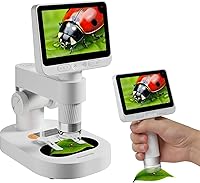
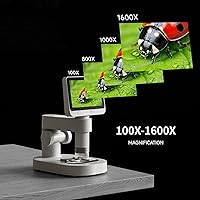
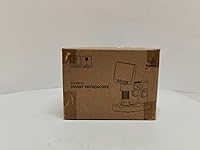
The BEAVERLAB Darwin M2B Handheld Digital Microscope sits in an interesting spot — more capable than plastic toy microscopes aimed at young children, yet approachable enough that you don't need a science background to use it. The detachable tube design is the standout concept: clip it to the stand for desk work, or pull it off and take it outside. It ships with five prepared slides, magnetic specimen clips, and an 8GB memory card, so beginners can start observing immediately. One honest caveat worth stating upfront: the advertised 1600X magnification is a ceiling, not a guarantee — practical, sharp images tend to appear at considerably lower zoom levels.
Features & Benefits
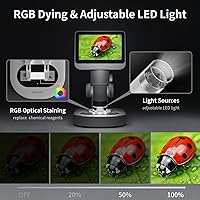
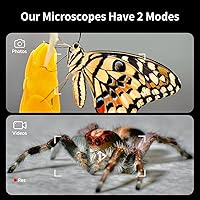
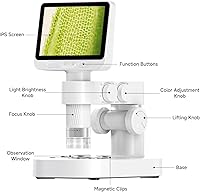
The 4-inch IPS screen is probably the feature you'll appreciate most day-to-day — no fumbling with a phone app or laptop connection, just a bright, color-accurate display built right in. The eight adjustable LEDs handle illumination well, and controlling brightness matters more than it sounds: a coin surface and a thin plant slice need very different light levels to reveal useful detail. The RGB color base is a genuinely practical idea — swapping the light color helps surface contrast the way chemical staining would, minus the mess or safety concerns around children. One-click photo and video capture, plus built-in Wi-Fi sharing, round out a feature set that punches above its price tier.
Best For
This handheld microscope makes the most sense for parents, teachers, or curious adults who want a real science instrument without the complexity of a lab-grade setup. Kids roughly 8 and up can operate it independently — the screen-based interface removes a lot of friction. Coin collectors, stamp enthusiasts, and gemstone hobbyists will appreciate having a standalone screen instead of squinting through an eyepiece or relying on a phone. It also works for light inspection tasks: checking solder joints, fabric weave, or print quality. The included starter accessories make it especially appealing for anyone who wants to unbox and start exploring rather than sourcing supplies separately.
User Feedback
Owners consistently highlight screen clarity and portability as the two things that exceed expectations — the IPS display genuinely impresses people who assumed it would look washed-out. That said, a recurring observation across reviews is that image sharpness drops noticeably at the upper magnification range; buyers needing extreme detail may find the practical ceiling lower than marketed. Battery life during long outdoor sessions draws some complaints, and Wi-Fi sharing occasionally introduces lag depending on the connected device. The RGB lighting tends to surprise people positively — more useful than expected. Build quality earns mixed notes: the aluminum rail feels solid, but some plastic components feel less refined.
Pros
- The 4-inch IPS screen delivers genuinely bright, color-accurate views without needing a phone or laptop tethered.
- Detachable tube design makes the Darwin M2B practical for both desk work and outdoor field observation.
- RGB color base lighting helps surface contrast on specimens quickly and safely — no chemicals, no mess.
- Eight adjustable LEDs handle both reflective and transparent specimens with enough brightness control to matter.
- One-click photo and video capture is fast and reliable for documenting finds or sharing with a classroom.
- Included accessories — prepared slides, memory card, and magnetic clips — mean you can start immediately after unboxing.
- The aluminum alloy focus rail adds real stability and precision compared to all-plastic competitors at similar prices.
- This pocket microscope is easy enough for children aged 8 and up to operate independently within minutes.
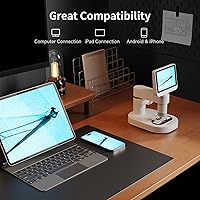
- Broad device compatibility covers Android, iOS, and Windows for users who want occasional tethered use on a larger screen.
Cons
- Practical sharpness degrades noticeably beyond 600X to 700X, making the advertised 1600X maximum largely unusable.
- Battery life of roughly two to three hours is a real constraint for extended outdoor or all-day classroom use.
- The outer ABS plastic housing feels thin and less resilient than the price point suggests — drops are a genuine risk.
- Wi-Fi sharing introduces inconsistent lag depending on the paired device, and the setup process is not always intuitive.
- The companion app experience on Android in particular is inconsistent and feels unpolished compared to the hardware.
- Brightness adjustment steps through fixed levels rather than offering smooth control, which can frustrate fine observation work.
- The 2.0MP sensor produces images that soften quickly when cropped or viewed on a large monitor.
- No battery percentage indicator makes it difficult to anticipate when the device will need recharging mid-session.
- Direct sunlight significantly reduces outdoor screen visibility, which undermines the field-use case the design promotes.
- Button layout requires a short learning curve, and accidental mode switches are common during grip adjustments.
Ratings
The scores below reflect an AI-driven analysis of verified global buyer reviews for the BEAVERLAB Darwin M2B Handheld Digital Microscope, with spam, bot-submitted, and incentivized feedback actively filtered out before scoring. Each category is weighted against real-world usage patterns reported by hobbyists, educators, and families — not promotional copy. Both the standout strengths and the recurring frustrations are represented transparently so you can make a genuinely informed decision.
Display Quality
Portability & Form Factor
Magnification Performance
RGB Lighting System
LED Illumination Control
Photo & Video Capture
Wi-Fi Sharing
Build Quality & Durability
Battery Life
Ease of Use
Included Accessories
Value for Money
Software & App Integration
Focus Mechanism
Suitable for:
The BEAVERLAB Darwin M2B Handheld Digital Microscope is a strong fit for parents and educators who want a real science instrument that children aged 8 and up can actually operate on their own — the built-in screen removes the app-dependency that makes many competing devices frustrating for younger users. Hobbyists who regularly examine coins, stamps, gemstones, or natural specimens will appreciate having a dedicated display instead of squinting through an eyepiece or relying on a phone connection that adds lag and setup steps. The detachable tube design makes it genuinely useful outdoors — nature walkers, insect observers, and rock collectors can pull the tube off the stand and carry it into the field without extra gear. Teachers running hands-on science sessions will find the Wi-Fi sharing and one-click capture features practical for demonstrating observations to a small group in real time. It also works well for anyone who wants a complete starter kit out of the box, since the included slides, clips, and memory card mean you can start exploring immediately rather than sourcing accessories separately.
Not suitable for:
The BEAVERLAB Darwin M2B Handheld Digital Microscope is not the right tool for anyone who needs reliably sharp images at high magnification levels — the 1600X marketing figure bears little resemblance to what the device actually delivers in practice, with usable sharpness peaking well before that ceiling. Researchers, biology students doing detailed cell observation, or professionals needing microscopy for technical inspection work will quickly find the 2.0MP sensor and digital zoom limitations frustrating. The battery life, realistically two to three hours of active use, rules it out as a dependable all-day field instrument for serious outdoor naturalists. Anyone planning to display or print captures at large sizes will also be disappointed, since image quality degrades noticeably when viewed beyond phone or tablet screen dimensions. Finally, buyers who want premium build quality throughout should be aware that while the focus rail is solid, the outer plastic housing feels noticeably less robust — it is not a device that will shrug off frequent drops or rough handling.
Specifications
- Display: A 4.0-inch IPS screen provides a bright, color-accurate view of specimens without requiring any external device connection.
- Image Sensor: A 2.0MP CMOS sensor captures stills and video at up to 1920x1080 (1080P) full HD resolution.
- Magnification: Hybrid zoom spans 100X to 1600X, though practical sharpness is most reliable in the 100X to 600X range.
- LED Lighting: Eight built-in LEDs ring the lens and offer adjustable brightness levels to suit different specimen types and surface reflectivity.
- RGB Base Lighting: The stand base includes seven selectable color modes to improve specimen contrast without chemical staining agents.
- Connectivity: Built-in Wi-Fi allows live view streaming and image sharing to compatible smartphones, tablets, and computers.
- Device Compatibility: Works with Android 8.0 and above, iOS 12.0 and above, and Windows 7, 8, 10, and 11.
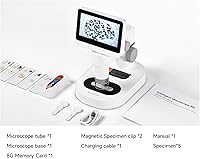
- Storage: An 8GB microSD memory card is included and pre-installed for immediate photo and video storage.
- Power: A rechargeable 5V lithium-ion battery is built in and ships included; the device charges via the supplied USB cable.
- Body Materials: The outer housing is ABS plastic, while the internal focus rail uses aviation-grade aluminum alloy for added stability.
- Dimensions: The unit measures 4.5″ in length, 1.6″ in width, and 7.4″ in height when assembled on its stand.
- Weight: The complete assembly weighs 2.27 pounds, which includes the tube, stand base, and attached components.
- Design: The microscope tube detaches from the adjustable-height stand base, enabling standalone handheld use in the field.
- Angle of View: The real angle of view is 45 degrees, which determines how the camera captures the specimen area at a given distance.
- Included Accessories: The package contains five prepared slides, two magnetic specimen clips, one charging cable, and one 8GB memory card.
- Specimen Clips: Two magnetic specimen clips are included to hold flat samples like slides, leaves, or fabric securely in place during observation.
- Model Identifier: The official model name and number is DDL-M2B, manufactured by BeaverLab (Beaver Technology).
- Input Voltage: The device operates at 5 volts, consistent with standard USB charging adapters and power banks.
Related Reviews
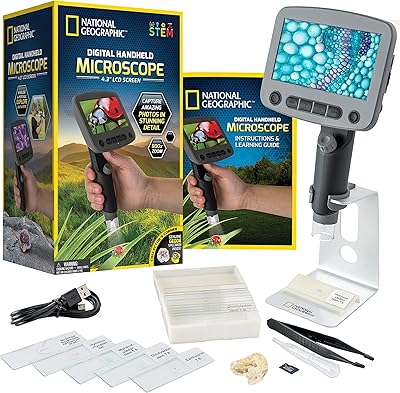
National Geographic Kids Digital Handheld Microscope
BEAVERLAB Darwin M2C Digital Pocket Microscope
Andonstar AD203 Handheld Digital Microscope
Celestron Deluxe Handheld Digital Microscope
APEXEL MS008 Handheld Digital Microscope
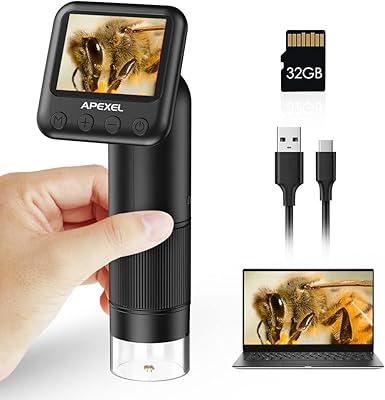
Evil Eye 800X Handheld Digital Microscope
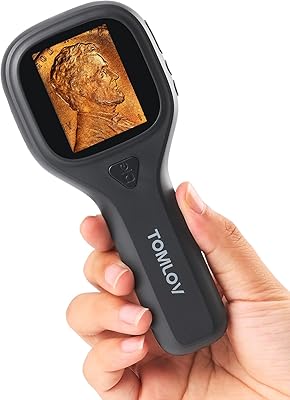
TOMLOV P10 Evo Handheld Digital Microscope
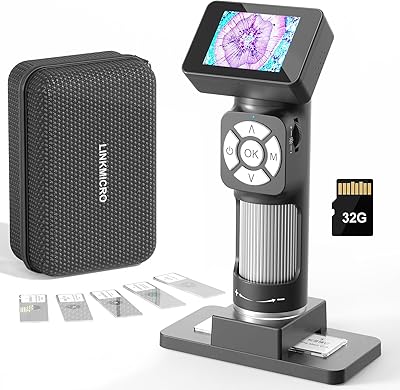
LINKMICRO LM112 500X Handheld Digital Microscope for Kids and Adults
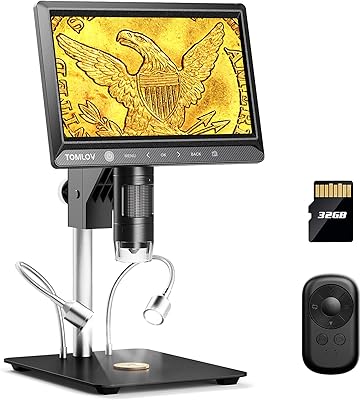
TOMLOV DM702 Digital Coin Microscope 10-inch