Overview

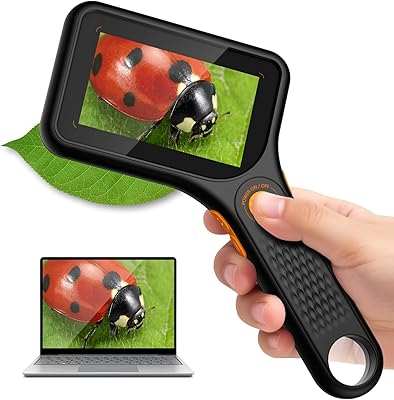
The KEXWAXX KX-1000-CY Kids Pocket Digital Microscope is a compact, self-contained science tool that the brand introduced in late 2024 as part of their push into affordable STEM gear for younger learners. What sets it apart from traditional children's microscopes is the built-in 2.0″ screen — no phone, no laptop required, just pick it up and look. It ships ready to go, with a slides kit and a 32GB SD card already in the box, so there's no waiting before a curious kid can start poking at a leaf or a bug wing. For the price, the out-of-box completeness is one of its strongest selling points.

Features & Benefits

The headline spec is 1000x magnification, which sounds impressive — and at lower zoom levels, the achromatic lens does produce sharp, usable images. At the maximum end, though, expect some softness; this is a budget device, and real-world clarity won't rival lab-grade optics. The LED light source helps considerably, keeping specimens well-lit without hot spots. The battery is rechargeable via Type-C, which is practical for kids who forget to swap out disposables. At roughly 14 ounces, the KEXWAXX scope sits comfortably in small hands, and the included neck strap prevents the inevitable drops that come with enthusiastic young explorers.

Best For

This pocket microscope makes the most sense as a first science gift — the kind you buy for a curious 6- to 10-year-old who's already peering at ants through a magnifying glass. It works well in homeschool settings or as a portable classroom tool, where passing a compact screen-equipped scope around a group is far more practical than a fixed-stage bench microscope. Kids who get bored squinting through an eyepiece will stay engaged much longer when they can watch the image on a screen. It's also genuinely useful outdoors — tuck it in a backpack, and a trail walk becomes a hands-on discovery session without any extra setup.

User Feedback

Parents who've picked up this kids digital microscope as a gift consistently report that kids get into it right away — minimal setup frustration is probably the most repeated positive. On the flip side, a fair number of buyers note that image quality at maximum zoom disappoints; the 4K label sets expectations the hardware, at this price point, can't fully meet. A few parents raise questions about long-term durability given the plastic construction, though most report it holds up fine under normal use. The included accessories — slides, card, strap — feel like genuine additions rather than afterthoughts, and that attention to out-of-box readiness earns consistent appreciation.

Pros

  • Kids aged six and up can start exploring within minutes, no app or phone required.
  • Ships with slides, a 32GB SD card, neck strap, and charging cable — genuinely ready out of the box.
  • The built-in screen keeps children engaged far longer than traditional eyepiece-only designs.
  • Rechargeable via Type-C, so there are no mid-session battery hunts or AA replacements.
  • Lightweight enough for small hands and easy to carry on outdoor walks or field trips.
  • LED illumination provides consistent lighting for indoor specimen viewing without hot spots.
  • Images can be saved directly to the SD card, adding an interactive capture-and-review element kids enjoy.
  • At mid-range zoom levels, the achromatic lens produces sharp, genuinely interesting images.
  • Compact dimensions make it a practical shared tool in homeschool or small classroom settings.
  • Packaging is gift-ready and feels complete, which matters for holiday and birthday purchases.

Cons

  • Maximum zoom clarity is noticeably soft — the 1000x spec overstates real-world optical performance.
  • The 4K label creates expectations the small screen and budget optics cannot consistently meet.
  • Holding a sharp, stable image by hand at higher magnifications is frustrating without a stand.
  • Screen glare in direct sunlight makes outdoor use noticeably harder than indoor sessions.
  • The slide kit is basic; curious kids will want more variety fairly quickly after the first sessions.
  • No adjustable LED brightness limits flexibility across different lighting environments.
  • File navigation for saving and reviewing images is not intuitive for children under seven.
  • Long-term durability of the plastic housing is a reasonable concern under rougher daily handling.
  • No option to connect to a larger screen or computer for extended viewing or image analysis.
  • Children above ten or eleven may find the optical limitations frustrating sooner than expected.

Ratings

The scores below reflect an AI-assisted analysis of verified global buyer reviews for the KEXWAXX KX-1000-CY Kids Pocket Digital Microscope, with spam, incentivized, and bot-generated feedback actively filtered out before scoring. Each category is rated on its own merits against realistic expectations for this price tier and age range. Where buyers consistently flagged a gap between marketing claims and real-world performance, that tension is reflected honestly in the numbers.

Ease of Setup
91%
Parents repeatedly mention that kids aged six and up can unbox and start using this pocket microscope within minutes, with no app downloads or pairing required. The self-contained screen means there is no technical hurdle between the child and their first specimen.
A small number of reviewers note that the user manual could be clearer for the youngest age range — around four or five years old — where some parental guidance is still needed to get the focus and lighting right.
Magnification Clarity
63%
37%
At lower zoom levels — roughly 100x to 400x — images are sharp enough to genuinely surprise kids examining insect wings, plant fibers, or fabric threads. That usable mid-range magnification is where most children spend their time anyway.
The advertised 1000x maximum is misleading at this price point; images at full zoom become noticeably soft and hard to keep steady. Parents expecting lab-quality optics will be disappointed, and a few feel the spec was oversold relative to real-world performance.
Screen Quality
71%
29%
Having a built-in 2.0″ display is a genuine differentiator — kids stay far more engaged watching a live image on a screen than squinting through a traditional eyepiece. Brightness is adequate for indoor use, and the image updates in real time without noticeable lag.
The 4K label sets expectations the small screen and underlying optics cannot fully meet. In bright outdoor conditions, glare on the display can make images harder to see, and the screen size itself limits how much detail is actually visible to a viewer standing nearby.
Build Quality & Durability
67%
33%
Most parents report the KEXWAXX scope holding up well through normal everyday use — tossed into backpacks, carried on hikes, handled by enthusiastic younger siblings. The combined plastic-and-glass construction feels sturdier than its low weight suggests.
A recurring concern is the long-term durability of the plastic housing under rougher handling. A few buyers report cracking or loose component fits after several months of frequent use, which is worth noting if the child is particularly hard on toys and gear.
Battery Life
78%
22%
The rechargeable lithium-ion battery is a practical choice for a kids device — no scrambling for AA batteries mid-session. Charge time is reasonable via the included Type-C cable, and most users report enough runtime to cover a full afternoon of exploration.
Actual battery duration varies more than expected, with some users noting the screen brightness drains the battery faster than anticipated during extended indoor sessions. A battery indicator that was easier for kids to read would help prevent abrupt shutdowns.
Portability & Ergonomics
84%
At under a pound and small enough to fit in a child's jacket pocket, this kids digital microscope genuinely earns its portable label. The included wide neck strap adds a practical layer of security during outdoor use, keeping it accessible without the risk of drops.
For children on the younger end of the four-to-twelve range, the device can feel a little bulky to hold steady one-handed while simultaneously focusing. A small tripod or stand accessory would have made a meaningful difference for that age group.
Included Accessories
82%
18%
The box contents feel unusually complete for the price tier — glass slides, a 32GB SD card, neck strap, and charging cable are all included without being marketed as premium add-ons. Kids can start examining prepared specimens on day one without any extra purchases.
The glass slides kit is basic, and parents with older or more curious kids may find they want more variety fairly quickly. The slide preparation tools are minimal, so creating custom specimens beyond what is included requires a separate purchase.
LED Illumination
76%
24%
The onboard LED light source does a solid job for indoor specimen viewing, providing even coverage without harsh hot spots. Kids examining rocks, coins, or prepared slides in a bedroom or classroom setting generally get well-lit, viewable results.
In bright outdoor light, the LED contribution becomes negligible and the ambient glare on the screen competes with the image. There is no adjustable brightness setting, which limits versatility across different lighting environments.
Value for Money
83%
Relative to what this age group typically engages with, the KEXWAXX scope delivers a lot of novelty and educational value for the asking price. The combination of a working screen, rechargeable battery, and slide kit makes it feel like a thoughtful purchase rather than a throwaway toy.
The gap between the advertised specs and real-world performance — particularly around magnification and 4K claims — does erode the value perception for buyers who research deeply before purchasing. Expectations set by the listing are higher than the hardware consistently delivers.
Kid Engagement & Fun Factor
88%
This is where the product genuinely shines for its intended audience. Kids aged six to ten who receive this as a gift almost universally get absorbed in it immediately, carrying it outdoors and examining everything from bark to their own fingernails.
Engagement tends to drop off for children above ten or eleven, who may quickly outgrow the optical limitations. It functions better as a gateway to curiosity than as a sustained scientific instrument for older or more technically minded kids.
Image Capture & Storage
69%
31%
The ability to save images directly to the included SD card is a feature most kids genuinely use — snapping and reviewing photos adds a layer of interaction that keeps sessions going longer. It also lets parents review what their child discovered during the day.
Photo quality saved to the card does not match the live preview experience, and some parents note the file management interface is not intuitive for younger children to navigate independently. Video capture, while possible, produces underwhelming results at maximum zoom.
Gift Presentation & Packaging
79%
21%
Multiple buyers comment that the packaging looks genuinely gift-ready, which matters for holiday and birthday purchases where presentation is part of the experience. The organized layout of accessories inside the box gives an impression of completeness.
The outer box design leans heavily on technical specs rather than age-appropriate imagery, which can make it feel slightly mismatched with its intended child audience. A few buyers mention the packaging arrived dented, suggesting it could benefit from more protective outer materials.
Focus & Stability
61%
39%
At lower magnification levels, achieving a usable focus is straightforward enough that children can manage it on their own after a short learning curve. For casual exploration of larger objects like leaves or coins, the focus mechanism works adequately.
At higher magnifications, maintaining a stable, focused image by hand becomes genuinely difficult — small movements create significant blur, and there is no stabilization feature to compensate. Without a stand, extended high-magnification sessions are frustrating for both kids and supervising adults.

Suitable for:

The KEXWAXX KX-1000-CY Kids Pocket Digital Microscope is a strong match for parents, grandparents, or teachers shopping for a first hands-on science tool for children roughly between the ages of six and eleven. If the goal is to spark genuine curiosity rather than deliver lab-grade results, this pocket microscope hits that target well — a child can pick it up, point it at a leaf or a coin, and see something interesting on the screen within minutes of opening the box. It works particularly well as a holiday or birthday gift precisely because it arrives complete: slides, storage card, strap, and cable are all included, so there is nothing extra to buy before the fun starts. Homeschool families and classroom settings will also find the portable, screen-based format more practical than a fixed bench microscope that only one child can use at a time. For outdoor-oriented kids who like collecting rocks, examining insects, or exploring on trails, the lightweight build and neck strap make it easy to carry and use on the go without treating it like fragile equipment.

Not suitable for:

The KEXWAXX KX-1000-CY Kids Pocket Digital Microscope is not the right choice for buyers who take the advertised 1000x magnification at face value and expect crisp, stable images at the upper zoom range — that level of clarity simply isn't realistic from a handheld budget device, and the disappointment is a predictable outcome for anyone with higher optical expectations. Children above twelve, or younger kids who are already scientifically engaged and asking more precise questions about what they're observing, will likely outgrow this scope quickly and be better served by a more capable instrument, even if it costs more. It is also not well-suited for parents who want a durable, knock-around toy that can survive rough handling over several years — the plastic construction holds up to normal use, but it is not built for children who are particularly hard on their belongings. Anyone hoping to connect the device to a computer for larger-screen viewing or advanced image analysis will find that this kids digital microscope is a closed, standalone system with no such capability. Finally, if screen quality in bright outdoor light matters — say, for a child who primarily wants to use it at the beach or in direct sunlight — the display glare can be a real limitation.

Specifications

  • Brand & Model: Manufactured by KEXWAXX under the model designation KX-1000-CY.
  • Magnification: Achromatic objective lens supports magnification up to a maximum of 1000x.
  • Display: Built-in 2.0″ LCD screen provides a live image feed without requiring a connected phone or computer.
  • Claimed Resolution: The device is marketed as 4K-capable, though real-world output quality reflects the constraints of its price tier.
  • Light Source: Onboard LED illumination delivers consistent, even lighting for indoor and low-light specimen viewing.
  • Field of View: The real angle of view is 24 degrees, which determines how much of a specimen is visible at a given magnification.
  • Power Source: Powered by a built-in rechargeable lithium-ion battery that is included and pre-installed.
  • Charging Port: Charges via a standard Type-C USB cable, which is included in the box.
  • Included Storage: A 32GB SD card is included for saving captured images and video directly from the device.
  • Dimensions: The device measures 3.2″ in length, 2.0″ in width, and 4.1″ in height.
  • Weight: Total weight is 14.8 ounces, keeping it light enough for comfortable use by children.
  • Materials: The body is constructed from a combination of plastic and glass components.
  • Accessories: Includes a glass slides kit, wide neck strap, Type-C charging cable, and a printed user manual.
  • Target Age Range: Designed for children aged 4 to 12, as well as young students beginning science education.
  • Connectivity: Operates as a fully standalone device with no Bluetooth, Wi-Fi, or USB data transfer to external screens.
  • Date Available: First made available for purchase in September 2024, making it a relatively recent entry in the category.
  • BSR Ranking: Ranked #13 in Lab Handheld Digital Microscopes on Amazon at the time of listing review.
  • Color Option: Available in Cyan as the listed color variant for this model.

Related Reviews
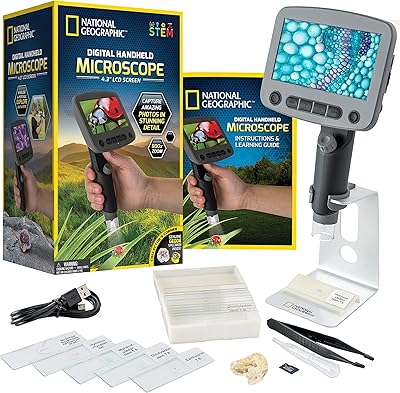
National Geographic Kids Digital Handheld Microscope
81%
88%
Ease of Use for Kids
83%
Image & Screen Quality
71%
Magnification Performance
79%
Battery Life
91%
Kit Completeness & Value
More
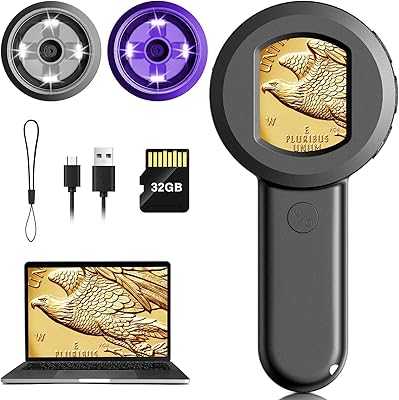
MAXLAPTER Pocket 100X Digital Microscope
74%
91%
Portability & Form Factor
88%
Ease of Use
63%
Image & Optical Quality
71%
Screen Quality
74%
UV Light Performance
More
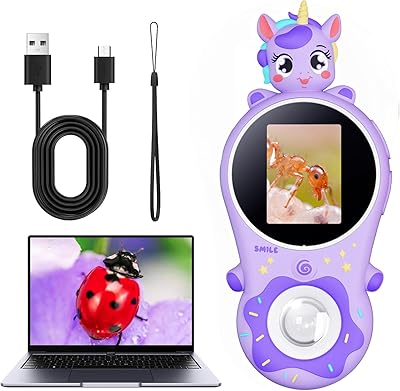
Ashfly Digital Microscope for Kids 200X Magnification
82%
88%
Ease of Use for Kids
91%
Portability
78%
Image Quality
75%
Magnification Strength
67%
Screen Size
More
T TAKMLY 8910-355 Pocket Digital Microscope
77%
91%
Portability & Form Factor
74%
Magnification Performance
83%
Display Quality
88%
Ease of Use
61%
Battery Life
More
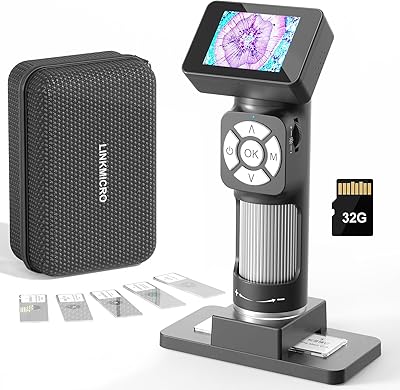
LINKMICRO LM112 500X Handheld Digital Microscope for Kids and Adults
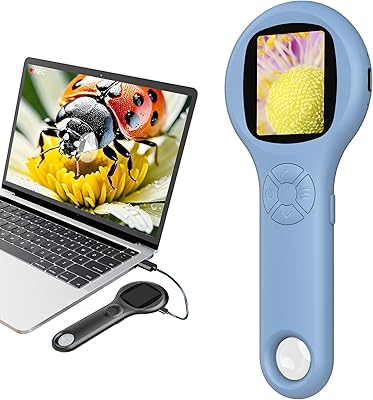
82%
86%
Magnification Performance
92%
Portability & Design
78%
Battery Life
72%
Display Quality
88%
Ease of Use
More
TOMLOV DM702 Digital Coin Microscope 10-inch
78%
88%
Display Quality
74%
Magnification Performance
83%
Build Quality & Durability
86%
Lighting System
84%
Stand & Working Space
More
Ahalfcit Digital Microscope 500X
83%
88%
Magnification Quality
91%
Ease of Use
92%
Portability
83%
Battery Life
89%
Display Quality
More
Andonstar AD266S 7-Inch 5-Lens Digital Microscope
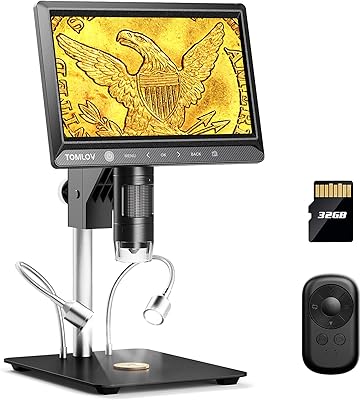
74%
83%
Image Clarity
88%
Lens Versatility
81%
Build Quality
79%
Value for Money
76%
LCD Display
More
Ninyoon 4K Digital USB Microscope
83%
88%
Image Quality
85%
Ease of Use
90%
Cross-Device Compatibility
80%
Build Quality
91%
Stability of Stand
More
LINKMICRO LM115 Digital Coin Microscope
86%
88%
Performance & Magnification
85%
Build Quality & Durability
90%
Ease of Use & Setup
91%
Display Quality
89%
Illumination & LED Lights
More

FAQ

No, this pocket microscope is completely self-contained. The built-in 2.0″ screen shows the live image directly on the device, so there is no need to connect it to a phone, tablet, or computer at any point.

Honest answer: at the maximum 1000x setting, images tend to be soft and difficult to keep steady by hand. The more practical and genuinely useful range is somewhere between 100x and 400x, where the achromatic lens performs well enough to show real detail on insects, leaves, fabric, or coins. Think of the 1000x figure as a ceiling, not a daily operating point.

The box comes with the microscope itself, a glass slides kit, a 32GB SD card, a Type-C charging cable, a wide neck strap, and a printed user manual. Everything a child needs to start exploring is included — no extra purchases required before first use.

Battery life varies depending on screen brightness and usage intensity, but most users report enough runtime to cover a solid afternoon of exploration. Charging is straightforward via any standard Type-C cable, and the battery recharges in a reasonable amount of time compared to disposable-battery alternatives.

Yes, and it is genuinely well-suited for outdoor use — it is lightweight, comes with a neck strap, and is easy to carry in a backpack. One practical limitation to be aware of is screen glare in direct sunlight, which can make the image harder to see. Shaded outdoor conditions work much better than bright midday sun.

Images are saved directly onto the included 32GB SD card. The capture function is built into the device, so kids can snap photos as they explore. Accessing the saved files does require removing the SD card and reading it on a computer, which younger children will need help with.

For normal everyday use — carried on walks, used at a desk, passed around a classroom — most parents report it holds up well. It is a plastic-and-glass device at an entry-level price point, so it is not indestructible. Children who are particularly rough on their belongings may eventually stress the housing, but it is not as fragile as it looks.

The sweet spot is roughly six to ten years old. Children younger than five or six will likely need consistent adult help to focus and operate it. Kids older than eleven or twelve may start to find the optical limitations frustrating once their curiosity outpaces what the device can show them.

No — the device has no HDMI output, Wi-Fi, Bluetooth, or USB data transfer capability. The 2.0″ built-in screen is the only display option. If larger-screen viewing is important to you, this scope would not meet that need.

Yes. Standard prepared microscope slides are widely available from science supply retailers and online marketplaces. The slides included in the box are a starter set, and purchasing additional prepared or blank slides is a natural next step once a child gets comfortable with the basics.