Overview

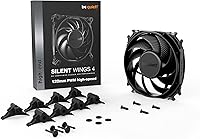
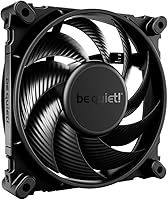
The be quiet! Silent Wings 4 120mm PWM Fan comes from a German brand that has built its reputation almost entirely around one promise: quiet cooling that doesn't sacrifice performance. This fan sits firmly in the premium tier, where it competes directly with Noctua and Corsair's higher-end options. What makes this cooling fan stand out is its range — it works equally well as a case intake or exhaust fan, mounted on a radiator, or paired with a heatsink. The all-black finish also fits cleanly into virtually any modern build without clashing with the aesthetic.
Features & Benefits

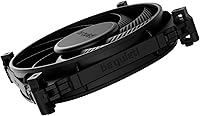
The engineering behind this cooling fan is genuinely thoughtful. At the core is a 6-pole, 3-phase motor that cuts vibration compared to standard designs, keeping the noise ceiling at 31.2 dB(A) at full speed — roughly the level of a quiet library. The fluid-dynamic bearing is rated for up to 300,000 hours, meaning this fan will likely outlast several PC builds. A funnel-shaped frame combined with tight blade-to-frame clearance maximizes static pressure, helping it pull real airflow through a dense radiator. Two mounting options ship in the box — rubber anti-vibration pads for cases, plastic screws for heatsinks — and the 4-pin PWM connector gives your motherboard precise control over speed.

Best For

This be quiet! fan is the kind of purchase that makes sense for a specific type of builder. If you're assembling a quiet home office PC or a living room HTPC where fan noise is genuinely noticeable, the Silent Wings 4 120mm is a strong match. It's also particularly well-suited for AIO radiator setups — the high static pressure matters when you're pushing air through a thick 240mm or 360mm rad. Mini-ITX cases benefit too, since restricted airflow paths demand fans that can generate real pressure rather than just spin fast. Budget builders should look elsewhere, but anyone replacing stock or cheap OEM fans will notice the difference immediately.

User Feedback

Across more than 2,000 verified purchases, the pattern is clear: buyers are largely satisfied, and the reasons are consistent. The most repeated praise focuses on quieter operation compared to whatever fans came before — stock cooler fans, budget 120mm options, you name it. The PWM response curve gets specific mention too; people appreciate that speed ramps feel gradual and controlled rather than jerky. On the other side, the most frequent criticism is simply the price. At roughly the cost of two or three budget fans, some buyers feel the premium is hard to justify for secondary case positions. Build quality and the secure fit of both mounting options, though, earn consistent approval without much debate.

Pros

  • Near-silent operation at mid-speed — genuinely hard to hear from a normal sitting distance.
  • The fluid-dynamic bearing is rated for an exceptionally long lifespan, reducing replacement anxiety.
  • Both mounting options ship in the box, covering case and radiator installs without extra purchases.
  • PWM speed transitions are smooth and gradual, avoiding the abrupt ramp changes that plague cheaper fans.
  • Strong static pressure output makes this cooling fan a reliable performer on AIO radiators.
  • All-matte-black finish integrates cleanly into modern builds without clashing with other components.
  • Anti-vibration rubber mounts noticeably reduce the chassis buzz that budget fans often transmit.
  • Holds #5 in its Amazon category with a 4.7-star average across thousands of verified purchases.
  • At full 2500 RPM, noise stays controlled — closer to a quiet library than a typical high-speed fan.

Cons

  • Per-unit pricing makes a full six-fan build a significant investment compared to budget alternatives.
  • No RGB option exists in this product line, limiting appeal for lighting-focused builds.
  • Plastic radiator screws feel lightweight relative to what the overall price point implies.
  • A small subset of users report a faint tonal hum at specific mid-range RPM steps.
  • Gains over cheaper fans are less obvious in open, well-ventilated cases with large mesh fronts.
  • Very low PWM duty cycles can cause occasional stutter on certain motherboard headers.
  • The fan sticker has been reported to sit slightly off-center in a minority of units.
  • Packaging lacks the rigid foam or molded tray presentation that some rival premium brands offer.

Ratings

The be quiet! Silent Wings 4 120mm PWM Fan earns its place near the top of the case fan market, and these AI-generated scores reflect that — built by analyzing thousands of verified global buyer reviews with spam, incentivized posts, and bot activity actively filtered out. The results capture both where this cooling fan genuinely excels and where real users have pushed back, giving you an honest picture before you spend your money.
Acoustic Performance
93%
This is the fan's strongest suit by a clear margin. Buyers consistently report that at mid-speed, it disappears into the background — quieter than almost any stock fan they replaced. Even at full tilt, the noise profile is more of a smooth whoosh than a harsh whine.
A small number of users in very quiet rooms noticed a faint tonal hum at specific RPM steps, particularly around the 1,200–1,500 RPM range. It is not universal, but it is mentioned often enough to be a realistic caveat for audiophile-level builds.
Airflow Performance
88%
With 76.7 CFM on tap, this cooling fan moves a meaningful volume of air for its noise floor. Builders running it as a primary intake or exhaust fan in mid-tower cases report noticeably lower ambient case temperatures compared to typical bundled fans.
Against dedicated high-airflow fans that tolerate higher noise, the CFM figure is competitive but not class-leading. Users chasing maximum raw airflow in an open-air test bench setup may find marginal gains from louder alternatives.
Static Pressure
91%
The tight blade-to-frame clearance pays off in real-world radiator use. Buyers running it on 240mm and 360mm AIO radiators report solid thermal results, with the fan maintaining cooling efficiency even through dense fin stacks that would choke lower-pressure options.
The static pressure advantage is most apparent on restrictive mounts. In wide-open case positions with little resistance, the difference between this fan and a cheaper high-airflow option narrows considerably, making the premium feel less justified in those contexts.
Build Quality
89%
The physical construction feels deliberate — blades have no flex when pressed, the frame sits perfectly square, and the anti-vibration rubber mounts grip securely without tearing during installation. Multiple buyers noted it feels noticeably more solid than fans at lower price points.
The frame is still plastic, and a handful of users expected something more premium-feeling given the price. The fan sticker, while clean-looking, has occasionally been reported to sit slightly off-center out of the box.
PWM Control & Response
87%
The 4-pin PWM implementation is smooth in practice. Builders report that speed transitions during workload changes are gradual and barely perceptible, making it a strong fit for setups where fan speed curves are tuned to ramp slowly with CPU or coolant temperature.
A minority of users found that at very low PWM duty cycles — below roughly 20% — the fan could stutter or drop to zero on certain motherboards. This appears to be a firmware or header compatibility issue rather than a consistent hardware flaw.
Bearing Longevity
94%
The fluid-dynamic bearing is rated to an exceptionally high hour count, and early adopters who have run this cooling fan for over a year report zero bearing noise degradation. For a fan intended to run 24/7 in a home server or always-on workstation, that longevity is genuinely reassuring.
The 300,000-hour figure is a manufacturer rating under controlled conditions, and real-world results over a multi-year horizon are still accumulating. A few users from warmer climates flagged slight bearing noise after extended high-temperature operation, though these cases are outliers.
Vibration & Resonance
86%
The pre-installed rubber anti-vibration mounts do a solid job of decoupling the fan from the case panel. Builders who previously dealt with case buzz from cheaper fans noticed a clear reduction in sympathetic vibrations transmitted to side panels and drive cages.
When using the included plastic screw mounts for radiator installations, some vibration isolation is lost. Users mounting multiple fans on a single radiator in a push-pull configuration noted slightly more chassis resonance compared to using the rubber options in case slots.
Installation Experience
82%
18%
Both mounting sets ship inside the box, which buyers appreciate since it removes a separate purchase decision. The rubber mounts snap into standard 120mm holes without tools, and the fan cable is long enough to reach headers in most mid-tower layouts without an extension.
The plastic radiator screws feel a little lightweight for a premium product, and at least a few buyers have mentioned slight cross-threading risk if not carefully aligned. Cable management is tidy but the sleeving ends abruptly, which can look unfinished in windowed builds.
Value for Money
67%
33%
For builders who care deeply about acoustics and long-term reliability, the pricing makes sense when weighed against what you get. The noise reduction over budget fans is immediate and obvious, and not having to replace fans in two years adds up over time.
At this price per unit, equipping a case with three to six fans becomes a significant investment. Budget-conscious builders can achieve acceptable results with fans costing a fraction of the price, making the premium a hard sell for secondary or low-visibility case positions.
Aesthetic Design
83%
The all-matte-black finish is clean and restrained — it blends into dark builds without demanding attention, which is exactly what many builders want from a fan that is not RGB. The blade geometry has a purposeful, engineered look that holds up well through a tempered glass panel.
There is no RGB variant in this product line, which is a deliberate brand choice but frustrating for builders who want coordinated lighting across their fans. The single fan sticker design, while neat, offers no customization and may feel understated for showpiece builds.
Noise Floor at Low Speed
91%
When the motherboard dials this cooling fan down to idle speeds during light workloads, most users describe it as completely inaudible from normal sitting distance. That low-speed quiet is exactly what makes it compelling for open-desk setups and home theater PCs.
The perception of silence at low RPM depends heavily on the ambient noise level of the rest of the system. In a build with a loud GPU fan or spinning hard drives, the benefit of this fan's low-speed quietness is partially masked and harder to appreciate.
Compatibility
88%
Standard 120mm sizing and a universal 4-pin PWM header mean this fan fits virtually any modern case or cooler. Buyers have successfully deployed it across a wide range of builds — from large full towers to compact SFF cases — without clearance or connector issues.
The fan is listed for desktop use only, and the 12V power requirement means it is not suitable for low-voltage embedded or NAS builds running 5V fan headers natively. This is a niche edge case, but worth noting for non-standard system builds.
Packaging & Unboxing
78%
22%
The fan arrives well-protected with both mounting sets clearly included and easy to identify. Buyers generally feel the presentation is appropriate for a premium product, and nothing arrives loose or improperly secured even when shipped in a larger multi-item order.
The packaging is functional but not exceptional — there is no foam cutout or rigid tray, just a cardboard insert. For a fan positioned at the higher end of the market, the unboxing experience feels a step below what rival brands offer at a similar price.
Thermal Impact on System
86%
Real-world temperature logging from buyers shows consistent drops in CPU and GPU ambient temperatures compared to the bundled fans most cases ship with. In tighter cases where airflow routing matters, the static pressure advantage translates to meaningful thermal headroom under sustained load.
The thermal gains are less dramatic when this cooling fan is used in well-ventilated mid-tower cases with large mesh fronts, where even mediocre fans move enough air. The biggest gains show up in restricted environments, so the upgrade impact varies significantly by case design.

Suitable for:

The be quiet! Silent Wings 4 120mm PWM Fan is purpose-built for builders who refuse to accept the usual trade-off between cooling performance and noise. If you work or game in a quiet room and actually notice the hum of your PC, this cooling fan is one of the most practical upgrades you can make. It is particularly well-matched for AIO liquid cooling setups, where the static pressure output makes a real difference pushing air through a dense 240mm or 360mm radiator. Compact and Mini-ITX builders will also benefit, since restricted airflow paths reward fans that generate genuine pressure rather than simply spinning fast. Home office and living room PC builders — the kind who keep their machine on a desk within arm's reach for hours at a time — will appreciate how close to silent this cooling fan runs at mid-speed loads. Enthusiasts upgrading from stock or budget fans will notice the difference immediately, both in perceived noise and in the smoother, more controlled PWM ramp behavior.
Not suitable for:

The be quiet! Silent Wings 4 120mm PWM Fan is a harder sell if noise is simply not a concern in your build environment. Builders working with a tight budget who need to populate four, five, or six fan slots will find that the per-unit cost adds up quickly, and the acoustic gains are harder to justify in secondary or rear exhaust positions where cheaper fans perform adequately. If your priority is raw maximum airflow above all else — and you are willing to tolerate higher noise to get it — dedicated high-airflow fans can edge this cooling fan out in pure CFM in an open bench scenario. RGB enthusiasts looking for synchronized lighting across their build will also be disappointed, as this entire product line deliberately skips addressable LEDs in favor of an understated all-black look. Lastly, users running non-standard low-voltage or 5V fan headers, such as certain NAS enclosures or embedded boards, will find this fan incompatible without additional hardware.
Specifications

  • Fan Size: Standard 120mm frame fits all common case and radiator mounts designed for 120mm fans.
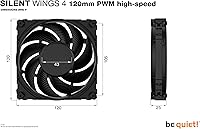
  • Dimensions: The fan measures 4.72″ x 4.72″ x 0.98″ (120mm x 120mm x 25mm), consistent with the standard 120mm form factor.
  • Max Speed: The fan spins up to 2500 RPM at full PWM duty cycle, enabling high-performance cooling when thermals demand it.
  • Noise Level: At maximum speed, acoustic output reaches 31.2 dB(A), roughly equivalent to a quiet library or a soft whisper at close range.
  • Airflow: Rated airflow capacity is 76.7 CFM, delivering strong volumetric air movement for both case ventilation and radiator cooling duties.
  • Bearing Type: A fluid-dynamic bearing (FDB) is used, which provides smooth, low-friction operation and significantly outlasts sleeve or ball bearings in long-term use.
  • Rated Lifespan: The FDB is rated for up to 300,000 hours of continuous operation under standard conditions, translating to decades of normal PC use.
  • Motor Design: A 6-pole, 3-phase motor reduces electromagnetic vibration compared to standard 4-pole motors, contributing directly to the lower noise floor.
  • Connector: Uses a standard 4-pin PWM connector, compatible with virtually all modern motherboard fan headers for precise speed control.
  • Voltage: Operates at 12V DC, the standard rail used for chassis fans on all ATX and ITX desktop motherboards.
  • Wattage: Power draw is rated at 2.4W at maximum speed, making it one of the more efficient options in the high-speed 120mm category.
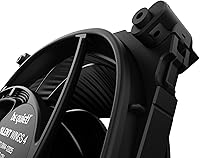
  • Mounting Options: Two mounting solutions are included: pre-installed anti-vibration rubber mounts for case positions and plastic screws for radiators and heatsinks.
  • Frame Design: The frame uses a funnel-shaped inlet profile combined with a tight blade-to-frame tolerance to maximize static pressure output.
  • Material: The fan frame and blades are constructed from black plastic, keeping weight low while maintaining structural rigidity during high-speed operation.
  • Color: Finished in an all-matte black colorway with no RGB lighting, designed for clean integration into dark or windowed builds.
  • Item Weight: The fan weighs 10.9 ounces (approximately 309g) including the pre-installed rubber mounts.
  • Compatibility: Designed for desktop PC use, compatible with standard case fan slots, 120mm radiator mounts, and heatsinks that accept 120mm fans.
  • Series: Part of the Silent Wings 4 product family from be quiet!, the high-speed variant optimized for performance-oriented builds.

Related Reviews
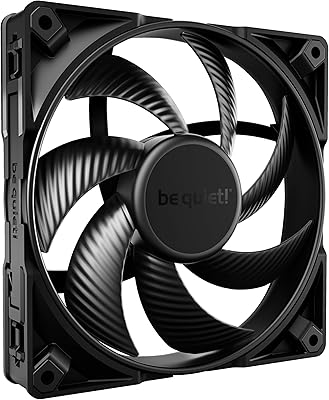
be quiet! Silent Wings Pro 4 140mm Fan
83%
94%
Noise Level at Typical Use
91%
Static Pressure Performance
88%
Build Quality & Materials
89%
Speed Switch Usability
72%
Value for Money
More
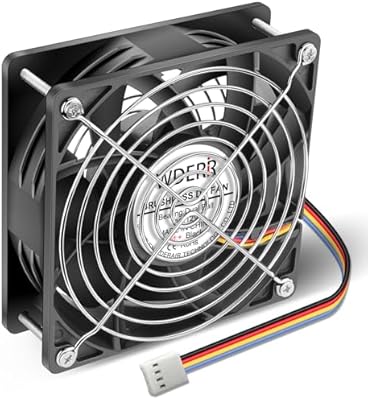
WDERAIR P1238 120mm PWM Computer Case Fan
70%
94%
Airflow Performance
31%
Noise Level
81%
Build Quality
83%
Durability & Longevity
76%
PWM Speed Control
More
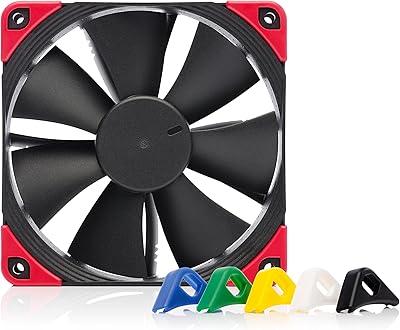
Noctua NF-F12 PWM chromax.Black.swap 120mm Fan
88%
96%
Acoustic Performance
93%
Static Pressure Efficiency
94%
Build Quality & Longevity
74%
Value for Money
91%
PWM Speed Control
More
upHere CPU Air Cooler with 120mm Fan and 4 Heat Pipes
85%
85%
Cooling Performance
92%
Noise Level
89%
Ease of Installation
88%
Build Quality
90%
Compatibility
More
AC Infinity AXIAL 1225 120mm Muffin Fan
81%
91%
Build Quality
78%
Noise Level
72%
Airflow Performance
93%
Longevity & Reliability
88%
Ease of Installation
More
Lian Li UNI Fan SL Wireless 120mm ARGB Fan
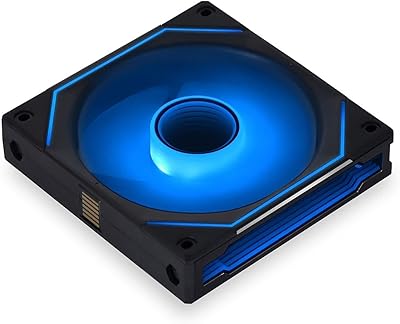
85%
91%
Cooling Performance
88%
Ease of Installation
84%
Noise Level
95%
RGB Customization
89%
Build Quality
More
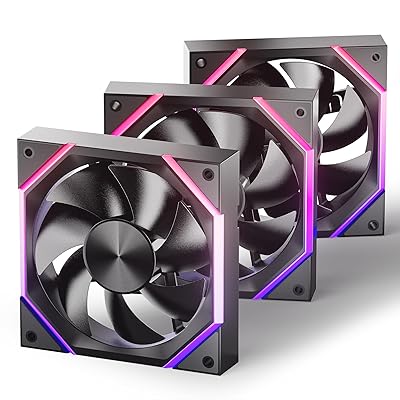
Lian Li UNI Fan SL-INF 120 RGB Infinity Mirror ARGB 120mm Fan
86%
93%
Aesthetics and RGB Lighting
88%
Noise Level/Quiet Operation
91%
Build Quality and Durability
85%
Ease of Installation
87%
Cooling Efficiency
More
Asiahorse Dawn 120mm ARGB Case Fan
88%
88%
Cooling Performance
92%
Noise Level
84%
RGB Customization
89%
Build Quality
91%
Ease of Installation
More
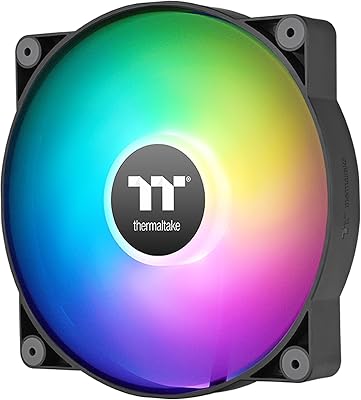
Thermaltake CT200 200mm ARGB Case Fan
82%
93%
Noise Level
78%
Airflow Performance
88%
ARGB Lighting Quality
86%
Motherboard RGB Compatibility
91%
Installation Ease
More
AsiaHorse COSMIQ 120mm RGB PC Fans
85%
87%
Cooling Performance
90%
Noise Level
85%
RGB Customization
88%
Ease of Installation
92%
Cable Management
More

FAQ

It is genuinely quieter than most high-speed 120mm fans at comparable RPM. At full 2500 RPM it measures around 31.2 dB(A), which is close to a quiet library environment. That said, it is not silent at full speed — if your motherboard never throttles it down, you will hear it. Most users running it on a curve find it nearly inaudible during everyday workloads.

It works very well on radiators, actually. The tight blade-to-frame clearance generates solid static pressure, which is exactly what you need to push air through a dense radiator fin stack. Builders running it on 240mm and 360mm AIO setups report good thermal results. Both the rubber anti-vibration mounts and the included plastic screws are in the box, so you have options for either application.

Everything you need for standard installations ships in the box. There are pre-installed rubber anti-vibration mounts for case fan slots and a set of plastic screws intended for radiator and heatsink mounting. You should not need to source additional hardware for typical desktop builds.

If your motherboard has a standard 4-pin PWM fan header — which virtually all modern desktop boards do — this cooling fan will work natively. Your motherboard's fan control software or BIOS will handle speed regulation automatically. A separate controller is not required unless you are daisy-chaining a large number of fans beyond your available headers.

Both are premium options with strong acoustic performance and high build quality. Noctua fans often have a slight edge in raw noise-to-airflow efficiency at lower speeds, but this be quiet! fan matches or exceeds them at higher static pressure scenarios like radiator use. The main practical difference is aesthetics — Noctua's signature beige-and-brown coloring is polarizing, while this cooling fan is all-black, which suits a wider range of builds.

No, there is no RGB variant in the Silent Wings 4 line. Be quiet! deliberately keeps this product family lighting-free, prioritizing performance and acoustics over visual effects. If synchronized RGB lighting is important for your build, you would need to look at other brands or product lines entirely.

The minimum speed depends partly on your motherboard's PWM implementation, but the fan is generally stable down to around 600–700 RPM in most setups. A small number of users have reported stuttering behavior at very low duty cycles on certain boards, so it is worth testing your specific header if you plan to run it near the floor of its range.

The fluid-dynamic bearing is rated for up to 300,000 hours, which under real-world usage patterns — say, eight to ten hours of daily use — works out to many decades. In practice, the bearing should comfortably outlast multiple PC upgrades. A few users in particularly hot environments have mentioned slight bearing noise after extended high-temperature use, but that appears to be the exception rather than the rule.

Almost certainly yes. Most case fans bundled with enclosures are optimized for cost, not performance or acoustics. Upgrading to this cooling fan typically results in both lower noise at equivalent airflow and better thermal headroom. The difference is most dramatic in compact cases or on radiators where static pressure matters, and slightly less pronounced in large open cases with minimal restriction.

The long bearing life rating makes it technically well-suited for always-on use. However, it requires a standard 12V desktop fan header, so compatibility depends on your NAS enclosure. Many consumer NAS units use proprietary connectors or 5V headers, in which case this cooling fan would not work without an adapter. For standard desktop-style home server builds, it is a solid choice for continuous operation.

Where to Buy