Overview

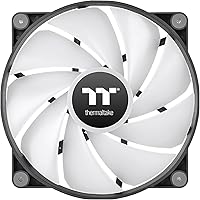
The Thermaltake CT200 200mm ARGB Case Fan arrived in December 2024 as a direct extension of Thermaltake's CT fan family, designed to slot into existing CT-series builds without visual friction. At 200mm, it's physically larger than the 120mm and 140mm fans most builders default to, which means it can move a meaningful volume of air while spinning at much lower speeds. That size advantage is the whole point — quieter operation without sacrificing ventilation. This is a single-pack, black-finish unit aimed squarely at the mid-range market, competing with large-format options from be quiet!, Corsair, and Arctic.

Features & Benefits

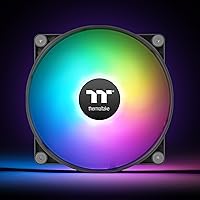
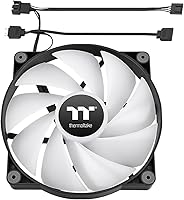
The CT200 pushes 131.6 CFM through a 9-blade design — a healthy output for whole-case ventilation, particularly in mesh-front builds where airflow resistance is minimal. PWM control runs between 500 and 900 RPM, which is intentionally conservative; that restraint keeps the noise ceiling at 27.2 dB, a level most people won't register over normal room ambiance. The hydraulic bearing reinforces that quiet character while supporting long-term reliability better than sleeve-bearing alternatives. Nine addressable LEDs connect via a 3-pin 5V ARGB header, syncing cleanly with ASUS Aura, MSI Mystic Light, and Gigabyte Fusion. Daisy-chainable PWM connectors with extension cables keep wiring manageable across multi-fan configurations.

Best For

This 200mm Thermaltake fan makes the most sense in cases that actually have a 200mm mounting point — large mid-towers and full towers where that slot often sits empty. In a mesh-front build, one unit can handle the ventilation workload that would otherwise require two or three 120mm fans, and do it far more quietly. It's also a natural fit for anyone already running CT-series fans who wants a consistent aesthetic without hunting for third-party matches. Builders who want ARGB lighting that works immediately without dedicated software will appreciate the straightforward 5V sync. That said, this large ARGB case fan is not the right call for high-performance cooling rigs that demand aggressive thermal headroom.

User Feedback

Sitting at a 4.7-star average across roughly 300 ratings, the CT200 has earned strong early approval — though the review pool is still relatively modest for a fan released in late 2024, so that score could settle as more buyers weigh in. The most consistent praise centers on hassle-free installation and ARGB sync that works out of the box with major motherboard brands, something buyers clearly don't take for granted. Real-world noise levels track closely to the rated spec, which is a genuine plus. The recurring complaint is the 900 RPM ceiling — users who need serious thermal performance find it limiting. The daisy-chain connectors, however, draw consistent appreciation from anyone managing multiple fans.

Pros

  • Runs exceptionally quietly — real-world noise levels closely match the rated 27.2 dB spec according to buyers.
  • 131.6 CFM airflow is genuinely impressive for a fan that barely registers acoustically.
  • Hydraulic bearing construction supports long-term reliability without the higher noise floor of ball bearings.
  • 5V ARGB sync works out of the box with all major motherboard ecosystems — no extra controllers needed.
  • Daisy-chain PWM connectors make multi-fan cable management noticeably cleaner and faster.
  • The 200mm format can replace two or three smaller fans in mesh-front builds, simplifying your setup.
  • Strong early user satisfaction with a 4.7-star average across a growing review base.
  • Extension cables are included, which is a small but practical touch that competitors sometimes skip.
  • Fits naturally into existing CT-series builds for a visually consistent look without hunting for matching products.

Cons

  • The 900 RPM maximum is a hard ceiling — not suitable for systems that need aggressive active cooling under heavy loads.
  • Sold as a single unit only, so outfitting a multi-fan build requires multiple purchases at full per-unit cost.
  • Limited to cases with a 200mm mounting point, which rules out a large portion of mainstream mid-tower chassis.
  • Static pressure of 1.92 mm-H2O is low, making it a poor fit for radiators or restrictive intake panels.
  • The review base of roughly 300 ratings is still relatively small for a product this new, so long-term reliability data is limited.
  • No bundled RGB controller means users without a compatible 5V ARGB motherboard header will need a separate solution.
  • At 1.1 pounds, the physical weight is worth noting if your case fan mount uses lightweight plastic brackets.
  • Single color option (black) means it may not suit builds with white or light-themed interiors.

Ratings

The scores below reflect our AI-driven analysis of verified global user reviews for the Thermaltake CT200 200mm ARGB Case Fan, with spam, bot-generated, and incentivized feedback actively filtered out before scoring. Each category is rated independently based on what real buyers reported across their actual builds, covering both the aspects that impressed them and the frustrations they ran into. The result is a transparent breakdown that treats this fan's strengths and shortcomings with equal weight.

Noise Level
93%
Consistently praised as one of the quietest fans buyers have added to their builds, with multiple users noting they had to physically check whether it was spinning at all during light workloads. At low PWM speeds it blends completely into background room noise, making it a genuine standout for open-plan home office setups where fan whine is a real irritant.
A small number of buyers reported a faint hum at startup that disappeared once the fan reached operating speed, which suggests some unit-to-unit variation in hydraulic bearing behavior. This was rare, but enough to prevent a perfect score.
Airflow Performance
78%
22%
In mesh-front cases with minimal intake resistance, the CT200 delivers noticeably strong case ventilation for such a quiet fan, with users reporting meaningful temperature drops compared to the smaller 120mm fans it replaced. The 200mm format gives it a natural volume advantage that compensates for its modest RPM ceiling in suitable builds.
Buyers running solid-front cases or cases with dense dust filters found the airflow disappointing, as the fan simply lacks the static pressure to push through resistance effectively. High-load gaming rigs also exposed the 900 RPM cap as a real thermal constraint during extended sessions.
ARGB Lighting Quality
88%
The nine addressable LEDs produce vivid, evenly distributed color across the fan frame, and buyers consistently described the lighting as bright without being harsh or washed out. Matching it with other CT-series fans produced a visually consistent glow that many builders highlighted as a core reason they chose this unit specifically.
With only nine LEDs covering a 200mm diameter, the lighting coverage is less dense than on smaller fans with similar LED counts, leaving some visible dark patches between LEDs at certain angles in darker cases.
Motherboard RGB Compatibility
86%
Buyers using ASUS, MSI, and Gigabyte motherboards reported clean, immediate sync through their respective software suites with no manual configuration required. The standard 3-pin 5V ARGB connector is widely supported and caused no compatibility headaches for the vast majority of users.
Builders without a dedicated 5V ARGB header on their motherboard had to source a separate controller, which added cost and complexity that some felt should have been flagged more clearly in the product listing. Older boards with only 4-pin 12V RGB headers are simply incompatible with this fan's lighting system.
Installation Ease
91%
Buyers across experience levels found the installation process quick and frustration-free, with the daisy-chain PWM connectors and included extension cables earning particular appreciation in multi-fan builds where reaching distant headers is usually a cabling headache. The physical fit into 200mm mounts was consistently reported as precise and secure.
A handful of buyers noted that the extension cables, while included, were shorter than expected for some full-tower cases, requiring additional cable management effort. Nothing critical, but worth noting for deep chassis with fan mounts far from the motherboard.
Build Quality
82%
18%
The Copper ABS frame feels solid in hand and shows no flex under normal handling, which matches what you would expect from a Thermaltake mid-range product. Buyers who installed multiple CT-series fans together noted consistent finish quality across units, which matters for builds where fans are visible through a glass panel.
At this size and price point, some buyers felt the blade and frame material compared less favorably to premium alternatives from be quiet! or Noctua, which use more refined plastics with a higher perceived quality. It is functional, but not boutique-tier in feel.
Value for Money
76%
24%
As a single-pack ARGB fan with a hydraulic bearing, daisy-chain support, and a reputable brand name, the CT200 sits at a reasonable price point for what it delivers. Buyers who needed a quiet large-format fan with lighting came away feeling the purchase was justified, especially compared to similar offerings without ARGB.
Buyers who needed three or four units for a full build found the per-unit cost added up faster than comparable multi-packs from competitors. The single-pack only format is the biggest value friction point for anyone building out a larger ventilation setup.
PWM Control Responsiveness
79%
21%
The fan responds smoothly to PWM signals from the motherboard, ramping up and down without audible stepping or sudden speed jumps that can be jarring during transitions between workloads. Buyers running auto fan curves found it tracked their intended profiles accurately.
The 500 to 900 RPM operating window is narrow, which limits how much fine-tuning is actually achievable through PWM. Users who prefer granular fan curve control found the range too compressed to make meaningful acoustic or thermal tradeoffs.
Bearing Longevity
81%
19%
Hydraulic bearings have a well-established track record for quiet, stable operation over multi-year use in normal horizontal or vertical mounting positions, and buyers upgrading from older sleeve-bearing fans specifically cited this as a motivating factor. Early feedback on the CT200 shows no bearing noise complaints outside of the occasional startup hum.
Hydraulic bearings are more sensitive to mounting orientation than ball bearings, and users who install fans in non-standard positions — such as angled or inverted mounts — may see accelerated wear over time. Long-term durability data is also still limited given the product only launched in late 2024.
Cable Management
84%
The daisy-chain PWM design genuinely simplifies wiring in builds with multiple fans, reducing the number of headers occupied on the motherboard and cutting down on loose cables behind the panel. Buyers managing three or more fans in a full-tower appreciated this more than almost any other feature.
While the daisy-chain system works well, the ARGB cables are not daisy-chainable in the same way, meaning each fan still needs its own ARGB connection back to the motherboard or a hub, which undermines some of the cable tidiness gains from the PWM side.
Cooling Efficiency
71%
29%
In low-restriction airflow paths, the CT200 moves a meaningful volume of air relative to its noise output, and buyers with mesh-front mid-towers reported consistent CPU and GPU temperature improvements compared to their previous setups. For a quiet daily-use PC, it does the job well.
Compared to higher-RPM 140mm or 120mm fans in thermally demanding systems, the CT200 falls behind on sustained cooling capacity. Buyers running overclocked systems or compact builds with limited airflow paths will find it undersized for the thermal workload.
Aesthetic Design
85%
The black frame and translucent blade design look clean and intentional when lit, and buyers who matched it with other CT-series fans described the overall visual result as cohesive and polished rather than mismatched. The large 200mm size also creates an impressive visual presence through glass panels.
The single black colorway limits its appeal for white or light-themed builds, and there is currently no white variant available in the CT200 lineup. Buyers committed to a monochromatic light build will need to look elsewhere or accept a color mismatch.
Packaging & Accessories
73%
27%
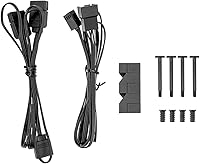
The fan arrives well-protected and includes mounting screws and extension cables, which is a practical inclusion that not every manufacturer bothers with at this price tier. Buyers appreciated not having to source hardware separately for a straightforward install.
Several buyers noted the accessory bundle felt minimal for a premium-branded product — no controller, no hub, and no documentation beyond the basics. For buyers who are new to ARGB setups, a bit more guidance in the box would have reduced the learning curve considerably.

Suitable for:

The Thermaltake CT200 200mm ARGB Case Fan is a strong pick for builders who prioritize a quiet system above all else and happen to have a 200mm fan mount available in their case. Large mid-towers and full-tower chassis with that front or top mounting point get the most out of it — one unit at low RPM can move air more efficiently than a cluster of smaller fans spinning harder, which translates directly to a calmer acoustic experience. If you are already invested in the CT fan ecosystem, this fits right in visually and syncs with the same ARGB chain without any awkward mismatches. Mesh-front case owners will particularly appreciate it, since the low static pressure requirement of an open panel plays to the CT200's strengths rather than exposing its limits. It also appeals to ARGB enthusiasts who want 5V motherboard-synced lighting that works immediately with ASUS Aura, MSI Mystic Light, or Gigabyte Fusion without wading through controller software.

Not suitable for:

The Thermaltake CT200 200mm ARGB Case Fan is not the right tool for builders chasing maximum thermal headroom. The 900 RPM ceiling is a deliberate design constraint that favors silence over raw cooling capacity, and in a high-wattage gaming rig with a hot CPU and GPU, that restraint can become a liability during sustained loads. Cases that only support 120mm or 140mm fan mounts make the CT200 a non-starter entirely — always check your chassis specifications before purchasing a large-format fan. Builds with restricted intake panels, like solid-front cases or dense dust filter setups, will also underperform here since hydraulic bearings and low RPMs work best when air has a clear path through. Finally, if you need more than one fan and are comparing total cost, buying multiple CT200 units adds up quickly compared to grabbing a multi-pack from a competitor.

Specifications

  • Fan Size: The fan measures 200mm in diameter, making it a large-format unit suited to cases with dedicated 200mm mounting points.
  • Airflow: Rated airflow output is 131.6 CFM, delivered through a 9-blade impeller optimized for high-volume, low-restriction ventilation.
  • Static Pressure: Static pressure is rated at 1.92 mm-H2O, which is suitable for open-airflow setups but not for pushing air through dense radiators or heavy filters.
  • Speed Range: Fan speed is PWM-controlled between 500 and 900 RPM, allowing the system to modulate performance based on thermal load.
  • Noise Level: Maximum acoustic output is rated at 27.2 dB, which falls comfortably below typical ambient room noise in a quiet home or office environment.
  • Bearing Type: The CT200 uses a hydraulic bearing, which offers quieter operation and better longevity compared to standard sleeve bearings under normal operating conditions.
  • LED Count: Nine individually addressable LEDs are distributed around the fan frame, capable of displaying up to 16.8 million colors.
  • RGB Connector: Lighting is powered through a 3-pin 5V ARGB connector, compatible with motherboard headers from ASUS, MSI, Gigabyte, and other major brands.
  • PWM Connector: Speed is controlled via a 4-pin PWM connector, and the fan supports daisy-chaining so multiple units can share a single motherboard header.
  • Wattage: Power draw is rated at 1.92W, making it an extremely low-consumption unit even in multi-fan configurations.
  • Voltage: The fan operates on 5V DC for the ARGB circuit, with the PWM motor drawing from the standard 12V fan header supply.
  • Material: The fan frame and blade assembly are constructed from Copper ABS, a reinforced plastic compound that balances rigidity with weight efficiency.
  • Dimensions: Physical dimensions are 1.4″ (depth) x 8.7″ (width) x 10.2″ (height), consistent with a standard 200mm mounting footprint.
  • Weight: The unit weighs 1.1 pounds, which is typical for a 200mm fan and should not stress standard plastic fan mounts.
  • Color: The fan ships in a black colorway, with no white or alternative color variant currently listed in the CT200 product line.
  • Pack Size: This product is sold as a single fan; buyers needing multiple units for a full build must purchase additional packs separately.
  • Brand Family: The CT200 belongs to Thermaltake's CT fan series, which is designed for visual and functional consistency across a matched multi-fan build.
  • Availability: The product was first made available in December 2024, making it a relatively recent addition to the 200mm ARGB fan market.

Related Reviews
Asiahorse Nyota 120mm ARGB Case Fan
85%
88%
Cooling Performance
90%
Noise Level
85%
RGB Lighting Quality
84%
Build Quality
80%
Ease of Installation
More
Asiahorse Dawn 120mm ARGB Case Fan
88%
88%
Cooling Performance
92%
Noise Level
84%
RGB Customization
89%
Build Quality
91%
Ease of Installation
More
Cooler Master SF240R ARGB 240mm Case Fan
77%
78%
Cooling Performance
74%
Noise Level
88%
Installation Ease
76%
ARGB Lighting Quality
71%
ARGB Compatibility
More
Thermaltake View 51 TG ARGB Edition Gaming Case
85%
92%
Design and Aesthetics
88%
Cooling and Airflow Performance
85%
Ease of Assembly
90%
Space and Expandability
89%
Build Quality and Durability
More
Thermaltake View 380 ARGB Mid Tower Case
83%
93%
Aesthetic Design
88%
Tempered Glass Quality
91%
Hidden-Connector Compatibility
89%
Included Fan Bundle
82%
Airflow Performance
More
Thermaltake View 170 TG ARGB Micro-ATX Case
88%
91%
Build Quality
89%
Cooling Performance
94%
Design & Aesthetics
72%
Cable Management
88%
Ease of Assembly
More
Thermaltake View 200 TG ARGB Mid Tower Case
71%
78%
Build Quality
53%
Airflow Performance
67%
Included Fans
84%
RGB & Lighting
62%
Cable Management
More
Lian Li UNI Fan SL-Infinity 140 ARGB Fan
86%
92%
Cooling Performance
95%
Visual Appeal & Lighting
87%
Noise Level
80%
Installation Ease
91%
Build Quality
More
Lian Li UNI Fan SL Wireless 120mm ARGB Fan
85%
91%
Cooling Performance
88%
Ease of Installation
84%
Noise Level
95%
RGB Customization
89%
Build Quality
More
GDSTIME 200mm 120V AC Axial Fan
82%
93%
Build Quality
91%
Bearing Longevity
88%
Airflow Performance
41%
Noise Level
84%
Ease of Installation
More

FAQ

Yes, as long as your motherboard has a 3-pin 5V ARGB header, it will sync with ASUS Aura Sync. Just plug the ARGB cable into the correct header and the software should detect it. Make sure you are not accidentally connecting it to a 4-pin 12V RGB header, which is a different standard and can damage the LEDs.

It is not recommended. The CT200 has a static pressure rating of only 1.92 mm-H2O, which is quite low for pushing air through the dense fin stacks of a radiator. For radiator mounting you generally want a fan with a higher static pressure rating. This fan is much better suited to open-intake ventilation roles like front intake on a mesh case.

That depends heavily on your build. For a typical mid-range gaming system in a mesh-front case, 131.6 CFM at 900 RPM provides solid airflow and should keep temperatures in check. If you are running a high-wattage CPU and GPU under sustained load, though, the capped speed may leave you wanting more thermal headroom. Silence-first and everyday builds will be well served; extreme overclock rigs probably will not.

Unfortunately, no. The Thermaltake CT200 200mm ARGB Case Fan requires a dedicated 200mm mounting point. There are no adapters that reliably allow a 200mm fan to fit a 120mm or 140mm cutout. Before purchasing, double-check your case specifications to confirm it has a 200mm fan mount — common examples include the Thermaltake Core V71, certain Fractal Design cases, and a handful of NZXT and Corsair full-towers.

The CT200 includes a 4-pin PWM daisy-chain connector that lets you link multiple fans in sequence. You connect the first fan to your motherboard's PWM header, then run the daisy-chain cable from that fan to the next one, and so on. Keep in mind that your motherboard header has an amperage limit, so check your board's manual if you plan to chain more than three or four fans.

Thermaltake typically includes standard fan mounting screws in the box, as is common practice across their fan lineup. That said, if you are replacing a fan or adding to an existing build, most standard 200mm fan screws are interchangeable, so even if you need extras they are easy to source.

At 27.2 dB, the CT200 is quieter than most people's ambient room noise, which typically sits around 30 to 40 dB even in a relatively quiet home. In practice, users report that the fan blends into the background entirely during normal use. At its minimum of 500 RPM, you would be hard pressed to hear it at all with a case panel on.

Hydraulic bearings use an oil-film cushion to reduce friction, which results in quieter operation and decent longevity in normal conditions. Ball bearings use physical steel balls, which are noisier but tend to last longer in high-heat or inverted mounting environments. For a standard horizontal or vertical case installation where silence matters, hydraulic bearings are a solid choice.

Yes, but you will need a separate 5V ARGB controller, which is sold independently. Without a compatible header or controller, the LEDs will either not light up at all or default to a static color depending on the specific setup. A standalone ARGB controller is an inexpensive addition and still allows you to pick colors and effects manually.

Not really. The CT200 only comes in black, and the frame and blades will be visible inside most cases. If you are building a white or light-themed system, the dark frame may clash with your aesthetic. Thermaltake has not listed a white variant of the CT200 at this time, so you would need to look at alternative 200mm options or a different fan size that comes in white.

Where to Buy