


Overview

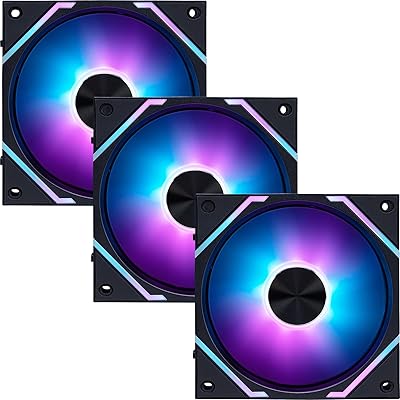
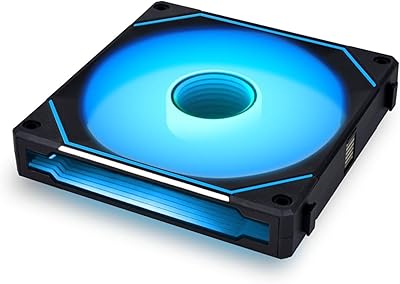
The Asiahorse Dawn 120mm ARGB Case Fan enters a crowded field dominated by names like Lian Li, Corsair, and Arctic — and it knows it. AsiaHorse isn't a brand most builders will recognize on sight, which means it has to earn trust through what it actually delivers. The standout pitch here is modular daisy-chain connectivity, which sets this ARGB case fan apart from the tangle-prone alternatives most of us have wrestled with. It also ships in both forward and reverse blade configurations — a genuinely useful distinction when you're planning airflow paths or trying to keep exposed blades facing a certain direction. Solid specs on paper, but let's see how they hold up in practice.

Features & Benefits

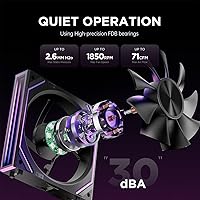
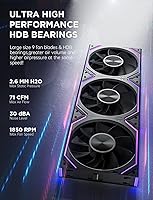
The most practical feature of this modular fan isn't its lighting — it's the daisy-chain connector system that lets you link multiple units using a single cable run. For a three-fan intake or a six-fan full build, that alone simplifies routing considerably. Performance-wise, the PWM controller spans 900 to 1850 RPM, pushing 71 CFM with 2.6 mmH2O static pressure — numbers that compare reasonably well against Corsair's LL120, though the LL120 edges it on static pressure for radiator use. The Hydro-Dynamic Bearing uses oil lubrication to reduce wear, which typically outlasts standard sleeve bearings. Noise peaks at 29 dBA, which is genuinely quiet at moderate speeds, and the ARGB infinity mirror layout produces even, consistent lighting that syncs cleanly with Aura Sync, RGB Fusion, and Mystic Light.

Best For

This ARGB case fan makes the most sense for builders installing three or more fans who are tired of zip-tying a spaghetti mess behind their motherboard tray. The modular connection benefit scales — it matters less with a single fan, a lot more with six. It's also a natural fit for ASUS, GIGABYTE, or MSI platform owners who want their lighting to just work without digging through third-party controllers. Mid-tower ATX builds with moderate thermal loads are the sweet spot. The forward and reverse blade options mean you can run a push-pull radiator configuration or simply choose which side shows the blade face, without ordering two separate products. Heavy overclocking rigs needing dense radiator setups may want a fan with higher static pressure ratings.

User Feedback

Because the Dawn 120mm fan launched in mid-2025, the user review pool is still relatively thin — worth flagging before treating early impressions as gospel. That said, early adopters have been most vocal about two things: lighting consistency, which holds up better than cheaper alternatives, and the ease of connecting multiple fans without extra adapters. On the downside, a handful of buyers have noted connector fit concerns after repeated swaps, and a few report minor RGB sync hiccups with certain motherboard generations. Long-term reliability of the HDB bearing is still unproven at this stage. Compared to the Lian Li UNI Fan, most reviewers see the Dawn as a competitive value option, though they acknowledge Lian Li's ecosystem polish remains a step ahead.

Pros

  • The daisy-chain connector links multiple fans with a single cable, making a clean interior significantly easier to achieve.
  • Forward and reverse blade variants let builders choose airflow orientation without purchasing two separate fan models.
  • At 29 dBA maximum noise, this modular fan stays quiet enough for open-air or bedroom builds.
  • HDB oil-lubricated bearings outperform cheap sleeve bearings in both noise reduction and expected operational lifespan.
  • Plug-and-play ARGB sync works out of the box with ASUS Aura Sync, GIGABYTE RGB Fusion, and MSI Mystic Light.
  • 71 CFM airflow handles mid-range CPU and GPU heat effectively without requiring fans to run at full speed.
  • Infinity mirror LED layout delivers even, uniform lighting that avoids the patchy glow common in budget ARGB fans.
  • PWM range of 900 to 1850 RPM gives solid granular speed control for balancing noise and cooling needs.

Cons

  • AsiaHorse is a relatively new entrant with a limited long-term brand track record compared to Corsair or Lian Li.
  • Launched in mid-2025, there is not yet enough owner data to confirm HDB bearing longevity over multiple years.
  • Static pressure of 2.6 mmH2O falls short for pushing air through thick radiators in demanding cooling setups.
  • Some early buyers report RGB sync hiccups with certain motherboard generations, requiring additional troubleshooting steps.
  • Daisy-chain connector durability after repeated connects and disconnects has been flagged by a handful of users.
  • The modular connection advantage is largely irrelevant if you are only buying one or two fans for a build.
  • Lighting compatibility outside ASUS, GIGABYTE, and MSI ecosystems is not guaranteed and may require a dedicated controller.
  • ABS and PVC construction feels noticeably lighter than premium metal-reinforced alternatives, which may concern longevity-focused buyers.

Ratings

The Asiahorse Dawn 120mm ARGB Case Fan has been evaluated by our AI scoring system after analyzing verified purchase reviews from global buyers, with spam, bot activity, and incentivized feedback actively filtered out. Scores reflect a balanced picture across both genuine strengths and consistent pain points reported across different build types and use cases. Where early review data is limited due to the product's mid-2025 launch window, that uncertainty is directly factored into the relevant category scores rather than papered over.

Cable Management
91%
The daisy-chain connector is the single most praised aspect of this fan among builders who have installed three or more units in a single build. Linking multiple fans through one cable run eliminates the tangle of connectors behind the motherboard tray, and reviewers running six-fan builds consistently describe the interior cleanup as dramatic.
The benefit effectively disappears if you are only installing one or two fans — in those scenarios, you are paying for a feature you will not use. A handful of users also note that the proprietary connector limits mix-and-match flexibility with fans from other brands in the same build.
Airflow Performance
78%
22%
At 71 CFM, this modular fan delivers solid airflow for mid-tower cases running mainstream CPUs and GPUs at everyday workloads. Builders positioning fans for standard intake and exhaust report that thermal results are consistent with what the rated numbers suggest on paper.
At 2.6 mmH2O static pressure, it falls short for pushing air through dense radiator fin stacks — users comparing it against Arctic P120 or Noctua NF-A12x25 in pressure-sensitive scenarios notice a meaningful performance gap. Those expecting strong radiator performance will need to look elsewhere.
Noise Level
84%
At moderate RPMs — where most systems spend the bulk of their time during everyday desktop and gaming workloads — this ARGB case fan is impressively unobtrusive. Users in open-air cases and home office environments frequently describe it as one of the quieter fans they have tested in this price bracket.
At full 1850 RPM, 29 dBA becomes audible if your case has mesh panels or minimal acoustic dampening. Users with aggressive motherboard fan curves report noticing the fan more than expected during extended rendering or encoding sessions that push sustained high thermal loads.
RGB Lighting Quality
87%
The infinity mirror LED layout produces noticeably cleaner and more uniform illumination than the patchy strips found on similarly priced competitors. Users upgrading from older Corsair LL120 fans frequently comment on how much more even the glow looks through tempered glass side panels, particularly at mid-brightness settings.
Users outside the ASUS, GIGABYTE, and MSI ecosystems sometimes encounter lighting that runs at a fixed color or requires a third-party ARGB controller to manage effectively. A small number of early buyers also reported inconsistent LED brightness between units in the same chain, pointing to minor first-batch QC variation.
Value for Money
76%
24%
For builders assembling a three-to-six fan array, the Dawn 120mm fan offers a competitive blend of ARGB quality, cable management convenience, and reasonable airflow at a price that undercuts Lian Li UNI Fan packs. Most buyers who purchased a full set of three report feeling they received solid value relative to what they paid.
Buying a single unit is harder to justify against established alternatives at the same price point that carry stronger brand backing and longer warranty histories. The value proposition depends heavily on buying in multiples — solo purchases rarely make the daisy-chain advantage worthwhile enough to justify the premium over simpler alternatives.
Build Quality
73%
27%
Frame tolerances are tight enough that blades do not rattle or wobble at low speeds, and the modular connector clicks together with a reasonably positive feel during installation. Buyers who have handled Corsair or Lian Li fans will notice the plastic quality is slightly below those benchmarks, but not a dealbreaker for the price.
The ABS and PVC construction feels noticeably lighter than metal-reinforced alternatives, which can read as lower quality to experienced builders even when it is functionally adequate. A small number of early buyers flagged minor connector fit issues after repeated swaps, suggesting the first production batch had some consistency challenges.
Installation Ease
86%
Most builders report that mounting and wiring the Dawn 120mm fan takes noticeably less time than traditional multi-fan setups, thanks to the modular connection system. Standard 120mm mounting holes mean no case-specific compatibility surprises, and the daisy-chain cable runs feed through cases cleanly without needing extra zip ties or custom routing.
First-time builders unfamiliar with daisy-chain fan systems may need a few minutes to understand how the modular connectors link together and which end connects to the motherboard header. The forward and reverse blade identification also lacks clear printed orientation indicators on the packaging, which a few buyers found confusing during mid-build setup.
PWM Control
82%
18%
The 4-pin PWM implementation responds predictably to motherboard fan curves, with users reporting smooth speed transitions without abrupt jumps or speed hunting — a minor but irritating behavior common in cheaper fans. At the low end of its range, the fan spins down reliably under light desktop workloads.
The 900 RPM speed floor means it does not fully stop spinning under zero-RPM fan profiles, a feature that several competing fans in this class do support. Builders who prioritize completely silent idle operation — particularly in living room or bedroom HTPCs — may find this limitation frustrating.
Software Compatibility
67%
33%
For ASUS, GIGABYTE, and MSI motherboard users, the ARGB sync works out of the box without any additional software beyond the board's standard lighting utility. Users on those three platforms consistently describe the lighting integration as reliable and straightforward, even for those with no prior ARGB experience.
Beyond those three ecosystems, compatibility becomes hit or miss — Corsair iCUE, NZXT CAM, and AMD-platform boards without native ARGB headers require a separate controller, adding both cost and setup complexity. A subset of MSI board owners also reported needing a firmware update before sync worked correctly, undermining the plug-and-play promise.
Static Pressure
61%
39%
For standard intake and exhaust positions on front, top, or rear case panels, the 2.6 mmH2O rating is adequate, and users running mainstream CPU air coolers report no thermal issues attributable to the fans. It handles everyday open-airflow ventilation duties reliably at mid-range speeds.
When pitted against purpose-built pressure-optimized fans from Arctic or Noctua in radiator-mounted scenarios, this ARGB case fan falls noticeably short — several users reported higher CPU temperatures when using it as a radiator fan compared to dedicated high-static-pressure alternatives. It is simply not the right tool for liquid cooling setups.
Bearing Longevity
69%
31%
The HDB bearing design is a sound engineering choice — oil-lubricated hydro-dynamic bearings used by other established brands in the same class have demonstrated multi-year lifespans with stable noise floors. Early buyers who have run the fan continuously for several months report no increase in noise or vibration.
With only a few months of real-world data since the May 2025 launch, there is simply not enough long-term field evidence to confirm whether AsiaHorse's specific HDB implementation holds up across two or three years of continuous use. Buyers who prioritize proven longevity should consider waiting for a more established owner track record.
Blade Flexibility
83%
Offering both forward and reverse blade configurations in a single product line is genuinely uncommon at this price tier, and builders who have used both variants in push-pull radiator setups praise the consistent mounting pattern and connector placement across the two. It removes the need to source two completely different fan models just for directional flexibility.
The two variants are sold separately rather than as a bundled mixed pack, so builders wanting both orientations need to place multiple orders and track which box contains which version. Packaging differentiation between the forward and reverse options could also be clearer to avoid costly mix-ups discovered only during mid-build installation.
Brand Reliability
58%
42%
AsiaHorse has been active in the PC peripheral market long enough to have shipped multiple fan product lines with reasonable buyer satisfaction, and early adopters who have needed warranty support describe response times as acceptable. The product itself shows clear signs of deliberate engineering investment rather than a generic rebadged design.
AsiaHorse does not carry the multi-year warranty infrastructure or service scale of Corsair, Lian Li, or Noctua — which matters significantly if a unit fails outside the standard return window. For a product launched in 2025, buyers are largely betting on design merits rather than a proven long-term support track record, and that is a meaningful risk at this price tier.

Suitable for:

The Asiahorse Dawn 120mm ARGB Case Fan is a strong pick for PC builders planning to install multiple fans in a single build who want to avoid the cable management headache that comes with traditional setups. If you're fitting out a mid-tower or full ATX case with three or more intake and exhaust fans, the daisy-chain connector cuts down on header usage and keeps the interior looking clean without requiring a separate fan hub. ASUS, GIGABYTE, and MSI motherboard owners get the most out of the ARGB implementation, since the infinity mirror lighting syncs directly with Aura Sync, RGB Fusion, and Mystic Light without additional controllers or software workarounds. The dual-orientation blade design — available in both forward and reverse configurations — is a genuine advantage for builders who want consistent aesthetics in push-pull radiator setups or prefer exposed blades to face a specific direction without buying two different fan models. Anyone running a system at moderate thermal loads who values quiet operation will also appreciate the 29 dBA noise ceiling during typical daily use.

Not suitable for:

The Asiahorse Dawn 120mm ARGB Case Fan is not the right call for extreme overclockers or anyone pushing high-end cooling demands through dense radiators. At 2.6 mmH2O static pressure, it's competitive for general case airflow, but it trails purpose-built high-static-pressure fans from Noctua or Arctic when it comes to pushing air through tightly packed heatsink fins. AsiaHorse also lacks the brand recognition and long-term reliability track record of Corsair, Lian Li, or be quiet! — which matters to buyers who weigh warranty support and company longevity when making hardware decisions. Since this fan only launched in May 2025, there is no multi-year owner feedback yet to validate the HDB bearing's durability claims, so early adopters are taking on some real risk there. Builders using non-ARGB headers or RGB controllers outside the ASUS, GIGABYTE, or MSI ecosystems may also run into lighting compatibility gaps. If you are only buying a single fan rather than a set, the daisy-chain feature adds no practical value and you would do better evaluating competitors on raw performance alone.

Specifications

  • Fan Dimensions: 120 x 120 x 25mm standard form factor fits any case with 120mm fan mounting points.
  • Speed Range: PWM-controlled speed adjusts between 900 and 1850 RPM depending on thermal load and motherboard fan curve settings.
  • Airflow: Maximum airflow output is rated at 71 CFM, suitable for general case ventilation in mid-tower and ATX builds.
  • Static Pressure: Static pressure is rated at 2.6 mmH2O, adequate for open case airflow but not optimized for dense radiator fin stacks.
  • Noise Level: Operating noise ranges from 6 dBA at minimum speed to a maximum of 29 dBA at full speed.
  • Bearing Type: Uses a Hydro-Dynamic Bearing (HDB) with oil lubrication to reduce friction, wear, and operational noise over time.
  • Connector: Connects to the motherboard via a standard 4-pin PWM header for automatic speed control.
  • Power Draw: Maximum power consumption is 4.35 watts at full speed under 12V DC input.
  • Voltage: Operates at 12V DC, compatible with standard ATX power supply rails via the motherboard fan header.
  • Lighting: Features an ARGB infinity mirror LED layout that produces uniform, even illumination across the fan frame.
  • RGB Sync: Natively compatible with ASUS Aura Sync, GIGABYTE RGB Fusion, and MSI Mystic Light for motherboard-controlled ARGB lighting.
  • Connection Type: Uses a modular daisy-chain connector system, allowing multiple fans to be linked together using a single cable run.
  • Blade Design: Available in two blade orientations: forward (front-to-back airflow) and reverse (back-to-front airflow) configurations.
  • Materials: Fan frame and housing are constructed from ABS plastic and PVC, with metal components used in the motor assembly.
  • Compatible Devices: Designed exclusively for use in desktop PC cases with standard 120mm fan mounting positions.

Related Reviews
Asiahorse Nyota 120mm ARGB Case Fan
75%
88%
ARGB Lighting Quality
76%
Cooling Performance
71%
Noise Level
74%
Motherboard Sync Compatibility
61%
Bearing & Long-Term Durability
More
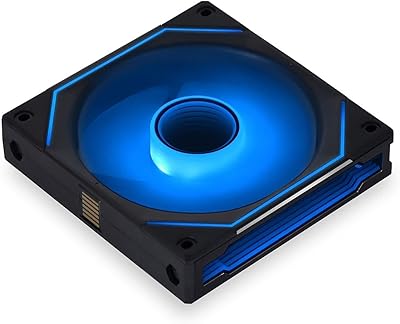
Lian Li UNI Fan SL Wireless 120mm ARGB Fan
85%
91%
Cooling Performance
88%
Ease of Installation
84%
Noise Level
95%
RGB Customization
89%
Build Quality
More
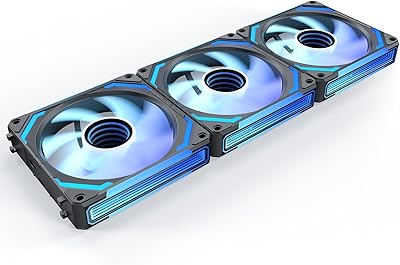
Lian Li UNI Fan SL-INF 120 RGB Infinity Mirror ARGB 120mm Fan
86%
93%
Aesthetics and RGB Lighting
88%
Noise Level/Quiet Operation
91%
Build Quality and Durability
85%
Ease of Installation
87%
Cooling Efficiency
More
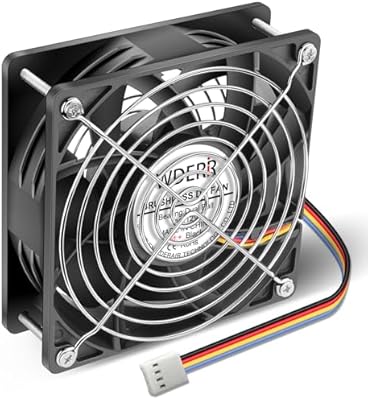
AsiaHorse COSMIQ 120mm RGB Case Fans 3-Pack
77%
93%
Cable Management
88%
Lighting Quality
86%
Ease of Installation
79%
Cooling Performance
67%
Noise Level
More
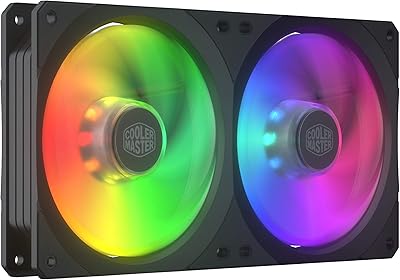
WDERAIR P1238 120mm PWM Computer Case Fan
70%
94%
Airflow Performance
31%
Noise Level
81%
Build Quality
83%
Durability & Longevity
76%
PWM Speed Control
More
Cooler Master SF240R ARGB 240mm Case Fan
77%
78%
Cooling Performance
74%
Noise Level
88%
Installation Ease
76%
ARGB Lighting Quality
71%
ARGB Compatibility
More
Lian Li UNI Fan SL-Infinity 140 ARGB Fan
86%
92%
Cooling Performance
95%
Visual Appeal & Lighting
87%
Noise Level
80%
Installation Ease
91%
Build Quality
More
PCCOOLER C3T500 ARGB Mid Tower PC Case
78%
88%
Value for Money
71%
Build Quality
79%
Cooling Performance
91%
Ease of Assembly
93%
Aesthetics & Lighting
More
AsiaHorse Perseus Mid-Tower ATX PC Case
75%
94%
Aesthetic Design
91%
Component Visibility
83%
Build Quality
86%
GPU Compatibility
82%
Interior Spaciousness
More
MSI MPG EZ120 ARGB 120mm Fans 3-Pack
76%
91%
Installation Experience
88%
RGB Lighting Quality
58%
Software Compatibility
83%
Noise Level
71%
Airflow Performance
More

FAQ

No separate hub is required. The modular daisy-chain connector lets you link fans directly to one another, so a single cable from the end of the chain runs back to your motherboard header or fan controller. This is a genuine time-saver when installing three or more fans, since it cuts down the number of cables running through your case significantly.

The 4-pin PWM connector works on any motherboard regardless of CPU platform, so speed control functions normally on AMD builds. The ARGB lighting is where it gets more platform-specific — native sync is confirmed for ASUS Aura Sync, GIGABYTE RGB Fusion, and MSI Mystic Light. If your AMD board does not support one of those three protocols natively, you will need a separate ARGB controller to manage the lighting.

It comes down to which direction air moves through the fan. The forward version pulls air from the front face and pushes it toward the back — the standard orientation for most intake or exhaust positions in a case. The reverse version does the opposite, moving air from back to front. This matters for push-pull radiator configurations where you need airflow coming from both sides, or when you want the blade face pointing a specific direction for aesthetic reasons without having to mount the fan awkwardly.

The 29 dBA ceiling is the rated maximum at full 1850 RPM, which most systems only hit under peak thermal load. Under a typical balanced fan curve, the Dawn 120mm fan spends most of its time at mid-range speeds where it is barely audible. If your motherboard profile is set aggressively, you will notice it more, but for everyday desktop use and casual gaming it is a genuinely quiet fan.

No, it does not natively support Corsair iCUE or NZXT CAM. Those platforms rely on proprietary connectors and protocols, while this fan's ARGB lighting is built around the three major open-standard ecosystems: ASUS Aura Sync, GIGABYTE RGB Fusion, and MSI Mystic Light. For Corsair or NZXT-centric builds, you would need a universal ARGB controller to manage the lighting independently.

Both use a daisy-chain approach that reduces cable clutter, and the core idea is similar. Lian Li's UNI Fan ecosystem is more mature and polished — the connector feel and overall fit and finish are a step above. That said, this modular fan is typically priced lower per unit, so you are getting a comparable cable-management benefit at a more accessible price point, with some trade-offs in ecosystem refinement and brand track record.

HDB stands for Hydro-Dynamic Bearing, which uses a thin film of lubricating oil to keep the rotating shaft suspended rather than relying on direct surface contact. Standard sleeve bearings — common in budget fans — wear down faster because the shaft and housing rub against each other directly. In practical terms, HDB means lower noise over time and a longer operational lifespan, particularly in fans that run continuously or in warm environments. It is a meaningful step up from sleeve bearings, though dual-ball-bearing designs still hold an edge for very long-term continuous operation.

Yes, both variants use the same modular connector, so chaining them together is not a compatibility issue. The daisy-chain connection passes power and the PWM signal regardless of blade orientation. Just plan your airflow direction deliberately — mixing orientations without a clear purpose can result in fans partially working against each other and reducing overall case airflow efficiency.

AsiaHorse does not publish a specific chain length limit, but most 4-pin fan headers on motherboards are rated for around 1 amp of current, which typically covers three to four fans at this wattage before you risk overloading the header. For larger fan arrays, the safer approach is to use a dedicated PWM fan hub that draws power from a SATA connector — the motherboard header then handles only the speed signal, not the full current load.

It is a fair concern to raise. Any product with only a few months of market history lacks the multi-year field data needed to assess durability with real confidence. The HDB bearing design is a proven approach used by other reputable brands, but how this specific implementation holds up at the two- or three-year mark is still an open question. Early buyer feedback has been broadly positive on build quality, but if long-term reliability is your top priority, a fan from a brand with a longer established track record may offer more peace of mind.