Overview

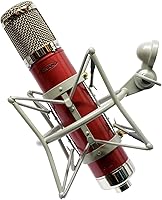
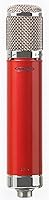
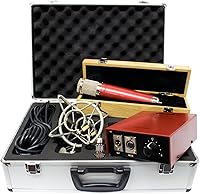
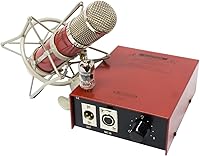
The Avantone Pro CV-12 Tube Condenser Microphone sits in an interesting corner of the large-diaphragm condenser market — tube-driven and heritage-inspired, but priced for home and project studio users rather than the boutique crowd. It ships with a dedicated external power supply and an aluminum storage box, making it a more complete package than many rivals at this tier. This is not a mic for someone who wants to plug into phantom power and hit record. It is built for the recordist who wants genuine tube character, real pattern flexibility, and a microphone that will grow with their craft.
Features & Benefits

The CV-12 offers nine selectable polar patterns controlled through the external power supply, letting you switch between cardioid for tight vocal sessions, figure-8 for two-person recording, or omni for room ambience without swapping gear. The tube signal path delivers a warm, harmonically rich character that solid-state mics at this tier rarely replicate. The large-diaphragm capsule covers a frequency response up to 20 kHz, and the brass construction adds durability while helping manage resonance. With a 74 dB signal-to-noise ratio, the noise floor stays impressively controlled for a tube design — which is not always a given in this segment.

Best For

This tube condenser is a strong match for lead vocalists in home or project studios who want vintage-flavored warmth without boutique pricing. Singer-songwriters recording both vocals and acoustic instruments will find the multipattern capability genuinely useful rather than a box-ticking feature. It handles acoustic guitar and piano miking well, and those working in treated rooms can properly exploit figure-8 and omnidirectional patterns for stereo or ambient captures. If you record in an untreated space and only need cardioid, a simpler phantom-powered mic might suit you better — but for the flexible home studio builder, this large-diaphragm mic covers a lot of ground.

User Feedback

Buyers consistently highlight the full-bodied vocal warmth as the CV-12's standout quality, with many noting it outperforms solid-state options at comparable prices on certain source material. References to classic vintage tube mics come up often in owner reviews — not as direct comparisons, but as a way of describing the character it brings. Build quality earns generally positive remarks, and the included aluminum case is seen as a practical addition rather than a throwaway accessory. On the other side, the external power supply draws regular criticism for its bulk and extra cable routing. There is also a notable learning curve around dialing in the right pattern and placement, which can frustrate less experienced recordists.

Pros

  • The tube signal path delivers a warm, full-bodied vocal tone that solid-state mics at this price rarely replicate.
  • Nine selectable polar patterns make this tube condenser genuinely versatile across vocals, acoustic instruments, and room miking.
  • The 74 dB signal-to-noise ratio keeps the noise floor impressively controlled for a tube-based design.
  • A complete package out of the box, including a dedicated power supply and a sturdy aluminum storage case.
  • Brass body construction feels durable and solid, well above what you might expect at this price tier.
  • The large-diaphragm capsule captures a wide, natural frequency response suited to detailed acoustic recording.
  • Users consistently praise the CV-12 for evoking a vintage tube character that costs far more to achieve elsewhere.
  • Pattern switching via the external power supply is straightforward once you are familiar with the setup.
  • Strong long-term value for studio owners who will use multiple polar patterns regularly.

Cons

  • The external power supply is bulky and adds cable clutter that not every studio desk can accommodate easily.
  • No phantom power compatibility means it cannot work directly with interfaces that lack a dedicated power input.
  • There is a real learning curve to dialing in optimal placement and polar pattern selection, especially for beginners.
  • The large physical footprint of the full kit, case included, makes storage and transport less convenient than compact alternatives.
  • Tube mics in this price range can show unit-to-unit variation, so quality control is worth checking on arrival.
  • The warmth of the tube circuit, while appealing on vocals, can be too colored for sources that need a more neutral capture.
  • Users recording in untreated rooms may find the sensitive large-diaphragm capsule picks up unwanted room noise and reflections.
  • The power supply cable length may be limiting depending on your studio layout and rack positioning.

Ratings

The scores below for the Avantone Pro CV-12 Tube Condenser Microphone were generated by our AI system after analyzing verified buyer reviews from around the world, with spam, bot submissions, and incentivized feedback actively filtered out. Each category reflects the genuine consensus across a wide range of real users — home studio vocalists, project studio producers, and singer-songwriters alike. Both the strengths that keep buyers loyal and the frustrations that lead to hesitation are transparently captured in every score.
Vocal Sound Quality
88%
Across hundreds of reviews, vocalists consistently describe the CV-12 as capturing a warmth and body that solid-state mics at this price tier rarely deliver. In home studio sessions, many users note that lead vocals sit more naturally in a mix without needing heavy EQ correction, which is a meaningful time-saver during production.
A handful of users with brighter, more sibilant voices find that the tube coloration can occasionally mask fine high-frequency detail. It is not a neutral capture tool, so those who need a transparent, clinical vocal sound may find the character more limiting than flattering.
Tube Character
83%
The tube signal path adds a harmonic richness that most owners describe as genuinely musical rather than gimmicky — particularly appreciated on acoustic guitar and piano recordings where solid-state mics can sound thin. Users who came from entry-level condensers often describe this as their first real introduction to vintage-flavored tone.
It is important to calibrate expectations: this is a mid-range tube circuit, not a boutique design, and a few experienced engineers point out that the tube contribution is subtle rather than dramatic. Buyers expecting the full-bodied saturation of a high-end vintage mic may find the character less pronounced than anticipated.
Polar Pattern Versatility
86%
The nine selectable patterns are widely praised as one of the CV-12's most practical strengths, allowing users to shift from tight cardioid vocal tracking to figure-8 for dual-vocalist sessions or omni for room ambience without pulling out a second microphone. Studio owners especially appreciate this flexibility when working with varied source material across a single session.
Pattern switching requires interacting with the external power supply rather than a switch on the mic body itself, which a number of users find less intuitive when working quickly. There is also a learning curve around understanding how each intermediate pattern behaves in a real room, which can frustrate newer recordists.
Build Quality
81%
19%
The brass body feels substantial and well-machined, and most owners report that the microphone holds up well over years of regular studio use without loosening joints or degraded finish. The overall construction is frequently described as punching above its price segment in terms of physical solidity.
A small but consistent portion of reviewers report unit-to-unit variation in finish quality and capsule consistency, suggesting that quality control is not perfectly uniform across production batches. This is not a widespread problem, but it is worth inspecting carefully upon arrival.
Value for Money
84%
For a mid-range tube condenser that includes a dedicated power supply and an aluminum storage case, most users feel they are getting strong value relative to what comparable tube character would cost from competing brands. The included accessories alone represent meaningful cost savings over buying them separately.
If you already own a capable solid-state large-diaphragm condenser, the incremental step up in tone may not justify the investment for everyone. A few buyers on tighter budgets also note that the total system cost creeps up once you factor in a quality preamp to pair with it.
Setup & Usability
62%
38%
Once the initial setup is understood, the workflow is reasonably consistent and repeatable — experienced studio users adapt to the external power supply routine quickly and generally report no ongoing friction. The XLR connection is standard and universally compatible with existing gear chains.
The dependency on a dedicated power supply is the most commonly cited usability complaint, as it adds cable routing complexity and requires an extra power outlet that not every recording desk setup can easily accommodate. First-time tube mic owners frequently report a steeper-than-expected setup learning curve that took several sessions to resolve.
Noise Floor
77%
23%
A 74 dB signal-to-noise ratio is a respectable figure for a tube condenser, and the majority of users recording vocals and acoustic instruments in treated rooms report no meaningful noise issues during tracking or mixing. The self-noise stays out of the way in typical studio conditions.
In less controlled recording environments, some users notice a slight tube hiss that becomes more apparent when recording quieter sources or applying significant gain. It is not a dealbreaker for most, but it is worth considering if your work involves delicate close-miking of very quiet acoustic sources.
Low-End Response
78%
22%
Many vocalists specifically praise the natural low-end body the CV-12 adds to chest-heavy voices, noting that it reduces the need for low-shelf EQ boosts in post-production. On upright bass and floor toms, users describe the low end as present and warm without becoming muddy.
Some users tracking male vocalists with naturally heavy low-mids find the mic can occasionally overemphasize that range in small, untreated rooms. Careful positioning and high-pass filtering during recording can manage this, but it does require an extra step that phantom-powered condensers in the same category handle more transparently.
High-Frequency Detail
71%
29%
The frequency response extending up to 20 kHz means the CV-12 captures adequate air and presence for most studio applications, and acoustic instruments like fingerpicked guitar benefit from a natural top-end sheen that feels musical rather than artificially boosted.
Compared to high-end solid-state condensers with pronounced presence peaks, the high-frequency response here is more relaxed and rounded, which is a byproduct of the tube design. Engineers who prefer a more forward and detailed upper register for pop or acoustic recordings may find themselves reaching for EQ to compensate.
Included Accessories
82%
18%
The rigid aluminum storage case is consistently called out as a genuinely useful inclusion rather than a marketing afterthought — it keeps the mic, power supply, and cables organized and protected between sessions. Long-term owners particularly appreciate it for keeping everything in one place over years of use.
The power supply cable length is a point of frustration for some users with specific studio layouts, as it may not reach comfortably between the mic position and the nearest power outlet or equipment rack. A longer cable option would resolve a complaint that comes up more often than it probably should.
Acoustic Instrument Recording
79%
21%
Acoustic guitar, piano, and even light percussion recordings are frequently cited as strong use cases, with users noting that the tube warmth adds a pleasing naturalness to strummed and plucked strings in particular. The multipattern capability makes room miking and stereo techniques accessible from a single unit.
For very bright acoustic instruments like mandolin or banjo where transient clarity matters, the slightly rounded tube response can soften attack detail in ways that require EQ correction. It is not a weakness unique to this mic, but it is a real-world tradeoff that acoustic recording specialists should factor in.
Compatibility
88%
Standard XLR output means the CV-12 integrates cleanly into virtually any existing studio chain without adapters or special considerations beyond the power supply. Users with entry-level interfaces up to professional preamp setups all report clean, reliable connectivity.
The non-phantom-power design is a genuine compatibility limitation for anyone whose workflow depends on fast, cable-minimal setups — particularly mobile recorders or those who work in multiple locations. It is not a flaw, but it is a hard constraint that limits the use cases compared to a standard phantom-powered condenser.
Durability Over Time
76%
24%
Owners who have used the CV-12 for several years generally report that the brass body and overall construction hold up well to regular studio handling, with no common reports of mechanical failure or degraded performance under normal conditions. The aluminum case contributes meaningfully to long-term protection.
Tube components have a finite lifespan, and a few long-term owners note that tube replacement eventually becomes a consideration — though replacement tubes are available and not prohibitively expensive. This is inherent to any tube mic design rather than a specific fault of this model.
Room & Ambience Capture
73%
27%
In treated recording spaces, the omnidirectional and figure-8 patterns open up genuinely useful room miking options that many users exploit for adding natural space to acoustic recordings. Vocalists who layer multiple room takes also find it well-suited to capturing a cohesive ambient bed.
In untreated rooms, the sensitivity of the large-diaphragm capsule combined with the open polar patterns can pick up reflections and background noise that quickly undermine the warmth users are chasing. This is arguably the biggest environmental limitation for buyers who do not yet have a treated recording space.

Suitable for:

The Avantone Pro CV-12 Tube Condenser Microphone is a well-matched choice for home and project studio owners who want genuine tube character without spending boutique-level money. It is particularly well-suited to lead vocalists who prioritize warmth and body in their recordings over a hyper-accurate, clinical sound. Singer-songwriters who track both voice and acoustic instruments will get strong mileage from the nine selectable polar patterns, since one mic can handle multiple source types without compromise. Producers who record in acoustically treated spaces will benefit most, as the figure-8 and omnidirectional settings reward proper room preparation. If you are building a mid-range studio setup and want a microphone that can grow with your skills and recording scenarios, this large-diaphragm mic offers a level of versatility that is hard to match at its price point.
Not suitable for:

The Avantone Pro CV-12 Tube Condenser Microphone is not the right call for recordists who need a simple plug-and-play solution. Because it runs on a dedicated external power supply rather than standard 48V phantom power, it requires additional desk space, cable management planning, and a bit more setup time than most condenser mics. Podcasters, streamers, or content creators who just want to plug into an interface and start talking will find the workflow unnecessarily complicated. Those recording in untreated rooms should also think twice, as multipattern tube condensers tend to pick up reflections and noise that can undermine the warmth they are chasing. Beginners with no experience positioning large-diaphragm mics may find the learning curve frustrating before they hear the results they expected.
Specifications

  • Mic Type: Large-diaphragm tube condenser microphone designed for studio recording applications.
  • Polar Patterns: Features 9 selectable polar patterns, switchable via the included external power supply unit.
  • Frequency Response: Captures audio across a wide range with an upper limit of 20 kHz for detailed, natural sound reproduction.
  • Signal-to-Noise Ratio: Rated at 74 dB, delivering a relatively controlled noise floor for a tube-based condenser design.
  • Audio Sensitivity: Sensitivity is rated at 10 dB, suitable for capturing vocals and acoustic instruments at typical studio levels.
  • Connector: Uses a standard XLR output connector, compatible with professional preamps and audio mixers.
  • Power Source: Requires the included dedicated external power supply unit; it does not operate on standard 48V phantom power.
  • Body Material: Constructed from brass, contributing to durability and helping isolate the capsule from mechanical resonance.
  • Weight: The microphone body weighs 2.7 pounds, which is typical for a large-diaphragm tube condenser of this class.
  • Dimensions: The full kit including the aluminum case measures 17 x 13 x 6 inches for storage and transport.
  • Included Accessories: Ships with a dedicated power supply unit and a rigid aluminum storage box for safe transport and long-term protection.
  • Model Number: The official model designation is CV12, as listed by the manufacturer Avantone Pro.
  • Brand: Manufactured and sold by Avantone Pro, a brand focused on heritage-inspired studio recording tools.
  • Compatibility: Works with standard audio mixers, standalone preamps, and audio interfaces that accept XLR connections.
  • Channels: Single-channel microphone, capturing one audio source at a time through its XLR output.

Related Reviews
Avantone Pro CK-1 Small-Diaphragm Condenser Microphone
81%
88%
Sound Transparency
86%
Transient Response
81%
Capsule Versatility
84%
Build Quality
89%
SPL Handling
More
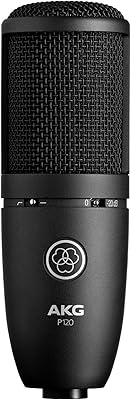
AKG P120 Condenser Microphone
78%
88%
Sound Clarity
84%
Value for Money
74%
Build Quality
61%
Room Sensitivity
79%
Ease of Setup
More
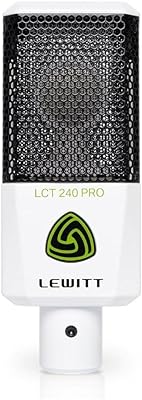
Lewitt LCT 240 Pro Condenser Microphone
83%
91%
Vocal Clarity
89%
Acoustic Instrument Recording
88%
Build Quality
76%
Background Noise Rejection
87%
Value for Money
More
Rode NTK
Rode NTK
77%
94%
Vocal Tone & Warmth
91%
Self-Noise & Signal Clarity
88%
Build Quality & Durability
54%
Stand & Mounting Requirements
61%
Ease of Setup
More
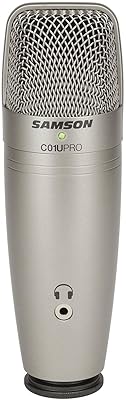
Samson C01U Pro
Samson C01U Pro
83%
93%
Build Durability
88%
Vocal Clarity
82%
Background Noise Rejection
91%
Latency Performance
96%
Ease of Setup
More
Warm Audio WA-251 Tube Condenser Microphone
78%
89%
Vocal Sound Character
83%
Build Quality
91%
Value for Money
86%
Polar Pattern Versatility
72%
Noise Floor Performance
More
Elgato Wave:3 USB Condenser Microphone
82%
91%
Audio Clarity
88%
Build Quality
93%
Ease of Setup
71%
Wave Link Software
78%
Noise Rejection
More
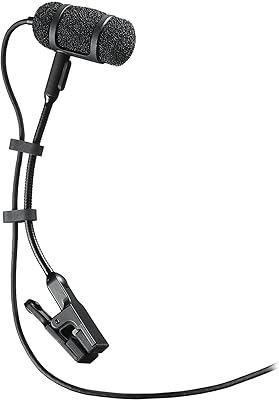
Audio-Technica PRO 35
88%
93%
Audio Clarity
96%
High-SPL Handling
89%
Mounting Security
91%
Isolation & Feedback Rejection
87%
Build Durability
More
Lewitt LCT 940 Large-diaphragm Condenser Microphone
81%
91%
Tonal Blend Control
92%
FET Sound Quality
87%
Tube Sound Quality
93%
Build Quality
91%
Vocal Performance
More
Blue Blueberry Cardioid Condenser Microphone
79%
93%
Tonal Character
91%
Vocal Performance
89%
Build Quality
94%
Capsule Quality
71%
Preamp Compatibility
More

FAQ

No, it does not. The CV-12 runs exclusively off its own dedicated external power supply, which is included in the box. You still connect it to your interface via XLR, but the power comes from that separate unit rather than from the 48V phantom power on your interface. Make sure you have desk space and a free power outlet ready for the supply box before you set up.

The Avantone Pro CV-12 Tube Condenser Microphone offers nine selectable polar patterns, ranging from cardioid and figure-8 to omnidirectional and several intermediate settings. Pattern selection is handled through a dial on the external power supply unit rather than on the mic body itself. It is a straightforward process once you are familiar with the layout, though first-time tube mic users may need a few sessions to understand how each pattern behaves in their room.

It can be an excellent choice for home vocal recording, but there are some conditions. It performs best in acoustically treated spaces where room reflections are managed, since the large-diaphragm capsule is quite sensitive. If your recording space is untreated or has a lot of hard surfaces, you may pick up more room noise than you want. In a well-prepared environment, the tube circuit adds a warmth to vocals that solid-state mics at similar prices often cannot match.

It shares some of the broad character traits of classic tube condensers — warmth, a slightly rounded top end, harmonic richness — but it is a mid-range tube circuit, not a boutique-grade design. Think of it as a genuine introduction to tube sound rather than a substitute for a vintage Neumann or AKG. For the price tier it occupies, the tube character is real and noticeable, and many users find it satisfying for vocals and acoustic instruments without needing to make direct comparisons to far more expensive gear.

Yes, and it handles acoustic guitar well, particularly when you take advantage of the multipattern options. Cardioid works well for close-miking the body or soundhole, while an omnidirectional setting can capture more of the natural room ambience around the instrument. Positioning and distance will make a significant difference, so it is worth experimenting before committing to a final placement.

It is genuinely practical for both storage and transport. The case protects the mic and keeps the power supply and cables organized in one place, which is more useful than it might sound when you are dealing with a tube mic setup that involves multiple components. Most owners who mention the case in their feedback consider it a real bonus rather than a throwaway accessory.

For a tube condenser, the noise floor is quite well-controlled at a 74 dB signal-to-noise ratio. Tube mics are generally noisier than high-end solid-state designs by nature of their circuitry, but the CV-12 sits comfortably within acceptable limits for vocal and instrument recording in a home or project studio context. You are unlikely to have issues unless you are recording very quiet sources in a demanding professional environment.

Any standard XLR preamp or audio interface input will work, since the mic handles its own power needs externally. You do not need a high-gain preamp like you might for a dynamic mic — condenser mics are generally efficient enough that mid-range interfaces pair well with them. A cleaner preamp will let the tube character of the mic come through more clearly, so if you have options, leaning toward a transparent preamp is a reasonable choice.

As of the available product information, the CV-12 is not discontinued and remains in active production. Avantone Pro has kept it in their lineup for a considerable number of years, which speaks to its sustained appeal among home and project studio users.

There is a moderate learning curve, mainly around understanding how the different polar patterns interact with your recording space and source placement. If you have only used a fixed-cardioid mic before, transitioning to a nine-pattern tube condenser will take some experimentation. The external power supply adds one more variable to manage. That said, the reward for putting in the time is a much wider creative toolkit, and most users report that the initial adjustment period is worth it.

Where to Buy