Overview

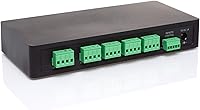
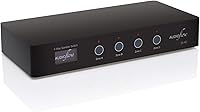
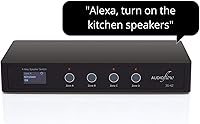
The Audioflow 3S-4Z 4-Way Smart Wi-Fi Speaker Switch is a purpose-built zone selector from a company that focuses exclusively on this niche. It connects up to four pairs of passive speakers to a single stereo amplifier, giving you whole-home audio without buying separate amplifiers for every room. Control happens through a dedicated iOS and Android app or via Amazon Alexa voice commands — no physical fumbling with buttons. Crucially, the design is passive switching, meaning the audio signal passes through without any active processing, which matters to anyone who has invested in a quality amplifier.
Features & Benefits

Connecting four speaker zones to one amp sounds straightforward until you consider what it does to impedance — running multiple pairs in parallel can drop the load dangerously low. The Audioflow 4-zone selector handles this with an impedance matching system that wires zones in a series-parallel configuration, keeping your amplifier safe across outputs up to 300W at 8Ω. There is also a built-in 200Ω dummy load that kicks in when all zones are switched off, preventing the open-circuit condition some amplifiers dislike. Wi-Fi runs on 2.4GHz with WPA/WPA2 security, and the app covers Android 6.0 and iOS 13 and above.

Best For

This Wi-Fi speaker switcher makes most sense if you already own a capable stereo amplifier and want to push audio into multiple rooms without running separate amps everywhere. Think kitchen, living room, patio, and a bedroom — all fed from one source. It is particularly well suited to smart home setups where Alexa routines already handle lighting and thermostats, because adding speaker zone switching to that ecosystem feels natural. People upgrading from a basic manual rotary switch will notice the biggest quality-of-life improvement. You do need 8Ω passive speakers to take full advantage of the impedance management built in.

User Feedback

With 95 ratings and a 4.3-star average, the reception is genuinely positive — though that is a relatively modest sample, so treat the overall picture as directional rather than definitive. App setup and Wi-Fi responsiveness draw the most consistent praise, with buyers noting that zone switching works reliably in daily use. The premium price is a recurring friction point, particularly for those weighing this against a passive manual selector. A minority of reviewers have raised questions around relay longevity, and while Alexa integration works well for most, a few users report needing to re-link it after firmware updates.

Pros

  • Passive switching architecture keeps the audio signal completely unaltered between amplifier and speakers.
  • Built-in impedance matching protects your amplifier when running multiple zones at once.
  • The 200Ω dummy load prevents open-circuit damage when all zones are switched off.
  • Alexa voice control integrates cleanly into existing smart home routines for most users.
  • App-based zone switching from a phone beats walking to a manual selector every time.
  • Universal 100–240V power supply works across North America, Europe, and Australia out of the box.
  • Handles amplifier outputs up to 300W at 8Ω, covering powerful home stereo systems comfortably.
  • Compact footprint fits neatly into an AV cabinet without dominating the rack space.
  • The Audioflow 3S-4Z 4-Way Smart Wi-Fi Speaker Switch supports up to 14AWG cable, suitable for longer speaker runs.
  • 4.3-star average across verified buyers reflects genuine satisfaction in real home installations.

Cons

  • App connectivity can drop after router restarts, requiring a re-pairing process that feels avoidable.
  • Alexa skill occasionally unlinks after firmware updates, disrupting automation routines unexpectedly.
  • No per-zone volume control means one global amplifier level applies across all active speaker pairs.
  • Strictly 8Ω compatible — owners with 4Ω or mixed-impedance speakers are effectively locked out.
  • 2.4GHz-only Wi-Fi with no Ethernet fallback is a real limitation for fixed AV cabinet installations.
  • The quick-start guide lacks the detail needed for less experienced buyers during Wi-Fi provisioning.
  • Plastic chassis feels inconsistent with the premium pricing when compared to metal-bodied alternatives.
  • Long-term relay durability data is still limited given the modest total review count available.
  • No rack-mount hardware included, which matters for anyone building a proper equipment rack.
  • Premium pricing is difficult to justify for users who only need occasional zone switching.

Ratings

The Audioflow 3S-4Z 4-Way Smart Wi-Fi Speaker Switch earns a well-rounded but nuanced verdict after our AI system analyzed verified buyer reviews from global markets, applying filters to remove incentivized, bot-generated, and outlier feedback. Across categories ranging from installation ease to long-term reliability, the scores reflect what real owners consistently praise and where genuine frustrations surface. Both the strengths and the friction points are represented transparently here, so you can weigh this Wi-Fi speaker switcher against your specific setup before committing.

App Experience
78%
22%
Most owners find the dedicated app intuitive enough to configure all four zones within a single session. Switching rooms on and off from a phone feels noticeably more convenient than walking to a manual selector, especially when music is playing during a dinner party or a lazy Sunday morning.
A portion of users report that the app occasionally loses connection after router restarts, requiring a re-pairing step that should not be necessary on a premium device. The interface is functional but lacks the polish of mainstream smart home apps, which feels inconsistent with the price positioning.
Alexa Integration
74%
26%
For households already running Alexa routines, being able to say a phrase and switch audio to the patio or kitchen is genuinely useful. Setup through the Alexa skill works as documented for the majority of buyers, with zone commands responding reliably under normal conditions.
A recurring complaint involves Alexa unlinking from the device after firmware updates, forcing users to re-discover and re-authorize the skill. This is more than a minor annoyance when it disrupts a carefully built automation routine, and it suggests the firmware update process needs tighter integration testing.
Impedance Protection
91%
The series-parallel wiring architecture is one of the most technically credible aspects of this unit, keeping the amplifier load within safe limits even when all four zones run simultaneously. Audiophiles who understand what an unprotected multi-speaker tap can do to a good amp genuinely appreciate this as a built-in safeguard rather than an afterthought.
The protection system is designed specifically around 8Ω speakers, so buyers with 4Ω or 6Ω speaker pairs will find the impedance calculations no longer apply as intended. This is a real constraint for anyone with a mixed or non-standard speaker collection.
Amplifier Safety (Dummy Load)
88%
The 200Ω dummy load that engages when all zones are switched off is a thoughtful engineering detail that protects amplifiers sensitive to open-circuit output conditions. Owners running high-end integrated amps have specifically called this out as a reason they chose this unit over cheaper alternatives.
This feature is largely invisible to most users, which means those who do not read the manual carefully may not realize it is there or why it matters. It does not compensate for incompatible speaker impedances, so the protection has limits that are not always clearly communicated in the product listing.
Installation & Wiring
76%
24%
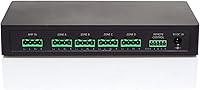
The physical installation is manageable for anyone comfortable with basic speaker wire terminations. Connection plugs are included in the box, and the terminals accept up to 14AWG cable, which covers most residential speaker runs without requiring specialist tools.
Four zones worth of speaker wiring in a home audio setup means a lot of cable management, and the unit's compact footprint can make the terminal area feel cramped when all eight runs are connected. A few buyers noted that the quick-start guide skims over the Wi-Fi provisioning steps, leading to avoidable confusion during first setup.
Wi-Fi Reliability
73%
27%
Day-to-day switching commands transmit quickly enough that there is no perceptible delay between tapping the app and hearing the relay click. The 2.4GHz band offers solid wall penetration, which matters when the unit is installed in a utility room or AV cabinet away from the router.
A 2.4GHz-only design can be a bottleneck in households with congested wireless environments, where interference from other devices occasionally causes command dropouts. There is no wired Ethernet fallback, which would have been a sensible option for a device marketed at serious home audio users.
Build Quality
82%
18%
The chassis feels appropriately solid for a device that sits in a fixed AV installation rather than being handled daily. The relay mechanism produces a satisfying click that reinforces confidence in the switching action, and the black finish blends cleanly into most rack or shelf environments.
The enclosure is entirely plastic, which some buyers feel is at odds with the premium price tier. There are no rack-mount ears or integrated cable management slots, which would have improved its practical usability in a proper AV cabinet installation.
Sound Transparency
86%
Passive switching is fundamentally the right architecture for preserving audio fidelity, and owners consistently report no audible coloration or signal degradation when routing through the unit. Compared to active switchers that insert their own circuitry into the signal path, this approach earns trust from more discerning listeners.
At very high output levels approaching the 300W ceiling, a small number of users have noted faint relay noise during switching transitions. It is not a fidelity issue during playback, but it can be startling in a quiet room if you are toggling zones while music is paused.
Value for Money
62%
38%
For buyers who genuinely need Wi-Fi control, impedance matching, and Alexa integration in a single unit, the pricing can be justified relative to assembling those capabilities from separate components. The amplifier protection features alone add tangible long-term value for owners of expensive stereo equipment.
Compared to passive manual speaker selectors that cost a fraction of the price, the premium is steep, and the app reliability issues reported by a subset of users make it harder to defend confidently. Budget-conscious buyers who rarely need remote zone switching may struggle to justify the cost difference.
Zone Flexibility
79%
21%
Having four independently controlled zones gives real versatility for typical home layouts — covering the main living areas plus an outdoor space is a common configuration that this unit handles without compromise. Each zone can be toggled independently or in combination via the app.
There is no per-zone volume control, which means the amplifier volume applies globally across whichever zones are active. This is a notable limitation when one room needs background-level audio while another zone is the primary listening area.
Compatibility Range
67%
33%
The universal 100–240V power supply means the unit ships and operates across North America, Europe, and Australia without an adapter, which is a practical convenience for buyers outside the UK. The broad OS support covers virtually all current Android and iPhone users.
The strict 8Ω speaker requirement limits compatibility more than casual buyers might anticipate. Users with older or imported speaker pairs running at different nominal impedances will need to verify specifications carefully, and there is no built-in way to accommodate mixed-impedance zone configurations.
Setup Documentation
61%
39%
The included quick-start guide covers the physical connection steps adequately for someone with prior AV installation experience. Online support resources from Audioflow are available for buyers who need additional guidance beyond what is in the box.
The documentation falls short for less technical buyers, particularly around the Wi-Fi provisioning process and the impedance matching explanation. Several reviewers mention that clearer diagrams for common multi-room wiring scenarios would have saved meaningful setup time.
Long-Term Reliability
69%
31%
The majority of owners who have used the unit for an extended period report stable day-to-day performance with no hardware failures. The relay-based switching mechanism is a proven technology that does not degrade with normal usage frequency.
With only 95 ratings available, long-term reliability data is still accumulating, so projections carry uncertainty. A handful of reviewers raise questions about relay wear under high-frequency switching use cases, and firmware update consistency remains a watch point based on current feedback patterns.

Suitable for:

The Audioflow 3S-4Z 4-Way Smart Wi-Fi Speaker Switch is built for homeowners who already own a capable stereo amplifier and want to distribute audio across multiple rooms without buying additional amplifiers or streaming devices for each space. If your setup involves a good integrated amp in the living room and you want the same music playing on the patio, in the kitchen, and in a bedroom simultaneously, this unit handles exactly that scenario with the impedance matching needed to keep your amp safe. It fits naturally into Alexa-driven smart homes, where voice commands or automated routines can flip speaker zones without anyone picking up a phone. Audiophiles upgrading from a basic rotary manual selector will feel the quality difference immediately — both in terms of convenience and in knowing their amplifier is genuinely protected. It also appeals to AV enthusiasts who care about signal purity, since the passive design keeps the audio path clean rather than inserting active electronics between the amp and speakers.
Not suitable for:

Buyers looking for a straightforward, set-it-and-forget-it audio switch at a modest price point are likely to find this Wi-Fi speaker switcher more expensive and more complex than their needs require. The unit is strictly designed for 8Ω passive speakers, so anyone running 4Ω bookshelf speakers or a mixed-impedance setup will not benefit from the built-in impedance management and could even encounter compatibility issues. It is also not the right choice for people who want per-zone volume control — the amplifier sets a single output level across all active zones, which becomes awkward when different rooms need very different listening volumes at the same time. Households with congested 2.4GHz Wi-Fi networks may encounter occasional connectivity hiccups, and there is no wired Ethernet fallback for those who want rock-solid reliability in a fixed installation. If your smart home runs purely on platforms other than Alexa, the voice control advantage largely disappears, and you would be paying a premium for an app that some users find less polished than expected at this price.

Specifications

  • Model: The unit is the Audioflow 3S-4Z, the four-zone variant in Audioflow's smart speaker switch range.
  • Zones: Supports up to four independent pairs of passive speakers connected to a single stereo amplifier simultaneously.
  • Power Rating: Rated for amplifier outputs up to 300W at 8Ω, accommodating high-output home stereo systems.
  • Speaker Impedance: Designed for use with 8Ω speakers and amplifiers capable of accepting a 4Ω load.
  • Dummy Load: A 200Ω dummy load engages automatically when all zones are switched off, protecting the amplifier from open-circuit conditions.
  • Relay Rating: Internal switching relays are rated at a maximum of 8A at 250V AC.
  • Cable Capacity: Speaker wire terminals accept conductors up to 2.5mm² or 14AWG for each zone connection.
  • Wi-Fi Standard: Connects via 2.4GHz 802.11b/g/n Wi-Fi with WPA and WPA2 PSK security protocols.
  • Power Input: Requires 5V DC at 1A via a 2.1×5.5mm barrel plug, centre positive.
  • Power Supply: Included power supply is universal, operating on 100–240V 50/60Hz, with UK, EU, USA, and AUS plug adapters included.
  • App Compatibility: The Audioflow companion app supports Android 6.0 and above, and Apple iOS 13.0 and above.
  • Voice Control: Compatible with Amazon Alexa for hands-free zone switching via voice commands.
  • Dimensions: The unit measures 8.46 × 3.9 × 1.38 inches (approximately 215 × 99 × 35mm).
  • Weight: The unit weighs 1.61 pounds (approximately 730g) without cabling.
  • Color & Finish: Available in black with a matte plastic enclosure suited to AV cabinet or shelf installation.
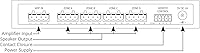
  • Connector Type: All speaker connections use screw-terminal speaker wire connectors rather than proprietary plugs.
  • Impedance Design: Zones are wired internally in a series-parallel configuration (Zone A+B in series, Zone C+D in series, both pairs then in parallel) to maintain a safe amplifier load.
  • First Available: The product was first made available in July 2021, manufactured by Audioflow.

Related Reviews

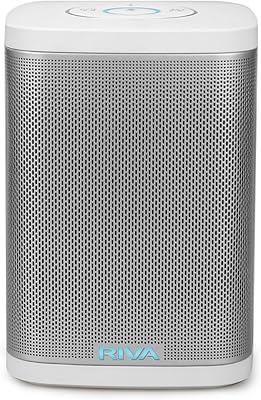
RIVA Concert Wi-Fi Bluetooth Smart Hi-Fi Speaker
85%
93%
Sound Quality
85%
Alexa Integration
88%
Connectivity Options
90%
Ease of Setup
87%
Multiroom Audio Compatibility
More
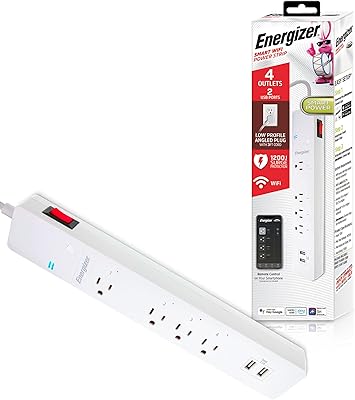
Energizer Smart Wi-Fi 4-Outlet Power Strip
73%
88%
Ease of Setup
67%
App Performance
84%
Voice Control Integration
62%
Outlet Spacing
71%
Surge Protection
More
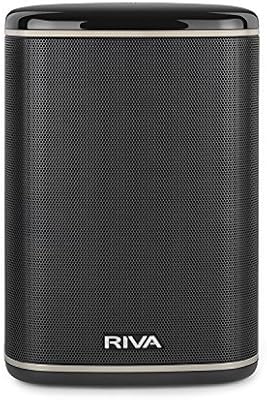
RIVA Arena
RIVA Arena
76%
84%
Sound Quality
68%
Bass Performance
89%
Multiroom & Ecosystem Integration
61%
Setup & App Experience
91%
Streaming Platform Support
More
Blaupunkt GTX 401 4-Inch Coaxial Car Speakers
70%
81%
Value for Money
67%
Sound Quality
43%
Bass Response
71%
Treble Clarity
74%
Midrange Performance
More
Pioneer TS-F1035R 4-Inch 2-Way Car Speakers
78%
83%
Sound Clarity
54%
Bass Response
91%
Installation Ease
88%
Value for Money
76%
Build Quality
More
Energizer Smart Wi-Fi Indoor Security Camera
84%
91%
Value for Money
94%
Ease of Setup
88%
Video Quality
87%
Motion Detection Performance
85%
Audio Quality
More
Kenwood KFC-1066S 4″ 2-way Speakers
85%
87%
Sound Quality
92%
Value for Money
85%
Bass Performance
88%
Clarity of High Frequencies
90%
Ease of Installation
More
Netgear R6400 AC1750 Wi-Fi Router
73%
78%
Wireless Range
61%
5 GHz Band Stability
84%
Setup & Ease of Use
88%
Wired Port Performance
72%
Value for Money
More
SoundXtreme ST694 6x9 4-Way 520W Car Speakers
85%
85%
Sound Quality
90%
Bass Response
88%
Ease of Installation
80%
Build Quality
92%
Power Handling
More
Pioneer TS-A1680F 4-Way Car Audio Speakers
85%
88%
Sound Quality
91%
Installation Ease
87%
Bass Performance
85%
Clarity at High Volumes
82%
Build Quality
More

FAQ

You can run any combination of zones simultaneously — all four at once, just two, or any mix you prefer. The impedance matching system is specifically designed to handle multiple active zones without pushing your amplifier into a dangerously low load, which is a real risk with cheaper passive selectors that lack this protection.

Unfortunately, no — the Audioflow 3S-4Z 4-Way Smart Wi-Fi Speaker Switch is engineered specifically around 8Ω speakers and amplifiers that can handle a 4Ω load. Using speakers with different nominal impedances means the built-in impedance matching calculations no longer apply correctly, and you could end up stressing your amplifier rather than protecting it. Check your speaker documentation before purchasing.
The unit relies on Wi-Fi for app and Alexa control, so if your network goes down, remote switching will not be available. There is no physical manual override button on the unit itself, which is worth keeping in mind if network reliability in your home is inconsistent.

For most people it is straightforward — download the app, power up the unit, follow the in-app Wi-Fi provisioning steps, and connect your speaker wires to the labeled terminals. Where buyers sometimes get stuck is during the Wi-Fi pairing step, especially on networks with both 2.4GHz and 5GHz bands sharing the same name. Making sure your phone is connected to the 2.4GHz band during setup tends to resolve most of those issues.

The app requires iOS 13.0 or Android 6.0 as a minimum, which covers the vast majority of smartphones still in active use. If you are running a very old device that has not received OS updates in several years, it is worth checking your current OS version before assuming compatibility.

The relay switch response is generally quick enough that most users do not find it disruptive — there is a brief mechanical click as the relay engages, but it is not a slow or laggy experience under normal network conditions. On congested Wi-Fi networks, occasional command delays have been reported, but these are not typical for most home environments.

No — volume is controlled entirely by your amplifier, and that setting applies globally to whichever zones are active at any given time. This is a genuine limitation if you regularly need quiet background levels in one room while another room is the main listening space. There is no per-zone attenuation built into this unit.

This is actually one of the more thoughtful design features of this Wi-Fi speaker switcher. When all zones are switched off, a 200Ω dummy load automatically connects to the amplifier output, preventing the open-circuit condition that some amplifiers dislike or that can even cause damage over time. It is a passive safety mechanism that works without any user action required.

Currently, voice control is limited to Amazon Alexa. There is no native Google Home or Apple HomeKit support, which is a meaningful gap for households built around those ecosystems. If your smart home runs primarily on Google Assistant or Siri, the voice control benefit largely disappears and you would be relying solely on the app for remote switching.

The box includes the switch unit itself, a universal power supply with UK, EU, USA, and Australian plug adapters, connection plugs for the speaker terminals, cable ties, and a quick-start guide. It does not include speaker wire, so make sure you have appropriate cable ready for your installation — the terminals accept up to 14AWG.

Where to Buy