
Overview

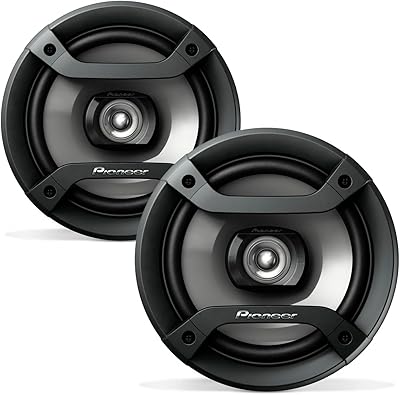
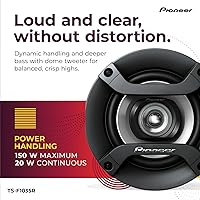
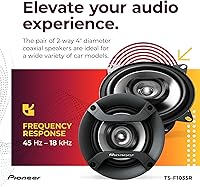
The Pioneer TS-F1035R 4-Inch 2-Way Car Speakers are exactly what they sound like — a practical, no-fuss replacement for tired factory speakers. Pioneer has been a fixture in car audio for decades, so there's a certain comfort in knowing you're not buying from an unknown brand. These Pioneer coaxial speakers use a 2-way design, meaning the woofer and tweeter share a single axis, which keeps installation simple and delivers a broader frequency range than a single-driver setup. The standard 4-inch diameter fits a wide range of vehicles right out of the box. Just be clear-eyed: this is an entry-level swap, not a boutique audio upgrade.

Features & Benefits

The TS-F1035R pair lists 150W as its peak power figure, but that number needs context — the actual working power is 20W nominal, which aligns with what most stock head units put out. That distinction matters because the 86dB sensitivity rating means these speakers can get genuinely loud from a factory radio, no amplifier required. A 30mm tweeter handles upper frequencies, keeping vocals and cymbals clear rather than compressed. The flush mount design drops straight into standard factory cutouts with no cutting or brackets. They carry a waterproof rating too, handy for door panels exposed to the elements. Speaker wire and a quick-start guide are in the box, so first-timers won't feel lost.

Best For

These 4-inch replacement speakers make the most sense for a specific kind of buyer: someone whose stock speakers have gone flat or just given up, and who wants a clear step up without reworking the whole system. If you're running a factory head unit with no amplifier in the picture, this is the right price and performance tier. Compact cars, older economy sedans, and any vehicle with a standard 4-inch door slot will accommodate them easily. Don't come in expecting heavy bass — physics simply limits what a small driver can do in the low end. But for clean mids and smooth treble response, the improvement over stock is real and immediate.

User Feedback

Buyers tend to land in a similar spot with these Pioneer coaxial speakers: clearly better than what came from the factory, but not without limitations. The consistent wins are easy installation and noticeably cleaner mids — two things people actually notice on a daily commute. The recurring complaint is thin bass, which is fair and expected given the driver size. A handful of reviewers flag fitment quirks with certain import vehicles, so checking your car's specs before ordering is worth a minute. Against similarly priced JVC and Kenwood alternatives, Pioneer tends to get the nod for treble accuracy. Long-term durability feedback is mostly positive, with few reports of early degradation.

Pros

  • Delivers a clear, immediate improvement over degraded or factory-original speakers right out of the box.
  • The 86dB sensitivity rating means you get solid volume from a stock head unit without needing an amp.
  • Standard 4-inch sizing fits a wide range of compact and mid-size vehicles with no adapter required.
  • Flush mount design integrates cleanly into existing factory speaker locations — no cutting or custom brackets.
  • Waterproof construction adds real-world durability, especially for door-mounted positions exposed to moisture.
  • Box includes speaker wire and a quick-start guide, making the install genuinely beginner-friendly.
  • Vocal clarity and treble detail are noticeably better than what most stock speakers produce.
  • Pioneer brand reliability gives buyers more confidence than comparable no-name alternatives at the same price.
  • Long-term durability feedback is mostly positive, with most owners reporting stable performance past the one-year mark.
  • At their price point, these 4-inch replacement speakers deliver a value-to-improvement ratio that is hard to beat.

Cons

  • Bass output is thin and unsatisfying without a subwoofer — this is a consistent complaint, not an edge case.
  • The 150W peak power figure is misleading; real-world handling is closer to 20W nominal, so read the specs carefully.
  • Treble can turn edgy or fatiguing at high volumes, particularly with bright or heavily compressed audio sources.
  • Minor quality control inconsistencies have been reported, including tweeter assemblies that feel slightly loose out of the box.
  • Fitment issues with certain import vehicles mean you should verify your door cavity depth before ordering.
  • The quick-start guide is too minimal for complete beginners — first-timers may need to supplement with online tutorials.
  • Soundstage depth and stereo imaging are limited, which matters if you value a more immersive listening experience.
  • Buyers stepping down from Pioneer's higher product tiers often feel the F-Series build materials feel underwhelming by comparison.
  • Very long-term durability data — beyond 18 months — is sparse, making it hard to assess performance in extreme heat cycles.

Ratings

The Pioneer TS-F1035R 4-Inch 2-Way Car Speakers earn their scores from an AI-driven analysis of verified global buyer reviews, with spam, bot submissions, and incentivized feedback actively filtered out before any scoring is applied. What you see reflects the honest consensus of real drivers — daily commuters, weekend tinkerers, and budget-conscious upgraders — not a curated highlight reel. Both the genuine wins and the frustrating trade-offs are weighted transparently in every category below.

Sound Clarity
83%
Most buyers describe a noticeable jump in vocal and mid-range definition compared to worn factory speakers. On daily commutes, the difference is particularly obvious with podcasts, acoustic tracks, and spoken-word content, where the added tweeter separation keeps detail from sounding muddy.
At higher volumes, some listeners notice a slight harshness creeping into the upper mids, especially on compressed audio streams. It's not severe, but those with more critical ears may find the sound less refined than pricier coaxial options in the same size class.
Bass Response
54%
46%
For casual background listening at moderate volumes, the low-end holds up reasonably well for a 4-inch driver. Drivers who weren't expecting deep bass — and set expectations accordingly — report being satisfied with the warmth these produce on standard rock and pop recordings.
This is where physics wins every time. The 4-inch woofer simply cannot move enough air to produce meaningful bass, and buyers who hoped otherwise were routinely disappointed. Without a subwoofer in the system, bass-heavy genres like hip-hop and EDM sound notably thin.
Installation Ease
91%
The flush mount design and standard 4-inch footprint mean these drop into most factory locations without adapter plates or custom cutting. The included speaker wire and quick-start guide are genuinely useful — several first-time installers reported completing the swap in under 30 minutes with basic hand tools.
A small number of buyers, particularly those with older Japanese and Korean import vehicles, reported minor fitment inconsistencies where the mounting holes didn't align perfectly. It's not a dealbreaker, but it's worth confirming your vehicle's specific slot dimensions before ordering.
Value for Money
88%
At their price point, these Pioneer coaxial speakers are hard to argue against as a stock replacement. Buyers consistently note that the improvement over dead or degraded factory speakers feels disproportionately large relative to what was spent, which is exactly the expectation this price tier should meet.
As soon as you compare them to mid-range options costing $20 to $30 more, the value proposition softens. The gap in build materials and sound refinement becomes tangible, so buyers with any flexibility in their budget sometimes wish they had stretched a little further.
Build Quality
76%
24%
The overall construction feels solid for the segment — the grilles sit flush, the driver surrounds look well-finished, and the waterproofing adds a layer of confidence for door-mounted applications. Reviewers who have had these installed for over a year mostly report no noticeable degradation in fit or function.
The plastic housing components feel appropriately lightweight but not especially premium to the touch. A few users noted that the tweeter assembly on one unit of their pair felt slightly less secure than the other straight out of the box, suggesting minor quality control variance.
Sensitivity & Volume Output
82%
18%
The 86dB sensitivity rating pays off in the real world. Drivers running unmodified factory head units report being able to reach comfortable listening volumes without straining the radio, which is exactly the use case these speakers were designed around. No external amplifier needed for everyday listening.
Push the volume close to the factory head unit's ceiling and the speakers start to lose composure — the sound compresses and the tweeter can get slightly edgy. For those who like to crank it occasionally, the lack of headroom becomes apparent faster than the specs might suggest.
Treble Performance
79%
21%
The 30mm tweeter handles high frequencies with more finesse than many budget coaxial competitors. Cymbals, string instruments, and high-pitched vocals come through with reasonable air and separation, which is one of the aspects buyers most frequently call out as a clear upgrade from factory.
Extended listening sessions at louder volumes can make the treble feel slightly fatiguing. The tweeter doesn't have the smoothness of soft-dome designs found in more expensive options, and on bright recordings, the top end can tip from crisp into edgy.
Mid-Range Accuracy
81%
19%
Vocals and guitars are where these 4-inch replacement speakers genuinely shine relative to their price. The coaxial design keeps frequency handoff between the woofer and tweeter reasonably coherent, resulting in a natural-sounding mid-range that flatters everyday music genres like pop, country, and classic rock.
The mid-range does thin out when asked to handle both low-mid warmth and presence simultaneously. Compared to component speaker setups — even budget ones — the crossover behavior in this coaxial design is more blunt, which limits how layered and textured the sound can get.
Compatibility & Fitment
77%
23%
The standard 4-inch diameter covers a broad range of compact and mid-size vehicles, and many buyers confirm these fit their car's existing mounting locations perfectly without modification. Compatibility with common platforms like older Toyota, Honda, and Ford models is well-documented in the buyer community.
Compatibility is not universal. Vehicles with shallow door cavities or non-standard depth requirements may need spacers that aren't included in the box. The product listing doesn't provide a compatibility checker, so buyers must do their own research before purchasing.
Durability Over Time
78%
22%
Among buyers who have logged six months or more with these Pioneer coaxial speakers, the majority report no functional issues. The waterproof rating appears to hold up in practice — users in humid climates or vehicles with poorly sealed doors haven't flagged water damage as a concern.
There is a thinner pool of very long-term reviews — beyond 18 months — making it harder to assess how the surround material and tweeter hold up over years of use in extreme heat cycles. Some buyers in hot climates mention slight changes in sound character after prolonged summer use.
Imaging & Soundstage
61%
39%
For a coaxial design at this price, the stereo separation is acceptable. Listeners focused on casual music enjoyment rather than critical listening will find the soundstage adequate for a car environment, where road noise already limits how nuanced the experience can be.
Soundstage depth and precise imaging are simply not realistic expectations from a 4-inch coaxial speaker in a door position. Buyers who care about instrument placement or a wide stereo field will find the TS-F1035R pair limiting — it's built for practicality, not audiophile positioning.
Packaging & Unboxing
74%
26%
The box is organized and the included accessories — speaker wire, quick-start guide, and warranty card — are all present and useful. Nothing about the packaging feels wasteful or underdelivered, and first-time buyers appreciate that the wire is ready to use right out of the box.
The quick-start guide is minimal — it covers the basics but assumes some baseline familiarity with car speaker installation. Complete beginners may still need to supplement with an online tutorial, particularly for understanding polarity and running wire through door panels cleanly.
Brand Reliability
86%
Pioneer carries genuine weight in the car audio world. Buyers express more confidence purchasing from an established brand than from unrecognized alternatives at the same price, and that brand trust translates into higher overall satisfaction scores even when individual performance metrics are mixed.
Brand reputation can create expectations that the entry-level F-Series doesn't fully satisfy. Buyers familiar with Pioneer's higher-tier products occasionally feel underwhelmed by these, since the Pioneer name primes them to expect more than a budget-positioned product can realistically deliver.

Suitable for:

The Pioneer TS-F1035R 4-Inch 2-Way Car Speakers are purpose-built for drivers who want a straightforward, cost-effective fix for underperforming or dead factory speakers — no amplifier, no wiring overhaul, no drama. If you drive a compact sedan, older hatchback, or any vehicle with a standard 4-inch door slot and an untouched factory head unit, these slot right in without modification in most cases. They're an especially smart pick for commuters who spend an hour or more a day in the car and are tired of the flat, lifeless sound that worn stock speakers produce. Casual listeners who care about clear vocals and decent high-frequency detail — but aren't chasing deep bass or concert-hall imaging — will find the sound quality upgrade genuinely satisfying. First-time DIYers will also appreciate the included wire and guide, which lower the barrier enough that the swap rarely requires more than a screwdriver and 30 minutes of patience.

Not suitable for:

The Pioneer TS-F1035R 4-Inch 2-Way Car Speakers are not the right call if bass is a priority in your listening experience — physics limits what a 4-inch driver can do in the low end, and no amount of power or EQ tweaking will change that meaningfully. Buyers who listen to bass-heavy genres like hip-hop, EDM, or electronic music at high volumes will almost certainly feel shortchanged without a dedicated subwoofer in the system. If you already have an aftermarket amplifier or a high-output head unit, these speakers' 20W nominal power handling means they're not designed to take full advantage of that setup. Audiophiles or anyone who values precise soundstage imaging and layered stereo detail should look further up the product ladder — component speaker systems with dedicated crossovers will serve that use case far better. Additionally, drivers with non-standard door cavity depths or unusual mounting configurations should confirm fitment before buying, as the occasional compatibility gap has frustrated a subset of buyers.

Specifications

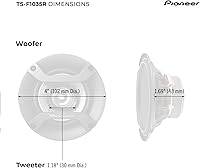
  • Speaker Size: Each speaker measures 4 inches in diameter, conforming to the standard sizing used in a wide range of factory door and dash locations.
  • Design Type: These are 2-way coaxial speakers, meaning the woofer and tweeter are mounted on a shared axis and operate together as a single unit.
  • Peak Power: The speakers are rated to handle up to 150W peak power, which represents the absolute maximum the driver can tolerate in very brief bursts.
  • Nominal Power: Continuous or RMS power handling is 20W, which reflects the actual sustained power these speakers are designed to work with during normal listening.
  • Impedance: Speaker impedance is 4 ohms, making these compatible with virtually all factory and aftermarket head units without requiring a separate impedance-matching device.
  • Sensitivity: Sensitivity is rated at 86dB, meaning the speakers produce 86 decibels of output for every watt of input measured at one meter — efficient enough for stock radios.
  • Tweeter Size: The integrated tweeter measures 30mm in diameter and handles the upper frequency range to add clarity and air to vocals and high-frequency instruments.
  • Frequency Response: These speakers cover a frequency range extending up to 18kHz, capturing most of the audible spectrum relevant to music and spoken-word content.
  • Mounting Type: Flush mount installation is the designated method, allowing the speakers to sit flat against the mounting surface and integrate cleanly into factory speaker openings.
  • Dimensions: Each speaker unit measures 2″ deep by 4.13″ wide by 4.13″ tall, keeping the footprint compact enough for standard door cavities.
  • Weight: The pair weighs 1.85 pounds total, making handling and positioning during installation straightforward for a solo installer.
  • Waterproofing: The speakers carry a waterproof rating, providing resistance to moisture and humidity that is particularly relevant for door-mounted positions exposed to rain or condensation.
  • Audio Output: Output mode is stereo, with the pair working together to reproduce left and right audio channels as designed for standard 2-channel car audio systems.
  • Connectivity: Connection is wired, using standard speaker wire terminals that interface with existing factory or aftermarket wiring harnesses.
  • In The Box: Each purchase includes two TS-F1035R speakers, a length of speaker wire, a printed quick-start guide, and a warranty card.
  • Warranty: Pioneer covers these speakers under a limited warranty, the specific terms of which are detailed on the included warranty card.
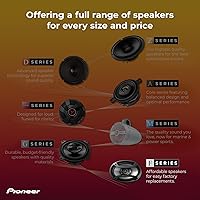
  • Series: These speakers belong to Pioneer's F-Series lineup, which is positioned as an accessible entry-level range targeting OEM replacement applications.
  • Model Number: The official model designation is TS-F1035R, which can be used to verify compatibility with your vehicle using online fit-guide tools.

Related Reviews
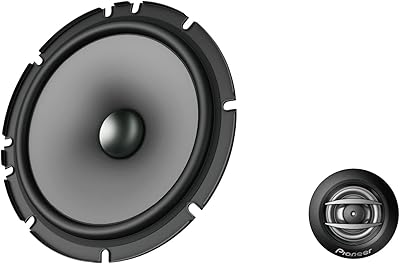
Pioneer TS-A652C 6.5″ 2-Way Component Car Speakers
78%
88%
Sound Clarity & Midrange Quality
67%
Bass Response
79%
Tweeter Performance
83%
Installation Ease
74%
Vehicle Compatibility
More
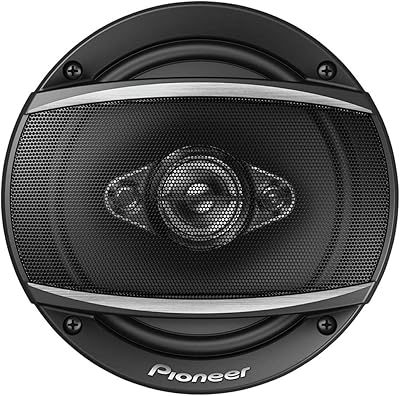
Pioneer TS-A1680F 4-Way Car Audio Speakers
85%
88%
Sound Quality
91%
Installation Ease
87%
Bass Performance
85%
Clarity at High Volumes
82%
Build Quality
More
Pioneer TS-F1634R 6.5″ Coaxial Car Speakers
76%
78%
Sound Quality
61%
Bass Performance
74%
Treble Clarity
93%
Installation Ease
89%
Compatibility
More
Pioneer TS-G4644R 4x6″ 2-Way Coaxial Car Speakers
85%
90%
Value for Money
88%
Ease of Installation
83%
Sound Quality
74%
Bass Performance
87%
Build Quality
More
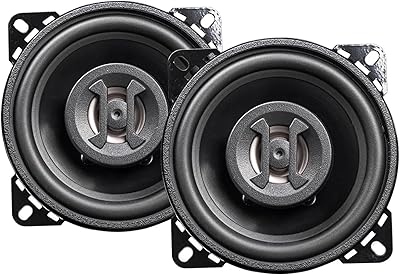
Hifonics Zeus ZS4CX 4-inch Coaxial Car Speakers
73%
83%
Sound Clarity
47%
Bass Performance
61%
Volume & Loudness
91%
Ease of Installation
67%
Build Quality
More
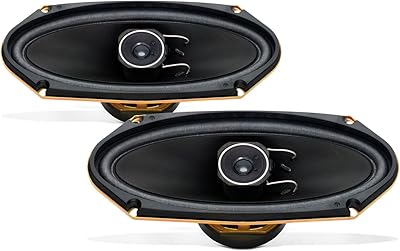
Pioneer TS-A4103 4″ x 10″ 2-Way Speakers
85%
87%
Sound Quality
90%
Bass Response
85%
Treble Clarity
92%
Value for Money
89%
Ease of Installation
More
Cerwin-Vega V4 4-inch 2-Way Coaxial Car Audio Speakers
84%
88%
Sound Quality
94%
Ease of Installation
72%
Bass Performance
80%
Build Quality
85%
Power Handling
More
Pioneer TS-A709 2.75″ 2-Way Car Speakers
81%
88%
Sound Clarity
61%
Bass Response
91%
Installation Ease
86%
Value for Money
83%
Power Handling
More
JVC CSV4627 4x6-Inch Coaxial Car Speakers
67%
83%
Value for Money
74%
Sound Clarity
41%
Bass Response
91%
Installation Ease
69%
High-Frequency Performance
More
Blaupunkt GTX 401 4-Inch Coaxial Car Speakers
70%
81%
Value for Money
67%
Sound Quality
43%
Bass Response
71%
Treble Clarity
74%
Midrange Performance
More

FAQ

In most cases, yes — the standard 4-inch diameter lines up with factory speaker locations in a wide range of compact and mid-size vehicles. That said, door cavity depth can vary, and a small number of vehicles have non-standard mounting configurations. It is always worth using an online vehicle fit guide with the model number TS-F1035R before ordering to confirm your specific make, model, and year.

No, you do not. The 86dB sensitivity rating means these Pioneer coaxial speakers are specifically designed to produce good volume from a low-powered factory head unit. Most stock radios put out somewhere between 15W and 22W per channel, which falls right in line with the 20W nominal rating of these speakers. An amp is not required, though adding one would give you more headroom.

It is genuinely one of the more beginner-friendly DIY jobs in car audio. The flush mount design slots into most factory openings directly, and the included speaker wire means you are not scrambling for supplies. Most people complete the swap in 20 to 40 minutes with a basic screwdriver and panel removal tool. The quick-start guide covers the core steps, though watching a model-specific tutorial online first is a smart move for absolute beginners.

Peak power is the maximum the speaker can handle for a very brief moment before risking damage — it is essentially a stress ceiling, not a working specification. Nominal power, at 20W, is the figure that actually matters for everyday use because it reflects how much continuous power the speaker is built to handle comfortably. Most factory head units operate well within that 20W range, so the two specs are well matched for a stock replacement setup.

They carry a genuine waterproof rating, which is more meaningful than it might sound for car speakers. Door-mounted drivers regularly encounter condensation, splashback from window seals, and humidity in certain climates. Users in rainy regions have not flagged water ingress as a recurring issue, so the protection appears to hold up in real-world conditions.

Honestly, they will struggle with those genres at high volumes. Bass-heavy music exposes the physical limits of a 4-inch woofer quickly, and without a subwoofer in the system, low-end frequencies will sound noticeably thin. For pop, rock, podcasts, or acoustic music, the sound is quite satisfying — but if bass is central to your listening experience, you should factor in a sub or look at a larger speaker size.

All three brands compete closely in this segment, and the differences are subtle. Pioneer tends to get favorable marks for treble smoothness and brand build confidence. JVC and Kenwood sometimes edge ahead on paper sensitivity specs, but in practice the listening experience is comparable. For buyers who value an established brand with a long track record specifically in car audio, Pioneer often wins the tie.

Technically yes, you can install just one. However, if the other original speaker has significant age on it, the sonic mismatch between the new driver and the worn factory speaker will likely be noticeable, especially in the high-frequency range. Replacing both at the same time gives you a balanced, matched output on both channels and is generally the cleaner approach.

Based on available long-term buyer feedback, the TS-F1035R pair holds up well through the first 12 to 18 months under normal use. The waterproof construction helps in environments where moisture is a concern. There is less data on performance beyond 18 months, particularly in vehicles that experience extreme heat cycles in summer, so that remains a mild unknown — but early degradation complaints are not a common pattern in the feedback.

For most vehicles, a basic Phillips-head screwdriver and a plastic panel removal tool are all you need. The speakers come with wire, so you do not have to source that separately. If your vehicle uses a wiring harness adapter for aftermarket speakers — which some makes do — you may need a low-cost connector kit specific to your car, available at most auto parts stores for a few dollars.