Overview

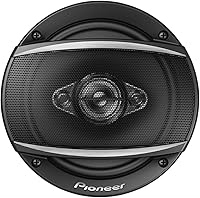
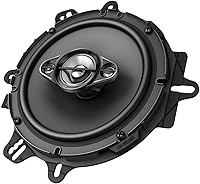
The Pioneer TS-A1680F 6.5-inch Car Coaxial Speakers sit squarely in Pioneer's A-Series lineup, aimed at drivers who are tired of flat, lifeless factory audio but don't want to rewire their entire dash. Unlike basic 2-way replacements, this is a 4-way design, meaning dedicated drivers handle different frequency ranges within a single unit. Installation is genuinely straightforward — the included multi-fit adapters, grilles, and mounting hardware mean most people can finish the job with a screwdriver and an afternoon. Pioneer's Hi-Res Audio certification is worth noting: it doesn't promise audiophile-grade perfection, but it does indicate the speaker can resolve more detail than typical OEM units.
Features & Benefits

Where these Pioneer coaxials stand out is in how their 4-way driver arrangement handles the full audio spectrum. Most factory replacements use a simple two-driver setup, which leaves a noticeable gap in the midrange. Here, a dedicated midrange driver and a super-tweeter fill that space, so vocals and acoustic instruments have actual texture rather than sounding papery. The 80W RMS rating means they perform well straight off a stock head unit — no amplifier required to hear a real difference. Sensitivity at 88 dB translates to confident volume in real driving conditions. The frequency range stretching down to 36 Hz adds useful low-end presence for everyday listening, though it won't replicate a proper subwoofer.

Best For

The TS-A1680F speakers are an obvious match for anyone doing a drop-in factory replacement — especially if your vehicle has a standard 6.5-inch door cutout and you'd rather not spend a weekend routing new wiring. Commuters who want noticeably cleaner highs and more defined midrange without touching an amplifier will get exactly that. They're less suited for bass heads; if you regularly play hip-hop or EDM and want physical impact, a trunk subwoofer is still on the shopping list. But for podcasts, classic rock, or jazz on the daily drive, this Pioneer speaker set handles everything asked of it confidently. Clear instructions make them approachable even for first-time installers.

User Feedback

Owners who have run these Pioneer coaxials for a year or more tend to report that the speakers hold up well, with no notable drop in clarity over time. The most consistent praise centers on vocal and midrange clarity — particularly noticeable to people coming from bare OEM units. Installation earns high marks too, though a handful of users note that the mounting adapters don't always align perfectly in certain Asian or European vehicles. The main recurring complaint is predictable: bass. Without a dedicated subwoofer, low-frequency extension has limits that become obvious at higher volumes. Overall, most buyers feel the value is solid for the price tier — few regret the purchase, even if some eventually add a sub down the line.

Pros

  • Noticeably clearer mids and highs compared to virtually any factory speaker straight out of the box.
  • The 4-way driver layout handles a wider frequency range than typical 2-way replacements at this price tier.
  • Works confidently off a stock head unit — no amplifier purchase required to hear a real difference.
  • Installation hardware is comprehensive: grilles, adapters, screws, and wire lengths are all included.
  • Multi-fit mounting adapters make these Pioneer coaxials compatible with a broad range of vehicle cutouts.
  • Hi-Res Audio certification means more audio detail is resolved, which is genuinely audible on well-recorded tracks.
  • Long-term owners consistently report solid durability with no significant drop in sound quality over time.
  • The 4-ohm impedance makes future amplifier pairing straightforward if you decide to upgrade later.
  • Frequency response reaching down to 36 Hz adds low-end body that most direct factory replacements simply lack.
  • Overall value perception among buyers is strong — most feel the performance-to-price ratio is hard to beat.

Cons

  • Bass extension has real limits at higher volumes without a separate subwoofer backing them up.
  • The mounting adapters do not guarantee a perfect fit in every vehicle, particularly some European and Asian models.
  • Included speaker wire runs are short — useful for testing, but not long enough for a clean permanent install.
  • The TS-A1680F speakers are not water-resistant, which rules them out for boats, Jeeps, or open-air builds.
  • At higher output levels, some listeners notice compression in the low-midrange — pairing with an amp helps but adds cost.
  • Grilles are functional but feel lightweight, and a few users report them loosening over time with road vibration.
  • The 11mm tweeter diameter is on the smaller side, which can limit stereo width in larger vehicle cabins.
  • Without an amp, very loud listening sessions may reveal the boundaries of the 80W RMS rating on demanding tracks.

Ratings

The scores below reflect our AI-powered analysis of verified buyer reviews for the Pioneer TS-A1680F 6.5-inch Car Coaxial Speakers, sourced globally and filtered to remove incentivized, spam, and bot-generated feedback. We weighted patterns from long-term owners as heavily as first-impression reviews to give a more accurate picture. Both the genuine strengths and the recurring frustrations are reflected honestly in every category.

Sound Clarity
88%
Vocal reproduction is where these Pioneer coaxials draw the most consistent praise — commuters report that dialogue in podcasts and lead vocals in rock or pop come through with a crispness that factory speakers simply cannot match. The 4-way driver layout distributes frequency workload well, keeping mids from sounding congested even at moderate to high volumes.
A small but vocal segment of buyers notice a slight harshness in the upper midrange when the head unit's EQ is pushed, particularly on compressed audio streams. It is not a dealbreaker for most, but listeners accustomed to higher-end component systems may find the tuning less refined under scrutiny.
Bass Response
63%
37%
For a coaxial speaker without a dedicated subwoofer, the low-end extension down to 36 Hz adds genuine warmth and body to bass-adjacent frequencies — acoustic bass, kick drums, and lower male vocals all benefit noticeably compared to OEM alternatives. Casual listeners report that the TS-A1680F speakers hold their own on pop and classic rock without needing any EQ adjustment.
Bass heads will be disappointed. At higher volumes on hip-hop or EDM tracks, the low-frequency output runs out of authority fairly quickly, and the absence of physical impact is hard to ignore. This is an inherent coaxial limitation rather than a flaw, but buyers expecting thumping bass without a subwoofer consistently leave underwhelmed.
High-Frequency Detail
84%
The integrated super-tweeter gives the TS-A1680F speakers an edge over standard 2-way coaxials when it comes to cymbal shimmer, string overtones, and the subtle air around recorded instruments. Buyers who stream at high bitrates or listen to lossless audio files notice a tangible improvement in treble resolution that aligns with the Hi-Res Audio certification.
At very high volumes, a few users report that the tweeter can edge toward brightness, occasionally making sibilant vocals or sharp hi-hats feel fatiguing on long drives. Backing off the treble in the head unit EQ by a couple of decibels tends to solve it, but it is an adjustment not everyone wants to make.
Installation Ease
91%
First-time installers consistently highlight how complete the package feels — adapters, screws, grilles, and even short test wires are all in the box, which removes the usual last-minute hardware store trip. Most standard 6.5-inch door swaps are reported to take under two hours with basic hand tools, and the instructions are clear enough to follow without prior experience.
Vehicle fit is not universal — owners of certain European and Japanese models report that the mounting adapters require extra shimming or do not align perfectly with their door brackets. It is a minority experience, but those affected say it adds meaningful time and frustration to an otherwise simple job.
Value for Money
86%
Among mid-range car speaker upgrades, this Pioneer speaker set earns strong marks for delivering a noticeable, immediate improvement over factory audio at a price point that does not require amplifier investment. Buyers repeatedly describe it as one of the best returns on a single car audio purchase they have made, especially when coming from weak OEM setups.
A portion of buyers who push the system harder — adding an amp or comparing directly to higher-end component speakers — feel the value proposition softens at that level. The TS-A1680F speakers are clearly priced for the upgrade crowd, not the enthusiast crowd, and those who outgrow them relatively quickly may feel they should have stretched the budget further initially.
Build Quality
77%
23%
The speaker cones and overall assembly feel solid for the price tier, and long-term owners who have had these Pioneer coaxials installed for 12 to 24 months generally report no rattling, warping, or structural degradation. Pioneer's manufacturing consistency earns trust here — units across different purchase batches appear to be uniform in quality.
The included grilles are the most commonly criticized component — they feel noticeably lighter and cheaper than the speakers themselves, and several users report the plastic clips loosening from road vibration within a few months. It is a cosmetic rather than acoustic issue, but it does undercut the premium feel of an otherwise well-built product.
Durability Over Time
82%
18%
Buyers who have logged serious miles with these speakers — daily commuters especially — report that sound quality holds steady well past the one-year mark with no perceptible degradation in clarity or output. Pioneer's history in car audio gives buyers reasonable confidence in long-term reliability under normal driving conditions.
The lack of any water resistance is a genuine concern in climates with frequent rain or for vehicles with known door seal issues. A handful of owners in humid or wet environments report premature cone degradation, suggesting these speakers need a dry installation environment to reach their expected lifespan.
Compatibility
79%
21%
The 4-ohm impedance and 80W RMS rating make these Pioneer coaxials plug-and-play with the overwhelming majority of factory and aftermarket head units sold in the last decade. Buyers confirm clean integration with popular OEM infotainment systems across major American and Korean vehicle brands without any impedance mismatch issues.
Fit compatibility with non-standard cutouts — particularly in older German vehicles and some compact Japanese hatchbacks — is less predictable. The multi-fit adapters cover common configurations well but are not a guaranteed solution for every make and model, and a small number of buyers need to source additional hardware.
Midrange Performance
86%
This is arguably the strongest suit of the 4-way design — the dedicated midrange driver fills the gap that most budget coaxials leave hollow, giving voices, guitars, and keyboards a presence and warmth that transforms how familiar tracks sound on a daily commute. Several buyers specifically call out midrange improvement as the reason they would repurchase.
Under heavy bass EQ settings, the midrange can start to sound slightly congested, with individual instruments losing some separation. Listeners who prefer a flat, neutral EQ curve will not encounter this, but those who habitually boost the low end may inadvertently undermine what these speakers do best.
Packaging & Included Accessories
83%
The box contents are notably complete for the price — having both grilles and multi-fit adapters included means most buyers can finish the install in a single session without an extra parts run. The short wire lengths are appreciated for initial testing before committing to a permanent wiring setup.
The included wire lengths are genuinely too short for a clean, permanent installation in any vehicle, so buyers end up purchasing speaker wire separately regardless. A few reviewers also note that the printed instructions, while adequate, lack vehicle-specific guidance that would make the process less ambiguous for true beginners.
Volume & Headroom
74%
26%
At typical listening volumes — commuter-level output from a stock head unit — these speakers perform confidently and cleanly without any strain. The 88 dB sensitivity rating delivers comfortable cabin fill without needing to push the head unit's output more than halfway.
When buyers crank the volume close to maximum on a factory head unit, the TS-A1680F speakers begin to show compression and minor distortion, particularly in the bass frequencies. Pairing with even a modest 4-channel amplifier resolves this, but that represents an additional investment some buyers did not anticipate.
Aesthetic & Grille Design
67%
33%
The speakers themselves have a clean, modern look that sits unobtrusively behind door panels, and the black finish is neutral enough to blend into most vehicle interiors without looking out of place. Buyers who leave the grilles off report no objections to the bare speaker appearance.
The grilles are consistently described as the visual weak point — thin plastic construction and a generic appearance that does not match the speaker's actual performance level. Road vibration causes them to develop a faint rattle in some vehicles, and a meaningful number of owners simply remove them and leave the speakers exposed.
Hi-Res Audio Performance
71%
29%
For buyers who stream at the highest available quality tier or use lossless audio files, there is a real and perceptible improvement in treble extension and micro-detail that justifies the Hi-Res Audio label — cymbals decay more naturally and acoustic instruments have more texture than on standard-certified speakers at this price.
For the majority of buyers streaming at standard quality or using Bluetooth from a smartphone, the Hi-Res Audio certification delivers no practical benefit — the source material is the limiting factor. Treating it as a meaningful differentiator for average use cases leads to overblown expectations that the day-to-day listening experience does not always confirm.

Suitable for:

The Pioneer TS-A1680F 6.5-inch Car Coaxial Speakers are a strong fit for everyday drivers who are done tolerating the thin, compressed sound of factory-installed speakers but don't want to commit to a full component system overhaul. If your vehicle has a standard 6.5-inch door cutout and you're comfortable with basic DIY work, installation takes under two hours with no special tools. Commuters who spend significant time in the car and listen to a wide range of music — rock, pop, podcasts, spoken word — will notice a genuine improvement in vocal clarity and high-frequency detail. The 88 dB sensitivity means these speakers perform well even without an external amplifier, making them ideal for anyone running a stock head unit. First-time upgraders who want a meaningful, low-risk audio improvement will find the included hardware and multi-fit adapters make the whole process approachable.
Not suitable for:

The Pioneer TS-A1680F 6.5-inch Car Coaxial Speakers are not the right call for listeners who prioritize deep, room-filling bass — these are coaxials with a physical size limit, and no amount of spec sheet optimism changes that reality. If your playlist leans heavily on bass-driven genres like hip-hop, EDM, or trap and you expect to feel the music, you will need a dedicated subwoofer regardless of what you put in the doors. Serious audiophiles who want pinpoint stereo imaging and the ability to tune individual drivers independently should look at a proper component speaker setup instead. Drivers with non-standard cutouts or vehicles known for tight door cavities may find the mounting adapters helpful but not always a guaranteed fit, so checking your vehicle's compatibility beforehand is worth the effort. Anyone expecting waterproof or moisture-resistant speakers for an open-air vehicle or marine application should look elsewhere entirely.
Specifications

  • Speaker Size: Each speaker measures 6.5 inches in diameter, fitting standard door and dash cutouts found in a wide range of vehicles.
  • Configuration: 4-way coaxial design integrates a woofer, midrange driver, tweeter, and super-tweeter into a single unit.
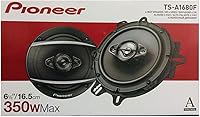
  • Peak Power: Each speaker handles up to 350W peak power, though real-world listening is governed by the continuous RMS rating.
  • RMS Power: Continuous (RMS) power handling is rated at 80W per speaker, which aligns well with most factory and aftermarket head units.
  • Sensitivity: Sensitivity is rated at 88 dB, meaning these speakers produce adequate volume even when driven by a low-powered OEM radio.
  • Frequency Range: Frequency response spans from 36 Hz to 25 kHz, covering a broad audio range from low-end body to upper-register air.
  • Impedance: Nominal impedance is 4 ohm, ensuring compatibility with the vast majority of car stereos, head units, and external amplifiers.
  • Tweeter Size: The integrated tweeter measures 11 mm in diameter and handles high-frequency reproduction within the coaxial assembly.
  • Mounting Type: Flush mount installation is standard, using the included multi-fit adapters to accommodate varying cutout depths and diameters.
  • Dimensions: Overall product dimensions are 3.5″ deep by 6.88″ wide by 6.88″ tall per speaker unit.
  • Item Weight: The complete package weighs 3.5 pounds, reflecting the pair of speakers along with included hardware.
  • Connectivity: Wired coaxial connection; no wireless pairing — these speakers connect directly to your vehicle's speaker wiring harness.
  • Compatibility: Designed for use with car stereos, head units, and OEM infotainment systems; not intended for home or marine audio use.
  • Water Resistance: These speakers carry no water resistance rating and are not suitable for open-air, marine, or moisture-prone environments.
  • Certification: Hi-Res Audio certified, indicating the speaker can reproduce frequencies beyond the standard 20 kHz threshold used in CD-quality audio.
  • In the Box: Each package includes two 4-way speakers, two grilles, two multi-application mounting adapters, eight mounting screws, and two 12-inch lengths of speaker wire.
  • Sold As: Sold as a pair — one purchase covers both the driver and passenger side speaker replacement.
  • Warranty: Backed by Pioneer's limited warranty; refer to the included documentation for specific coverage terms and duration.
  • Manufacturer: Manufactured by Pioneer Corporation, a Japanese audio electronics company with a long history in car audio development.
  • Model Number: Official model designation is TS-A1680F, part of Pioneer's A-Series coaxial speaker lineup.

Related Reviews
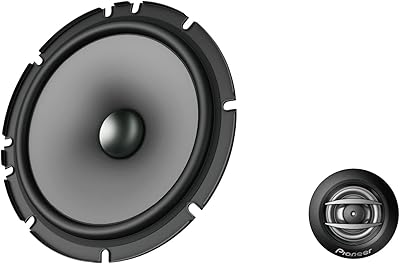
Pioneer TS-A652C 6.5″ 2-Way Component Car Speakers
78%
88%
Sound Clarity & Midrange Quality
67%
Bass Response
79%
Tweeter Performance
83%
Installation Ease
74%
Vehicle Compatibility
More
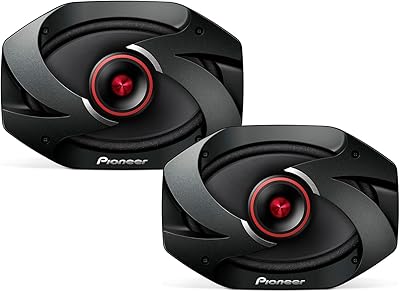
Pioneer TS-6900PRO 6x9 2-Way Car Speakers
82%
93%
Sound Output & Volume
84%
Bass Response
67%
Tweeter Performance
91%
Installation Ease
78%
Build Quality
More
MB Quart FKB116 6.5-Inch Coaxial Car Speakers
75%
83%
Sound Clarity
58%
Bass Response
81%
Treble Performance
78%
Midrange Quality
74%
Build Quality
More
Pioneer TS-F1634R 6.5″ Coaxial Car Speakers
76%
78%
Sound Quality
61%
Bass Performance
74%
Treble Clarity
93%
Installation Ease
89%
Compatibility
More
Crunch CS65CXS 6.5″ Shallow Mount Car Speakers
72%
91%
Fitment & Shallow Mount Design
88%
Ease of Installation
79%
Midrange & Vocal Clarity
74%
High-Frequency Performance
58%
Bass Response
More
Cerwin-Vega H7653 6.5-Inch Car Coaxial Speakers
72%
88%
Bass Output
79%
Vocal & Midrange Clarity
74%
High-Frequency Detail
71%
Sound Stage & Separation
63%
Power Handling (Real-World)
More
Hifonics ZS653 Zeus 6.5 Inch 3-Way Car Audio Coaxial Speakers
85%
88%
Sound Quality
85%
Bass Performance
92%
Ease of Installation
80%
Build Quality
91%
Value for Money
More
Blaupunkt GTX650 6.5-Inch Coaxial Car Speakers
72%
78%
Sound Clarity
54%
Bass Performance
88%
Installation Ease
73%
Build Quality
76%
High-Frequency Performance
More
Infinity REF-6532EX 6.5-inch Coaxial Car Speakers
75%
83%
Sound Clarity
61%
Bass Performance
88%
Ease of Installation
79%
Value for Money
67%
Build Quality
More
BOSS Audio CH6530B 6.5-inch Car Coaxial Speakers
75%
91%
Value for Money
78%
Sound Clarity
52%
Bass Performance
94%
Installation Ease
67%
Build Quality
More
Blaupunkt GTS655M 6.5-inch Coaxial Car Speakers
72%
78%
Sound Clarity
53%
Bass Performance
84%
Fit & Compatibility
86%
Ease of Installation
67%
Build Quality
More

FAQ

They are designed to fit most vehicles with a standard 6.5-inch speaker cutout. The included multi-fit mounting adapters handle a wide range of door depths and bracket configurations, but it is worth checking your specific vehicle's speaker size before ordering — particularly if you drive a European or Japanese model with tighter door cavities.

No — the TS-A1680F speakers are rated at 88 dB sensitivity and 80W RMS, which means they perform well straight from a factory or aftermarket head unit. That said, pairing them with a modest amplifier will give you noticeably more headroom and control at higher volumes if you want to push them further down the road.

For a first-timer, this is a manageable project. The box includes adapters, screws, and even short wire lengths for testing. Most door panel removals require only a panel-popping tool and a Phillips screwdriver. Budget about 1.5 to 2 hours if you are working carefully, and watch a vehicle-specific tutorial beforehand — that alone makes the process much less intimidating.

It means the speakers are technically capable of reproducing audio above the 20 kHz ceiling of standard CD-quality recordings. In practice, you will notice this most with high-bitrate streaming or lossless audio files — there is a subtle but real improvement in detail and texture on well-recorded material. It is not a dramatic night-and-day effect, but it is a genuine quality indicator rather than pure marketing.

They are honest performers down to around 36 Hz, which adds more low-end presence than most factory speakers, but they are still coaxials in a standard door mount — not a substitute for a dedicated subwoofer. If bass is a priority and you listen to hip-hop, EDM, or trap regularly, you will likely want to add a sub at some point. For most other genres, the low-end is perfectly satisfying.

Yes, as long as the rear deck cutout is also 6.5 inches and the depth clearance allows for a flush mount. Many sedans have slightly different rear deck configurations, so double-check the mounting depth against your vehicle specs before you commit. Running them front and rear with a head unit that supports fade control gives you a much fuller soundstage.

Owners who have run these Pioneer coaxials for well over a year generally report no meaningful drop in clarity or output. Pioneer's A-Series has a solid track record for durability in normal daily-driving conditions. Just keep in mind they are not waterproof, so if your doors let in significant moisture — from a leaky seal or a poorly fitting window — that could eventually affect performance.

Peak power (350W) refers to the absolute maximum a speaker can handle in very short bursts — it is largely a marketing figure and not how speakers are actually used. RMS (80W) is the continuous power the speaker can handle reliably during normal listening, and it is the number that actually matters when matching to your head unit or amplifier. Always match by RMS, not peak.

The grilles are designed to sit over the speaker once installed, but how flush they look depends on your door panel's speaker recess depth. In most standard installations they sit cleanly, but a small number of users with deeper recessed panels report a slight raised appearance. It is more of an aesthetic note than a functional concern.

Generally, yes — the extra midrange driver in this Pioneer speaker set makes a real difference for vocal clarity and instrument separation, which is where most budget coaxials fall short. If you spend a lot of time listening to music with complex arrangements or spoken-word content, the 4-way configuration earns its keep. Pure bass performance is similar either way, so the upgrade is most relevant for midrange and high-frequency detail.