Overview

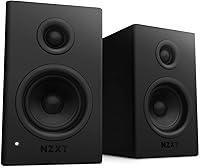
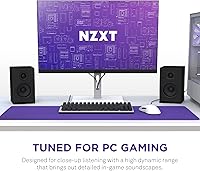
The NZXT Relay Speakers mark the brand's first real push into desktop audio, bringing a bookshelf-style design to a market already occupied by well-regarded names like Edifier and Klipsch. At their mid-range price, they sit in genuinely competitive territory — not a budget throwaway, but not audiophile-grade either. The MDF enclosure is compact enough to live comfortably on either side of a monitor without demanding much real estate, and the 80W total output covers a solid range of use cases. Worth stating clearly upfront: this is a 2.0 stereo setup with no subwoofer, so listeners expecting room-shaking bass should factor that in before buying.

Features & Benefits

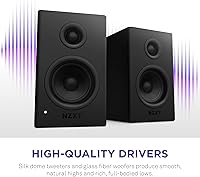
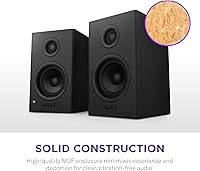
The Relay bookshelf speakers use a 20mm silk dome tweeter paired with a 3-inch glass fiber woofer — a combination that keeps high frequencies smooth rather than sharp, which matters during longer gaming sessions. The MDF cabinet cuts down on the panel vibration that cheaper plastic enclosures tend to let through. Volume and bass boost are handled entirely by touch controls on the speaker body, which is convenient but a genuine trade-off if you prefer the feel of a physical knob. Bluetooth rounds out the connectivity alongside the 3.5mm and RCA inputs, and a 2-year warranty backs the whole package with above-average confidence for this price tier.

Best For

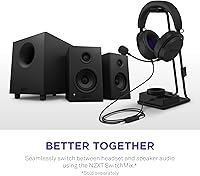
This gaming speaker pair makes the most sense for PC users stepping up from thin, plasticky desktop speakers who want noticeably better stereo imaging without adding a subwoofer or a full surround configuration. Near-field listening — where your ears sit roughly two feet from the speakers — is where they perform best; sound staging holds up well at that kind of distance. Streamers and content creators who need clean audio playback for monitoring will find them capable. They also slot naturally into an NZXT-built system aesthetically. If deep, room-filling bass is the priority, though, this 2.0 setup has a real ceiling.

User Feedback

Across roughly 129 ratings, these NZXT desktop speakers hold a 4.4 out of 5, and the split of opinions is telling. Buyers consistently praise the sound staging clarity and how well in-game audio separates at this price point. Cabinet solidity also gets called out as a pleasant surprise. Where things get mixed is the touch control panel — some users adapt fine, while others report accidentally triggering volume changes too easily. Bass response without boost mode engaged is described as lean, particularly by music listeners, so bass-heavy genres may leave you reaching for that boost toggle regularly. The build quality relative to price is the recurring positive that cuts across nearly all reviews.

Pros

  • MDF cabinet construction feels dense and solid — well above what you normally get at this price point.
  • Silk dome tweeters keep high frequencies smooth even during extended gaming sessions, avoiding listener fatigue.
  • Clean stereo imaging makes directional audio in games noticeably more precise than budget PC speaker alternatives.
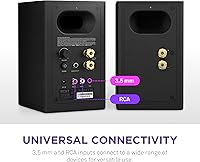
  • Bluetooth, 3.5mm, and RCA inputs cover nearly every desktop connection scenario without needing an adapter.
  • Compact dimensions fit comfortably beside a monitor without eating into desk space.
  • The 2-year warranty offers meaningful peace of mind for a brand entering the speaker market for the first time.
  • Bass boost mode adds useful warmth for cinematic gaming and action content when you want more body in the sound.
  • Plug-and-play setup requires no drivers or software — functional within minutes of unboxing.

Cons

  • Bass output without the boost mode feels lean, especially for music listeners used to a fuller low end.
  • Touch controls are the most divisive aspect — too easy to trigger accidentally when moving cables or reaching past the speaker.
  • No physical volume knob means fine-tuned incremental adjustments are harder to dial in consistently.
  • No onboard EQ beyond a single bass boost toggle leaves frequency tuning almost entirely out of the buyer's hands.
  • Bluetooth audio quality is noticeably softer than the wired 3.5mm connection, making wireless feel like a secondary option.
  • Only available in black, which limits appeal for buyers running white or light-themed desktop builds.
  • No optical or USB audio input restricts compatibility with some modern DACs and newer televisions.
  • Long-term reliability data is limited since this is a first-generation product from a brand new to the speaker category.

Ratings

The NZXT Relay Speakers have been evaluated by our AI rating system after parsing verified buyer reviews from global markets, with spam, incentivized, and bot-generated feedback actively filtered out before scoring. The result is an honest breakdown that reflects both what users genuinely love and where real frustrations surfaced. Strengths and shortcomings are weighted equally so you can make a confident, informed decision.

Sound Staging & Clarity
86%
For desktop gaming, the stereo imaging these produce is a clear step above typical PC speaker fare. Players report being able to distinguish directional audio cues in competitive titles with noticeably more precision, which translates to a real advantage during longer sessions.
The soundstage, while clean, has limits in wider room environments where the speakers sit farther apart. Users who moved these off their desk and onto a shelf reported the imaging lost much of its cohesion, making near-field use practically mandatory for best results.
Bass Performance
61%
39%
With the built-in bass boost engaged, the Relay bookshelf speakers deliver a warmer low end that works reasonably well for action games and cinematic content. The glass fiber woofers keep bass from sounding muddy, which is a common complaint with cheaper 3-inch drivers at this size.
Without the boost mode switched on, the low-end output feels noticeably lean — particularly for music genres that rely on sustained sub-bass. Buyers coming from 2.1 setups with a dedicated subwoofer will feel the difference immediately, and the boost toggle is not a substitute for actual bass extension.
Treble & High-Frequency Quality
83%
The 20mm silk dome tweeter handles highs with a smoothness that avoids the listening fatigue common in cheaper speakers with cheaper tweeter materials. After hours of gaming or background music, users consistently noted the high end never becomes harsh or piercing.
At higher volume levels, a small number of reviewers noted the treble could thin out slightly, losing some of the refinement heard at moderate listening levels. This is not a widespread complaint but worth noting for anyone who regularly listens loud.
Build Quality & Cabinet Construction
89%
The MDF enclosure is one of the most talked-about positives among buyers. It feels dense and solid in hand — far removed from the hollow plastic shells you find on comparably priced competitors — and the cabinet does not buzz or flex under volume stress.
The cabinet finish, while clean, does attract fingerprints and minor scuffs more visibly than a matte or textured surface would. A few buyers noted the surface showed minor marks after just a few weeks on a busy desk, which matters for aesthetics-conscious buyers.
Touch Controls Usability
58%
42%
The touch controls respond reliably and do eliminate the need for a physical knob cluttering the desk. For users who barely adjust volume once a setup is dialed in, the panel works fine day to day and keeps the speaker face looking clean and minimal.
This is the most polarizing aspect of the Relay bookshelf speakers. Buyers used to physical knobs frequently report accidentally triggering volume changes when moving cables or brushing past the speaker. There is no tactile feedback, so incremental adjustments feel imprecise compared to a traditional rotary control.
Connectivity & Input Options
84%
Offering both 3.5mm aux and RCA inputs alongside Bluetooth covers most practical desktop scenarios. Switching between a PC via 3.5mm and a console or TV via RCA without re-cabling is a genuine convenience that regular users appreciate during mixed-use setups.
There is no optical or USB audio input, which limits integration with some modern DACs or newer TVs that have dropped analog outputs. Bluetooth also lacks any noted aptX or LDAC codec support, so wireless audio quality is adequate but not hi-fi grade.
Volume Output & Room Fill
78%
22%
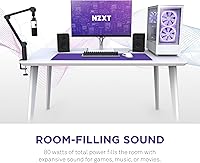
80 watts of total power is more than adequate for small-to-medium rooms, and the speakers have no trouble filling a standard bedroom or home office without strain. Users report they rarely push past 60 to 70 percent volume even in larger spaces.
In open-plan spaces or rooms with high ceilings, the output does hit a ceiling where the sound starts to thin. This gaming speaker pair is genuinely optimized for near-field desktop listening, and buyers hoping to use them as a living room solution may find the coverage falls short.
Aesthetic & Desk Integration
88%
The clean, angular design integrates naturally into a modern PC setup, and NZXT users in particular noted how well the speaker finish coordinates with their cases and peripherals. The footprint is compact enough to sit beside a 27-inch or even an ultrawide monitor without crowding.
Color availability is limited to black, which works for most builds but leaves buyers with white or light-themed setups with no matching option. There is no RGB lighting either, which is a deliberate design choice but one that some buyers in the NZXT ecosystem found inconsistent with the brand's usual aesthetic flexibility.
Bluetooth Performance
71%
29%
Pairing is quick and the connection holds reliably within normal room distances. For casual background listening from a phone or tablet while working, the wireless connection is stable and lag-free enough for media content.
Audio quality over Bluetooth is noticeably softer and less defined compared to the wired 3.5mm connection. Serious listeners will likely default to wired for any critical listening, making Bluetooth feel more like a convenience feature than a primary input.
Value for Money
77%
23%
Relative to similarly priced bookshelf speaker options from Edifier or entry-level Klipsch, this gaming speaker pair holds its own on build quality and sound clarity at the desktop. Buyers who came in with realistic expectations for a 2.0 setup consistently rated the value as fair to good.
The absence of a subwoofer and the touch-only controls are two areas where the asking price invites scrutiny. Competing options at a similar price point occasionally offer more flexible EQ tools or physical controls, making the value proposition somewhat dependent on how much you value the NZXT branding and aesthetic cohesion.
Setup & Out-of-Box Experience
82%
18%
Unboxing and connecting these speakers takes under ten minutes. The cable management is straightforward, and both wired inputs work immediately without drivers or software — a level of plug-and-play simplicity that first-time powered speaker buyers tend to appreciate.
There is no companion app or any hardware EQ beyond the single bass boost toggle, so users wanting to fine-tune frequency response beyond the factory tuning have no built-in options. An onboard equalizer or even a simple treble adjustment would have meaningfully expanded flexibility.
Gaming Audio Suitability
87%
Detail retrieval in complex game soundscapes — layered environmental audio, weapon sounds, footsteps — is where the Relay bookshelf speakers genuinely impress. The silk dome tweeter and glass fiber woofer combination delivers separation that makes spatial awareness more tangible during gameplay.
Without a subwoofer, explosions and low-frequency game effects lack the physical impact that 2.1 setups provide. For genres like racing simulators or first-person shooters where sub-bass presence adds immersion, the gap is noticeable enough that some buyers went on to add a compact sub anyway.
Music Listening Performance
69%
31%
Acoustic, jazz, vocal, and mid-range-forward music genres translate well through these speakers. The smooth treble and reasonably neutral midrange give vocals and instruments a natural character that holds up better than many gaming-focused speakers.
Electronic music, hip-hop, and anything bass-forward can expose the low-end limitations quickly, especially without boost mode. Buyers who split listening time evenly between gaming and music reported that the speaker profile felt slightly tilted toward the former at the expense of the latter.
Warranty & Brand Support
81%
19%
A 2-year warranty is notably generous for powered desktop speakers at this price tier, and NZXT has a track record of responsive customer support through its existing PC components and peripherals business. Buyers cited this as a trust factor when choosing the Relay over lesser-known audio brands.
NZXT is still new to the speaker category, and long-term reliability data beyond the warranty window is limited. A handful of buyers expressed uncertainty about parts availability and ongoing support if issues arise years down the line, which is a fair concern for a first-generation audio product.

Suitable for:

The NZXT Relay Speakers are a strong fit for PC gamers who spend hours at their desk and want noticeably better audio than what a cheap 2.0 set delivers, without the complexity or footprint of a full surround system. Near-field listeners — meaning your ears are sitting roughly two feet from the drivers — will get the most out of the stereo imaging and detail retrieval these speakers are tuned for. Streamers and content creators who need clean, accurate playback for monitoring voice recordings or game audio will find the silk dome tweeters keep things clear without fatigue over long sessions. They also slot naturally into an existing NZXT build for anyone who cares about a cohesive aesthetic across their peripherals and components. If your primary use cases are gaming, casual music listening, and occasional movie watching from a desktop setup, this gaming speaker pair covers all three competently within a compact footprint.

Not suitable for:

Buyers expecting deep, physical bass should look elsewhere — the NZXT Relay Speakers are a 2.0 stereo configuration with no subwoofer, and even with the boost mode engaged, the low-end extension has a real ceiling that no toggle can fully compensate for. If your listening habits lean heavily toward electronic music, hip-hop, or anything that relies on sustained sub-bass presence, the gap will feel obvious within the first few hours. Audiophiles or critical listeners who want precise EQ control will also run into limitations, since there is no companion app and the only tonal adjustment on offer is a single bass boost switch. Anyone coming from a setup with a physical volume knob should approach the touch-only controls with realistic expectations — accidental triggers are a recurring frustration reported by real buyers, and there is no tactile feedback to compensate. Finally, users hoping to use this gaming speaker pair as a room-filling solution for a larger living space will find the output starts to thin out before it can truly pressurize a big room.

Specifications

  • Total Power: The speakers deliver 80 watts of total output, with each unit rated at 40 watts individually for a balanced stereo presentation.
  • Configuration: This is a 2.0 stereo setup consisting of two powered bookshelf speakers with no subwoofer included in the package.
  • Tweeter: Each speaker uses a 20mm silk dome tweeter designed to reproduce high frequencies smoothly and without harshness over extended listening periods.
  • Woofer: A 3-inch glass fiber woofer handles mid and low frequencies, chosen for its stiffness and resistance to coloration under sustained output.
  • Cabinet Material: Enclosures are constructed from MDF (medium-density fiberboard), which reduces panel resonance and vibration compared to plastic alternatives.
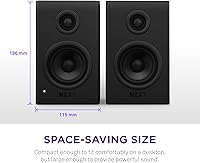
  • Dimensions: Each speaker measures 6.25″ deep, 4.52″ wide, and 7.32″ tall, making them compact enough for most standard desktop configurations.
  • Weight: The pair weighs approximately 9.23 pounds combined, reflecting the density of the MDF cabinet construction.
  • Wired Inputs: Both 3.5mm auxiliary and RCA inputs are provided, allowing connection to a wide range of source devices including PCs, consoles, and home theater receivers.
  • Wireless: Bluetooth connectivity is built in, enabling wireless audio streaming from phones, tablets, or any Bluetooth-capable device within standard range.
  • Control Method: Volume adjustment and bass boost are managed through touch-sensitive controls located on the speaker body rather than a physical rotary knob.
  • Bass Boost: A dedicated bass boost mode is accessible via the touch panel to add low-frequency warmth when the default tuning feels insufficient for certain content.
  • Power Source: The speakers are powered by a corded electric connection and are not battery-operated or USB-powered.
  • Color: The Relay bookshelf speakers are available exclusively in black with a clean, minimal finish suited to modern desktop builds.
  • Warranty: NZXT covers this product with a 2-year limited warranty, which is above average for powered desktop speakers in this price segment.
  • Compatible Devices: Officially compatible with desktop PCs and home theater setups, and functionally compatible with any device that outputs 3.5mm, RCA, or Bluetooth audio.
  • Speaker Count: The package includes two speakers — a left and right channel unit — with all necessary cables for wired connection included in the box.

Related Reviews
Monster Speaker S200 Wireless Portable Bluetooth Speaker
87%
92%
Sound Quality
89%
Battery Life
90%
Waterproofing
85%
Portability
82%
Connectivity
More
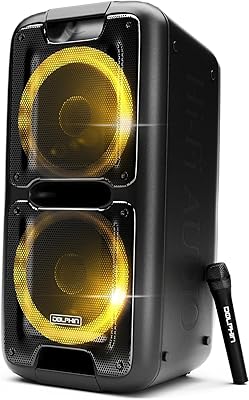
Party Speaker Dolphin SP-2100RBT Bluetooth Speaker
83%
88%
Sound Quality
83%
Portability
80%
Battery Life
75%
LED Lights Effect
85%
Ease of Use
More
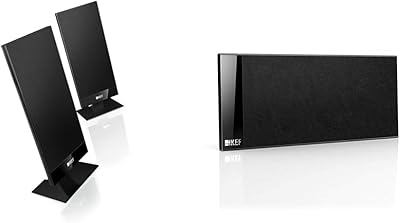
KEF T101 Satellite Speaker Pair & T101C Center Channel Speaker
85%
88%
Sound Quality
91%
Dialogue Clarity
85%
Ease of Setup
92%
Compactness & Design
75%
Bass Performance
More
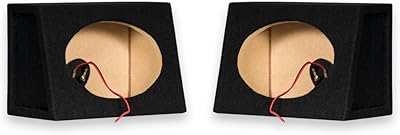
OnlyFactoryDirect TR69 Sealed Car Bass Box Speaker Enclosure Cabinets for 6X9 Speakers
85%
88%
Sound Quality
91%
Bass Response
94%
Ease of Installation
87%
Build Quality
75%
Size Compatibility
More
Bose TV Speaker
Bose TV Speaker
83%
93%
Dialogue Clarity
96%
Setup Simplicity
91%
Compact Design
88%
Build Quality
64%
Bass Performance
More
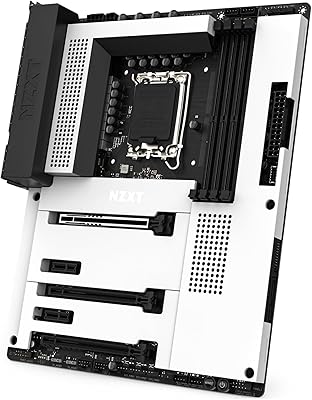
NZXT N7 B650E
NZXT N7 B650E
89%
97%
CPU Compatibility
94%
Memory Support
91%
Build Quality
89%
Thermal Performance
88%
Ease of Installation
More
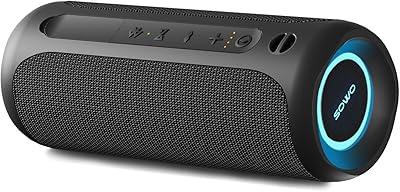
SOWO Bluetooth Speaker
87%
88%
Sound Quality
85%
Bass Performance
90%
Battery Life
86%
Build Quality
87%
Portability
More
ERKEISEHN Bluetooth Speaker
87%
88%
Sound Quality
91%
Battery Life
94%
Waterproof Performance
85%
Build Quality
80%
LED Light Show
More
NZXT N7 Z790
NZXT N7 Z790
89%
96%
CPU Compatibility
94%
Memory Support
92%
Build Quality
88%
Installation Ease
90%
Connectivity Options
More
Monster S320 Bluetooth Speaker
87%
88%
Sound Quality
94%
Battery Life
91%
Build Quality
95%
Waterproofing & Durability
83%
Portability
More

FAQ

No, they do not. This is a 2.0 stereo configuration, meaning you get two bookshelf speakers and nothing else. If deep bass is important to you, you would need to add a separate powered subwoofer — these speakers have a bass boost mode, but it is not a replacement for a dedicated sub.

Yes, as long as your console or TV has a 3.5mm headphone output or RCA outputs, you can connect the Relay bookshelf speakers directly. The Bluetooth option also works if your console supports Bluetooth audio output, though not all do natively.

There is a touch-sensitive panel on one of the speakers that handles volume up, volume down, and bass boost toggling. It responds quickly, but a meaningful number of users report accidentally triggering it when reaching past the speaker or repositioning cables — so if you are used to a physical knob, expect a small adjustment period.

It is decent for casual background listening, but noticeably softer and less detailed than the wired 3.5mm connection. If you care about audio quality, wired will always be the better choice here — Bluetooth is more of a convenience option than a primary input.

They are quite compact — each speaker is under 7.5 inches tall and 4.6 inches wide — so they sit comfortably on either side of most monitors, including ultrawide setups. The MDF build means they have some weight to them, but the footprint is manageable.

Technically yes, though it depends on the subwoofer. If the sub has speaker-level inputs or its own RCA input, you can run a signal from your source into the sub and then out to these speakers. There is no dedicated subwoofer output on the speakers themselves, so the connection path requires a bit of planning.

It adds a noticeable lift to the low-mid and bass frequencies, which makes the sound warmer and fuller — particularly helpful for gaming and action movies. Without it engaged, the default tuning is relatively neutral and can feel lean if you are used to bass-heavy audio. It is a simple on/off toggle with no adjustment, so you either like the effect or you do not.

Yes, completely. Since the connection is either 3.5mm audio or Bluetooth — no proprietary drivers involved — they work with any device that has a headphone output or Bluetooth capability, including Macs, Linux machines, and Chromebooks.

Buyers who have compared them directly tend to give the Relay bookshelf speakers a slight edge on cabinet solidity due to the MDF construction. Edifier also uses quality materials at comparable price points, so the gap is not dramatic — but the NZXT enclosure does feel noticeably dense and rattle-free under most conditions.

You get the two speakers, a speaker interconnect cable to link the pair together, and a 3.5mm audio cable for connecting to your PC or other source device. There is no remote control, no companion app, and no additional accessories beyond the basics needed to get started.