Overview

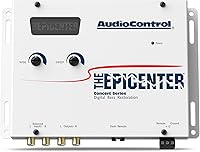
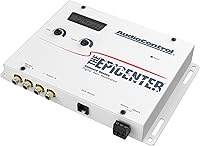
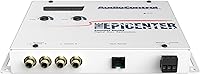
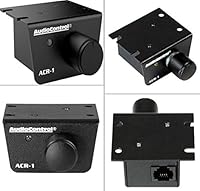
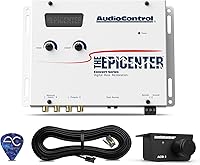
The AudioControl Epicenter Bass Restoration Processor is not a bass boost knob dressed up in a fancy enclosure — it is a dedicated signal processor that digitally recreates the low-frequency fundamentals stripped out when music gets compressed for streaming. Most car audio systems bleed bass detail long before the signal reaches your amplifier, and this bass processor addresses that at the source. It has been on the market since 2011, earned a top-ten ranking among Car Amplifier Equalizers, and still attracts serious buyers. The white chassis looks clean in most installs, and the included dash-mounted remote is a practical touch that lets the driver adjust bass on the fly.
Features & Benefits

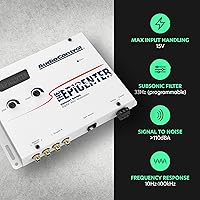
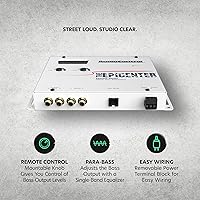
The Para-Bass parametric EQ is where this AudioControl unit separates itself from generic bass boosters. The center frequency sweeps continuously from 27 Hz to 63 Hz with an adjustable band width, meaning you can target exactly the frequencies your specific speakers and enclosure favor rather than guessing. The Bass Maximization circuit keeps output voltage configurable — 2.5, 5, 7.5, or 10 volts — and reins in destructive signal spikes before they damage drivers. The subsonic filter chip is actually replaceable, letting you shift the crossover anywhere from 20 to 45 Hz. Balanced differential inputs reduce noise, and EPICENTER LINK ties everything together cleanly when paired with compatible AudioControl amplifiers.

Best For

This bass processor makes the most sense for someone who has already invested in a decent amplifier and subwoofer but feels the system is missing impact — especially when streaming music from a phone. If your head unit is factory or entry-level, you are not losing much by skipping a source upgrade; the Epicenter can do more for your low-end than a new head unit in many cases. Dedicated AudioControl amplifier users will appreciate the LINK integration, but it works well with other brands too. It is not the right pick for casual listeners wanting a one-knob fix — installation requires patience and basic signal chain knowledge.

User Feedback

Across roughly 920 ratings, the Epicenter holds a 4.6-star average, which for a specialized processor at this price point reflects genuine satisfaction rather than impulse purchases. Buyers who left detailed reviews consistently mention a clear, noticeable improvement in bass texture and punch on streamed playlists — the kind of depth a straight EQ boost simply cannot replicate. The recurring criticism, however, centers on installation difficulty; several users found the wiring and configuration more involved than expected, and a few flagged that the remote cable could stand to be longer. Long-term owners generally report no durability concerns, which is reassuring for a unit you plan to leave installed for years.

Pros

  • Digitally recreates lost bass fundamentals from compressed streaming audio, delivering real depth rather than just volume.
  • The Para-Bass parametric EQ lets you target specific frequencies precisely, which generic bass boosters simply cannot do.
  • Output voltage is user-configurable across four settings, making it adaptable to a wide range of amplifier sensitivities.
  • The replaceable subsonic filter chip is a rare, genuinely useful feature for installers who need to fine-tune low-end rolloff.
  • Balanced differential inputs noticeably reduce noise, keeping the signal clean across longer cable runs.
  • The wired dash remote is practical and well-placed, letting the driver adjust bass without touching any settings menu.
  • Strong 4.6-star average across nearly a thousand ratings reflects consistent satisfaction from a technically demanding audience.
  • Long-term owners regularly report no performance degradation, suggesting solid build quality for a unit meant to stay installed for years.
  • EPICENTER LINK integration with AudioControl EPIC amplifiers adds both convenience and built-in fuse protection.

Cons

  • Installation is genuinely complex and not suitable for anyone without prior car audio wiring experience.
  • The remote cable length has been flagged by multiple buyers as too short for flexible mounting in larger vehicles.
  • Performance gains depend heavily on the quality of the amplifier and speakers already in the system.
  • No wireless or app-based control option exists, which feels dated compared to some competing DSP units.
  • The unit is bulky relative to some modern signal processors, which can complicate installation in tight spaces.
  • Buyers using non-AudioControl amplifiers miss out on the EPICENTER LINK feature, reducing the value of that integration investment.
  • At its price point, some buyers expect more detailed setup documentation than what ships in the box.
  • The subsonic filter chip replacement, while flexible, adds an extra cost and sourcing step that not all users anticipate.

Ratings

The AudioControl Epicenter Bass Restoration Processor earns its strong reputation across nearly a thousand verified buyer reviews, and these scores reflect an AI-driven analysis of that global feedback — with spam, bot activity, and incentivized reviews actively filtered out. The results are transparent: where this bass processor genuinely delivers, the scores show it, and where real buyers have run into frustration, that is reflected too.
Bass Restoration Performance
91%
Buyers who stream music daily consistently describe a transformation in low-end depth that a simple EQ boost cannot replicate. The digital recreation of stripped bass fundamentals makes a noticeable difference on compressed formats like those used by major streaming platforms, especially with a well-matched subwoofer in the system.
Results are not uniform across all setups. Users with budget amplifiers or smaller sealed enclosures report more modest gains, and a handful noted that the improvement was underwhelming until they properly calibrated the output voltage to their specific hardware.
Signal Processing Precision
88%
The Para-Bass parametric EQ gives experienced installers a level of control that few processors at this tier offer. Being able to sweep the center frequency from 27 Hz to 63 Hz and adjust the band width independently means you can dial in exactly what a given speaker and enclosure combination responds to best.
This precision is a double-edged advantage. Users who are not familiar with parametric EQ concepts found the tuning process confusing and time-consuming, and a few reported inadvertently degrading their sound before figuring out the correct settings.
Installation Experience
58%
42%
For experienced car audio installers, the wiring layout is logical and the balanced input options give flexibility in how the unit is integrated into an existing system. Professionals working with AudioControl amplifiers found the EPICENTER LINK connection particularly clean and straightforward.
Casual buyers frequently flagged installation as the biggest pain point. The setup demands a working knowledge of signal chain fundamentals, output voltage matching, and proper grounding — and the included documentation does not bridge that gap well enough for first-timers.
Remote Usability
72%
28%
Having a physical knob within arm's reach while driving is a genuine practical advantage over processor units that require app or menu access. The LED indicator gives a quick visual read on the current bass level, which drivers appreciate during daily use without having to look away from the road.
The remote cable length drew consistent criticism across reviews, with multiple users in larger vehicles noting it was too short to mount in a convenient position. The knob itself feels functional rather than premium, and a few users questioned its long-term durability under regular use.
Build Quality
79%
21%
The main unit holds up well in permanent installations, and long-term owners rarely report hardware failures or performance degradation over time. The composite housing is solid enough for trunk or under-dash mounting where it is not being handled frequently.
The white plastic finish can scuff during installation, and the overall aesthetic feels more utilitarian than the premium price point might suggest. The remote assembly in particular feels noticeably less robust than the main processor unit.
Value for Money
74%
26%
For buyers who genuinely need DSP-level bass restoration and understand how to use it, the Epicenter delivers results that cheaper inline boosters simply cannot match. The replaceable subsonic filter chip and configurable output voltage add long-term flexibility that justifies the investment for serious enthusiasts.
At this price, buyers who are not already invested in a quality amplifier and subwoofer will not hear a return that matches the cost. It is a hard sell to anyone on a tight overall car audio budget, since the supporting hardware matters just as much as the processor itself.
Noise Rejection
86%
The balanced differential input circuit performs reliably in real-world installs, and the vast majority of users report a clean, quiet signal even over longer cable runs. This is especially appreciated in vehicles where the head unit and amplifier are physically far apart.
A small number of users reported residual noise that they traced back to grounding issues elsewhere in their system rather than the Epicenter itself — though the troubleshooting process was time-consuming and not always clearly diagnosed.
Subsonic Filter Flexibility
83%
The replaceable chip design is a standout feature that professional installers genuinely appreciate. Being able to physically swap the crossover point to anywhere from 20 Hz to 45 Hz without any additional electronics makes this unit far more adaptable across different enclosure types and driver specs.
Sourcing the replacement chips is not always straightforward, and some buyers were unaware the chips were sold separately until after purchase. For those who never need to change the default 33 Hz setting, this feature adds no value.
Compatibility
77%
23%
The unit connects cleanly to amplifiers from any brand using standard RCA connections, and the selectable input modes cover both balanced and unbalanced sources. Most buyers using non-AudioControl hardware reported no fundamental compatibility issues during setup.
Users outside the AudioControl ecosystem miss out on the EPICENTER LINK functionality entirely, which represents a meaningful portion of the unit's design investment. A few buyers also noted minor sensitivity mismatches with certain budget amplifiers that required careful voltage calibration.
Documentation & Setup Guidance
51%
49%
The physical connections and control layout are logically labeled, and experienced installers found the unit intuitive enough to configure without consulting the manual extensively. Online resources from AudioControl supplement the in-box materials for those willing to do additional research.
The included documentation consistently drew criticism for being too brief and too technical for intermediate buyers. Several users had to rely on community forums and YouTube tutorials to successfully complete their installation, which is not ideal at this price point.
EPICENTER LINK Integration
84%
For buyers running a full AudioControl system, the LINK connection simplifies wiring, delivers 1A fuse protection, and creates a unified control experience between the processor and compatible EPIC amplifiers. Installers who have used it describe it as one of the cleaner proprietary integration solutions in car audio.
This feature is entirely irrelevant if you are not using a compatible AudioControl amplifier, which limits its appeal to a specific subset of buyers. It also creates a degree of brand lock-in that some enthusiasts find limiting when planning future system upgrades.
Long-Term Reliability
87%
Long-term owners are noticeably present in the review pool, and the pattern across multi-year ownership reviews is consistent: the unit keeps performing without measurable degradation. For something permanently installed in a vehicle and subject to heat and vibration cycles, that reliability track record matters.
There is limited publicly available data on failure rates for specific internal components like the filter chip socket over very long periods. A small number of users reported intermittent LED issues with the remote after extended use, though this did not appear to affect audio performance.
Bass Control Accessibility
81%
19%
The wired dash remote puts real-time bass adjustment directly in the driver's hand, which is a practical convenience most competing units at this level do not include as standard. Buyers who adjust bass depending on music genre or road noise report using it regularly.
The lack of any wireless or app-based control option is increasingly noticeable compared to newer DSP competitors. For buyers who prefer modern smartphone integration in their car audio setup, the wired-only remote will feel like a limitation rather than a feature.

Suitable for:

The AudioControl Epicenter Bass Restoration Processor is built for car audio enthusiasts who are genuinely frustrated by how flat and hollow their system sounds when playing streamed or digitally compressed music. If you have already spent real money on a subwoofer and amplifier but feel the low end lacks weight and definition, this bass processor targets exactly that gap without requiring you to swap out your head unit. It is also an excellent fit for installers putting together a full AudioControl-based system, since the EPICENTER LINK integration with compatible EPIC amplifiers streamlines setup and adds a layer of signal protection. Drivers who want physical, within-reach bass adjustment — rather than diving through an app or menu — will appreciate the included wired remote. Anyone stepping up from a passive inline bass booster and wanting actual DSP-level control over their low-frequency response will find this AudioControl unit a meaningful upgrade.
Not suitable for:

The AudioControl Epicenter Bass Restoration Processor is not a good match for casual listeners who just want to plug something in and be done with it. This unit requires a working understanding of car audio signal chains — input sensitivity, output voltage matching, and crossover points — and skipping that groundwork often leads to poor results or frustration. If your amplifier and speakers are entry-level or already struggling, the Epicenter will not compensate for those weaknesses; the quality of your supporting hardware still determines the ceiling of what you hear. Buyers expecting a dramatic transformation from a stock, low-power system will likely be disappointed. It is also a harder sell if you have no interest in AudioControl amplifiers and are looking for a more universal, brand-agnostic DSP solution with a broader feature set.
Specifications

  • Brand: Manufactured by AudioControl, a US-based company with a long track record in professional and consumer audio signal processing.
  • Model: The Epicenter bass restoration processor, model number B005FMABZC, has been available since August 2011.
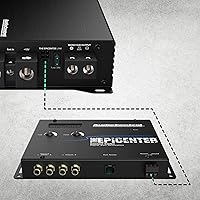
  • Dimensions: The unit measures 9.4 x 11.9 x 3.4 inches, making it a mid-sized processor that requires dedicated mounting space during installation.
  • Weight: The processor weighs 2.6 pounds, which is typical for a unit of this class and does not present any unusual mounting challenges.
  • Material: The enclosure is constructed from plastic or composite material, finished in white to suit a range of interior aesthetics.
  • Output Voltage: Output voltage is user-selectable at 2.5, 5, 7.5, or 10 volts to match the input sensitivity of a wide range of external amplifiers.
  • Para-Bass EQ Range: The Para-Bass parametric equalizer offers a continuously variable center frequency from 27 Hz to 63 Hz with an adjustable band width.
  • Subsonic Filter: The default subsonic filter crossover is set at 33 Hz and uses a replaceable chip that can be swapped for crossover points of 20, 25, 30, 35, 40, or 45 Hz.
  • Input Type: The unit supports both balanced and unbalanced differential inputs, with a circuit designed to cancel noise picked up along the signal transmission line.
  • Remote Control: A wired remote with an LED indicator is included and designed for dash or under-dash mounting via a supplied bracket, or for custom through-dash installation.
  • EPICENTER LINK: The EPICENTER LINK port allows direct integration with AudioControl EPIC monoblock or 5-channel amplifiers for a unified system connection.
  • Fuse Protection: When connected via EPICENTER LINK, the system is protected by a 1A fuse to safeguard connected equipment from electrical faults.
  • Output Wattage: The unit is rated at 9.5 watts output, consistent with its role as a signal processor rather than a standalone amplification device.
  • Connectivity: The product listing notes Radio Frequency and Wireless as connectivity features, primarily referring to its compatibility within RF-enabled car audio signal chains.
  • Bass Maximization: The Bass Maximization circuit actively monitors and restrains destructive signal bursts while pushing the bass output to the configured voltage ceiling.
  • In The Box: The package includes the Epicenter unit and a bass control remote knob with its mounting bracket and wiring harness.
  • Seller Rank: As of the most recent data, the unit holds a rank of number 10 in Car Amplifier Equalizers and sits at number 18,960 overall in Electronics.
  • Rating: The product carries a 4.6-out-of-5-star average based on 920 customer ratings on Amazon.
  • Discontinuation: AudioControl has confirmed this product is not discontinued and remains in active production and distribution.
  • Color: The unit is available in white; this specific variant is the white-finish version of the Epicenter processor.

Related Reviews
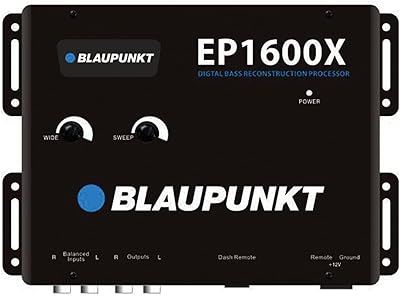
Blaupunkt EP1600X Digital Bass Processor
70%
84%
Bass Restoration Performance
81%
Parametric Bass Control
78%
Signal Cleanliness
54%
Ease of Installation
77%
Value for Money
More
Soundstream BX-12W Digital Bass Processor

77%
88%
Sound Performance
91%
Ease of Installation
79%
Remote Control Usability
76%
Build Quality
87%
Subsonic Filter Effectiveness
More
Intel Core i7-4790 Desktop Processor
70%
91%
Value for Money
78%
Raw CPU Performance
63%
Gaming Capability
67%
Platform Compatibility
61%
Thermal Performance
More
SEEN Restore Scalp Serum 2oz
85%
88%
Effectiveness in Soothing Dry Scalp
92%
Fragrance-Free Formula
90%
Absorption Speed
87%
Suitability for Sensitive Skin
85%
Hydration Lasting Power
More
Kenra Platinum Restorative Reconstructor 6oz

85%
89%
Effectiveness on Damaged Hair
85%
Improvement in Hair Texture
90%
Smoothing & Softening Effects
84%
Ease of Use/Application
72%
Fragrance & Scent
More
Intel Core i3-10100 Processor
83%
91%
Value for Money
88%
Performance for Everyday Tasks
85%
Energy Efficiency
78%
Gaming Performance (Light)
80%
Multitasking Capabilities
More
Intel Core i9-7900X Desktop Processor
74%
91%
Multi-Threaded Performance
78%
Single-Core Responsiveness
54%
Thermal Management
82%
Overclocking Potential
93%
PCIe Lane Availability
More
Intel Core i7-6850K Processor
83%
93%
Performance under Load
90%
Multitasking Efficiency
67%
Thermal Management
85%
Ease of Setup
89%
Compatibility with Other Hardware
More
Intel Core i3-9100 Processor
84%
92%
Value for Money
87%
Performance in Everyday Tasks
80%
Gaming Performance (Casual)
90%
Energy Efficiency
88%
Installation Ease
More
AMD Ryzen 5 1400 Processor
82%
92%
Value for Money
85%
Gaming Performance
88%
Overclocking Potential
80%
Thermal Management
90%
Setup and Installation
More

FAQ

It works with factory head units. The Epicenter sits between your source unit and amplifier in the signal chain, so it does not matter much what is feeding it. That said, results are better when the source signal is reasonably clean to begin with.

Honestly, some prior car audio experience helps a lot here. This is not a plug-and-play device. You need to understand basic signal routing, input sensitivity matching, and how to set output voltage correctly for your amplifier. If you have never installed a processor before, budget extra time or consider having a shop handle it.

It works with amplifiers from any brand. The EPICENTER LINK port is a bonus feature for users with compatible AudioControl EPIC amps, but the standard RCA inputs and outputs connect to virtually any external amplifier. You just will not have the LINK integration or its fuse protection if you go with a different brand.

A standard bass boost just raises the volume of existing bass frequencies, which often just makes things louder and muddier. The Epicenter digitally analyzes the signal for harmonic content and recreates the fundamental bass frequencies that were stripped out during audio compression. The result tends to sound more like actual depth and punch rather than just added volume.

AudioControl does not publish an official cable length specification, but user feedback consistently notes that it can feel short in some vehicle installations. A few buyers have extended it using standard remote cable, though doing so is not officially recommended and could affect signal quality if done incorrectly.

Yes, and this is actually one of the more practical design choices on the Epicenter. The subsonic filter chip is physically replaceable, and AudioControl offers chips for crossover points ranging from 20 Hz up to 45 Hz. It gives you real tuning flexibility without any additional electronics.

The composite plastic housing holds up reasonably well in an under-dash or trunk-mounted installation where it is not being handled constantly. A few long-term owners mention minor scuffing from cable management work, but nothing that affects performance. If aesthetics matter, mounting it somewhere out of direct contact helps.

The balanced differential input circuit is specifically designed to cancel out noise that can be introduced along the cable run between the source unit and the processor. In practice, most users report a clean output, though the quality of your RCA cables and overall system grounding still plays a role.

Bass Maximization pushes the bass output toward the configured voltage ceiling while actively limiting signal spikes that could damage your speakers or amplifier. Think of it as a controlled ceiling rather than a simple volume increase. It is a protective circuit as much as an output-boosting one, which is why it is worth setting the output voltage correctly for your hardware.

Streaming audio is precisely where this type of processor tends to show the most noticeable improvement. Compressed formats like those used by major streaming platforms lose a significant amount of low-frequency information during encoding, and recovering that is exactly what the Epicenter is built to do. Just keep in mind that your amplifier and subwoofer still set the ceiling on how much improvement you will actually hear.

Where to Buy