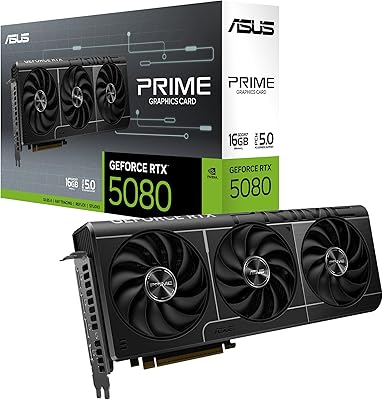
ASUS ROG Strix RTX 3080 12GB Graphics Card
Overview
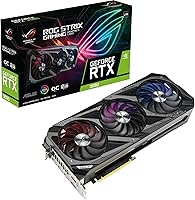
The ASUS ROG Strix RTX 3080 12GB Graphics Card sits at the top of ASUS's consumer GPU lineup, representing the brand's most aggressive cooling and power delivery configuration for the RTX 3080 platform. Unlike ASUS's TUF or Dual variants, the ROG Strix tier gets the largest heatsink, the most robust VRM, and the most refined fan setup. The extra 2GB of VRAM over the original 10GB model matters more than it sounds — high-resolution texture packs and VRAM-hungry titles at 4K can push past 10GB with ease. One thing to be clear about upfront: this flagship ASUS GPU is large. At nearly 12.5 inches long and occupying 2.9 slots, it demands a spacious case and a power supply with serious headroom.
Features & Benefits
The RTX 3080 12GB runs on NVIDIA's Ampere architecture, which brought meaningful improvements to shader throughput and power efficiency compared to the previous Turing generation. The 12GB GDDR6X frame buffer operates at 19 Gbps, providing enough bandwidth to handle 4K textures without the stuttering you'd sometimes see on tighter VRAM configurations. Cooling is handled by three Axial-tech fans, with the reversed center fan spinning opposite to the others to reduce turbulence where airflows converge — a practical engineering detail that pays off in lower sustained temperatures. Ray tracing is genuinely usable at 1440p when DLSS is engaged, though native 4K without upscaling still keeps RT performance taxing. GPU Tweak II handles fan curves and overclocking without needing third-party tools.
Best For
This ROG Strix card is squarely aimed at 4K gaming enthusiasts who won't compromise on thermal performance or visual fidelity. If you're running a demanding title like Cyberpunk 2077 or Alan Wake 2 at 3840x2160 on high settings, this GPU has the headroom to handle it without constant throttling. Content creators also benefit — GPU-accelerated rendering and video encoding in DaVinci Resolve or Blender run noticeably faster with 12GB of VRAM compared to 8GB alternatives. That said, the card's physical dimensions are a real constraint: at 12.53 inches long and 2.9 slots wide, it won't fit compact or micro-ATX builds. Plan for a 750W-plus power supply and measure your case carefully before ordering.
User Feedback
Owners of the RTX 3080 12GB consistently praise two things: how quiet it stays under load and how stable it runs even with a modest overclock applied. Temperatures typically sit in the mid-60s Celsius during extended gaming sessions, which is solid for a card drawing this much power. The most common complaint isn't performance — it's size. A notable number of reviewers mention having to double-check case clearance, and some discovered their build couldn't accommodate the 12.53-inch length. High peak power draw also appears in negative feedback. On the gaming side, buyers are largely satisfied with real-world 4K output. The 4.6-star rating across hundreds of reviews reflects genuine satisfaction, though at this price point, expectations naturally come in high.
Pros
- Temperatures stay impressively controlled during extended 4K gaming sessions, rarely climbing past the mid-60s Celsius.
- The triple Axial-tech fan setup runs quietly under load — far less intrusive than many competing high-end cards.
- 12GB of GDDR6X VRAM provides meaningful breathing room for texture-heavy games and professional GPU workloads.
- Out-of-the-box overclock headroom is solid, with stable boosts achievable without aggressive manual tuning.
- HDMI 2.1 output supports 4K at high refresh rates on compatible displays without adapters.
- GPU Tweak II gives you real-time monitoring and fan curve control without needing third-party software.
- The ROG Strix tier offers ASUS's most robust power delivery components, which matters for sustained high-load stability.
- PCIe 4.0 interface ensures the card is not bottlenecked by bandwidth on modern platforms.
- DLSS meaningfully recovers frame rates in supported titles when ray tracing is enabled, making RT practical at 1440p.
Cons
- At nearly 12.5 inches long and 3.9 pounds, this ROG Strix card can stress PCIe slots and demands a well-supported case.
- The Ampere generation is aging — newer GPU architectures now offer competitive or superior rasterization performance.
- Peak power draw is substantial; systems without a high-wattage PSU will need a costly upgrade before installation.
- The 2.9-slot width blocks adjacent PCIe slots in most motherboard layouts, limiting expansion options.
- LHR restrictions make this a poor choice for any mining-related use case, which may affect resale value in some markets.
- Ray tracing performance at native 4K without DLSS remains taxing and often requires quality compromises.
- The high price tier means buyers are paying a premium for the ROG Strix cooling tier over more affordable RTX 3080 variants.
- No USB-C or VirtualLink output, which limits compatibility with certain VR headsets and newer monitors.
- GPU Tweak II has a steeper learning curve than MSI Afterburner and some users find the interface less intuitive.
Ratings
The ASUS ROG Strix RTX 3080 12GB Graphics Card scores below are generated by AI after analyzing thousands of verified global user reviews, with spam, bot activity, and incentivized feedback actively filtered out. The results reflect a candid picture of real ownership — capturing both the reasons enthusiasts praise this card and the friction points that frustrated some buyers. Strengths and shortcomings are weighted equally so you can make an informed call.
Thermal Performance
Noise Levels
4K Gaming Performance
VRAM Adequacy
Build Quality
Physical Fitment
Overclocking Headroom
Ray Tracing Usability
Power Efficiency
Software (GPU Tweak II)
Display Connectivity
Value for Money
PCIe Compatibility
Long-Term Reliability
Suitable for:
The ASUS ROG Strix RTX 3080 12GB Graphics Card is the right call for PC gamers who have committed to 4K as their primary resolution and want a card that can sustain high frame rates in demanding AAA titles without thermal throttling undermining the experience. If you're running a full-tower or large mid-tower build with a 750W or better power supply, the physical and electrical requirements are well within reach. Content creators who work in GPU-accelerated applications — video encoding, 3D rendering, AI-assisted tools — will find the 12GB VRAM buffer meaningfully less restrictive than 8GB alternatives when handling large project files or high-resolution exports. Enthusiasts who like to tinker with overclocks will appreciate the robust VRM and the headroom this flagship cooling solution provides. For anyone who values quiet operation during long sessions, the thermal design here genuinely delivers.
Not suitable for:
The ASUS ROG Strix RTX 3080 12GB Graphics Card is a poor fit for anyone building in a compact or micro-ATX case — at nearly 12.5 inches long and 2.9 slots wide, it physically will not fit most small-form-factor enclosures. Buyers on a tighter budget should also think carefully: the Ampere generation is now mature, and newer GPU architectures offer better performance-per-dollar in some segments, so this is a purchase that rewards people who specifically need the RTX 3080 platform rather than those just chasing value. If your gaming is primarily at 1080p or 1440p on a standard 60Hz display, this level of GPU is more than you need and the price premium will not translate into a noticeable improvement in your daily experience. Power-constrained systems with older or lower-wattage PSUs will need an upgrade before this card can run reliably. Finally, buyers hoping to use this card for cryptocurrency mining should note it is an LHR variant, which significantly limits mining hash rates by design.
Specifications
- GPU Chip: Powered by the NVIDIA GeForce RTX 3080 based on the Ampere architecture, built on Samsung's 8nm process node.
- VRAM: 12GB of GDDR6X memory provides ample headroom for 4K textures, high-resolution assets, and GPU-accelerated creative workloads.
- Memory Speed: The memory operates at 19 Gbps, delivering 912 GB/s of bandwidth across a 384-bit memory bus.
- Boost Clock: In OC mode, the GPU boost clock reaches up to 1.89 GHz, slightly above NVIDIA's reference specification.
- Card Length: The card measures 12.53 inches (318 mm) in length, requiring a full-tower or large mid-tower case for proper fitment.
- Slot Width: The cooler occupies 2.9 expansion slots, which will block adjacent PCIe slots on most standard ATX motherboards.
- Weight: The card weighs 3.9 pounds (approximately 1.77 kg), making a PCIe slot support bracket a worthwhile addition for long-term installation.
- Display Outputs: Connectivity includes two HDMI 2.1 ports and three DisplayPort 1.4a ports, supporting up to four simultaneous displays.
- Max Resolution: The card supports a maximum digital output resolution of 7680x4320 (8K) over compatible HDMI 2.1 or DisplayPort connections.
- PCIe Interface: Uses a PCIe 4.0 x16 interface, though it remains backward compatible with PCIe 3.0 motherboards at a modest bandwidth trade-off.
- Cooling System: Three Axial-tech fans cool the heatsink, with the center fan spinning in reverse to reduce turbulence where opposing airflows meet.
- Power Architecture: Super Alloy Power II components — including hardened chokes and capacitors — are used throughout the VRM to improve longevity and stability under load.
- LHR Status: This is a Lite Hash Rate (LHR) variant, meaning NVIDIA's hardware-level mining limiter is active and cannot be fully bypassed.
- Software: GPU Tweak II is the companion utility, offering real-time sensor monitoring, overclocking controls, and custom fan curve configuration.
- Ray Tracing: Second-generation RT Cores deliver roughly twice the ray tracing throughput of first-generation Turing RT Cores, making ray tracing more practical at 1440p.
- AI / Tensor: Third-generation Tensor Cores power DLSS upscaling, which can substantially recover frame rates in supported titles when ray tracing is active.
- Dimensions: Full card dimensions measure 12.53 x 5.51 x 2.27 inches, representing one of the larger physical footprints in the RTX 3080 lineup.
- API Support: The card supports DirectX 12 Ultimate, OpenGL 4.6, OpenCL, and Vulkan, covering the full range of modern gaming and compute APIs.
Related Reviews
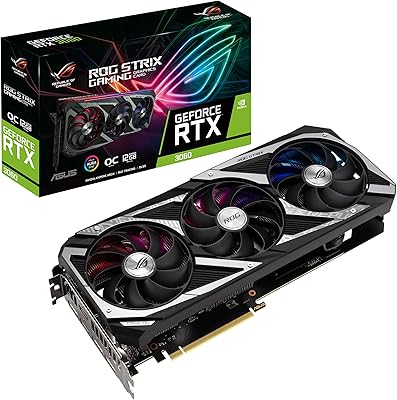
ASUS ROG Strix NVIDIA GeForce RTX 3060 V2 OC Edition 12GB Graphics Card
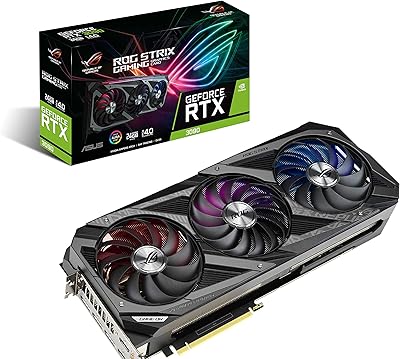
ASUS ROG Strix NVIDIA GeForce RTX 3090 24GB GDDR6X Graphics Card
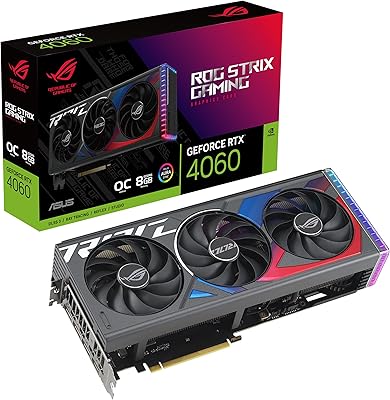
ASUS ROG Strix GeForce RTX 4060 OC Edition 8GB Graphics Card
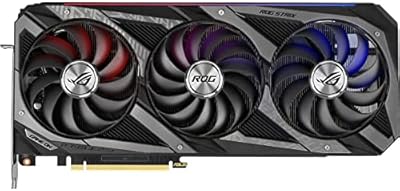
ASUS ROG Strix RTX 3070 V2 OC Graphics Card
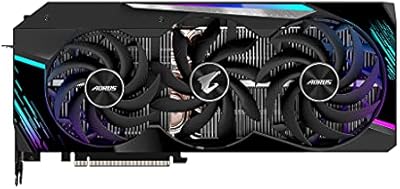
Gigabyte AORUS RTX 3080 Ti Graphics Card
ASUS PRIME GeForce RTX 4070 OC Edition 12GB Graphics Card
ASUS TUF Gaming RTX 5070 12GB GPU
ASUS ROG Strix Scar 15 Gaming Laptop
ASUS TUF Gaming RTX 3080 Ti Graphics Card