Overview

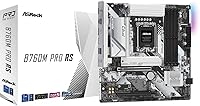
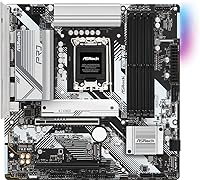
The ASRock B760M Pro RS Motherboard landed in mid-2023 as a practical answer for builders who wanted DDR5 without paying flagship prices. Built around Intel's B760 chipset in a Micro-ATX form factor, it fits neatly into compact cases while still handling 12th, 13th, and 14th Gen Intel Core processors on the LGA1700 socket. That broad CPU compatibility keeps it relevant even as newer generations arrive. It's not trying to be everything — it's a focused, no-nonsense board that has clearly resonated with buyers, sitting consistently near the top of Amazon's motherboard bestseller rankings since its release.

Features & Benefits

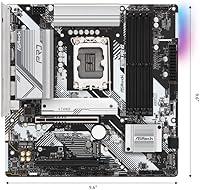
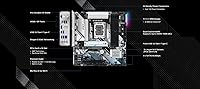
The B760M Pro RS punches above its weight in a few key areas. Its DDR5 support reaches up to 7200MHz via XMP and EXPO memory profiles — impressive for this chipset tier — and accommodates up to 192GB across two DIMM slots. The primary PCIe 5.0 x16 slot keeps the board ready for next-generation graphics cards, while a secondary PCIe 3.0 x16 slot adds flexibility. A 7+1+1 power phase design with Dr.MOS ensures stable delivery for mid-range CPUs without thermal headaches. Display outputs cover HDMI, DisplayPort, and eDP for integrated graphics use. WiFi is not built in, but an M.2 Key E slot lets you add a card if needed.

Best For

This mid-range Intel motherboard suits first-time builders who want modern specs without wading through overcomplicated BIOS menus or premium-board feature bloat. It pairs naturally with a Core i5 or i7 for a home or office desktop that handles everyday workloads and light gaming without complaint. Budget-minded gamers will appreciate the PCIe 5.0 slot — it means the board won't hold back a future high-end GPU. The Micro-ATX footprint also appeals to anyone targeting a compact mid-tower build. And if you're coming from a DDR4 system wanting a low-friction DDR5 entry point, this is one of the more sensible places to start.

User Feedback

Buyer sentiment around this ASRock board skews positive, with the most consistent praise directed at its straightforward BIOS and how smoothly it comes together during a build. Memory compatibility earns good marks too — most users report DDR5 kits hitting rated speeds without much trouble. The gripe that surfaces most regularly is the two-slot DIMM limit; for anyone planning a RAM upgrade down the road, that's a real ceiling worth considering before buying. The absence of onboard WiFi is noted but seldom a dealbreaker, since the M.2 Key E option is a known workaround. Overall, buyers feel the feature set is fair for the cost, with quality control concerns rare but occasionally present.

Pros

  • DDR5 support up to 7200MHz via XMP and EXPO profiles is genuinely impressive at this price tier.
  • PCIe 5.0 x16 slot keeps the board compatible with the latest and next-generation discrete graphics cards.
  • Broad CPU compatibility across 12th, 13th, and 14th Gen Intel Core processors adds long-term flexibility.
  • The 7+1+1 Dr.MOS power phase design provides stable, reliable power delivery for mainstream processors.
  • Micro-ATX form factor fits compact and mid-tower cases without sacrificing meaningful connectivity.
  • HDMI, DisplayPort, and eDP outputs make integrated graphics genuinely usable for office and light-use setups.
  • BIOS navigation is consistently praised by users as clean and beginner-friendly.
  • DDR5 memory kits reliably hit rated speeds with minimal troubleshooting on this board.
  • Strong bestseller ranking reflects broad, sustained buyer confidence across a wide range of build types.
  • M.2 Key E slot gives buyers the option to add WiFi without forcing them to pay for it upfront.

Cons

  • Only two DIMM slots leave no room to grow your RAM capacity over time without replacing existing sticks.
  • No built-in WiFi means an extra purchase and installation step for users who need wireless connectivity.
  • B760 chipset locks out CPU overclocking entirely, limiting performance tuning to memory profiles only.
  • A single M.2 Key E slot is consumed by WiFi if added, leaving no flexibility for other M.2 Key E devices.
  • Limited M.2 storage slots may frustrate users who rely on multiple high-speed NVMe drives.
  • Occasional quality control inconsistencies appear in buyer reviews, though they are not the majority experience.
  • The secondary PCIe slot runs at Gen 3 speeds, which may bottleneck certain high-bandwidth add-in cards.
  • No onboard USB Type-C header is a notable omission for builders using modern cases with front-panel USB-C.

Ratings

The ASRock B760M Pro RS Motherboard scores below are generated by AI after analyzing thousands of verified buyer reviews from global markets, with spam, bot-submitted, and incentivized feedback actively filtered out. The results reflect a genuine cross-section of real builder experiences — first-timers, upgraders, and budget-focused enthusiasts alike. Both the strengths that keep this board near the top of the bestseller charts and the trade-offs that frustrate a vocal minority are represented transparently in every category.

Value for Money
88%
Buyers consistently express satisfaction with how much platform capability they get at this price point — DDR5 support, PCIe 5.0, and broad CPU compatibility are not typically bundled together this affordably. For builders working within a tight budget, the B760M Pro RS regularly comes up as the board that required the least compromise.
A small segment of buyers feel the lack of built-in WiFi and the two-slot DIMM limit slightly undercut the value proposition, particularly when comparable boards from other brands occasionally include wireless at a similar price.
BIOS Experience
91%
The BIOS on this ASRock board earns some of its strongest praise here — first-time builders specifically call out how navigable it is compared to competing boards in the same tier. Finding XMP and EXPO memory profiles, adjusting fan curves, and enabling storage devices all happen without a frustrating learning curve.
A handful of experienced builders note the BIOS lacks some of the finer tuning options found on Z-series boards, which is expected given the chipset, but occasionally feels like a ceiling for those who want more granular control over system behavior.
DDR5 Compatibility
86%
Most buyers report that DDR5 kits from major brands hit their rated speeds reliably after enabling XMP or EXPO in BIOS, without requiring manual intervention or multiple reboots. For a board at this tier, that kind of out-of-box memory stability is genuinely appreciated, especially by users who are handling DDR5 for the first time.
A minority of users report needing BIOS updates before certain DDR5 kits would POST correctly, and a few noted that some higher-speed kits required manual timing adjustments to run stable — not a dealbreaker, but worth factoring in for less experienced builders.
Installation Ease
89%
Builders describe the physical installation process as clean and predictable, with clear labeling on headers, sensibly placed connectors, and nothing that deviates unexpectedly from standard Micro-ATX conventions. First-timers particularly mention that following a guide alongside this board felt intuitive rather than stressful.
A small number of users flagged that the CPU power connector placement near the top edge can create cable management challenges in compact cases with limited top clearance, requiring some patience to route cleanly.
CPU Power Delivery
83%
The 7+1+1 Dr.MOS power phase configuration handles mid-range Intel Core i5 and i7 processors without any instability under sustained workloads. Buyers running productivity applications, light video rendering, and gaming simultaneously report no throttling or unexpected shutdowns tied to power delivery issues.
Users pushing higher-TDP Core i9 processors have noted that the power delivery operates closer to its limits under extended all-core loads, with some reporting higher VRM temperatures in cases with limited airflow — this board was clearly tuned for mainstream rather than enthusiast-grade CPUs.
PCIe Slot Utility
81%
19%
Having a PCIe 5.0 x16 primary slot at this price is a genuine forward-looking feature, and buyers building with current mid-range GPUs appreciate knowing the slot won't be a bottleneck when they eventually upgrade their graphics card. The secondary PCIe 3.0 x16 slot is also well-positioned for capture cards or other add-in hardware.
The secondary slot running at PCIe 3.0 speeds is a step behind what some users expected, and a few buyers noted that the physical slot spacing leaves limited room between cards in configurations where both slots are populated simultaneously.
Build Quality
79%
21%
The board feels appropriately solid for its category, with a sturdy PCB and heatsinks that cover the VRM area adequately for normal operating conditions. Most buyers report no cosmetic or structural issues after extended use, which aligns with what you'd expect from a mainstream ASRock product.
Isolated reports of quality control inconsistencies — including a DOA unit and one instance of a bent socket pin out of the box — appear in the review pool. These cases appear rare, but they exist, and they leave a visible mark on overall confidence in manufacturing consistency.
Connectivity Options
72%
28%
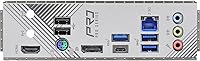
The rear panel covers the essentials well — multiple USB ports across different generations, and the trio of display outputs (HDMI, DisplayPort, and eDP) adds genuine flexibility for integrated graphics use in office and home setups where a discrete GPU is not part of the build.
The absence of a USB Type-C header for front-panel connectivity is a notable gap for buyers using modern cases, and the lack of onboard WiFi or Bluetooth means the board falls short of plug-and-play wireless readiness in a way that some competing boards at this tier do not.
Memory Expansion Potential
61%
39%
The two DIMM slots can accommodate up to 192GB of DDR5 in high-density configurations, which is technically more than most mainstream users will ever need, and day-one setups with 32GB or 64GB work without issue.
The real-world pain point is upgrade inflexibility — buyers who start with two sticks have no path to add more RAM later without replacing what they already have. Several reviews specifically flag this as the board's most frustrating long-term limitation compared to four-slot alternatives at a modest price premium.
Thermal Management
76%
24%
Under typical workloads with a mid-range Core i5 or i7, the VRM heatsink keeps temperatures in a comfortable range without requiring active cooling or special case configurations. Buyers in standard mid-tower setups with reasonable airflow report no thermal concerns during normal operation.
In compact cases with restricted airflow, or when running higher-TDP processors under sustained loads, VRM temperatures climb more noticeably. A few buyers in small Micro-ATX builds recommend ensuring active airflow over the VRM area to maintain long-term stability.
Wireless Flexibility
58%
42%
The M.2 Key E slot approach to WiFi is appreciated by buyers who already own a wireless card or who prefer a wired connection, effectively keeping unnecessary cost out of the base price for those users.
For buyers who need wireless and did not realize WiFi was absent until after purchase, the discovery is consistently described as frustrating. The extra cost and installation step of sourcing a compatible M.2 Key E card undercuts the convenience factor that many expect from a modern board in this category.
Gaming Readiness
82%
18%
The combination of PCIe 5.0 support, stable DDR5 memory performance, and broad CPU compatibility gives this mid-range Intel motherboard a genuinely capable gaming foundation. Budget gamers pairing it with a Core i5 and a mid-range GPU report smooth, consistent performance across popular titles.
The B760 chipset's inability to overclock the CPU is a real limitation for gamers who want to extract every frame from their processor, and the lack of advanced fan control options in BIOS means some thermal fine-tuning that competitive builders expect is simply not available here.
Long-Term Reliability
74%
26%
The majority of buyers who have owned this ASRock board for a year or more report continued stable operation with no unexpected failures or degradation. For a board used in a standard home or office desktop, longevity has not been a widespread concern based on the available review data.
A small but consistent thread of quality control mentions — DOA units, occasional BIOS update complications, and isolated component issues — prevents a higher confidence score here. None of these represent a systemic pattern, but they are frequent enough across the review pool to acknowledge honestly.

Suitable for:

The ASRock B760M Pro RS Motherboard is a strong fit for builders who want a modern, capable platform without overcommitting their budget. It's especially well-suited to first-time builders pairing it with a 12th, 13th, or 14th Gen Intel Core i5 or i7 — the BIOS is approachable, the installation process is straightforward, and the board doesn't drown new users in features they'll never use. Home and office desktop users who need reliable daily performance with integrated graphics output will appreciate having HDMI, DisplayPort, and eDP all covered out of the box. Budget-minded gamers who want to stay competitive in the mid-range also benefit here, since the PCIe 5.0 x16 slot means the board can accommodate next-generation GPUs without being the bottleneck. Anyone transitioning from a DDR4 system looking for a clean, low-hassle entry into DDR5 will find this one of the more sensible and practical ways to make that jump.

Not suitable for:

The ASRock B760M Pro RS Motherboard is not the right pick for enthusiasts who want serious headroom for expansion or overclocking. The B760 chipset does not support CPU overclocking at all — memory tuning via XMP or EXPO is the extent of what's possible, so builders hoping to push processor performance beyond stock speeds should look at a Z790 board instead. With only two DIMM slots, anyone planning to start with a smaller RAM kit and upgrade later will hit a hard ceiling faster than they might expect. Power users running multiple NVMe drives simultaneously may also find the storage options limiting, as there is no abundance of M.2 slots on this board. If built-in WiFi is a hard requirement, this board will require an additional purchase and an available M.2 Key E slot, which adds friction for users who expect wireless connectivity out of the box. Content creators or workstation users who need maximum PCIe lane availability or multi-GPU setups should look elsewhere.

Specifications

  • Chipset: This board uses the Intel B760 chipset, a mid-range option that supports memory overclocking via XMP and EXPO but does not allow CPU overclocking.
  • CPU Socket: The LGA1700 socket is compatible with Intel 12th, 13th, and 14th Gen Core processors, covering a wide range of current mainstream CPUs.
  • Form Factor: The Micro-ATX form factor measures 244mm x 244mm, making it a practical choice for compact and standard mid-tower cases alike.
  • Memory Type: The board supports DDR5 memory exclusively, with two DIMM slots capable of holding up to 192GB total capacity.
  • Memory Speed: DDR5 speeds are supported up to 7200MHz via overclocking profiles, with standard DDR5 frequencies also fully supported out of the box.
  • PCIe Slots: One PCIe 5.0 x16 slot handles the primary graphics card, while a secondary PCIe 3.0 x16 slot is available for additional expansion cards.
  • Power Delivery: A 7+1+1 power phase design using Dr.MOS components manages VCore and GT power delivery, providing stable output for mainstream Intel processors.
  • Display Outputs: Rear panel display connectivity includes HDMI, DisplayPort, and eDP ports, supporting integrated graphics on compatible Intel processors.
  • Wireless Support: The board does not include built-in WiFi or Bluetooth, but a single M.2 Key E slot allows installation of an optional wireless adapter card.
  • Storage Expansion: Beyond the M.2 Key E slot for wireless cards, storage expansion relies on SATA and any available M.2 slots as provided by the B760 platform.
  • CMOS Battery: A CR2032 coin cell battery powers the CMOS chip for storing BIOS settings, and one is included with the board at purchase.
  • USB Connectivity: The B760 chipset provides a range of USB ports on the rear panel and internal headers, covering USB 3.2 Gen 2 and USB 2.0 connections.
  • CPU Compatibility: Supported processors span Intel 12th Gen Alder Lake, 13th Gen Raptor Lake, and 14th Gen Raptor Lake Refresh families on LGA1700.
  • Item Weight: The board weighs approximately 2.7 pounds, which is typical for a well-constructed Micro-ATX motherboard with a solid PCB and heatsink layout.
  • Package Dimensions: The retail box measures approximately 19.69″ x 19.69″ x 11.02″, sized to accommodate the board and bundled accessories safely.
  • Availability: The board was first made available in May 2023 and has maintained a consistent presence near the top of Amazon's motherboard bestseller rankings since launch.
  • Manufacturer: ASRock is a Taiwan-based motherboard manufacturer with a long track record of producing value-oriented boards for the consumer PC market.
  • Model Number: The official model designation is B760M Pro RS, with the D5 suffix in some listings confirming the DDR5 memory variant of this board.

Related Reviews
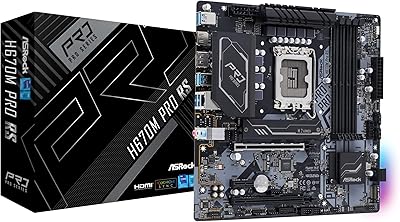
ASRock H670M PRO RS Motherboard
83%
84%
Performance
91%
Value for Money
88%
Ease of Installation
90%
Compatibility with Intel 12th Gen
85%
Gaming Performance
More
ASRock B650 PRO RS ATX Motherboard
74%
88%
Value for Money
83%
Build Quality
84%
BIOS Experience
86%
Installation & Setup
71%
CPU Power Delivery
More
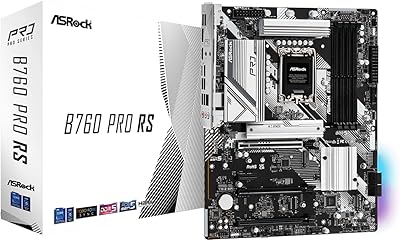
ASRock B760 Pro RS ATX Motherboard
80%
83%
Value for Money
88%
Feature Set
91%
CPU Compatibility
74%
Memory Performance
76%
VRM & Power Delivery
More
ASRock Z790 Pro RS/D4 Motherboard
86%
91%
Performance
88%
Overclocking Stability
89%
Power Delivery & Stability
85%
Build Quality
80%
Ease of Setup
More
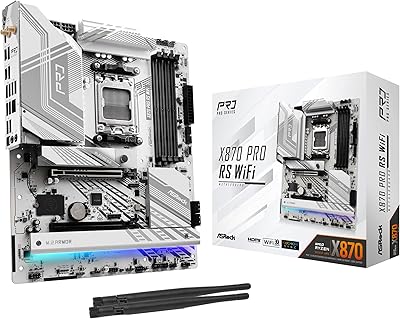
ASRock X870 Pro RS WiFi Motherboard
84%
91%
Performance
95%
Connectivity Options
88%
Stability and Overclocking
70%
Ease of Setup
94%
DDR5 Compatibility
More
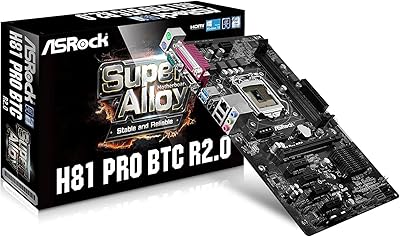
ASRock H81 PRO BTC Motherboard
77%
91%
Value for Money
88%
Performance in Mining Rigs
86%
Build Quality
85%
Ease of Setup
82%
Connectivity Options
More
ASRock H610M/AC Motherboard
83%
91%
Value for Money
88%
Installation Ease
85%
Performance for General Use
80%
Gaming Performance
86%
Build Quality
More
ASRock B550 PRO4 Motherboard
85%
88%
Performance
84%
Build Quality
90%
Ease of Setup
91%
Compatibility with AMD Ryzen 3rd Gen
85%
PCIe 4.0 Performance
More
ASRock Z390 PRO4 Motherboard
86%
88%
Performance for Gaming
84%
Overclocking Stability
92%
Value for Money
90%
Ease of Installation
85%
Multi-Graphics Setup (CrossFireX)
More
ASRock B450M STEEL LEGEND Motherboard
85%
91%
Value for Money
88%
Gaming Performance
94%
Ease of Installation
65%
Overclocking Capability
89%
Build Quality
More

FAQ

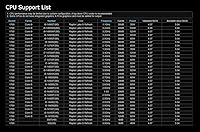
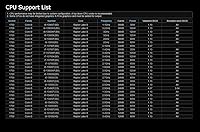
It supports all three generations — 12th, 13th, and 14th Gen Intel Core processors on the LGA1700 socket. Some listings emphasize 12th and 13th Gen because those were current at launch, but 14th Gen Raptor Lake Refresh CPUs are compatible. You may want to check ASRock's CPU support list for your specific processor model just to be sure.

No, the B760 chipset does not support CPU overclocking — that's locked to Intel's Z-series boards. What you can do is run DDR5 memory at higher speeds using XMP or EXPO profiles, which the board supports up to 7200MHz. If CPU overclocking is important to you, you'd need to step up to a Z790 board.

It will not. The B760M Pro RS is a DDR5-only board, so DDR4 memory is not compatible at all. You'll need to budget for a DDR5 kit alongside this board if you're upgrading from an older system.

WiFi is not built in, but the board has an M.2 Key E slot that accepts an optional wireless adapter card. It's a deliberate design choice to keep the base cost lower. If you need wireless, picking up an Intel AX200 or similar M.2 Key E WiFi card is a straightforward addition.

The ASRock B760M Pro RS Motherboard has two DDR5 DIMM slots, and the maximum supported capacity is 192GB total. For most users that's more than sufficient, but it does mean you can only have two sticks of RAM — so if you start with two 16GB sticks, upgrading means replacing them entirely rather than adding more.

Yes, it's one of the more approachable options in its category. The BIOS interface is clean and not overwhelming, installation follows standard procedures, and the board doesn't require unusual setup steps. Buyers consistently mention how straightforward the build process is with this board.

The rear panel includes HDMI, DisplayPort, and eDP outputs. That covers most monitor setups if you're using a processor with integrated graphics, like an Intel Core i5 or i7 with Intel UHD graphics. Just keep in mind you need a CPU with integrated graphics — not all Intel processors include it.

For most current GPUs, not yet — the majority of today's graphics cards still run on PCIe 4.0 and don't fully saturate even that. But having a PCIe 5.0 x16 slot does future-proof the board for the next wave of GPUs, which is a reasonable thing to care about when making a platform investment.

The B760M Pro RS follows the Micro-ATX standard, so it fits into any case that supports Micro-ATX or ATX motherboards. Compact Micro-ATX cases work well, and standard mid-tower ATX cases will accommodate it too with extra space to spare.

The two most recurring ones are the two-slot DIMM limitation and the lack of built-in WiFi. Neither is a flaw exactly — they're trade-offs that keep the cost down — but they can catch buyers off guard if they haven't researched the board beforehand. A smaller number of buyers have mentioned quality control issues, though these appear to be isolated cases rather than a pattern.

Where to Buy