Overview
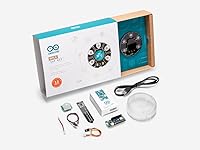
The Arduino OPLA AKX00026 IoT Kit arrived in late 2020 as Arduino's most cohesive attempt at a consolidated IoT learning platform. At its core sits the MKR WiFi 1010 board, powered by an Espressif chip running FreeRTOS — which means real multitasking rather than the single-loop approach most Arduino beginners are used to. The physical design is genuinely clever: a modular carrier board accepts snap-in sensor modules, keeping hardware organized and swap-friendly. This kit targets intermediate makers, developers moving into connected devices, and serious hobbyists. If you have zero coding background, expect a steep ramp. Some prior Arduino or embedded experience will make your first project far less frustrating.
Features & Benefits
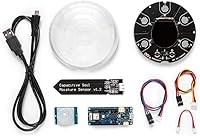
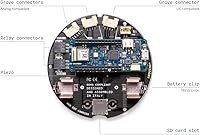
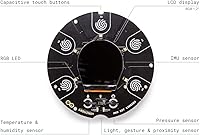
The sensor lineup in the OPLA kit covers the most practical IoT bases: temperature and humidity for environmental projects, a PIR motion sensor for presence detection, plus ambient light and barometric pressure sensors. All of these slot into the carrier board cleanly — no breadboard required. The MKR WiFi 1010 handles both Wi-Fi and Bluetooth, and the kit supports MQTT and HTTP out of the box for talking to platforms like AWS IoT or ThingSpeak. A small but useful 1-inch color display on the carrier board gives on-device feedback without extra wiring. Arduino IoT Cloud integration lets you build dashboards and monitor devices remotely without writing backend infrastructure from scratch.
Best For
The Arduino OPLA is a strong fit for developers who already know their way around Arduino or basic embedded programming and want a structured, well-documented path into connected devices. Educators running IoT workshops will appreciate having hardware, tutorials, and a supported cloud platform in one box. Smart home builders and environmental monitoring enthusiasts will find the sensor set genuinely practical. Where it falls short: absolute beginners without any coding exposure will likely find the curve punishing, and if your project needs LoRa connectivity, this kit does not include it. Also factor in the IoT Cloud free tier cap if you plan anything beyond short-term experimentation.
User Feedback
With 71 ratings and a 4.2-star average, this IoT starter kit has a relatively limited feedback pool — treat the trends as directional rather than definitive. Consistent praise centers on build quality and the clean integration between hardware and the Arduino ecosystem; buyers report that IDE setup is straightforward and the official documentation genuinely holds up under real use. The main sticking point for critics is value: the component count feels expensive relative to what you could assemble independently. A recurring secondary complaint is the Arduino IoT Cloud free tier ceiling, which can stall longer projects unless you are willing to move to a paid subscription.
Pros
- Modular snap-in sensor design keeps hardware organized and makes swapping components fast and clean.
- The MKR WiFi 1010 board supports both Wi-Fi and Bluetooth, covering a wide range of connectivity scenarios out of the box.
- FreeRTOS support enables real multitasking, which is a meaningful step up from standard single-loop Arduino behavior.
- MQTT and HTTP protocol support makes integration with AWS IoT, ThingSpeak, and other cloud services straightforward.
- The on-board 1-inch color display provides useful real-time feedback without requiring any external wiring.
- Official Arduino IoT Cloud compatibility lets you build remote dashboards without writing backend infrastructure from scratch.
- The included tutorial library is progressive and well-structured, reducing the time from unboxing to a working first project.
- Build quality is consistently praised by buyers; the hardware feels purposeful rather than like a cheap bundled assortment.
- Everything is pre-configured for the Arduino IDE, so environment setup is quick and avoids common toolchain headaches.
Cons
- The price is hard to justify on a pure component basis; experienced makers can assemble similar hardware for noticeably less.
- Absolute beginners without any coding background will find the learning curve steeper than the marketing implies.
- The Arduino IoT Cloud free tier has device and data limits that will block more ambitious projects unless you pay for a plan.
- LoRa connectivity is not included, which is a real gap for anyone targeting low-power, long-range IoT applications.
- With only 71 ratings at the time of writing, the user feedback pool is too small to draw firm conclusions about long-term reliability.
- The kit has not been updated since its 2020 launch, so newer connectivity standards and cloud integrations are not reflected.
- Subscription costs for Arduino IoT Cloud can add up over time, making the total investment higher than the upfront price suggests.
- Users report that the free tier limitations only become apparent after setup, which can feel like a bait-and-switch for first-time buyers.
Ratings
Our AI rating engine analyzed verified global buyer reviews for the Arduino OPLA AKX00026 IoT Kit, actively filtering out incentivized, duplicate, and bot-generated feedback to surface what real users actually experience. The scores below reflect both the genuine strengths that keep makers coming back and the friction points that have caused frustration — nothing is glossed over.
Build Quality
Ease of Setup
Value for Money
Connectivity
Sensor Selection
Documentation & Tutorials
Cloud Integration
Beginner Accessibility
Display Usefulness
Ecosystem Compatibility
Hardware Design
Long-term Scalability
Community Support
Suitable for:
The Arduino OPLA AKX00026 IoT Kit is built for people who already have a foothold in programming or electronics and want a clear, well-supported path into connected device development. If you have tinkered with Arduino before, written a few sketches, or have a background in software development, this kit removes the most frustrating part of IoT work: hunting down compatible components, wiring everything up from scratch, and finding documentation that actually matches your hardware. Educators running structured IoT workshops will find real value in having hardware, tutorials, and a cloud dashboard platform bundled together under one supported ecosystem. Smart home builders and environmental monitoring hobbyists will appreciate that the included sensor set maps directly onto practical projects without needing to source extra parts on day one. Professionals scoping out Arduino IoT Cloud for lightweight prototyping before committing to a larger deployment will also get useful hands-on signal from this kit without building a test rig from nothing.
Not suitable for:
If you are completely new to programming or have never written a line of code, the Arduino OPLA AKX00026 IoT Kit will likely frustrate more than it teaches — the official tutorials are solid, but they assume a baseline of comfort with embedded logic and Arduino-style C++. Budget-conscious buyers who are comfortable sourcing individual components should also think carefully here, because the per-component cost of this bundle is noticeably higher than assembling equivalent hardware yourself; what you are paying for is integration, official support, and time savings, and that trade-off only makes sense if you value those things. Users who need LoRa connectivity for long-range, low-power projects will find it absent from this kit entirely, requiring additional hardware purchases. Finally, anyone planning to build persistent, always-on IoT projects should factor in that the Arduino IoT Cloud free tier has real data and device limits — scaling beyond casual experimentation will require a paid subscription, which adds to the total cost of ownership over time.
Specifications
- Brand: Manufactured by Arduino, one of the most established names in open-source hardware and embedded development.
- Model Number: The kit is officially designated AKX00026, with some packaging references also citing AKX00027.
- Core Board: Powered by the MKR WiFi 1010, an Espressif-based board running FreeRTOS for concurrent task management.
- Processor: The onboard CPU is manufactured by Espressif, with a single-core configuration suited for real-time IoT workloads.
- Flash Memory: Includes 1 GB of flash memory, providing ample storage for firmware, data logging, and project assets.
- RAM: Uses SRAM for runtime memory, consistent with the MKR family board architecture.
- Connectivity: Supports Wi-Fi and Bluetooth wirelessly, plus two USB 2.0 ports for wired programming and power delivery.
- Protocols: MQTT and HTTP are supported natively, enabling integration with cloud platforms such as AWS IoT and ThingSpeak.
- Operating System: Runs FreeRTOS, a lightweight real-time operating system that supports multitasking beyond the standard Arduino loop model.
- Display: Features a 1-inch color screen built into the carrier board for on-device status and data visualization.
- Included Sensors: Comes with modules for temperature, humidity, PIR motion detection, ambient light, and barometric pressure measurement.
- Form Factor: Uses a modular carrier board design with snap-in sensor slots, eliminating the need for breadboards or loose wiring.
- Dimensions: The assembled package measures 11.02 x 8.66 x 3.19 inches, making it compact enough for desktop or shelf placement.
- Weight: The complete kit weighs 1.21 pounds, light enough for portable use or easy relocation between workspaces.
- Cloud Platform: Fully compatible with Arduino IoT Cloud, which provides a browser-based dashboard builder and remote device monitoring tools.
- IDE Compatibility: Works out of the box with the Arduino IDE, with pre-configured board support and access to Arduino's full library ecosystem.
- Release Date: First made available in November 2020, positioning it as a mature product with established community support and documentation.
- User Rating: Currently holds a 4.2 out of 5 star rating based on 71 reviews on Amazon, ranking #3,513 in Single Board Computers.
Related Reviews
Arduino Student Kit AKX00025
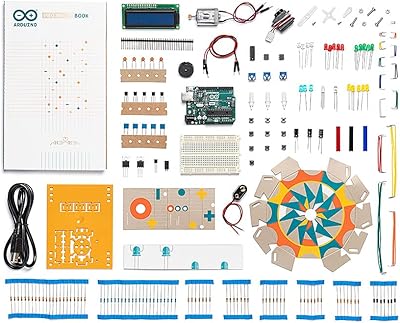
Arduino Starter Kit K000007
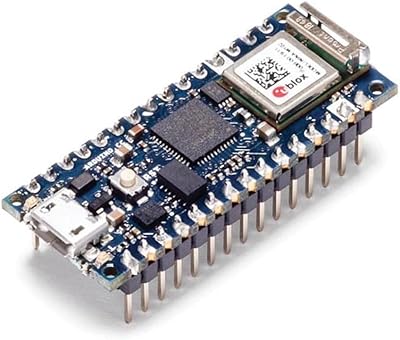
Arduino Nano 33 IoT with Headers
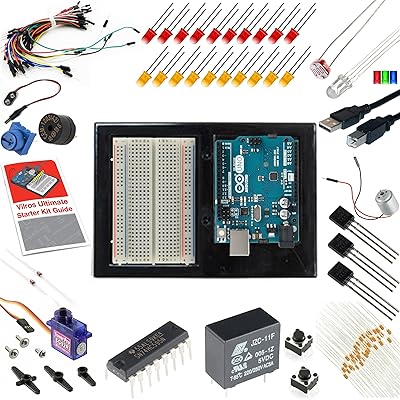
Vilros Arduino Uno R3 Starter Kit
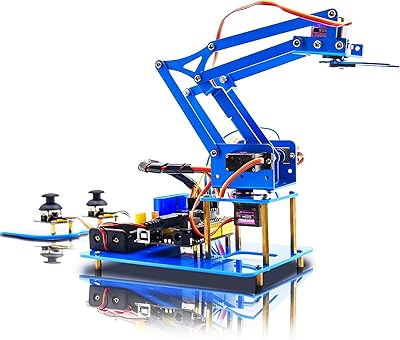
KEYESTUDIO 4DOF Robot Arm Arduino Kit
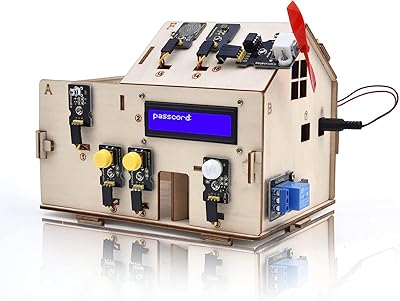
KEYESTUDIO KS0085 Smart Home Arduino Starter Kit
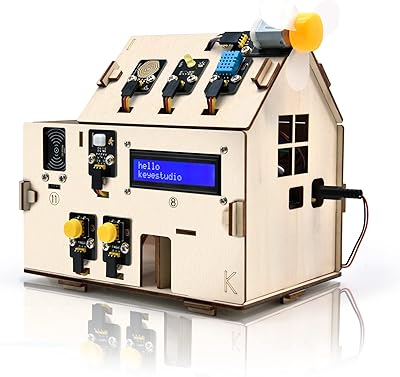
KEYESTUDIO ESP32 Smart Home Starter Kit
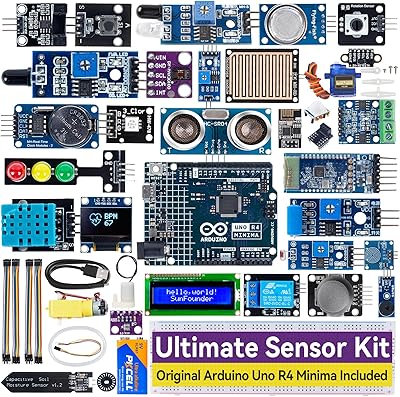
SunFounder Ultimate Sensor Kit Arduino R4 Minima

Convenience Kits International Men & Women Travel Toiletry Kit 2-Pack