Overview

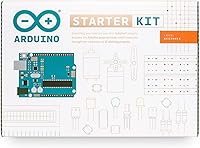
The Arduino Starter Kit K000007 is Arduino LLC's own entry point into electronics learning, assembled in Italy and built around a genuine Arduino Uno board. It has been on the market since 2012, which means it carries real credibility — a long track record and an active community ready to help when you get stuck. The kit targets beginners and STEM learners, though it sits at a mid-to-premium price point that signals this is a serious tool rather than a novelty. It connects via USB and works on Windows, macOS, and Linux, so setup friction is minimal regardless of what computer you already own.
Features & Benefits

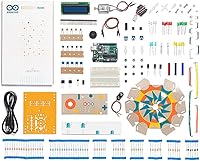
The official starter kit comes with a genuine Arduino Uno — Atmel processor, 2KB SRAM, running at 5V — alongside a well-chosen mix of components: LEDs, sensors, a DC motor, a servo, and more. What sets it apart from random component bundles is the printed project book, a physical English-language guide that walks you through 15 projects in escalating order of complexity. You start with something as simple as lighting an LED, and by the end you are wiring up a motorized spinning wheel or a touch-responsive lamp. Working from a book rather than a screen makes a real difference at a cluttered workbench, and the free Arduino IDE means you are coding within minutes of plugging in.

Best For

This learning kit is a natural fit for complete beginners — people who have never touched a microcontroller, soldering iron, or line of code. It also works well for students and teachers who need something structured enough to drop into a STEM curriculum without extra prep. Parents looking for a substantive educational gift for a curious teenager will find it has enough depth to hold attention for weeks, not just an afternoon. That said, if you have even a moderate electronics background, the introductory pace may feel slow. This is specifically a first step, not a comprehensive maker toolkit — and it delivers on that narrower promise very well.

User Feedback

With a 4.6-star average across more than 3,600 reviews, the reception for this Arduino kit is hard to argue with. Buyers most frequently call out the project book and the fact that every component you need arrives in one compact box — no separate sourcing required. On the flip side, a recurring theme in critical reviews is the price gap versus third-party clone kits; most of those reviewers still concede the official components feel more reliable and better made. A small number of buyers reported receiving a damaged or missing part, though this looks like isolated fulfillment exceptions rather than a systemic issue. Experienced makers consistently flag that the kit gets outgrown quickly, which is fair — it was never designed to be anything more than a starting point.

Pros

  • Official Arduino Uno board with genuine components ensures reliable, frustration-free builds for beginners.
  • The printed project book is exceptionally clear — one of the most praised elements across thousands of verified reviews.
  • Fifteen projects cover a genuinely broad range of concepts, from sensors and motors to basic human-computer interaction.
  • Everything you need arrives in one box — no separate component hunting before your first build.
  • Works on Windows, macOS, and Linux via USB, so it fits whatever setup you already have at home or school.
  • Arduino has been around since 2004 and the community behind it is enormous — finding help online is rarely difficult.
  • The official starter kit holds its value well as a reusable teaching tool, especially compared to single-use kits.
  • Component quality noticeably outperforms cheap clone alternatives, reducing the chance of a bad part derailing a project.

Cons

  • The price premium over third-party clone kits is real and will give budget-conscious buyers genuine pause.
  • Experienced users consistently report outgrowing the included project set within a few weeks.
  • No wireless module, screen, or advanced sensor is included, limiting more ambitious early builds.
  • Small components are not stored in labeled compartments, making organization messy once a project is underway.
  • The kit offers no built-in roadmap for what to learn or buy once the 15 projects are complete.
  • A small but recurring number of buyers report receiving a kit with a missing or damaged component.
  • Driver configuration issues on certain Windows setups can create an unexpectedly rough first experience.
  • The project book depth may feel insufficient for anyone wanting to understand the underlying electronics theory.
  • Classroom or multi-user setups accelerate component wear, increasing long-term replacement costs.
  • At 1.8 pounds and in a compact box, storage for spare and leftover parts quickly becomes its own challenge.

Ratings

Our scores for the Arduino Starter Kit K000007 are generated by AI after systematically analyzing thousands of verified global buyer reviews, with spam, bot activity, and incentivized feedback actively filtered out. The result is an honest, data-driven picture of where this learning kit genuinely delivers and where real buyers have run into friction. Both the strengths and the recurring pain points are reflected transparently in every category below.
Component Quality
91%
Buyers who have handled third-party clone kits repeatedly single out the official components as noticeably more consistent and reliable. The Arduino Uno board itself rarely gets blamed for project failures, which matters a lot when you are debugging your first circuit and need to trust your hardware.
A small but persistent cluster of reviews describes receiving a kit with one or two components that were either missing or arrived damaged. It is not the norm, but it is frequent enough to be worth noting, especially at this price point.
Project Book Quality
93%
The printed English project book is the most praised single element across the entire review base. Learners consistently describe it as clear, logically sequenced, and genuinely helpful even when they have no prior background in electronics or coding. Working from a physical book at a workbench is a real practical advantage.
A handful of more advanced buyers found the explanations too hand-holdy, with not enough depth on the underlying electronics theory. If you already know what a resistor does, some pages will feel like they are explaining things you figured out years ago.
Beginner Accessibility
92%
The kit is thoughtfully structured so that the very first project requires almost no prior knowledge — you are lighting an LED within minutes of opening the box. This approachability is exactly what parents, teachers, and self-taught beginners respond to most positively in reviews.
The accessibility that makes it great for beginners is also a ceiling. Users who came in with even a modest background in electronics or coding found themselves ready to move on after just a few projects, leaving a portion of the kit underused.
Value for Money
72%
28%
For buyers who specifically want official Arduino hardware with a guarantee of compatibility and a structured learning path, the price makes sense. The all-in-one nature of the kit — board, components, and project book bundled together — removes the time cost of sourcing parts individually.
The price gap versus clone kits is real and reviewers acknowledge it candidly. If your priority is maximum components per dollar rather than brand assurance or print quality, cheaper third-party bundles do exist. Budget-conscious buyers occasionally feel the premium is hard to justify.
Scope & Depth of Projects
74%
26%
Fifteen projects covering a range of concepts — from sensor-based inputs to motor control and basic human-computer interaction — gives a beginner a genuinely broad introduction to what microcontrollers can do. The escalating complexity keeps early learners engaged for several weeks.
Fifteen projects sounds substantial, but experienced reviewers note the learning curve flattens out relatively quickly. Once you complete the included set, the kit does not naturally point you toward next steps, leaving some users unsure where to go once the book is finished.
Setup & Out-of-Box Experience
88%
USB connectivity and compatibility with Windows, macOS, and Linux means most buyers are up and running with the free Arduino IDE in under thirty minutes. Reviews rarely mention setup headaches, which is a meaningful signal given how varied buyers' technical backgrounds are.
A small number of reviewers encountered driver issues on specific Windows configurations, requiring extra troubleshooting before the board was recognized. This is not a kit-specific flaw, but it does affect first impressions for a non-trivial minority.
Build Durability
83%
The Uno board and most components hold up well across repeated project builds and tear-downs, which is exactly what a learning kit needs to do. Buyers who have revisited the kit months later generally report everything still functions as expected.
Some of the smaller passive components — particularly certain sensors — showed wear after heavy handling in classroom environments. Kits used by multiple students sequentially tend to need component replacement sooner than kits used by a single learner at home.
Packaging & Presentation
79%
21%
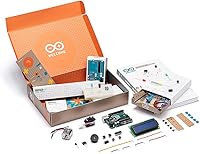
The compact, well-organized packaging makes a strong first impression and works well as a gift. Components are laid out clearly enough that you can take a rough inventory without reading the manual, which new buyers appreciate.
A few reviewers noted that the component organization inside the box is not ideal for long-term storage once you start a project — small parts migrate easily. A labeled compartment tray or resealable bags would have been a practical addition.
Community & Support Ecosystem
94%
Few beginner electronics products come backed by a community as large and accessible as Arduino's. Forums, tutorials, and project libraries built up over more than a decade mean that almost any question a new user could ask has already been answered somewhere online.
The community, while massive, can be overwhelming to navigate for absolute beginners who are not yet sure what terminology to search for. The kit itself does not do a strong job of pointing users toward official support channels or recommended next resources.
Educational Suitability
89%
Teachers and homeschool educators consistently rate the kit highly as a structured classroom resource. The project book reads almost like a prepared lesson plan, covering both the why and the how behind each circuit, which saves educators significant preparation time.
The kit targets an individual learner and does not scale gracefully to a full classroom without purchasing multiple units. Group use also accelerates component wear, which raises the total cost per cohort over time.
Cross-Platform Compatibility
86%
Running identically on Windows, macOS, and Linux through the free Arduino IDE removes one of the more common early frustrations in electronics learning. Buyers in mixed-OS households or schools do not need to worry about platform-specific limitations.
Although the hardware compatibility is solid, a small share of reviewers on older operating systems ran into IDE configuration issues. These are generally solvable but add friction that a true beginner may find discouraging without some technical guidance.
Component Variety
77%
23%
The included components cover enough ground — motors, sensors, LEDs, a breadboard, resistors — to give a first-time builder a genuinely diverse introduction to physical computing. You can build projects that respond to light, touch, sound, and motion without buying anything extra.
Once you exhaust the 15 projects, the component set starts to feel limiting. There is no wireless module, no display panel, and no real input for more ambitious builds, so intermediate learners will inevitably need to supplement the kit with additional purchases.
Documentation Accuracy
85%
The project instructions are accurate and the circuit diagrams are clear enough that most buyers complete their first few projects without any errors. This reliability in the documentation is something reviewers contrast favorably against cheaper kits where instructions are vague or mistranslated.
A handful of reviewers noticed minor discrepancies between the printed diagrams and the physical components included — usually related to component labeling conventions. Nothing that stops a project, but it briefly confused a few first-timers who were following instructions very literally.
Reusability & Longevity
71%
29%
Because the kit uses a breadboard rather than requiring permanent soldering, all components can be reused across different projects. The Arduino Uno board itself remains useful well beyond the starter kit's project set for any future build.
The kit is genuinely designed as a first chapter, not a long-term toolkit. Most buyers who stick with Arduino report outgrowing the included project set within a few months, at which point the kit essentially becomes a component drawer rather than an active learning resource.

Suitable for:

The Arduino Starter Kit K000007 is purpose-built for anyone who wants a structured, low-friction entry point into electronics and coding — and that covers a surprisingly wide range of people. If you have never touched a breadboard or written a line of code, the step-by-step project book essentially acts as a patient teacher, walking you through each build in plain English without assuming prior knowledge. Students and educators will find it particularly useful: the projects are sequenced like a curriculum, which reduces lesson-planning overhead significantly. Parents looking for a gift that genuinely holds a teenager's attention for weeks rather than days will get real mileage here — the builds are hands-on enough to feel rewarding, and the variety of included components keeps things from getting repetitive too quickly. It also works well for hobbyists who dabbled in electronics years ago and want a guided way back in, because the official hardware and polished documentation remove the guesswork that often derails self-directed learning.

Not suitable for:

If you already have a working knowledge of microcontrollers, basic circuit design, or any coding experience, the Arduino Starter Kit K000007 will likely feel too slow within the first few sessions. The 15 included projects are intentionally introductory, and once you work through them there is no natural next chapter built into the kit itself — intermediate makers will find themselves supplementing with external component purchases fairly quickly. Budget-focused buyers who are comfortable sourcing components separately and learning from free online tutorials may also find it hard to justify the mid-to-premium price when cheaper third-party bundles exist. The kit does not include wireless modules, a display, or advanced sensors, so anyone with a specific project in mind that goes beyond the basics will hit its limits fast. It is also not well-suited for shared classroom use where multiple students rotate through the same kit, since component wear accelerates significantly under those conditions.
Specifications

  • Brand: Manufactured and sold by Arduino LLC, the original creators of the Arduino platform, based in Italy.
  • Model Number: Official model identifier is K000007, sometimes listed by retailers as FBA_K000007.
  • Processor: The included Arduino Uno board is powered by an Atmel ATmega328P microcontroller running at 5V.
  • Memory: The Arduino Uno board provides 2KB of SRAM for runtime data storage during program execution.
  • Connectivity: Connects to a host computer via a standard USB cable, which also powers the board during development.
  • Compatible OS: Fully compatible with Windows, macOS, and Linux operating systems through the free Arduino IDE software.
  • Dimensions: The kit box measures 6.3 x 9.06 x 1.77 inches, making it compact enough to store on a desk or shelf.
  • Weight: Complete kit weighs approximately 1.8 pounds including the board, components, and printed project book.
  • Voltage: The Arduino Uno board operates at 5V and can be powered via USB or an external 7–12V DC power supply.
  • Projects Included: The printed project book guides users through 15 structured hands-on projects that escalate in complexity.
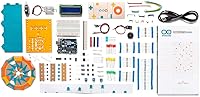
  • Key Components: Included hardware covers a DC motor, servo motor, tilt sensor, assorted LEDs, resistors, a breadboard, and additional passive components.
  • Project Book: A full-color printed English-language project book is included, providing step-by-step circuit diagrams and coding instructions for each project.
  • Origin: The kit is assembled and sourced in Italy directly by Arduino LLC, ensuring genuine, first-party component quality.
  • First Available: This kit has been commercially available since October 2012, giving it over a decade of real-world use and community feedback.
  • User Rating: Holds an average rating of 4.6 out of 5 stars based on more than 3,654 verified global reviews.
  • Software Required: Projects use the Arduino IDE, which is free to download and requires no prior software installation beyond standard USB drivers.
  • Soldering Required: No soldering is required for any of the included projects, as all builds use a reusable breadboard for component connections.
  • Warranty: Arduino LLC provides standard manufacturer support; buyers experiencing defective or missing components should contact Arduino or their retailer directly.

Related Reviews

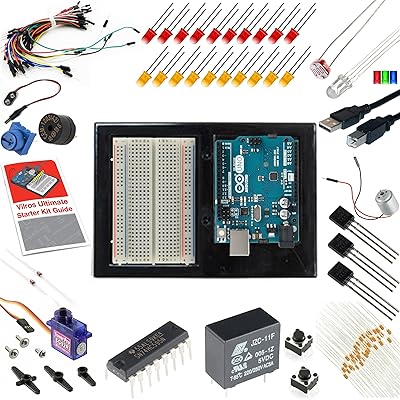
Vilros Arduino Uno Starter Kit
82%
92%
Value for Money
88%
Ease of Use
90%
Component Quality
85%
Instruction Manual
82%
Learning Curve
More
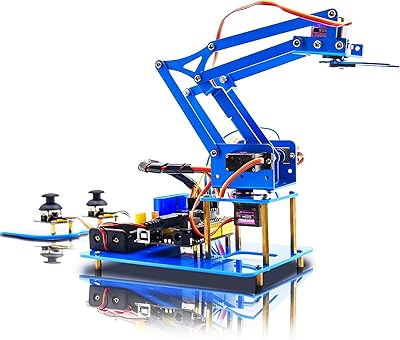
KEYESTUDIO Robot Arm Starter Kit 4DOF for Arduino
84%
88%
Learning Experience
80%
Build Quality
84%
Ease of Setup
91%
Control Flexibility
92%
Compatibility with Arduino
More
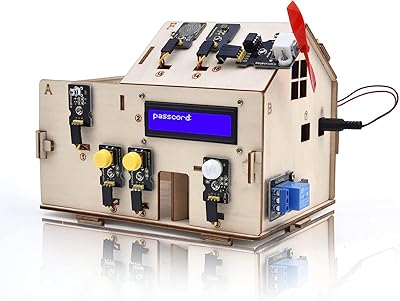
KEYESTUDIO Smart Home Starter Kit for Arduino KS0085
83%
88%
Value for Money
91%
Ease of Use for Beginners
94%
Educational Value
82%
Build Quality
74%
App Control Functionality
More
Acure Brightening Starter Kit
85%
88%
Effectiveness in Brightening
91%
Gentleness on Sensitive Skin
84%
Texture and Feel
86%
Absorption and Finish
75%
Fragrance
More
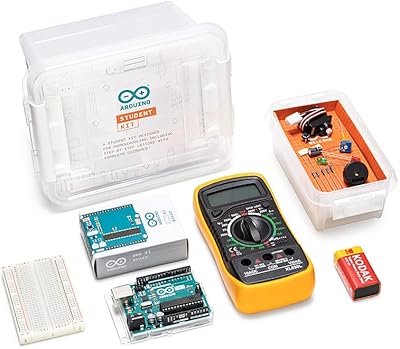
Arduino Student Kit AKX00025
82%
91%
Curriculum Quality
84%
Component Quality
76%
Value for Money
88%
Ease of Getting Started
63%
Component Quantity
More
Narrative Cosmetics Starter Effects Kit
86%
88%
Ease of Use for Beginners
92%
Realism of Effects
74%
Scar Wax Application
90%
Versatility of Bruise Wheel
85%
Quality of Ingredients
More
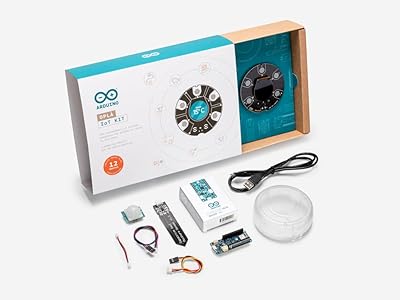
Arduino OPLA IoT Kit AKX00026
87%
88%
Ease of Use
91%
Learning Resources
90%
Sensor Quality and Variety
89%
Wireless Connectivity Options
95%
Compatibility with Arduino IDE
More
Saie SaieGlow Starter Makeup Kit
90%
94%
Hydration & Skin Feel
88%
Glow & Radiance
91%
Ease of Application
97%
Vegan & Cruelty-Free Quality
89%
Buildability & Versatility
More
VOFEL BB Glow Starter Kit
84%
89%
Effectiveness in Skin Brightening
87%
Hydration and Moisture Retention
92%
Ease of Use for At-Home Microneedling
78%
Pore Shrinking Results
84%
Anti-Aging Benefits Over Time
More
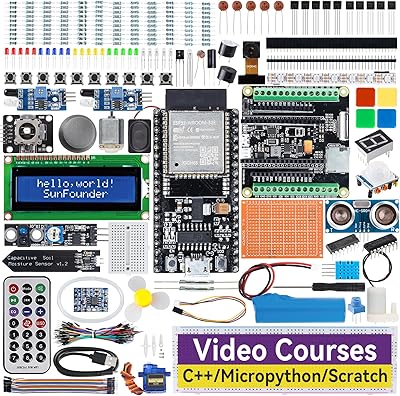
SunFounder ESP32 Ultimate Starter Kit
80%
88%
Value for Money
91%
Tutorial & Documentation Quality
79%
Component Quality
63%
Ease of Setup
67%
Camera Module Performance
More

FAQ

None at all. The official starter kit is specifically designed for people starting from zero. The printed project book opens with a thorough introduction to the tools and concepts before asking you to build anything, so you are never thrown in at the deep end.

You will need the Arduino IDE, which is completely free to download from the official Arduino website. It runs on Windows, macOS, and Linux. Installation is straightforward, and the project book walks you through getting it set up before your first project.

That depends on what you value. Clone kits can be significantly cheaper, but they often come with inconsistent component quality and instructions that have been translated poorly or not at all. The Arduino Starter Kit K000007 gives you genuine components, a well-produced printed book, and the backing of the official Arduino community — which matters when you hit a problem and need reliable help online.
It varies a lot by pace and age, but most self-directed adult learners complete all 15 projects over three to six weeks working at a relaxed pace. Students or teenagers might move faster if they are highly motivated. Each project typically takes between one and three hours from reading to completed build.

For younger teenagers with some patience and reading ability, independent use is realistic. Younger children — roughly under 12 — will generally benefit from an adult working alongside them, at least for the first few projects. The instructions are clear, but troubleshooting a circuit that is not behaving as expected can be frustrating without some guidance.

No, everything required for the included projects comes in the box. You do not need to source any additional components to complete the full project set. The only external requirement is a computer with a USB port to upload code to the board.

The kit does not include a built-in roadmap for what comes after, which is a fair criticism. That said, the broader Arduino community is enormous — there are thousands of free tutorials, project ideas, and forums online. The Uno board you have already built with remains fully usable for any future project, so you are not starting from scratch.

It works well as a teacher demonstration tool or for individual student use, but it was not designed to be shared across multiple students in rotation. Heavy shared use accelerates component wear, and you would likely need to purchase replacement parts sooner. For a full class, buying one kit per student or per pair gives the best results.

Absolutely. The Arduino Uno is a fully capable, general-purpose microcontroller board that is not limited to the included projects in any way. Once you are comfortable with the basics, you can use it to build almost anything — home automation, robotics, sensors, displays — the platform is very open-ended.

A small number of buyers have reported this issue. Your best course of action is to contact the retailer where you purchased the kit first, as they can typically arrange a replacement. You can also reach out to Arduino LLC directly through their official support channels. In most cases, individual replacement components are easy to source separately and are inexpensive.