Overview

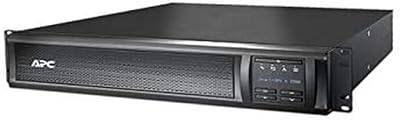
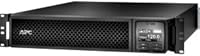
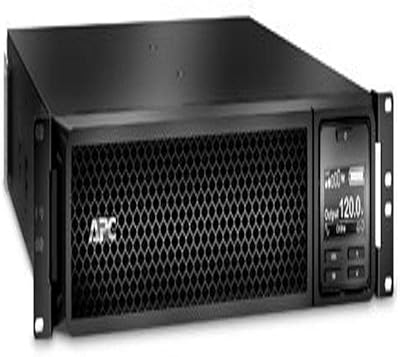
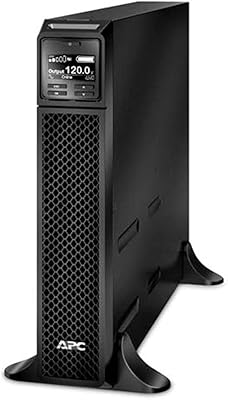
The APC SRT2200RMXLA 2200VA Smart-UPS Rack Mount UPS is built squarely for IT professionals who need serious, always-on power protection — not a glorified surge strip. With a 2200VA/1800W capacity, it can carry the load of multiple servers, switches, and storage arrays simultaneously. APC has been the benchmark name in power protection for decades, and this unit reflects that pedigree. It fits into a standard rack in a 2U form factor but can also stand alone as a tower if your environment calls for it. Make no mistake: this is an enterprise-grade investment, and it is priced accordingly.
Features & Benefits

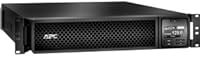
What sets this online UPS unit apart from cheaper standby models is the online double-conversion topology. Most budget UPS devices sit idle until they detect a power event — meaning your equipment actually runs on raw utility power most of the time. This rack UPS works differently: it continuously converts incoming AC power to DC, then back to a clean sine wave, so your servers never touch dirty utility power at all. Transfer time is effectively zero. Seven output receptacles — six NEMA 5-20R and one NEMA L5-20R — handle a diverse mix of gear, and a network management card slot enables remote monitoring through APC's EcoStruxure platform.

Best For

This rack UPS is a strong fit for small-to-medium data centers and serious home labs running VMware, Hyper-V, or similar virtualization platforms where even a fraction of a second of power interruption can corrupt VMs and trigger hours of recovery work. It also suits businesses in regions with unpredictable utility grids — think frequent brownouts, sags, or hard outages. Healthcare clinics, law firms, and financial offices handling sensitive records will appreciate the clean, conditioned output. If your operation simply cannot afford unplanned downtime and you manage rack-mounted infrastructure, the APC Smart-UPS is the kind of device that earns its cost relatively quickly.

User Feedback

Verified buyers consistently highlight the quiet, stable operation of this online UPS unit — a welcome trait in any server room. The PowerChute software integration earns regular praise, particularly for triggering graceful automated shutdowns before batteries run dry. On the downside, several installers point out that 55 pounds is a genuine two-person job during rack mounting, so plan ahead. Runtime at heavier loads is a frequent question: at full capacity it is modest, and buyers managing dense racks often add a supplemental battery module. Longer-term, battery replacement costs are worth folding into your ownership budget — APC replacements are available but carry a meaningful price tag.

Pros

  • Online double-conversion topology delivers zero transfer time, keeping servers and VMs completely unaware of any power event.
  • Pure sine wave output protects sensitive enterprise hardware from the voltage irregularities that simulated sine wave UPS units pass through.
  • Seven output receptacles, including a twist-lock NEMA L5-20R, accommodate a genuinely diverse mix of rack equipment.
  • PowerChute software enables automated, sequenced graceful shutdowns across multiple virtual machines before battery reserves deplete.
  • The 2U rack footprint is impressively compact given the protection capacity packed inside.
  • APC's long track record means replacement parts, firmware updates, and technical documentation remain available years after purchase.
  • Units from the original 2016 production run are still actively running in production environments, pointing to strong long-term durability.
  • Network management card slot allows remote monitoring integration without requiring a full unit replacement as your infrastructure scales.
  • Fan noise under normal load is restrained enough for server closets adjacent to occupied office spaces.
  • Flexible rack-or-tower deployment means the unit adapts to changing infrastructure layouts without additional hardware.

Cons

  • The network management card required for remote monitoring is sold separately, adding unexpected cost for buyers who assumed it was included.
  • Battery runtime shrinks significantly under heavy load, often necessitating a supplemental external battery module for dense racks.
  • At 55 pounds, safe rack installation is realistically a two-person job — not always possible in lean IT teams.
  • Replacement battery cartridges from APC carry a notable cost that should be factored into the total multi-year ownership budget.
  • Battery end-of-life warnings sometimes arrive earlier than published lifecycle estimates, particularly in warmer rack environments.
  • The front-panel LCD is difficult to read from an angle in brightly lit data center floors.
  • PowerChute initial setup can be frustrating on Windows Server environments with strict group policy or firewall configurations.
  • Strictly limited to 120V AC infrastructure, making it completely unsuitable for international deployments or mixed-voltage rack environments.
  • The menu navigation on the LCD panel feels dated and slow compared to more modern UPS management interfaces.
  • Buyers running very light loads may find the price-to-protection ratio harder to justify versus a capable line-interactive alternative.

Ratings

The APC SRT2200RMXLA 2200VA Smart-UPS Rack Mount UPS has been evaluated through AI-driven analysis of verified buyer reviews collected globally, with spam, incentivized, and bot-generated submissions actively filtered out. Scores reflect the honest consensus of real IT professionals, system administrators, and small business operators who have deployed this online UPS unit in live environments. Both the standout strengths and the genuine frustrations are represented transparently below.
Power Protection Reliability
94%
Buyers running virtualized server stacks consistently report zero unexpected shutdowns or data corruption events after deploying this rack UPS. The online double-conversion topology means equipment is always running off clean, conditioned power — a detail that resonates strongly with administrators who have lost data to dirty utility power in the past.
A small number of users in regions with unusually severe grid instability note that the unit occasionally logs more events than expected, which can feel alarming even when the protection itself is working correctly. The event log interface could surface this information more intuitively.
Output Power Quality
92%
The pure sine wave output is a consistent highlight among buyers running sensitive networking hardware and enterprise storage arrays. Several IT managers specifically note that switching from a simulated sine wave UPS to this online UPS unit resolved intermittent hardware faults they had struggled to diagnose for months.
At very light loads — well below 20 percent capacity — a handful of users report slight harmonic distortion readings when measured with precision power meters. This is unlikely to affect real-world equipment performance but may matter in highly controlled lab environments.
Battery Runtime
71%
29%
At moderate loads, covering a few servers and a managed switch, most buyers report enough runtime to execute a graceful shutdown sequence without any urgency. For offices with brief, rolling outages, the battery headroom is genuinely sufficient and handles the job reliably.
Runtime shrinks considerably when the rack is loaded near capacity, which catches some buyers off guard. Users managing dense, power-hungry racks frequently find they need a supplemental external battery module to achieve the runtime they initially expected from a unit at this capacity level.
Installation & Setup
74%
26%
The initial configuration is straightforward for experienced IT staff, and APC's documentation is detailed enough that most administrators can have the unit operational within an hour of unpacking. The rack-mount hardware is included and fits standard 19-inch racks without additional adapter kits.
At 55 pounds, rack installation is genuinely a two-person task, and buyers who attempted it solo report real difficulty aligning the unit in the rack safely. A few users also note that the initial battery charge period before first use is not prominently communicated in the quick-start materials.
Software & Remote Management
83%
PowerChute Business Edition integration is a recurring positive in buyer feedback, particularly the ability to configure automated, sequenced graceful shutdowns across multiple virtual machines before battery reserves run low. Administrators managing mixed VMware and Hyper-V environments call this feature alone worth a significant portion of the purchase price.
The network management card is sold separately, which surprises some buyers who assume remote monitoring is included out of the box. Initial PowerChute configuration can also be fiddly on Windows Server environments with strict group policy settings, requiring manual firewall exceptions.
Build Quality & Durability
89%
The chassis feels genuinely solid — buyers describe it as the kind of hardware that inspires confidence when you are trusting it to protect five-figure server investments. Units deployed since the product launched in 2016 are still actively running in production environments according to long-term reviewers.
The front bezel and LCD panel feel slightly less premium than the rest of the chassis, and a few users report minor cosmetic wear on the bezel after extended rack use. Nothing that affects function, but noticeable given the price tier.
Noise Level
88%
For an online double-conversion unit — which runs its inverter continuously — the fan noise is notably restrained. Buyers who moved this rack UPS into smaller server closets adjacent to office spaces report that it blends into background noise without becoming a distraction.
Under heavy load or during active battery discharge, the fans ramp up audibly. This is expected behavior for the topology, but buyers who anticipated library-quiet operation in all conditions may find the load-dependent fan speed increase surprising.
Receptacle Layout & Connectivity
81%
19%
Seven total outlets — including the twist-lock NEMA L5-20R — give administrators flexibility when connecting a mix of standard and higher-draw equipment. Buyers with varied rack populations appreciate not needing a separate PDU to accommodate different plug types.
The physical spacing between some receptacles is tight enough that wider power bricks can block adjacent outlets. A couple of users managing older equipment with bulky inline transformers found they effectively lost one or two usable outlets as a result.
Value for Money
67%
33%
For organizations where server downtime translates directly into revenue loss or compliance risk, the cost of this online UPS unit is readily justifiable against even a single avoided outage incident. Long-term buyers frame the pricing as infrastructure spending rather than a discretionary purchase.
For home lab enthusiasts or very small offices with infrequent outages, the price-to-benefit ratio is harder to defend versus a quality line-interactive UPS at a fraction of the cost. The ongoing expense of battery replacements and the optional network card add to the total cost of ownership noticeably over time.
Battery Replacement Process
62%
38%
Replacing the internal batteries is a tool-accessible process that experienced IT staff can handle without shipping the unit out for service. APC's replacement battery cartridges are a direct swap, which reduces downtime during maintenance windows.
Genuine APC replacement batteries carry a price tag that catches long-term owners off guard — third-party alternatives exist but introduce compatibility uncertainty. Several buyers also note that battery end-of-life warnings can arrive sooner than the published lifecycle estimates suggest, particularly in warmer rack environments.
LCD Display & Monitoring Interface
76%
24%
The front-panel LCD gives at-a-glance visibility into load percentage, estimated runtime, input voltage, and battery health without requiring a laptop or network connection. Buyers doing routine walkthroughs of their server rooms find this genuinely useful for quick status checks.
The display lacks backlight brightness for well-lit data center floors, making it harder to read from an angle. Navigation through the menu system feels dated compared to modern UPS interfaces, and a few users wish the display rotated orientation when the unit is deployed in tower mode.
Compatibility & Standards
91%
Broad compatibility with North American 120V AC infrastructure means this rack UPS drops into most existing environments without any wiring modifications. It works reliably across the range of server, networking, and storage hardware brands that IT administrators commonly manage in mixed-vendor environments.
The 120V design limits this unit strictly to North American deployments — international buyers have flagged this as a non-starter for global rollouts. Organizations with any 240V equipment in their rack will need separate power protection solutions for those devices.
Documentation & Support
78%
22%
APC's supporting documentation ecosystem is extensive, and most configuration questions are answered either in the printed manual or through the company's well-organized online knowledge base. Access to firmware updates and compatibility matrices for the management card slot is straightforward.
Live technical support response times draw mixed feedback, particularly for non-warranty configuration questions. Some users report being redirected through multiple support tiers before reaching someone who could address their specific PowerChute or network card integration issue.

Suitable for:

The APC SRT2200RMXLA 2200VA Smart-UPS Rack Mount UPS is purpose-built for IT professionals and system administrators who manage rack-mounted infrastructure where unplanned downtime carries real financial or operational consequences. Small-to-medium business data centers running VMware, Hyper-V, or similar virtualization platforms will find the online double-conversion topology especially valuable — virtual machines are notoriously sensitive to even millisecond-level power interruptions, and this rack UPS eliminates that risk entirely. Organizations operating in areas with unstable utility grids, where brownouts and voltage sags are a regular occurrence rather than an occasional nuisance, will benefit from the continuous power conditioning that cheaper standby UPS units simply cannot provide. Healthcare clinics, legal offices, and financial services firms handling sensitive records will appreciate the clean, regulated output and the audit-ready reliability that comes with an APC product of this class. IT administrators who need remote visibility into power status will also value the network management card slot, which enables integration with APC's EcoStruxure monitoring platform without replacing the unit itself.
Not suitable for:

The APC SRT2200RMXLA 2200VA Smart-UPS Rack Mount UPS is not the right choice for buyers on a tight budget who are primarily protecting a single workstation, a NAS drive, or basic home networking gear — a quality line-interactive UPS at a fraction of the cost will serve those needs perfectly well without the complexity overhead. Home lab enthusiasts who experience outages only a few times a year may struggle to justify the total cost of ownership when factoring in periodic battery replacements and the optional network card purchase. The 55-pound weight is a real logistical constraint: solo installers and environments without two available staff members during rack maintenance will find this online UPS unit genuinely difficult to handle safely. Buyers outside North America should look elsewhere entirely, as the 120V AC design is not compatible with international power infrastructure. Anyone expecting extended battery runtime at heavy loads without purchasing a supplemental external battery module will also be disappointed — at full capacity, the built-in battery is designed to buy you enough time for a graceful shutdown, not to sustain operations through a prolonged outage.
Specifications

  • Capacity: This unit delivers 2200VA and 1800W of continuous power output, sufficient to carry multiple servers, managed switches, and storage arrays simultaneously.
  • Topology: Online double-conversion architecture continuously regenerates output power from DC, ensuring zero transfer time and complete isolation from utility power disturbances.
  • Output Waveform: Pure sine wave output is maintained at all times, regardless of whether the unit is running from utility power or battery.
  • Input Voltage: Accepts 120V AC input, designed specifically for North American utility infrastructure.
  • Output Voltage: Delivers a regulated 120V AC output to connected equipment, independent of input voltage fluctuations.
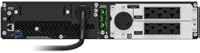
  • Receptacles: Provides seven total output receptacles: six NEMA 5-20R standard outlets and one NEMA L5-20R twist-lock outlet for higher-draw or dedicated equipment.
  • Form Factor: Mounts in a standard 19″ equipment rack in a 2U profile and can also be reoriented for freestanding tower deployment.
  • Dimensions: Physical dimensions measure 23 x 17 x 3.3 inches, fitting within standard rack depth constraints for most modern server cabinets.
  • Weight: The unit weighs 55 pounds fully assembled, which makes two-person rack installation strongly advisable.
  • Battery Type: Internal sealed lead acid battery is included and factory-installed, requiring no separate purchase before initial deployment.
  • Transfer Time: Transfer time is effectively zero due to the online double-conversion topology, meaning connected equipment never switches to battery — it is always on inverter output.
  • Network Management: An expansion card slot accepts APC SmartSlot network management cards, enabling remote monitoring and integration with APC EcoStruxure IT infrastructure management.
  • Compatibility: Compatible with APC PowerChute Business Edition software for automated graceful shutdown orchestration across physical and virtualized server environments.
  • Expandability: Supports connection of APC Smart-UPS SRT external battery packs to extend runtime beyond the internal battery capacity at any load level.
  • Manufacturer: Designed and manufactured by APC by Schneider Electric, a company with decades of enterprise power protection experience.
  • Model Number: Official model identifier is SRT2200RMXLA, which distinguishes this 120V North American variant from similar international models in the SRT family.
  • Availability: This product has been commercially available since September 2016 and is confirmed as an active, non-discontinued model by the manufacturer.
  • Warranty: APC provides a standard manufacturer warranty covering parts and labor, with extended service plans available through APC's direct service network.

Related Reviews
APC Smart-UPS SRT3000RMXLA 3000VA Rack UPS
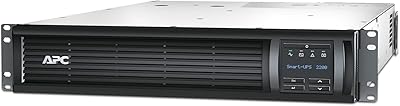
77%
94%
Reliability & Uptime Protection
92%
Power Quality & Output
76%
Battery Performance
51%
Battery Replacement Cost
91%
Build Quality & Construction
More
APC SMT2200RM2UC 2200VA Rack Mount UPS
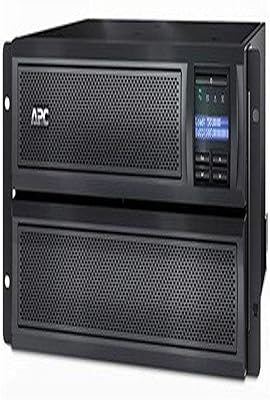
79%
93%
Power Protection Reliability
91%
Pure Sine Wave Output Quality
88%
Automatic Voltage Regulation
87%
Build Quality & Durability
74%
Battery Life & Longevity
More
APC Smart-UPS X 3000VA Rack/Tower UPS
78%
91%
Build Quality
93%
Reliability & Uptime
61%
Runtime Performance
88%
Remote Management
86%
Outlet Flexibility
More
APC Smart-UPS X 2000VA Rack Tower UPS
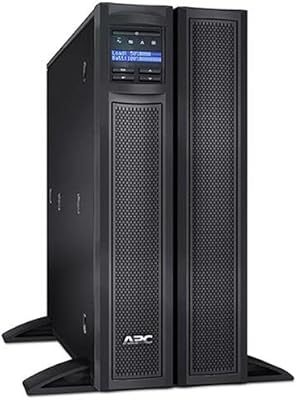
76%
93%
Build Quality
96%
Power Protection
74%
Battery Runtime
89%
LCD Display & Monitoring
87%
Form Factor Flexibility
More
APC SMT750 750VA Smart-UPS Battery Backup

80%
91%
Power Protection Reliability
88%
Pure Sine Wave Output
89%
Automatic Voltage Regulation
62%
Runtime at Load
87%
Build Quality
More
APC SCL500RM1UC 500VA Lithium Ion Rackmount UPS
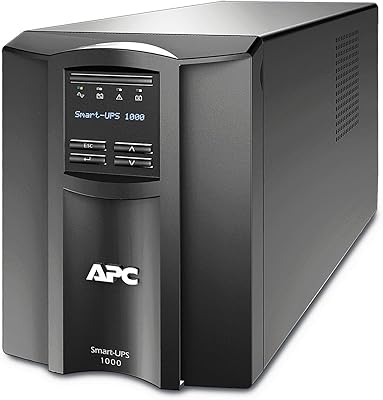
79%
88%
Build Quality
83%
Battery Life & Longevity
67%
Runtime at Real-World Loads
91%
Installation & Setup
93%
Weight & Physical Footprint
More
APC Smart-UPS 1000VA UPS Battery Backup (SMT1000)
87%
88%
Performance
91%
Value for Money
85%
Battery Life
92%
Build Quality
89%
Noise Level
More
APC Smart-UPS SMC1500C 1500VA Sinewave UPS Battery Backup
85%
91%
Power Protection Reliability
87%
Ease of Setup & Installation
92%
Remote Monitoring Functionality
85%
Build Quality & Durability
70%
Weight & Portability
More
APC Smart-UPS SMX1500RM2UNC 1500VA Network UPS
76%
94%
Power Protection Quality
91%
Long-Term Reliability
88%
Network Management Features
79%
Runtime Performance
62%
Installation Experience
More
APC Smart-UPS 1500VA SMT1500
87%
95%
Backup Performance
89%
Battery Runtime Accuracy
92%
Power Surge Protection
90%
Build Quality
87%
LCD Display Clarity
More

FAQ

It is genuinely zero transfer time, not a rounding convention. Because the online double-conversion design runs your equipment off the inverter continuously — never directly off utility power — there is nothing to transfer when an outage occurs. The inverter simply keeps running on battery instead of grid-derived DC. Your servers and switches will not detect any event at all.

Yes, and this is one of the most commonly cited reasons IT administrators choose this rack UPS. APC PowerChute Business Edition supports ESXi integration, allowing you to configure sequenced, graceful VM shutdowns and host power-off procedures triggered by battery level or estimated runtime thresholds. You will need to install the PowerChute agent and configure your vCenter or host credentials during setup.

At around 50 percent of rated capacity — roughly 900W — most users report somewhere in the range of 8 to 12 minutes of runtime, which is typically enough for a full graceful shutdown sequence. At heavier loads approaching the full 1800W rating, runtime drops significantly, sometimes to just 3 or 4 minutes. If you need longer coverage, APC offers compatible external battery modules that connect directly to this unit and extend runtime proportionally.

It is sold separately. The unit includes the SmartSlot expansion bay, but you need to purchase an APC network management card — such as the AP9631 — independently if you want remote monitoring, SNMP integration, or EcoStruxure connectivity. This catches some buyers off guard, so budget for it upfront if remote management is part of your plan.

Technically one person can do it, but at 55 pounds it is genuinely awkward and carries real risk of dropping the unit or injuring yourself if you are working alone, especially when sliding it into a mid-height rack position. Two people make the installation safe and straightforward. If you are a solo administrator, use a rack installation shelf or lift cart — do not attempt to muscle it in unaided.

The core difference is how each type handles power. A line-interactive UPS passes utility power through to your equipment most of the time and only switches to battery during significant events — meaning your gear is exposed to sags, surges, and minor disturbances regularly. The APC SRT2200RMXLA 2200VA Smart-UPS Rack Mount UPS continuously regenerates clean power from DC, so your equipment is always running on conditioned output regardless of what the grid is doing. For mission-critical servers, the upgrade is worth it. For basic workstations or light-duty NAS devices, a line-interactive unit is usually sufficient.

Third-party replacement batteries that match the voltage and capacity specifications will physically fit and function, but APC does not certify or support non-OEM batteries, and some users report shorter-than-expected service life from off-brand cells. If your organization has strict uptime requirements or warranty considerations, sticking with genuine APC replacement cartridges is the safer long-term choice, even accounting for the higher cost.

Under normal operating conditions and moderate load, the fan noise is low enough that the unit blends into typical server room background noise without being disruptive. If the unit is installed in a closet adjacent to an occupied workspace, most users report it is not noticeable through a standard door. Under heavy load or during active battery discharge, the fans do ramp up audibly, but that is expected behavior and not a persistent condition in most deployments.

Yes. The unit ships ready for rack mounting with the necessary hardware included, and the chassis can be reoriented for freestanding tower use without additional parts. This flexibility is useful if your environment changes — for example, if you are running it as a tower during a temporary deployment before a rack cabinet arrives.

Under typical data center conditions, sealed lead acid batteries in this class of UPS usually need replacement every 3 to 5 years, though units operating in warmer environments or at consistently high load levels may reach end-of-life closer to the 3-year mark. The replacement process is accessible — the battery module slides out from the front of the unit with basic tools and no service call required. APC provides clear instructions, and the process takes most IT staff under 20 minutes.

Where to Buy