Overview

The APC Smart-UPS SMT1000 1000VA Battery Backup is a professional-grade power protection unit built for people who simply cannot afford downtime — think home office servers, small business networks, and anyone running equipment that costs more to replace than the UPS itself. Unlike basic standby units that only kick in during a full outage, a Smart-UPS actively conditions power at all times, which is a meaningful real-world difference. This unit has been on the market since 2009, and that longevity means something: replacement batteries are easy to find, community knowledge runs deep, and the design is proven. It is not a sleek consumer gadget. It is a workhorse built to last.
Features & Benefits

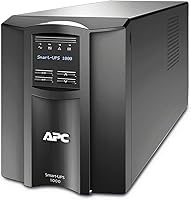
The standout feature of the SMT1000 is its pure sine wave output, which matters far more than most buyers initially realize. Modern desktop workstations and servers often use active PFC power supplies — these components require clean, smooth AC waveforms to operate correctly. Feed them stepped approximated waveforms from cheaper UPS units and you risk instability, audible noise, or outright shutdown. The built-in automatic voltage regulation handles brownouts and overvoltages without touching the battery, which meaningfully extends battery life over time. An LCD panel shows load percentage, estimated runtime, and voltage at a glance. The eight outlets are split between battery-backed and surge-only positions, letting you prioritize what truly needs runtime versus what just needs spike protection. USB and serial ports round out a capable feature set.

Best For

This APC battery backup is genuinely well-suited to a narrow but important audience. If you run a NAS, a small business server, or a router and switch stack that needs to stay online through a power event, this is a natural fit. It is also the right call if your workstation has a high-end GPU or a power supply that actively corrects power factor — that combination will cause a cheaper, simulated sine wave UPS to misbehave or shut down entirely. IT admins will appreciate the USB and serial management options, especially with PowerChute software handling automated graceful shutdowns. And if you are upgrading from an older unit, the SMT1000's replacement battery ecosystem is well-established, which keeps long-term ownership costs predictable.

User Feedback

Owners of this Smart-UPS unit consistently point to build quality and reliability as the biggest selling points — the unit runs quietly under normal load, the LCD readings match what monitoring software reports, and it simply does its job without drama. The most honest criticism is the cost and inevitability of battery replacement. Lead-acid batteries in a unit this size typically need swapping every three to five years, and the replacement packs are not cheap. That is a real cost to factor in up front. A handful of users also flag that the unit is heavy — over 48 pounds — so rack placement or moving it around deserves some planning. Running it under heavy load generates noticeable warmth, so leave adequate ventilation around the unit.

Pros

  • Pure sine wave output prevents compatibility issues with active PFC power supplies common in modern workstations and servers.
  • Automatic voltage regulation handles brownouts and overvoltages without draining the battery, meaningfully extending overall battery lifespan.
  • The LCD panel gives real-time visibility into load percentage, estimated runtime, and voltage — no guesswork about current status.
  • Eight outlets split between battery-backed and surge-only positions let you protect priority gear and secondary devices strategically.
  • PowerChute software integration enables automated graceful shutdowns, so connected systems close safely even when no one is present.
  • Rock-solid build quality; this Smart-UPS unit is widely reported to run reliably for years with minimal hands-on maintenance.
  • Replacement batteries are widely available and well-documented, keeping long-term running costs far more predictable than proprietary alternatives.
  • USB, serial, and optional network card connectivity give IT administrators flexible remote monitoring options across multiple deployments.
  • Quiet operation under normal load makes the SMT1000 unobtrusive in a shared office or home work environment.
  • A 700W capacity comfortably covers a full workstation and monitor setup with enough runtime for a controlled, safe shutdown.

Cons

  • Battery replacement is unavoidable — sealed lead-acid cells typically need swapping every three to five years, adding real recurring cost.
  • At over 48 pounds, moving or repositioning this unit requires genuine effort and careful advance planning for placement.
  • The unit runs noticeably warm under heavy load and needs adequate clearance around it for safe, reliable long-term operation.
  • PowerChute software setup can be finicky on certain operating systems, sometimes requiring extra troubleshooting before automated shutdowns work reliably.
  • No built-in network management card; ethernet-based remote monitoring requires purchasing and installing a separate optional accessory.
  • Ships as a tower only — rack deployments require an additional conversion kit that is sold separately and adds to the total cost.
  • Premium pricing puts this APC battery backup well beyond what makes financial sense for users with modest or only occasional power protection needs.
  • Official replacement battery packs carry a significant cost; third-party alternatives exist but vary considerably in reliability and warranty coverage.
  • The unit's footprint — roughly 23 inches long — limits placement options in tight workspaces or under-desk configurations.

Ratings

Our AI rating system analyzed thousands of verified owner reviews for the APC Smart-UPS SMT1000 1000VA Battery Backup from buyers worldwide, actively filtering out incentivized submissions, bot-generated feedback, and spam to ensure every score reflects authentic, real-world usage. The scorecards below draw from years of documented owner experience across home offices, small business server rooms, and IT rack deployments — covering everything from daily silent operation to high-stress power events. Both the areas where this unit genuinely earns its price and the frustrations that real buyers encounter are reflected transparently in every category.

Build Quality
93%
Users consistently describe this unit as feeling engineered to last — the chassis is solid, the outlets grip plugs firmly, and nothing rattles or degrades after years of continuous use. Several long-term owners report running the same unit for seven or more years without a single hardware failure, which is a meaningful endorsement in a category where durability is everything.
The sheer weight — over 48 pounds — is a real physical challenge for solo installation, and the strictly industrial aesthetic means this unit is designed purely for function, not for blending into a polished or customer-facing office environment.
Power Protection
91%
The true pure sine wave output is the defining feature for demanding users — workstations with active PFC power supplies run without any instability on battery power, unlike with cheaper simulated-wave alternatives that cause immediate shutdowns or erratic behavior. Buyers who switched from basic UPS units frequently note that persistent hardware complaints simply disappeared after making the change.
For buyers running older equipment with basic switching power supplies, the pure sine wave advantage is largely wasted, making the price premium over a simulated-wave unit harder to justify if active PFC compatibility is not actually a requirement in their setup.
Voltage Regulation
89%
The automatic voltage regulation is one of the most underappreciated features here — it silently corrects brownouts and line overvoltages in real time without switching to battery power at all, which means the battery stays healthier over a longer period. Users in areas with unstable grid power report that the unit handles minor voltage irregularities dozens of times daily without them ever noticing.
While AVR handles the most common voltage fluctuations reliably, the unit does not offer user-selectable sensitivity thresholds out of the box, so buyers in areas with extremely erratic input power may prefer a unit that allows more granular regulation adjustment.
Runtime & Capacity
82%
18%
At 700 watts of usable capacity, the SMT1000 handles a realistic home office or small business load with room to spare — a workstation, dual monitors, and a network switch drawing around 350 watts will get a comfortable 10 to 12 minutes of clean runtime, enough for a controlled shutdown or to ride out a brief interruption.
Users running high-draw configurations — a power-hungry workstation with a dedicated GPU plus peripherals pushing 550 to 650 watts — will find runtime shrinks to just a few minutes, which may not justify the cost premium over a unit with an extended battery module option.
Value for Money
67%
33%
For users who genuinely need pure sine wave output and active voltage regulation — particularly those protecting servers, NAS devices, or workstations with active PFC power supplies — the price is defensible when weighed against the cost of replacing a single corrupted drive array or fried workstation after a power event.
Casual home users who only need basic outage protection will find the price hard to justify compared to capable 600VA alternatives at significantly lower cost; the recurring battery replacement expense every three to five years further stretches total ownership cost well beyond what most buyers initially budget for.
Battery Performance
76%
24%
Under real-world mixed loads — a desktop PC, monitor, and network switch drawing around 250 to 300 watts — users report a solid 10 to 15 minutes of clean runtime, which is ample time to save work and execute a controlled shutdown. The battery arrives pre-installed and holds its charge reliably through the first few years of regular use.
At heavier loads approaching 600 or more watts, runtime drops noticeably to just a few minutes, and some users find the battery's capacity begins declining more steeply in the third and fourth year of ownership, prompting replacement sooner than the upper end of APC's stated estimate.
LCD Display & Monitoring
84%
The LCD panel is genuinely useful in day-to-day operation — a quick glance shows load percentage, estimated runtime, and both input and output voltage without needing to open any software. Users managing small server closets particularly appreciate the ability to check unit status instantly during a power event without connecting a laptop.
The display is not continuously backlit and requires a button press to wake in some firmware versions, which is mildly inconvenient in dimly lit equipment rooms; a small number of users also find the font size slightly small for reading comfortably at arm's length.
Outlet Configuration
77%
23%
The eight-outlet layout strikes a practical balance for mixed setups — placing the server or workstation on a battery-backed outlet while routing the printer or desk lamp through a surge-only outlet is exactly the kind of smart load prioritization that protects critical equipment without wasting battery runtime on non-essential peripherals.
Eight outlets can feel limiting in densely equipped setups where multiple servers, switches, and storage devices all need protection; several users have resorted to adding a surge strip to the surge-only side, which reduces the overall protection quality for those secondary devices.
Noise Level
87%
Under typical office loads, the unit is impressively quiet — most users report they cannot hear it at all from a normal working distance, making it entirely appropriate for shared office spaces or quiet home workspaces where ambient noise is a real concern.
When running above roughly 70% load for extended periods, or during the unit's scheduled battery self-test, the internal fan spins up to a noticeably audible level; users in particularly silent work environments report finding these intermittent fan cycles distracting enough to mention in their reviews.
Software & Management
72%
28%
PowerChute integration adds real value in IT-managed environments — automated graceful shutdowns function reliably once properly configured, and the software logs every power event with timestamps, which proves useful when diagnosing recurring brownout patterns or documenting uptime for compliance purposes.
The PowerChute setup process can be genuinely frustrating on newer operating systems, where driver compatibility issues sometimes require manual troubleshooting; multiple users report that getting automated shutdowns working correctly took far longer than expected, particularly on Linux-based server environments.
Setup & Installation
79%
21%
Physical setup is refreshingly simple — the battery ships pre-installed, the unit powers on immediately once connected, and the LCD guides through the initial status check without requiring a manual. Most users report having critical equipment protected within minutes of unpacking, which is exactly what you want in a protection device.
Configuring the USB connection and PowerChute software for automated shutdowns is where the process gets complicated, requiring a compatible OS version and some patience; rack installation adds further friction since the conversion kit must be sourced and purchased separately from the main unit.
Thermal Management
69%
31%
At loads up to around 50% of rated capacity, the unit maintains a manageable operating temperature and the fan keeps internal components comfortably within safe ranges, a factor that likely contributes directly to the platform's well-documented long service life under normal office conditions.
Above 70 to 80% of rated capacity, the chassis surface becomes noticeably warm and fan activity increases meaningfully; users who have installed the unit in enclosed cabinets with restricted airflow report accelerated battery degradation, making adequate ventilation clearance a genuine operational requirement rather than just a recommendation.
Battery Replacement
56%
44%
Replacement cartridges for the SMT1000 are widely stocked through APC and numerous third-party suppliers, and the swap-out process is user-accessible without any specialized tools or professional service — a meaningful practical advantage over units that require factory servicing or proprietary procedures to replace the battery.
Official APC replacement packs carry a cost that many buyers describe as uncomfortably high for what is a consumable component; third-party alternatives exist at lower prices but longevity and cycle life vary enough that many long-term owners reluctantly stick with OEM cartridges and absorb the recurring expense.
Connectivity Options
83%
Having both USB and serial ports gives this unit genuine deployment flexibility — USB handles modern management workflows cleanly while the serial port remains viable for legacy servers and specialized equipment; the expansion slot for an optional ethernet card also makes the unit forward-compatible with more demanding IT infrastructure.
Network management requires purchasing an additional card that does not ship with the unit, which feels like an omission at this price tier; buyers who expect full remote monitoring capability straight out of the box will need to budget for that accessory separately before the feature is usable.
Long-term Reliability
94%
The SMT1000's track record across well over a decade of production is a genuine differentiator — owners routinely report units running without incident for five to eight or more years, and the platform's age means there is substantial real-world evidence backing up its durability claims in demanding environments.
A small but recurring segment of user reports describes earlier-than-expected battery failures in certain production batches, suggesting that quality consistency across a very long manufacturing run is not perfectly uniform — a minor but worth-noting caveat for buyers seeking maximum long-term predictability.

Suitable for:

The APC Smart-UPS SMT1000 1000VA Battery Backup is the right choice for anyone running equipment that genuinely cannot go offline — small business servers, NAS drives, managed switches, and workstations where an unexpected shutdown means corrupted data or lost hours of work. If your desktop PC or server uses a modern power supply with active power factor correction, this unit's pure sine wave output is not a luxury; it is a compatibility requirement, since cheaper simulated-sine-wave UPS units can cause those supplies to shut down or behave erratically under battery power. Home office professionals who handle client work, video rendering, or financial records will find the combination of battery runtime and automatic voltage regulation gives them a meaningful window to save work and shut down safely during both full outages and the far more common brownout events. IT administrators overseeing multiple units will value the USB and serial management ports, which pair with APC's PowerChute software to automate graceful system shutdowns without anyone needing to be in the room. Anyone upgrading from an aging UPS will also appreciate that replacement batteries for this platform are widely stocked and well-documented, keeping the long-term cost of ownership predictable.

Not suitable for:

The APC Smart-UPS SMT1000 1000VA Battery Backup is not the right fit for buyers who simply need basic surge protection for a home entertainment setup or a handful of peripheral devices — a quality surge-protected power strip handles that job at a fraction of the cost. At over 48 pounds and roughly the size of a small tower PC, this unit demands dedicated floor or shelf space, which rules it out for cramped desks or anyone expecting a slim, under-desk solution. The price is also a genuine barrier for casual users; if your only concern is keeping a single home desktop running for a few extra minutes during occasional outages, there are capable 600VA units at significantly lower cost that will meet that need without overspending. Budget-conscious buyers need to factor in the battery replacement cycle from day one — sealed lead-acid batteries in a unit this size typically need replacing every three to five years, adding a recurring expense that catches many owners off guard. Anyone who needs a rack-mount form factor straight out of the box should note that this unit ships as a tower and requires a separately purchased conversion kit for rack installation.

Specifications

  • Capacity: Provides 700 watts and 1000 VA of power protection, enough to simultaneously support a workstation, monitor, and networking gear under typical office loads.
  • Output Waveform: Delivers a true pure sine wave output, ensuring full compatibility with active PFC power supplies commonly found in modern desktop PCs, workstations, and servers.
  • Outlets: Includes 8 NEMA 5-15R outlets divided between battery-backed positions and surge-only positions for flexible, prioritized device allocation.
  • Output Voltage: Nominal output voltage is 120V AC, meeting standard North American household and office electrical requirements.
  • Voltage Regulation: Automatic Voltage Regulation (AVR) corrects brownouts and overvoltages in real time without switching to battery power, preserving battery capacity for actual outages.
  • Output Frequency: Output frequency synchronizes to the mains supply at 50 or 60 Hz, with an operating tolerance of plus or minus 3 Hz.
  • Display: An integrated LCD panel shows real-time readouts of load percentage, battery charge level, input and output voltage, and estimated runtime remaining.
  • Connectivity: Includes USB and serial ports for local management software integration, plus an expansion slot for an optional ethernet network management card sold separately.
  • Battery Type: Uses an internal sealed valve-regulated lead-acid (VRLA) 12V battery that ships pre-installed in the unit and is user-replaceable without tools.
  • Battery Life: Internal battery typically requires replacement every 3 to 5 years depending on operating load, ambient temperature, and the frequency of discharge cycles.
  • Dimensions: Unit measures 22.83 x 13 x 14.57 inches (length x width x height) in standard tower orientation.
  • Weight: Fully assembled with battery installed, the unit weighs 48.4 lbs, which should be factored into placement and rack-load planning.
  • Form Factor: Ships in tower configuration by default; a separately purchased rack-mount conversion kit allows installation in a standard 19-inch equipment rack.
  • Compatible Software: Works with APC PowerChute Personal Edition and PowerChute Business Edition for automated graceful shutdowns, power event logging, and energy management reporting.
  • Manufacturer: Designed and produced by APC by Schneider Electric, with the SMT1000 model having been continuously available and supported since its introduction in 2009.

Related Reviews
APC SMT750 750VA Smart-UPS Battery Backup
80%
91%
Power Protection Reliability
88%
Pure Sine Wave Output
89%
Automatic Voltage Regulation
62%
Runtime at Load
87%
Build Quality
More
APC SMC1500C 1500VA Line Interactive UPS
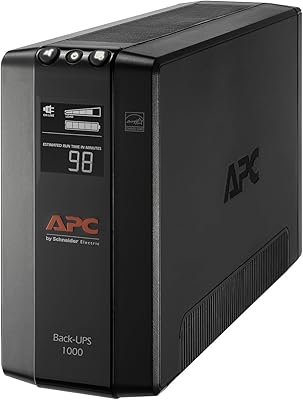
81%
93%
Power Protection Reliability
91%
Pure Sine Wave Output Quality
88%
Automatic Voltage Regulation
71%
Battery Runtime
74%
SmartConnect Remote Monitoring
More
APC Back-UPS Pro 1000VA UPS Battery Backup BX1000M
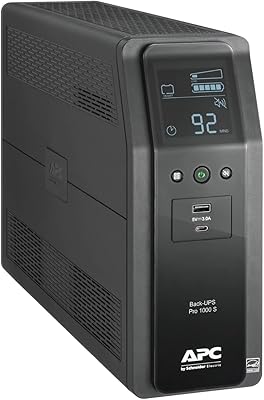
83%
92%
Reliability during Power Outages
88%
Ease of Setup
85%
Build Quality
90%
Surge Protection
80%
Energy Efficiency
More
APC BR1000MS 1000VA Sinewave UPS Battery Backup
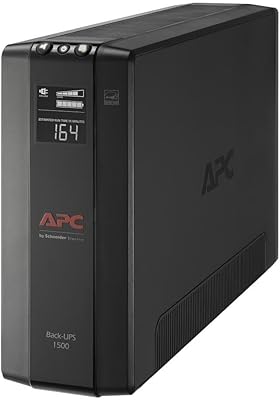
80%
93%
Power Protection Reliability
91%
Pure Sine Wave Output Quality
88%
Automatic Voltage Regulation (AVR)
76%
Battery Runtime
84%
Build Quality & Materials
More
APC Back-UPS Pro BX1500M 1500VA
79%
83%
Battery Runtime
91%
Voltage Regulation (AVR)
78%
Build Quality & Durability
88%
Ease of Setup
86%
LCD Display & Monitoring
More
APC BE550G 550VA UPS Battery Backup
79%
91%
Reliability
54%
Battery Runtime
88%
Surge Protection
93%
Ease of Setup
67%
Outlet Layout
More
APC BX2200MI Backup Battery UPS
85%
94%
Reliability during Outages
88%
Setup & Installation
91%
Surge Protection Performance
89%
Voltage Regulation (AVR)
85%
Build Quality & Durability
More
GOLDENMATE 1000VA/600W Lithium UPS Battery Backup
86%
91%
Value for Money
94%
Battery Life
88%
Ease of Use
85%
Build Quality
80%
Performance Under Load
More
APC BE425M UPS 425VA
78%
93%
Reliability & Uptime
74%
Battery Backup Duration
51%
Battery Longevity & Replaceability
96%
Ease of Setup
72%
Outlet Layout & Count
More
CyberPower OR700LCDRM1U 700VA Rackmount UPS
75%
91%
Ease of Installation
54%
Battery Backup Runtime
88%
Voltage Regulation (AVR)
61%
Output Waveform Compatibility
84%
LCD Display & Monitoring
More

FAQ

Yes, and this is one of the most important reasons to choose the SMT1000 over a budget UPS. Modern high-performance power supplies — especially those with active power factor correction — require a clean pure sine wave to operate correctly when running on battery. Many cheaper UPS units produce a stepped approximated waveform that causes active PFC supplies to shut down immediately or behave unpredictably, which defeats the whole purpose. This unit's true sine wave output eliminates that problem entirely.

Runtime depends heavily on how much wattage you have connected. A typical home office workstation with a monitor drawing around 300 watts will get roughly 10 to 14 minutes — usually enough time to save your work and shut down gracefully. A lighter load like a NAS drive and a router drawing around 80 to 100 watts could run for well over 30 minutes. The LCD display shows a live runtime estimate, so you never have to guess where you stand during an outage.

Plan on replacing the internal battery every 3 to 5 years — this is normal for any sealed lead-acid UPS and is not a flaw unique to this unit. APC sells replacement cartridges directly and through major electronics retailers, and compatible third-party options are also available at lower prices, though quality can vary. It is worth factoring this recurring cost into your buying decision up front rather than treating it as a surprise later.

Under normal operating conditions, the unit is genuinely quiet — the internal fan runs at a low speed or not at all at lighter loads. When the load increases or the unit runs its periodic battery self-test, the fan will spin up audibly for a short time. The switch to battery during an outage produces a brief click, which is normal. Most users find the noise level perfectly acceptable for an office setting.

The APC Smart-UPS SMT1000 1000VA Battery Backup continuously conditions incoming power and regulates voltage in real time, whereas a basic standby UPS sits idle and only reacts when a full outage occurs, with a brief transfer gap. The smart unit also delivers pure sine wave output at all times, which cheaper units do not. That active approach protects against a much wider range of power problems — brownouts, voltage sags, and line noise — not just complete power failures, and it does so without stressing active PFC power supplies.

This is one of the most practical uses for the SMT1000. Home networking gear tends to draw relatively low wattage — a router, switch, modem, and NAS together might pull 80 to 150 watts — giving you well over an hour of runtime during most outages. That means your internet connection and local network stay available even during extended power events, which matters a lot if you work from home or rely on the network for security systems.

Yes. The USB and serial ports on the unit both work with APC's free PowerChute software, which monitors battery status and triggers a graceful, automated system shutdown when the charge drops to a threshold you set. For network-wide management across multiple units, you can add an optional APC network management card to the unit's expansion slot, enabling SNMP monitoring and web-based control. IT administrators managing several units across an office will find this particularly valuable.

At 48.4 lbs, this unit deserves a stable, dedicated spot — the floor beside a desk or next to a server cabinet works well for most users in tower orientation. If you plan to rack-mount it, a separate conversion kit is required and the unit occupies a significant portion of rack space, so check your rack capacity first. Wherever you place it, leave a few inches of clearance on the sides and rear, especially if it will run under heavy load, since the unit generates noticeable heat at higher wattages.

Despite being on the market since 2009, this platform remains actively supported by APC — replacement battery cartridges, firmware updates, and PowerChute software downloads are all available through APC's website. Its age actually works in your favor: there is a large installed base, abundant community knowledge, and a well-established parts ecosystem. Buying a proven platform with a long track record is often smarter than buying a newer unit with less real-world reliability data.

It depends on your power supply. If your desktop PC uses a modern active PFC power supply — which most systems built in the last several years do — then a pure sine wave UPS is genuinely the right choice, not overkill. If your setup is simpler, like a basic older desktop or a laptop dock, a less expensive 600VA to 750VA unit with simulated sine wave output may handle your needs at a lower cost. The SMT1000 earns its price when you need the pure sine wave output, the AVR, or the management capabilities for automated shutdowns.

Where to Buy