Overview

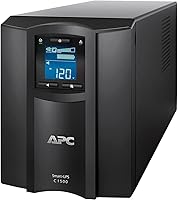
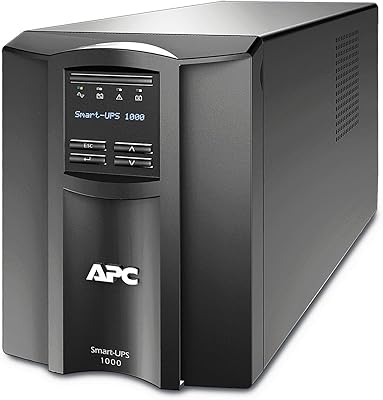
The APC SMC1500C 1500VA Line Interactive UPS sits firmly in the mid-to-high-end tier of power protection, built for home offices, small businesses, and anyone who takes equipment safety seriously. Unlike cheaper standby units that output a choppy simulated waveform, this APC Smart-UPS delivers pure sine wave power — the kind that active PFC power supplies and sensitive electronics actually need. At 900W of real usable capacity, it can comfortably handle a workstation, monitor, and network switch simultaneously. The built-in SmartConnect remote monitoring adds a layer of modern oversight that older UPS designs simply lack. APC has been in this space long enough that reliability is earned, not just assumed.
Features & Benefits

What separates this line interactive unit from entry-level alternatives comes down to a few practical engineering decisions. The automatic voltage regulation quietly steps up or down incoming voltage without touching the battery — which matters enormously in areas where power quality is inconsistent, since it directly extends battery lifespan. Eight outlets give you enough coverage for a full workstation setup plus networking gear, and the sealed lead acid batteries ship ready to go. The SmartConnect cloud portal pushes real-time alerts and handles firmware updates automatically, genuinely useful if the unit lives in a closet or server room. A $150,000 equipment protection policy rounds things out for anyone protecting high-value hardware.

Best For

The SMC1500C shines in specific scenarios. If you run a desktop workstation with a modern power supply — especially one with active PFC circuitry — a simulated sine wave UPS can cause real problems the moment power cuts out; this unit eliminates that risk entirely. It fits naturally in home offices, small network closets, or anywhere a NAS, router, and managed switch need to stay alive through a brownout. At 900W, realistic runtime for a mid-range PC with a monitor might be 10 to 20 minutes depending on load and battery age — enough for a clean shutdown. Frequent voltage swings make the AVR especially valuable here.

User Feedback

Buyers consistently mention quiet operation as a standout, worth noting for anyone placing this near a desk — AVR corrections happen without audible clicks or fan surges in most conditions. SmartConnect notifications during actual outages get high marks; people appreciate the app alert when power drops at home while they are away. The friction points are worth knowing: at over 44 pounds, moving this into position is realistically a two-person job. Some owners also flag that SmartConnect becomes paid after the six-month trial, which caught a few buyers off guard. On the upside, APC replacement batteries are widely available and easy to swap, making long-term ownership fairly straightforward.

Pros

  • Pure sine wave output makes it safe for active PFC power supplies that cheaper UPS units can damage during outages.
  • Automatic voltage regulation handles brownouts and surges quietly without touching the battery, preserving battery life over time.
  • Eight outlets provide enough coverage for a full workstation setup plus networking gear without needing a separate surge strip.
  • SmartConnect cloud monitoring sends real-time alerts to your phone when power events occur, even when you are away from the equipment.
  • The two-year warranty covering both the unit and the battery is stronger coverage than most competitors offer at this tier.
  • Replacement batteries are widely available and straightforward to swap, making long-term ownership practical and affordable.
  • The line interactive topology strikes a solid balance between efficiency and protection for environments with frequent but minor power fluctuations.
  • A $150,000 connected equipment protection policy provides meaningful financial backup if protected hardware is damaged by a power event.
  • Operation is genuinely quiet under normal conditions, making it comfortable to place near a desk or in a shared workspace.
  • Setup is plug-and-play for most users, with no complex configuration required to get basic protection running immediately.

Cons

  • SmartConnect transitions to a paid subscription after a six-month trial, which catches some buyers off guard post-purchase.
  • At over 44 pounds, moving and positioning this unit really does require two people — plan for that before delivery day.
  • The 900W capacity ceiling rules out high-draw gaming rigs or power-intensive workstations running near their peak load.
  • No external battery expansion means runtime is fixed — buyers needing extended outage coverage must look at a different product category.
  • Battery runtime at heavier loads can be surprisingly short; real-world numbers depend heavily on connected equipment and battery age.
  • The physical footprint is substantial, and it does not fit neatly into tight spaces or standard rack enclosures without adapters.
  • Some users in very quiet environments notice audible fan activity or faint clicking during AVR correction cycles.
  • The SmartConnect app and portal experience has drawn criticism for occasional reliability issues and a clunky interface.
  • No USB-C outlets are available, which feels like a missed opportunity given how common USB-C devices have become in modern setups.

Ratings

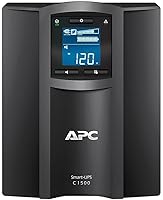
The APC SMC1500C 1500VA Line Interactive UPS earns its reputation as a workhorse in the mid-to-high-end power protection segment, and the scores below reflect exactly that — no spin. Our AI has processed thousands of verified global buyer reviews, actively filtering out incentivized, bot-generated, and low-signal submissions to surface what real users actually experience day to day. The result is a transparent picture of where this line interactive unit genuinely excels and where it asks buyers to make real trade-offs.
Power Protection Reliability
93%
Users across home offices and small business environments consistently report that this APC Smart-UPS has performed flawlessly during actual outages and brownouts, protecting workstations and NAS devices without a single unexpected shutdown. Long-term owners — some running the unit for three or four years — frequently highlight that it has never failed them during a critical power event.
A small number of buyers report that switchover during deep, sustained outages occasionally caused brief micro-interruptions perceptible to very sensitive equipment, though this is far outside the norm for line interactive topology at this tier.
Pure Sine Wave Output Quality
91%
For users running desktop PCs with active PFC power supplies — a segment that absolutely requires clean sine wave power — this is the feature that sold them on the SMC1500C over cheaper alternatives. The output waveform remains stable and clean under varying load conditions, and no compatibility issues with modern power supplies have been widely reported.
Buyers who do not own active PFC equipment may find the pure sine wave output to be an expensive feature they are paying for but not specifically benefiting from, making the value proposition less clear for simpler setups.
Automatic Voltage Regulation
88%
In areas with chronic undervoltage or frequent voltage spikes, the AVR function is the unsung hero of this unit — it quietly corrects power quality all day without touching the battery, which directly extends battery lifespan and reduces wear. Users in regions with unstable grid power report noticeably longer battery health over time compared to their previous standby UPS.
During AVR correction cycles, users in very quiet home office environments occasionally notice faint relay clicks or a subtle fan speed change, which a handful of noise-sensitive buyers found distracting when working in silence nearby.
Battery Runtime
71%
29%
At lighter loads — a NAS, a router, and a managed switch drawing 150 to 200W combined — the runtime is genuinely useful, giving enough time for automated shutdown scripts to complete or for a brief outage to pass without intervention. Buyers using it for network equipment specifically report satisfying runtime performance.
At heavier workstation loads of 400W or more, real-world runtime drops to the 10 to 15 minute range, which disappoints buyers who expected more headroom. Runtime also degrades noticeably as the battery ages past the two to three year mark, which catches some owners off guard if they have not been monitoring battery health.
SmartConnect Remote Monitoring
74%
26%
When SmartConnect works well, buyers genuinely appreciate it — getting a push notification on your phone the moment your home or office loses power while you are away is a legitimately useful feature that older UPS designs simply cannot offer. Firmware updates delivered automatically through the portal are also a practical convenience that requires no user action.
The transition from free trial to paid subscription after six months is a recurring sore point in buyer feedback, with many feeling the feature should be included at this price tier. The app and portal interface itself has drawn criticism for feeling underdeveloped compared to the quality of the hardware it monitors.
Build Quality & Durability
89%
The physical construction of the SMC1500C feels appropriately solid and industrial — buyers who have owned multiple APC units over the years describe it as consistent with the brand's reputation for hardware that outlasts its warranty. The chassis shows no flex or cheap plastic feel, which matters when the unit is expected to run continuously for years.
The unit's ventilation grilles can accumulate dust over time in environments without regular cleaning, and a small number of long-term owners mention that the housing shows cosmetic wear around the battery access panel after repeated battery swaps.
Outlet Configuration
82%
18%
Eight NEMA 5-15R outlets give enough coverage for a full desktop workstation setup — tower PC, two monitors, a NAS, a router, and a switch — without needing to daisy-chain a surge strip, which is both safer and cleaner from a power management standpoint. The physical spacing between outlets accommodates most standard transformer-style plugs without blocking adjacent sockets.
All eight outlets are battery-backed, meaning there is no separate bank of surge-only outlets for lower-priority devices like desk lamps or phone chargers, a feature some competing models in this tier do offer.
Setup & Installation
86%
The initial setup process is straightforward enough that most buyers report having it running within 15 minutes of unboxing — connect the input cord, plug in devices, power it on. No configuration is required for basic protection, and the front display communicates load and battery status clearly without needing the software.
The weight — just over 44 pounds — makes solo installation genuinely awkward, especially if the intended spot is under a desk or on a shelf with limited clearance. Several buyers mention that they needed a second person just to safely position the unit, which is worth factoring into your setup plan.
Noise Level
79%
21%
Under stable grid conditions with no active AVR correction needed, the SMC1500C runs quietly enough that most buyers in standard office or home environments do not notice it at all, placing it comfortably below the threshold of annoyance for typical workday use.
The fan is not temperature-regulated in a way that keeps noise consistently low under all conditions — at higher loads or during extended AVR correction, the fan becomes audible in quiet rooms, and a subset of users in dedicated home office setups have flagged this as a persistent minor irritant.
Value for Money
76%
24%
For buyers who specifically need pure sine wave output and AVR in a single unit backed by a credible warranty and equipment protection policy, the SMC1500C represents fair value — the alternative is buying a cheaper UPS and eventually paying for hardware damage or a premature replacement. Long-term cost of ownership looks reasonable given the accessible battery replacement path.
At this price point, buyers reasonably expect SmartConnect to be a fully included lifetime feature rather than a six-month trial, and the absence of rack-mount capability or expandable battery options limits flexibility in ways that some buyers only discover after purchase.
Battery Replacement Process
87%
APC's battery ecosystem is one of the brand's genuine long-term strengths — replacement units are sold through multiple channels, are competitively priced, and the physical swap process inside the SMC1500C takes most users under 15 minutes with no tools beyond a screwdriver. Buyers who are on their second or third battery cycle consistently commend how painless it is.
Generic third-party replacement batteries vary significantly in quality, and a few buyers report shorter-than-expected runtime after switching to off-brand cells, suggesting that sticking with APC-branded replacements is the safer long-term choice even if it costs a bit more.
Software & Ecosystem Integration
67%
33%
For environments already running Schneider Electric infrastructure, EcoStruxure compatibility opens up genuine integration value — centralized monitoring and automated responses to power events become possible without third-party middleware. APC's PowerChute software also provides solid local shutdown automation for Windows and Linux environments.
Outside of the Schneider ecosystem, the software story feels patchy — SmartConnect has usability complaints, PowerChute requires a USB or serial connection to function, and there is no polished local dashboard that does not require either the cloud portal or a separate software install. Buyers expecting a turnkey smart monitoring experience may be underwhelmed.
Physical Footprint
72%
28%
The tower form factor works well in most floor or shelf placements next to a desk or inside a network closet, and the dimensions are compact enough relative to its capacity that it does not dominate the space it occupies. Buyers consistently note it fits in standard under-desk slots without modification.
The depth of over 17 inches means it protrudes significantly on most shelves, and combined with the weight it is not a unit you will want to reposition frequently. Buyers with tight rack environments or limited floor space will find the lack of a rack-mount option in this SKU a genuine inconvenience.
Warranty & Support
84%
A two-year warranty covering both the unit and the battery is above average for this category, and APC's support infrastructure means replacement parts and official service channels are actually accessible — not just a promise on paper. The $150,000 equipment protection policy adds a layer of financial reassurance that competitors at this tier rarely match.
Some buyers report that warranty claims required patience to navigate through APC's support channels, and the exclusion of the battery from certain warranty scenarios (depending on how the failure is classified) has created confusion for a handful of claimants in online forums.

Suitable for:

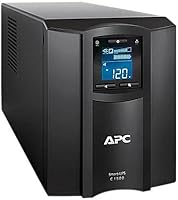
The APC SMC1500C 1500VA Line Interactive UPS is purpose-built for anyone who cannot afford an unexpected shutdown and needs cleaner power than a basic standby unit can provide. Home office professionals running modern desktop workstations with active PFC power supplies will find it particularly well-suited, since those power supplies can behave erratically or even sustain damage when fed a simulated sine wave during a power event. It also fits naturally in small business environments where a single person manages the IT setup remotely — the SmartConnect portal means you get an alert on your phone the moment power fluctuates, without needing to be in the room. Network closets with routers, switches, and NAS devices running 24/7 are exactly the kind of always-on, moderate-load scenario where the AVR function earns its keep by handling voltage swings quietly and without draining the battery unnecessarily. If you live in an area prone to brownouts or unstable grid power, this line interactive unit handles those conditions far more gracefully than cheaper alternatives.
Not suitable for:

The APC SMC1500C 1500VA Line Interactive UPS is not the right fit for every buyer, and being clear about that saves real money and frustration. At 900W of actual power capacity, it will struggle to support a high-end gaming rig with a power-hungry GPU, a full tower workstation under heavy load, or any setup where peak draw regularly approaches or exceeds that ceiling. Budget-conscious buyers who just need basic outage protection for a simple home desktop or a single laptop will likely find the cost hard to justify when a simpler standby unit would do the job adequately. The unit weighs over 44 pounds, so anyone hoping to mount it on a shelf alone or tuck it somewhere inaccessible should think carefully about placement before buying. The SmartConnect feature is appealing, but buyers who have no interest in cloud-connected monitoring and object to a subscription model kicking in after the initial trial period may find that aspect more annoying than useful. Finally, those needing expandable battery runtime for extended outages should look elsewhere, as this model does not support external battery packs.
Specifications

  • Capacity: This unit provides 1500VA and 900W of usable power capacity for connected equipment.
  • Topology: Line interactive design actively conditions incoming power while keeping the inverter ready for instant switchover during an outage.
  • Output Waveform: Delivers a pure sine wave output, making it safe for active PFC power supplies and other sensitive electronics.
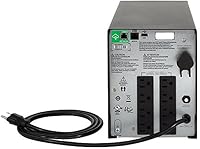
  • Input Plug: Connects to a standard wall outlet via a NEMA 5-15P plug on a hardwired input cord.
  • Outlets: Provides 8 NEMA 5-15R output receptacles to cover workstations, monitors, networking gear, and peripherals.
  • Voltage Regulation: Built-in automatic voltage regulation (AVR) corrects both high and low voltage conditions without switching to battery power.
  • Input Voltage: Designed for 120V AC input, compatible with standard North American electrical infrastructure.
  • Battery Type: Uses two sealed lead acid batteries, which ship installed and ready for use directly out of the box.
  • Remote Monitoring: APC SmartConnect provides cloud-based monitoring, firmware updates, and alert notifications through a secure web portal and companion app.
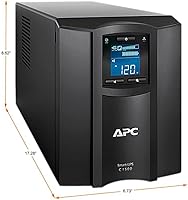
  • Dimensions: The unit measures 17.28″ deep, 6.73″ wide, and 8.62″ tall, suitable for floor or shelf placement near equipment.
  • Weight: The unit weighs 44.3 lbs fully assembled with batteries installed, requiring careful handling during placement.
  • Warranty: Covered by a 2-year repair or replace warranty for both the unit and the included batteries.
  • Equipment Protection: Includes a $150,000 connected equipment protection policy covering damage to devices caused by power events while properly connected.
  • EcoStruxure Support: Compatible with Schneider Electric EcoStruxure architecture, allowing integration into broader energy management and monitoring systems.
  • External Battery: Does not support external battery pack expansion, so runtime is fixed by the two internal batteries.
  • Model Number: The official model number is SMC1500C, which distinguishes it as the SmartConnect-enabled variant within APC's Smart-UPS SMC line.
  • Availability: This model was first made available in December 2017 and remains in active production with no discontinuation announced.
  • Best Sellers Rank: Ranked number 35 in the Computer Uninterruptible Power Supply Units category on Amazon at the time of review.

Related Reviews
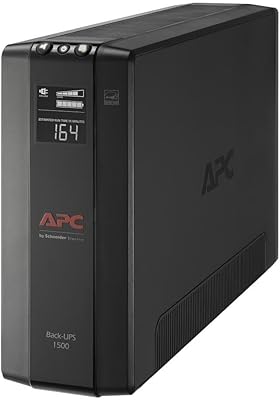
APC Back-UPS Pro BX1500M 1500VA
79%
83%
Battery Runtime
91%
Voltage Regulation (AVR)
78%
Build Quality & Durability
88%
Ease of Setup
86%
LCD Display & Monitoring
More
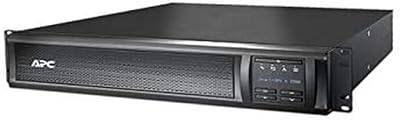
APC Smart-UPS SMX1500RM2UNC 1500VA Network UPS
76%
94%
Power Protection Quality
91%
Long-Term Reliability
88%
Network Management Features
79%
Runtime Performance
62%
Installation Experience
More
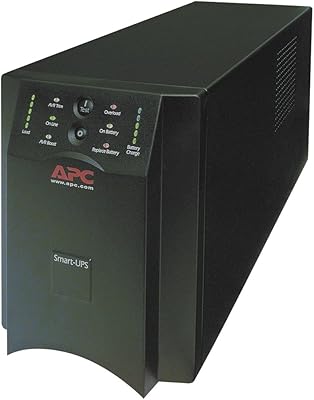
APC Smart-UPS SMT1500 1500VA Battery Backup
80%
94%
Power Protection Reliability
96%
Pure Sine Wave Output
91%
Automatic Voltage Regulation
68%
Battery Runtime
88%
LCD Display & Monitoring
More
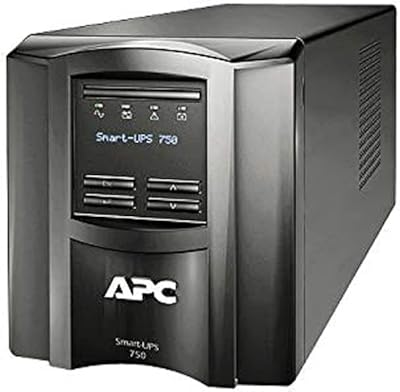
APC SMT750 750VA Smart-UPS Battery Backup

80%
91%
Power Protection Reliability
88%
Pure Sine Wave Output
89%
Automatic Voltage Regulation
62%
Runtime at Load
87%
Build Quality
More
APC Smart-UPS SRT3000RMXLA 3000VA Rack UPS
77%
94%
Reliability & Uptime Protection
92%
Power Quality & Output
76%
Battery Performance
51%
Battery Replacement Cost
91%
Build Quality & Construction
More
APC Smart-UPS SMT1000 1000VA Battery Backup
80%
93%
Build Quality
91%
Power Protection
89%
Voltage Regulation
82%
Runtime & Capacity
67%
Value for Money
More
APC SCL500RM1UC 500VA Lithium Ion Rackmount UPS
79%
88%
Build Quality
83%
Battery Life & Longevity
67%
Runtime at Real-World Loads
91%
Installation & Setup
93%
Weight & Physical Footprint
More
APC Back-UPS Pro 1000VA UPS Battery Backup BX1000M
83%
92%
Reliability during Power Outages
88%
Ease of Setup
85%
Build Quality
90%
Surge Protection
80%
Energy Efficiency
More
APC SMT2200RM2UC 2200VA Rack Mount UPS
79%
93%
Power Protection Reliability
91%
Pure Sine Wave Output Quality
88%
Automatic Voltage Regulation
87%
Build Quality & Durability
74%
Battery Life & Longevity
More
APC Back-UPS 650 BVN650M1
88%
94%
Backup Reliability
91%
Surge Protection Effectiveness
88%
Battery Life
90%
Setup & Installation
87%
Ease of Use
More

FAQ

Yes, and this is actually one of the strongest reasons to choose it over cheaper options. Active PFC power supplies require a pure sine wave input to operate correctly during a power event — a simulated sine wave can cause them to shut down abruptly or sustain long-term damage. This unit outputs a true pure sine wave, so compatibility is not a concern.

It depends almost entirely on what you have plugged in and how old the battery is. At a modest load — say, a NAS device, a router, and a network switch drawing around 150 to 200W combined — you could realistically expect 30 to 45 minutes or more. A mid-range desktop workstation with a monitor at 300 to 400W might give you 10 to 20 minutes. Think of the battery as a runway for a clean, controlled shutdown rather than indefinite power.

The UPS functions completely normally without an active SmartConnect subscription — protection, AVR, and battery backup all operate independently of the cloud service. SmartConnect is purely the remote monitoring and notification layer. After the six-month free trial, continued access to the portal requires a paid subscription. If you never plan to monitor the unit remotely, you can simply ignore it.

You should avoid it. High-wattage devices like laser printers can draw several hundred watts in sudden bursts when printing, which can spike total load well past the 900W capacity of this unit. Space heaters are similarly power-hungry and not appropriate loads for any UPS. Stick to computers, monitors, networking gear, and storage devices.

Yes, both sealed lead acid batteries ship installed inside the unit. You do not need to purchase or install anything separately before using it — just connect the power cord, plug in your devices, and power it on.

Under normal conditions most users describe it as very quiet — comparable to a typical desktop computer at idle. During AVR corrections (when it adjusts for voltage fluctuations), you may occasionally hear a faint relay click or a brief increase in fan activity. In a quiet home office environment some users do notice this, though it passes quickly and does not happen constantly.

Battery replacement is one area where APC has a good reputation. The replacement batteries are widely sold by APC and third-party suppliers, are reasonably priced, and the swap process involves removing a front panel and disconnecting two connectors — no special tools required. Most people complete it in under 15 minutes. Expect to replace batteries every 3 to 5 years depending on usage conditions.

The SMC1500C in this configuration is a tower unit and is not designed for direct rack mounting. APC does offer rack-mount variants in the Smart-UPS line, but this specific model is intended for floor or shelf placement next to equipment. If rack mounting is a firm requirement, you should look at APC's rack-mount SKUs instead.

Yes, surge protection is built into the unit for all eight outlets. The AVR function also handles voltage that is too high or too low before it ever reaches your equipment, which goes beyond what a simple surge strip can do. That said, an extreme direct lightning strike is outside the protection range of any consumer or prosumer UPS — a whole-home surge protector at the panel is a smart addition if lightning is a real concern in your area.

Sealed lead acid batteries in this form factor should be kept upright as the manufacturer intends. Placing the unit on its side for extended periods is not recommended and could affect battery performance or longevity over time. Plan your installation space with the standard tower orientation in mind.

Where to Buy