Overview

The APC SCL500RM1UC 500VA Lithium Ion Rackmount UPS is a purpose-built power protection unit aimed squarely at compact IT environments — think telecom closets, edge networking setups, and small server rooms where rack space is tight and reliability is non-negotiable. Unlike older UPS designs that rely on heavy VRLA batteries, this unit uses lithium ion chemistry, which meaningfully reduces weight and extends the battery service life. It runs a line-interactive topology with a pure sine wave output, a genuine step up from simulated sine wave units that can stress sensitive electronics. Worth noting upfront: at 500VA and 400W, this is designed for light loads only.

Features & Benefits

Pure sine wave output is the headline spec here, and it matters — routers, NAS devices, and other load-sensitive hardware respond poorly to the choppy waveforms cheaper UPS units produce. The lithium ion battery pack weighs the whole unit in at just over nine pounds, a significant advantage when you are mounting it solo in a 1U slot. At 9.13 inches deep, this rackmount UPS fits shallow and wall-mount racks that standard units simply cannot. The front LED panel gives quick-glance status on power mode and battery health, while APC SmartConnect adds cloud-based monitoring, automatic firmware updates, and email alerts — though buyers purchasing after August 2023 should know that SmartConnect now comes as a six-month free trial rather than a permanent inclusion.

Best For

This rackmount UPS is a strong fit for IT administrators who need rack-native power protection without dedicating a full 2U or more to a bulky unit. Small businesses running a firewall, a managed switch, and a lightweight NAS will find the 400W ceiling adequate for that kind of load. The short-depth form factor is a real differentiator for anyone working with shallow racks or wall-mount enclosures. If you want remote monitoring without purchasing a separate SNMP network management card, the SmartConnect portal covers that need at no added hardware cost. Buyers who factor in long-term battery longevity and lower replacement frequency will find the premium pricing easier to justify.

User Feedback

Across verified purchaser reviews, the most consistent praise lands on ease of installation — the included rack rails are straightforward to configure, and the lightweight build makes solo mounting genuinely practical. Runtime feedback is more measured: users running modest loads report reasonable holdover time, but anyone expecting to ride out extended outages with a full switch stack will be disappointed. The SmartConnect trial shift has frustrated some buyers who expected permanent cloud access. Battery replacement costs and lithium ion parts availability surface as longer-term concerns, with a few owners noting that sourcing replacement cells takes more effort than with standard lead-acid models. Firmware updates via SmartConnect have generally been reported as smooth and automatic.

Pros

  • Lithium ion battery chemistry significantly extends service life compared to standard lead-acid UPS units.
  • At under ten pounds, this rackmount UPS is light enough for solo installation without a second person.
  • The 9.13-inch depth fits shallow and wall-mount racks where virtually no competing 1U UPS can go.
  • Pure sine wave output protects sensitive network hardware and NAS devices from damaging waveform irregularities.
  • SmartConnect provides useful remote alerts and hands-free firmware updates when the portal connection is active.
  • Rack rails are included and straightforward to configure in standard 19-inch enclosures.
  • The front LED panel gives instant visual confirmation of power mode and battery health during routine checks.
  • APC brand reliability and a strong service track record reduce the risk of premature unit failure.

Cons

  • The SmartConnect monitoring feature shifts to a paid subscription after a six-month trial for post-August 2023 buyers.
  • Only four output outlets, which fills up fast in any setup with more than three protected devices.
  • Lithium ion replacement packs are significantly more expensive and harder to source than standard VRLA cartridges.
  • No numeric LCD readout means load percentage and estimated runtime require a software connection to check.
  • Runtime shrinks quickly when load approaches the 400W ceiling, leaving little buffer for graceful shutdowns.
  • The front panel alarm beep during power events cannot be easily silenced without third-party software.
  • Premium pricing is difficult to justify for buyers whose racks have standard depth and no shallow-fit requirement.
  • SmartConnect portal connectivity issues following firmware updates have been reported by a subset of users.

Ratings

The APC SCL500RM1UC 500VA Lithium Ion Rackmount UPS scores are generated by AI after analyzing verified buyer reviews from around the world, with spam, bot submissions, and incentivized feedback actively filtered out. This unit earns consistent respect in IT circles for its thoughtful engineering, but real-world ownership also surfaces a handful of friction points that prospective buyers deserve to know before committing. Both the strengths and the trade-offs are reflected honestly in the scores below.

Build Quality
88%
The all-metal chassis feels solid and rack-ready out of the box, and the included mounting rails are sturdy enough that solo installation rarely causes complaints. Users in telecom closets and small data rooms consistently note that the unit feels premium and purpose-built rather than a consumer product crammed into a rack shell.
A small number of users have flagged that the front LED panel bezel feels slightly less refined than the rest of the enclosure. Nothing structural, but for a unit at this price tier, a few buyers expected a more polished finish on every visible surface.
Battery Life & Longevity
83%
The lithium ion cells hold up notably better over multi-year ownership compared to sealed lead-acid alternatives, and users who have run this unit for two-plus years report that runtime degradation is slower than expected. That extended cycle life is one of the most cited justifications for the higher upfront cost.
Lithium ion replacement packs for this specific unit are harder to source than generic VRLA batteries, and the cost of a factory-compatible replacement is considerably higher. A few long-term owners were caught off guard by replacement pricing when their cells eventually needed swapping.
Runtime at Real-World Loads
67%
33%
At light loads — a firewall, a small managed switch, and a basic NAS — users report enough holdover time to execute a graceful shutdown safely, which is precisely what a unit in this class is engineered to deliver. For the target use case, runtime is adequate and reliable.
Push the load closer to the 400W ceiling and runtime shrinks quickly, leaving little margin for anything beyond an immediate shutdown sequence. Users who underestimated their connected load and expected extended ride-through were consistently disappointed, and this is the most common source of negative reviews.
Installation & Setup
91%
The included rack rails are adjustable and compatible with standard 19-inch enclosures, and most IT administrators report having the unit racked and powered on within 20 minutes. The lightweight lithium ion build makes solo mounting genuinely practical without a second person.
The rail adjustment instructions in the included documentation are minimal, and users working with non-standard or shallow-depth enclosures occasionally needed to consult online resources to confirm compatibility before committing to the install.
Weight & Physical Footprint
93%
Coming in under ten pounds, this is one of the lightest 1U UPS units available at this capacity tier, and that matters enormously when you are mounting equipment alone or working in overhead or wall-mount racks. Users frequently call out the low weight as a standout practical advantage over lead-acid competitors.
There is essentially no criticism of the weight itself. The only minor comment is that the compact depth, while an asset in shallow racks, means the unit does not fill standard deep racks flush, which is purely cosmetic but occasionally noted.
Pure Sine Wave Output Quality
89%
Users running sensitive network hardware, NAS enclosures with spinning drives, and even some medical-adjacent equipment report clean, stable power with no switching artifacts or unexpected reboots during transfer events. The waveform quality is a clear differentiator from simulated sine wave units in the same rack slot.
For buyers running strictly non-linear or highly tolerant loads, the pure sine wave advantage goes largely unused, making the price premium harder to rationalize. This is less a flaw and more a product-fit issue for buyers who do not actually need that output quality.
SmartConnect Remote Monitoring
62%
38%
When it works as advertised, SmartConnect is genuinely useful — email alerts during power events, automatic firmware pushes, and a clean cloud dashboard that does not require an on-site visit to check UPS status. Users managing multiple remote sites found it a worthwhile convenience.
The post-August 2023 transition to a six-month trial has generated significant frustration among newer buyers who expected permanent cloud access. After the trial, continued monitoring requires a paid subscription, and many users feel this was not communicated clearly at purchase, which directly hurts the perceived value of the feature.
Value for Money
71%
29%
Buyers who factor in total cost of ownership — longer battery cycles, fewer replacements, and the shallow-depth form factor that solves a real physical constraint — tend to rate the value positively. For specialized use cases, there are few direct competitors that match this combination of features in a 1U footprint.
For buyers with standard rack depth and no shallow-fit requirement, the price premium over comparable lead-acid UPS units is harder to defend on specs alone. Several reviewers noted that comparable runtime at a lower price point is achievable with a VRLA-based unit if lithium ion longevity is not a priority.
Outlet Availability
74%
26%
Four protected outlets cover most compact network equipment setups comfortably — a firewall, a switch, a NAS, and one spare is a realistic deployment scenario that the outlet count handles without issue.
In denser micro-rack environments where five or six devices need protection, four outlets becomes a limiting factor quickly. Users who needed to add a PDU downstream to extend coverage felt the outlet count was a missed opportunity at this price point.
LED Status Display
78%
22%
The front panel indicators give at-a-glance confirmation of power mode, battery condition, and network event status without requiring a software connection. For IT staff doing quick visual checks during a walk-through, it covers the basics reliably.
The display is informational rather than detailed — there are no numeric readouts for load percentage or estimated runtime, which means anything beyond basic status requires logging into the SmartConnect portal. Users accustomed to LCD readouts on higher-end units found this limiting.
Noise Level
84%
Under normal line-interactive operation, this rackmount UPS runs quietly enough that users in small office environments report it being effectively inaudible during regular business hours. The lithium ion battery management also eliminates the occasional trickle-charge hum associated with older VRLA units.
During a transfer event or active battery discharge, the unit produces an audible alarm beep that some users in open-office or quiet lab environments found disruptive. The beep pattern cannot be silenced through standard controls without third-party software intervention.
Battery Replacement Accessibility
53%
47%
APC does offer an official replacement battery cartridge for this unit, and the swap process itself is not overly complicated for someone comfortable with rack hardware. Users who have gone through the process describe it as manageable.
Sourcing the correct lithium ion replacement pack takes more effort than walking into any electronics retailer for a VRLA equivalent, and the cost is substantially higher. Several owners who reached this stage felt underprepared for the expense and availability challenge, which tempered their long-term satisfaction.
Firmware & Software Reliability
81%
19%
Verified buyers who have used SmartConnect during its fully functional period report that over-the-air firmware updates applied automatically without manual intervention or post-update issues. The process is genuinely hands-off for users who keep the monitoring connection active.
A small subset of users reported connectivity hiccups with the SmartConnect portal following firmware updates, requiring a manual reconnect. While not widespread, the issue was enough to create anxiety for users who rely on always-on remote visibility.
Compatibility with Rack Environments
86%
The 9.13-inch depth opens doors that standard UPS units cannot fit through — literally. Users working with wall-mount enclosures, shallow open-frame racks, and low-depth equipment racks cite compatibility as a primary reason they chose this unit over anything else on the market.
The included rails are designed for standard 19-inch racks and work well within that parameter, but users with non-standard or older proprietary rack systems occasionally found the rail hardware required adaptation. Not a widespread issue, but worth verifying against your specific enclosure before purchasing.

Suitable for:

The APC SCL500RM1UC 500VA Lithium Ion Rackmount UPS is purpose-built for IT professionals and technically minded small business owners who need dependable rack-native power protection in a constrained physical space. If you are managing a telecom closet, a compact edge networking setup, or a small server room where rack depth is limited to ten inches or less, this unit solves a problem that most UPS products simply cannot address. Home lab enthusiasts running a firewall appliance, a managed switch, and a NAS will find the 400W capacity more than sufficient for that kind of lean, always-on stack. The lithium ion chemistry is a genuine advantage for anyone who wants to reduce maintenance cycles and avoid the routine battery replacements that lead-acid units demand every few years. IT administrators overseeing remote or unstaffed locations will also appreciate the SmartConnect monitoring portal for its ability to send alerts and push firmware updates without requiring a site visit, provided they account for the six-month trial limitation upfront.

Not suitable for:

The APC SCL500RM1UC 500VA Lithium Ion Rackmount UPS is a poor fit for anyone expecting to protect a fully loaded server rack or sustain multiple high-draw devices through extended outages. At 400W maximum output, the unit reaches its ceiling quickly — a single tower server under load can consume that budget entirely, leaving no headroom for ancillary equipment. Buyers who need six or more protected outlets will run into the four-outlet limit almost immediately in denser setups. If long-term cloud monitoring is a priority and you are purchasing after August 2023, be aware that SmartConnect transitions to a paid subscription after the initial trial period, which changes the cost calculus for budget-conscious buyers. Anyone looking for a budget-friendly power backup with straightforward lead-acid battery replacements available at any hardware store will find both the upfront price and the proprietary lithium ion replacement pack harder to justify. Finally, if your rack environment does not have a shallow-depth constraint, there are competing units at lower price points that deliver comparable runtime and outlet count without the lithium ion premium.

Specifications

  • Model Number: This unit carries the official model designation SCL500RM1UC, manufactured by APC, a Schneider Electric brand.
  • Capacity: The UPS is rated at 500VA with a maximum real power output of 400W, suitable for light networking and storage loads.
  • Battery Type: Four lithium ion polymer cells are included and pre-installed, replacing the heavier sealed lead-acid chemistry found in traditional UPS units.
  • UPS Topology: Line-interactive topology with automatic voltage regulation keeps connected equipment stable during minor power fluctuations without switching to battery.
  • Output Waveform: Pure sine wave output is delivered during both normal operation and battery mode, protecting sensitive electronics from waveform irregularities.
  • Form Factor: The unit occupies a single rack unit (1U) of vertical space and ships with adjustable mounting rails for standard 19-inch enclosures.
  • Dimensions: Physical dimensions measure 9.13″ deep by 17.01″ wide by 1.73″ tall, qualifying it as a short-depth rackmount design.
  • Weight: The complete unit weighs 9.26 pounds, significantly lighter than lead-acid equivalents of comparable capacity.
  • Input Connection: Power input uses a NEMA 5-15P plug on a 6-foot cord, compatible with standard 120V North American wall outlets and PDUs.
  • Output Outlets: Four NEMA 5-15R receptacles provide protected output, all battery-backed with no distinction between surge-only and full UPS outlets.
  • Input Voltage: Nominal input voltage is 120V AC, designed exclusively for North American electrical infrastructure.
  • Remote Monitoring: APC SmartConnect enables cloud-based monitoring via a secure web portal, including event alerts, firmware updates, and basic UPS diagnostics.
  • SmartConnect Trial: Units purchased or registered after August 1, 2023 receive SmartConnect access as a six-month complimentary trial rather than a permanent feature.
  • LED Indicators: The front panel includes six LED indicators covering Online status, On Battery mode, SmartConnect connectivity, Network status, Event detection, and Replace Battery alerts.
  • Rack Rail Inclusion: Adjustable mounting rails compatible with standard 19-inch rack enclosures are included in the box, requiring no separate hardware purchase for typical installations.
  • Manufacturer: Designed and sold by APC, a brand operating under the Schneider Electric corporate umbrella with a long-standing focus on power protection infrastructure.

Related Reviews
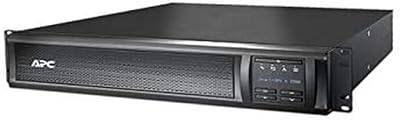
APC Smart-UPS SMX1500RM2UNC 1500VA Network UPS
76%
94%
Power Protection Quality
91%
Long-Term Reliability
88%
Network Management Features
79%
Runtime Performance
62%
Installation Experience
More
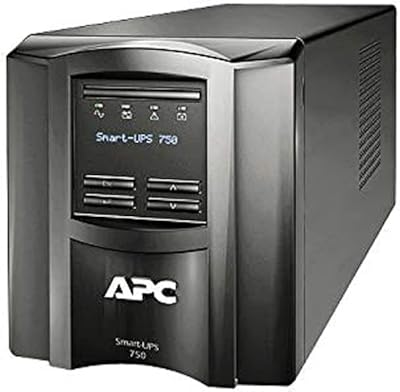
APC SMT750 750VA Smart-UPS Battery Backup
80%
91%
Power Protection Reliability
88%
Pure Sine Wave Output
89%
Automatic Voltage Regulation
62%
Runtime at Load
87%
Build Quality
More
APC Smart-UPS 1000VA UPS Battery Backup (SMT1000)
87%
88%
Performance
91%
Value for Money
85%
Battery Life
92%
Build Quality
89%
Noise Level
More
APC Smart-UPS SRT3000RMXLA 3000VA Rack UPS
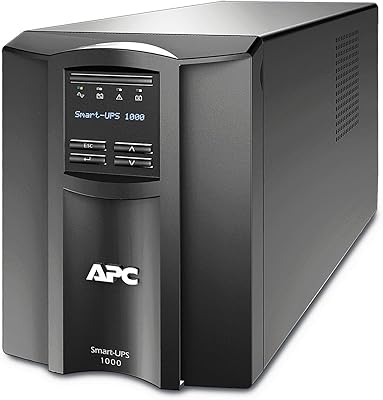
77%
94%
Reliability & Uptime Protection
92%
Power Quality & Output
76%
Battery Performance
51%
Battery Replacement Cost
91%
Build Quality & Construction
More
APC Smart-UPS SMC1500C 1500VA Sinewave UPS Battery Backup
85%
91%
Power Protection Reliability
87%
Ease of Setup & Installation
92%
Remote Monitoring Functionality
85%
Build Quality & Durability
70%
Weight & Portability
More
APC Back-UPS Pro 1000VA UPS Battery Backup BX1000M
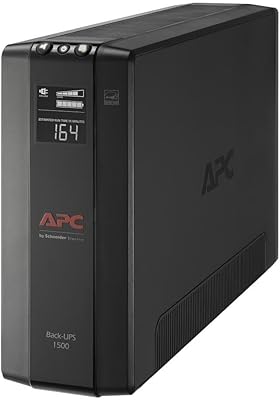
83%
92%
Reliability during Power Outages
88%
Ease of Setup
85%
Build Quality
90%
Surge Protection
80%
Energy Efficiency
More
APC Back-UPS Pro BX1500M 1500VA
79%
83%
Battery Runtime
91%
Voltage Regulation (AVR)
78%
Build Quality & Durability
88%
Ease of Setup
86%
LCD Display & Monitoring
More
APC BX2200MI Backup Battery UPS
85%
94%
Reliability during Outages
88%
Setup & Installation
91%
Surge Protection Performance
89%
Voltage Regulation (AVR)
85%
Build Quality & Durability
More
APC Back-UPS 1200VA BVK1200M2
85%
94%
Performance during Power Outages
88%
Ease of Setup
90%
USB Charging Ports
85%
Build Quality
80%
Battery Runtime at Load
More
APC SMT2200RM2UC 2200VA Rack Mount UPS
79%
93%
Power Protection Reliability
91%
Pure Sine Wave Output Quality
88%
Automatic Voltage Regulation
87%
Build Quality & Durability
74%
Battery Life & Longevity
More

FAQ

Yes, and that is one of its strongest selling points. At just 9.13 inches deep, this rackmount UPS fits in wall-mount and shallow open-frame enclosures where most 1U UPS units simply do not physically fit. Just verify your enclosure's internal usable depth before ordering to be safe.

That depends heavily on what you have plugged in. Running a typical small network stack — a firewall, a managed switch, and a lightweight NAS — you can generally expect enough runtime to execute a graceful, controlled shutdown. If you are pushing close to the 400W ceiling, that window shrinks considerably, so do not plan on riding out extended outages with this unit.

It depends on when you purchased the unit. If you bought or registered it before August 1, 2023, SmartConnect was included as a permanent feature. For units purchased after that date, APC now offers SmartConnect as a six-month free trial, after which continued access requires a paid subscription. Factor that into your total cost of ownership calculation.

It works out of the box for basic power protection — just rack it, plug in your devices, and connect it to power. The front LED panel gives you status at a glance. If you want remote monitoring, firmware updates, or email alerts, you will need to register for the SmartConnect portal, which is a straightforward web-based setup.

The APC SCL500RM1UC 500VA Lithium Ion Rackmount UPS does not include a USB or serial management port in the traditional sense used by APC PowerChute software for automated shutdown signaling. If graceful server shutdown automation is a firm requirement, verify compatibility with APC's current software ecosystem before purchasing, or consider a model with a dedicated management interface.

The practical differences come down to weight, lifespan, and maintenance. The lithium ion pack keeps the whole unit under ten pounds, which matters a lot when you are mounting solo. It also holds its charge capacity over more charge cycles than lead-acid cells, meaning you should go longer before needing a replacement. The trade-off is that replacement packs cost more and are harder to find at local stores.

Yes. Pure sine wave output is maintained both during normal line power and during battery discharge, which is the key distinction from cheaper simulated sine wave UPS units. This matters for equipment like NAS enclosures with active drives, some network switches, and any hardware with power factor corrected supplies.

There are four NEMA 5-15R outlets, all fully battery-backed. For most compact setups — a firewall, a switch, a NAS, and one spare slot — that covers the bases. If you routinely need five or six protected connections, you will hit the ceiling quickly and may need to evaluate whether a PDU downstream makes sense for your layout.

When that indicator lights up, the internal battery management system has detected that the lithium ion pack can no longer hold an adequate charge and needs replacement. You will need to source an APC-compatible lithium ion replacement cartridge for this specific model — it is not a generic VRLA swap you can grab locally. Budget accordingly, as these packs cost more than standard lead-acid replacements.

During normal operation on line power, it runs quietly enough that most users in small offices barely notice it. The fan, if active, is low-level. Where it becomes audible is during a power event — the alarm beep is noticeable and cannot be easily muted through the front panel controls alone. If your rack is in an open office or a quiet workspace, that is worth knowing ahead of time.

Where to Buy