Overview

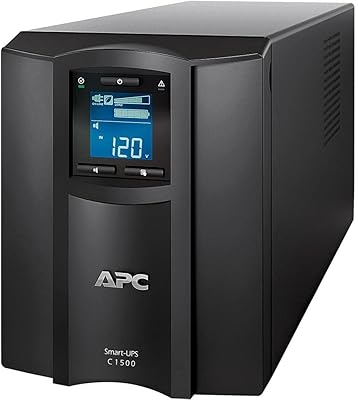
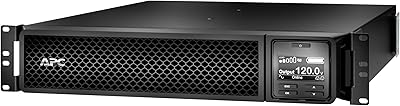
The APC Smart-UPS SRT3000RMXLA 3000VA Rack UPS sits firmly at the top end of what most small data centers and server rooms will ever need. APC has long been the default choice for IT pros who need power protection they can actually trust, and the SRT line represents the company's most capable offering short of enterprise-scale systems. At 3000VA and 2700W, this rack UPS handles critical server loads without breaking a sweat. It occupies a single rack unit, which matters when space is already spoken for. The asking price places it squarely in professional territory — this is not a purchase for casual or home use.
Features & Benefits

What separates this APC Smart-UPS unit from cheaper alternatives is its online double-conversion design, meaning connected equipment runs off the inverter constantly — so when utility power fails, there is literally zero transfer time. That alone justifies the investment for anything hosting live databases or financial applications. The output is pure sine wave, which sensitive server hardware demands. An LCD panel gives you at-a-glance load and battery status without needing to dig through software. The hot-swappable batteries let you replace cells during business hours without shutting anything down. You can also add external battery packs to extend runtime as your needs grow.

Best For

This rack UPS was built for IT administrators who simply cannot afford unplanned downtime. If you are running a small server room with switches, NAS units, or virtualization hosts, the SRT3000RMXLA delivers the kind of always-on protection that pays for itself the first time the power flickers. Businesses in areas with unstable utility power will especially appreciate the voltage regulation that kicks in without switching to battery. The network management card slot — sold separately — makes it practical for environments where remote UPS monitoring via SNMP or a web interface is part of the standard IT workflow.

User Feedback

Long-term owners consistently praise the build quality and reliability, with many noting years of trouble-free operation. APC's support reputation also earns positive mentions. The most common frustration is the battery replacement cost, which catches some buyers off guard when cells eventually age out. A number of users also flag the 69-pound weight as a real installation challenge — racking this unit alone is not advisable. On runtime, feedback is mixed; expectations sometimes exceed reality because actual runtime depends heavily on connected load. Those running at moderate capacity report solid backup windows, while fully loaded setups see significantly shorter runtime than spec-sheet figures suggest.

Pros

  • Online double-conversion means zero transfer time during outages — connected equipment never skips a beat.
  • Pure sine wave output protects sensitive server hardware and prevents compatibility issues common with cheaper UPS units.
  • Hot-swappable batteries allow replacements during business hours without scheduling any downtime.
  • The 1U rack form factor is genuinely space-efficient in crowded server room environments.
  • Runtime is extendable via external battery packs, so capacity can grow alongside your infrastructure.
  • The front LCD provides real-time load, battery, and runtime data without requiring any software access.
  • APC's long-standing reputation means parts, support, and compatible accessories are broadly available.
  • The SRT3000RMXLA handles voltage regulation continuously, not just during full power failures.
  • Build quality is consistently praised by long-term owners, with many reporting years of trouble-free operation.
  • SNMP-compatible remote monitoring integrates cleanly with existing NMS platforms when the management card is added.

Cons

  • Replacement battery cartridges carry a significant recurring cost that adds up meaningfully over a five-year ownership window.
  • The network management card is sold separately, which surprises buyers who assume it is included at this price tier.
  • At 69 pounds, two-person installation is essentially mandatory — solo racking is unsafe and impractical.
  • The 25-inch depth can create clearance problems in shallower rack enclosures that are not immediately obvious before purchase.
  • Runtime drops sharply when the unit runs near its maximum load, often falling well short of spec-sheet estimates.
  • Battery performance degrades noticeably after the three-year mark, making replacement scheduling a real operational planning task.
  • PowerChute software has a mixed reputation among Linux administrators and can require additional configuration effort.
  • Fan noise increases significantly during heavy load and post-outage recharge cycles, which matters in office-adjacent IT closets.
  • The total five-year cost of ownership — unit, management card, and battery replacements — is considerably higher than the sticker price alone.
  • Occasional reports of unit failure past the four-to-five year mark without prior warning are a concern for always-on environments.

Ratings

The APC Smart-UPS SRT3000RMXLA 3000VA Rack UPS has been scored by our AI system after a thorough analysis of verified global user reviews, with spam, bot-generated, and incentivized feedback actively filtered out. The ratings below reflect both the strengths that keep IT professionals loyal to this unit and the friction points that surface repeatedly in honest long-term ownership accounts. Nothing has been glossed over — the scores represent the full picture.
Reliability & Uptime Protection
94%
This is the category where this rack UPS earns its keep without argument. Users across server room deployments report years of incident-free operation through power events that would have taken down cheaper units. The online double-conversion design means equipment never even notices a grid fluctuation.
A small number of users report unexpected unit failures after the three-to-five year mark, which stings given the investment involved. In a handful of cases, failures occurred without warning rather than a graceful degradation, leaving teams scrambling for a fast replacement.
Power Quality & Output
92%
The pure sine wave output is not just a checkbox feature here — IT administrators running VMware hosts, NAS arrays, and sensitive networking gear report measurably cleaner power compared to stepped-approximation alternatives. Equipment boots and runs without the compatibility hiccups that cheaper UPS units sometimes introduce.
There is little to fault in the output quality itself, but some users note that the unit runs noticeably warm during sustained high-load periods. While this is within expected operating parameters, it is worth factoring into rack thermal planning, especially in already tight enclosures.
Battery Performance
76%
24%
At moderate load levels — say, 40 to 60 percent of rated capacity — users report solid runtime that comfortably covers the window needed for graceful shutdowns or generator spin-up. The battery charges back to full relatively quickly after an event, which matters in regions prone to repeated outages.
Runtime at high load is where expectations and reality diverge most sharply. Users running close to the 2700W ceiling find the backup window shorter than spec-sheet figures imply. Battery performance also degrades noticeably after the three-year mark, and replacement cells are a significant recurring cost.
Battery Replacement Cost
51%
49%
Hot-swappable batteries mean replacements can happen during business hours without scheduling downtime, which experienced IT staff genuinely appreciate. The process itself is straightforward for anyone familiar with rack equipment, and APC-compatible cells are available from multiple vendors.
The cost of replacement battery cartridges is the single most common complaint among long-term owners, often described as surprisingly high relative to the original purchase. Some users factor this into total cost of ownership calculations and find the five-year picture less attractive than the upfront price suggests.
Build Quality & Construction
91%
The chassis feels like it belongs in a professional rack environment — solid, well-finished, and clearly built to tolerate the kind of handling that happens during data center moves and equipment shuffles. Front panel buttons and the LCD both hold up well over years of daily interaction.
At 69 pounds, this unit demands a two-person installation without exception. A few users report minor cosmetic damage during delivery due to the sheer weight stressing packaging, and the rack ears, while functional, feel slightly less robust than the main chassis.
Physical Installation
63%
37%
Once racked, the SRT3000RMXLA sits solidly and the cable management options work well for a tidy server room setup. The 1U profile is genuinely space-efficient, and the front-accessible battery design makes ongoing maintenance less disruptive than side-access alternatives.
The 69-pound weight is consistently flagged as a real operational challenge, not just an abstract spec. Solo installation is inadvisable and potentially unsafe. Several users also note the unit is deeper than expected at 25 inches, which can cause clearance issues in shallower racks.
LCD Display & Local Monitoring
83%
The front LCD gives at-a-glance visibility into load percentage, estimated runtime, battery charge status, and input voltage — all the numbers a technician needs during a power event without opening a laptop. The display is readable from a reasonable distance across the rack row.
The display does not offer the depth of diagnostic detail that power users sometimes want when troubleshooting borderline load conditions. Brightness and viewing angle are adequate but not exceptional, and a few users wish the interface had more intuitive navigation for less experienced staff.
Network Management & Remote Monitoring
78%
22%
Users who invest in the optional network management card describe the remote monitoring capability as genuinely valuable in multi-site environments. SNMP integration with existing NMS platforms works reliably, and the automated graceful shutdown scripts save real equipment during extended outages.
The management card is sold separately at an additional cost, which frustrates buyers who assume remote management is included at this price tier. Initial configuration is not beginner-friendly, and a handful of users report firmware compatibility friction when integrating with newer monitoring platforms.
Software & Ecosystem Integration
71%
29%
PowerChute Network Shutdown integrates cleanly with VMware and Windows Server environments for most users, handling automated shutdown sequences without manual scripting. Users managing multiple APC units appreciate the consistency of the software interface across the product family.
PowerChute has a mixed reputation among Linux administrators, with some reporting configuration quirks that require community forum research to resolve. The software interface itself feels dated compared to modern infrastructure management tools, and update cadence has been criticized as slow.
Value for Money
67%
33%
For organizations where a single hour of unplanned downtime costs more than the unit itself, the value proposition is straightforward. Long-tenured IT managers often cite this rack UPS as one of the better infrastructure investments they have made when measured against avoided downtime costs.
For smaller businesses or those with more modest uptime requirements, the price is genuinely difficult to justify over capable competitors at a lower tier. The additional cost of a network management card and eventual battery replacements makes the true five-year cost of ownership substantially higher than the sticker price.
Runtime Scalability
79%
21%
External battery pack compatibility is a meaningful advantage for environments where runtime needs evolve over time. Users who have added expansion packs report a straightforward integration process and appreciate not needing to replace the core unit as their power runway requirements grow.
External battery packs carry their own significant cost, and the total investment for a meaningfully extended runtime can approach or exceed the base unit price. Some users also note that the rack space consumed by additional battery packs undermines the appeal of the compact 1U main unit.
Noise Level
74%
26%
Under normal operating conditions with utility power present, this APC Smart-UPS unit is quieter than many users expect for a unit of this capacity. The fan management is smart enough to keep noise down during light load periods, which matters in smaller server rooms adjacent to office space.
Fan noise increases noticeably under heavy load and during battery recharge cycles following an outage. A few users in noise-sensitive environments flag the recharge fan profile as more aggressive than competing units, which can be disruptive in quiet office-adjacent IT closets.
Recharge Speed
81%
19%
The roughly three-hour return to full charge after a complete discharge is competitive for a unit of this capacity. In environments that experience clustered outage events — common in areas with aging grid infrastructure — the relatively fast recovery time is a practical operational advantage.
During the recharge period, fan noise and heat output are elevated, which is a minor but noticeable operational reality. Some users managing thermally tight racks schedule non-critical maintenance windows around post-outage recharge periods to manage ambient temperature more carefully.
Long-Term Durability
82%
18%
The majority of users who have owned the SRT3000RMXLA for four or more years report that the unit continues to perform reliably as long as batteries are replaced on schedule. APC's parts availability and service infrastructure give long-term owners reasonable confidence in keeping units operational.
Component aging outside of batteries — particularly capacitors — has been flagged by a subset of experienced users as a concern past the five-year mark. Extended warranty or service contract costs add to the overall ownership picture and should be budgeted for in professional deployments.

Suitable for:

The APC Smart-UPS SRT3000RMXLA 3000VA Rack UPS was built for IT professionals who treat uptime as a non-negotiable operational requirement. If you are managing a small to mid-size server room running virtualization hosts, NAS arrays, switches, or storage systems, this rack UPS belongs on your shortlist. Businesses in sectors where even a few minutes of downtime triggers financial loss — think healthcare, finance, logistics, or e-commerce — will find the online double-conversion architecture genuinely earns its keep. Organizations in areas with unstable utility power or frequent grid fluctuations benefit especially, since the voltage regulation works continuously rather than only kicking in during full outages. IT administrators who need remote power monitoring integrated into an existing SNMP or NMS infrastructure will also appreciate the management card slot, even factoring in the additional cost. If your team performs maintenance during business hours and cannot schedule downtime for battery swaps, the hot-swap capability alone is worth serious consideration.
Not suitable for:

The APC Smart-UPS SRT3000RMXLA 3000VA Rack UPS is not the right fit for buyers who do not have a clear, professional-grade use case that justifies both the upfront cost and the long-term ownership expenses. Home users looking to protect a desktop workstation or a basic home network will find the price tier and physical footprint completely disproportionate to their actual needs — far more practical and affordable options exist at that level. Small offices with modest equipment loads and a high tolerance for brief, infrequent outages are similarly better served by a mid-range line-interactive UPS. Buyers operating in shallow rack enclosures should also take note: at 25 inches deep and 69 pounds, physical installation can be a genuine logistical challenge, and solo racking is not advisable. Anyone expecting the base unit to include remote management out of the box should recalibrate — the network management card is a separate purchase. Finally, if your total connected load regularly runs close to the 2700W ceiling, real-world runtime will fall noticeably short of what the numbers on paper might suggest, which can be a frustrating discovery after the fact.
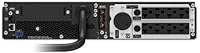
Specifications

  • Capacity: This rack UPS delivers 3000VA and 2700W of power capacity, suitable for running multiple servers, switches, and storage devices simultaneously.
  • Topology: Online double-conversion architecture keeps connected equipment running off the inverter at all times, eliminating any transfer delay during a power event.
  • Output Waveform: Pure sine wave output ensures full compatibility with sensitive server hardware, active PFC power supplies, and enterprise networking equipment.
  • Input Voltage: Designed for 120V utility input, standard across North American commercial and data center electrical infrastructure.
  • Form Factor: 1U rack-mountable chassis fits standard 19-inch equipment racks and occupies minimal vertical space in dense server room deployments.
  • Dimensions: The unit measures 25″ deep by 17.01″ wide by 3.35″ tall, requiring adequate rack depth clearance of at least 26 inches including cable management.
  • Weight: At 69 pounds, this APC Smart-UPS unit requires two people for safe rack installation and should be positioned on a lower rack shelf where possible.
  • Battery Type: Sealed lead acid batteries are used internally, offering a reliable and well-understood chemistry for sustained backup power in professional environments.
  • Recharge Time: The battery returns to a full charge approximately 3 hours after a complete discharge under typical operating conditions.
  • Hot-Swap Battery: Internal batteries are hot-swappable, allowing replacement during normal business hours without powering down connected equipment.
  • Runtime Expansion: Compatible external battery packs can be connected to extend backup runtime beyond what the internal cells alone provide.
  • Display: A front-panel LCD screen provides real-time visibility into load percentage, estimated runtime, battery charge level, and input voltage.
  • Management Slot: An onboard expansion slot accepts an optional APC network management card, enabling SNMP-based remote monitoring and automated shutdown integration.
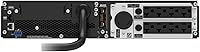
  • Outlet Configuration: The unit provides multiple NEMA 5-20R output receptacles supporting a mix of switched and unswitched load connections for flexible equipment management.
  • Communication Ports: A USB port and serial interface are included for local connectivity to PowerChute software running on a directly connected server or workstation.
  • Voltage Regulation: Automatic voltage regulation continuously corrects input voltage deviations without switching to battery, reducing unnecessary battery cycling in areas with unstable utility power.
  • Manufacturer: Produced by APC by Schneider Electric, a company with decades of presence in the UPS and data center power management industry.
  • Model Number: The official model designation is SRT3000RMXLA, used when sourcing compatible accessories, replacement batteries, and APC service contracts.

Related Reviews
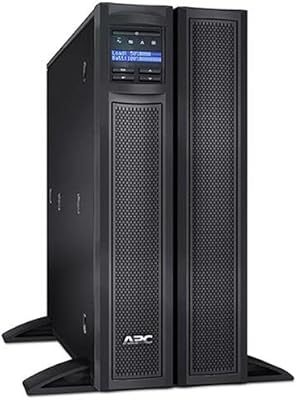
APC Smart-UPS X 3000VA Rack/Tower UPS
78%
91%
Build Quality
93%
Reliability & Uptime
61%
Runtime Performance
88%
Remote Management
86%
Outlet Flexibility
More
APC SRT3000XLA 3000VA Online Uninterruptible Power Supply
74%
93%
Power Protection Quality
91%
Output Waveform Fidelity
84%
Build & Chassis Quality
78%
Runtime Performance
54%
Installation Experience
More
APC Smart-UPS X 2000VA Rack Tower UPS
76%
93%
Build Quality
96%
Power Protection
74%
Battery Runtime
89%
LCD Display & Monitoring
87%
Form Factor Flexibility
More
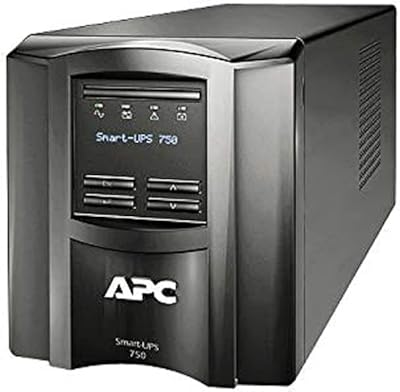
APC SMT750 750VA Smart-UPS Battery Backup

80%
91%
Power Protection Reliability
88%
Pure Sine Wave Output
89%
Automatic Voltage Regulation
62%
Runtime at Load
87%
Build Quality
More
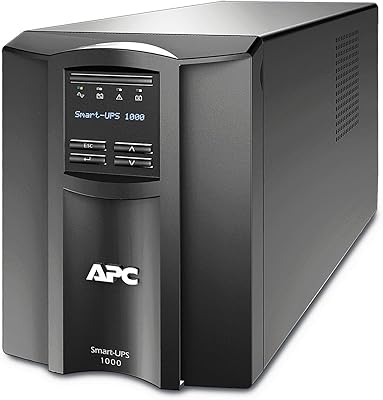
APC Smart-UPS 1000VA UPS Battery Backup (SMT1000)
87%
88%
Performance
91%
Value for Money
85%
Battery Life
92%
Build Quality
89%
Noise Level
More
APC SCL500RM1UC 500VA Lithium Ion Rackmount UPS
79%
88%
Build Quality
83%
Battery Life & Longevity
67%
Runtime at Real-World Loads
91%
Installation & Setup
93%
Weight & Physical Footprint
More
APC SMC1500C 1500VA Line Interactive UPS
81%
93%
Power Protection Reliability
91%
Pure Sine Wave Output Quality
88%
Automatic Voltage Regulation
71%
Battery Runtime
74%
SmartConnect Remote Monitoring
More
APC Smart-UPS SMX1500RM2UNC 1500VA Network UPS
76%
94%
Power Protection Quality
91%
Long-Term Reliability
88%
Network Management Features
79%
Runtime Performance
62%
Installation Experience
More
APC SMT2200RM2UC 2200VA Rack Mount UPS
79%
93%
Power Protection Reliability
91%
Pure Sine Wave Output Quality
88%
Automatic Voltage Regulation
87%
Build Quality & Durability
74%
Battery Life & Longevity
More
APC Smart-UPS SMT1500 1500VA Battery Backup
80%
94%
Power Protection Reliability
96%
Pure Sine Wave Output
91%
Automatic Voltage Regulation
68%
Battery Runtime
88%
LCD Display & Monitoring
More

FAQ

It depends heavily on how much load you have connected. At around 40 to 50 percent of the rated capacity, most users report enough runtime to execute a controlled shutdown or wait for a generator to come online. Running close to the 2700W ceiling, that window shrinks considerably. Use APC's online runtime calculator with your actual load numbers to get a realistic estimate before purchasing.

No, it does not. The management card slot is built into the unit, but the card itself is sold separately. This catches some buyers off guard, so budget for it upfront if remote SNMP monitoring or automated shutdown scripting is part of your deployment plan.

Yes, and this is actually one of the strongest reasons to choose an online double-conversion UPS with pure sine wave output for server hardware. Active PFC power supplies — which are standard in most modern servers — can behave unpredictably or even sustain damage when backed by stepped-approximation waveforms. The SRT3000RMXLA outputs clean sine wave power continuously, which is exactly what those PSUs require.

Technically possible, but genuinely not advisable. At 69 pounds, solo installation creates a real risk of injury and equipment damage, particularly when sliding the unit into mid-height rack positions. Two people and a rack lift for higher placements is the practical standard here.

The unit itself is 25 inches deep, so you need a rack with at least 26 to 28 inches of usable interior depth to accommodate the chassis plus power cable connections at the rear. Shallow or two-post open-frame racks are generally not suitable without an additional shelf or tray.

Under typical operating conditions, the sealed lead acid batteries in this class of UPS generally need replacement every three to four years, though frequent discharge cycles can shorten that window. Replacement cartridges for the APC Smart-UPS SRT3000RMXLA 3000VA Rack UPS carry a meaningful cost, and it is worth factoring that into your five-year total cost of ownership calculation before committing to the purchase.

Yes, PowerChute Network Shutdown integrates with VMware vSphere and Windows Server environments for orderly automated shutdowns during extended outages. Linux environments work as well, though some administrators report needing additional configuration steps that Windows deployments typically do not require.

Under normal load with utility power present, fan noise is manageable and most users do not flag it as a problem. Where noise does become notable is during heavy load periods and especially during battery recharge cycles after an outage — the fan profile ramps up meaningfully during recharge, which can be noticeable in quieter environments.

Yes, the SRT line supports compatible APC external battery packs that connect directly to the unit and appear as extended runtime in the LCD and management software. It is a practical upgrade path if your runtime requirements grow over time, though each additional pack adds cost and rack space to the overall deployment.

This is actually where the online double-conversion design is particularly valuable. Because connected equipment always runs off the inverter rather than directly from utility power, voltage sags, spikes, and frequency variations are absorbed without the unit ever switching to battery. Your equipment sees clean, stable power regardless of what is happening on the grid side.

Where to Buy