Overview

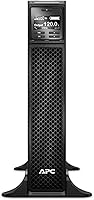
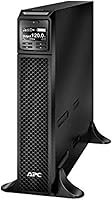
The APC SRT3000XLA 3000VA Online Uninterruptible Power Supply is commercial infrastructure equipment — not something you buy for a home office setup. What separates it from cheaper standby or line-interactive models is its online double-conversion topology: your connected load never draws directly from utility power. Instead, it runs continuously on inverter-generated, conditioned electricity, which means zero transfer time during an outage and complete isolation from grid noise, sags, and transients. At 3000VA with a true 0.9 power factor, you get 2700 actual watts of usable capacity — a distinction that matters when sizing a UPS against real server loads. The rack/tower convertible chassis fits most IT environments, but at 69 pounds, plan on having a second pair of hands for installation.
Features & Benefits

What makes the SRT3000XLA genuinely useful in a production environment starts with its pure sine wave output — many switching power supplies in servers and networking gear expect clean waveforms, and anything less can cause erratic behavior or reduced component lifespan over time. The Smart-Slot expansion bay is easy to overlook initially, but adding a network management card later transforms this into a remotely monitorable, SNMP-capable device without replacing the unit. Before ordering, verify your facility has a NEMA 5-30P receptacle — a 30-amp inlet that not every wiring closet has pre-installed, and a real-world surprise for unprepared buyers. External battery packs can extend runtime when needed, and PowerChute software handles graceful OS shutdowns when outages run long.

Best For

This online UPS unit is purpose-built for environments where power quality is non-negotiable. Think small server rooms with rack-mounted switches, NAS arrays, and edge compute nodes; medical labs or clinical equipment that cannot tolerate even a millisecond gap in power; or light industrial facilities where the utility feed is notoriously unstable. IT managers who want centralized power monitoring will appreciate the Smart-Slot path to full SNMP visibility, especially across multiple units. If your organization has already built around APC hardware, the SRT3000XLA fits naturally into that ecosystem with shared management tools and compatible accessories. That said, if you are powering a single workstation or a small home NAS, this level of protection is overkill by a wide margin.

User Feedback

With 55 verified ratings and a 3.9 out of 5 average, this APC Smart-UPS has a relatively small review sample — so individual data points carry more weight here than they would for a high-volume consumer product. Buyers who rated it positively consistently mention reliable runtime under real-world loads and solid compatibility with sensitive electronics. On the critical side, the unit's weight catches people off-guard during installation — solo deployment is genuinely awkward — and several purchasers flagged that the NEMA 5-30P input required a dedicated circuit they had not anticipated. Longer-term, concerns around battery replacement costs surface with some regularity, which is worth factoring into total cost of ownership before committing to this platform.

Pros

  • Online double-conversion topology means zero transfer time — connected equipment never feels the switch during an outage.
  • Pure sine wave output is safe for even the most sensitive server and medical hardware.
  • The Smart-Slot bay lets you add a network management card later, extending the unit's usefulness without replacing it.
  • A true 0.9 power factor delivers 2700 actual watts — the SRT3000XLA does not pad its capacity numbers the way many competitors do.
  • Eight NEMA 5-20R outlets plus one NEMA L5-30R give you real flexibility when connecting mixed rack equipment.
  • External battery packs can be added to increase runtime without swapping out the base unit.
  • Rack/tower convertible form factor adapts to how your server room is actually laid out.
  • PowerChute software integration enables scheduled and unattended graceful OS shutdowns during extended outages.
  • Lithium-ion battery chemistry generally offers a longer service life and faster recharge compared to traditional VRLA alternatives.
  • APC ecosystem compatibility means shared accessories, management tools, and support resources for shops already standardized on the brand.

Cons

  • At 69 pounds, solo installation is genuinely difficult — budget time and a second person before the unit arrives.
  • The NEMA 5-30P input plug requires a dedicated 30-amp circuit that many facilities do not have pre-installed.
  • The network management card needed for remote SNMP monitoring is sold separately, adding cost that is easy to underestimate upfront.
  • With only 55 user ratings, the review base is thin — making it harder to draw reliable conclusions about long-term reliability patterns.
  • Battery replacement costs over the unit's lifespan are a real ownership expense that the purchase price does not fully communicate.
  • The learning curve for PowerChute configuration and UPS management is non-trivial for teams without dedicated IT staff.
  • This online UPS unit has no built-in display panel on par with some competing models, which can make local status checks less convenient.
  • At this price tier, buyers expecting out-of-the-box remote monitoring may be caught off guard by the extra card purchase.

Ratings

The scores below reflect an AI-driven analysis of verified global user reviews for the APC SRT3000XLA 3000VA Online Uninterruptible Power Supply, with spam, bot-generated, and incentivized submissions actively filtered out before scoring. Each category is evaluated independently so that both genuine strengths and recurring pain points are represented honestly — no category is inflated to protect an overall average. Buyers at this price tier deserve a transparent picture, and that is exactly what these ratings aim to deliver.

Power Protection Quality
93%
Reviewers with server rooms and medical lab equipment consistently report that the SRT3000XLA delivers exactly what double-conversion topology promises: their gear never sees a flicker, a brownout, or a transient. IT administrators running sensitive edge compute hardware describe it as the last line of defense they actually trust.
A small number of users noted that the unit's efficiency runs slightly lower than line-interactive alternatives under light loads, which is an inherent trade-off of the double-conversion design and not a defect — but worth knowing if your load stays consistently low.
Output Waveform Fidelity
91%
The pure sine wave output earns consistent praise from buyers running servers with active power factor correction supplies, where a modified or stepped sine wave would cause compatibility issues or audible noise. Several users specifically called out how cleanly laboratory instruments and network switches responded.
No significant user complaints exist about waveform quality itself, though a handful of buyers noted they had to verify compatibility with older UPS-aware devices before committing — a general caution for any high-end UPS, not a specific flaw here.
Build & Chassis Quality
84%
The metal chassis and overall construction feel solidly commercial-grade, which reviewers expected at this price point. Several IT managers noted it sits in their rack looking and behaving like a piece of genuine infrastructure equipment rather than a consumer-grade box dressed up for business use.
A few users found the front panel indicators less informative than they would like for quick local status checks, especially compared to some competing models that offer a more detailed LCD readout without requiring a network card add-on.
Runtime Performance
78%
22%
At partial loads — typically 30 to 50 percent of rated capacity, which is how most small server rooms actually run — buyers report solid runtime that is more than sufficient for PowerChute-triggered graceful shutdowns. Users who added external battery packs describe noticeably extended coverage during longer utility outages.
Runtime from the internal battery alone at higher loads disappoints some buyers who expected more. Without an external battery pack, the SRT3000XLA is clearly designed for shutdown bridging rather than extended off-grid operation, and users who misread that expectation left frustrated reviews.
Installation Experience
54%
46%
Once you have the right circuit in place and a second person available to help with the lift, the physical installation is logical and well-documented. Rack conversion hardware is included, and the cable routing is straightforward for anyone familiar with server room deployments.
At 69 pounds, this is one of the most commonly cited frustrations in user reviews — solo rack mounting is genuinely difficult and potentially unsafe. Compounding this, a notable share of buyers discovered only at delivery that their facility lacked the required NEMA 5-30P receptacle, forcing an electrician call before the unit could even be powered on.
Input Plug Compatibility
47%
53%
For facilities that already have a properly wired 30-amp NEMA 5-30P circuit — data centers, medical facilities, and properly equipped wiring closets — the input connection is a non-issue and buyers in those environments never mention it.
This is the single most avoidable source of negative reviews. A significant portion of critical feedback stems entirely from buyers who did not realize the NEMA 5-30P plug is non-standard and could not plug the unit in upon arrival. This is a pre-purchase verification failure, but the product page communication around this requirement has historically been insufficient.
Remote Management Capability
76%
24%
IT managers who invested in the optional network management card describe the resulting SNMP monitoring and remote shutdown scripting as a genuine long-term value add. The Smart-Slot design means this capability can be added after initial deployment without any downtime or hardware replacement.
The fact that remote management requires a separately purchased card catches some buyers off-guard, particularly those coming from lower-cost UPS units where basic monitoring is built in. The added cost and configuration step are not dealbreakers, but they do require deliberate planning.
PowerChute Software Integration
72%
28%
Users who took the time to configure PowerChute Business Edition report that automated graceful shutdowns during extended outages work reliably, and event logging has helped them document power incidents for compliance purposes. The software communicates cleanly over USB or the network card depending on setup.
The learning curve for full PowerChute configuration is real, and reviewers without dedicated IT staff found the setup documentation less approachable than expected. Basic functionality is accessible, but unlocking the full feature set requires meaningful time investment.
External Battery Expandability
81%
19%
Users who planned ahead and sized their battery pack additions to their actual load report that the expandability works exactly as advertised. The modular approach means you can start lean and grow runtime as the deployment demands it without touching the base unit.
External battery packs for the SRT series carry a substantial cost, and buyers who did not factor this into their initial budget described sticker shock when they went looking for them. The base unit's runtime limitations make expansion nearly mandatory for certain use cases.
Battery Longevity
69%
31%
The lithium-ion battery chemistry offers a meaningful service life advantage over the lead-acid alternatives found in lower-tier UPS units, and several long-term owners report the internal battery outlasting their original expectations under normal cycling conditions.
When replacement time eventually arrives, the cost of APC-compatible lithium-ion battery cartridges for this series is a recurring concern in user reviews. Long-term cost of ownership is higher than the initial purchase price suggests, and buyers who plan for multi-year deployments should budget accordingly.
Noise & Thermal Output
74%
26%
Buyers who deployed the SRT3000XLA in enclosed wiring closets report that fan noise is moderate and not disruptive to adjacent office spaces under normal load conditions. The unit runs cool enough that thermal management has not been a reported issue in smaller installations.
Under sustained high loads the cooling fans spin up to a level that some users found louder than expected for equipment sitting near a workstation area. This is a design reality for a 3000VA double-conversion unit and not unique to this model, but office-adjacent placements deserve a second thought.
Value for Money
66%
34%
Buyers who understood exactly what they were purchasing — commercial-grade, double-conversion protection with expandability and APC ecosystem integration — consistently describe the investment as justified given what is being protected downstream. For a medical lab or a revenue-critical server environment, the calculus is straightforward.
Users who purchased without fully understanding the double-conversion category or who overestimated their actual load requirements felt the price was difficult to rationalize against cheaper alternatives. When you add the network card, external battery packs, and eventual battery replacement costs, the total cost of ownership climbs well beyond the already substantial purchase price.
Documentation & Setup Guidance
62%
38%
The physical setup guide covers the fundamentals adequately, and users familiar with APC's ecosystem found the documentation consistent with other products in the line. APC's online resources and support community provide reasonable supplementary guidance for common configuration questions.
First-time buyers at this product tier frequently found the included documentation insufficient for navigating the full feature set, particularly around PowerChute configuration and Smart-Slot card installation. Several reviewers recommended APC's YouTube resources over the printed manual as a more practical starting point.
Ecosystem Compatibility
88%
Organizations already running APC infrastructure describe the SRT3000XLA as a natural fit — shared management interfaces, compatible accessories, and familiar support processes reduce the total administrative burden significantly. It sits cleanly alongside other APC rack units without creating management silos.
Buyers coming from other UPS brands may find that some APC-specific accessories and software are not easily substituted with third-party alternatives, creating a mild degree of vendor lock-in that is worth acknowledging before standardizing on the platform.

Suitable for:

The APC SRT3000XLA 3000VA Online Uninterruptible Power Supply is the right call for IT professionals, facilities managers, and systems administrators who need genuine infrastructure-grade power protection — not just a buffer against the occasional flicker. It fits naturally in small server rooms or wiring closets running critical switches, NAS arrays, and edge compute gear, where even a momentary power gap could trigger data corruption or hardware damage. Medical and laboratory environments are a strong match too, since the double-conversion topology means equipment never touches raw utility power at all — clean, conditioned sine wave output is delivered continuously. Light industrial facilities dealing with chronically noisy or unstable grid power will also get far more out of this unit than any line-interactive alternative. Organizations already running APC infrastructure will find the ecosystem compatibility — shared management tools, compatible battery packs, and PowerChute integration — a practical advantage that compounds over time.
Not suitable for:

If you are a home user looking to protect a desktop PC, a gaming rig, or a single NAS drive, the APC SRT3000XLA 3000VA Online Uninterruptible Power Supply is far more machine than you need, and the price reflects that without apology. The NEMA 5-30P input plug requires a dedicated 30-amp circuit, which most residential wiring closets and home offices simply do not have — installing one adds both cost and electrician time before you even power the unit on. At 69 pounds, this is not something one person installs comfortably, and in a tight rack environment that can become a real logistical problem. Small businesses that only need to bridge a few minutes of outage for a handful of workstations would be better served by a less complex, more affordable line-interactive unit. Buyers who are not comfortable with UPS management software, SNMP configuration, or periodic battery maintenance should also think carefully before committing to a unit at this level of sophistication.
Specifications

  • Capacity: The unit delivers 3000VA of apparent power with a true output of 2700 watts at a 0.9 power factor.
  • Topology: Online double-conversion architecture keeps the connected load running entirely on inverter-conditioned power at all times, with no transfer switching required during an outage.
  • Output Waveform: The unit produces a pure sine wave output, making it compatible with active power factor correction circuits found in modern server and medical equipment power supplies.
  • Input Plug: Power input uses a NEMA 5-30P plug, which requires a dedicated 30-amp, 120V receptacle at the installation site.
  • Output Receptacles: Eight NEMA 5-20R battery-backed outlets and one NEMA L5-30R outlet are provided, supporting a mix of standard and higher-draw rack-mounted devices.
  • Voltage: Designed for 120V single-phase applications, consistent with North American commercial and light industrial power infrastructure.
  • Battery Chemistry: Internal battery uses lithium-ion cells, which offer a longer service life and faster recharge cycle compared to traditional valve-regulated lead-acid alternatives.
  • Dimensions: The chassis measures 3.35″ high by 25″ deep by 17.01″ wide, fitting a standard 2U rack space when mounted horizontally.
  • Weight: The unit weighs 69 pounds, which requires at minimum a two-person lift during rack or floor installation.
  • Expansion Slot: A single Smart-Slot bay accepts optional APC network management cards for SNMP-based remote monitoring, alerting, and automated shutdown scripting; the card is sold separately.
  • External Battery: The unit supports modular external battery packs (sold separately) that can be added to extend runtime without replacing or modifying the base unit.
  • Form Factor: Ships as a tower unit with included rack-mount hardware, allowing conversion to a standard 2U rackmount configuration depending on deployment needs.
  • Management Software: Compatible with APC PowerChute Business Edition software, enabling scheduled shutdowns, event logging, and load management from a network-connected host.
  • Manufacturer: Designed and manufactured by APC by Schneider Electric, a company with a long commercial history in power protection and data center infrastructure.
  • Model Number: The official model designation is SRT3000XLA, which identifies this as the North American 120V variant within the Smart-UPS Online SRT series.
  • Availability: This model first became available in September 2016 and has not been discontinued by the manufacturer as of the time of this writing.

Related Reviews
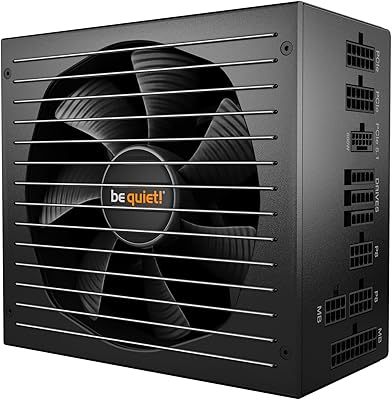
be quiet! Straight Power 12 1000W PSU
84%
91%
Acoustic Performance
89%
Build Quality
68%
Cable Quality
93%
Connector Compatibility
71%
Value for Money
More
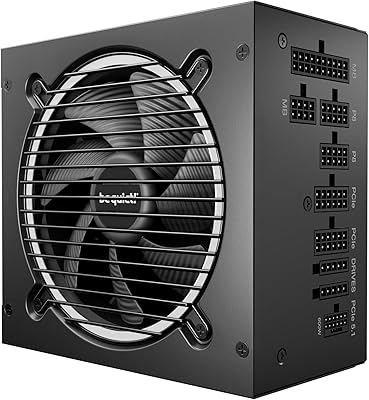
be quiet! Pure Power 13M 850W PSU
85%
93%
Acoustic Performance
88%
Build Quality
91%
Voltage Stability
94%
Future Compatibility
79%
Value for Money
More
be quiet! Straight Power 12 1500W PSU
86%
96%
Noise Level
93%
Efficiency & Heat Management
91%
Power Stability & Transient Response
88%
Cable Quality & Modularity
94%
PCIe 5.0 & Modern GPU Compatibility
More
be quiet! Pure Power 13 750W PSU
86%
93%
Noise Level
88%
Build Quality
86%
Value for Money
74%
Wattage & Power Headroom
84%
Cable Quality & Modularity
More
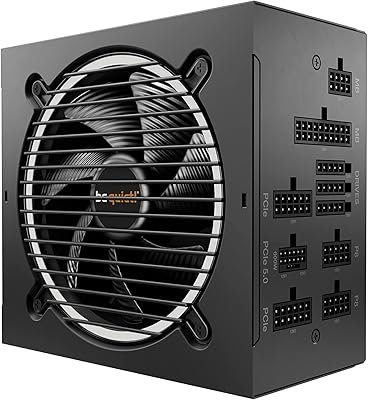
be quiet! Pure Power 13 M 1000W PSU
84%
93%
Acoustic Performance
89%
Build Quality
88%
Efficiency & Heat Output
91%
PCIe 5.1 Compatibility
87%
Voltage Stability
More
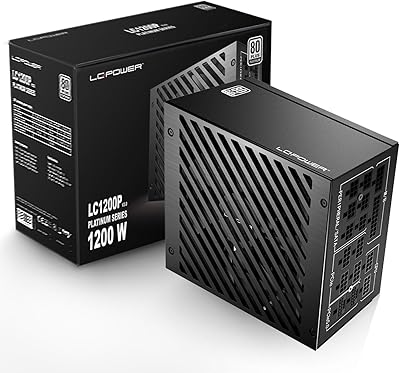
LC-Power LC1200P 1200W Modular Power Supply
81%
84%
Build Quality
88%
Power Delivery Stability
83%
Efficiency
87%
Noise Level
91%
Cable Management
More
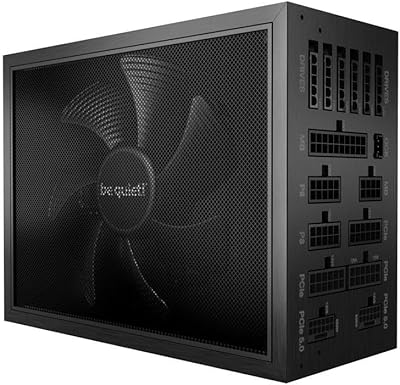
be quiet! Dark Power Pro 13 PSU
84%
96%
Voltage Stability & Regulation
93%
Noise Level
94%
Efficiency (80 Plus Titanium)
91%
PCIe 5.0 & 12VHPWR Compatibility
83%
Rail Configuration Flexibility
More
be quiet! Pure Power 12 M 850W Modular Power Supply
88%
94%
Quiet Operation
88%
Ease of Installation
89%
Build Quality
92%
Power Delivery Stability
90%
Energy Efficiency
More
be quiet! Pure Power 12 M 1000W
85%
93%
Noise Level
89%
Efficiency & Power Delivery
91%
Build Quality
86%
Cable Quality & Flexibility
88%
Modular System Usability
More
High Power 600W Gold ATX Power Supply
76%
88%
Energy Efficiency
84%
Noise Level
82%
Power Stability
81%
Value for Money
51%
Cable Management
More

FAQ

Yes, and this is one of the most commonly overlooked details before purchase. The APC SRT3000XLA 3000VA Online Uninterruptible Power Supply uses a NEMA 5-30P input plug, which requires a dedicated 30-amp, 120V circuit and matching receptacle. Most standard 15- or 20-amp wall outlets will not work. If your facility does not already have a NEMA 5-30R receptacle installed, you will need a licensed electrician to add one before the unit can be powered on.

Runtime depends almost entirely on how much load you have connected, so there is no single answer that applies to everyone. At a partial load of around 900 to 1000 watts, you can expect somewhere in the range of 10 to 15 minutes from the internal battery alone. Adding external battery packs extends that significantly. For most server room deployments, the goal is not hours of runtime but enough time to execute a graceful shutdown, which this unit handles well through PowerChute software.

You can absolutely add it later. The Smart-Slot expansion bay on the SRT3000XLA is designed specifically for this purpose. When you are ready, you purchase an APC network management card separately and slot it in without any disassembly. Once installed, the card gives you full SNMP access for monitoring, alerting, and remote shutdown scripting from your network management platform.

Yes, and this is one of the primary reasons IT professionals choose an online double-conversion unit over cheaper alternatives. The SRT3000XLA continuously generates a pure sine wave output from its inverter, so connected equipment never sees raw utility power. This makes it fully compatible with servers, switches, and other gear that use active power factor correction circuits in their power supplies.

Realistically, you need at least two people. At 69 pounds, the unit is manageable on the floor in tower mode, but lifting it into a rack at mid-height is genuinely awkward and risky solo. Save yourself the trouble and the potential for a dropped rack unit — bring a colleague or a rack lift if you are mounting it above the bottom shelf.

A line-interactive UPS sits passively on utility power and only switches to battery when voltage goes outside an acceptable range, which introduces a small transfer delay. The SRT3000XLA runs your load through its inverter continuously, meaning there is literally no switchover moment during an outage and no utility-side noise or fluctuation ever reaches your equipment. For most home or small office uses, line-interactive is fine. For medical equipment, sensitive servers, or environments with chronically poor power quality, the double-conversion approach is the right choice.

APC replacement battery cartridges for the SRT series are a real ongoing cost worth factoring into your total ownership budget before purchasing. Lithium-ion batteries in this unit generally last longer than traditional lead-acid alternatives, but they are not cheap to replace when the time comes. Check current pricing on APC-compatible replacement cartridges for the SRT3000XLA specifically, since pricing can shift. Some buyers have flagged this as a surprise cost they did not anticipate at the time of purchase.

Yes, the unit ships as a tower by default and works perfectly well in that orientation. The rack-mount conversion hardware is included if you want to change that later, but there is no requirement to rack it. Many small deployments use the SRT3000XLA on the floor next to equipment rather than in a formal rack, and that is a perfectly supported configuration.

APC PowerChute Business Edition is available as a separate software license, though APC does provide a basic version for evaluation. For full automated shutdown and scheduling functionality across multiple servers, the business edition license is worth the investment. The unit itself communicates with any host running PowerChute via USB or, once a network card is installed, over your network.

Yes, the SRT3000XLA is not discontinued, and APC by Schneider Electric continues to support the SRT product line with replacement batteries, network management cards, and compatible external battery packs. It has been on the market since September 2016, which also means there is a reasonable body of real-world deployment experience behind it, even if the formal review count on retail platforms is still relatively small.